-
-
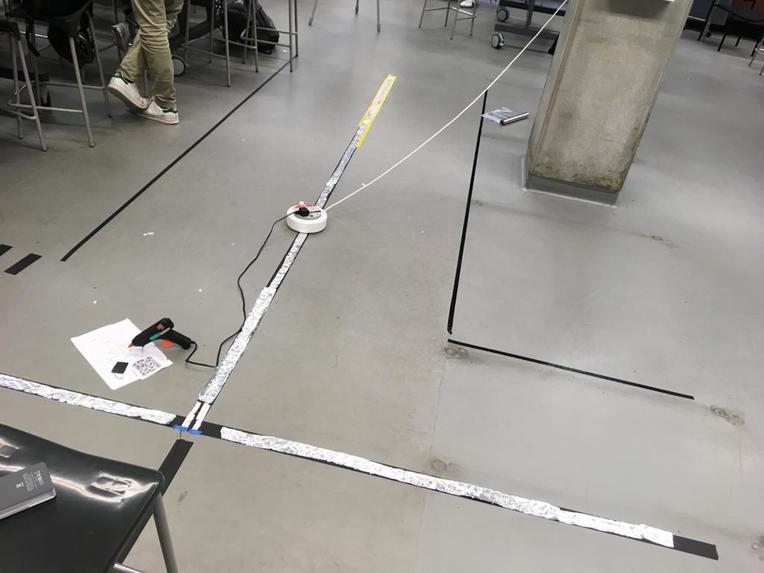
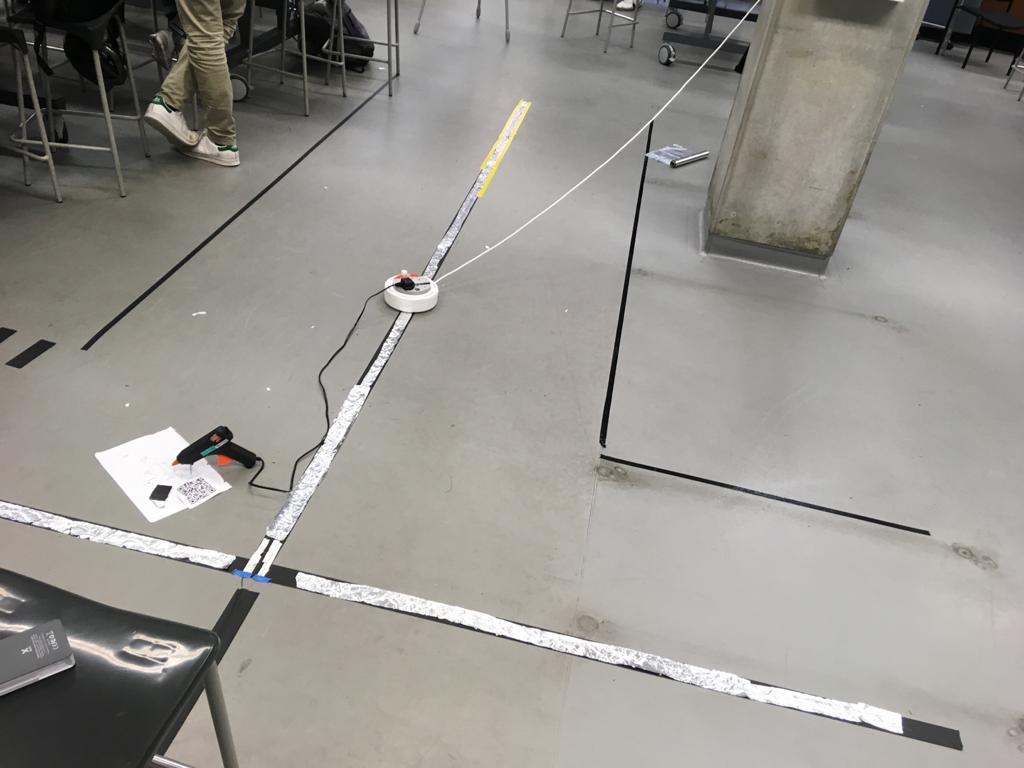
Track
-
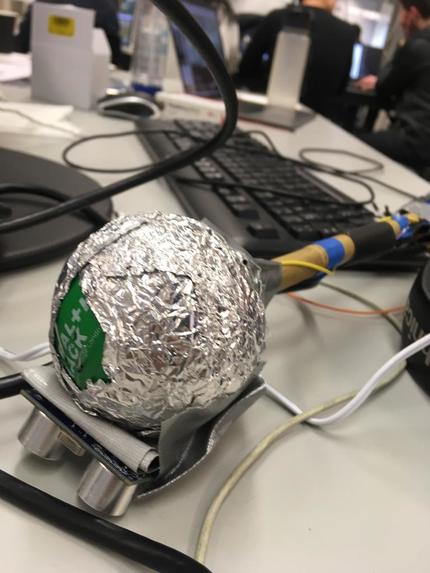
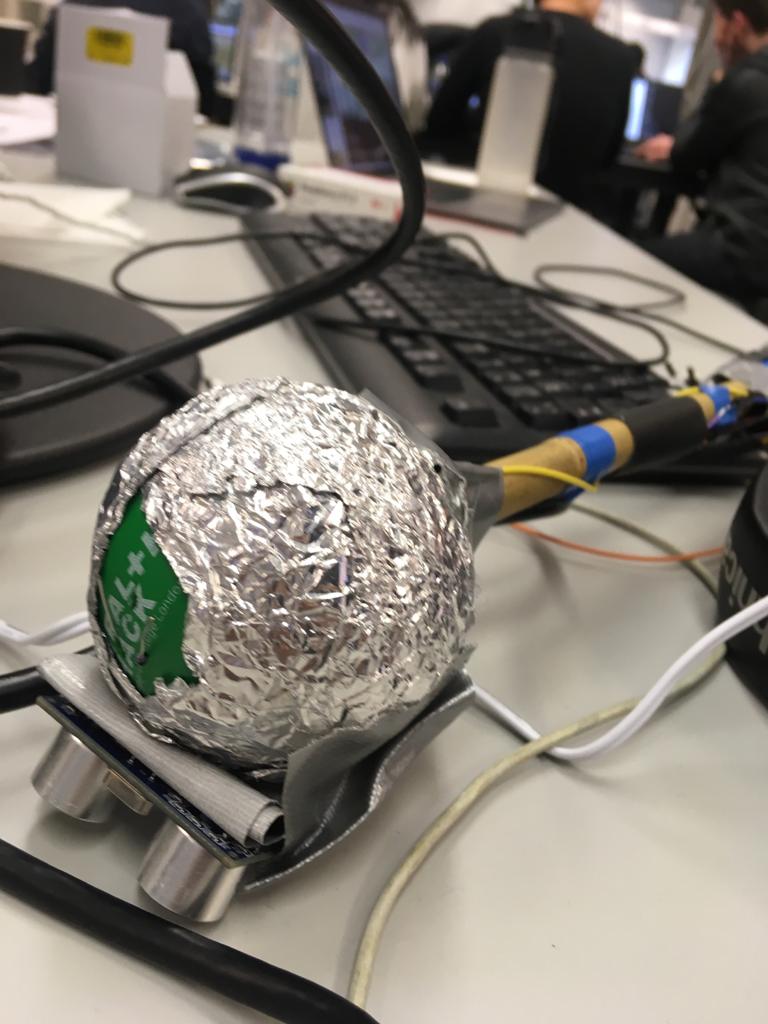
Cane
Inspiration
Signs are everywhere, but only accessible to sighted people. Thus blind and visually impaired people require more effort, time and planning to find their way in unfamiliar places. We want to make public places accessible to all. We created WhisperingWalls as a signposting infrastructure which achieves this in an affordable manner.
What it does
It enables building managers to signpost and direct in a way that is accessible to the blind. A conductive tape guides the path and QR code message give directions and important information. Visually impaired people use a modified cane that interacts with the environment and gives them haptic and auditory feedback. This system can be cheaply implemented.
How we built it
Cane is built to detect the conducting path on the floor and provides auditory feedback while aligned with the path. We use a Raspberry Pi as a microprocessor and -controller on the cane. Additionally, a camera module scans QR codes for messages. QR codes for a given text strong can easily be generated online. Special patches on the path indicate a QR code is nearby.
Challenges we ran into
Designing the tip of the cane such that it is independent of the angle at which it touches the floor. Implementing the mechanism to detect the conducting material.
Accomplishments that we're proud of
Developing a robust and cheap system that could be implemented in various locations.
What we learned
Being directly in touch with possible users is important for developing a product that is actually helpful.
What's next for WhisperingWalls
Upgrading the system in various ways: instead aluminium foil use materials with various conductive properties, reduce latency in the feedback.
Built With
- gtts
- pillow
- python
- pyzbar
- raspberry-pi

Log in or sign up for Devpost to join the conversation.