-
-
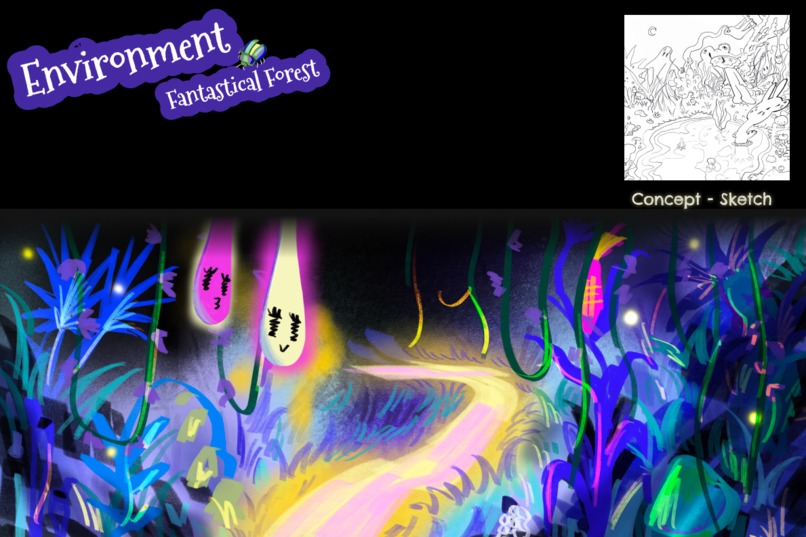
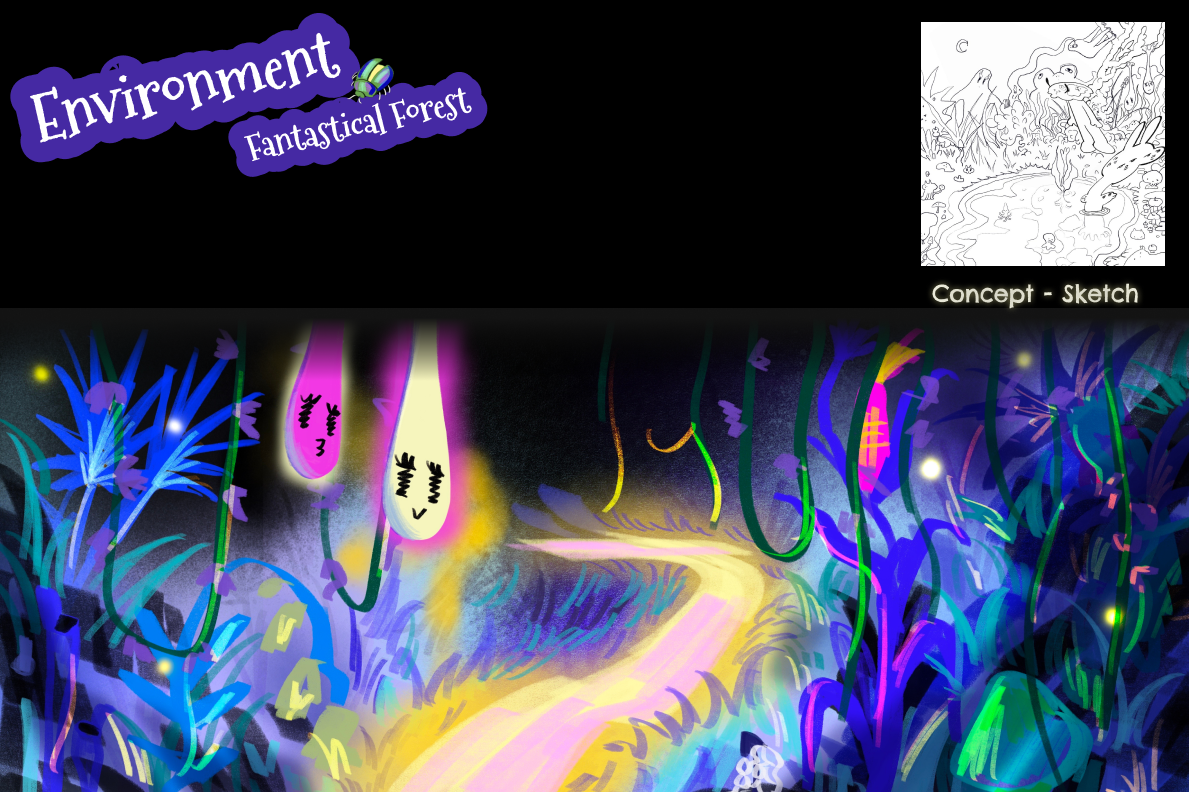
Art Bible - Environment
-
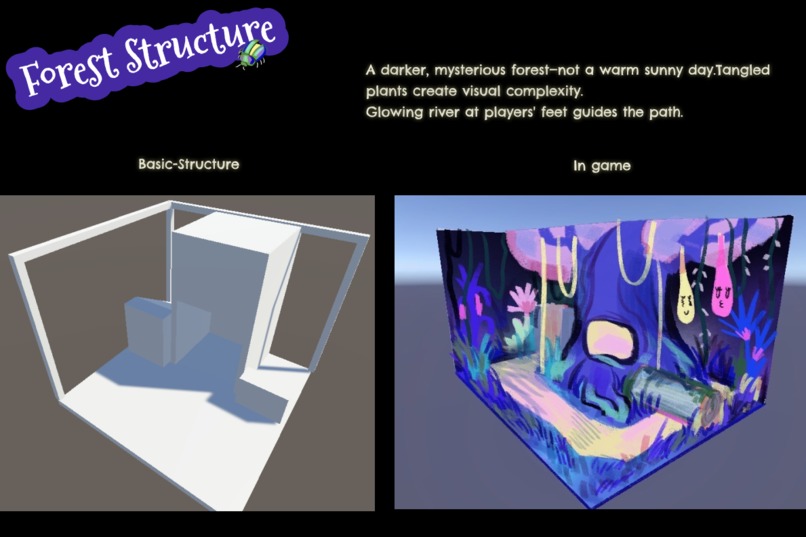
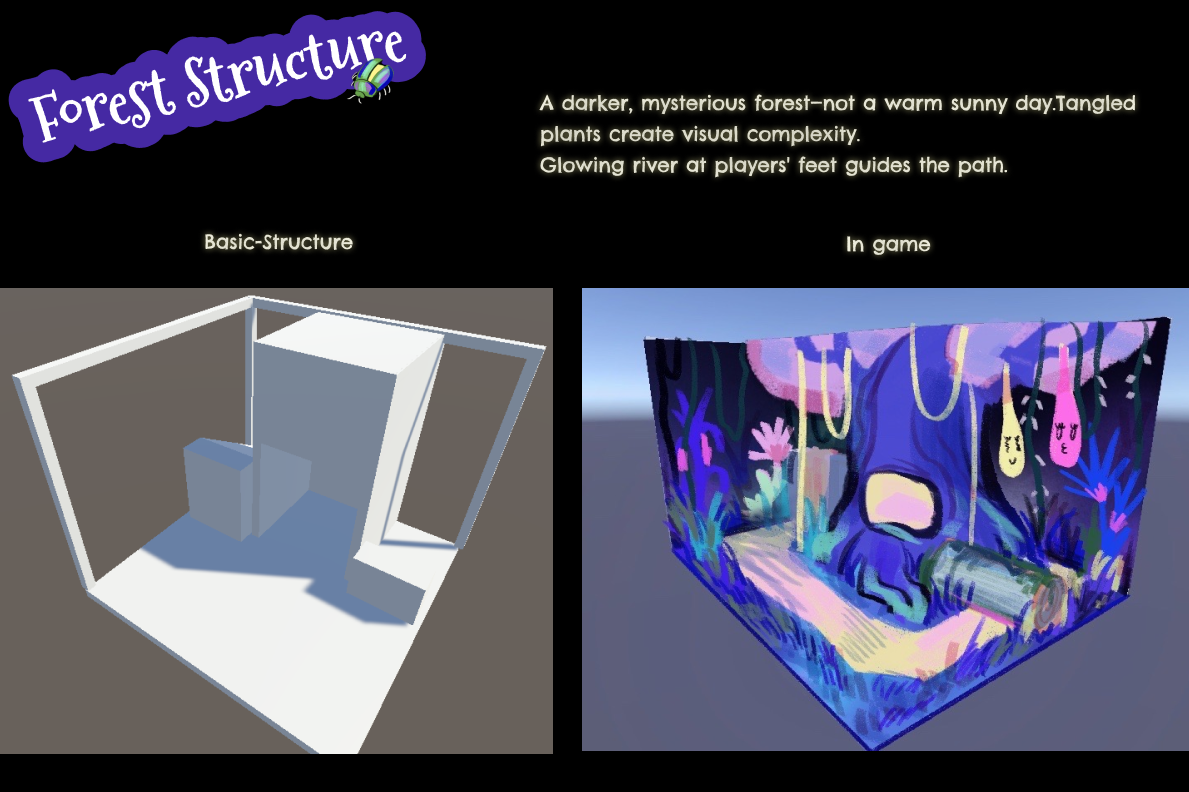
Art Bible - Forest Structure
-
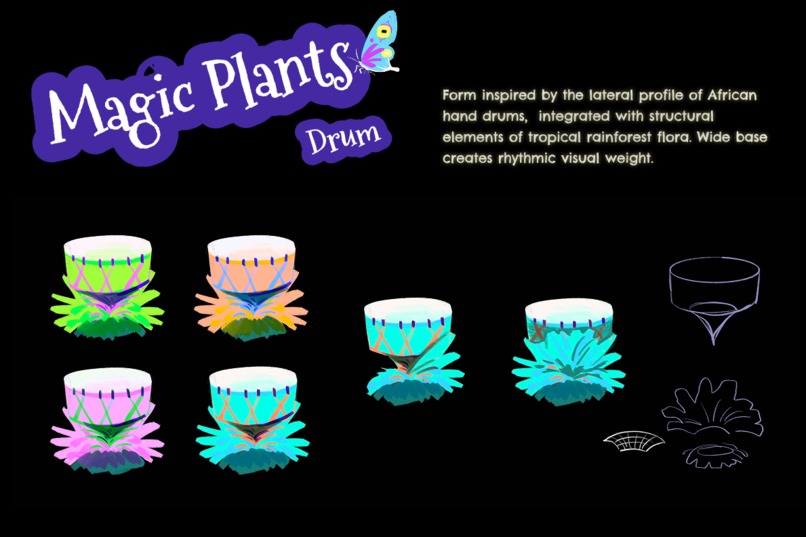
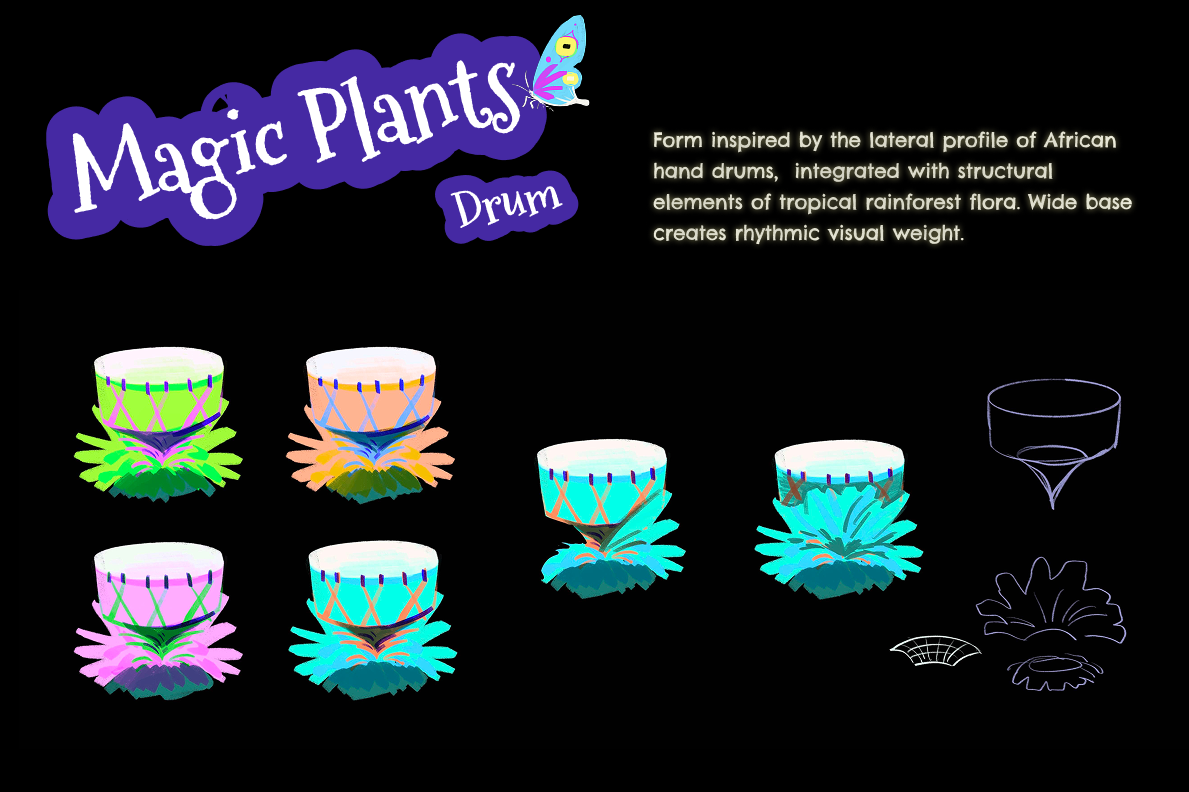
Art Bible - Drum Plant
-
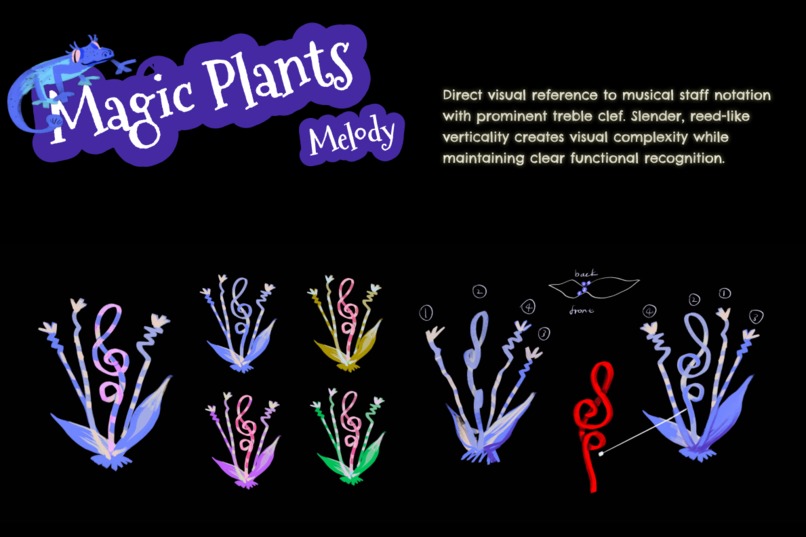
Art Bible - Melody Plant
-
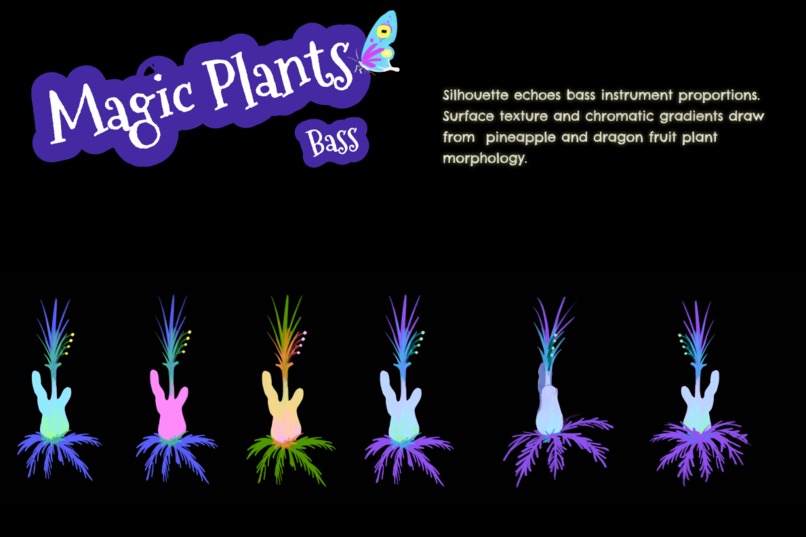
Art Bible - Bass Plant
-
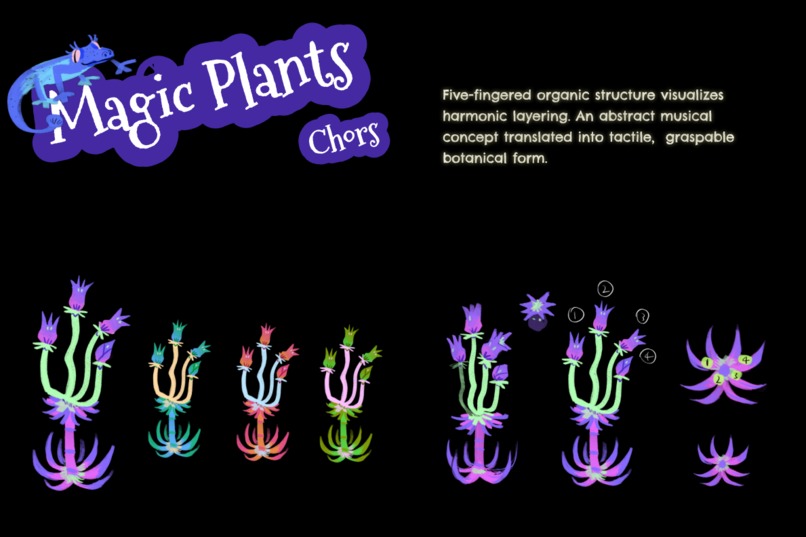
Art Bible - Chords Plant
-
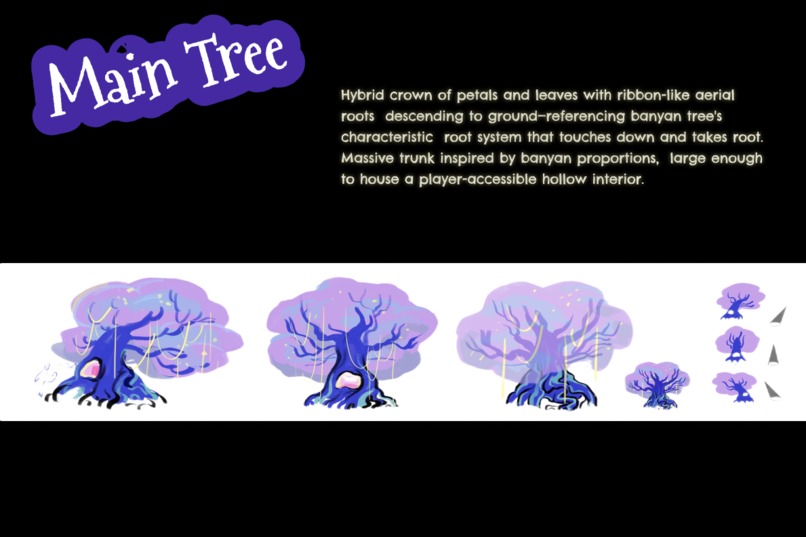
Art Bible - Main Tree
-
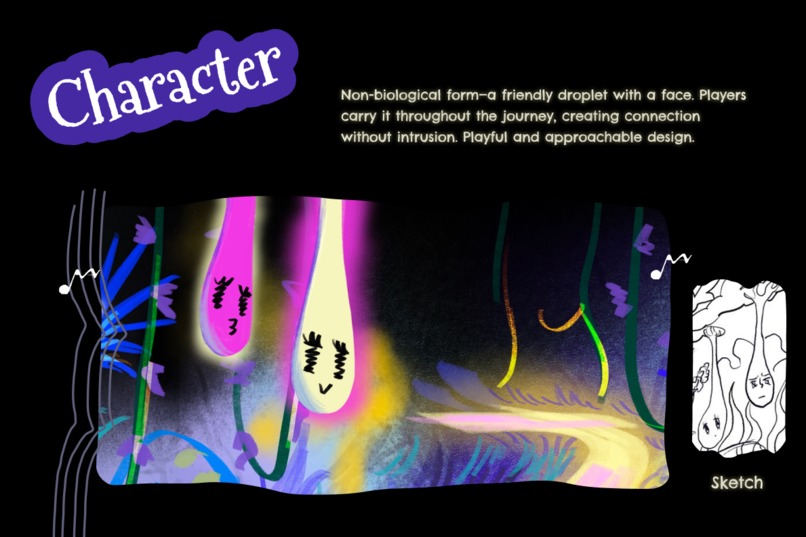
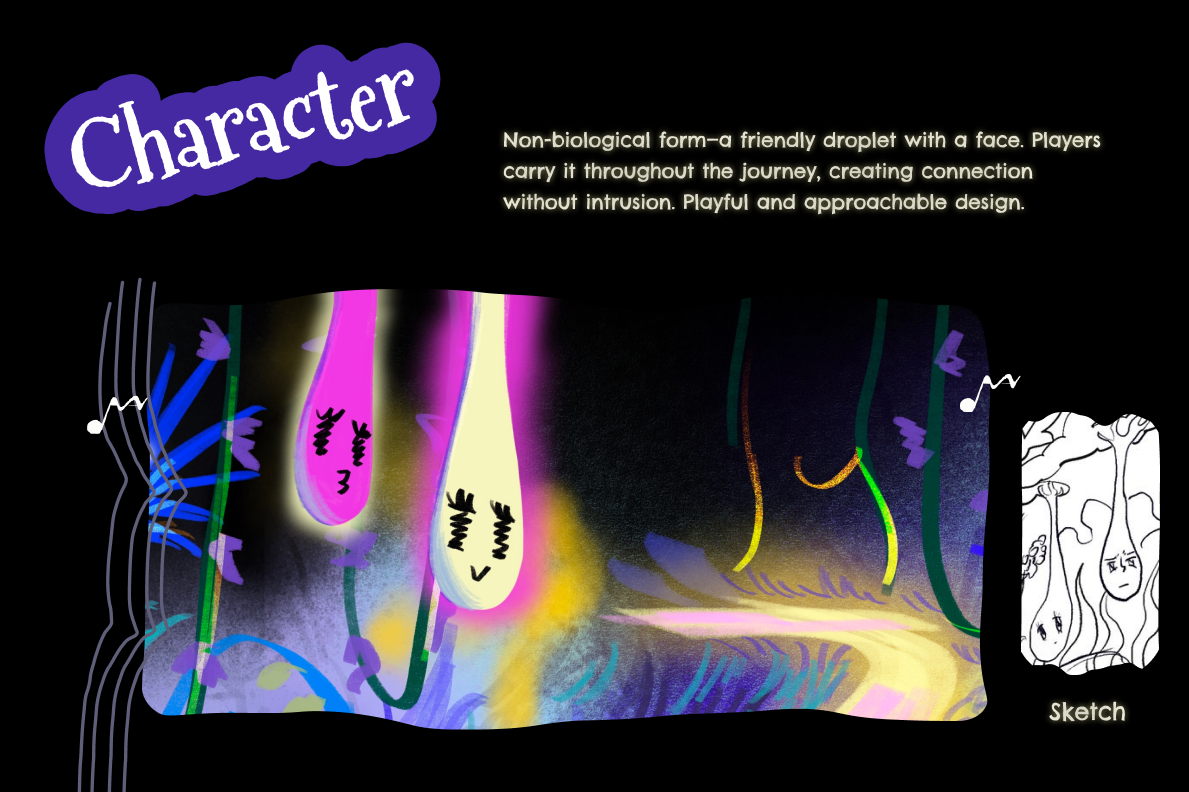
Art Bible - NPC
-
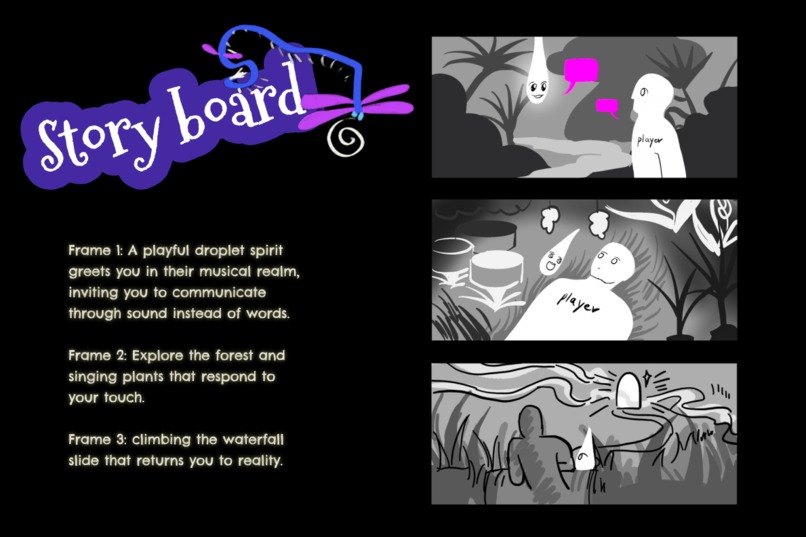
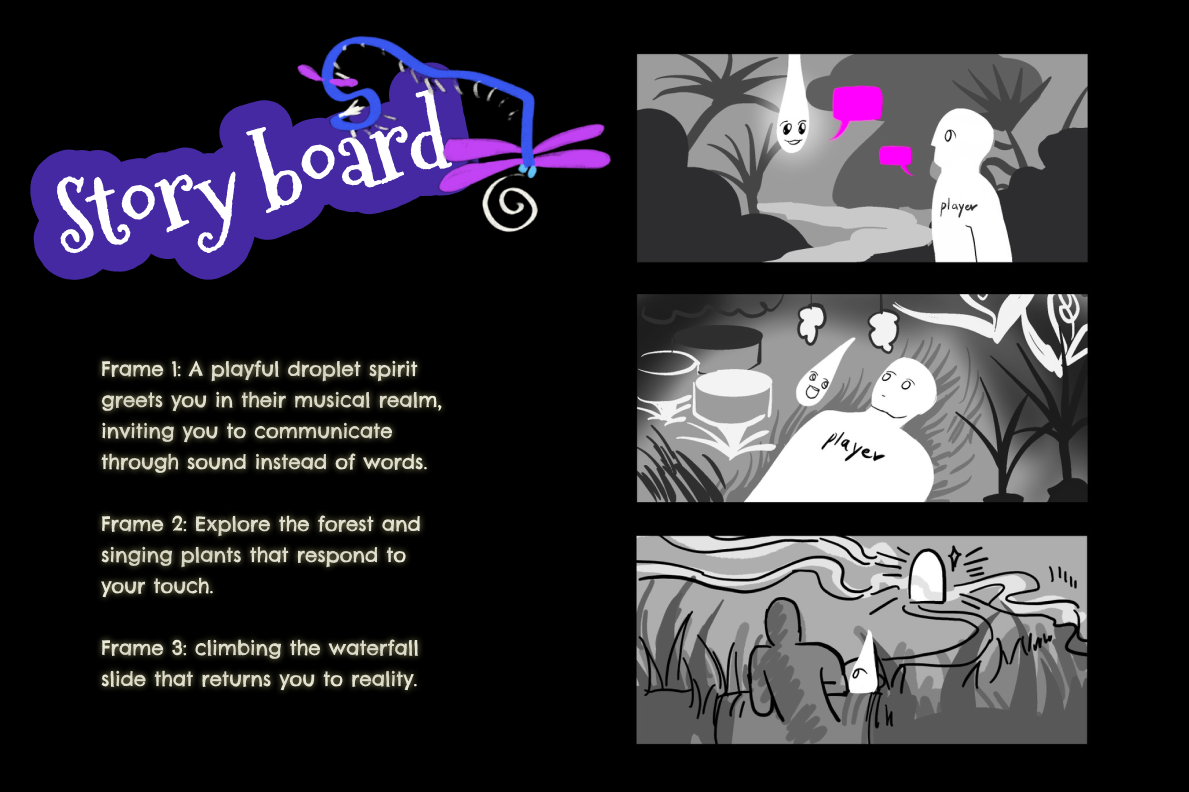
Art Bible - Story Board
Inspiration
We drew inspiration from Ableton's Learning Music for layered creation mechanics, Avatar's Pandora for otherworldly aesthetics, and music therapy research—which showed active creation is more empowering than passive listening, yet requires years of training. We wanted to create an experience where musical creation happens naturally through exploration and interaction.
How We Built It
Musical Architecture
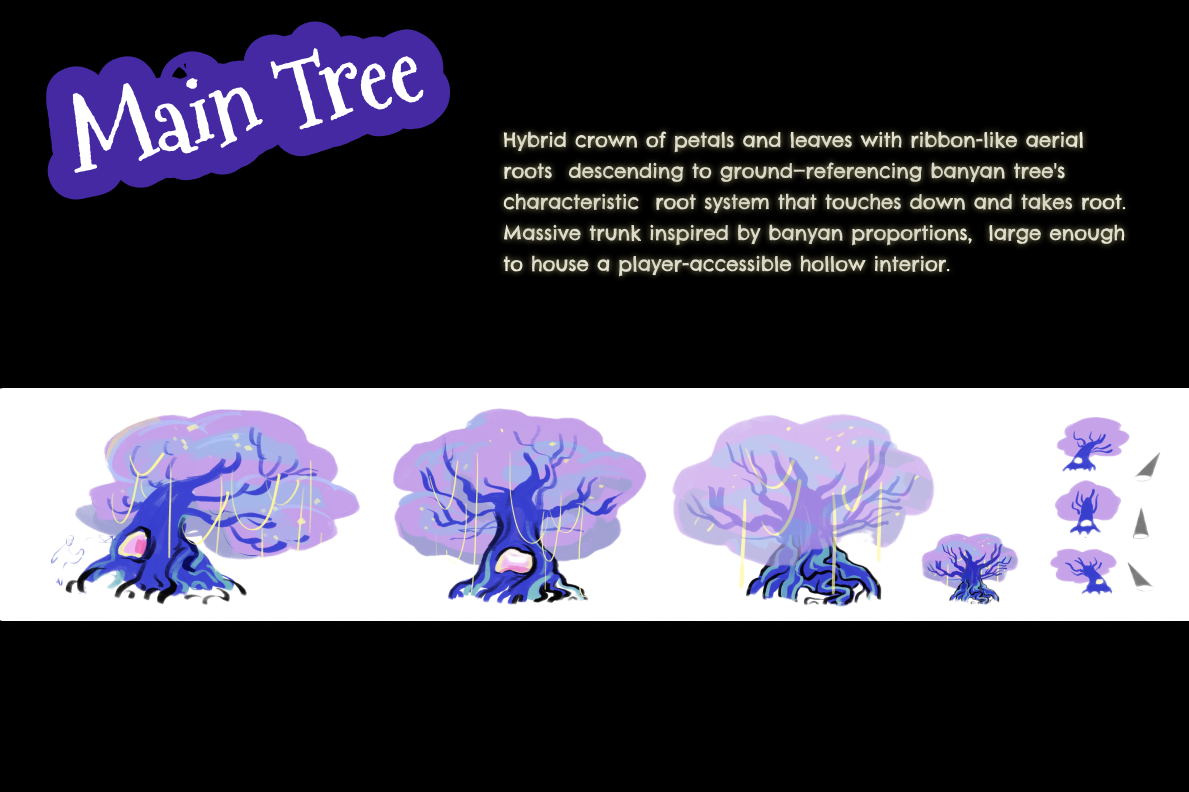
Our two composers created 16 original loops (4 instruments × 4 variants) unified in one key with 8-bar structures, engineered to harmonize in any combination. Players collect plant instruments throughout the forest, then compose inside a tree hollow by arranging their musical bouquet—hovering over plants previews sounds, grasping adds them to the bouquet.
VR Interaction Design
Built for Quest 3 hand tracking, players explore, touch magical plants, and grasp them to collect. A water droplet spirit teaches players that melodies are this world's language. The experience flows through distinct spaces: open forest for exploration, intimate tree hollow for composition, and a waterfall exit that feels like moving forward—not being exiled from this world.
Art Direction
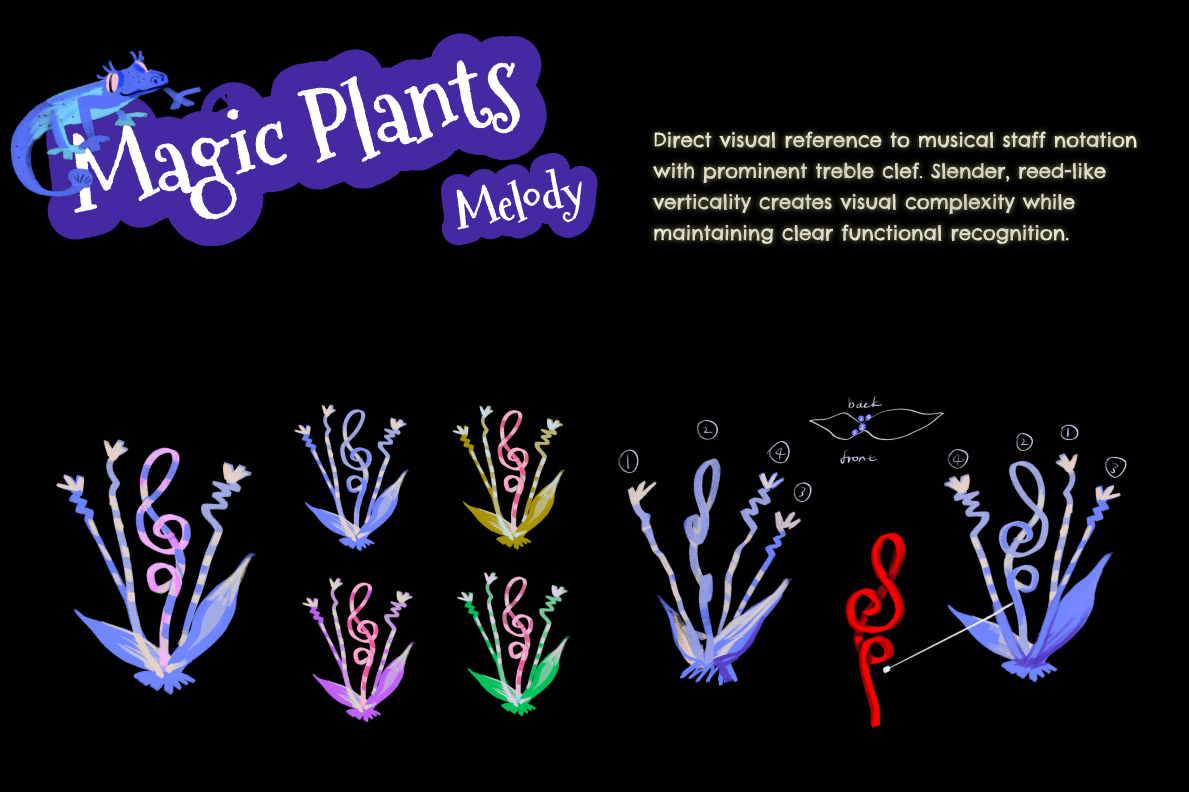
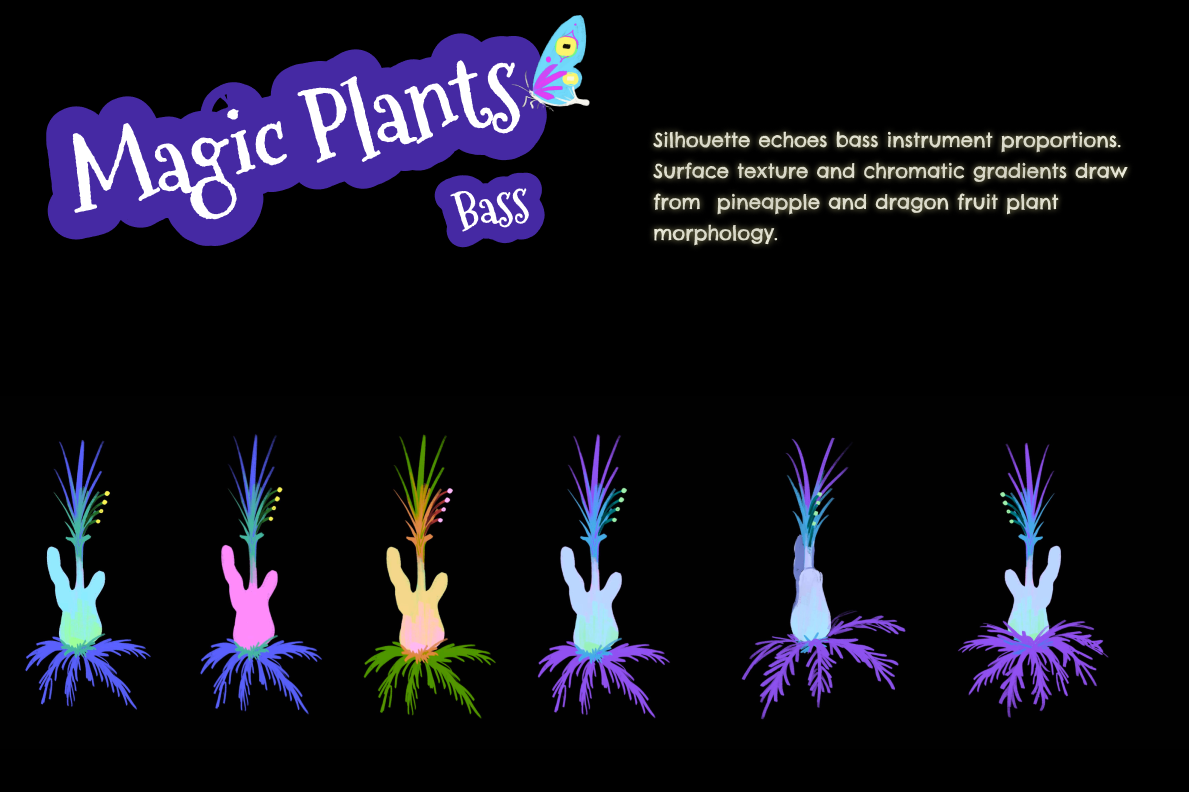
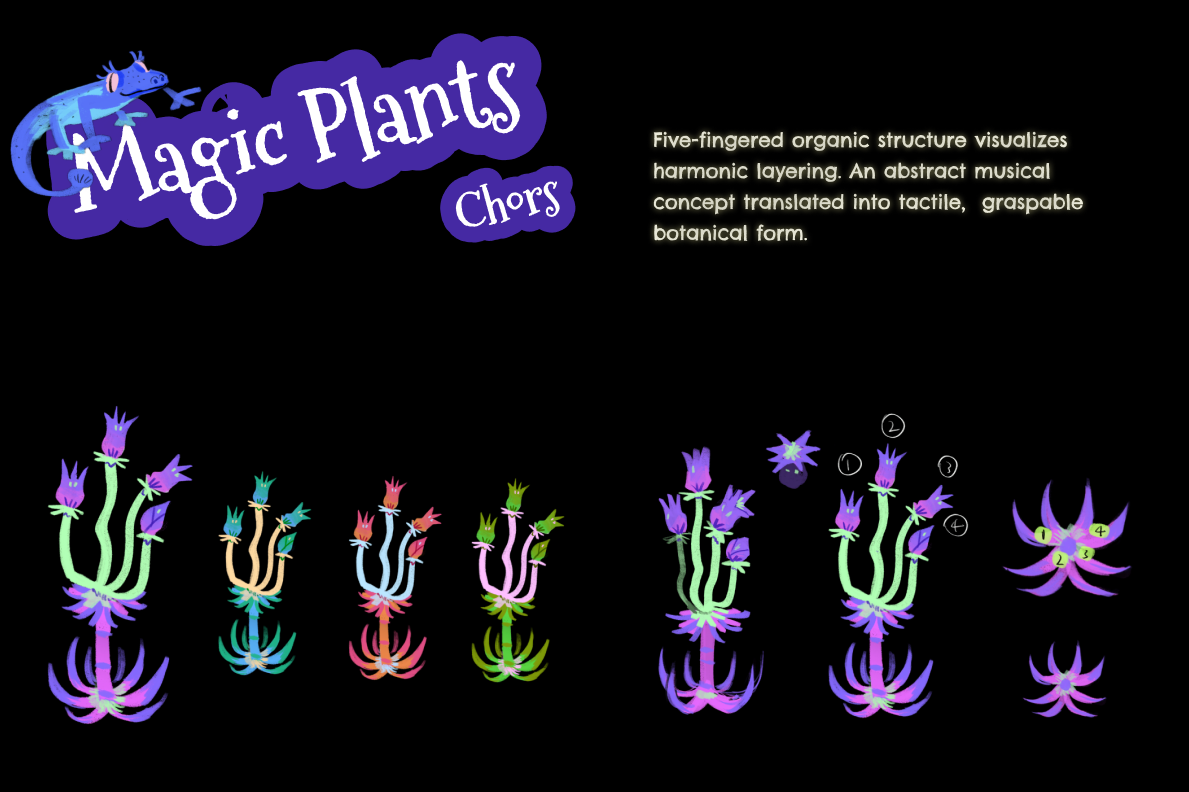
Our illustrator uses bold, saturated colors in complex palettes with raw, textural quality—contrasting polished fairy aesthetics. Each plant balances fantastical details with clear silhouettes (bass plants resemble bass instruments). We adopted Low Poly with cold colors, avoiding biological warmth. Testing showed hyper-realistic fantasy triggers uncanny valley discomfort.
Challenges We Faced
Audio Engineering: Limited chord and bass layers to prevent muddy mixes while preserving creative freedom for drums and melody.
Technical Development: As a team from interaction design and visual design backgrounds without prior game development experience, we encountered numerous technical obstacles. We overcame core challenges by consulting industry experts, reaching out to university professors, and engaging with developer forums.
Cross-Disciplinary Collaboration: Our international team across time zones pioneered workflows for version control, asset pipelines, and synchronizing expectations across disciplines.
What We Learned
VR Design: VR alters time perception—we learned to control pacing through NPC guidance and spatial transitions.
Accessibility Through Narrative: Framing the experience as "introducing yourself" rather than "making good music" eliminated performance anxiety.
Cognitive Load Management: We eliminated traditional menus, using spatial cues and NPC guidance to reduce VR's inherent sensory demands.
Learning New Disciplines: Transitioning from design backgrounds into game development taught us humility, resourcefulness, and the value of community knowledge. Expert consultation and forum engagement became essential tools for problem-solving.
Future Plans
Short-term: Expand musical variety, implement audio export functionality, and enhance visual effects.
Long-term: Explore LBVR integration with physical interactive elements, introduce more complex production layers while maintaining zero-barrier accessibility.
Where emotions bloom into music.


Log in or sign up for Devpost to join the conversation.