-
-
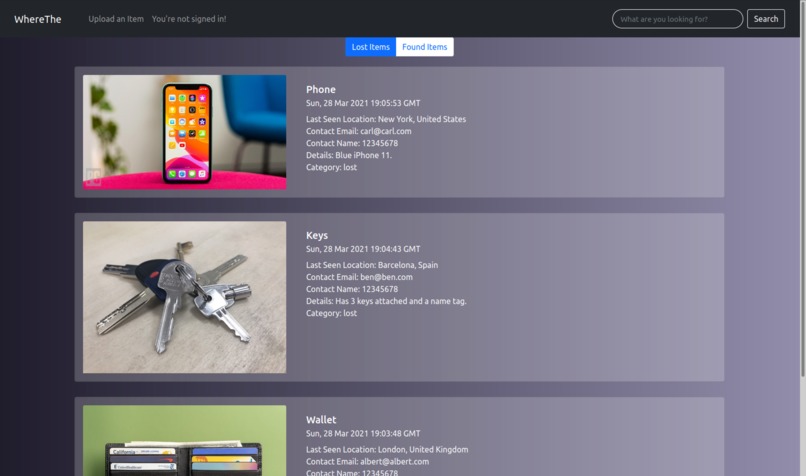
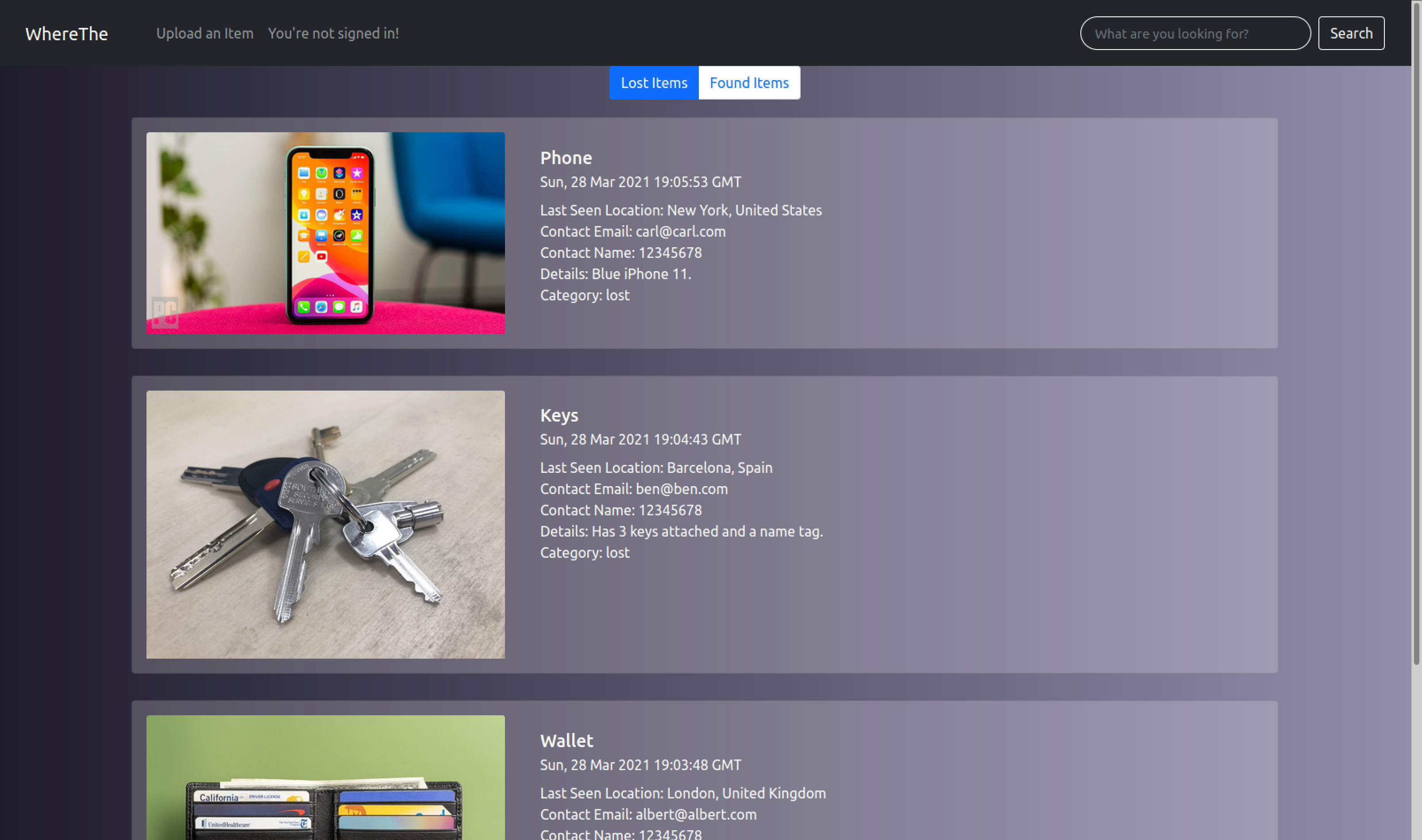
A list of all the lost items in your local area
-
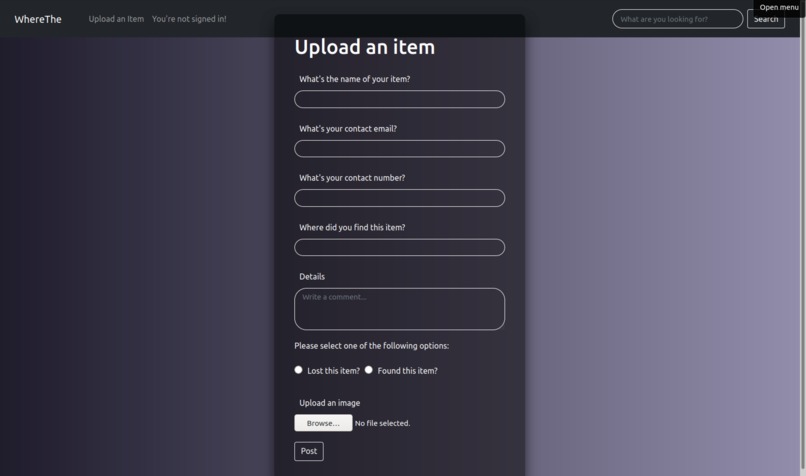
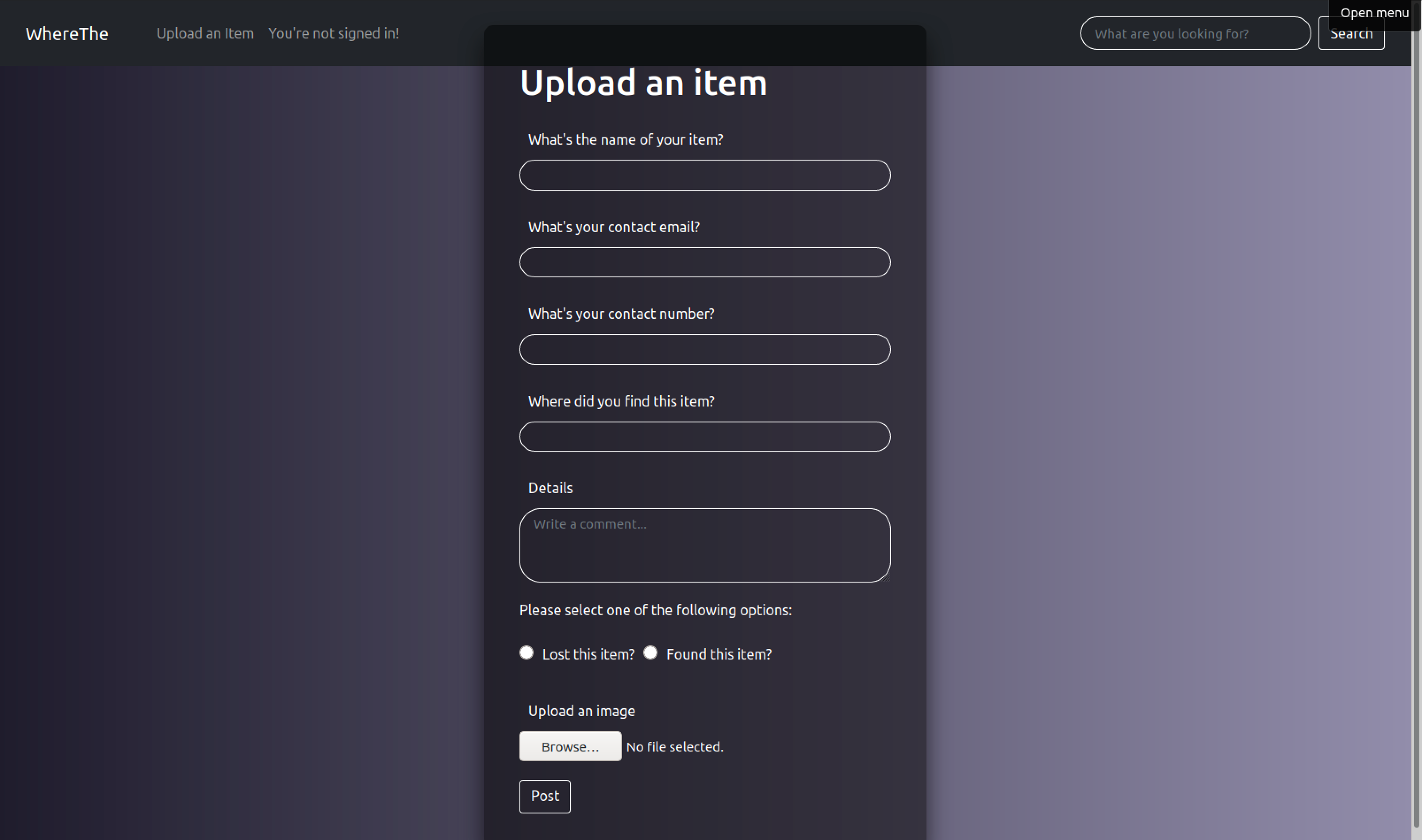
Uploading a lost or found item
-
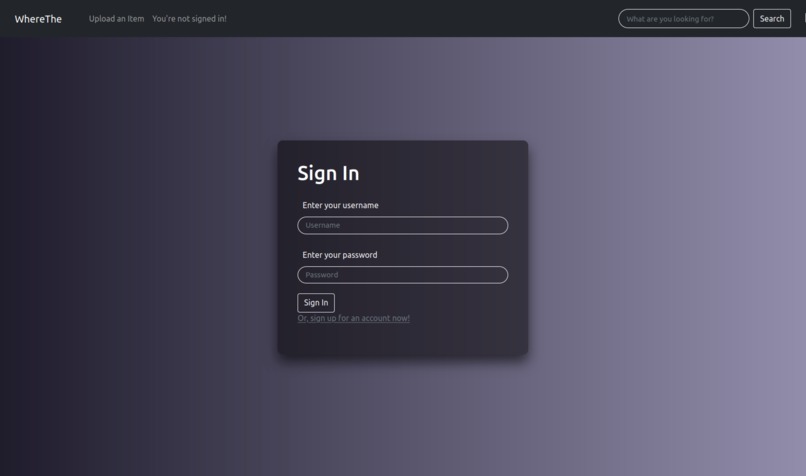
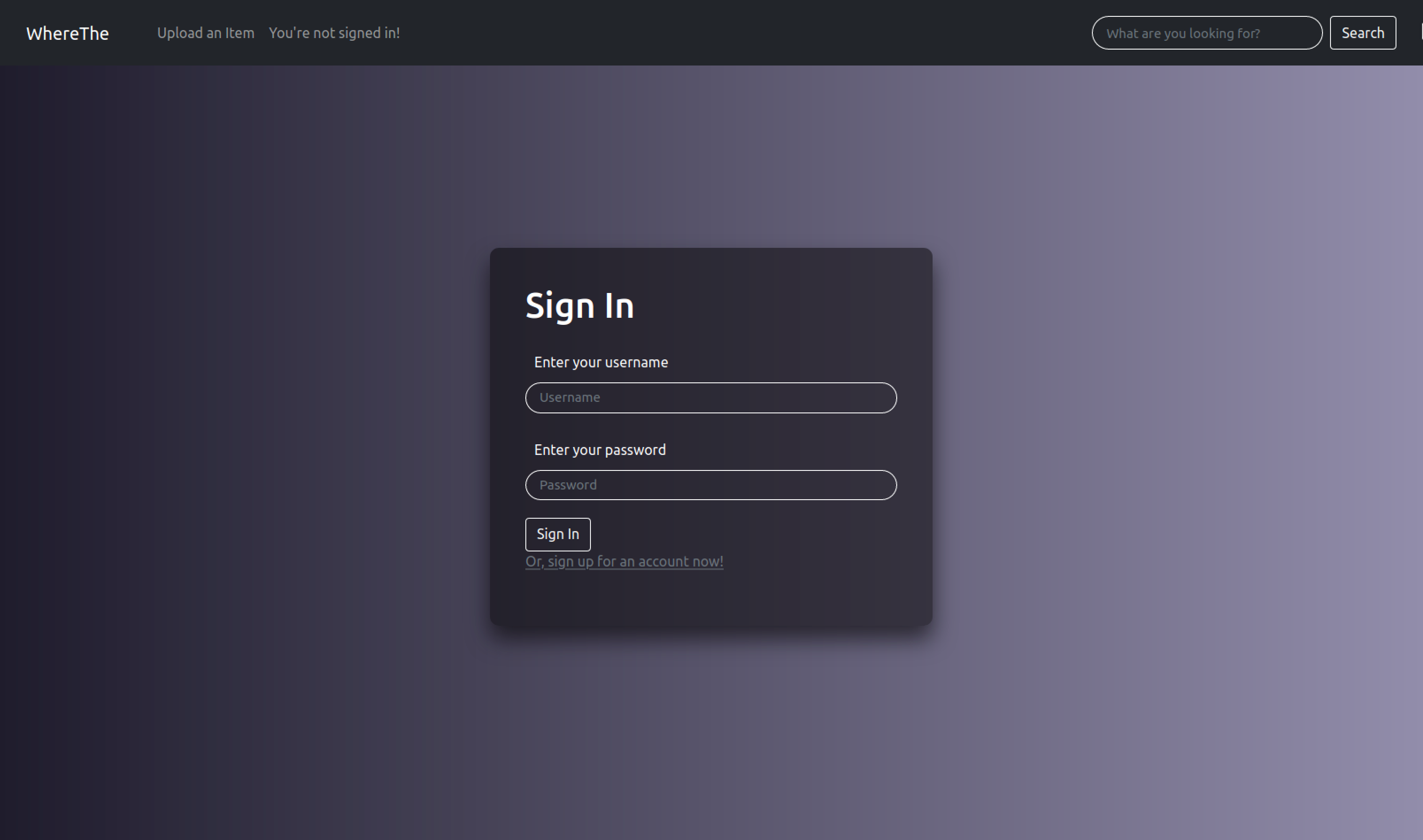
Sign-in form for users
Inspiration
Our aim is simple: We believe that there is a need for a platform where people in local areas can report lost items, such as wallets, phones, keys etc., and notify others of located items that are potentially being found. We realise that there is an even greater demand for such a platform during times such as the COVID-19 pandemic, where traveling freely and attempting to retrace your steps may not be as easy a task as usual. We believe that with WhereThe, people can locate their lost valuables more easily through this additional virtual medium, and connect with the people who helped find these items with minimal exposure, in the interests of health and safety.
What it does
WhereThe is a minimalistic web app platform that allows people in local areas to upload entries of potentially lost items, and for others to find items that they have lost. Each listing contains an image preview, the date and location at which the item was found, and the contact details of the person who found it. Users can search for specific items using the search bar.
How we built it
We built the front-end using React and Bootstrap, and the back-end using Flask and SQLite3. The back-end contains a database with a list of users on the platform and a list of items that are either lost or found. Instructions on how to run the front-end and back-end are described in the GitHub repositories linked below.
Challenges we ran into
We spent a lot of time learning and getting the hang of React and Flask, and thus ran into a lot of problems when trying to get the front-end and back-end to communicate properly, as well as for web site components to render properly. On top of that, we only had three people in our team as opposed to the suggested five, so juggling around the workload became more of a challenge.
Accomplishments that we're proud of
Considering that most of our team were not particularly experienced with the tools that we chose to use, we can still be proud of the fact that we managed to build a functioning MVP by the end of this session.
What we learned
It was an impactful experience, and reminded us all of the importance of clear planning, work allocation, time management and communication when designing a product within a team.
What's next for WhereThe
Due to the time constraints, there are bugs in the sign-in flow that we wished we could have ironed out. We also wished we could implement more advanced features such as location-based searching, embedding a Google Maps API into the site, user profile pages and mobile (iOS and Android) app variations of this platform.

Log in or sign up for Devpost to join the conversation.