-
-
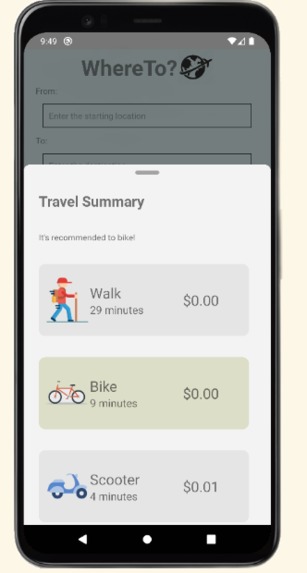
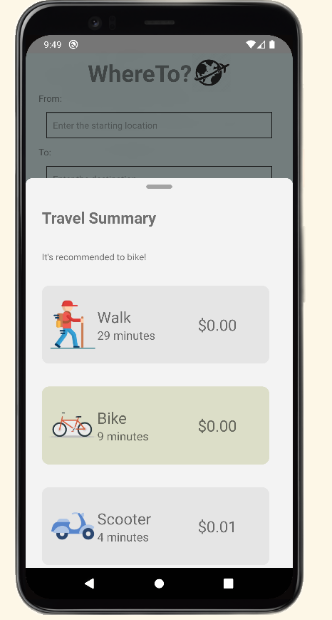
Optimized transportation methods (with costs)
-
App Banner
-
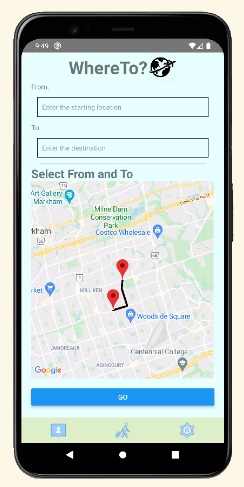
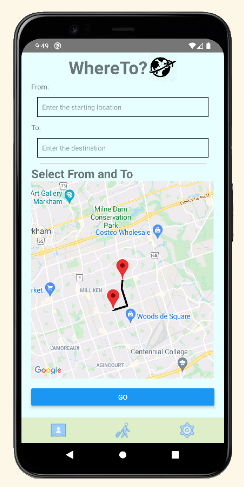
Dashboard
-

App icon

Info
Re:Three (Group 74) (Tier 1):
- Best use of cloud computing service
- Best UI/UX design
- Most innovative, idea
- Referral contest
- Draw Prizes
Inspiration
Being from Toronto, we noticed that there is an abundance of traffic and pollution in the city, so we wanted to see if there was anything we could do. One solution we came up with was to create a way to promote green transportation. But how can we convince someone to be green? How do we convince somebody to take the bus instead of a car? This is where our app, WhereTo, comes in.
What it does
WhereTo aims to save the user's time and money by optimizing their method of transportation while also promoting the green methods of transit. It recommends the fastest AND cheapest way to get somewhere by optimizing the relationship between time and money, while keeping in mind the environmental impact of each mode of transportation.
How we built it
In the planning stage of our app, we used Figma to collaborate our ideas, and create sample pages. To build our app, we used React Native for the front-end, and Javascript and Google Cloud for the backend. To display and map out the optimized route for the user to take, we used a cloud service: Google Cloud’s Maps API.
Challenges we ran into
One huge setback we ran into while creating the app was having the phone emulator we were using, Android Studio, to work in the first place. To fix this issue, we had to try many different solutions found on the software documentation until one of them finally worked. Another challenge we had when creating our app was that we had accidentally committed a broken version of the app through Git, so we had to roll back on a couple of our commits to a working version, and stash the changes that we had made up till then.
Accomplishments that we're proud of
The brainstorming process was efficient and easy with the use of Figma. We were easily able to collaborate and share our ideas and designs with one another. This is the first time most of us created a phone app in React Native, so developing something functional is a huge accomplishment for us. Successfully implementing a Google Cloud service was another huge accomplishment, as it is something have never done before.
What we learned
Problem solving was definitely the key takeaway in this hackathon for us. While we were able to become more familiar with the React Native framework and also with Google Cloud’s wide range of services, being able to get something functional with technologies we’ve never learnt before is a huge accomplishment. We would always be scratching our heads with the errors we would get, but became successful in the end.
What's next for WhereTo?
Some next steps that we can make on WhereTo include:
- Adding more features! As of now, WhereTo is limited in what it can do. Some features we thought of implementing are adding more methods of transportation and some way for the app to recommend methods of transportation based on their lifestyle. For example, if somebody is always biking 1km every day, the app could recommend some possible bike products that they could buy at a store near them that would enhance their biking experience.
- Adding a database and basic user authentication to have a more user-personalized experience.
- Providing a better UI and UX because we don’t want to make it difficult to promote green methods of transportation. Getting to their destination is all we want for our users.
- Lastly, we wish to implement dynamic pricing so that things like the price of electric car chargers and gasoline can adapt to the user’s area for an overall better user experience.


Log in or sign up for Devpost to join the conversation.