Inspiration
The project was inspired by team members who commute to the SF State campus via MUNI, and wanted to know how long they would have to wait before the next Bus arrived.
What it does
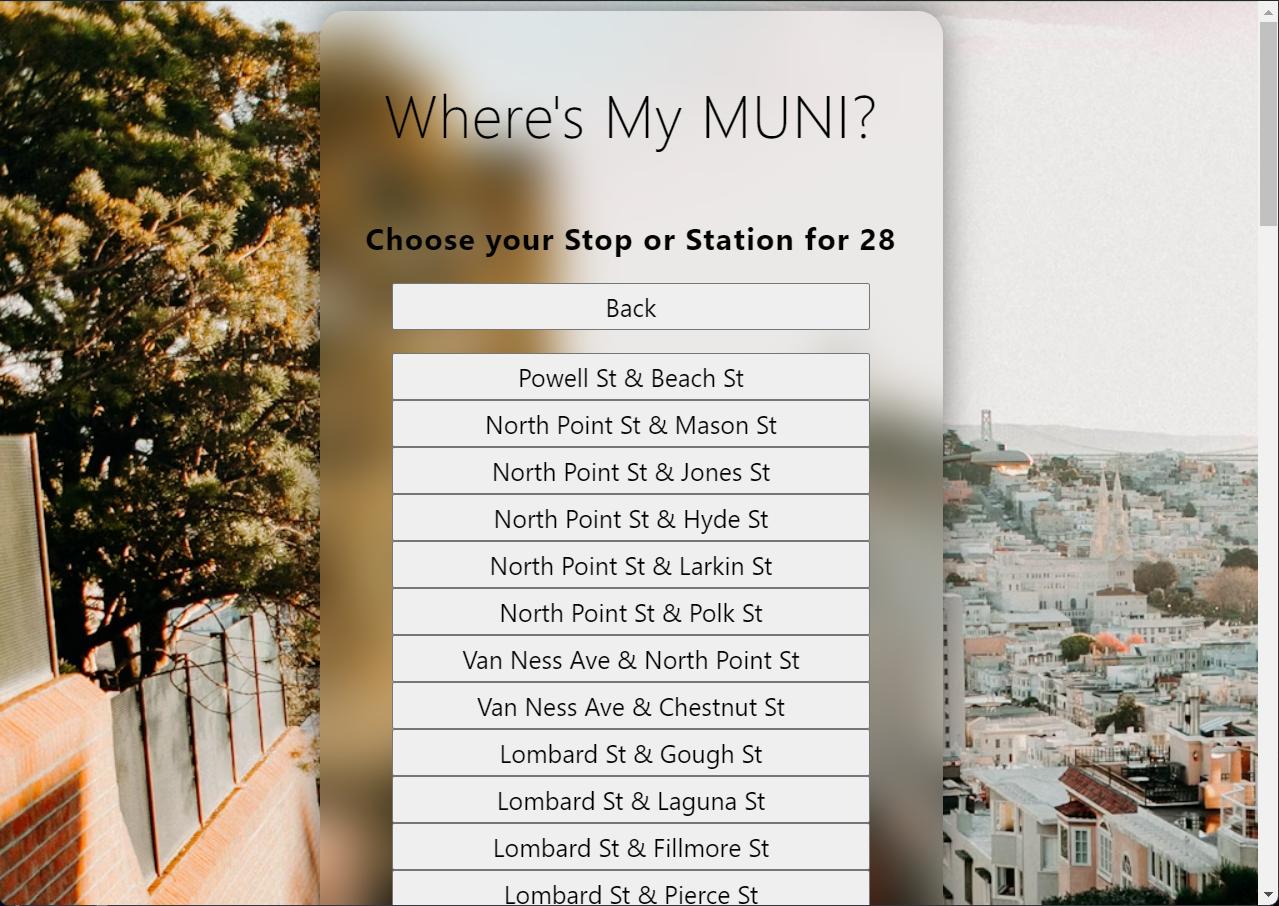
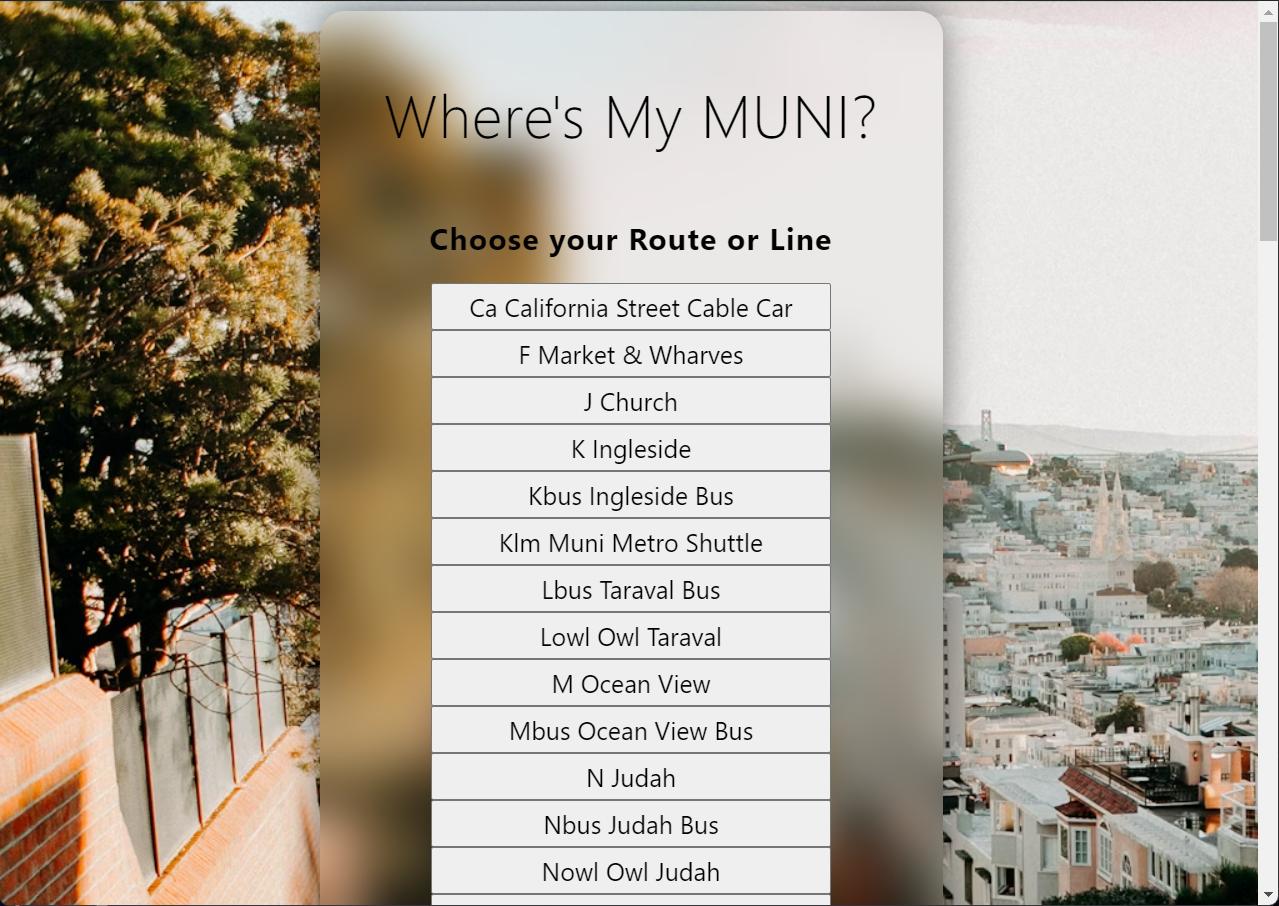
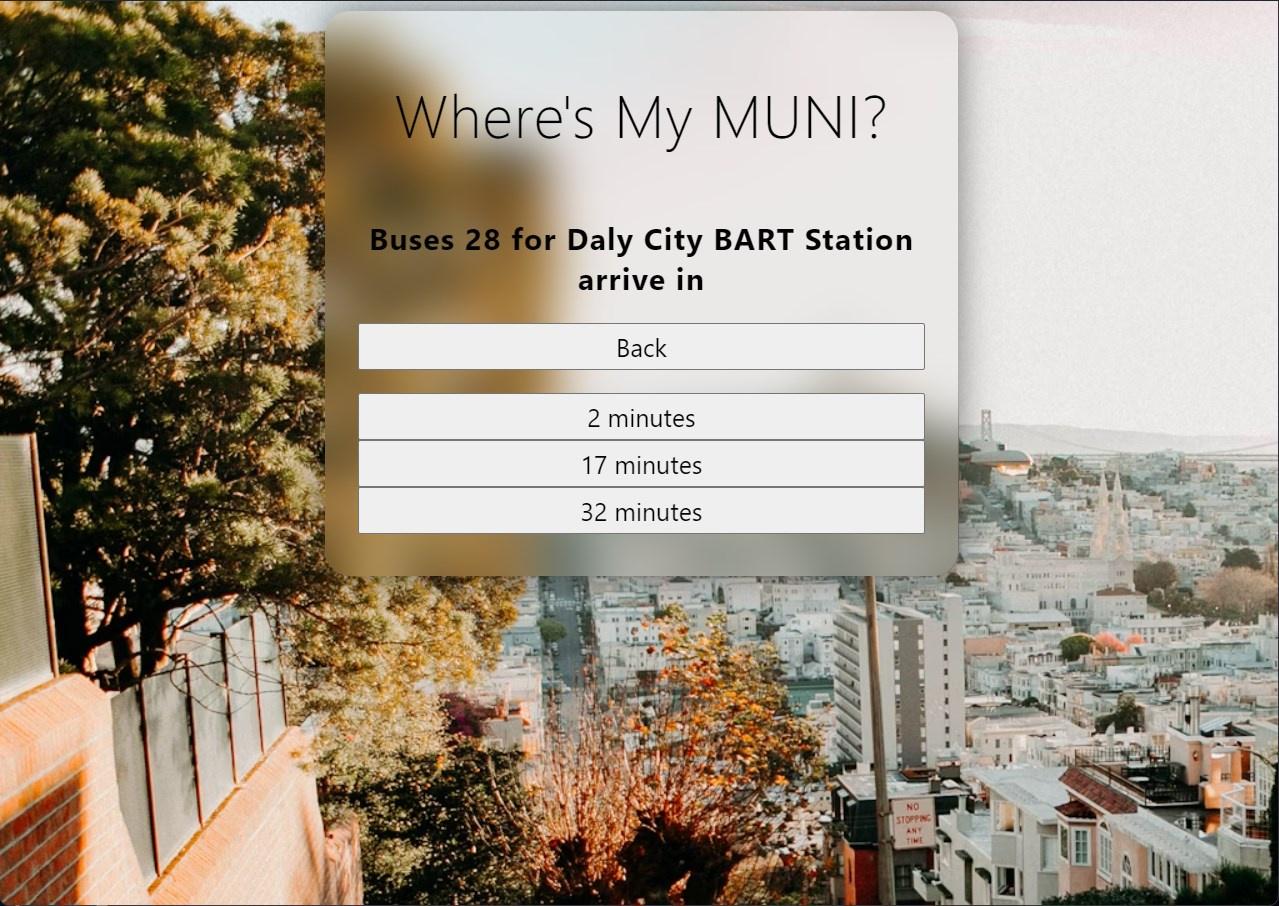
Our page requests and parses data from the Next Bus API in XML format. It asks the user to pick their route or line, and then their stop or station; then the page will display estimates for at most the next three buses that will arrive. The page shows the users selections and allows them to return to the previous form if they accidentally choose the wrong option.
How we built it
We built it using only "vanilla" technologies; HTML, CSS, and JS.
Challenges we ran into
We wanted to implement a favorites feature that allowed users to pin frequented stops and routes to the main page to allow them to quickly navigate there, but had to reduce our scope due to other class work obligations.
Accomplishments that we're proud of
We're proud of our lightweight and portable design. We wanted to keep our project pretty barebones and avoid any unwieldy frameworks, APIs, and technologies. Our project only uses 3 files, one for the HTML, CSS, and JS portions each, but the project can be condensed down to a single file with in-line declarations. Our project also does not require any hosting or domains.
What's next for Where's My MUNI?
The project can be expanded to support a favorite button to speed up the process on repeat check-ins, and a map can be added that allows users to share their location and have the page populate the nearest stations and routes to speed up the process on first-time check-ins.
Built With
- css
- html
- javascript
- nextbusapi

Log in or sign up for Devpost to join the conversation.