-
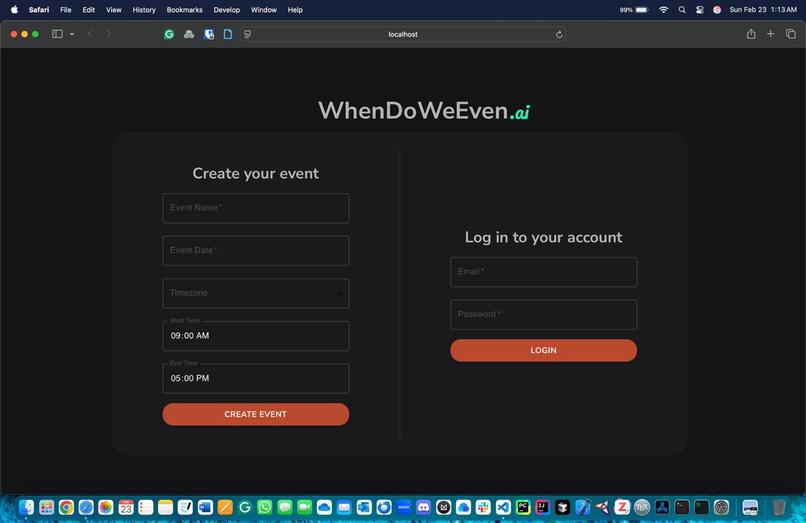
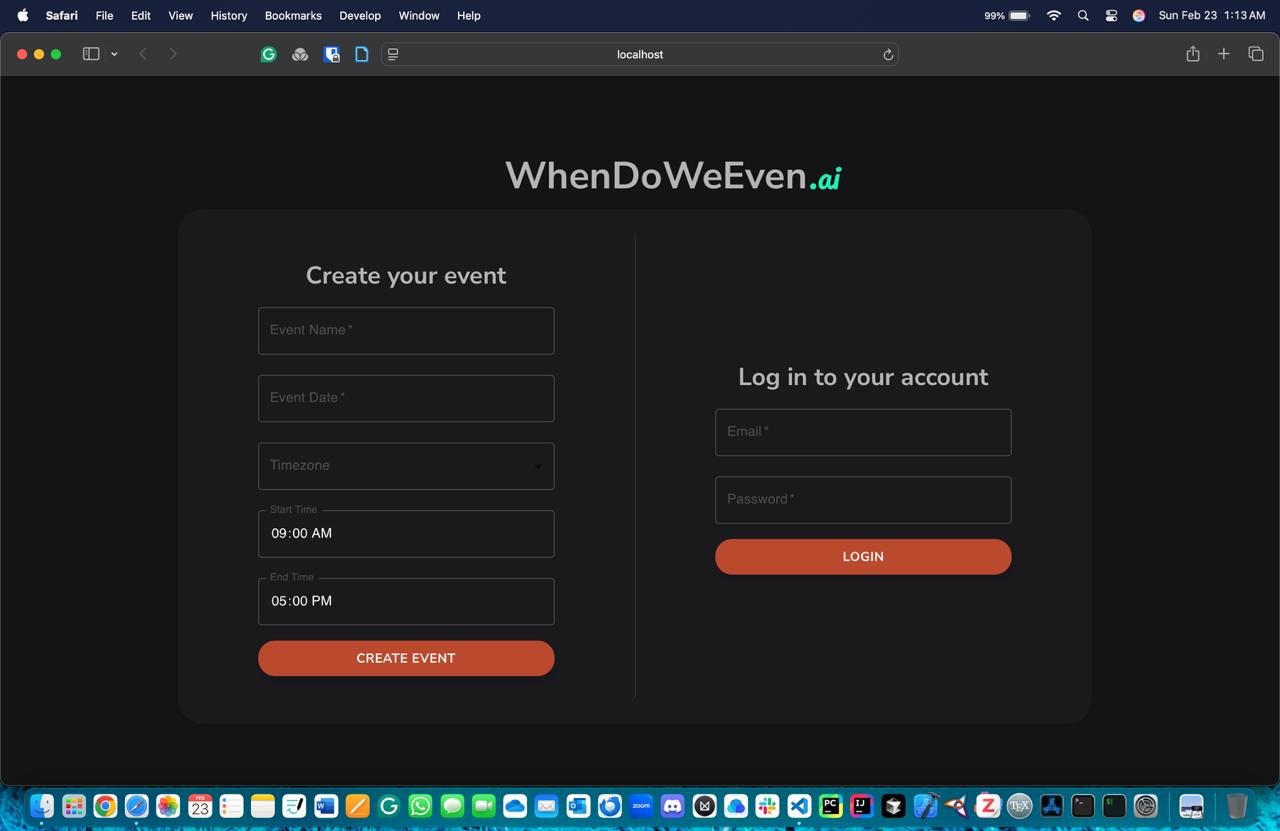
Landing Page
-
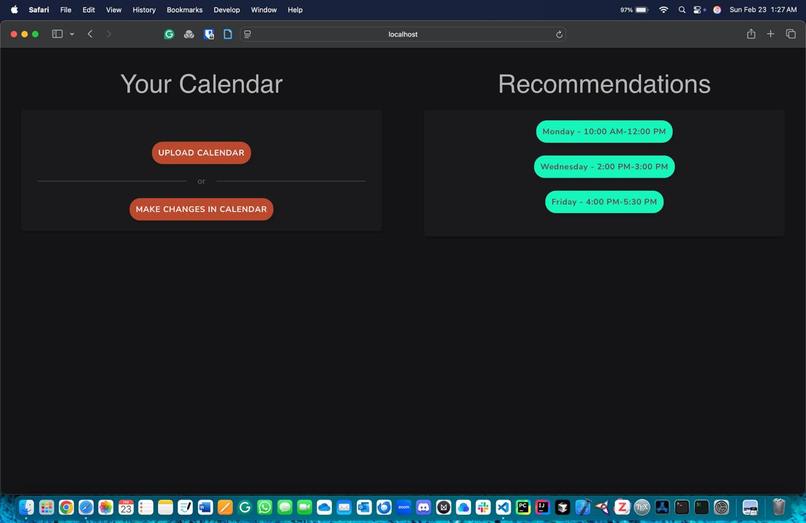
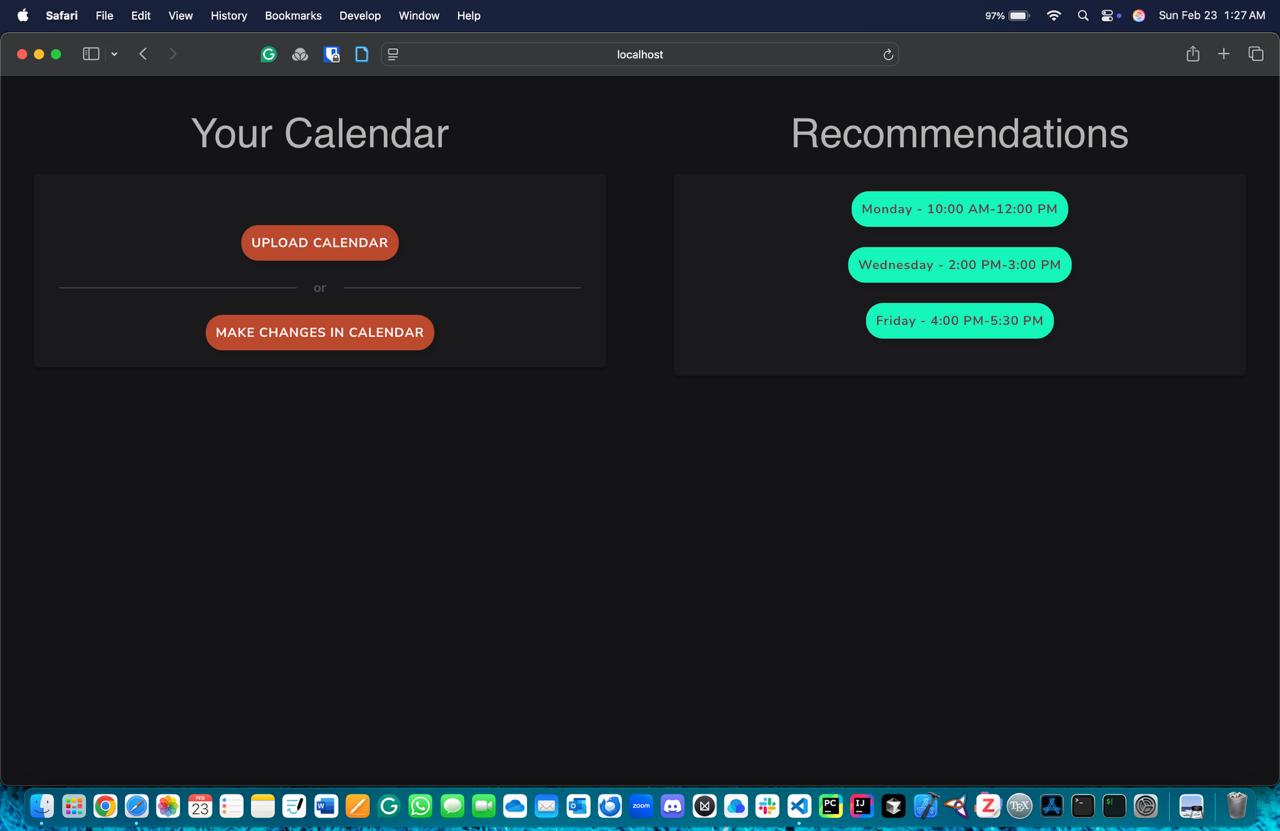
Recommendation Page & Calendar Upload / integration
-
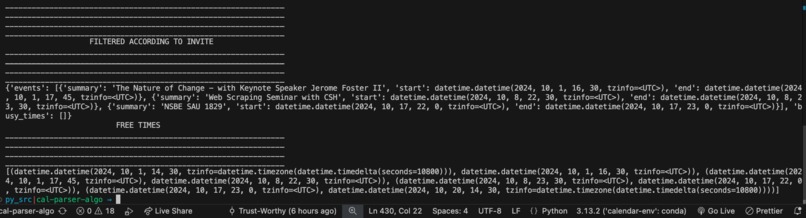
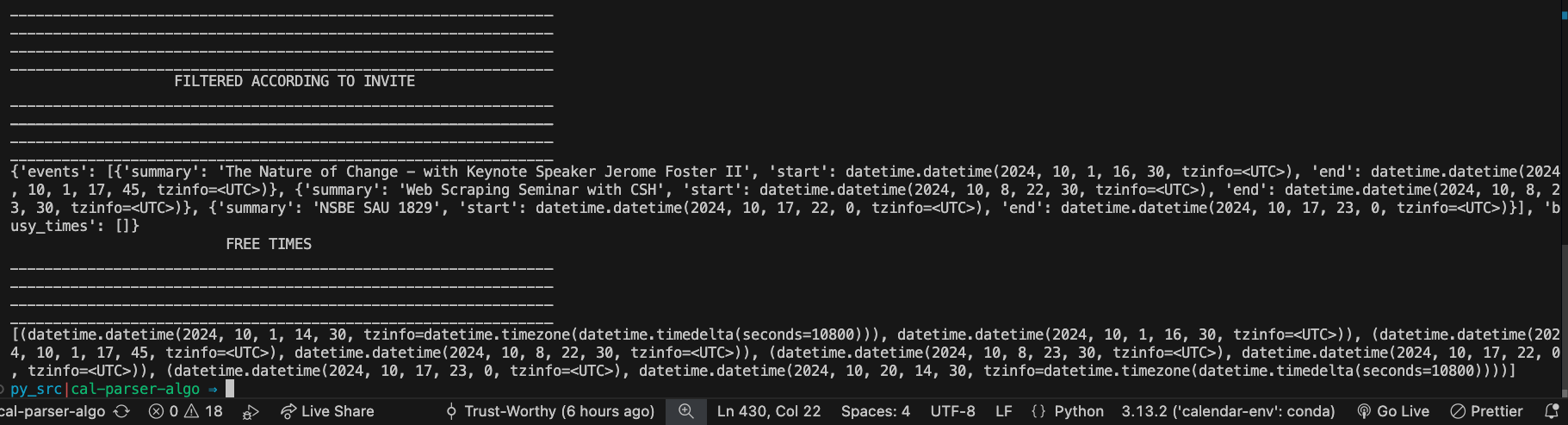
Free / available times after the sorting algorithm
-
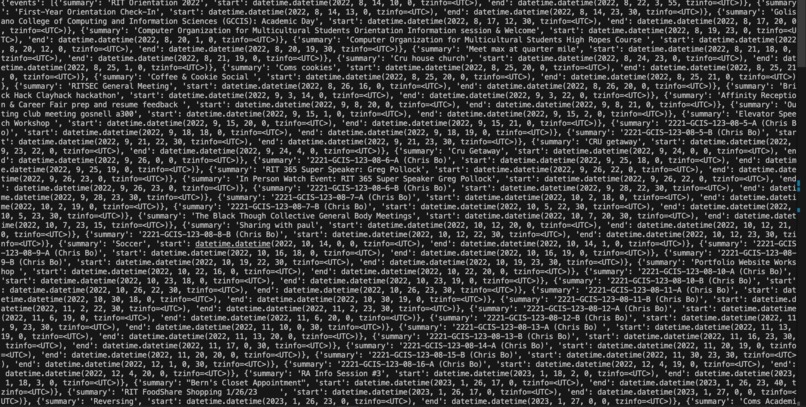
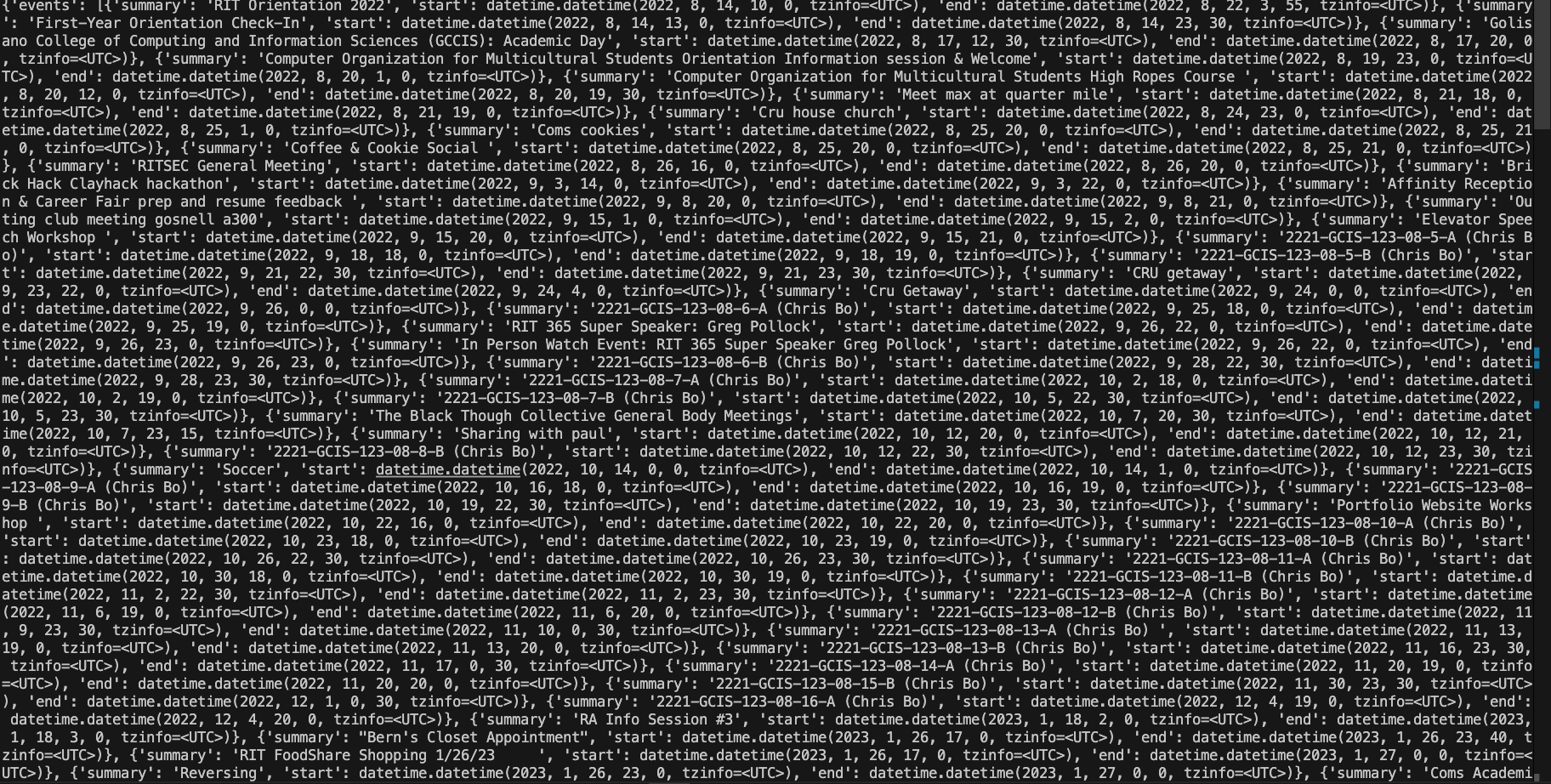
Calendar events before the sorting algorithm
About the Project
Team Members:
Anita & Angela Srbinovska – M.S. C.S Jonathan Bateman – Applied Math & Computing Security Vivek Senthil – M.S. in Ai
Inspiration:
Scheduling meetings for a group of more than 3 people, especially when those people are in different time zones, can be a nightmare. We were frustrated with the cumbersome process of coordinating times manually through emails and group chats. We noticed that existing scheduling tools like When2meet are functional but lack in aesthetics and usability. This inspired us to build a tool that addresses these issues and automates the scheduling process.
What We Learned:
Building this calendar web app taught us a lot about cross-platform calendar integration, handling time zone differences, and the challenges of integrating with various calendar formats, like .ics and iCal files. Lastly, we delved into the complexities of building a Progressive Web App (PWA) so that users can still interact with the app even when they are offline, which is critical for usability.
How We Built It:
We created a calendar web app that accounts for time zone differences and integrates with multiple calendar platforms. The app allows users to easily upload their calendars and recommends meeting times based on the availability of all participants. The user interface is designed to be intuitive and aesthetically pleasing, focusing on simplicity. The app even works offline, thanks to its PWA architecture. Our goal is to automate the scheduling process by parsing .ics files , integrating with popular calendars (google,apple, outlook), analyzing availability, and recommending the best times for a meeting.
Main Features:
Cross Calendar Platform Integration: The app can integrate with multiple calendar services, such as Google Calendar, Outlook, and iCal. Easy Calendar Uploads: Users can upload their calendar files easily, and the app will automatically parse them. Automatic Time Recommendations: The app suggests the best available times based on the parsed calendar data and the time zones of all participants. Progressive Web App: Even without an internet connection, users can still view the recommended meeting times and make decisions.
Challenges We Faced:
Designing the Recommendation Algorithm: Coming up with a efficient way of sorting through everyone's availability was one of the hardest parts of this project. Timezone Differences: One of the major challenges was handling the complexities of time zone differences between users, ensuring that meeting times were correctly adjusted. Cross-Platform Integration: Integrating with multiple calendar platforms proved to be tricky, as each platform has its own format and authentication mechanisms. Automating the Process: We wanted to eliminate the back-and-forth of manual scheduling by automatically recommending times. This required parsing calendar data, handling edge cases, and implementing algorithms that could handle real-world scheduling scenarios.
What's Next:
While the app is functional, we still have a feature in the works:
- Creating a feature for neurodivergent people schedule meetings with others who are more “right-brained.” We believe this could provide even more accessibility and ease for a wider range of users.
- Integrating a LLM like DeepSeek or Ollama for natural language recommendations based off of a group chat.
Why We Built It:
We were tired of the inefficiency of coordinating meetings through endless emails and group chats. This tool was born out of our frustration with the traditional ways of scheduling and our desire to streamline the process for everyone.

Log in or sign up for Devpost to join the conversation.