-
-
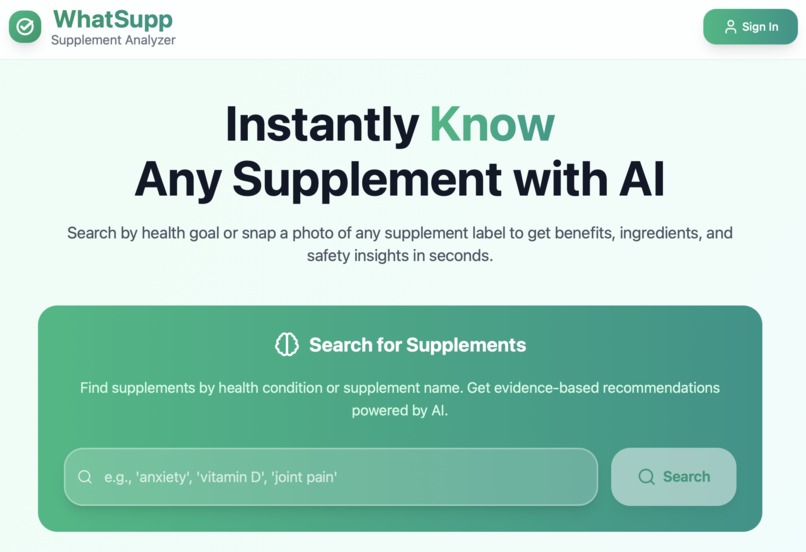
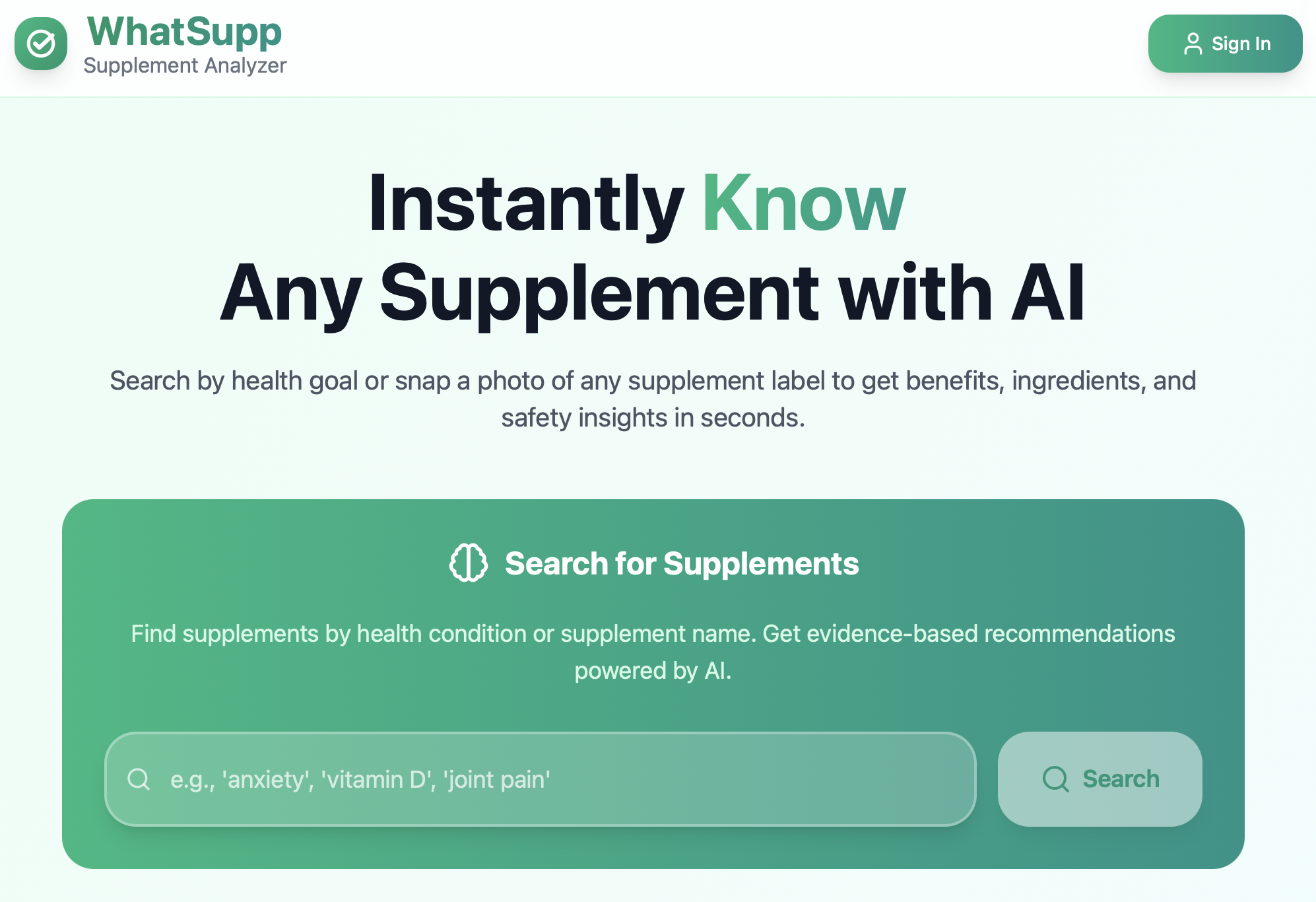
Hero and search bar
-
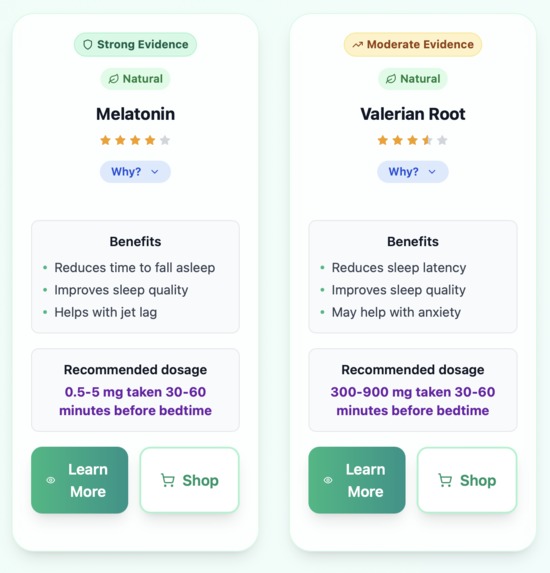
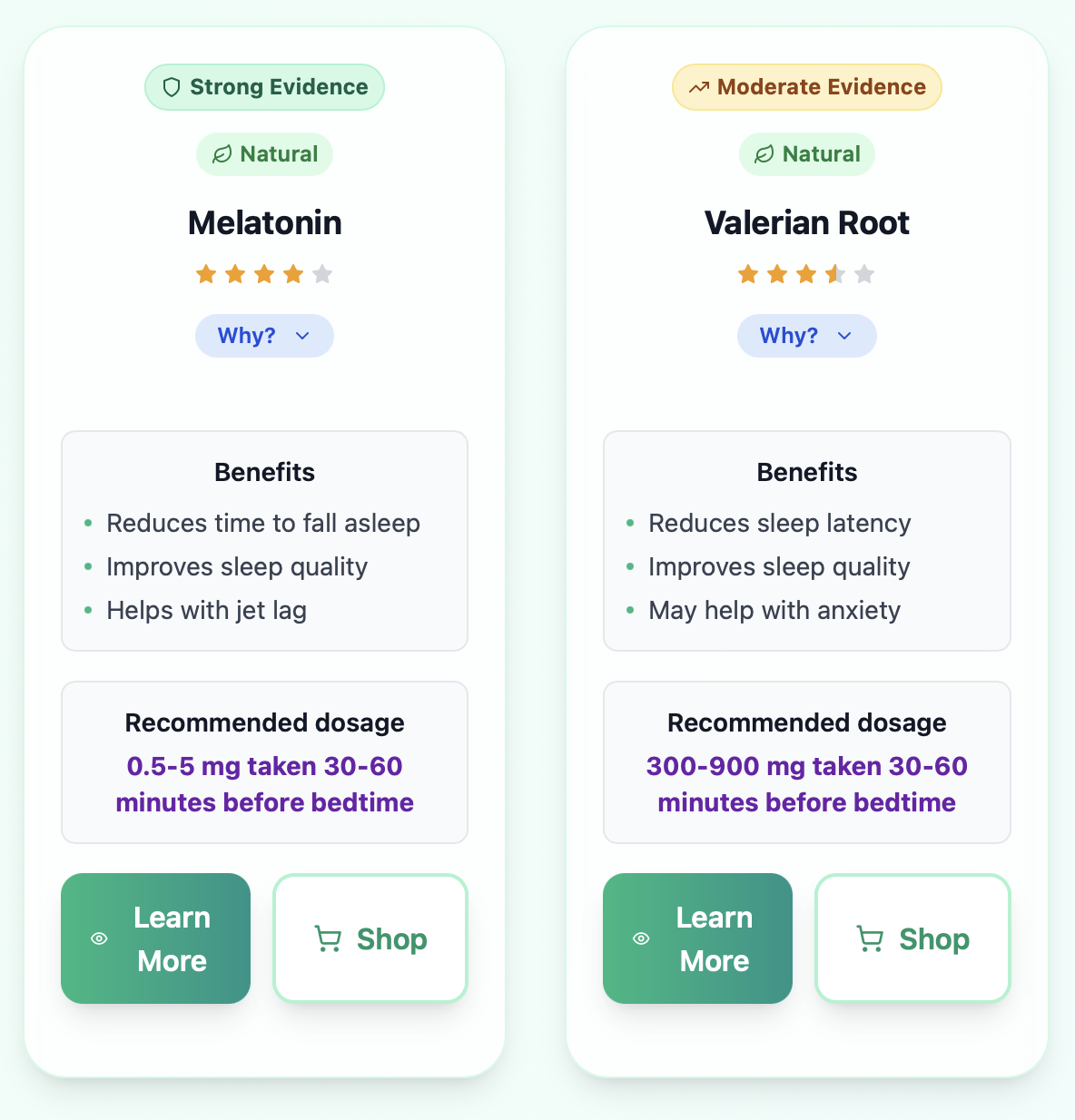
Search supplements ranked by clinical evidence
-
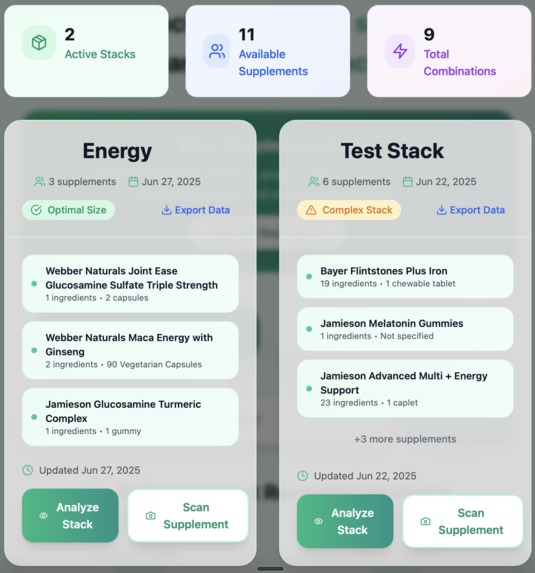
Intelligent stack management
-
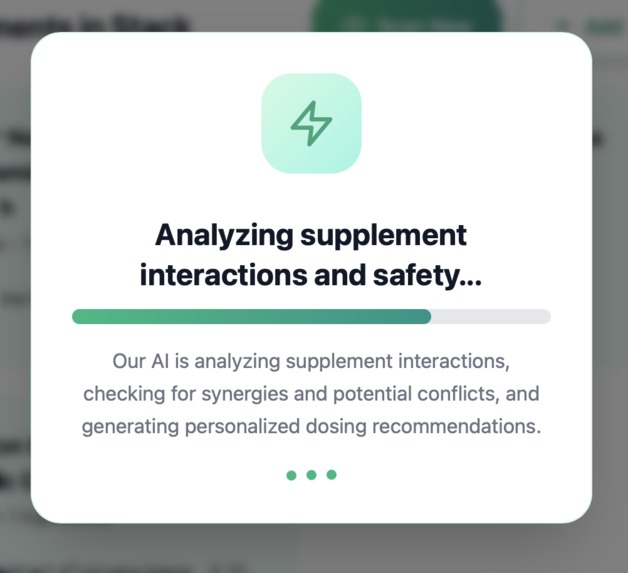
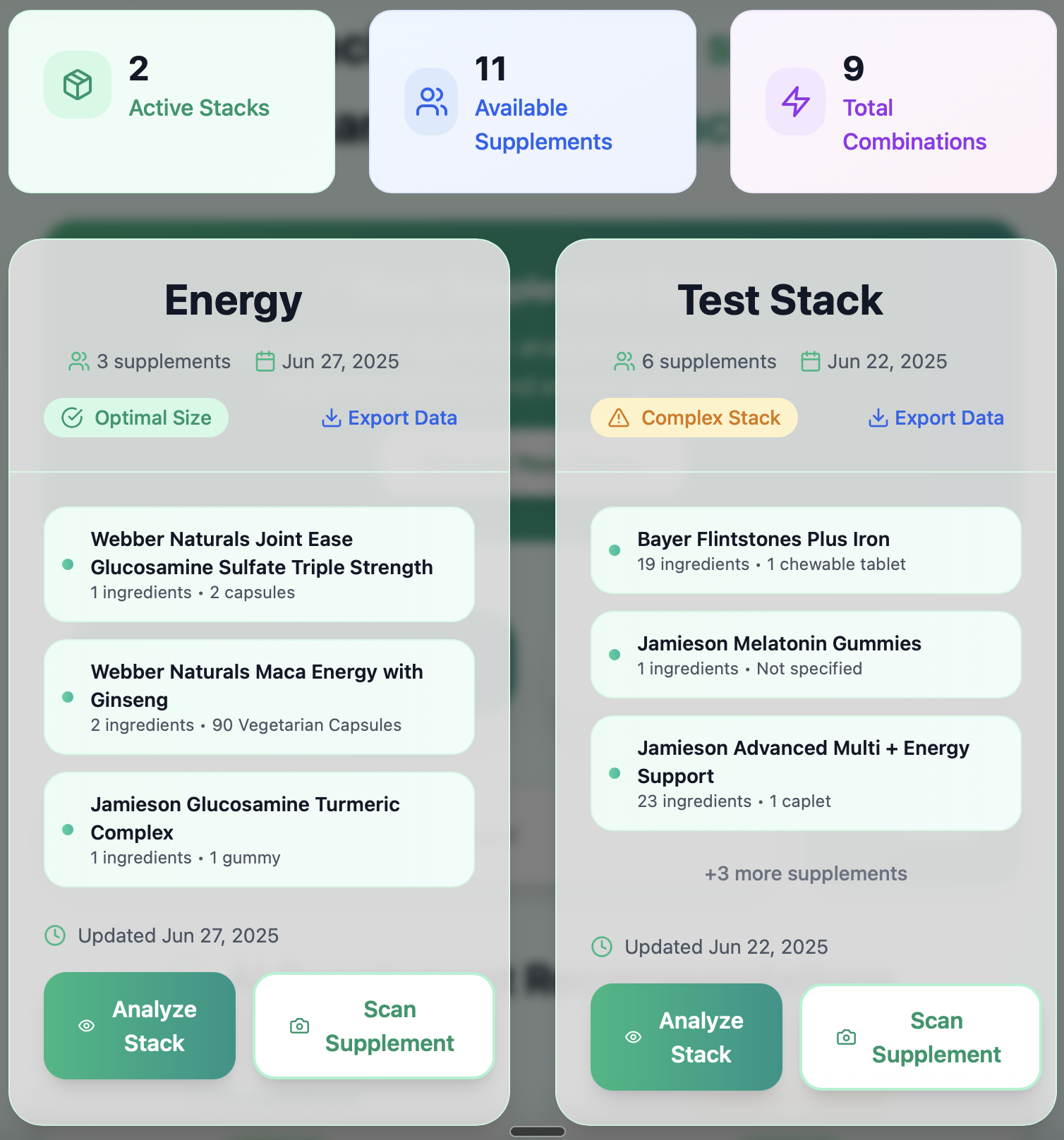
Real time analysis across your all your supplements
-
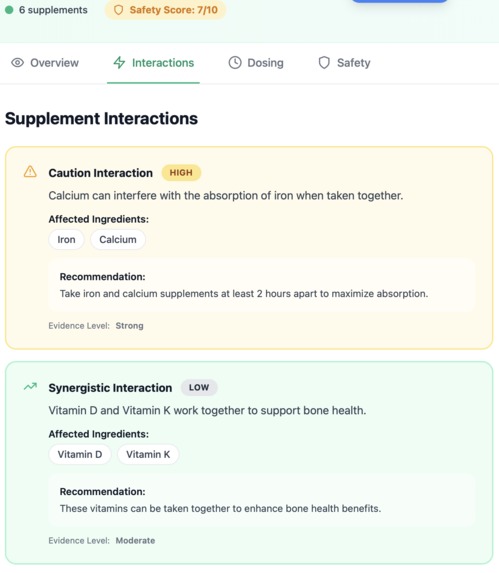
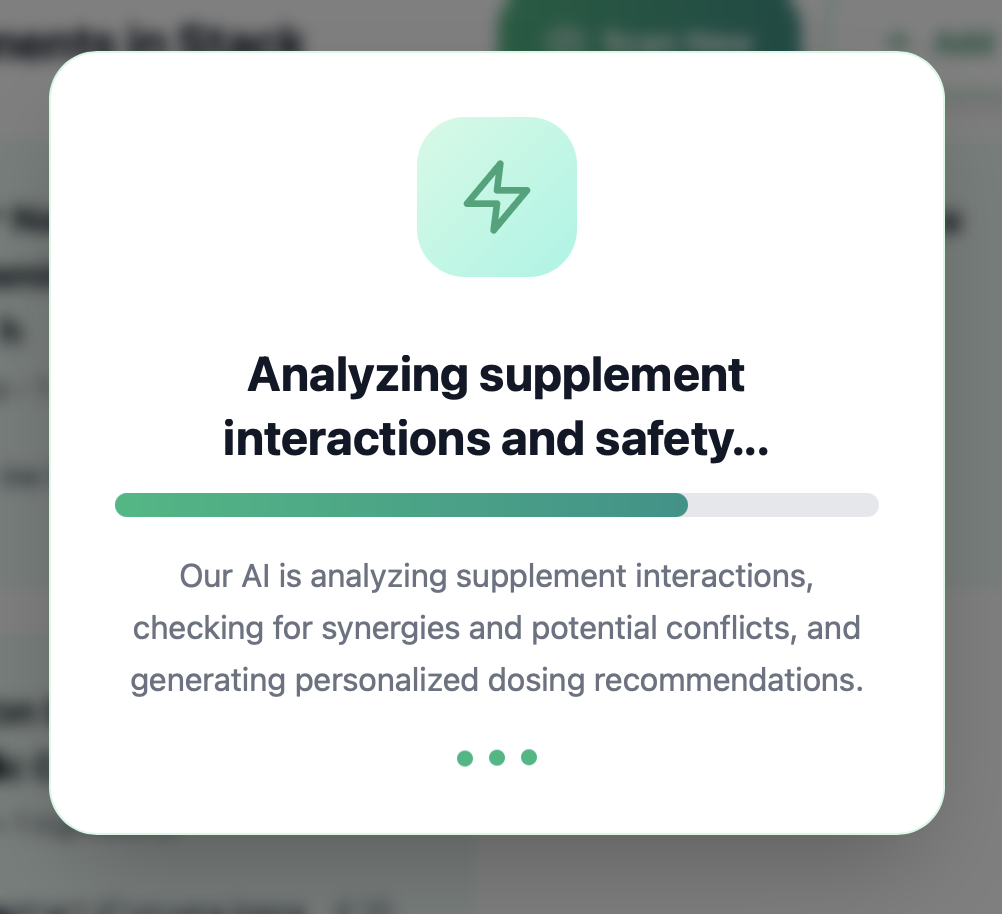
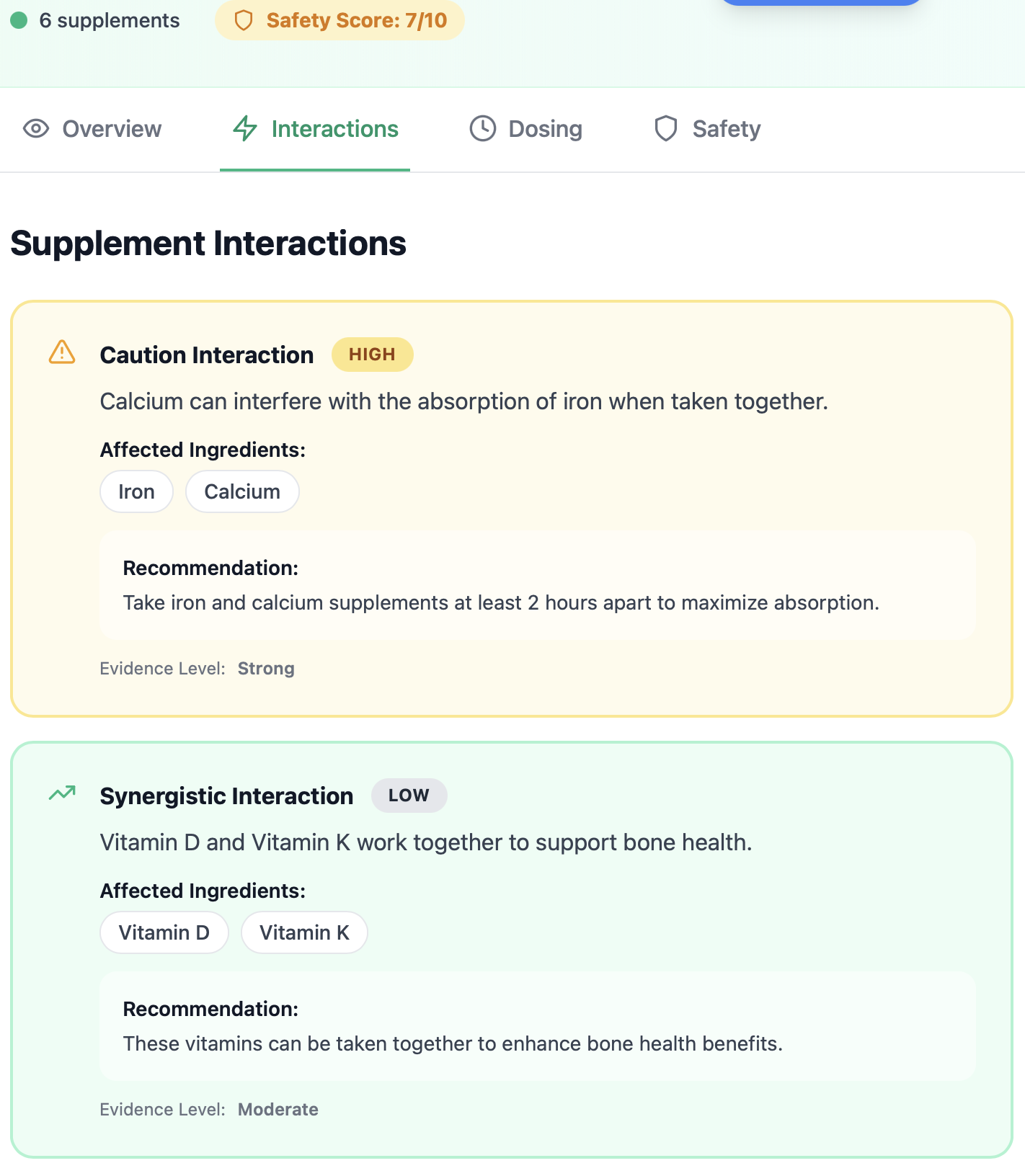
Check for interactions
-
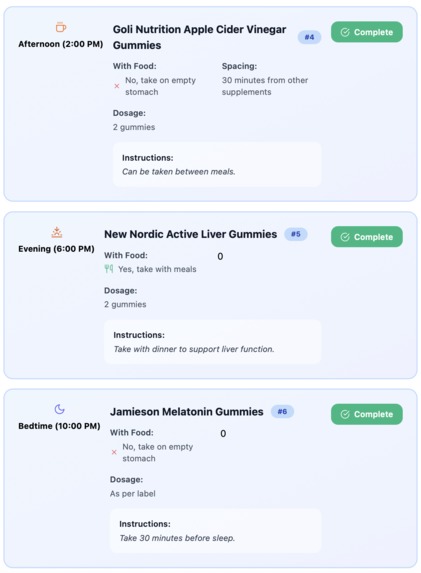
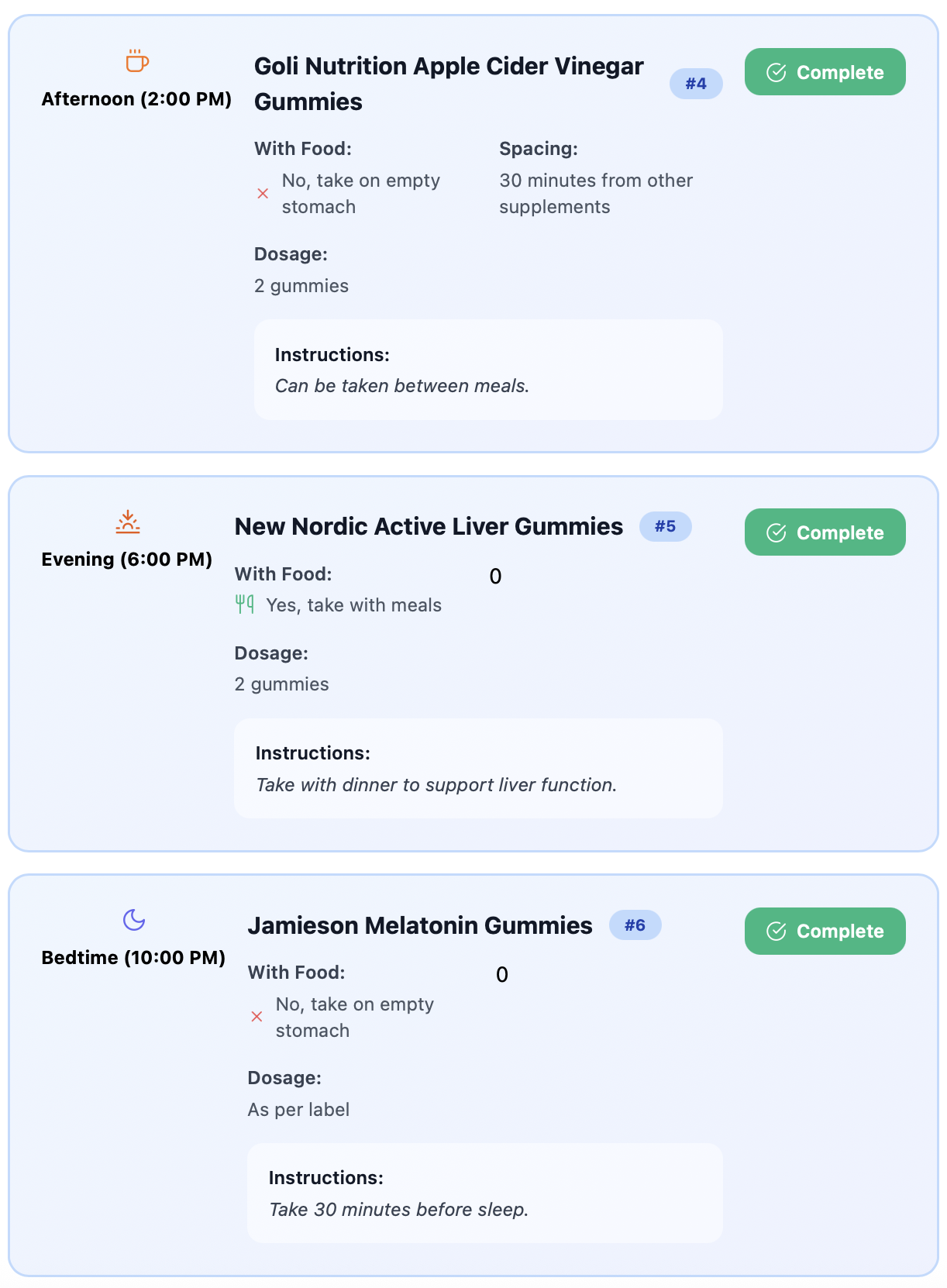
Optimal dosing recommendation
Inspiration
I’ve spent over a decade in biopharma, developing new therapies to improve health outcomes. But a few years ago, I watched a family member fall seriously ill after taking supplements recommended by an influencer. That experience was a wake‑up call: millions take supplements by listening to unscientific advice, with little oversight or data on its ingredients, or how they work with other medications or supplements.
What it does
WhatSupp is an AI‑powered platform that brings clarity and trust to supplement use. It lets users search for supplements based on health goals, with recommendations ranked on the basis of the level of evidence in peer-reviewed scientific literature. Designed to be a full platform, WhatSupp allows users to scan any supplement label to extract ingredients, dosages, and daily values instantly. Authenticated users can save scans in a personal collection or build custom “stacks” of supplements. The stacks can be analyzed for potential interactions (synergy, caution, or danger) and the user gets personalized dosing advice. Finally, the user can track daily doses with a smart schedule and easy completion tracking.
How I built it
- Frontend: React, Vite, Tailwind CSS for fast, responsive UI
- Backend: Supabase (PostgreSQL, Auth, Storage) and Edge Functions (Deno) for logic
- AI Services: OpenAI’s GPT‑4o and Claude
- Data Integration: FDA ingredient APIs (OpenFDA, DSLD) for ingredient validation and completeness
Challenges I ran into
- API orchestration: Merging label scans with FDA ingredient data and AI outputs took careful design and several redesigns of the workflow, given my learning curve with some of the software tools at the start of this project.
- Performance & UX: Refining the flow to allow seamless scanning, fast response, and smooth stack building required major UX tuning.
- Tech stack limitations: Understanding the pros and cons of Vite builds and Next.js to have best possible adoption for people searching for supplement apps.
Accomplishments that I am proud of
- I was able to build a secure backend due to RLS on Supabase and thus define policies so each user can only manage their own stacks and supplements. This built‑in security model is a strong fit handling sensitive data.
- I was surprised that I could launch the full platform at WhatSupp.Me in just one development cycle. This includes searching, scanning, and stacking supplements.
- The label parsing logic works particularly well for international supplement brands which increases the appeal of this platform globally.
- I found tremendous interest among early adopters, supplement manufacturers, and investors for this platform!
What I learned
Learned a lot about Supabase and deployments! Also, learnt the power of instant value that lets users search or scan a label before requiring signup. The importance of a clear, minimalist, and fast UX from label scanning and stack management was made clear by users juggling supplements for themselves and their family members.
What's next for WhatSupp
- I want to integrate with health trackers (e.g., sleep devices, oxidative stress monitors) to inform personalized dosing.
- I will be launching pro plans offering larger stack limits and access to certified nutritionists or healthcare professionals.
Built With
- anthropic
- dsld
- lucidchart
- openai
- openfda
- radix
- react
- sql
- supabase
- typescript
- vite


Log in or sign up for Devpost to join the conversation.