-
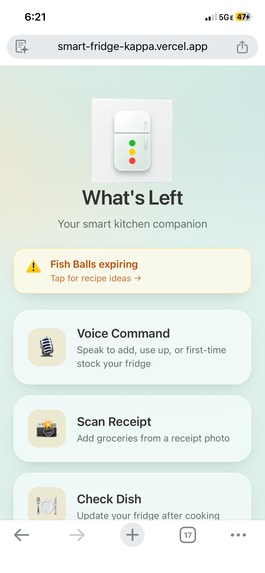
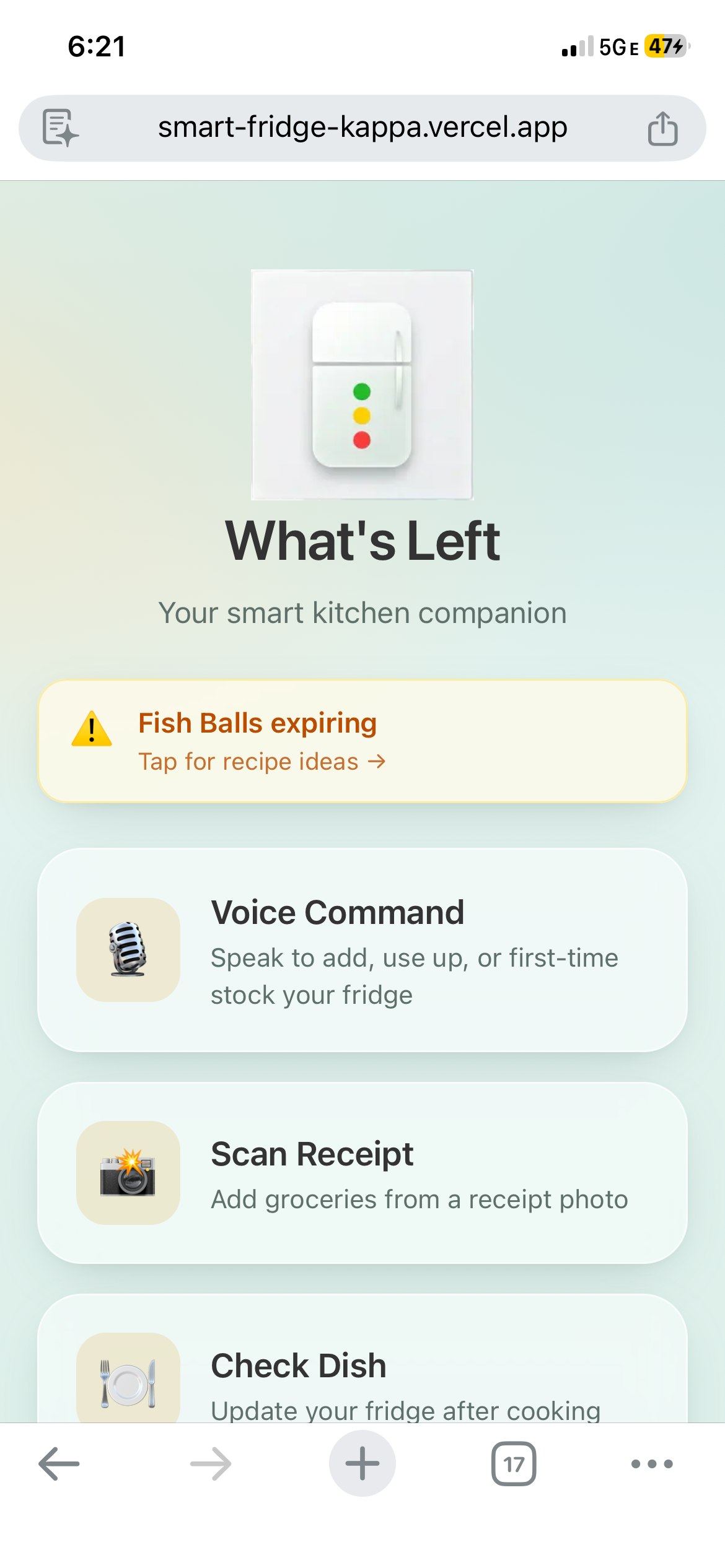
Home Dashboard: Your kitchen hub: expiring alerts, voice commands, receipt scanning, and recipe ideas, all in one tap.
-
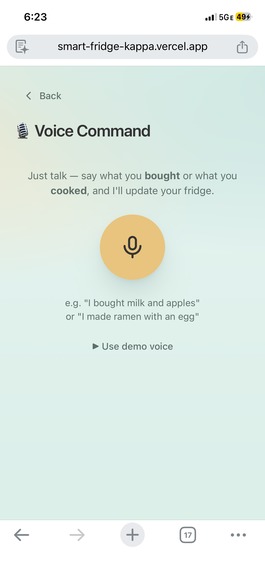
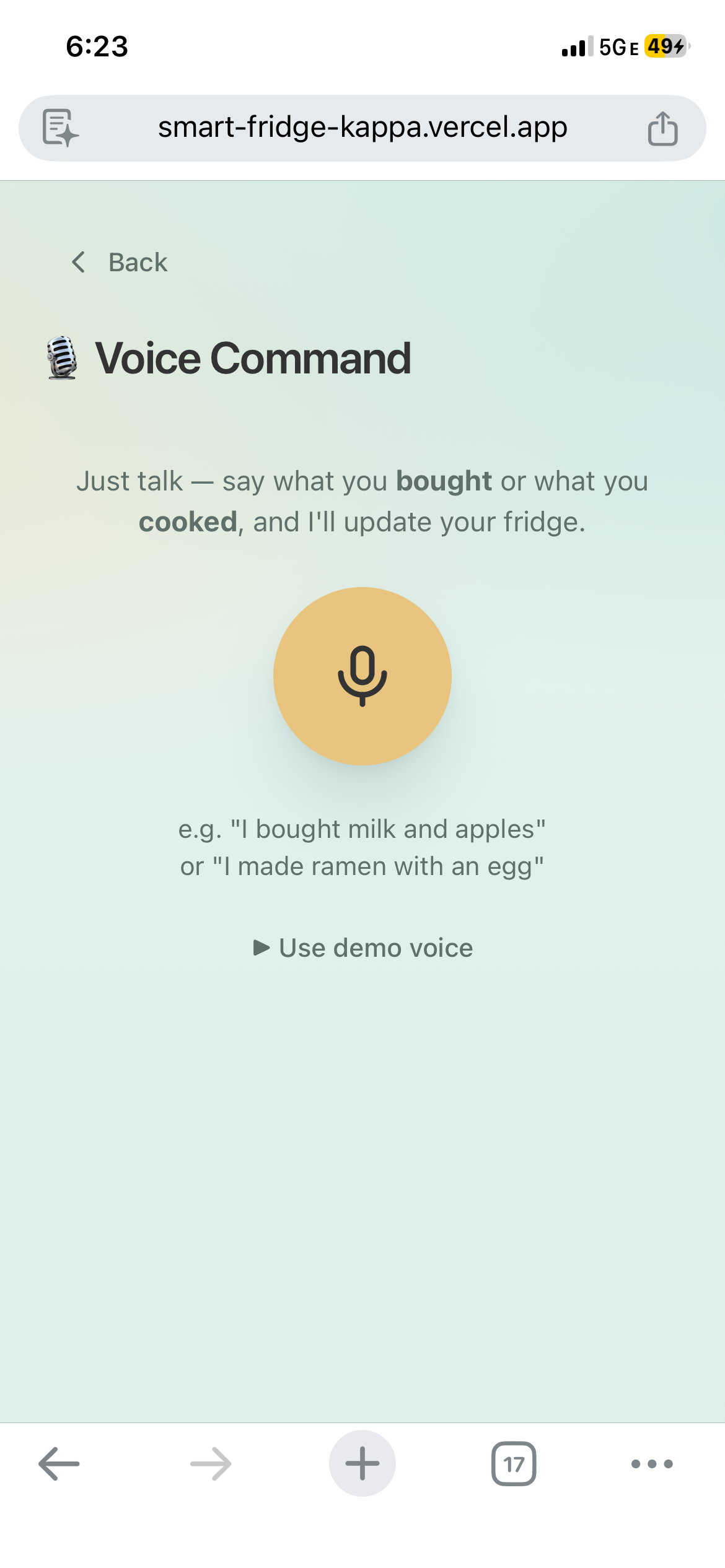
Voice Command: Just say what you bought or cooked, and What's Left updates your fridge hands-free.
-
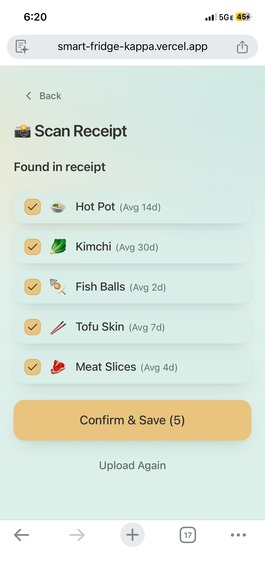
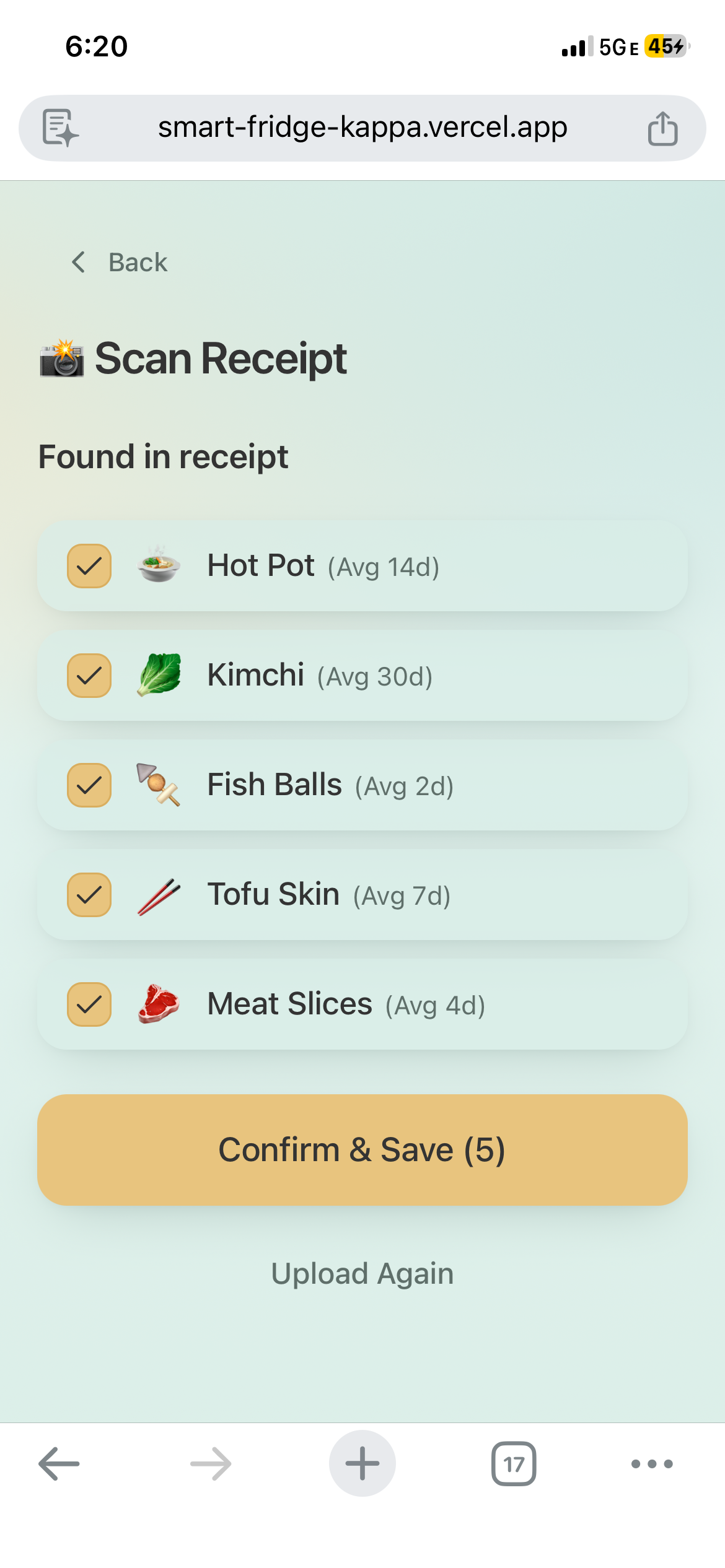
Smart Detection: AI recognizes items like Hot Pot, Kimchi, Fish Balls, and Tofu Skin — complete with estimated shelf life.
-
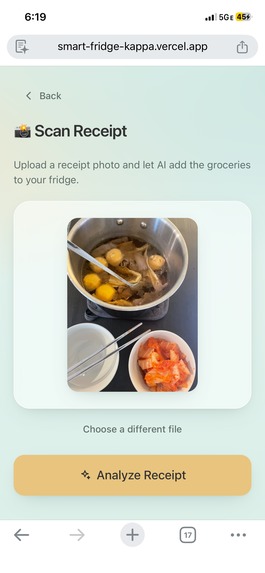
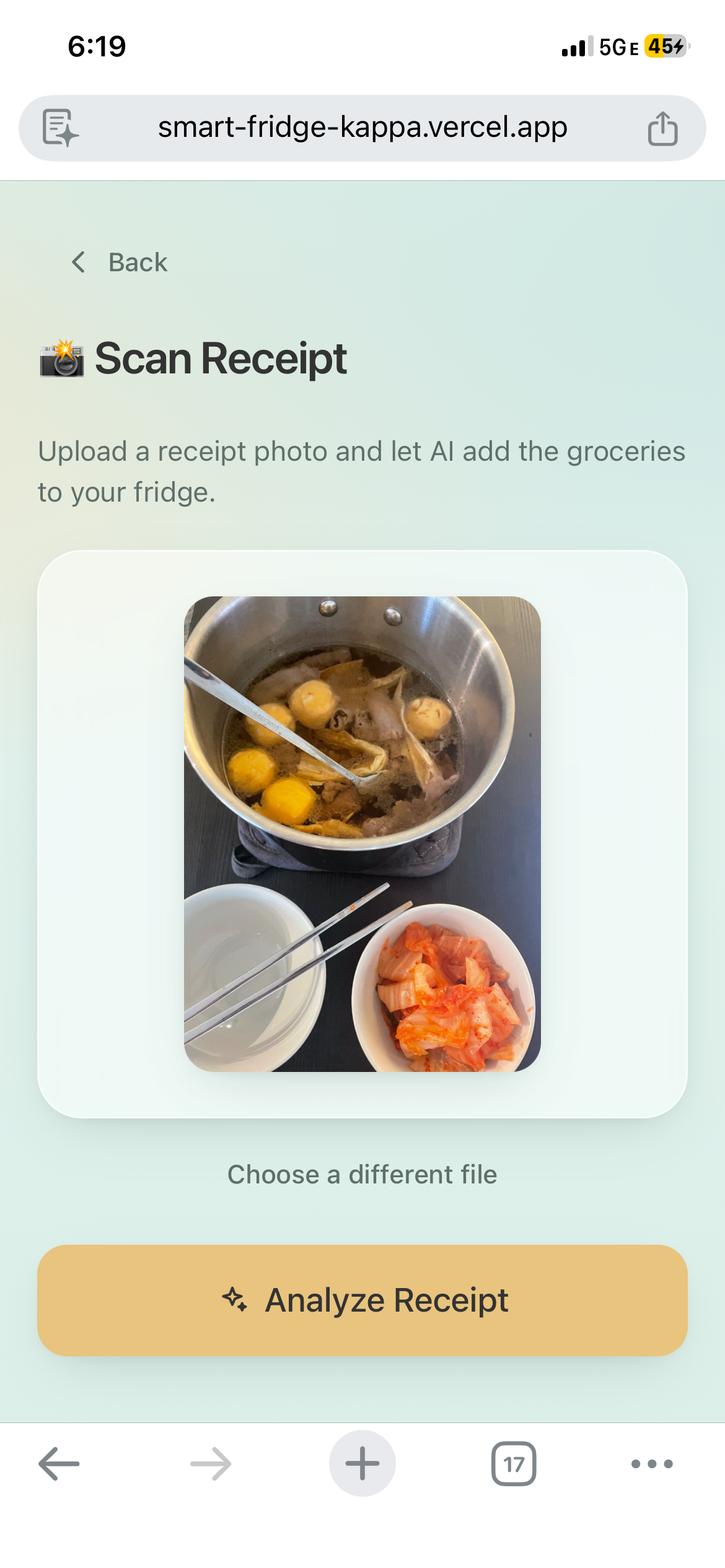
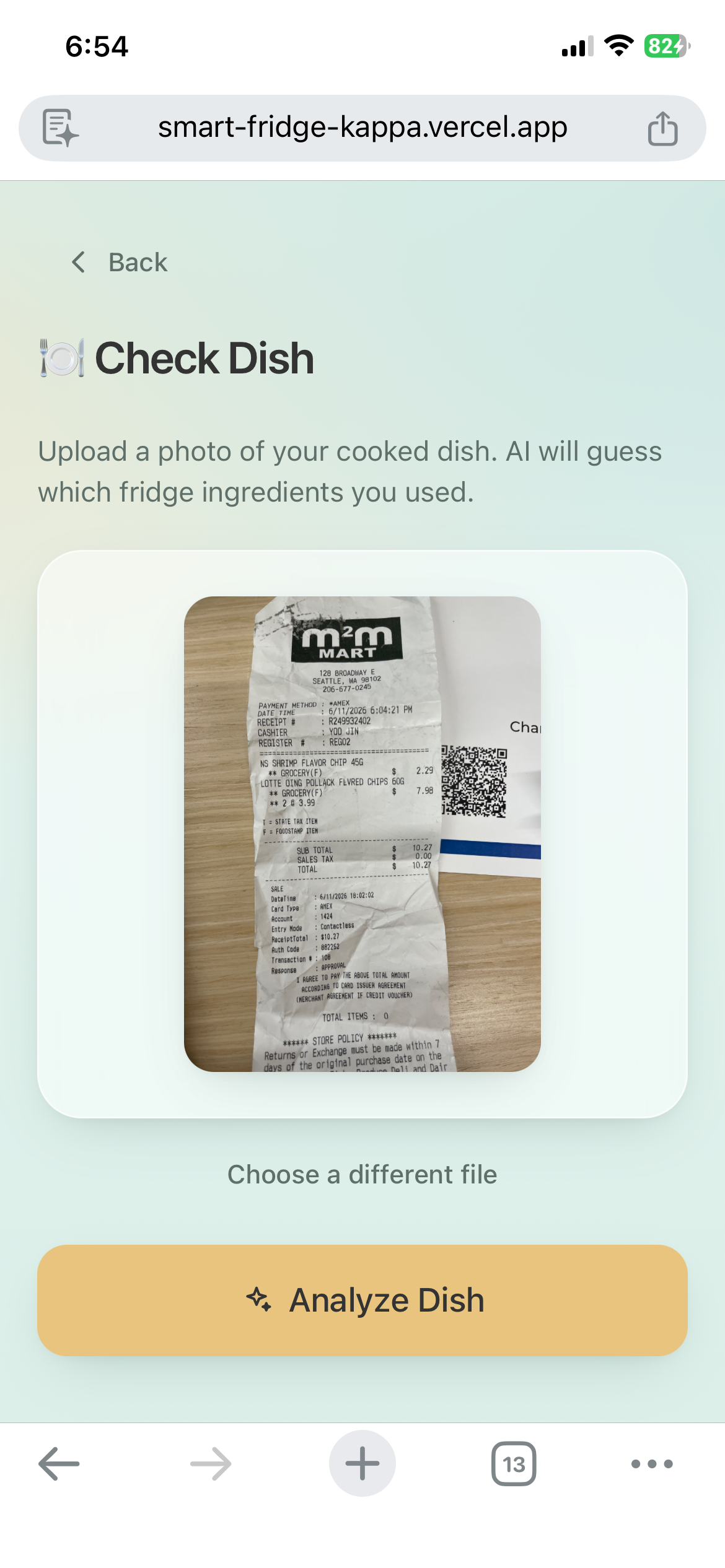
Scan Receipt: Snap a photo of your groceries or leftovers, and AI identifies every ingredient for you.
-
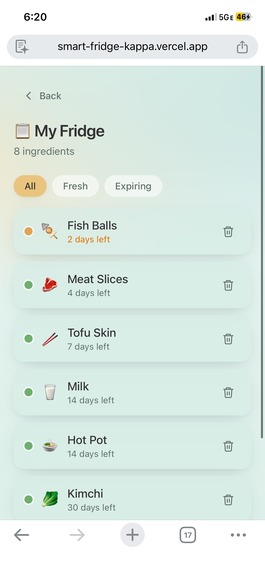
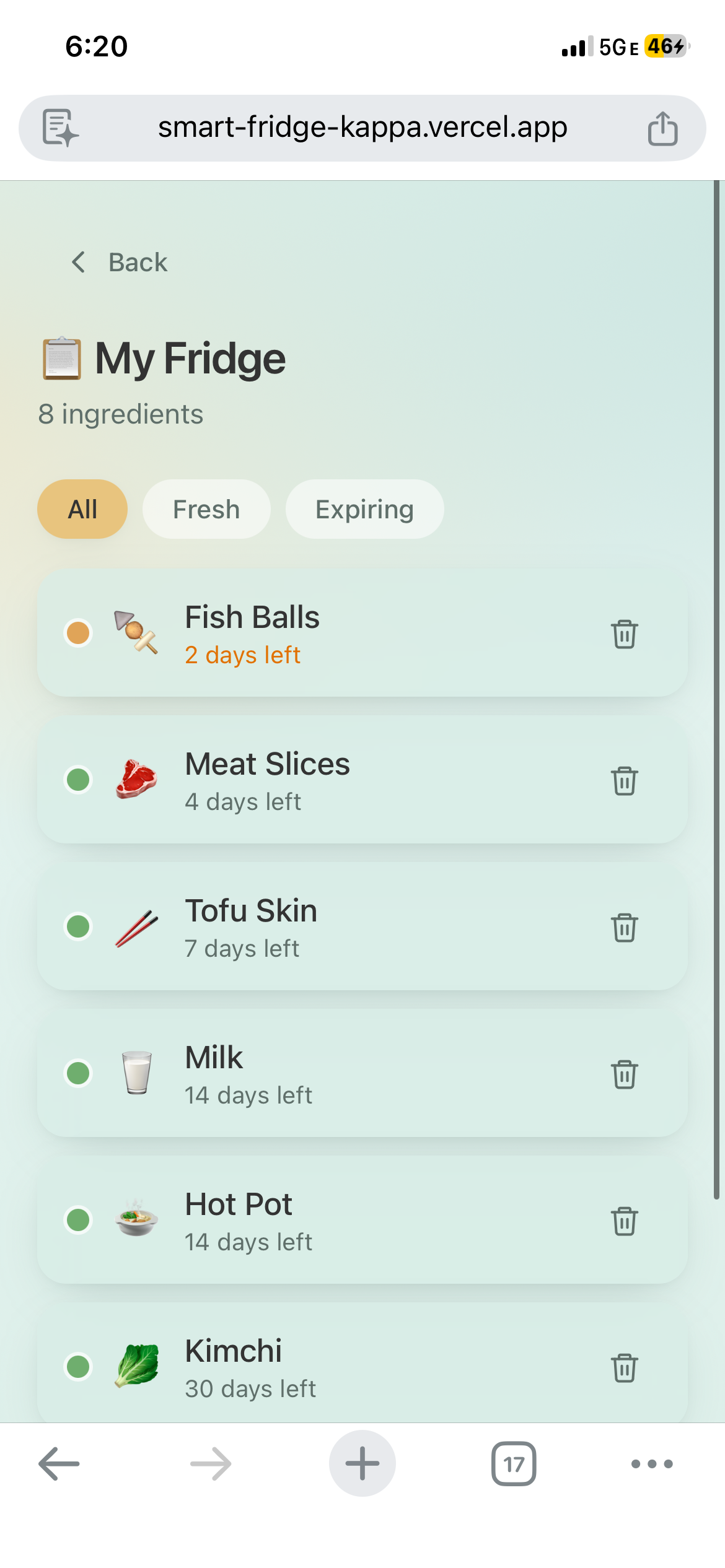
My Fridge: See everything you have at a glance, color-coded by freshness so nothing goes to waste.
-
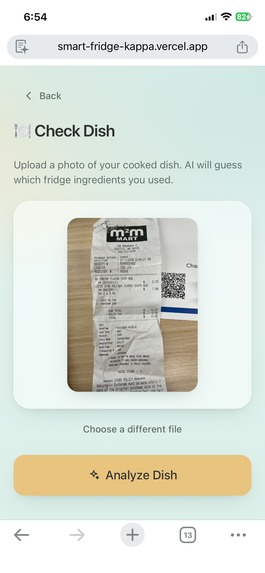
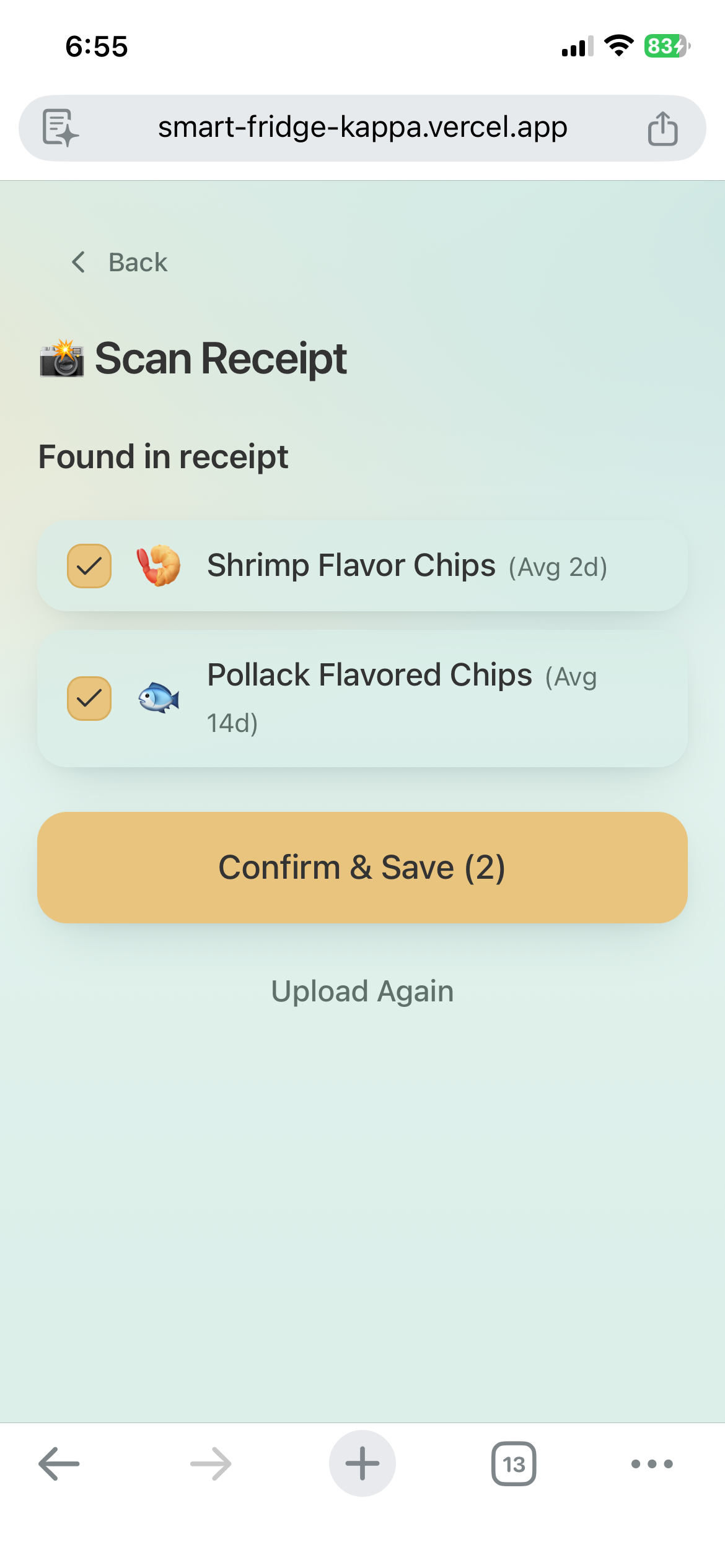
Receipt Scanning: Upload a real store receipt and let AI read every item automatically, no manual typing needed.
-
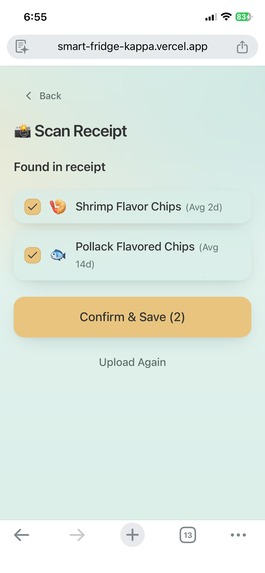
Instant Recognition: AI extracts each product from the receipt with estimated shelf life, ready to save to your fridge in one tap.
Inspiration
Roughly a third of all food produced is wasted, much of it at home simply because keeping a mental inventory of a fridge is difficult. Existing apps require users to manually type every item and expiry date, which almost no one sustains. We wanted to remove that friction entirely so that logging groceries becomes effortless.
What it does
WhatsLeft is an AI fridge assistant that maintains a live, freshness-aware inventory with minimal manual effort. Users can scan a receipt, photograph a finished dish, or simply speak ("I bought milk and apples" / "I made ramen with an egg") to update their fridge, and new users can onboard their entire inventory by voice. Each item is tracked with a freshness state, and recipe suggestions are ranked to prioritize ingredients that are about to expire.
How we built it
The entire codebase was built using Claude AI. The application is a single full-stack Next.js (App Router) project in TypeScript and Tailwind, with the frontend and API routes co-located. Google Gemini serves as the multimodal engine for receipt vision, dish recognition, voice intent parsing, and recipe generation, while a configurable voice layer supports either BizCrush streaming STT.
Challenges we ran into
A particular difficulty arose with first-time onboarding. Unlike a receipt, which is already structured and formatted data that is straightforward to parse, the contents a new user already owns have no such source. There is no receipt for what is sitting in the fridge today. To address this, we introduced voice-based onboarding. We found that speaking is a much more natural way for users to describe the contents of their fridge than filling out forms manually. This allowed new users to set up their inventory quickly and with minimal friction, creating a smoother onboarding experience.
Accomplishments that we're proud of
Existing solutions have generally made adding ingredients easy, but tracking what gets consumed has remained difficult. Buying groceries naturally lends itself to a quick receipt scan, while consumption has no equally convenient capture point. By allowing users to simply describe what they cooked, we made recording consumption as effortless as recording a purchase and closed a major gap in home inventory tracking. We are especially proud that our focus on convenience reduces friction at every step, from onboarding a new fridge to keeping inventory up to date over time. By making both purchasing and consumption easy to record, we created a system that users can realistically sustain in everyday life.
What we learned
We learned that AI can make traditionally tedious tasks much simpler by turning natural inputs like photos, receipts, and speech into structured data. We also found that real user behavior is often messy and ambiguous, making user experience design just as important as the AI itself. Most importantly, solving the overlooked problem of tracking food consumption created more value than improving grocery logging alone.
What's next for WhatsLeft
We envision WhatsLeft becoming the central platform for household food management. In the short term, we plan to integrate with retailers to provide automated grocery replenishment and personalized discounts. In the long term, partnerships with smart refrigerator manufacturers could enable fully passive inventory tracking, creating a seamless experience that helps households reduce food waste with virtually no effort.
Built With
- audioworklet
- bizcrush
- eslint
- generative-ai
- google-gemini
- javascript
- next.js
- node.js
- postgresql
- react
- supabase
- tailwindcss
- typescript
- web-audio-api
- websockets


Log in or sign up for Devpost to join the conversation.