Inspiration
AI chatbots give you one answer based on one hidden assumption. If you ask "should I launch in Q1 or Q2," the model silently picks a budget size or team size somewhere in its reasoning and runs with it — you never see which assumption drove the conclusion. If you want to know "what if that assumption were different," you have to start the whole conversation over from scratch and hope the new answer is comparable. We wanted to fix that: instead of reading a static answer, what if you could open up the model's reasoning, change one assumption, and watch the answer update live?
What it does
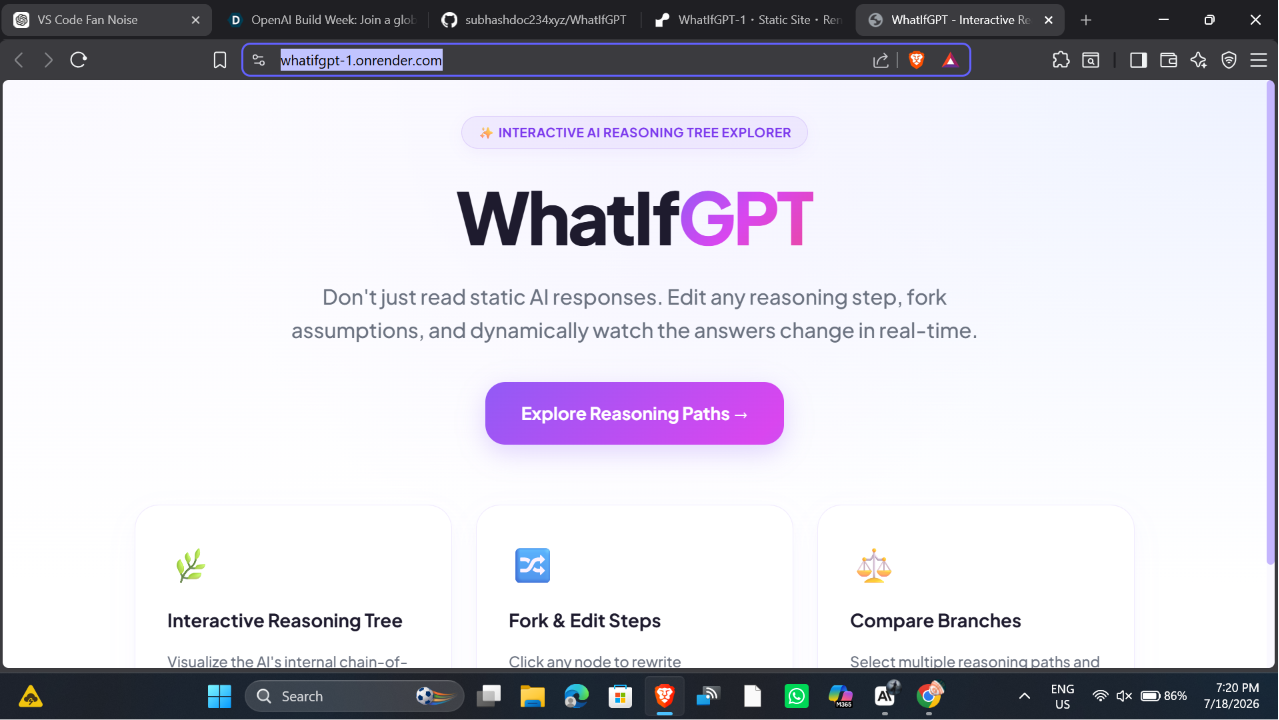
WhatIfGPT turns AI reasoning into an interactive, explorable tree instead of a wall of text.
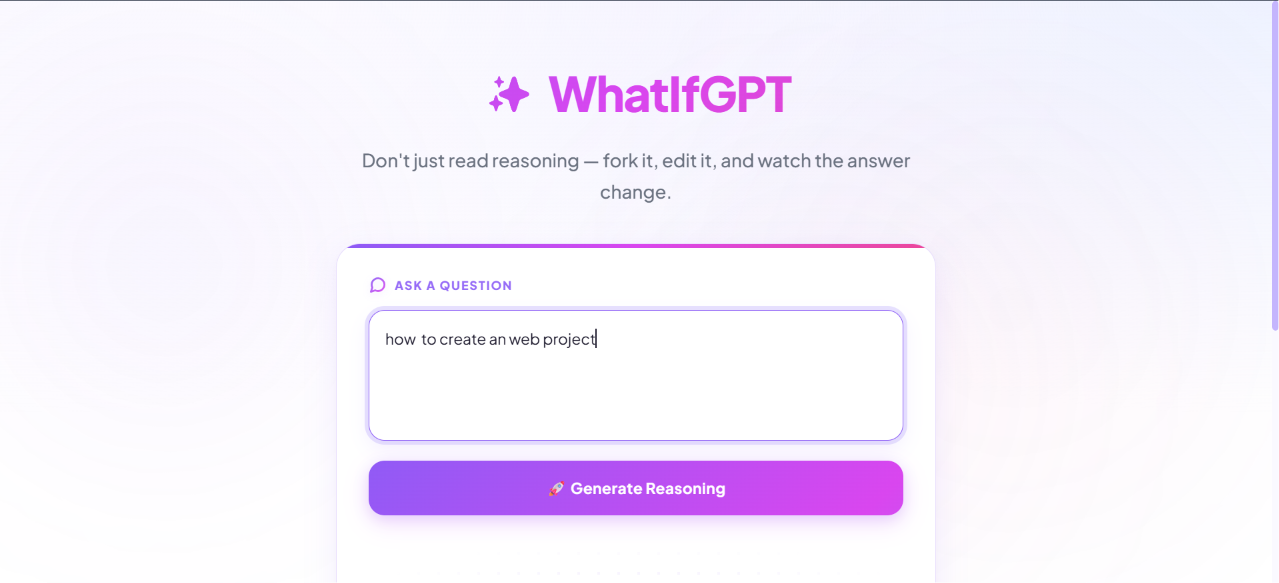
- Ask a question or decision (e.g. "Should I launch this product in Q1 or Q2?")
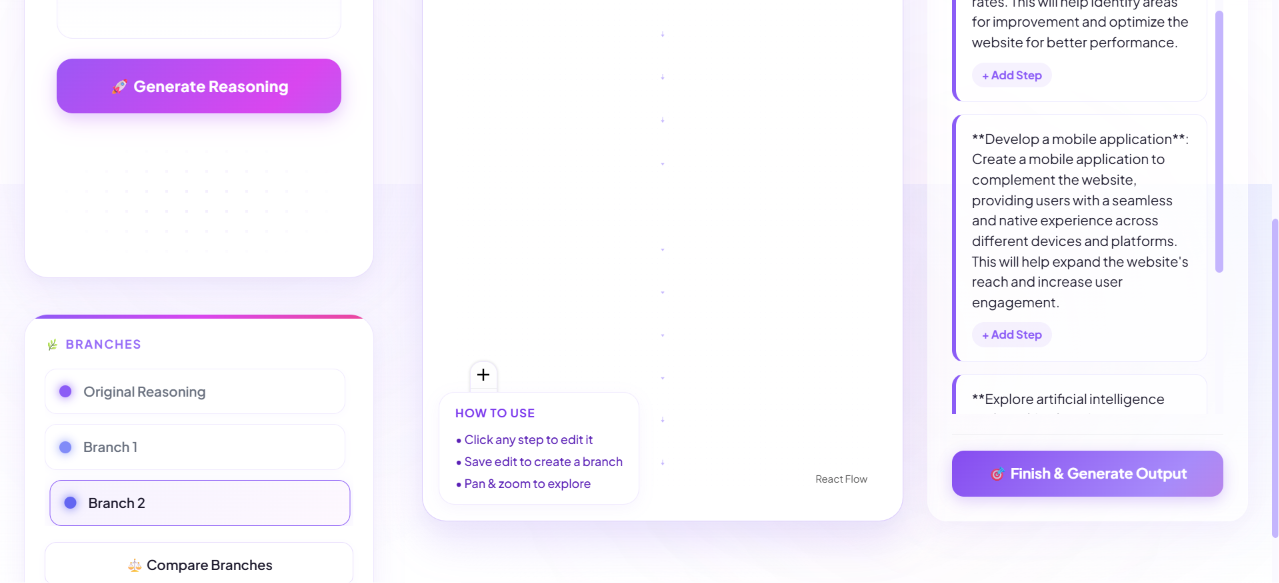
- The AI's reasoning renders as connected step-by-step nodes instead of a paragraph
- Click any node, edit the assumption it's based on, and fork — a new branch grows from that point while the original stays intact
- Get AI-suggested next steps to explore alternate paths automatically
- Compare any two branches side by side, with an AI-generated explanation of why they diverged
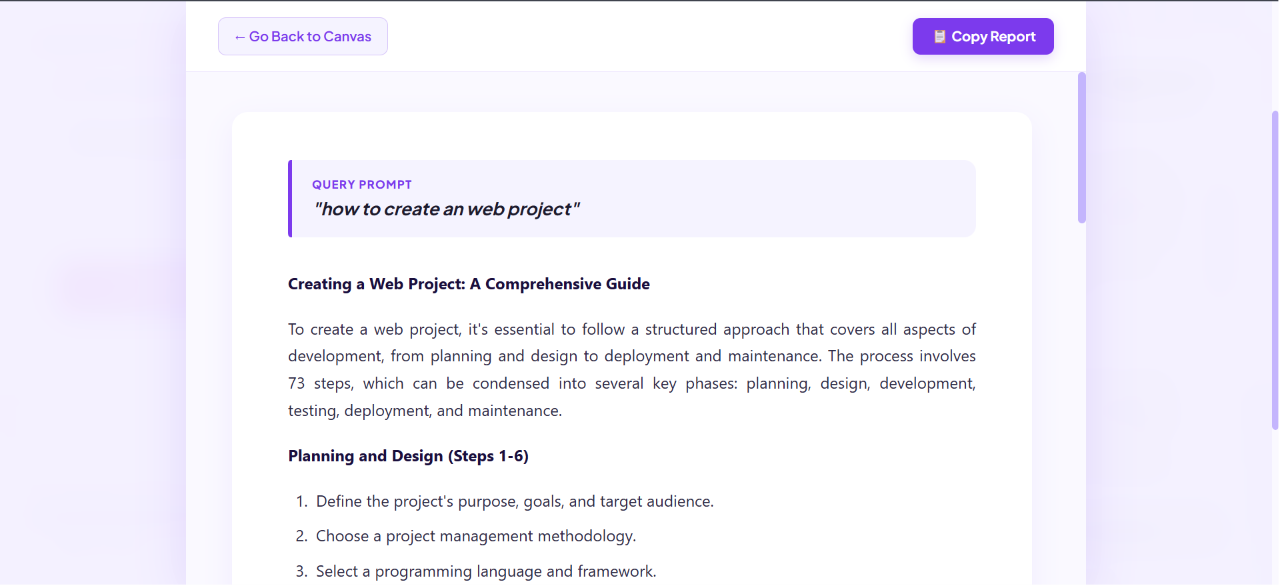
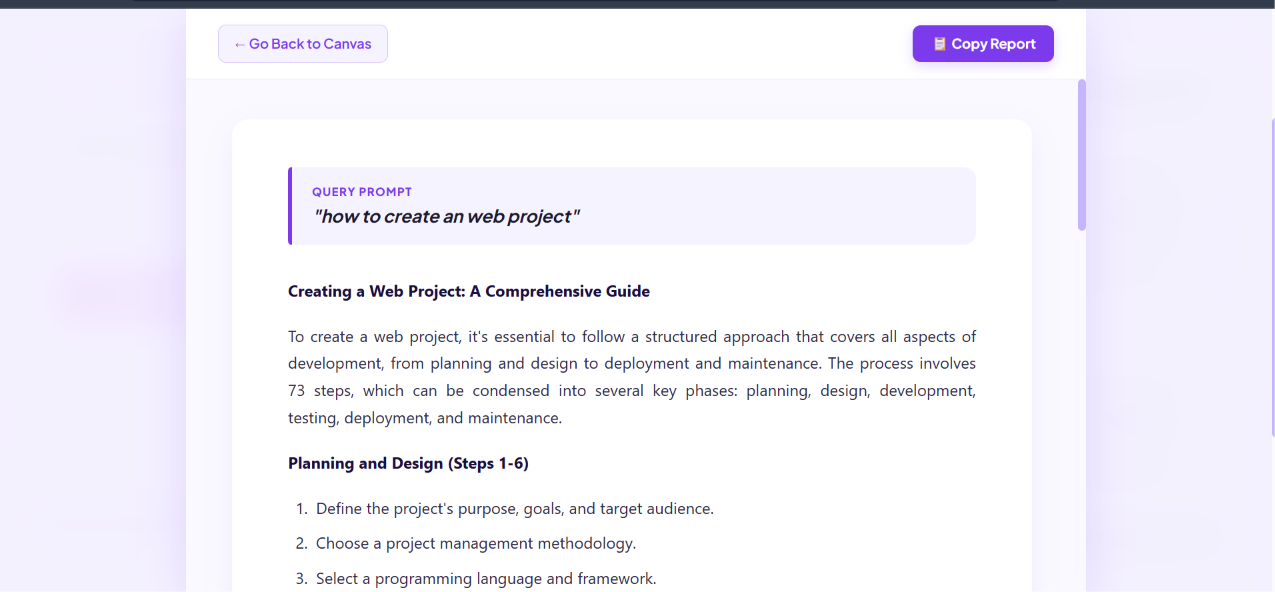
- Export the final synthesized answer as a clean, formatted report you can read, copy, or print
How we built it
- Frontend: React + Vite + Tailwind CSS + React Flow for the interactive reasoning tree
- Backend: FastAPI (Python) handling reasoning generation, forking, and branch comparison logic
- LLM: Accessed through the Groq API, with Codex and GPT-5.6 explored during OpenAI Build Week to extend the reasoning and code-assist workflows
- Styling: A custom glassmorphism UI with frosted glass cards, animated gradients, and flowing connection lines between reasoning steps
- Deployment: Backend on Render, frontend on Vercel/Render as a static site
Challenges we ran into
- Parsing free-form model output into a clean, structured tree of discrete steps that could be edited and re-run independently
- Designing the "fork" logic so a new branch could continue reasoning from an edited step without losing context from the steps before it
- Getting the reasoning tree UI to feel intuitive rather than cluttered once branches multiplied
- Balancing a rich, glassmorphic visual style with performance and clarity
Accomplishments that we're proud of
- A working end-to-end fork-and-compare workflow: edit an assumption mid-reasoning and see a real new branch generated
- A polished, distraction-free "final report" view for reading and exporting synthesized conclusions
- A UI that doesn't feel like a typical chatbot — it feels like a reasoning-inspection tool
What we learned
- How to structure prompts so a model's reasoning comes back in a genuinely parseable, step-by-step format
- How to design an interactive graph UI (React Flow) around dynamically generated, branching content
- How much more trust and usefulness an AI tool gains once its reasoning is inspectable and editable, not just a black box
What's next for WhatIfGPT
- Deeper reasoning trace support to take fuller advantage of exposed chain-of-thought
- Multi-way forking (more than two branches at once) for richer comparisons
- Shareable/collaborative trees so teams can explore decisions together
- Saved history so users can return to past reasoning trees


Log in or sign up for Devpost to join the conversation.