Inspiration
In the intersection of mental health and technology, there is a massive gap between individual self-understanding and large-scale clinical data. Most assessment tools are either insecure, static, or fail to provide meaningful insight. As a cybersecurity student, I wanted to build a platform that treated psychological data with the same "Zero-Trust" integrity as financial data, while using modern AI to transform raw scores into compassionate, human-readable narratives.
What it does
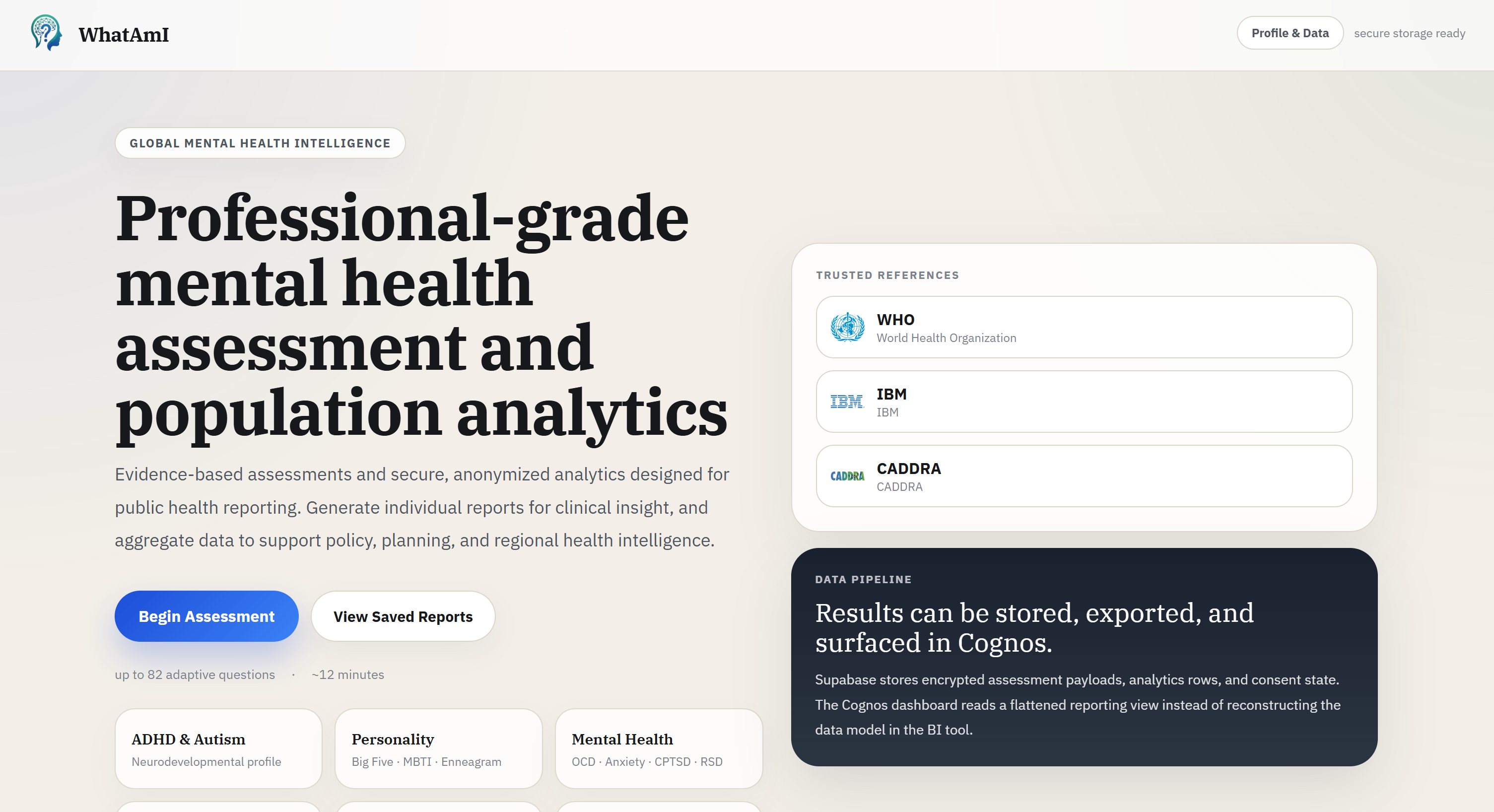
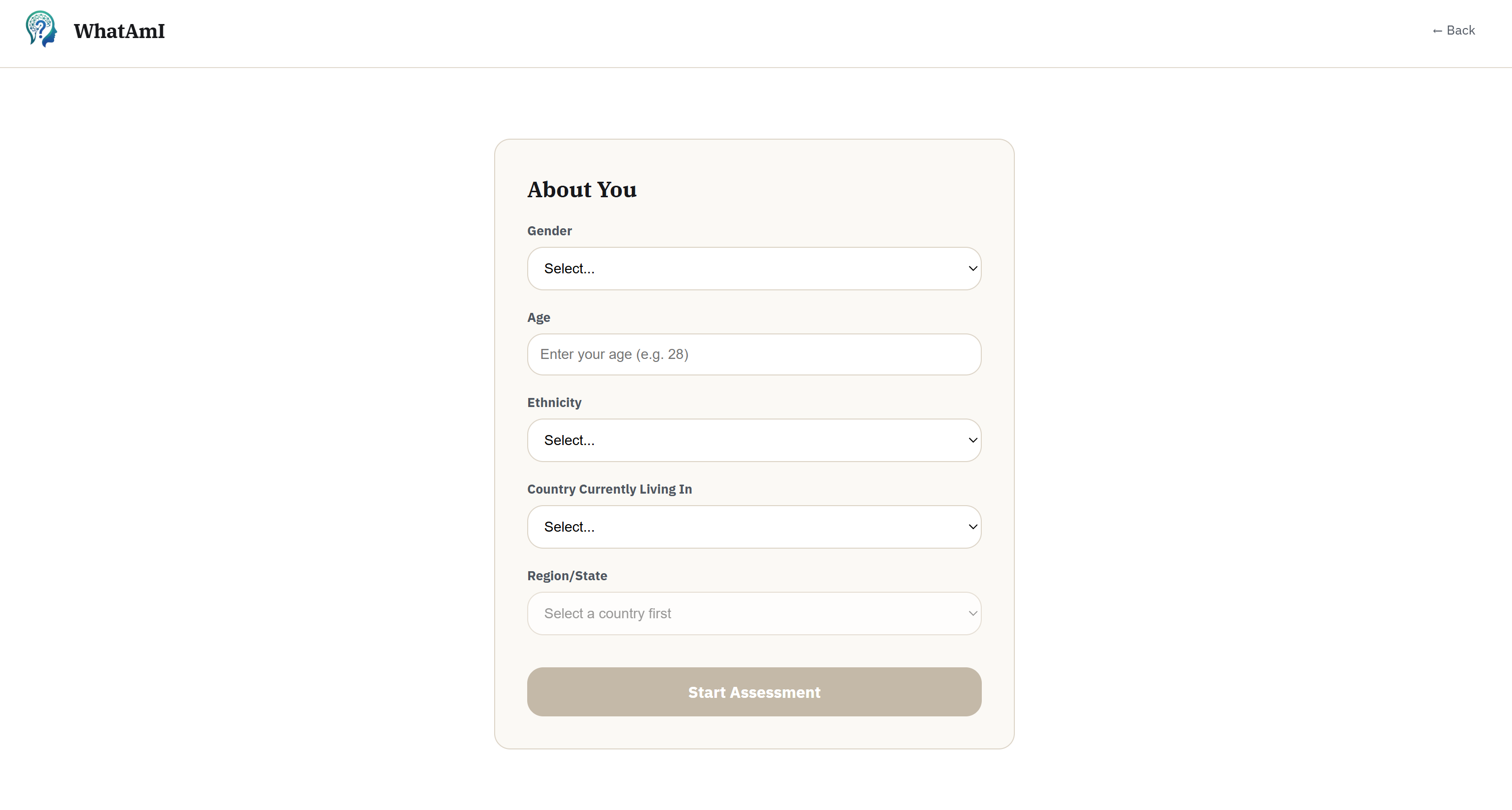
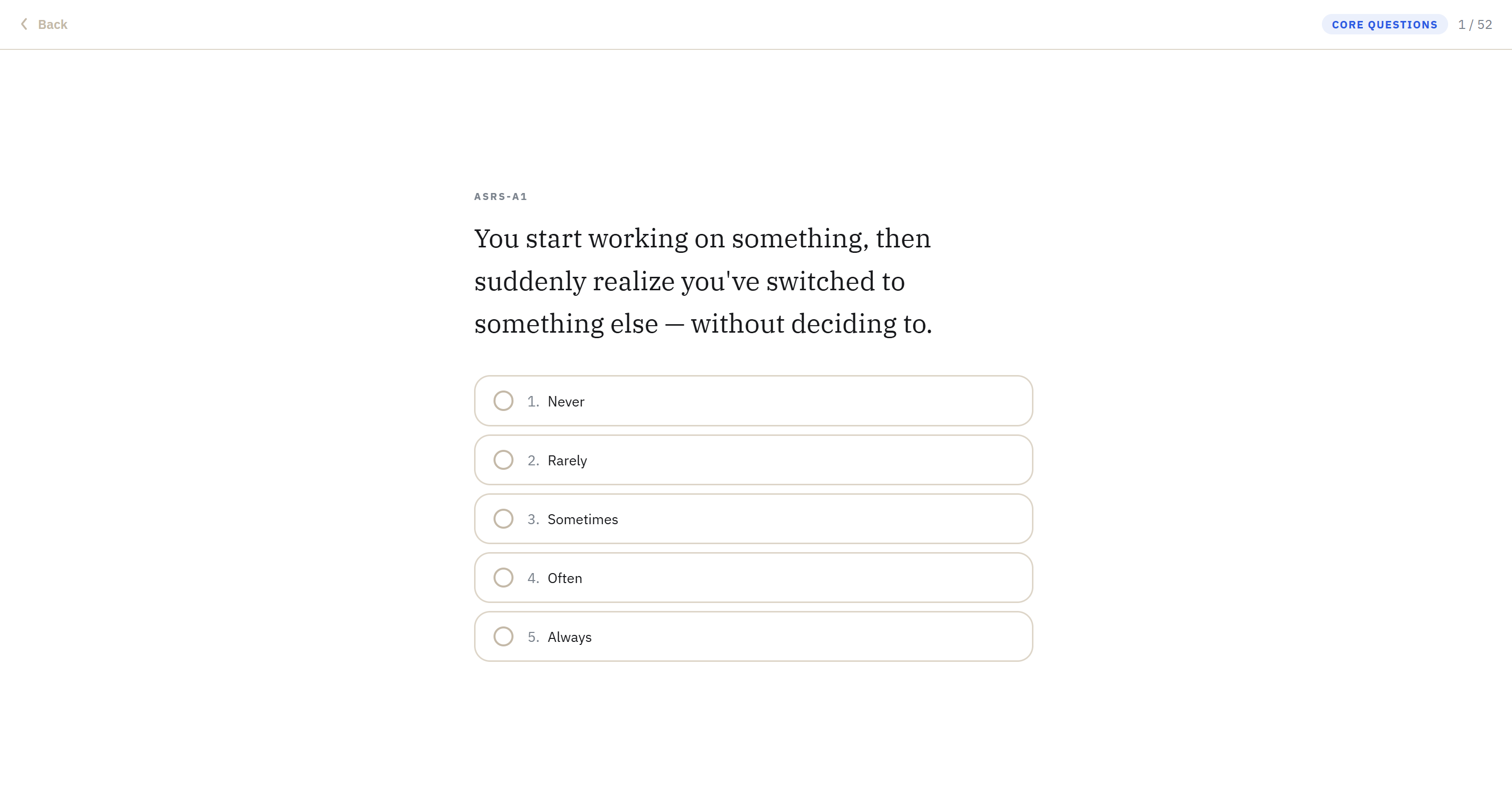
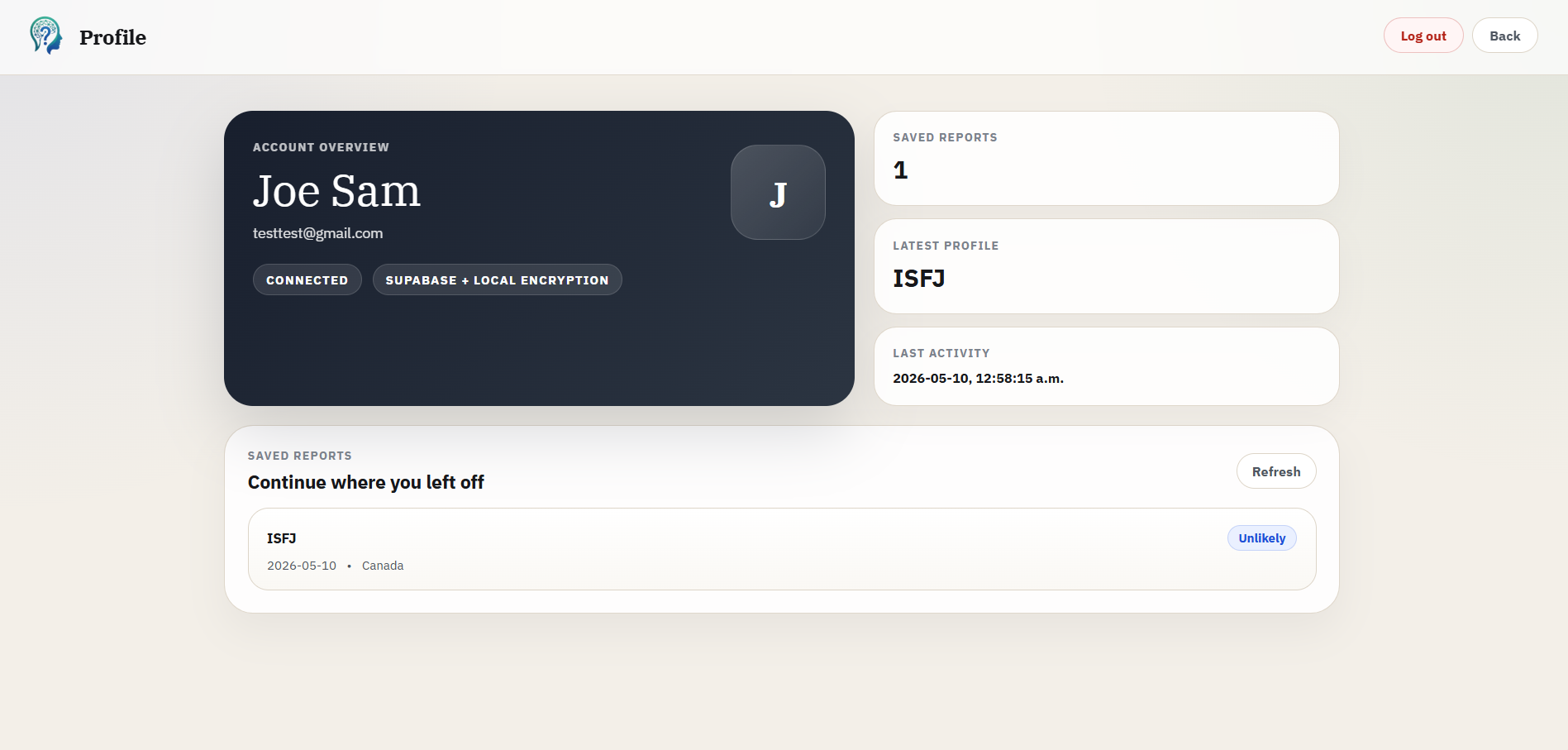
WhatAmI is a high-integrity neuro-analytics pipeline designed for secure psychological self-assessment and population-level research.
- For the User: It generates a "Clinical Narrative" using AI that explains how unique traits (ADHD, Autism, OCD, etc.) interact in a warm, humanizing way.
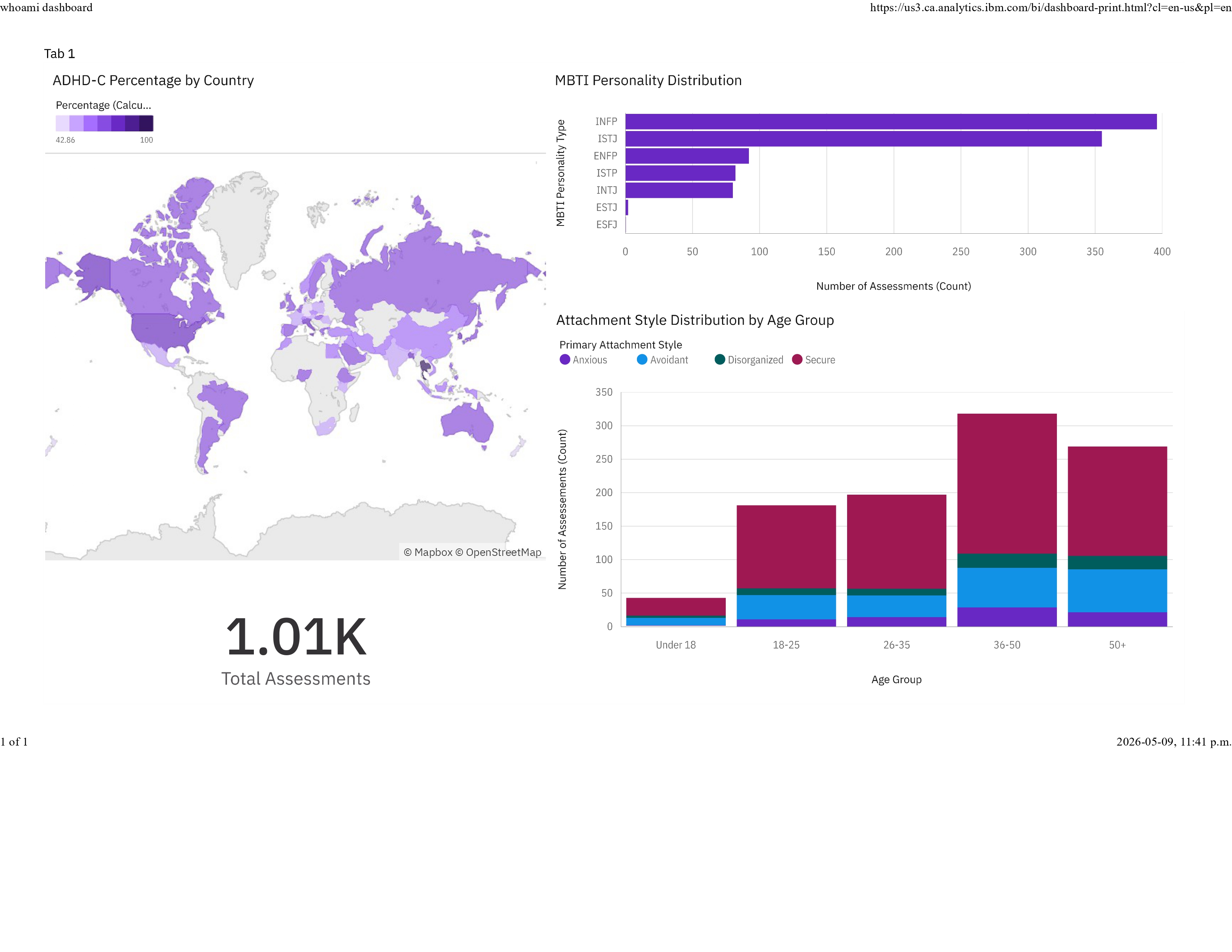
- For the Researcher: It anonymizes and aggregates data into an analytics dashboard to visualize neurodiversity trends across different ethnicities, ages, and countries.
- For the Architect: It ensures every major action is audited and secured behind enterprise-grade monitoring, moving away from "black box" assessments.
How we built it
The platform is a React + Vite application backed by a sophisticated IBM-integrated infrastructure:
- IBM watsonx.ai: Powering the "Narrative Engine" using the Granite-13b model to generate clinical summaries that feel warm and human, not robotic.
- IBM Guardium: Implementing a security-first audit trail. Every assessment completion triggers a secure webhook to Guardium to monitor data handling and ensure compliance.
- IBM Cognos: We injected a synthetic dataset of 1,000 global records to demonstrate how Cognos can visualize neuro-trends across 5 continents instantly.
- Supabase: Managed our PostgreSQL database, authentication, and secure Edge Functions to proxy AI requests safely.
Security & Data Sovereignty
As a project handling sensitive PII (Personally Identifiable Information), security was not an afterthought, it was the foundation:
- Secret Management: We utilized sealenv (Made by Yasser) to encrypt all environmental variables (IBM Cloud tokens, Supabase keys) within the repository, ensuring a secure build pipeline without exposing infrastructure secrets.
- Immutable Auditing: Integration with IBM Guardium creates a tamper-proof log of assessment events, providing the transparency required for clinical-grade software.
- Open-Source Protection: The project is licensed under GNU GPL v3 to protect intellectual property while promoting transparency in neuro-diagnostic technology.
Challenges we ran into
The biggest hurdle was "The Bridge", connecting the frontend logic to the IBM Cloud environment while maintaining total security. We faced significant challenges with deployment pathing (Vercel 404s) and Git database corruption, which required deep-diving into Vite's build process and Git's internal object structure to repair the deployment pipeline under a tight hackathon deadline.
Accomplishments that we're proud of
- Data Integrity: Successfully implementing the IBM Guardium audit hook, ensuring that sensitive psychological data is handled with a "Zero-Trust" mindset.
- Scale: Successfully simulating and visualizing 1,000 global user profiles in Cognos, proving the platform is ready for population-level research.
- AI Compassion: Tuning the watsonx prompts to ensure the AI never "diagnoses," but instead "validates" the user’s experience with sophisticated clinical terminology.
What we learned
This project reinforced the importance of Data Sovereignty. In the domain of mental health tech, the security of the data is just as important as the accuracy of the assessment. Integrating the IBM ecosystem taught us how to scale a local project into an enterprise-ready architecture.
What's next for WhatAmI?
The next phase involves expanding the "Clinical Forensics" aspect. We plan to implement more advanced biometric data points and refine the Cognos dashboards to include predictive modeling, helping healthcare providers anticipate which regions might need more specialized neurodivergent support services.
Technical Stack & Architecture
- Backend: Supabase / PostgreSQL / Node.js
- Frontend: React 18 / Vite / Tailwind
- AI Engine: IBM watsonx.ai (Granite-13b-instruct-v2)
- Security & Compliance: IBM Guardium Data Protection & sealenv
- BI & Visualization: IBM Cognos Analytics
- License: GNU GPL v3
Built With
- github
- ibm-cognos
- ibm-guardium
- ibm-watson
- javascript
- postresql
- sealenv
- sql
- supabase
- vercel
- vscode


Log in or sign up for Devpost to join the conversation.