-
-
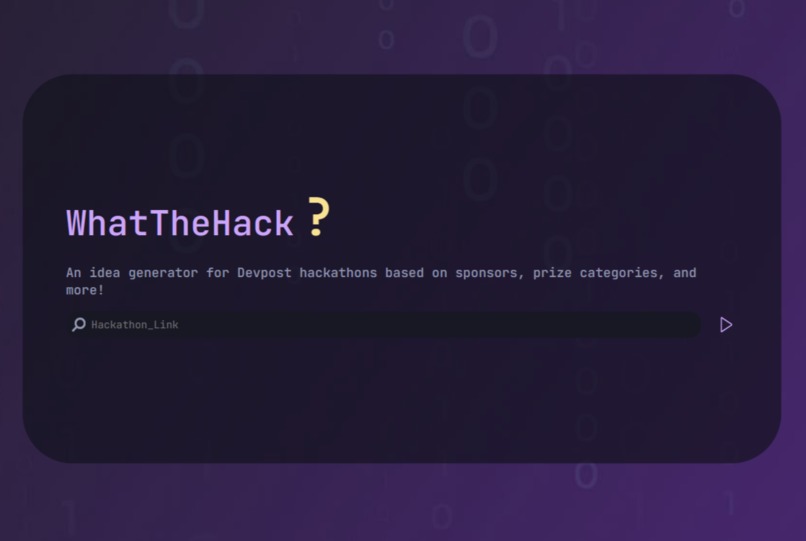
Cover
-
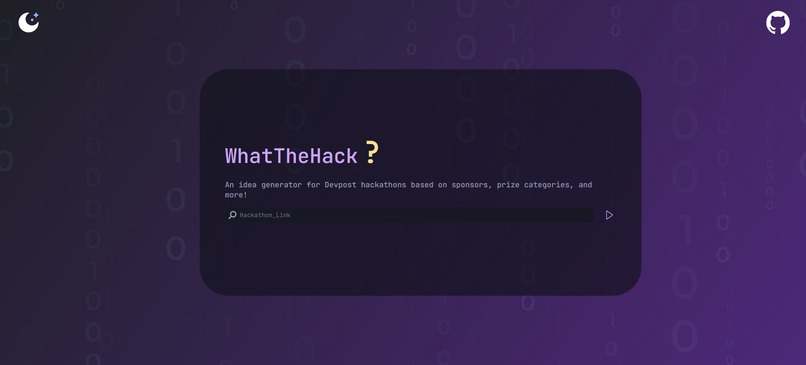
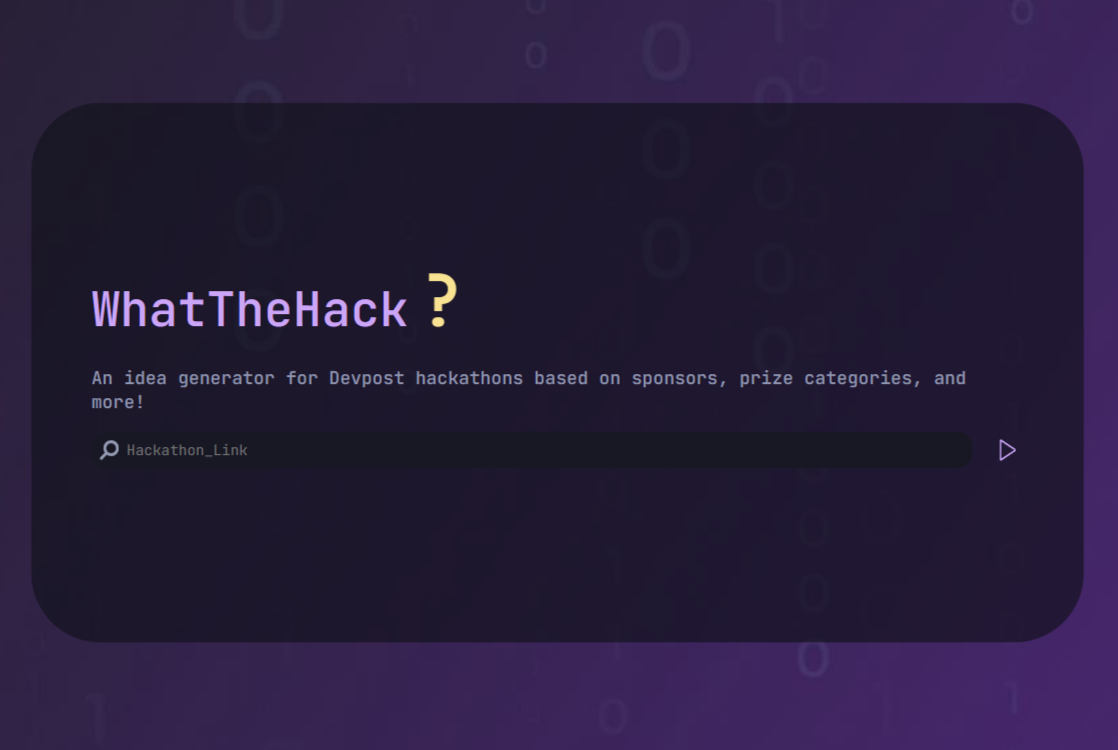
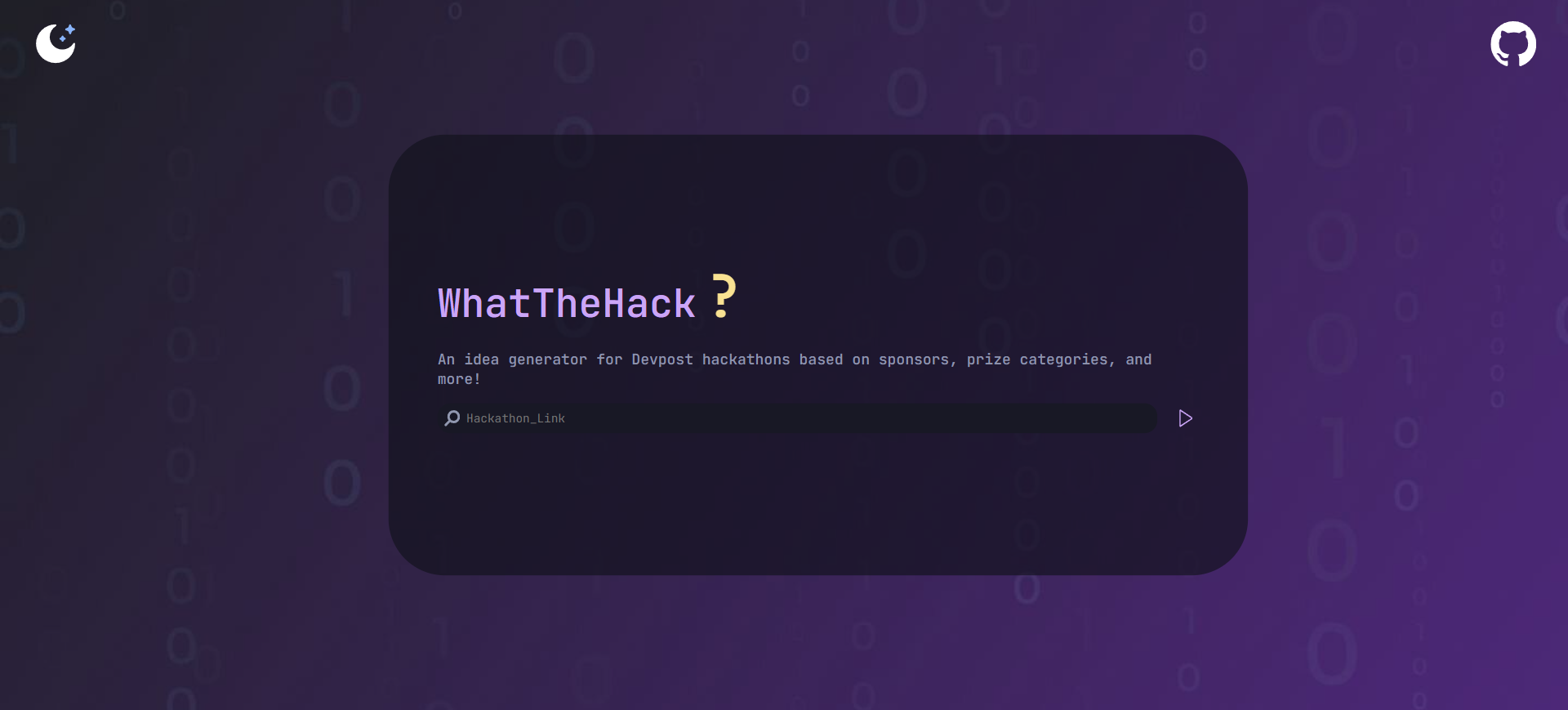
Home Page
-
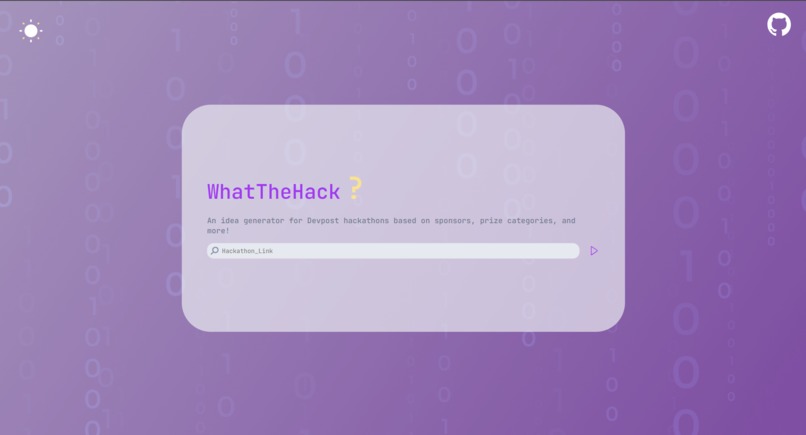
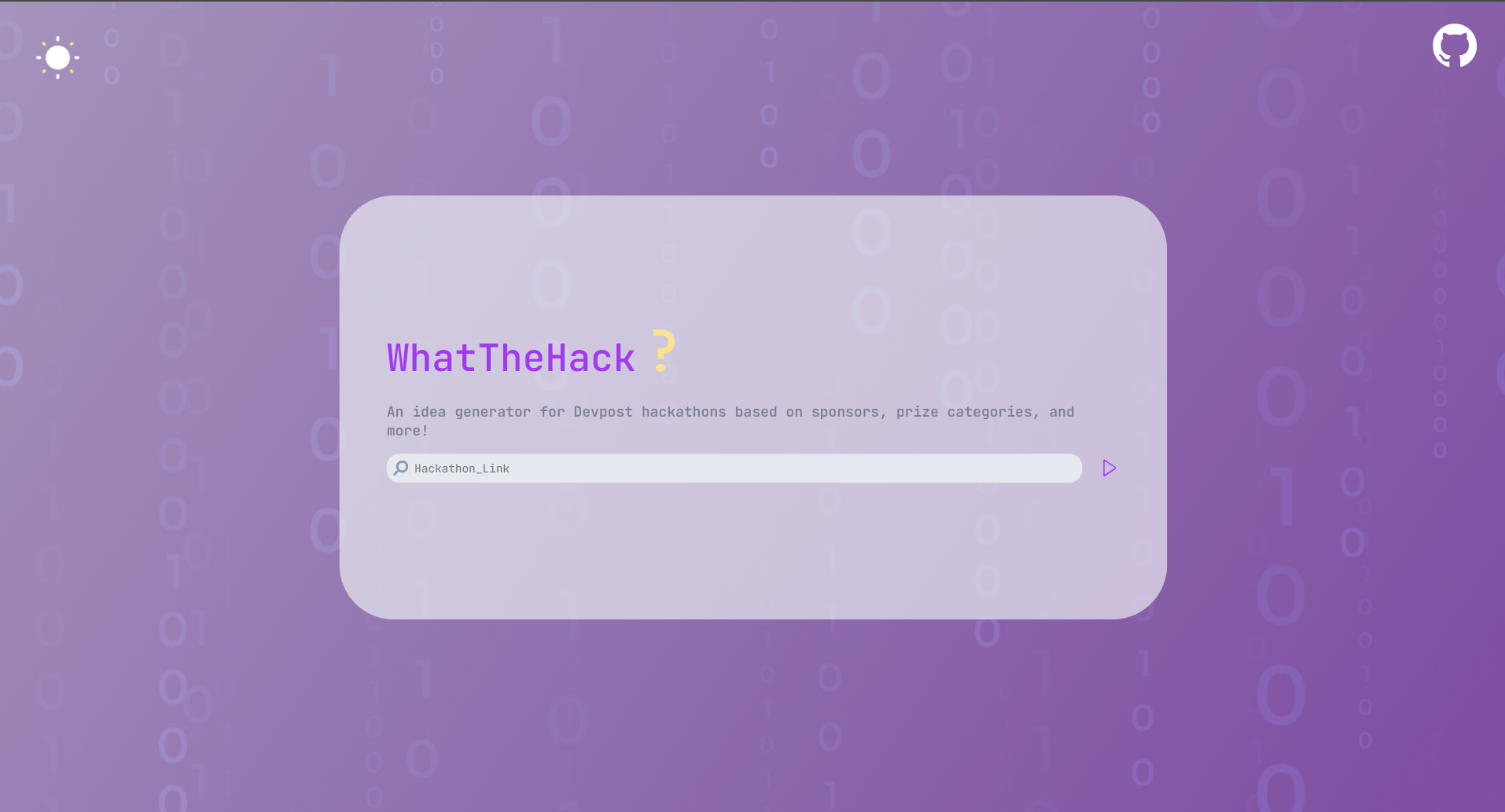
Light Mode Version
-

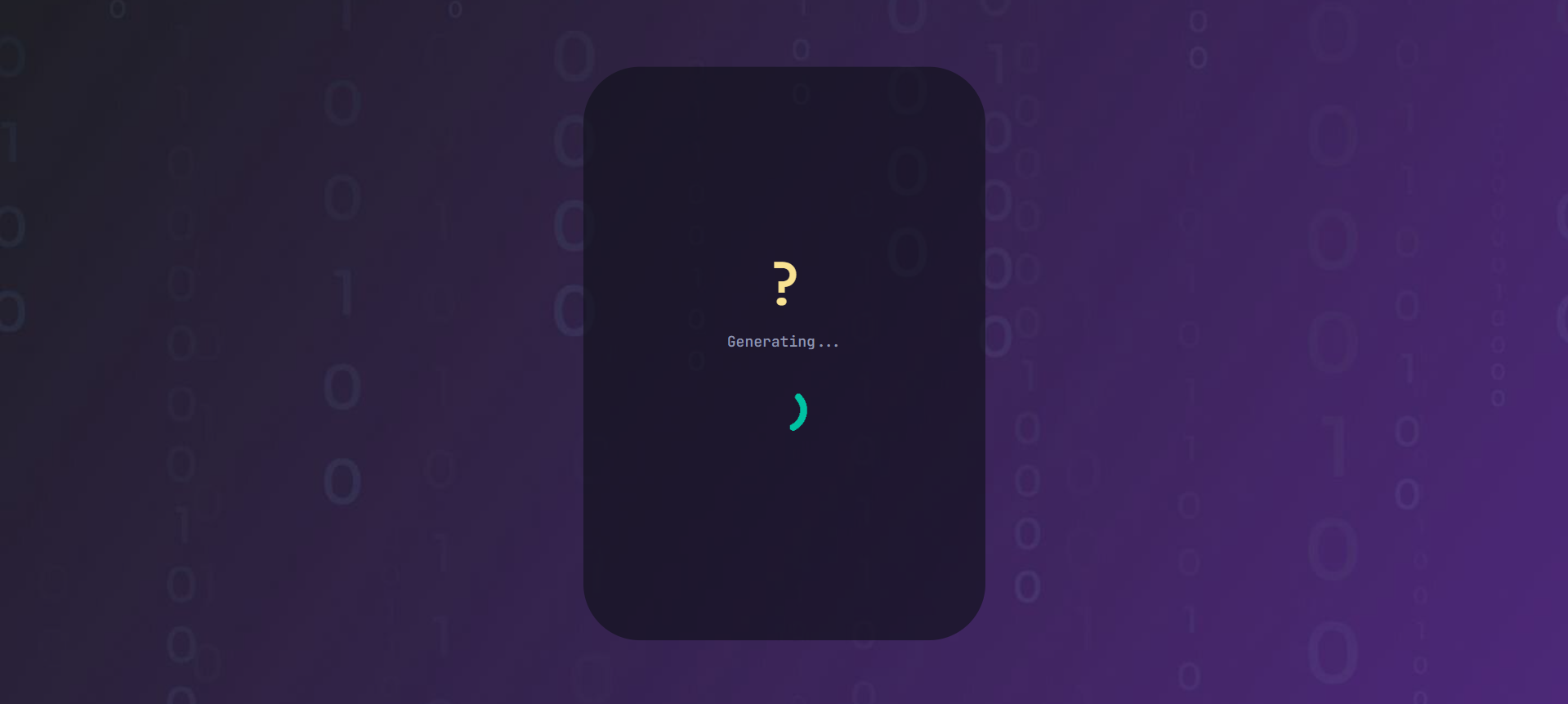
Loading Page
-
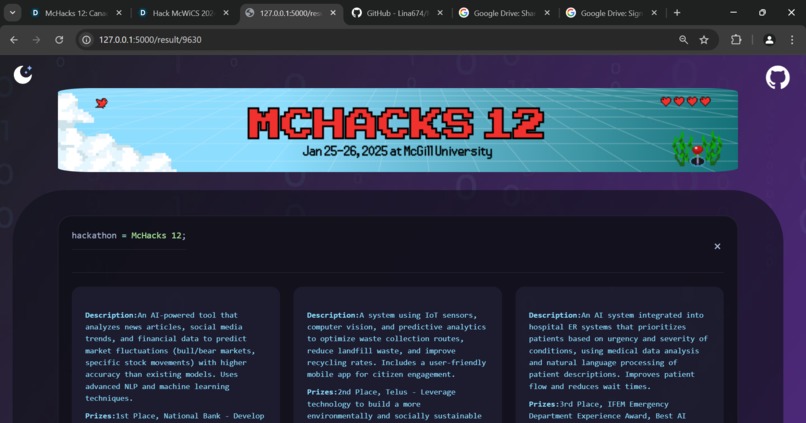
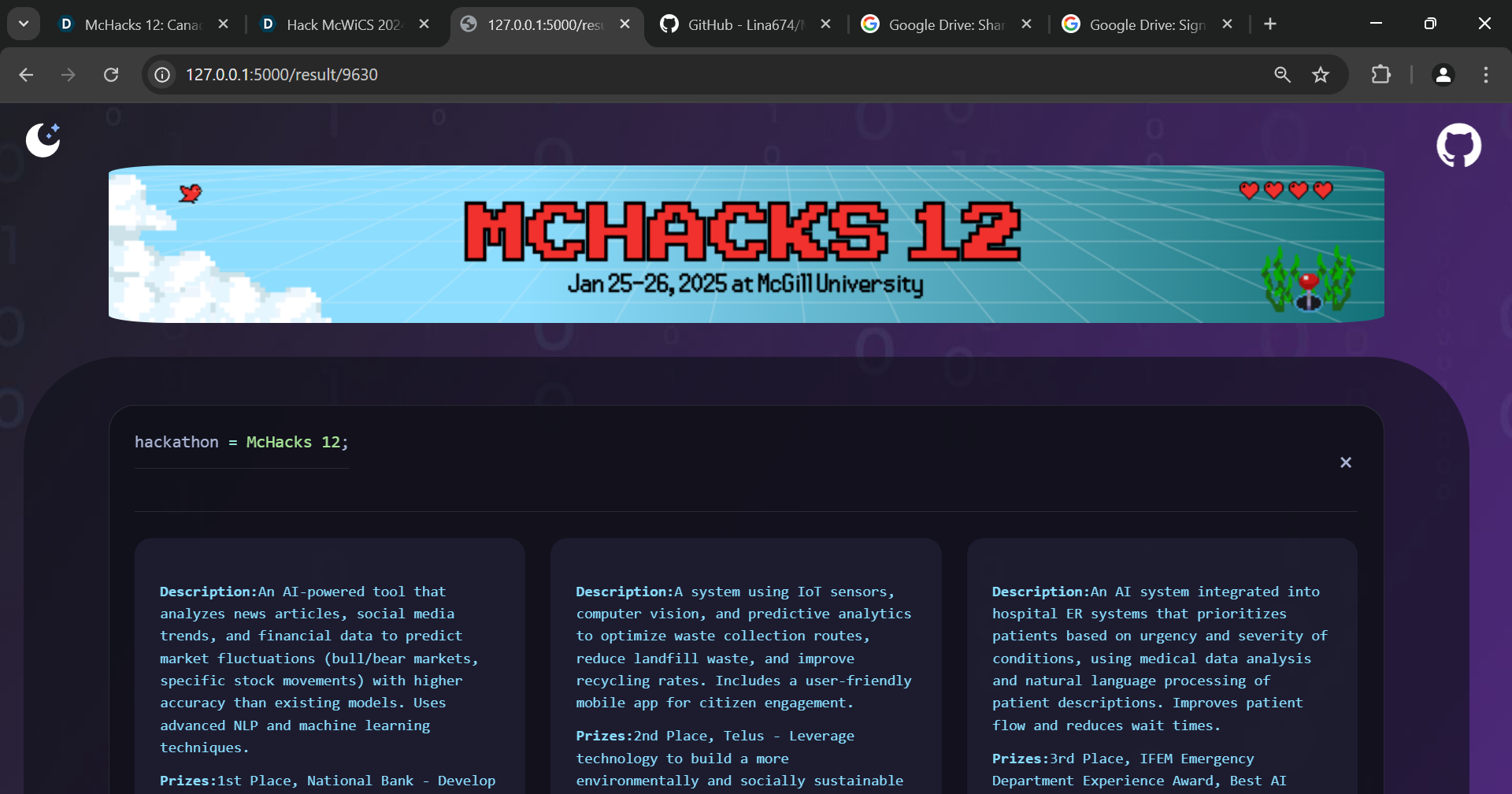
Result Page
-
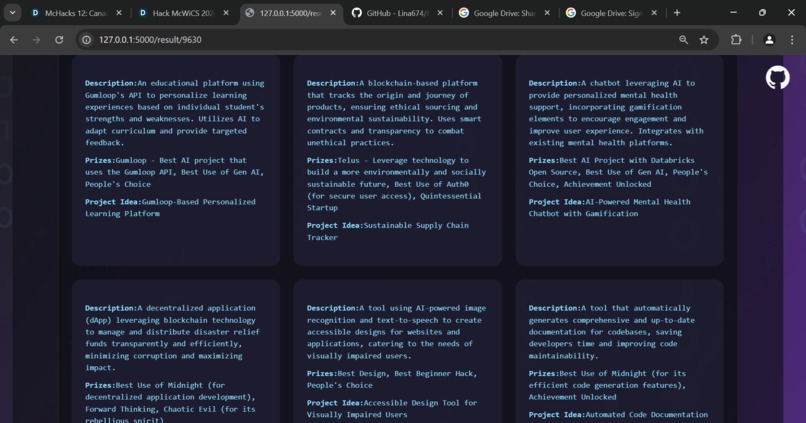
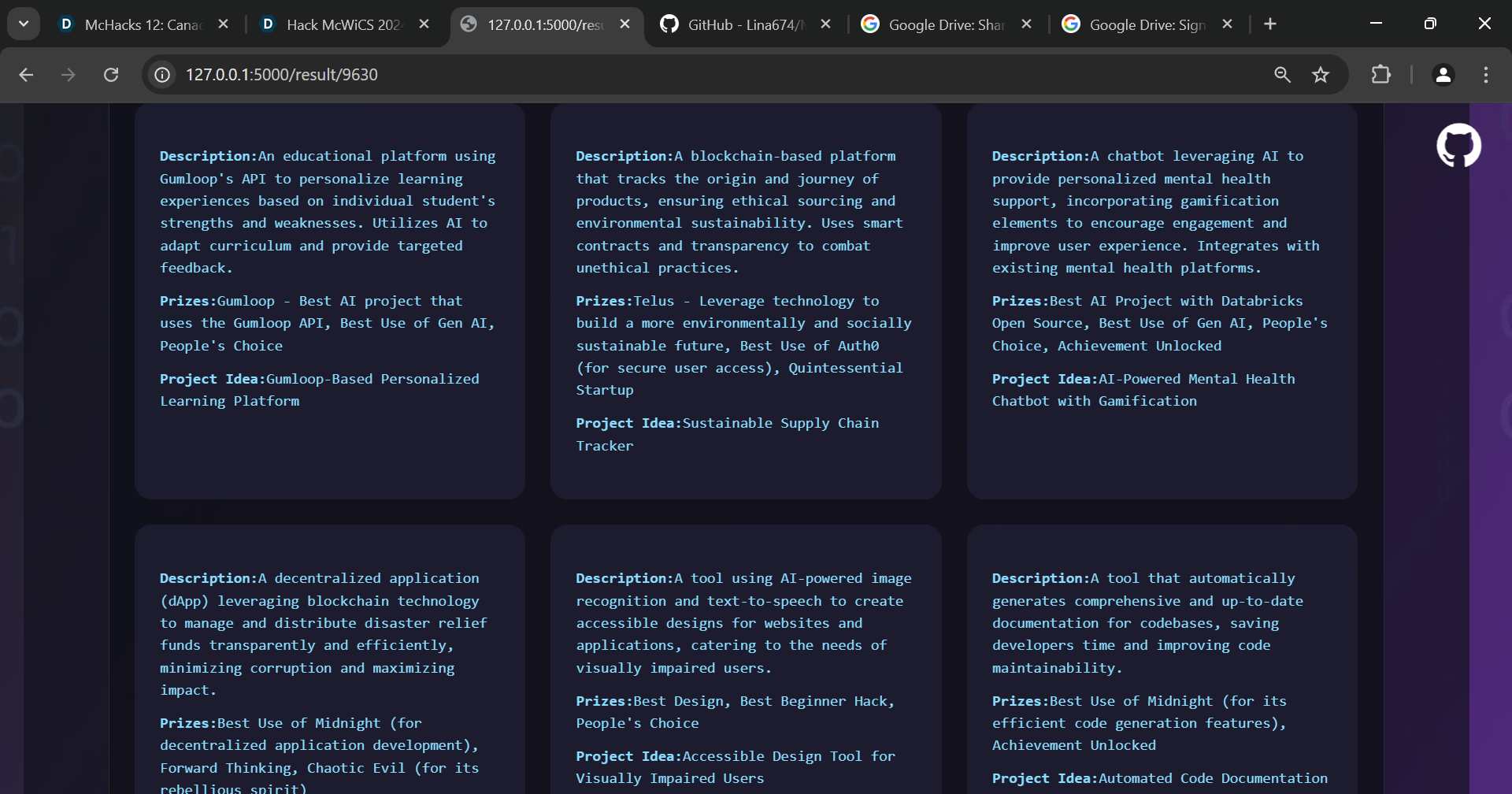
More result page!!
Inspiration
At the start of McHacks 12, we weren't sure what to build. That uncertainty became our inspiration—we decided to create a project that tackles this very challenge! Our project is designed to help others who are facing similar struggles by sparking ideas and offering guidance, empowering hackathon participants to overcome early obstacles and focus on creating impactful solutions.
What it does
Users can submit a Devpost URL related to the hackathon event, and our platform will produce a list of tailored project ideas. These suggestions are generated based on key event details, such as the sponsors, the prizes, and the challenges. By taking these factors into consideration, we provide users with relevant and innovative ideas that align with the hackathon's objectives, enabling them to focus their energy and efforts on their projects.
How we built it
To build our platform, the user inputs a Devpost hackathon URL, which is processed by a Python web scraper using Selenium. The scraper extracts key details like sponsors, prizes, and challenges from the URL. This data is then passed to Gemini AI, which will generate tailored hackathon ideas. These results are then sent back to the frontend through a Flask server, where they are displayed to the user.
Challenges we ran into
Our biggest challenge was deployment. While the project worked perfectly during development, we encountered issues once it was deployed. Moreover, working on the frontend was a learning curve as our team wasn't particularly skilled in that area. Another obstacle we faced was ensuring the smooth communication between Flask and JavaScript, specifically with routing and making sure that the frontend and backend components of our project work seamlessly together. Despite these issues, it ultimately helped us grow and learn, pushing us to think critically and adjust in real-time as we continue to refine the project.
Accomplishments that we're proud of
The frontend was a major accomplishment, especially since it was a skill we weren't familiar with, yet it turned out as we envisioned it. Our collaborative efforts were key, enabling us to work efficiently as a team. Ultimately, we are proud that we were able to bring our idea to life, transforming a mere concept into a functioning prototype!
What we learned
This project allowed us to gain hands-on experience in a number of important skills. We learned how to design effective UI/UX layouts and prototypes using Figma for the first time. We improved our collaborative and teamwork skills by dividing tasks and communicating effectively to bring our vision to life. Troubleshooting and deployment proved to be challenging, but we gained valuable experience in solving communication issues between the frontend and backend and managing server configurations. We explored real-time collaboration features and understood the technical complexities involved. And, we learned about the importance of adaptability and user-centered design, which helped us ensure that our product was user-friendly and satisfied their needs.
What's next for What The Hack?
For our next steps, we intend to expand our feature set to provide users with more customization options, helping them better tailor the idea generation process to their needs. We plan to work on integrating more data sources to refine idea generation, by drawing from past hackathon events, past winners, and more. Additionally, we hope to introduce a real-time collaboration feature, allowing teammates to work, brainstorm and communicate with one another directly through our platform. Currently, our platform supports Devpost alone, but we aim to broaden our scope to include more hackathon platforms like Major League Hacking (MLH), HackerEarth, and Hackathon IO, offering users the ability to generate ideas for a wider range of events.


Log in or sign up for Devpost to join the conversation.