-
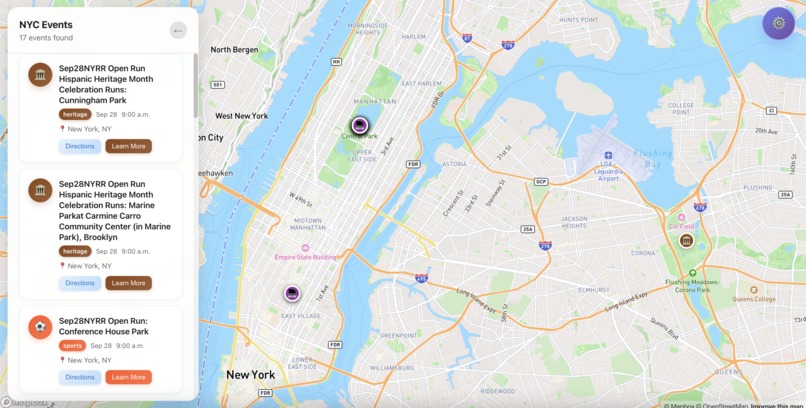
Example
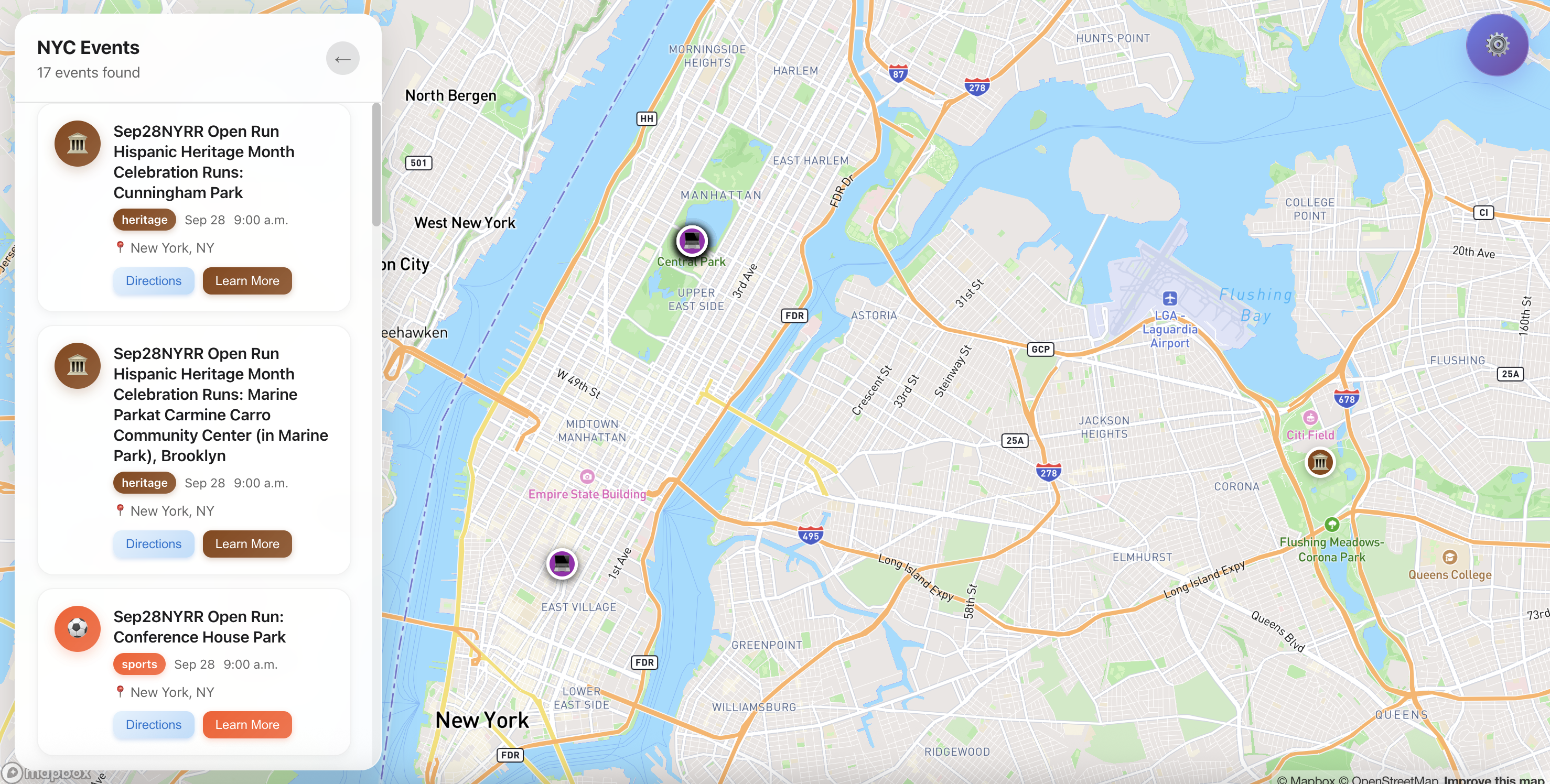
Inspiration
Sabal (our teammate) was at the gym with a couple of his buddies and he saw a huge crowd forming. Then he asked someone in the line, and found out the Jonas Brothers had just performed in my hometown Manassas. Sabal was annoyed something that big happened so close, and he didn’t even know. The same thing happened again when IShowSpeed came to NOVA recently. He’s of the biggest streamers, and missing the chance to see him because there was no quick way to see what was happening was made Sabal crash out. Talking with our group for the hackathon, Jayden from New York, and Dev from Philadelphia made me realize it’s a modern problem. In big cities, there’s so much happening concerts, pop-ups, block parties but no centralized way to know in real time. Even in our residence halls, I feel like being able to see what's happening and what events take place can bring strong value to communities. What makes this even more exciting is that we all just met here at the hackathon. We come from different majors, but each of us has some type of computer science interest, and this is actually our very first hackathon as freshmen.
What it does
Our platform features a sleek 3D map interface that connects users to nearby events in real time. It pulls data from notable websites and trusted sources, then integrates everything into one interactive experience. Users can instantly get directions to events and concerts, and easily filter by categories such as music, food, sports, or community gatherings.
How we built it
We built the platform from the ground up, starting with HTML and evolving into a dynamic React application. The frontend runs on Node.js for speed and real-time responsiveness. On the backend, we integrated the Gemini API to aggregate live event data and MapBox for 3D mapping and geospatial visualization. Together, this powers an immersive, real-time event map with navigation and category filtering, designed to scale as the platform grows.
Challenges we ran into
Pulling event info from multiple sources was inconsistent and honestly annoying.
- Scraping accurate event data from different sources had inconsistent formats.
- Turning our early HTML build into React caused state management headaches.
- Keeping everything live without slowing down the backend required smart API routing.
Accomplishments that we're proud of
We’re proud that we were able to take this idea from a simple HTML prototype to a fully functional React and Node.js application with real-time capabilities. We built an interactive 3D event map using Mapbox, optimized it for smooth performance, and successfully integrated live event data from multiple sources into one reliable platform. Along the way, we implemented custom filters for categories like music, food, and sports, and designed a scalable backend that can handle continuous updates without slowing down. Also being first time hackers building a full stack application successfully was something else we were proud of.
What we learned
Through this project, we learned how challenging and important real-time data aggregation can be, especially when sources are inconsistent or incomplete. We gained hands-on experience with scaling a frontend from a simple HTML prototype to a full React and Node.js application, and we deepened our knowledge of integrating APIs like Gemini and Mapbox for complex features such as live event data and 3D mapping. We also realized how critical it is to balance technical performance with user experience—making sure the app feels smooth, intuitive, and useful while handling live updates in the background.
What's next for What’sUpNYC
Next, we plan to scale What’s Up NYC beyond just a community platform and push for larger opportunities. This includes exploring government contracts to power local event visibility, implementing push notifications so users never miss nearby happenings, and expanding our reach into corporate partnerships as we scale. We’re also preparing to bring the platform to other major cities worldwide, making it a global hub for real-time events. On the technical side, we’re building a GPS feature directly into the app, inspired by Waze, to provide smart navigation and community-driven insights that make getting to events faster and more reliable.


Log in or sign up for Devpost to join the conversation.