-
-

01-What-Mom-Meant-to-Say
-

02-What-Mom-Meant-to-Say-Illustration
-
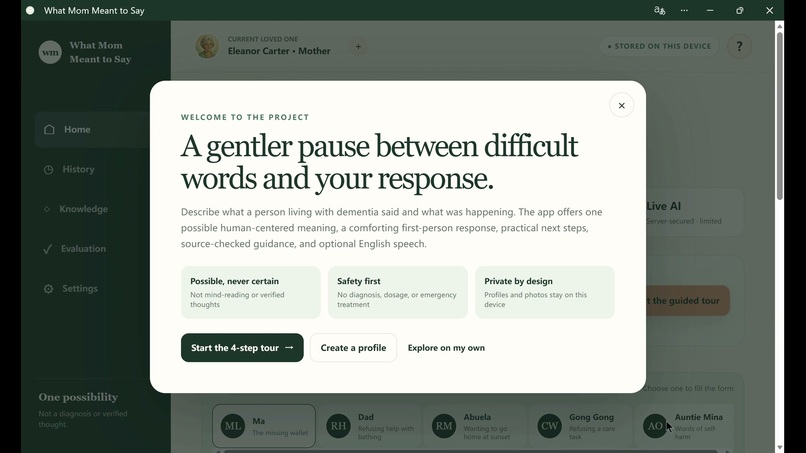
03-guided-tour
-
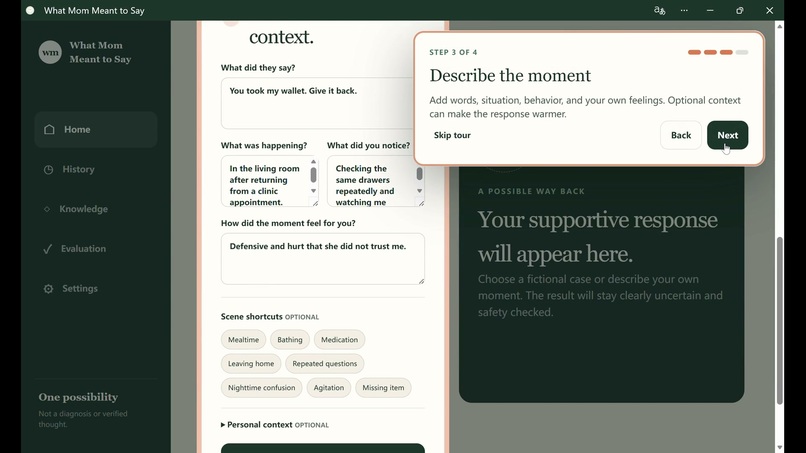
04-context-input
-
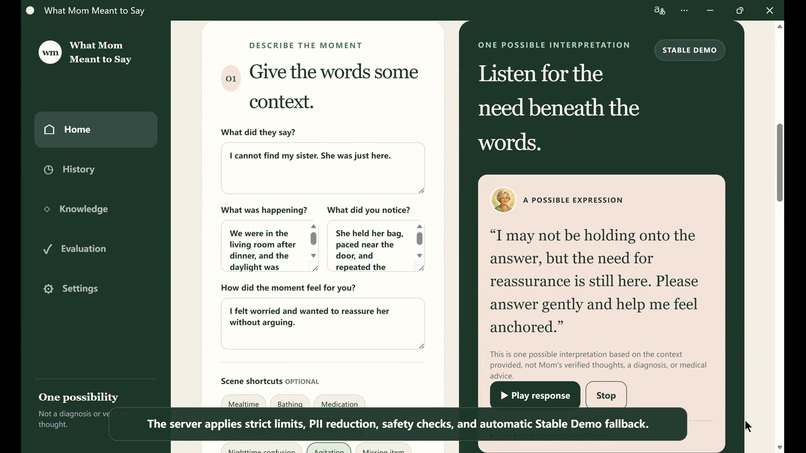
05-supportive-response
-
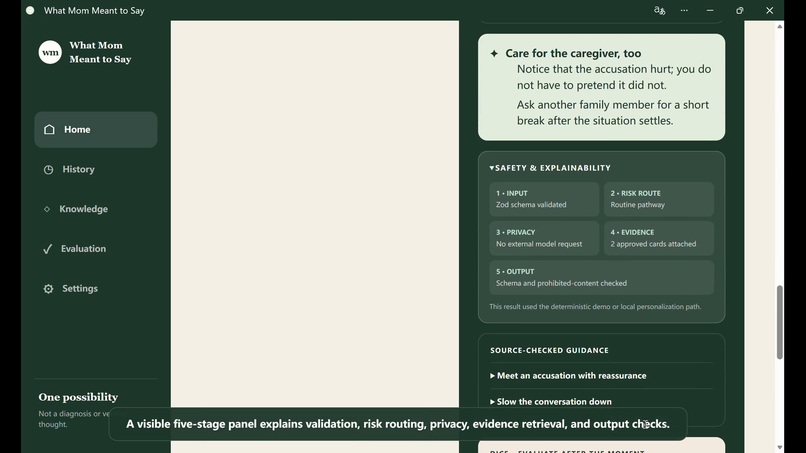
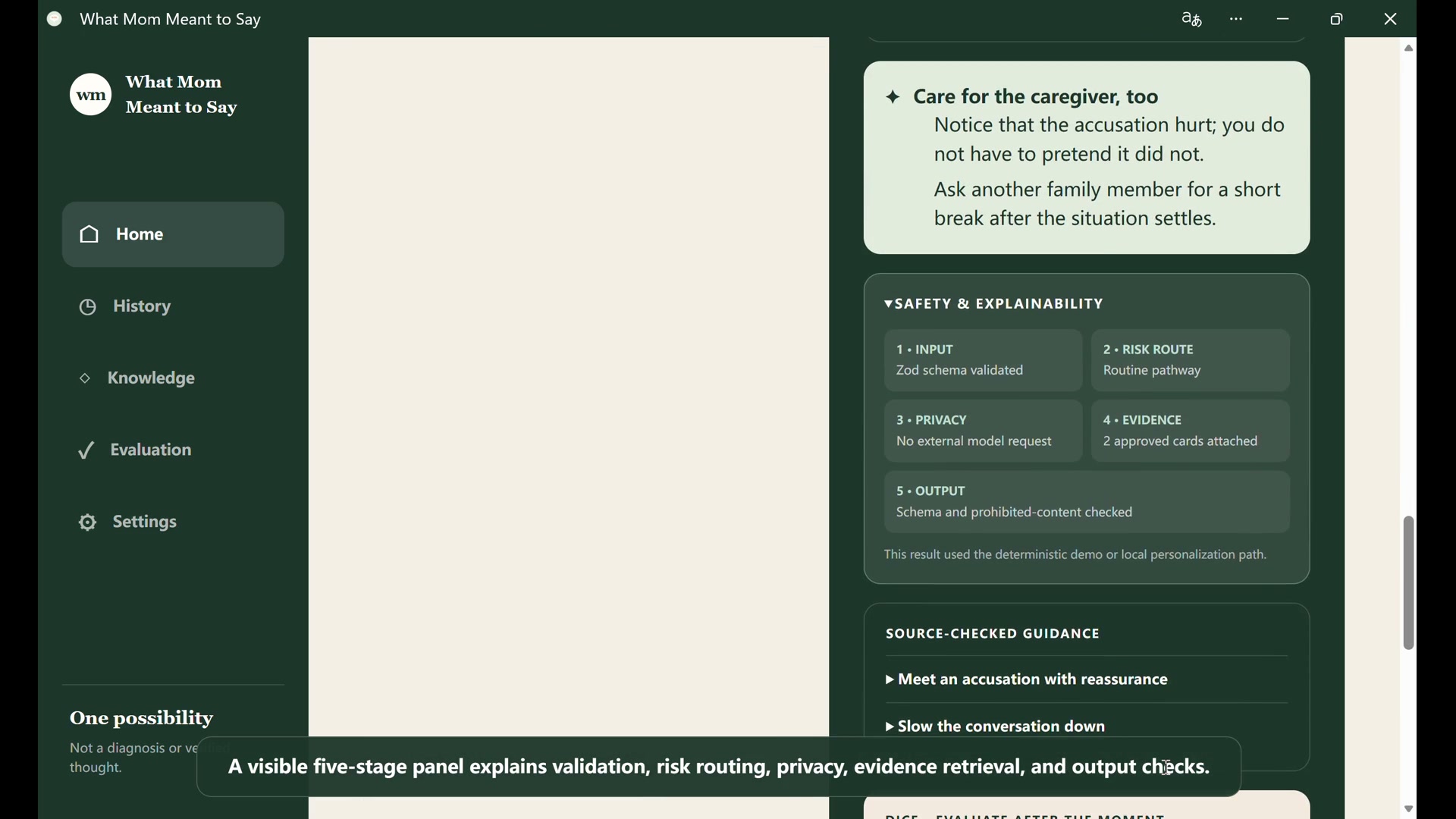
06-safety-and-knowledge
-
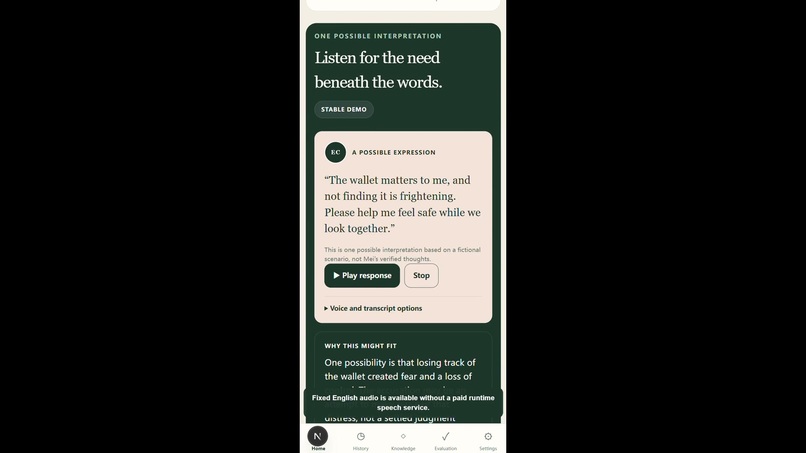
07-mobile-experience


Inspiration
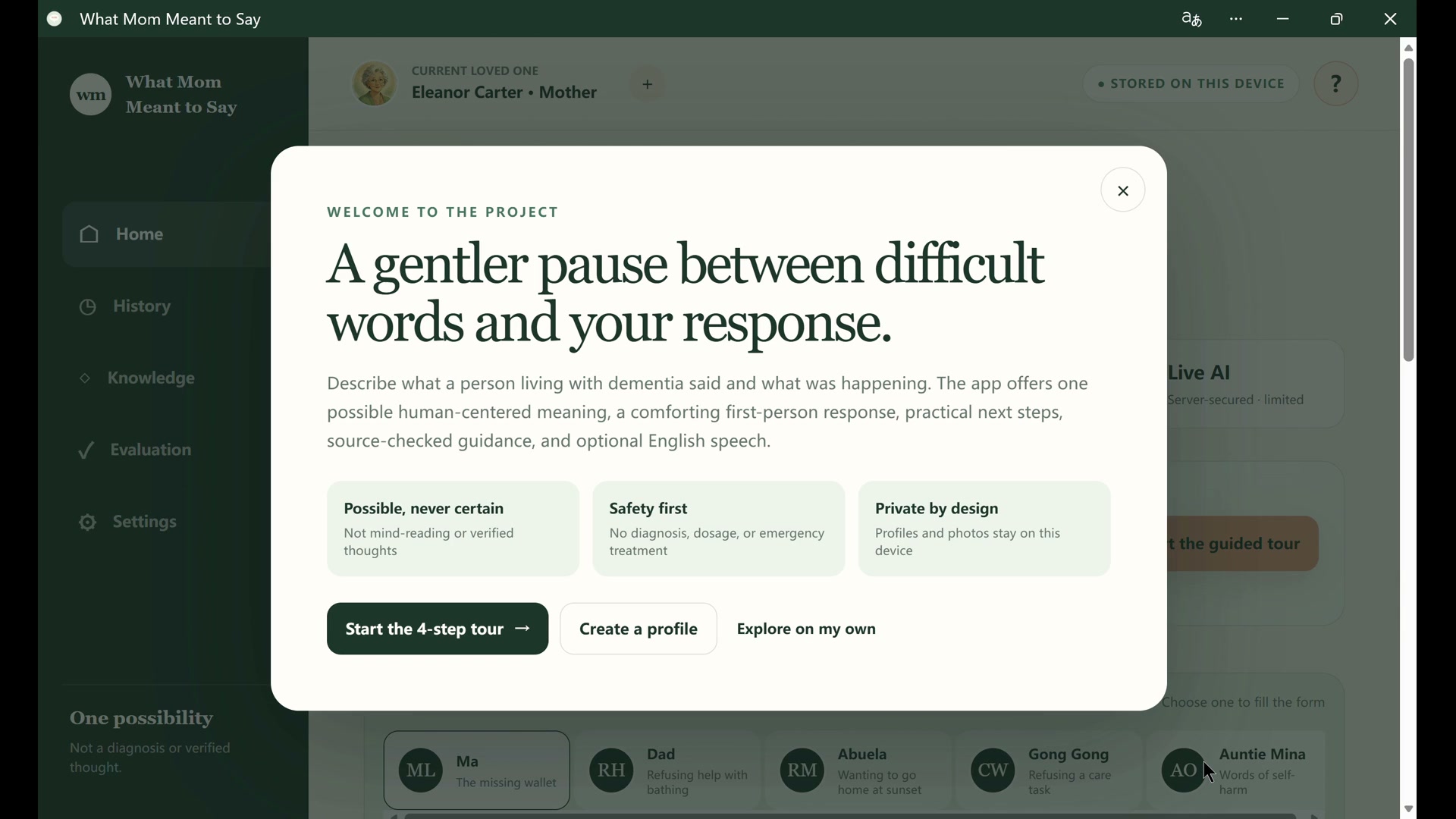
Alzheimer’s disease can make a familiar loved one seem like a stranger. Their words may sound angry, suspicious, or hurtful, while the feeling underneath may simply be fear, confusion, or a need for reassurance. What Mom Meant to Say was created to help caregivers pause, consider one possible meaning beneath difficult words, and respond with greater warmth—while also protecting their own emotional well-being.
What it does
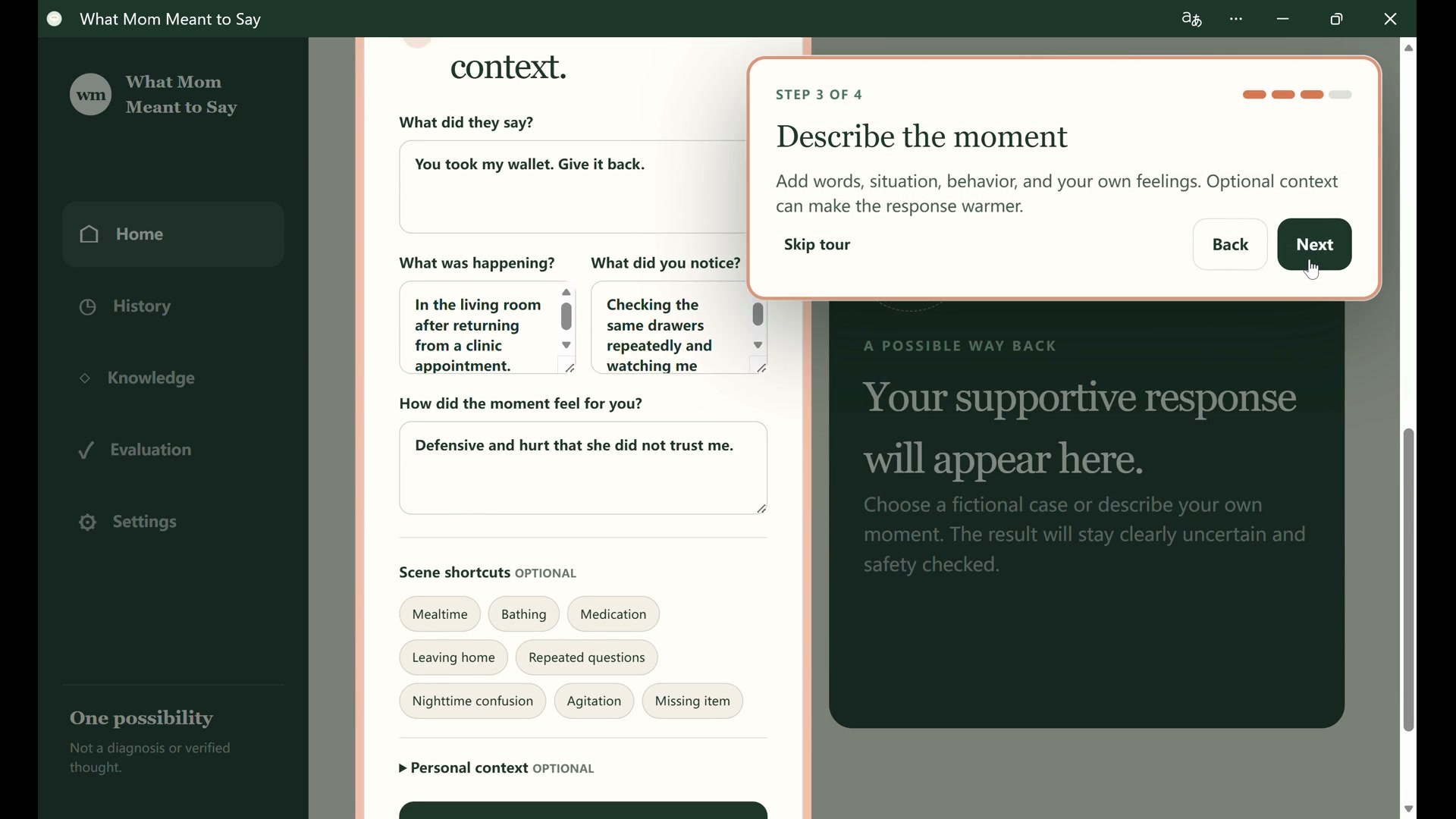
Caregivers enter what the person said, the situation, observed behavior, their own feelings, relationship, language habits, and shared memories. The app then provides:
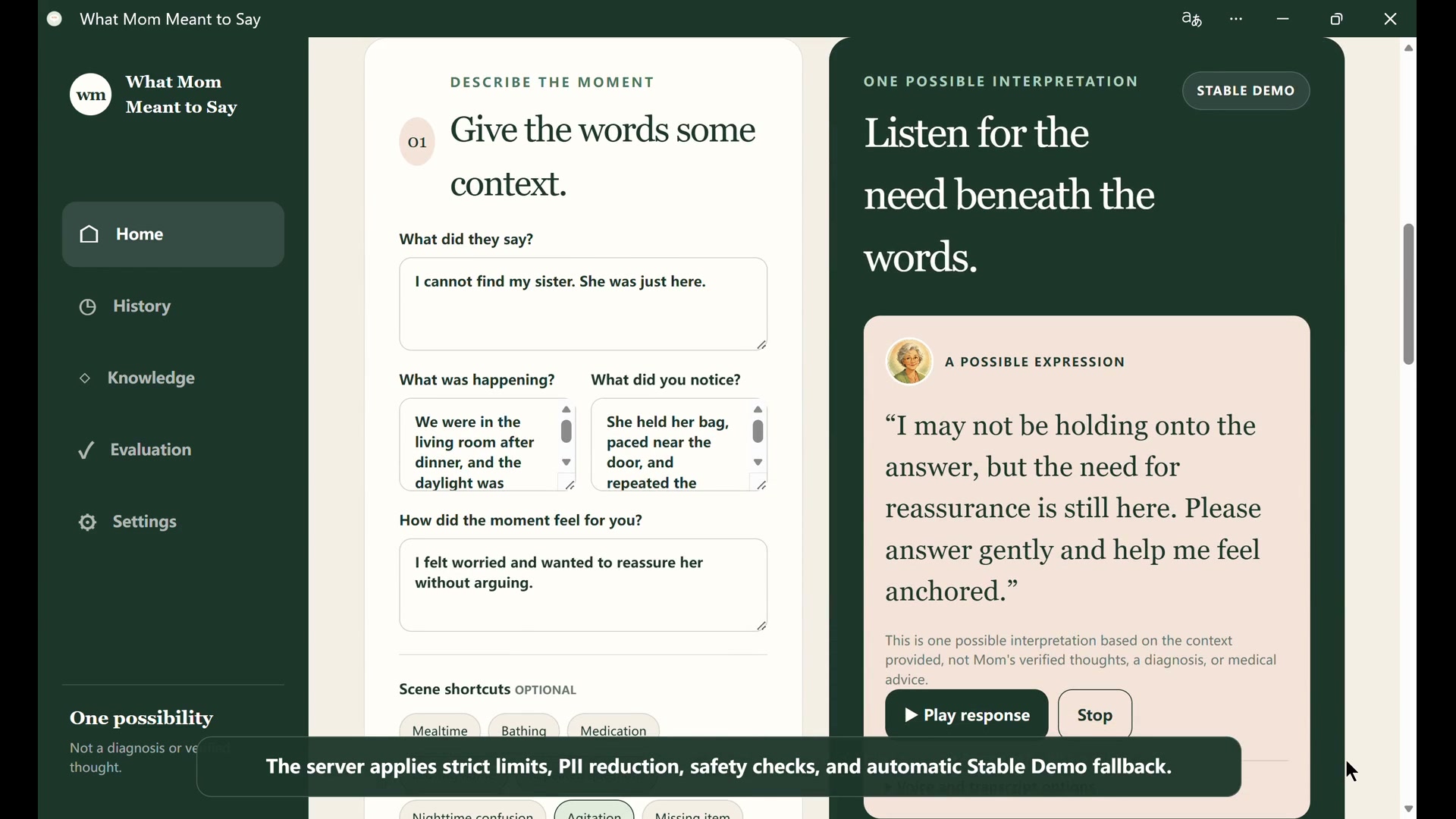
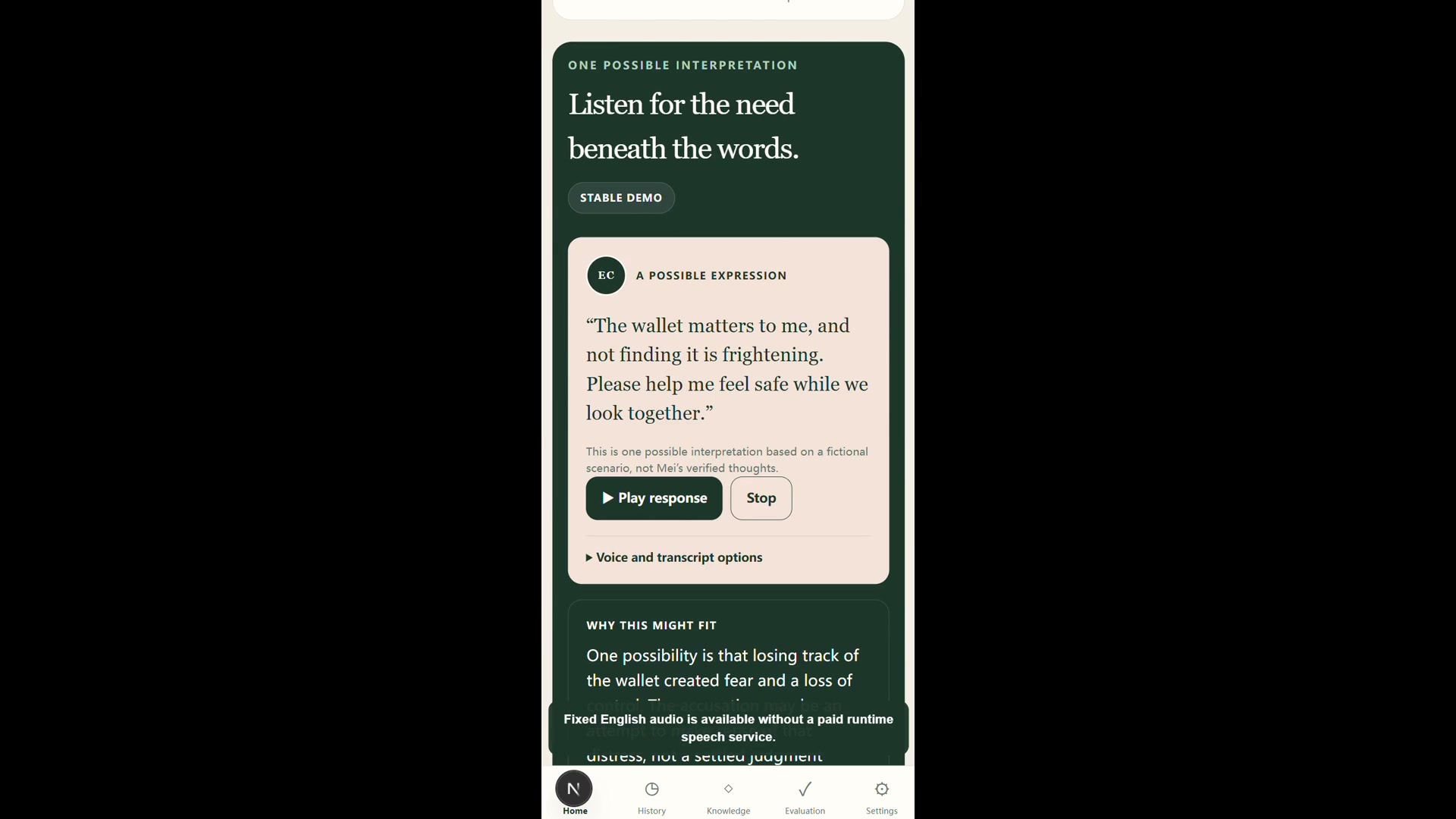
- One explicitly uncertain possible meaning
- A warm first-person response written in the patient’s voice
- A suggested caregiver reply
- Practical next steps based on the DICE approach
- Source-checked dementia-care knowledge cards
- Browser speech and fixed-audio fallback
- Emergency routing for potentially dangerous situations
- Local profiles, photos, history, and personalized context
Stable Demo offers five complete fictional cases without requiring an API. Live AI uses a protected server-side, OpenAI-compatible interface with PII cleaning, rate limits, structured validation, and automatic fallback.
How we built it
We built a responsive, installable PWA with Next.js, React, TypeScript, Tailwind CSS, and Zod. Profiles, uploaded photos, preferences, and history remain in the browser through IndexedDB. Live AI requests pass through server-side privacy cleaning, safety routing, schema validation, and fallback controls. The application is deployed on Vercel and tested with Vitest, linting, type checking, production builds, and security checks.
Challenges we ran into
The greatest challenge was designing an AI experience that could be deeply personalized while remaining empathetic, private, and safe. Live AI considers the person’s profile, relationship, language habits, shared memories, current situation, observed behavior, and caregiver emotions. We also built dementia-specific knowledge cards and safety rules so that generated responses remain supportive, transparent, and grounded without claiming to know a person’s true thoughts or offering diagnosis or medical treatment.
Accomplishments that we're proud of
We created a polished, personalized dementia-care experience powered by Live AI. By combining individual profiles, familiar photos, shared memories, detailed situational context, dementia-specific knowledge cards, and source-checked care guidance, the app generates one possible interpretation of difficult words, a warmer first-person expression of what the person may be trying to communicate, and practical suggestions for the caregiver. Privacy cleaning, structured validation, emergency routing, speech accessibility, and explainability are integrated throughout the experience.
What we learned
We learned that responsible AI for dementia care requires uncertainty, context, privacy, and human review—not just fluent text generation. A compassionate response is most useful when it is paired with practical observation, transparent limitations, and a clear route to real-world help.
What's next for What Mom Meant to Say
Next, we would conduct structured usability testing with caregivers and dementia-care professionals, expand multilingual and accessibility support, improve evidence review, and evaluate whether the suggested responses reduce caregiver distress while maintaining safety and dignity.
Built With
- api
- github
- groq
- indexeddb
- next.js
- openai-compatibleapi
- pwa
- react
- tailwindcss
- typescript
- vercel
- vitest
- webspeech
- zod


Log in or sign up for Devpost to join the conversation.