-
-
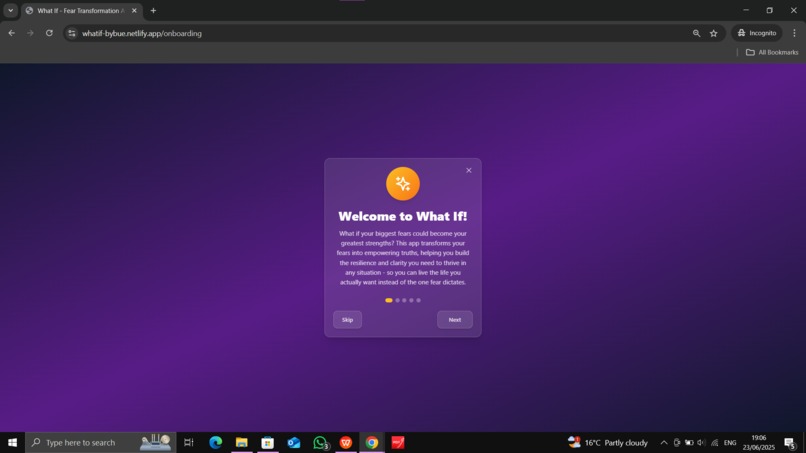
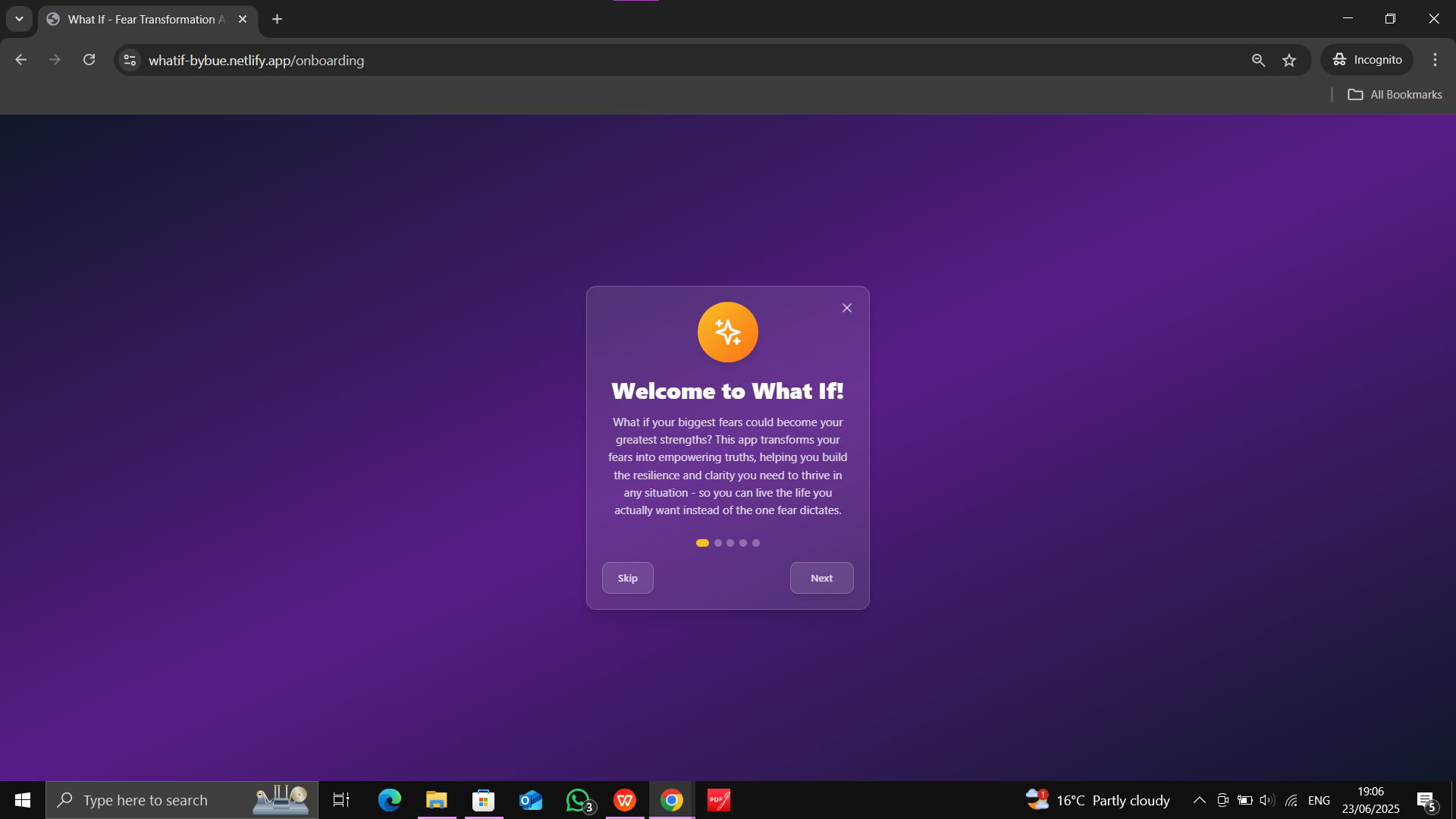
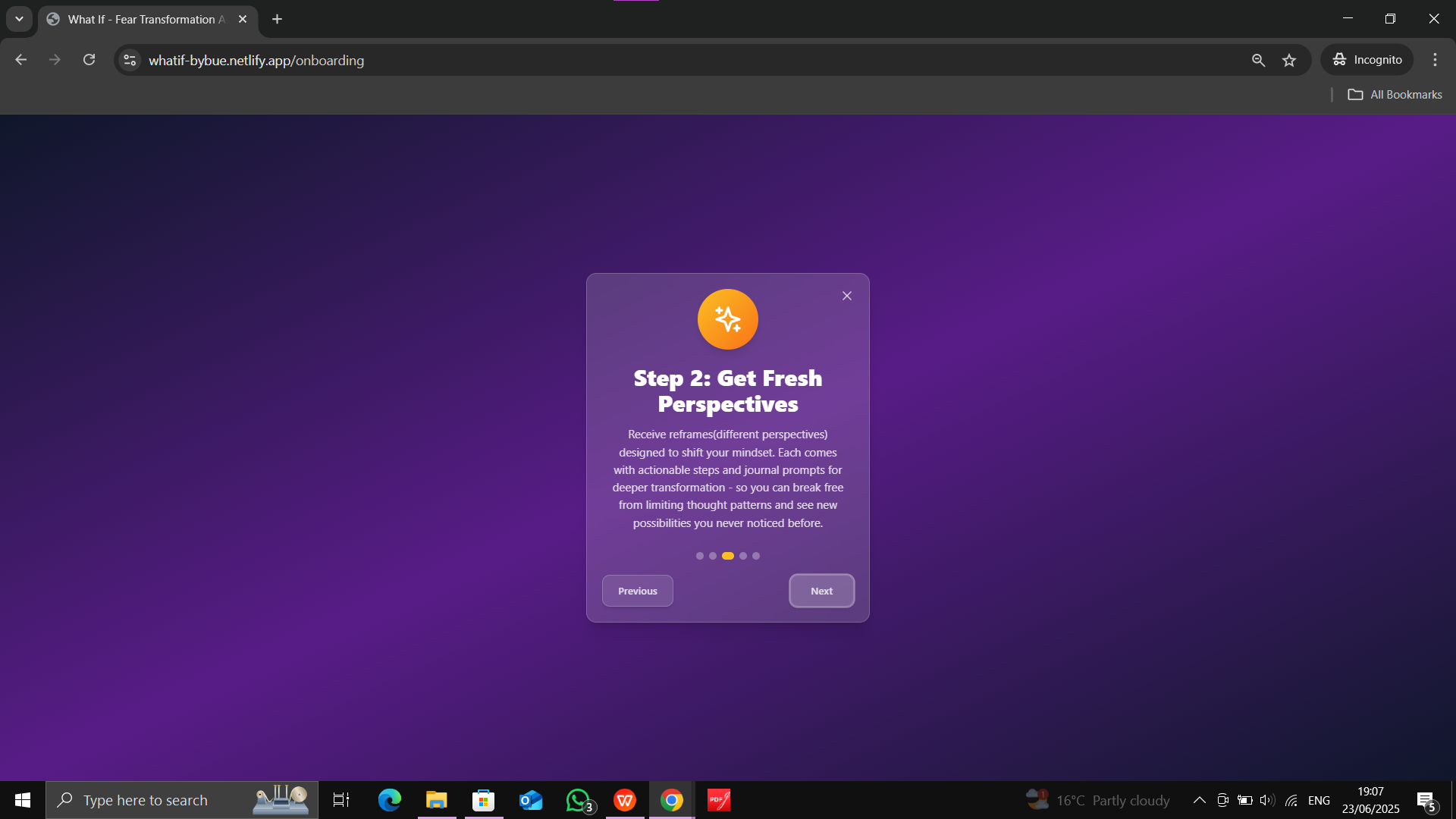
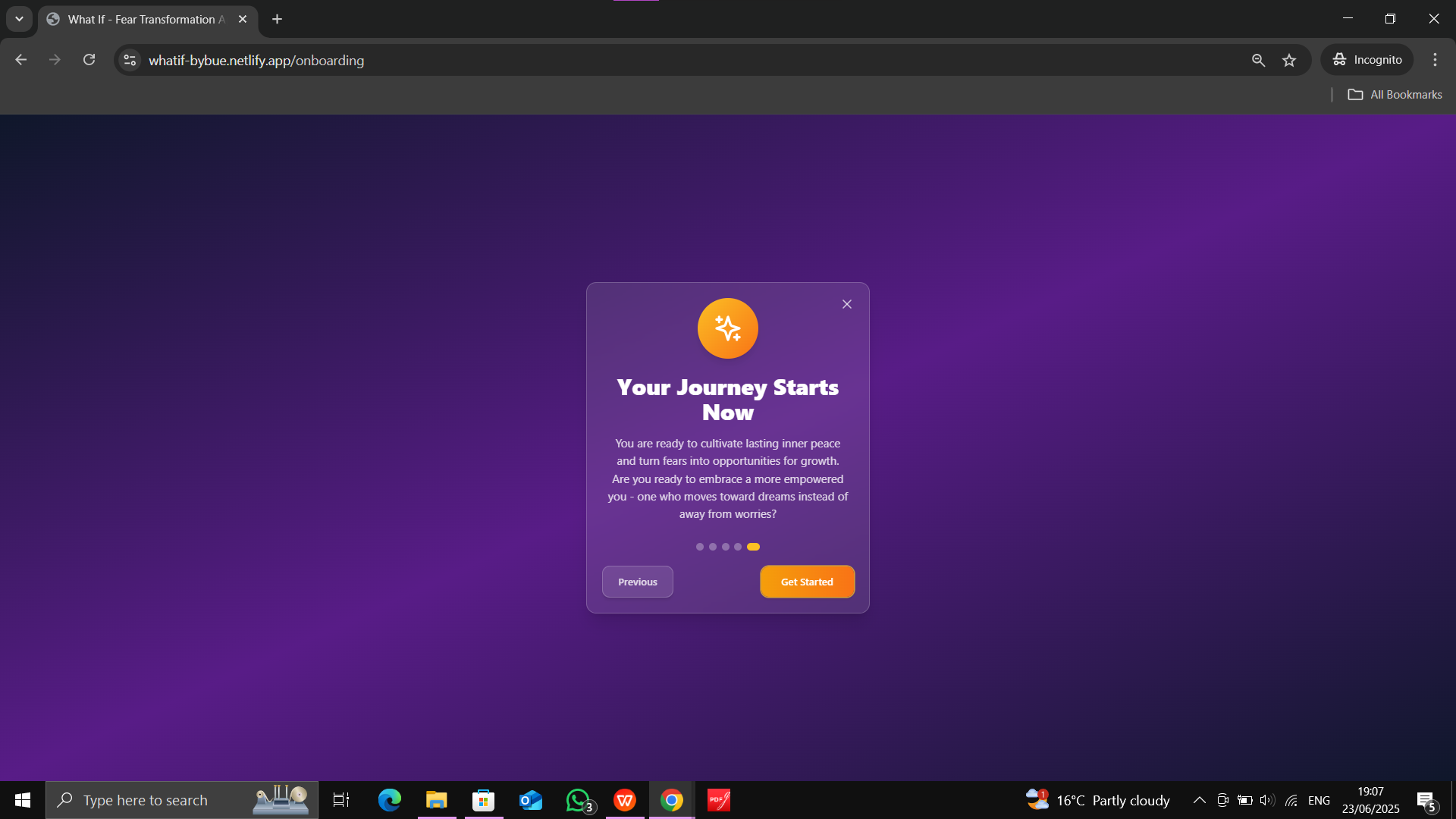
Welcome tutorial
-
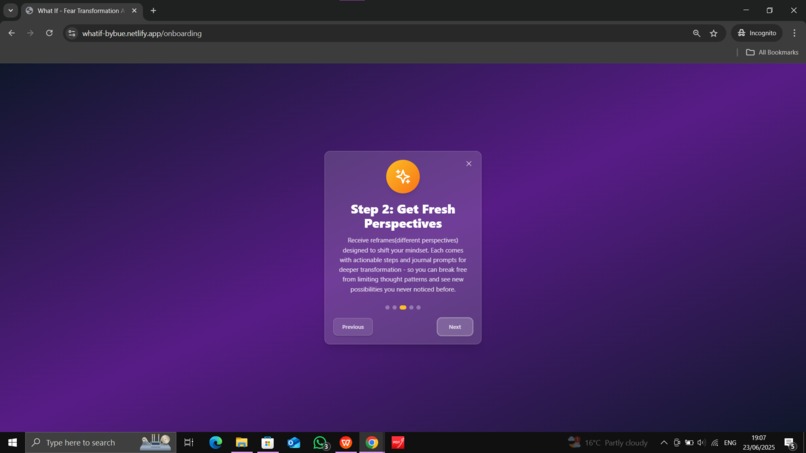
Welcome tutorial
-
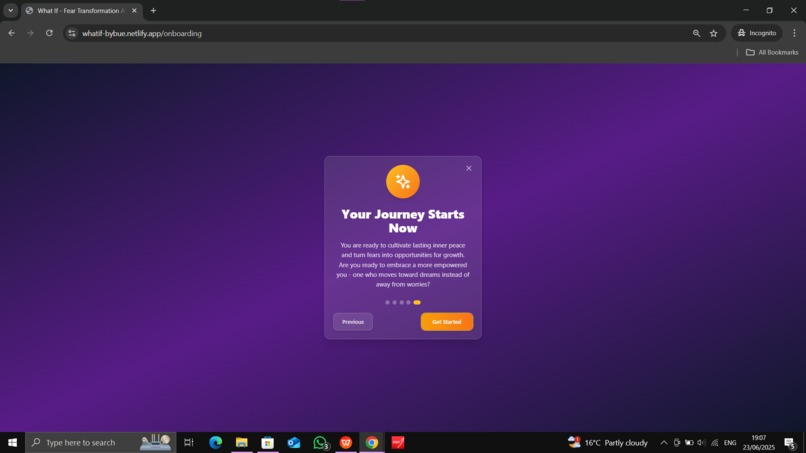
Welcome tutorial
-
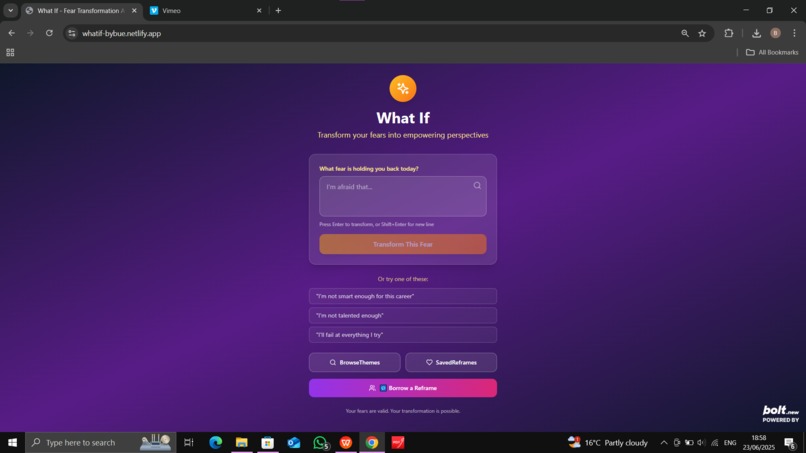
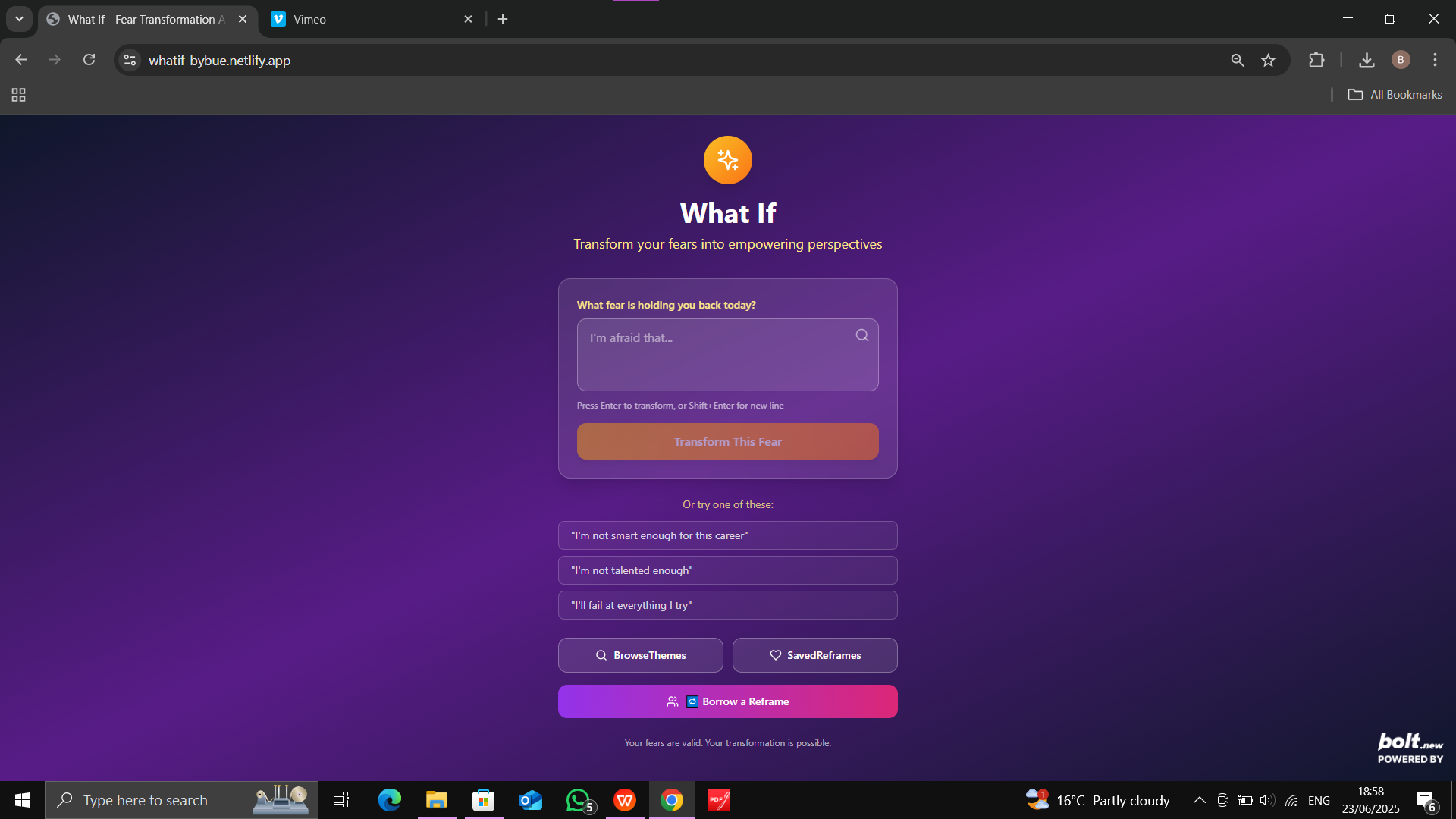
Main Screen
-
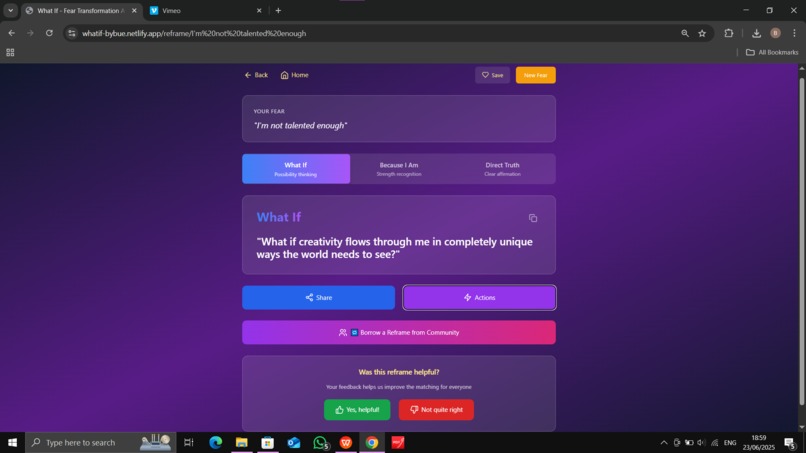
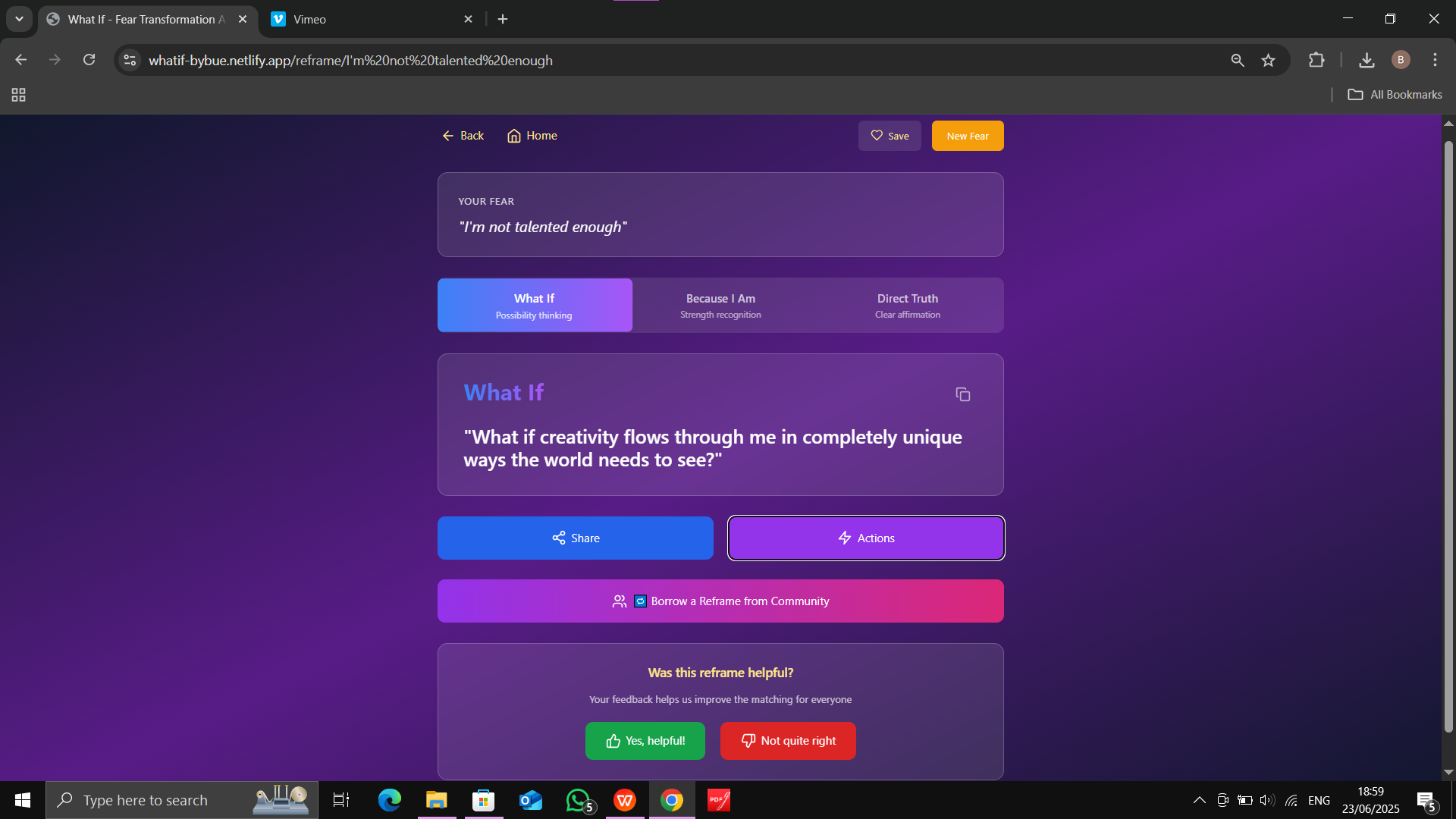
Fear transformed
-
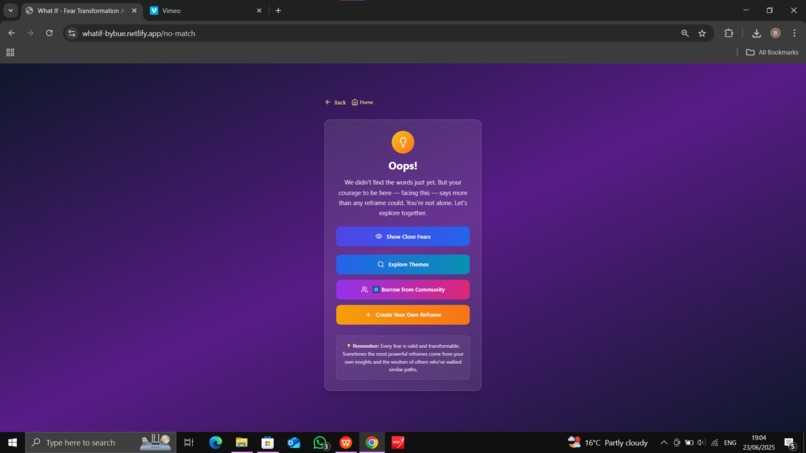
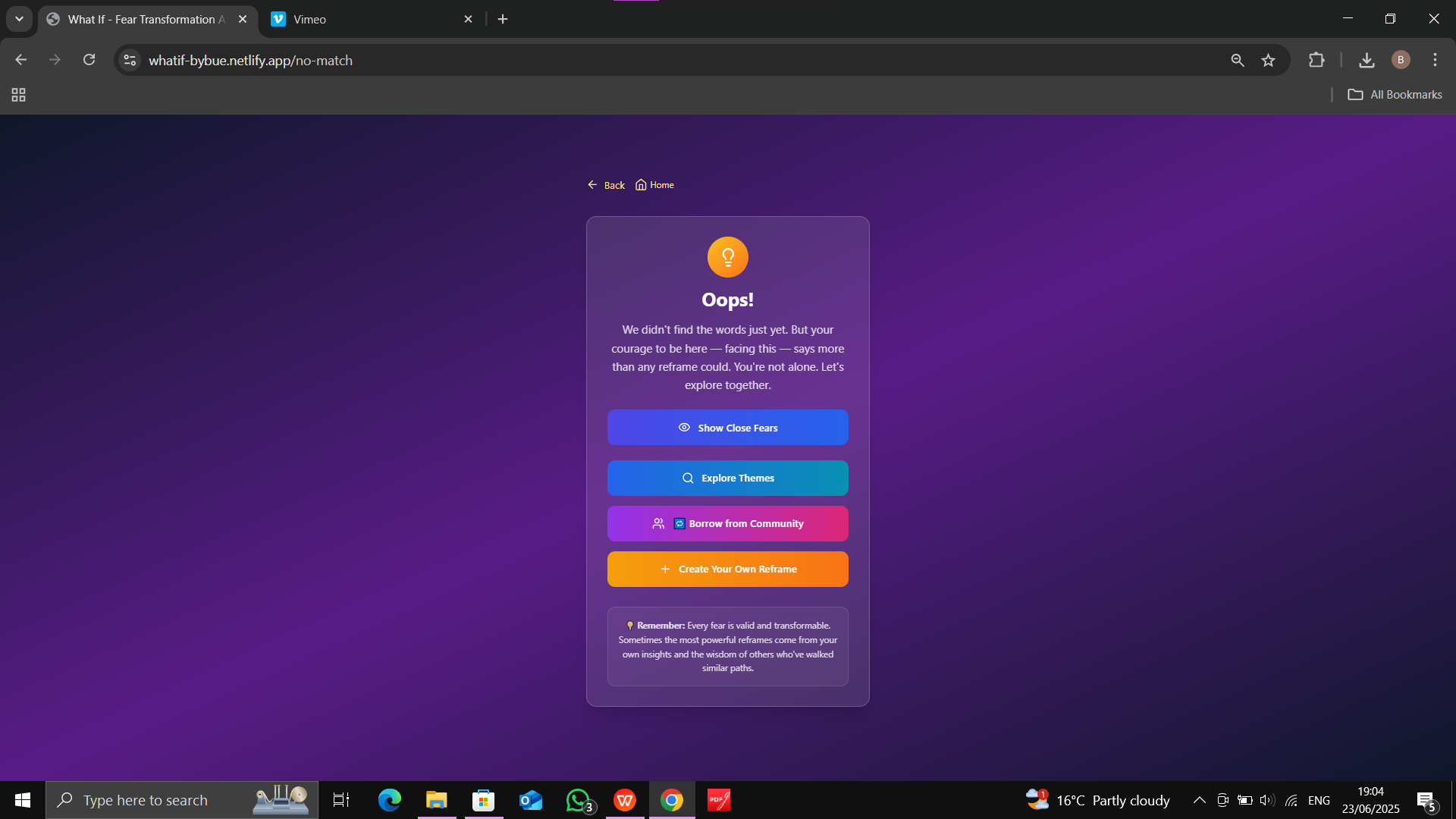
No Fear Match
-
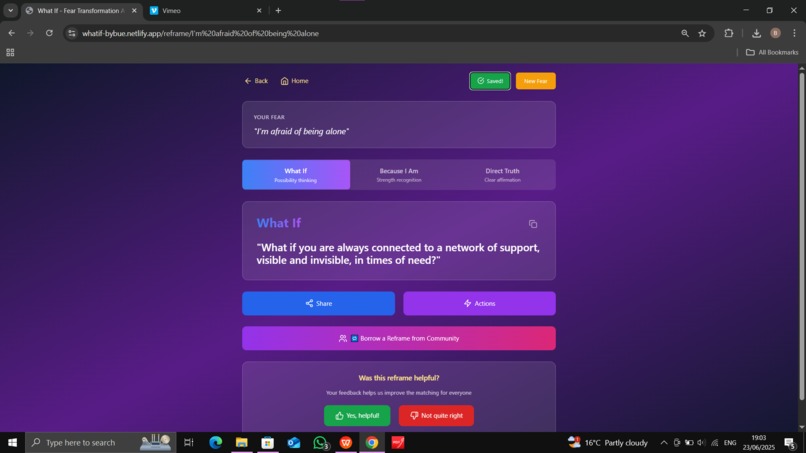
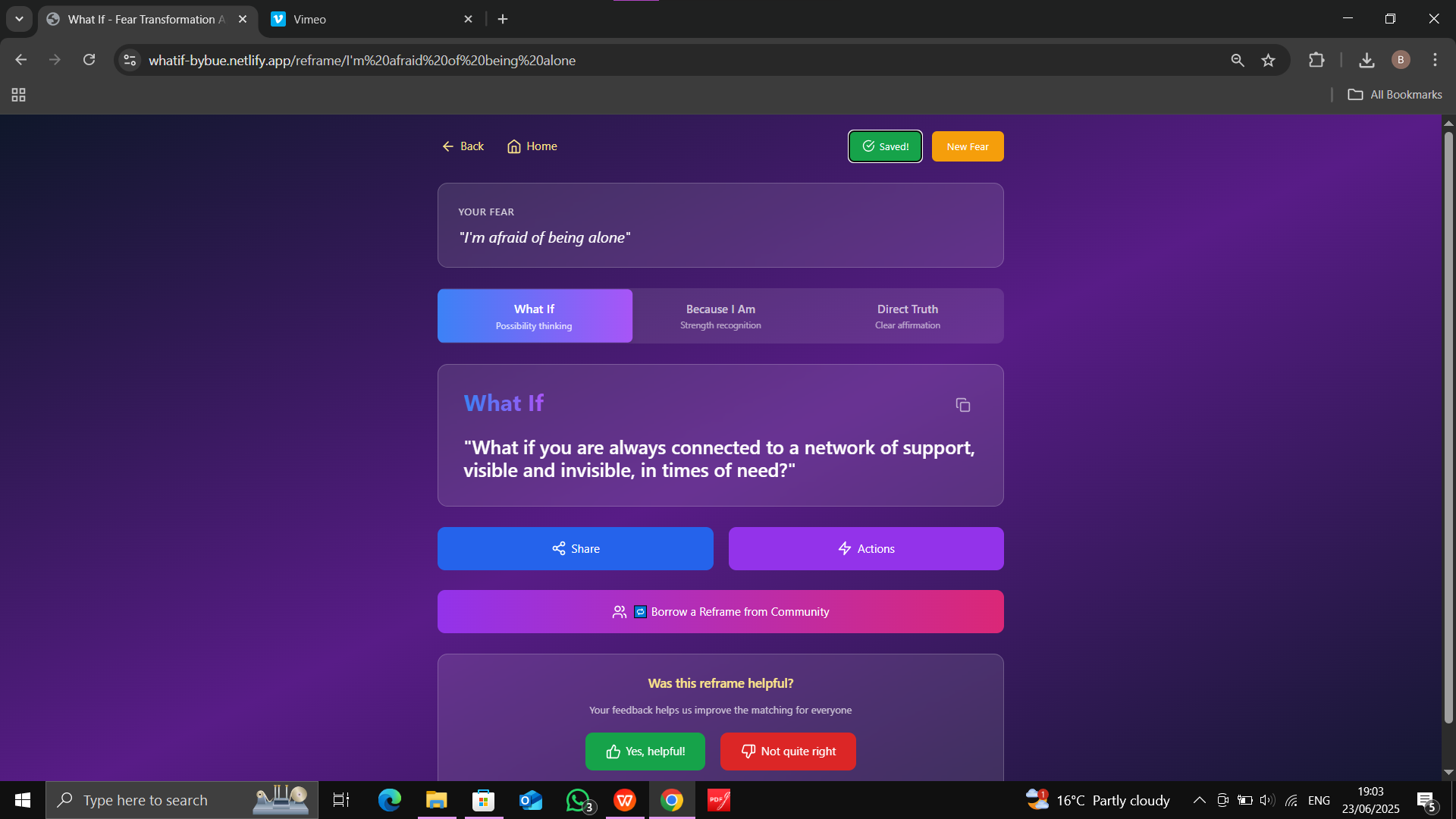
fear reframe save
-
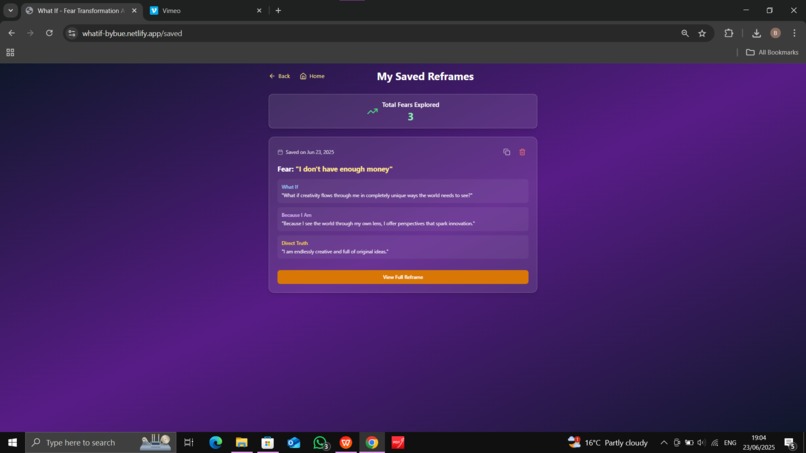
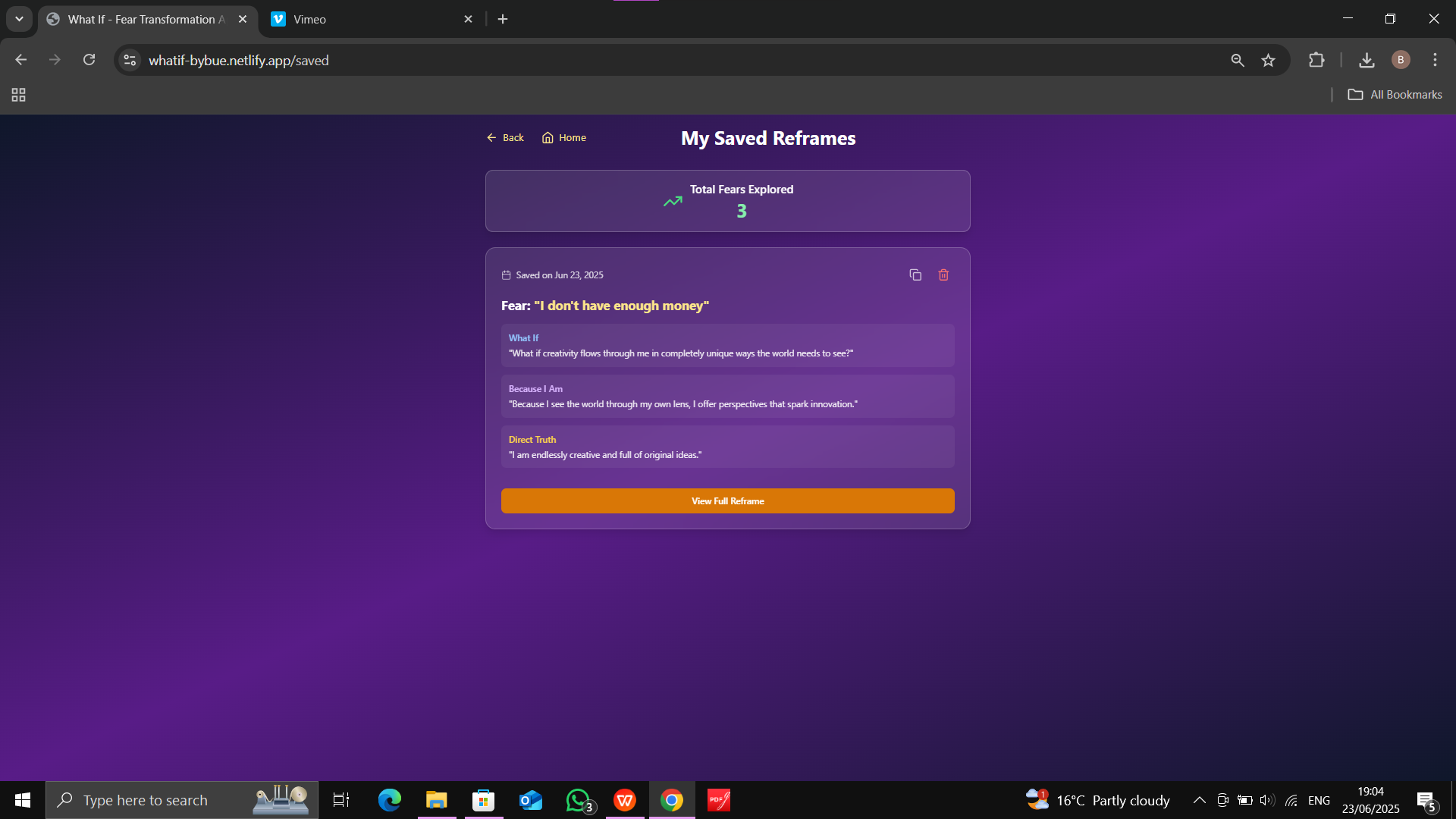
Saved Fears
-
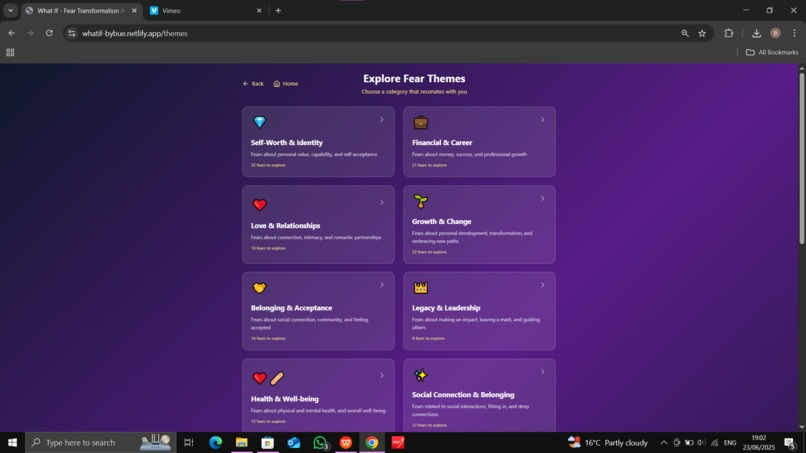
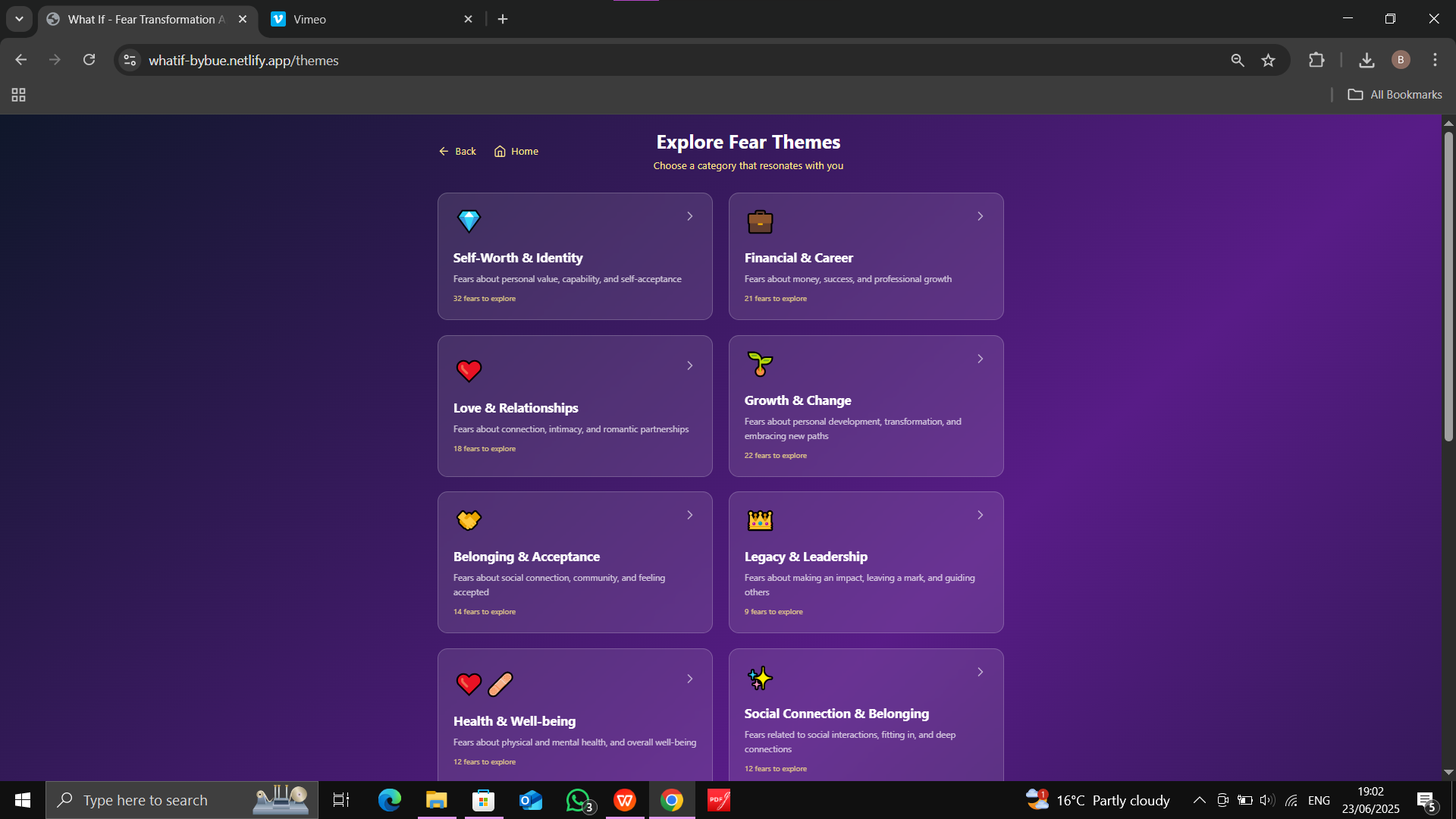
Themes
-
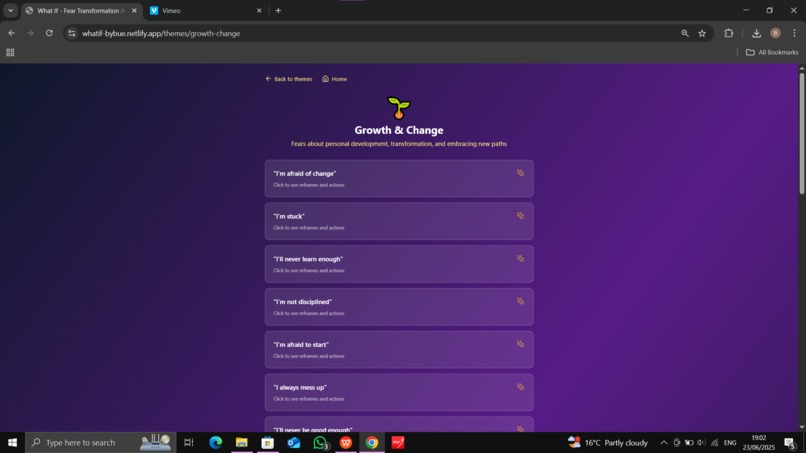
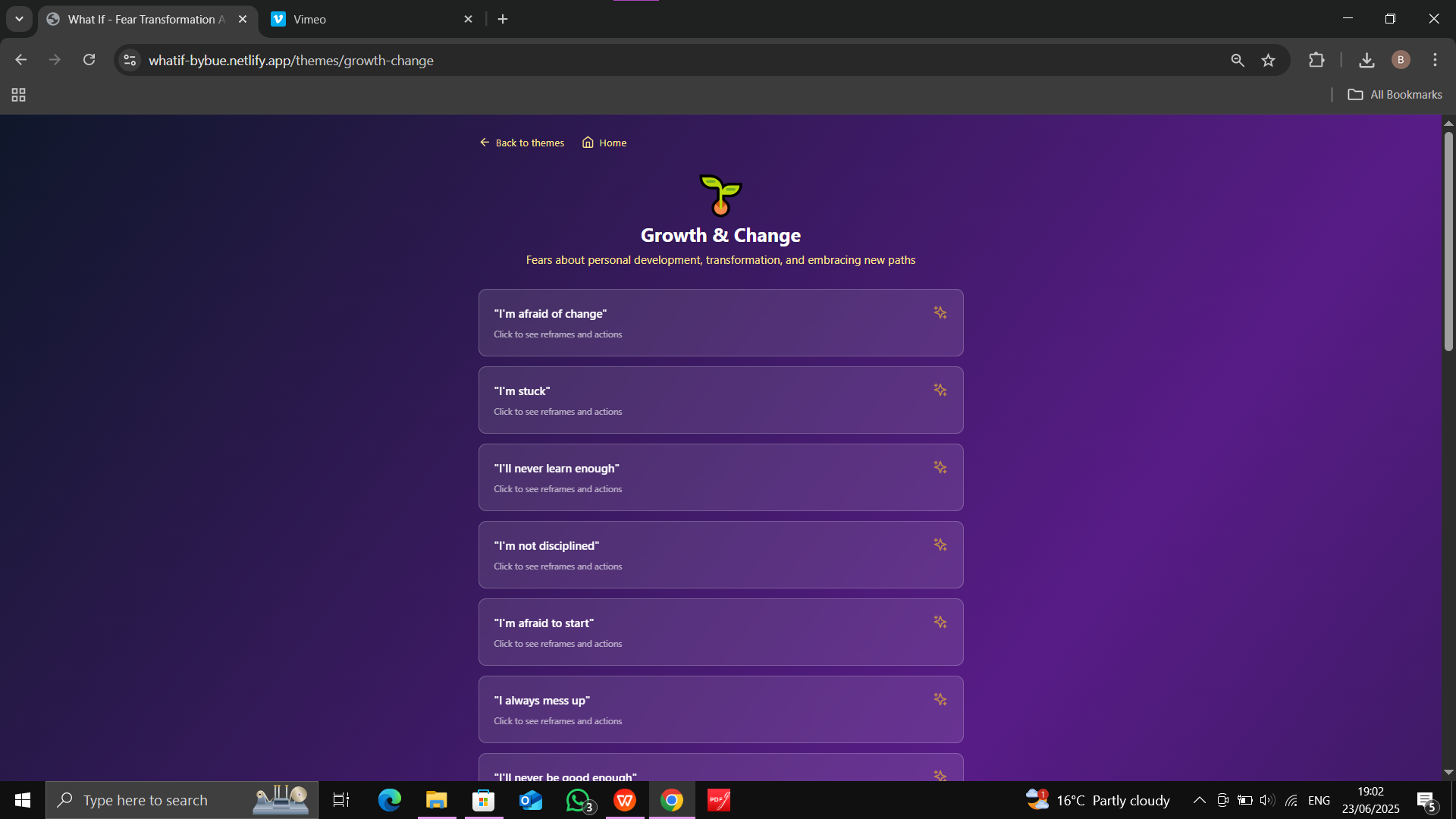
Specific theme
-
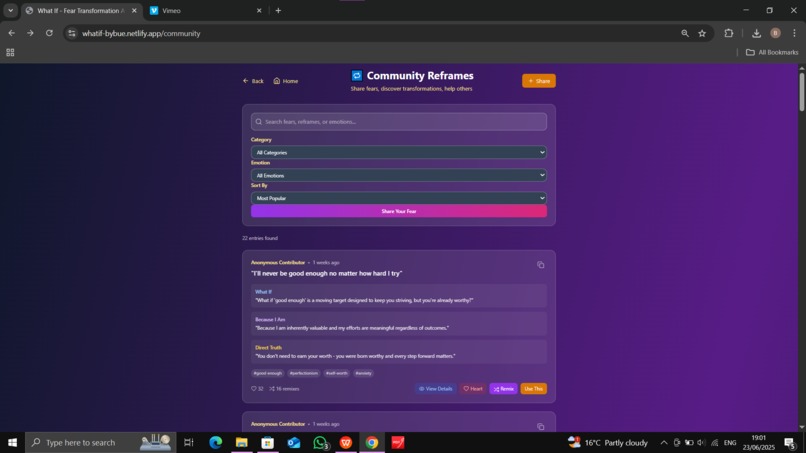
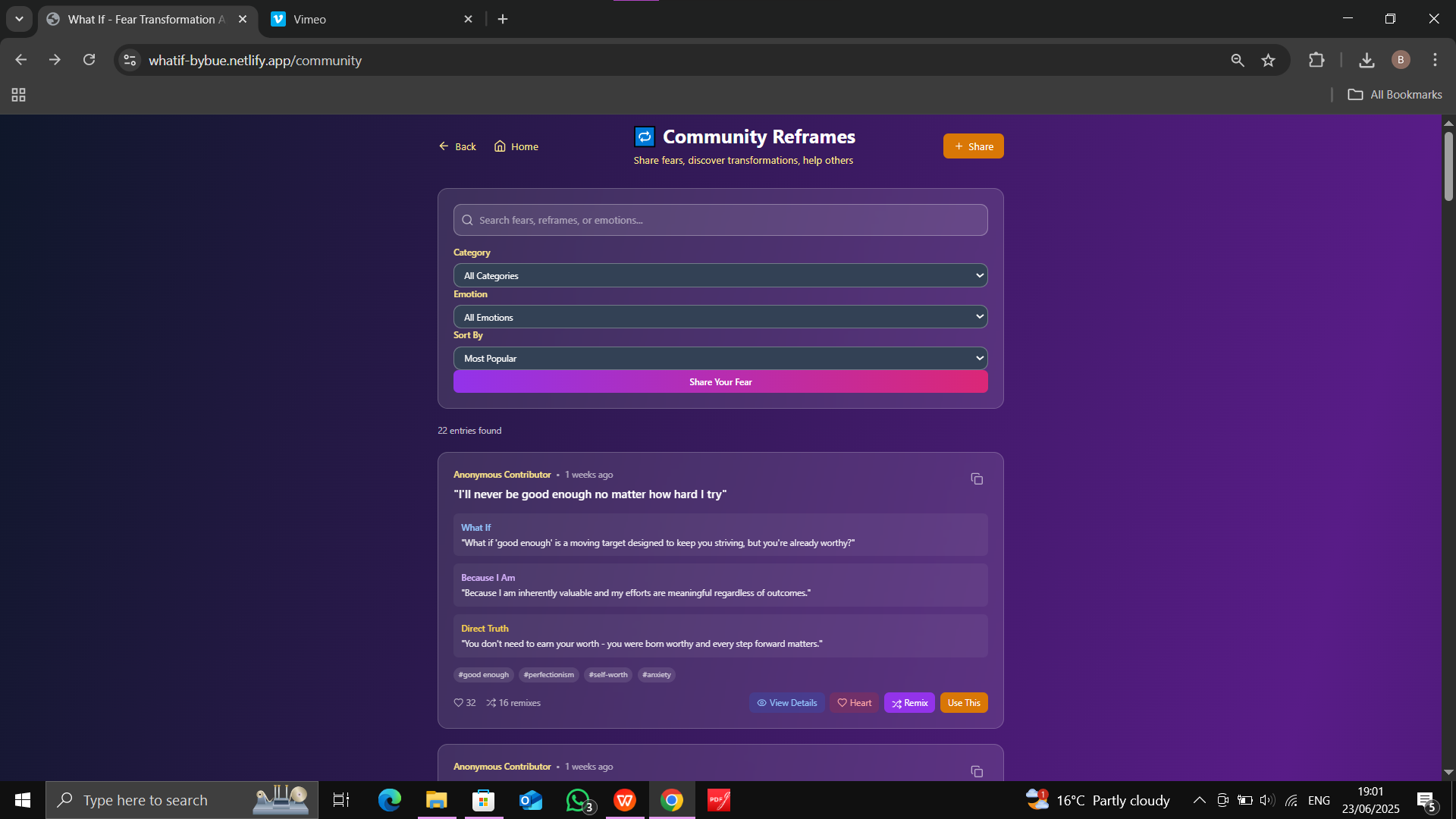
Community section
-
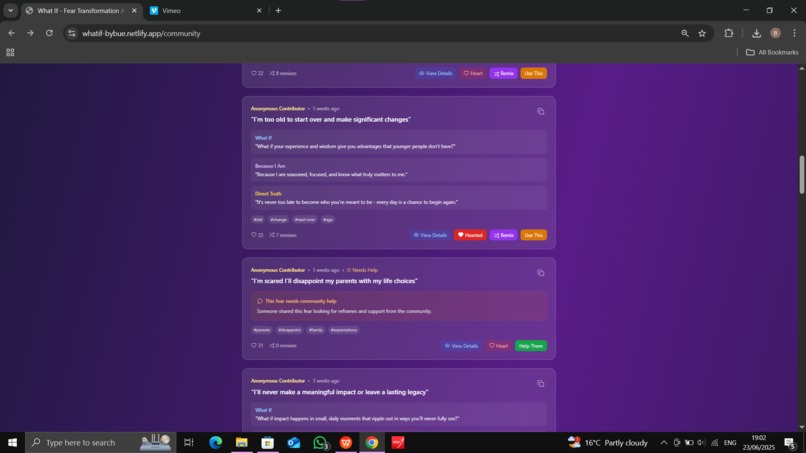
Community section
-
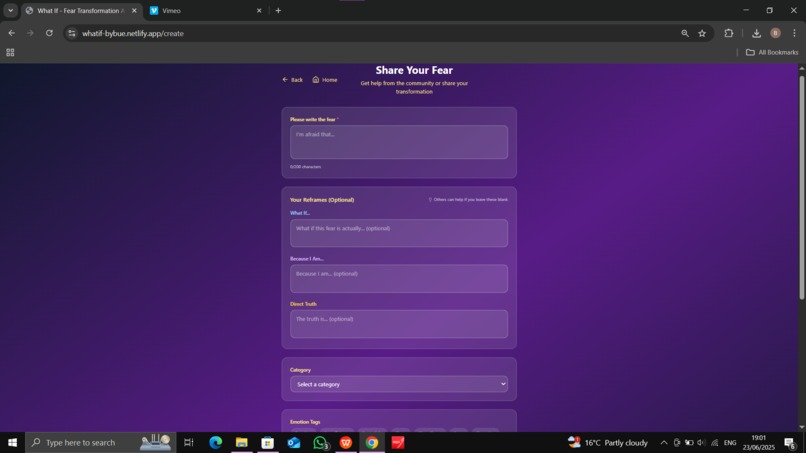
Entering a fear and reframes, or just a fear to share to community
What If: Transforming Fears into Empowering Perspectives
Inspiration
Initially, I approached this hackathon without any coding experience and struggled to find team members. So, I decided to go solo, driven by pure curiosity and a desire to create something in the wellness field. Brainstorming with ChatGPT, the "What If" idea sparked: a web app designed to turn fears into powerful reframes.
In our daily lives, those nagging fears and negative thoughts can really hold us back, keeping us from taking action and reaching our potential. A "reframe" is simply looking at a situation or thought from a new, more constructive angle. "What If" jumps in right there, offering an easy, instant way to shift these limiting thoughts, boosting resilience and a more positive outlook. It's like having a quick tool to tackle those common mental roadblocks.
What started as a fun learning exercise, building a database of fears and their reframes with the smart help of Claude and Perplexity, quickly became something much deeper. As I tested and tweaked the app, going through so many fears and reframes myself, something amazing happened. I genuinely found myself asking, "What if I win?" – and just like that, the hackathon became truly real for me. This personal transformation solidified my commitment, showing me firsthand that fears are just thoughts, and thoughts can absolutely be changed.
What it does
"What If" is an intuitive web app designed to help you transform your fears into empowering new perspectives. It’s super easy to use, with no sign-ups or user IDs – you just visit the app and jump right in! It can be used on both desktops and mobiles. A quick tutorial guides first-time users.
The app's main magic happens here:
Personalized Reframe Generation: You type in any fear, and the app instantly whips up three distinct, powerful reframes:
- A "What If" Reframe: e.g., for "I'm too old to start over," "What if this is the perfect time to begin something extraordinary with all the wisdom I've gathered?"
- A "Because I" Reframe: e.g., for "I always fail," "Because I've experienced setbacks, I approach success with humility and determination."
- A Direct Truth/Affirmation Reframe: e.g., for "I'm behind everyone else," "I am perfectly timed and walking my path with purpose."
Actionable Empowerment: A handy "Action" button gives you immediate, practical steps: a relevant journal prompt, a small micro-action, and a visualization exercise, all tied to your chosen reframe. It's about putting those new perspectives into action.
Sharing & Saving: You can share your favorite fear and reframe via email, or even email yourself all the generated reframes and action steps. Plus, the app lets you save reframes you really like, and they'll be there waiting for you on the same device next time you visit.
Discovery & Community:
- You can browse fears by themes (like "self-worth" or "financial-career") or pick from three random fears if you're not sure where to start. My database of fears and reframes is a themed list, complete with the fear, its three reframes, and action steps.
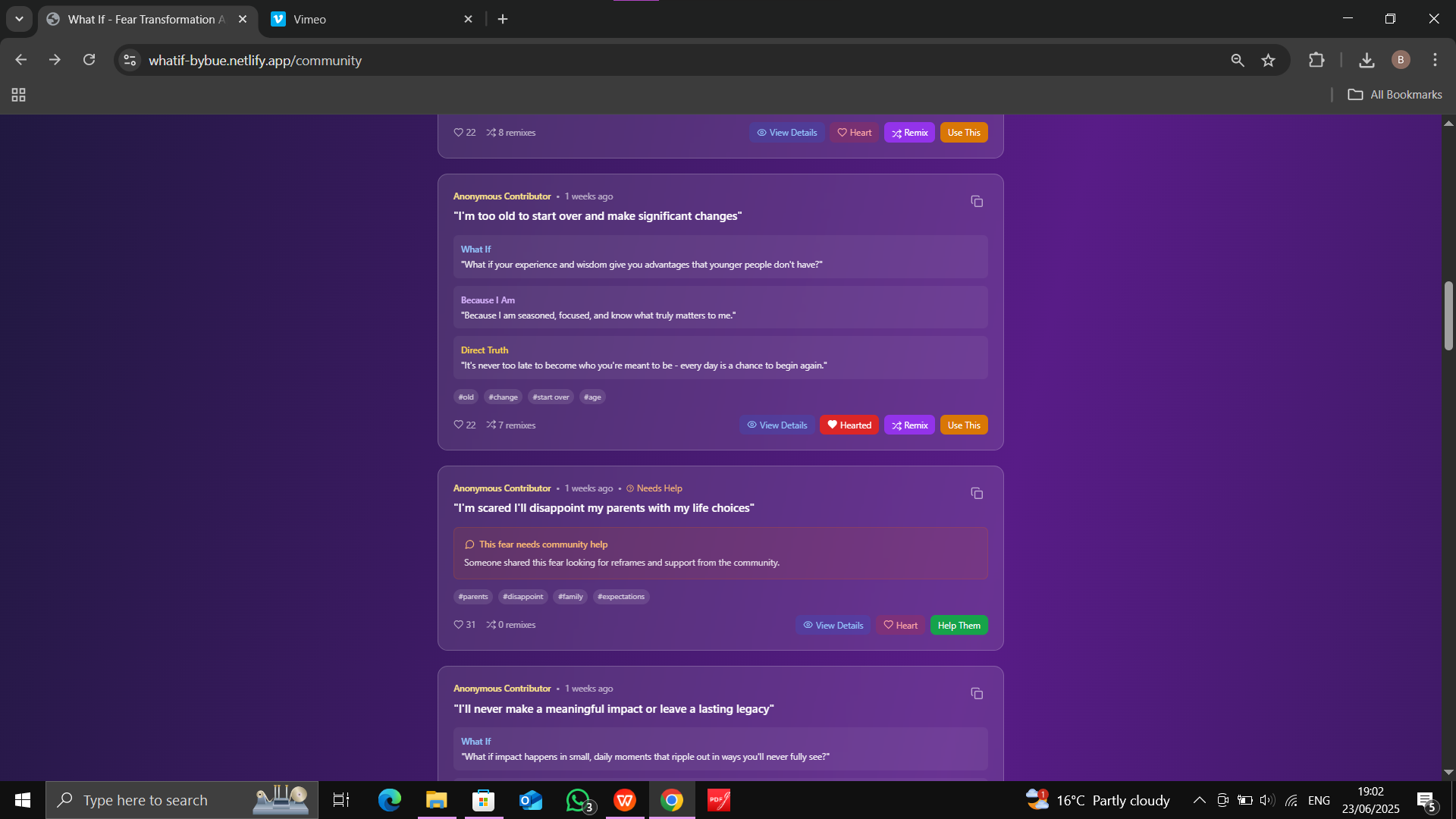
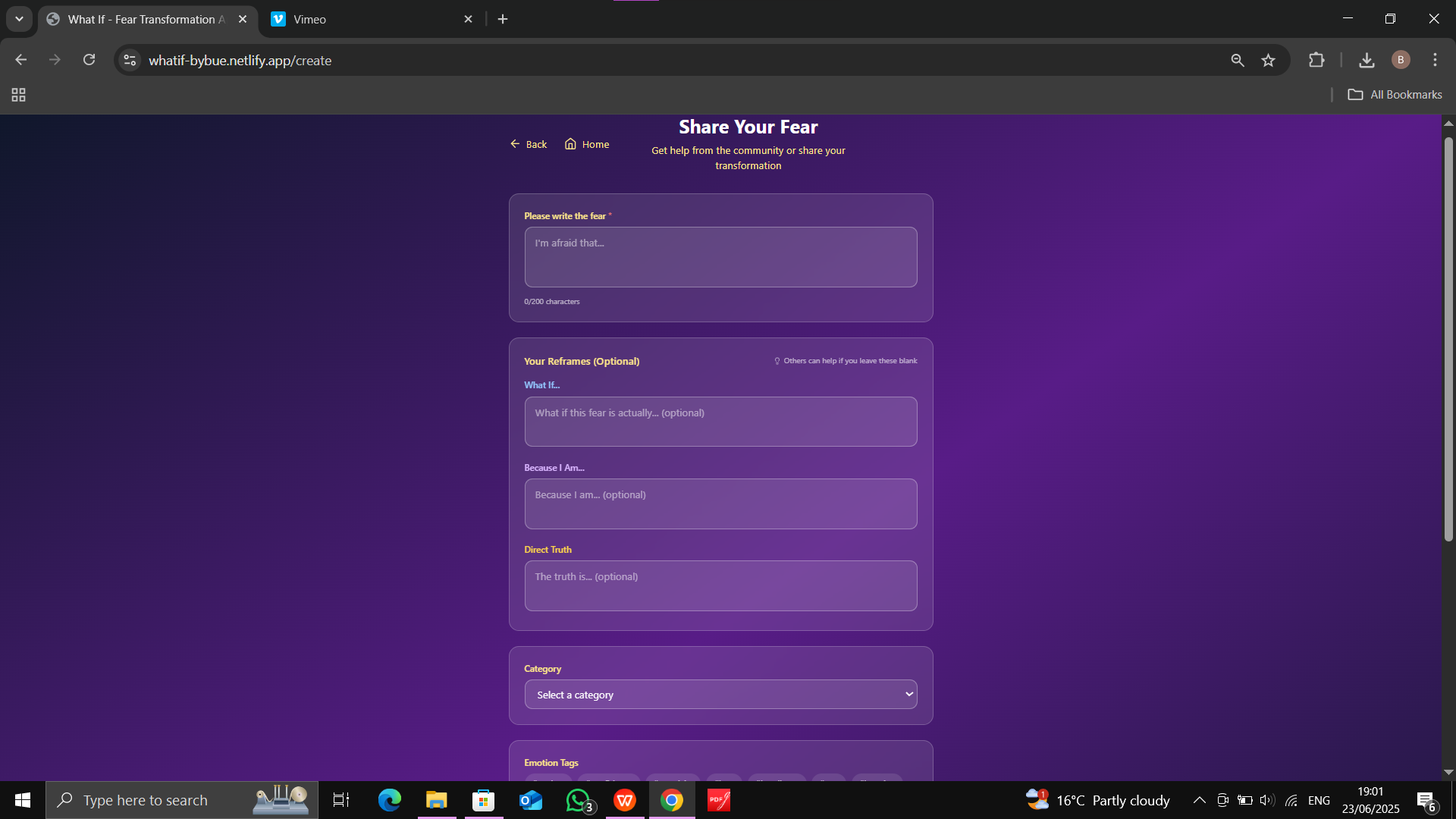
- A vibrant community section, powered by Supabase, lets you anonymously share your fears and get supportive reframes from others. You can also add your own reframes to inspire the community, "like" reframes, and even "remix" community reframes to make them your own. Supabase handles all the magic behind storing these community contributions, likes, and remixes.
Smart No-Match Handling & Feedback: If the app can't find an exact match for a fear you type, it smartly offers helpful options: view the three closest fears, browse themes, explore the community, or share a reframe. You can also tell the app if a reframe wasn't helpful, which then leads to these same alternative suggestions.
How I built it
I primarily built "What If" by simply describing what I wanted directly into Bolt.new. This platform was an absolute game-changer, allowing me to bring my ideas to life without writing a single line of code myself. Bolt.new automatically generated a perfect UI structure and the basic functionalities just from my descriptions, doing so much of the heavy lifting. I really appreciated that Bolt's UI stayed consistent and stable throughout the whole process.
When Bolt.new ran into limitations or errors, I seamlessly teamed up with other AI models: ChatGPT helped with initial brainstorming and general coding bits, while Gemini was crucial for fixing tricky errors and fine-tuning things Bolt wasn't quite nailing. ChatGPT, in particular, was a total lifesaver for stubborn bugs, like an infinite loop between the onboarding and welcome pages, and fixing issues where specific reframes weren't showing up, leading to frustrating random responses.
I integrated Supabase for the community features, which enabled users to submit, like, and remix reframes, fulfilling the Startup Challenge requirements. Finally, linking the project to GitHub in the final stages was essential for smooth page refreshes and preventing errors once the app was deployed on Netlify, fulfilling the Deploy Challenge requirements.
Challenges I ran into
Even with all the Bolt AI help, I definitely hit some bumps:
- Database Management: Initially, adding more fears and reframes directly within Bolt was a bit tricky, as some entries would disappear.
- Getting Reframes That Matter: It was a real challenge to ensure the generated reframes were genuinely insightful, actionable, and truly resonated with common fears. This required a lot of iteration and tweaking of the AI prompts used to create the database content.
- Persistent Errors: I wrestled with some really frustrating errors, like an infinite loop from the onboarding to the welcome page, and a bug where a "no fear" reframe wasn't appearing, leading to random reframes. ChatGPT swooped in to save the day on both of these, as I was stuck for a while.
- Backend Integration: While Supabase was amazing for the community features, fully grasping the underlying code of its integration is still something I'm learning about.
- Team Formation: Starting out, my complete lack of coding experience and "proper" projects made it tough to find teammates, which is why I decided to take on the hackathon solo.
Accomplishments that I'm proud of
Despite starting with zero prior coding experience, I'm incredibly proud of what I achieved:
- Building a Fully Functional Web App: I brought the entire "What If" concept to life as a complete web application.
- Harnessing AI Effectively: I leveraged multiple AI tools (Bolt.new, ChatGPT, Gemini, Claude, Perplexity) in a big way, as a non-coder, to pull off some pretty complex functionalities.
- Personal Transformation: The journey of building this app was a huge personal win; it directly led to my own shift in perspective, truly embodying the app's core message that fears are just thoughts that can be changed.
- Overcoming Technical Hurdles: I successfully debugged persistent errors and implemented features like Supabase integration, mostly thanks to resourceful AI collaboration.
- Creating a Meaningful Tool: I developed an app that I genuinely hope helps people uncover their own courage and wonders.
What I learned
This hackathon was a huge lesson in how accessible technology can be, and just how powerful AI is. I learned that even if you don't understand every line of code, clear ideas and creativity can turn complex concepts into working applications. My journey through building this project became a personal testament to overcoming self-doubt and embracing challenges with courage, truly proving that fears are just thoughts, and thoughts can be changed.
What's next for What If
I've got so many ideas bubbling for how to make "What If" even better! For the future, I envision:
- Integrating GPT for even more personalized and specific reframe responses.
- Adding user profiles and achievements (like "first reframe," "first like") to make the experience more engaging and build a stronger sense of community.
- Diving deeper into the Supabase integration to really understand how it works under the hood.


Log in or sign up for Devpost to join the conversation.