Inspiration
"Nothing is fixed until it is built"
The problem definition arises from our day-to-day experience with the decision processes in the AEC industry. The projects we deal with are complex and each stakeholder has distinct drivers that affect different aspects of the design.
The design process can be adversarial. What we mean is that the process can have many conflicting concepts and this makes it difficult to move forward and define the design constraints. This leads to a definition of the problem as "a gap in how we perceive information"
Our approach to the problem addresses communication within the structural and architectural design process. For example, "What if I remove a column?"
What it does
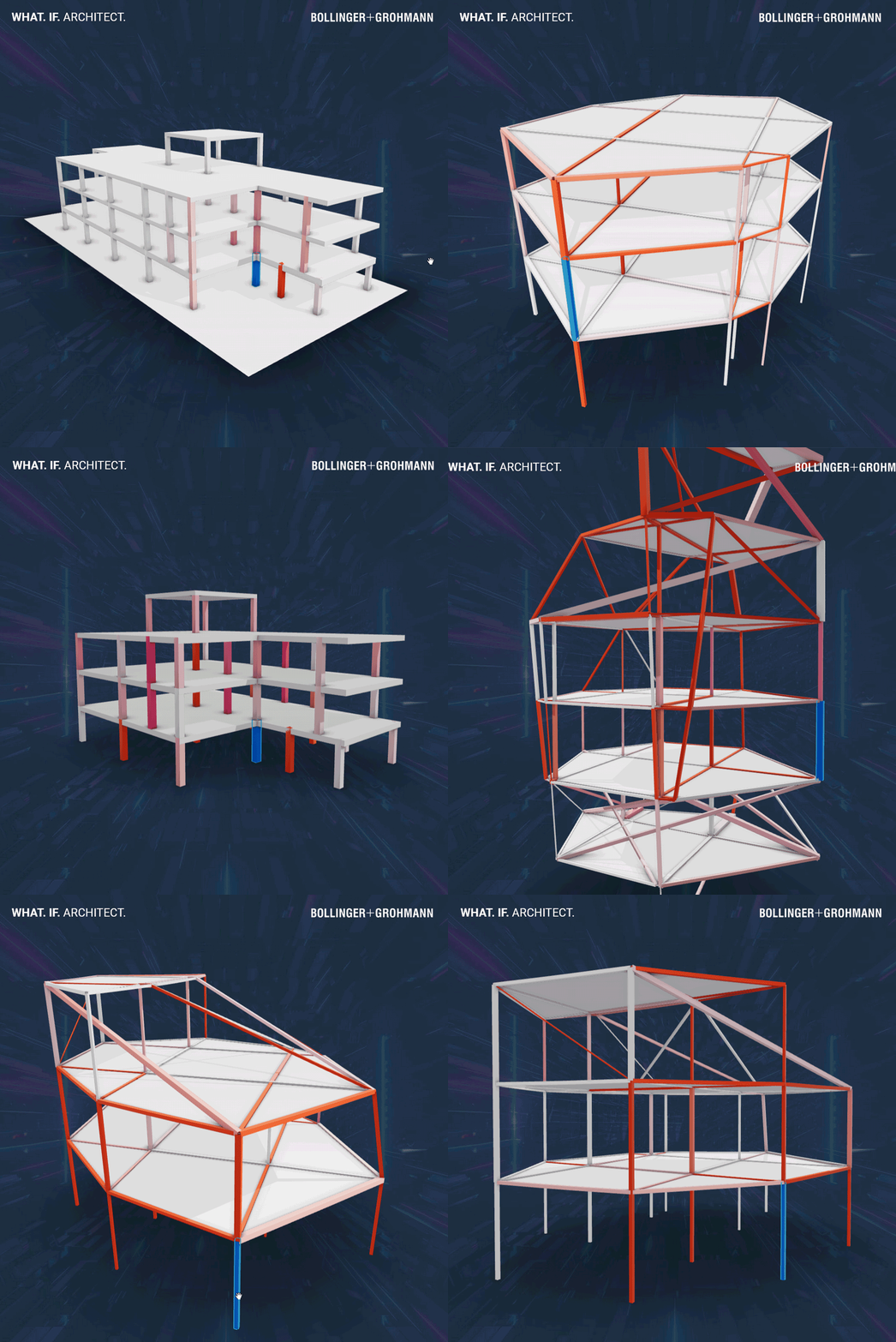
Our hack aims to re-visualize data through geometry. Primarily we wanted to see if there was a better way to communicate the flexibility of structural elements in the design process. We created a visual layer on top of speckle data that communicates much more than just geometry.
How we built it
The hack focuses on two main steps. First, the structural model is created in Rhino and analysed in Karamba3D. Then, to understand the impact of removing an element in the design, we analyse the model in various states where elements are removed from the model. The result of each state is then mapped to the result from the original design to evaluate its "influence" factor. Finally, all this data is collected and added as attributes to the rhino objects which are sent to Speckle. The website interface allows various users to interact with the results and understand how the decisions impact the overall design.
Challenges we ran into
The initial idea was to create a dynamic loop between decisions and results. However, the working concept was simplified into a “brute force” analysis where each possible variation of the model state is analysed and then uploaded to the server. This means that validation of the data is important before sending the model. The visual interface uses a ratio calculated for each element based on the relative change between model states. The method of deciding the influence factor from the results is subjective and will vary for different applications. In this test case we implemented a structural focused “influence” factor based on utilization, loads, and element weight.
Accomplishments that we're proud of
We are proud of the data connections we made between Speckle, Karamba, and the website interface. We are also proud of how we thought through and addressed a problem we saw in the AEC industry and how we then applied a new way of visualizing data to address this problem.
What we learned
We learned that applying the "influence" factor cannot be standardised for different types of elements and has subjective information baked into the process. For example, the design of beams and columns require different sets of assumptions and design objectives.
What's next for What.If.Architect.
The next stages of development would be to create a dynamic workflow that allows real time calculations and analysis for individual user input.
Team
Special thanks to the team. Matthew Tam, Steffen Samberger, Wyeth Binder, Torsten Künzler.
Built With
- grasshopper
- karamba3d
- rhino
- speckle
- typescript
- vue.js


Log in or sign up for Devpost to join the conversation.