-
-
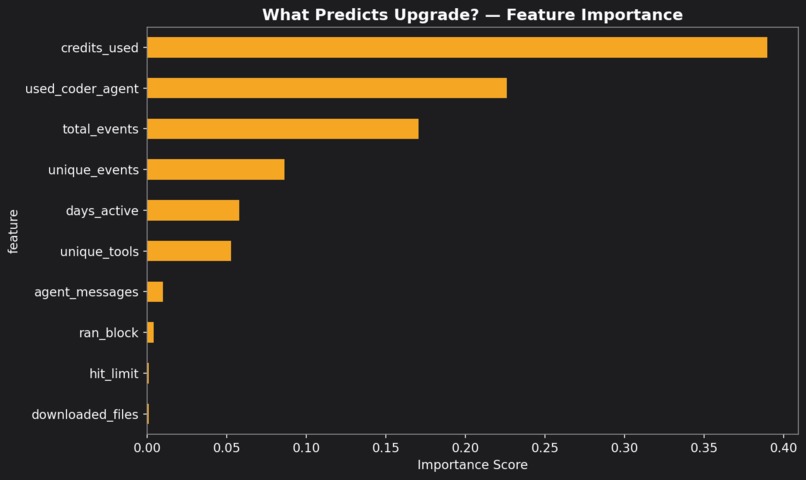
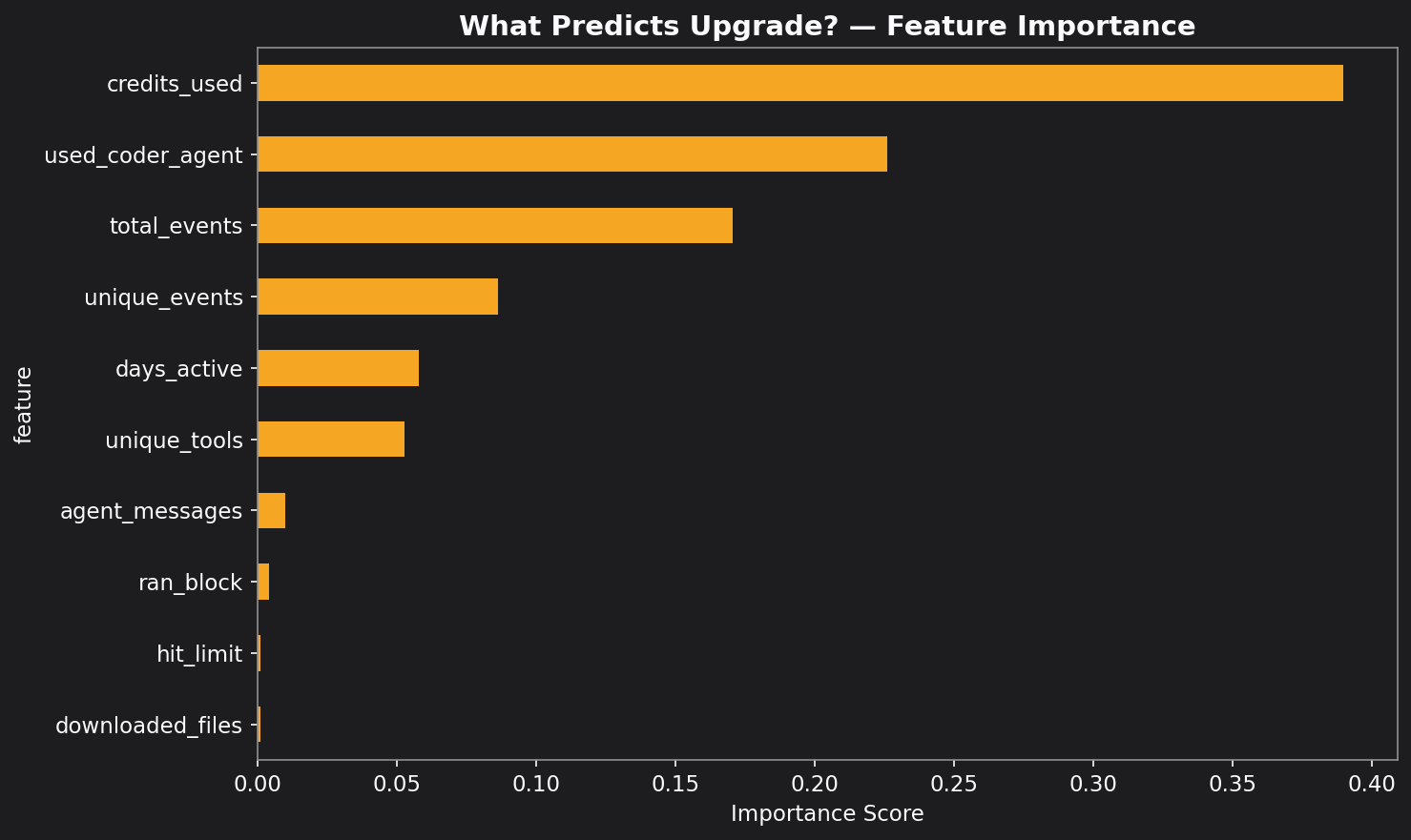
Feature_importance: “Visualizing key features driving model predictions using feature importance analysis for better interpretability.”
-
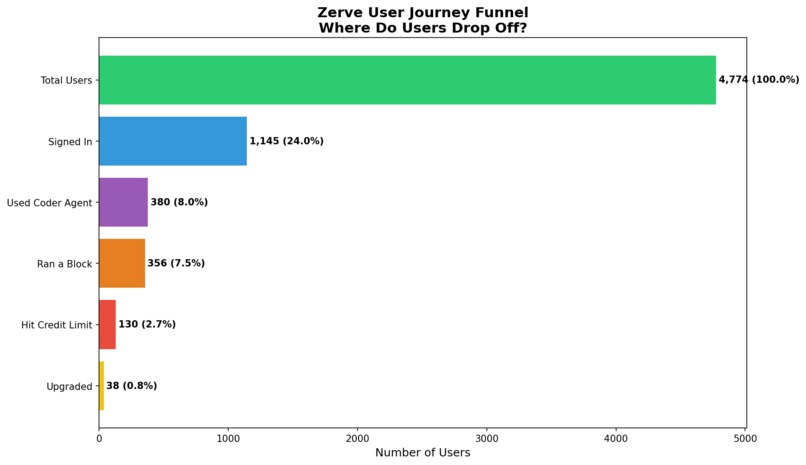
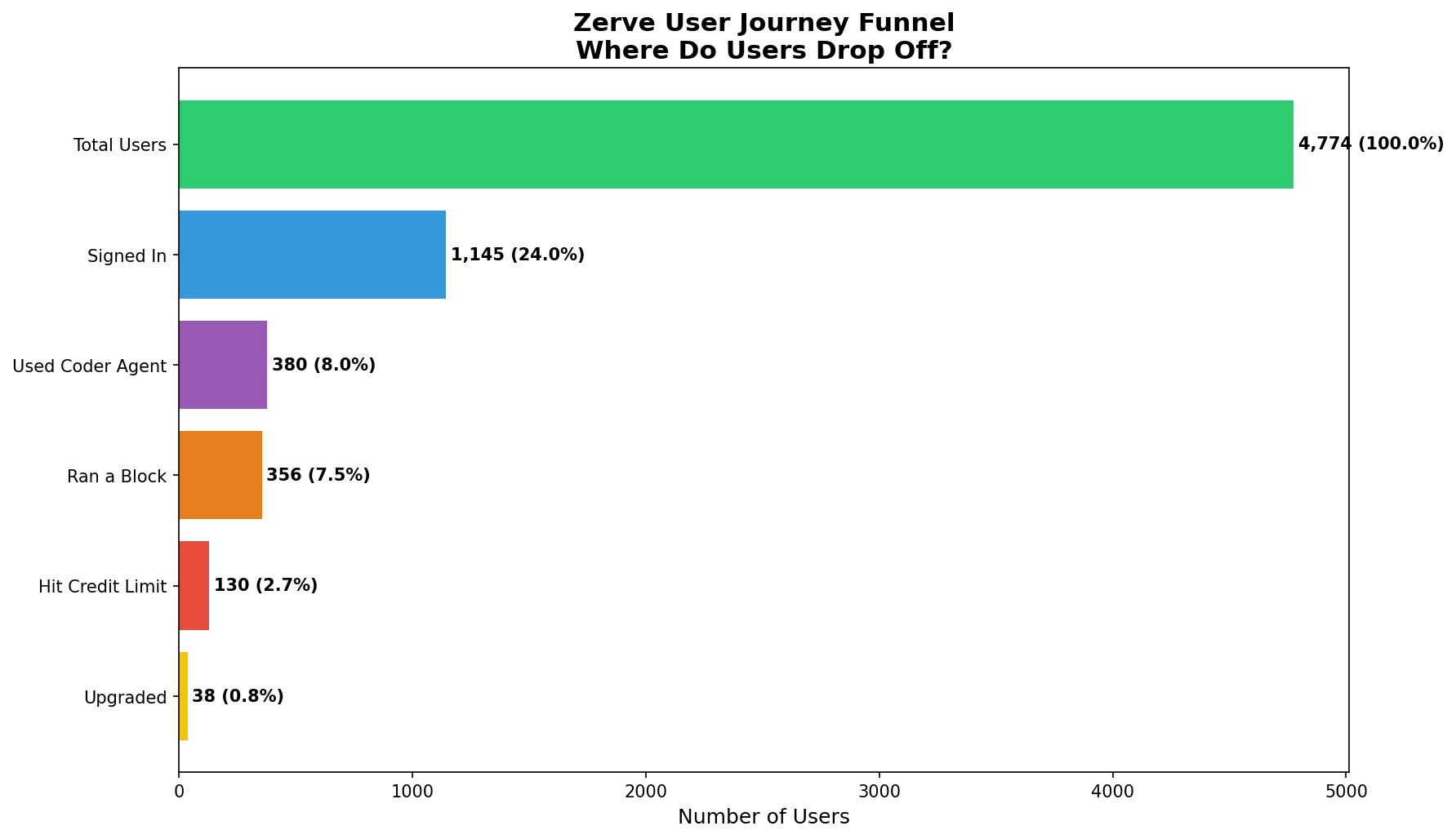
User _ funne l: “Tracking user journey through funnel stages to identify drop-offs and optimize engagement and conversion.”
-
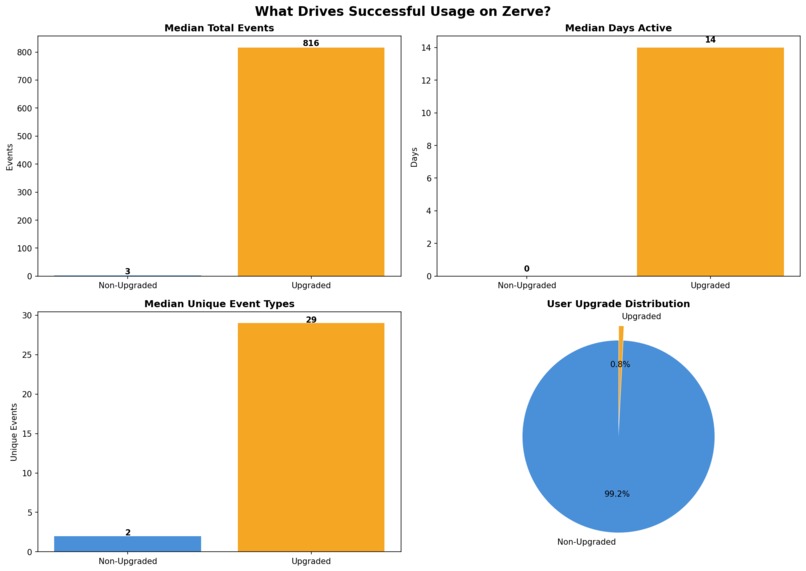
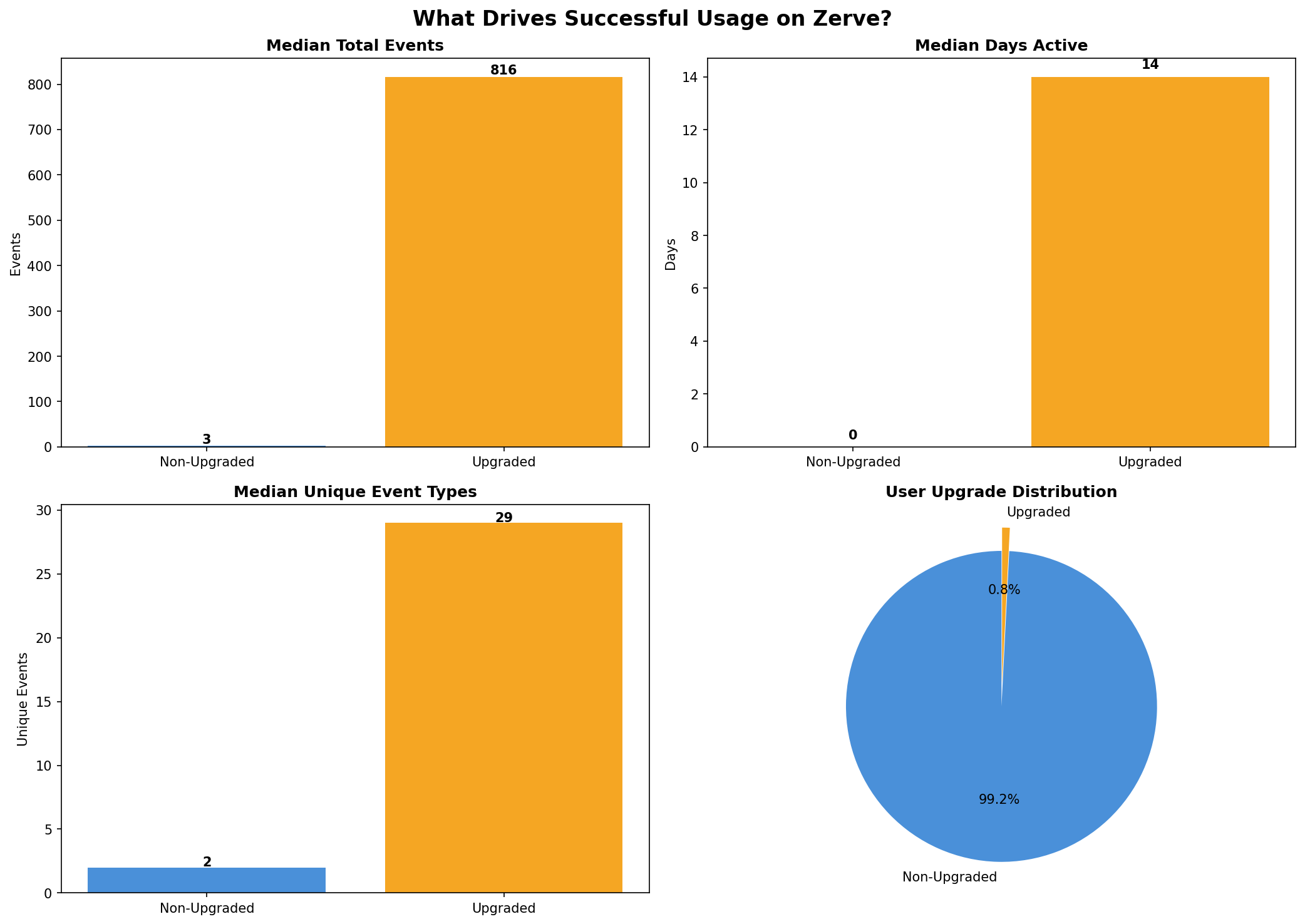
Zerve _ Success_ Analysis : “Analyzing Zerve performance metrics to uncover success patterns and improve decision-making outcomes.”
Inspiration
I wanted to understand what separates successful Zerve users from those who churn. With only 0.8% of users upgrading, there had to be a clear behavioral pattern worth uncovering.
What it does
Analyzes 409,287 Zerve platform events to identify what user behaviors predict long-term success and upgrades. Includes ML models, Success Score calculator, and live dashboard.
How we built it
Built entirely inside Zerve using Python, Pandas, Scikit-learn and Matplotlib. Analyzed user events, built two ML models, created Success Score framework, cohort retention heatmap, user segmentation, and deployed a live Streamlit dashboard.
Challenges we ran into
Defining success in an open-ended dataset. Handling imbalanced classes with only 38 upgraded users out of 4,774. Building an Early Warning System using only first 72 hours of behavior.
Accomplishments that we're proud of
Random Forest model achieved AUC 0.873. Created a novel Success Score framework that predicts upgrade likelihood. Discovered the Credit Cliff — 95.3% of users who hit limits never upgrade — Zerve's biggest revenue opportunity.
What we learned
Coder Agent usage in first 72 hours is the strongest early predictor of upgrade. Success on Zerve is binary not gradual. Germany has the highest upgrade rate at 7%.
What's next for What Drives Successful Usage on Zerve?
Deploy the Success Score as a real-time API. Build automated upgrade prompts triggered at credits_below_3. Create a 30-day retention program targeting the Engaged At-Risk segment.
Built With
- matplotlib
- pandas
- python
- scikit-learn
- streamlit
- zerve

Log in or sign up for Devpost to join the conversation.