-
-
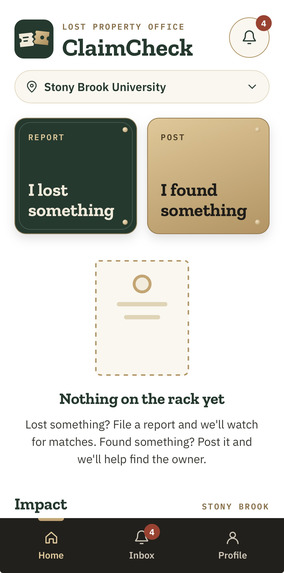
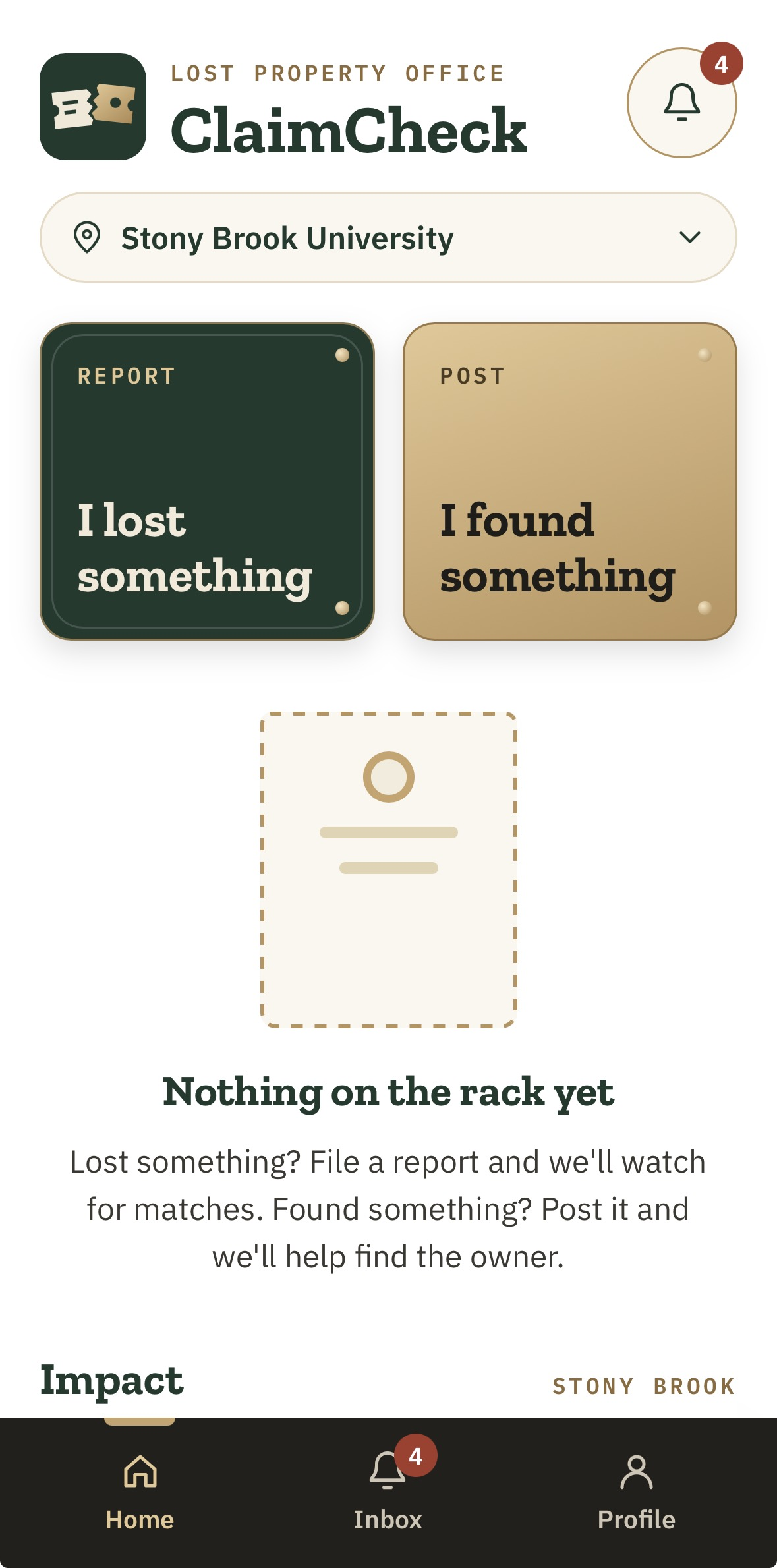
Homepage
-
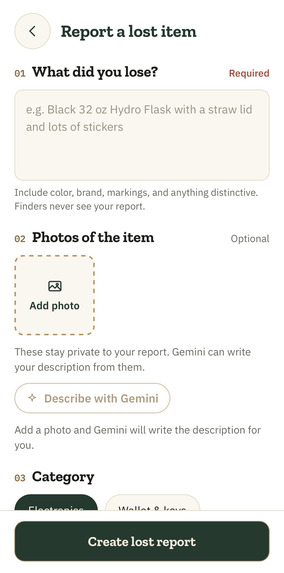
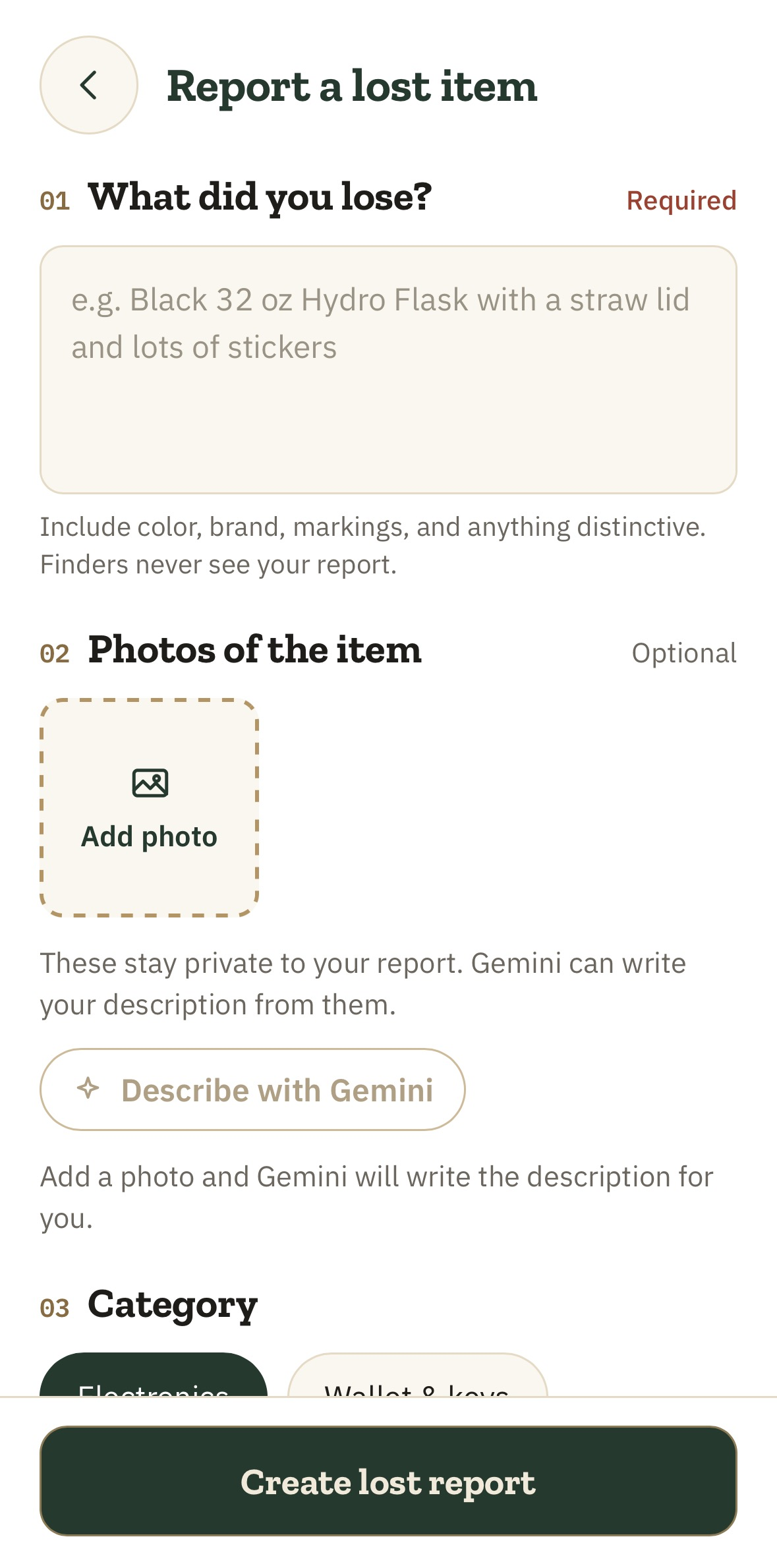
Report a lost item
-
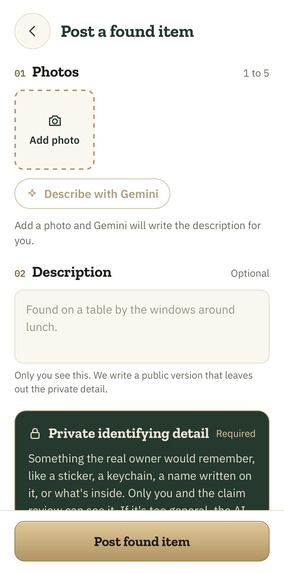
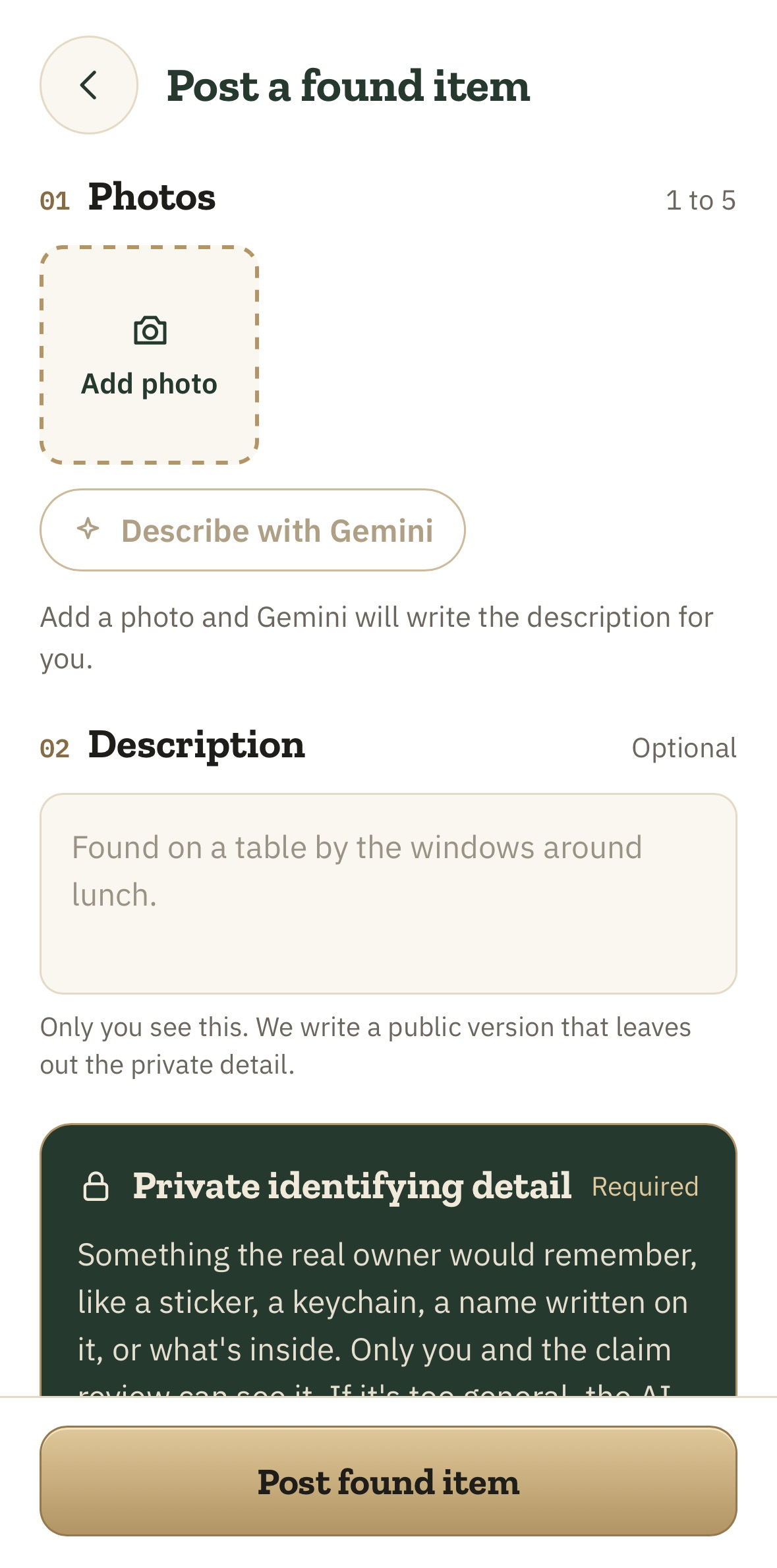
Post a found item
-
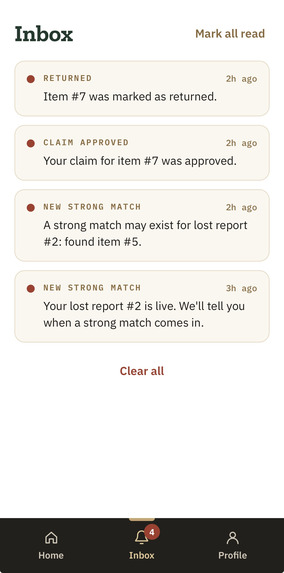
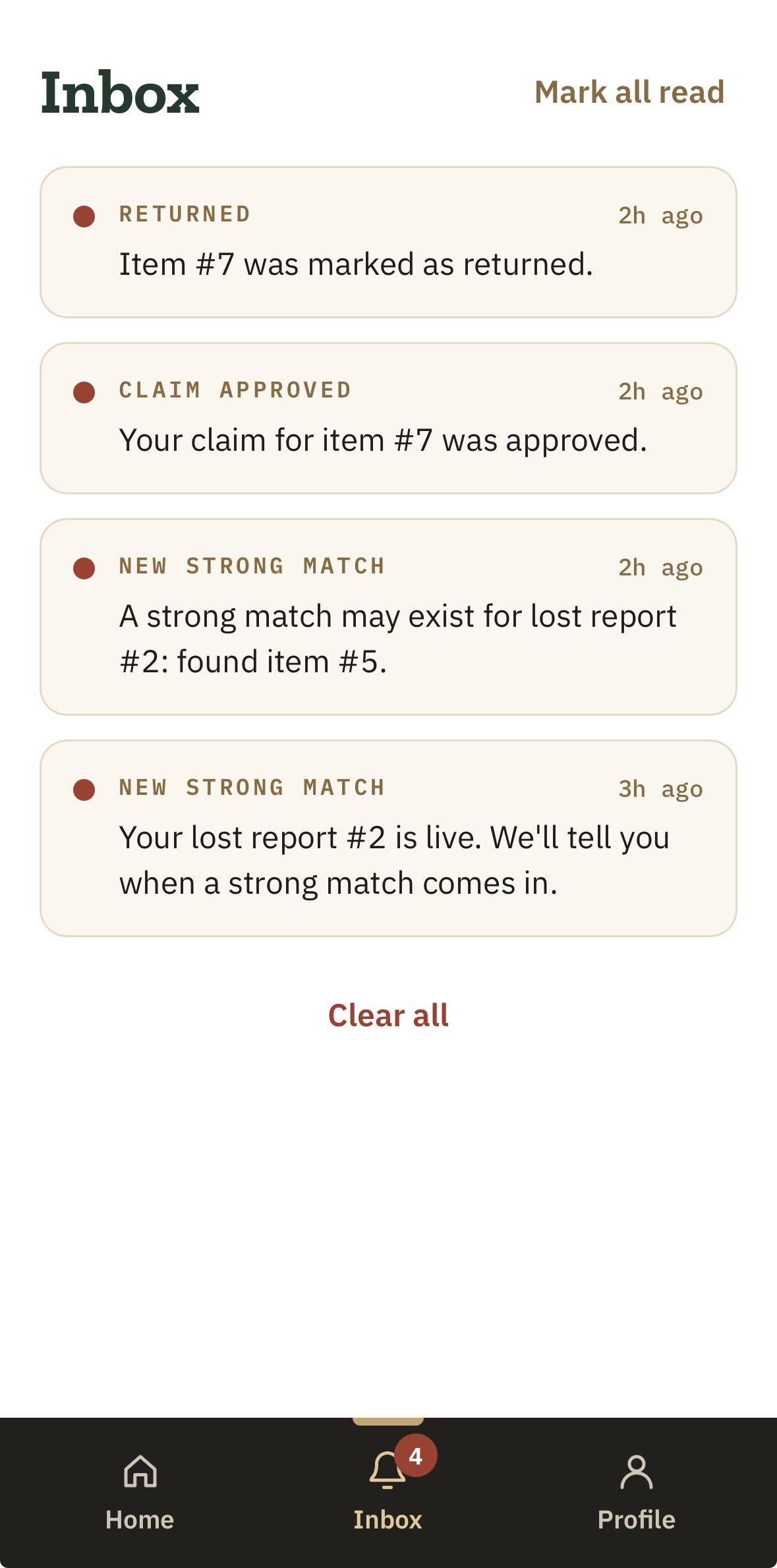
Inbox
Inspiration
This was inspired by many posts that you would see on college Instagram stories or subreddits of people posting about missing or found items. ClaimCheck is a more efficient and secure way for people to find lost items on college campuses.
What it does
ClaimCheck allows users to describe missing items, and it also allows them to report missing items. However, to improve security, this information is not posted to the public, and instead, items are matched with AI. The original user will have to answer an AI-generated question about the item to ensure that it is truly theirs before the users are put into contact with each other.
How we built it
We built ClaimCheck as a PWA with a React frontend and a Django backend, so it installs on any phone and opens like a native app, and we stored our data in a TigerData Postgres database. We used the Gemini API to describe photos, match lost reports to found items and verify ownership, and Leaflet with OpenStreetMap for the interactive maps.
Challenges we ran into
One issue is that matches were often too generous, such as a laptop showing up as a strong match for a smartwatch because both were "Electronics." We fixed this by ignoring filler and color words, adding a Gemini check that removes any pair scoring below 0.15 for "same kind of item," and ranking matches with a weighted score (35% description, 25% photos, 20% distance, 15% time, 5% category).
Accomplishments that we're proud of
We're proud of building a full sign-up and login system with email verification, so every finder and owner is a real, verified person. We're also proud of our matching model, which scores each found item against a lost report by description, photos, distance, time and category, so owners see their real item first. Finally, we're proud that ClaimCheck only hands an item back the person claiming it answers a question only the real owner would know.
What we learned
We learned how a PWA lets a web app install on a phone's home screen and open full-screen like a native app, without going through an app store. We also learned how to get it running on real phones by giving our app a secure link that anyone can open and install. Finally, we learned how to design for mobile first, with layouts, buttons and forms that feel natural on a small screen.
What's next for ClaimCheck
We plan to bring ClaimCheck to more campuses, airports and transit stations, so each one can run its own verified lost and found. We'd also like to build a dashboard for staff at lost-and-found desks to log items and hand them back faster. Finally, we want to host ClaimCheck online so anyone can install it from a permanent link at any time.
Built With
- django
- gemini
- javascript
- postgresql
- pwa
- python
- react
- tigerdata


Log in or sign up for Devpost to join the conversation.