
Inspiration
WEVR resulted from our shared frustration with the limits of online education. The inability to interact with other students and the professor in a meaningful way in online classes inhibits effective learning. We initially set out to create a program that made it so students are no longer bound by their geographical location to have access to the traditional learning environment. After we gathered the technology and finished our initial plan of a two-dimensional white board that multiple people could access, we were inspired by the Oculus Rift to enable users to move and draw in three dimensions.
What it does
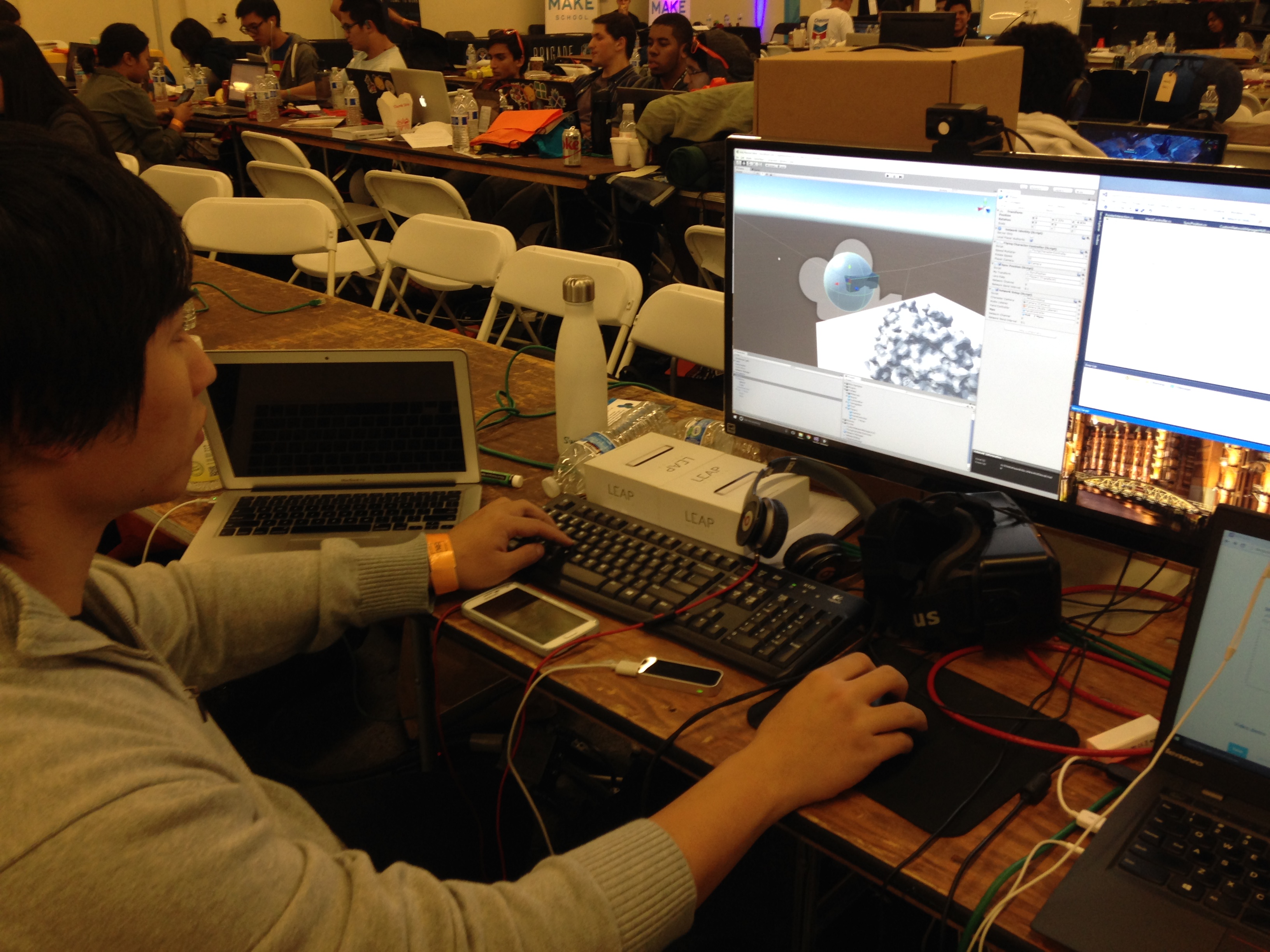
Students have access to a two-dimensional and three-dimensional whiteboard which they toggle between and draw on using Leap Motion technology. Users can access to a color palette for better annotation using arrow keys. We incorporated a model of hemoglobin in our showcase to illustrate the variety of applications that WEVR can be used for in learning new material.
How I built it
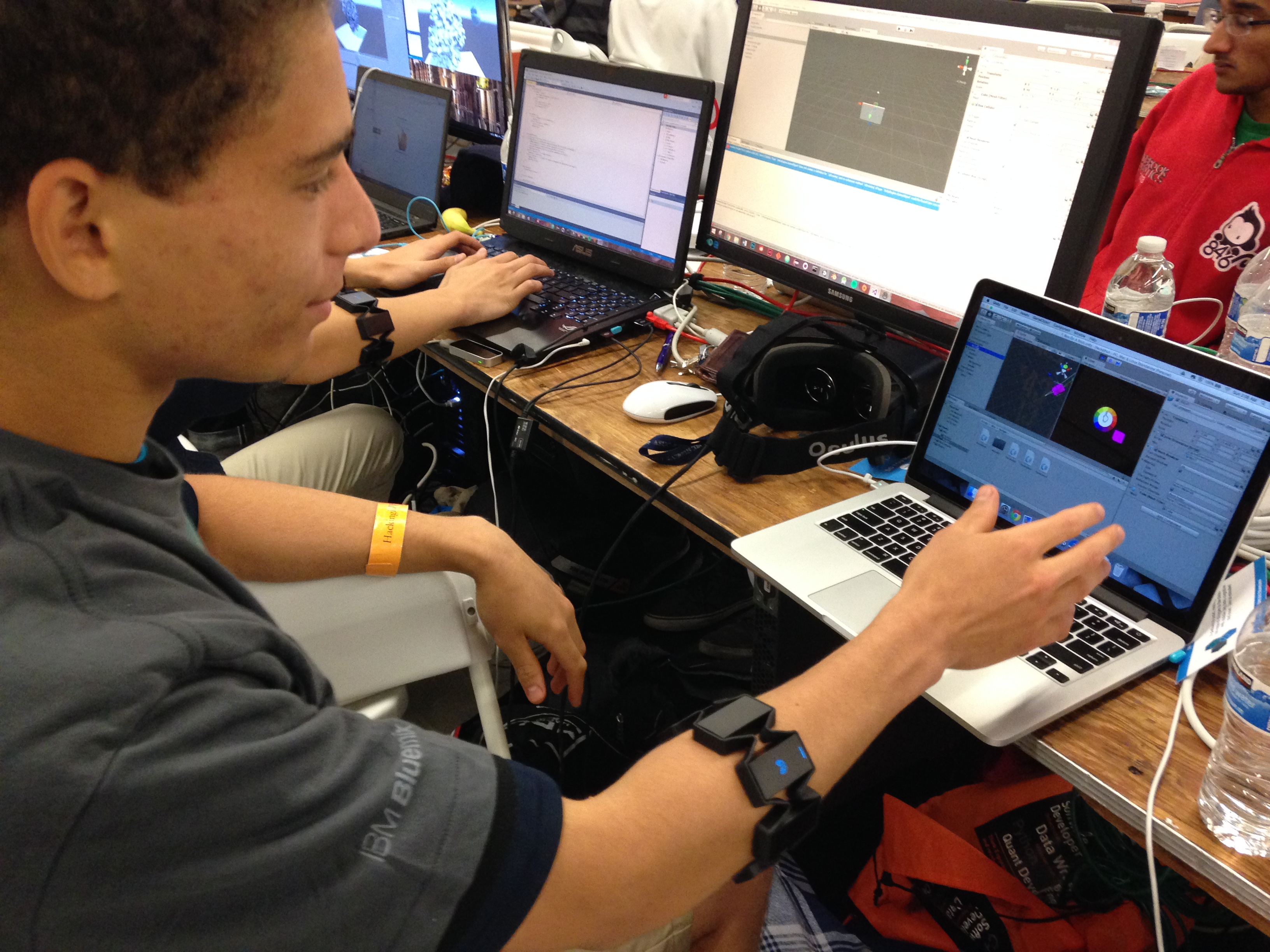
The majority of WEVR was completed in Unity and through the application of Oculus with Leap-Motion. The website for WEVR was created using html5 and css3.
Challenges I ran into
Implementing and understanding Bresenham's line algorithm for linear Interpolation
Accomplishments that I'm proud of
Color palette, Linear Interpolation with regards to 3D Drawing, and Multiplayer Support: syncing the drawings across all the clients
What I learned
-Better experience with C#, how to render 3D objects, and how to use Oculus, and Leap-Motion
What's next for WEVR (Whiteboard Education in Virtual Reality)
Creating more 3-D content, allowing for live streaming, and developing a cohesive curriculum.


Log in or sign up for Devpost to join the conversation.