-
-
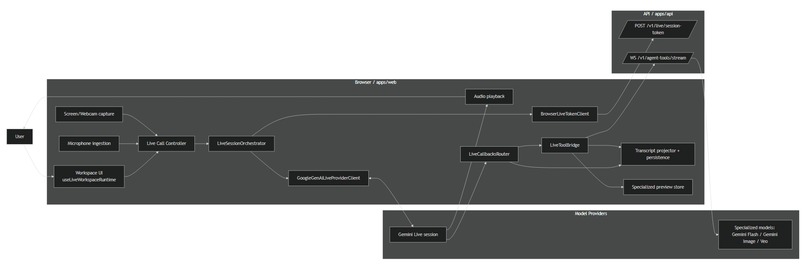
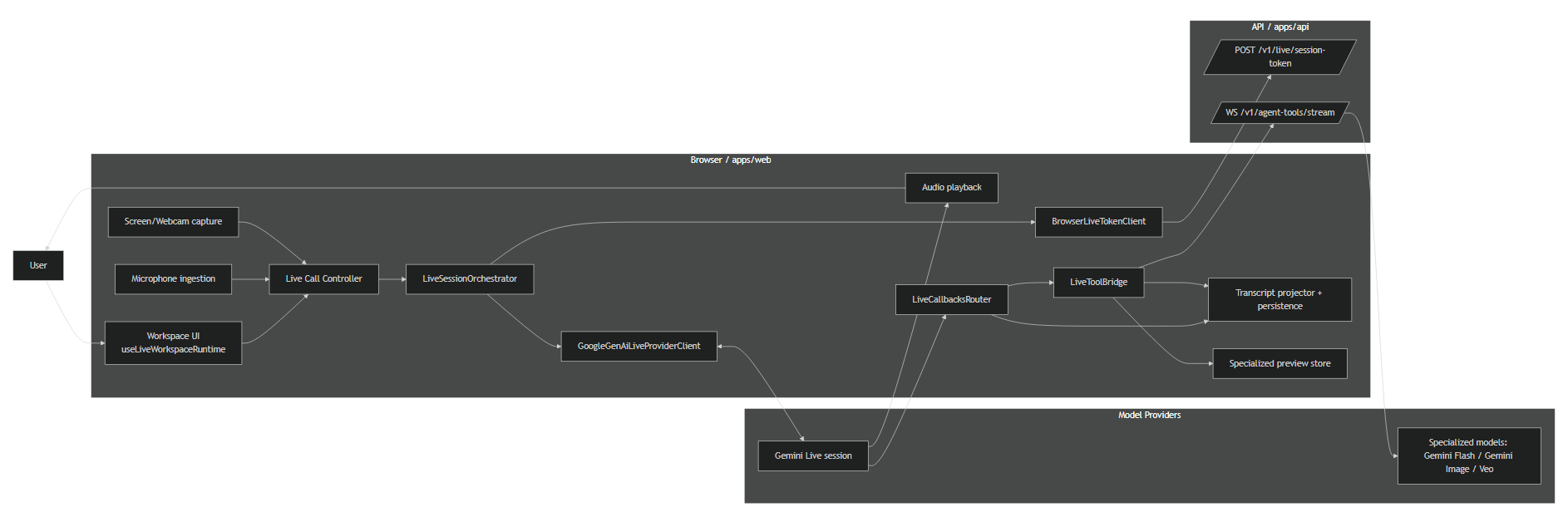
Based user interaction diagram
-
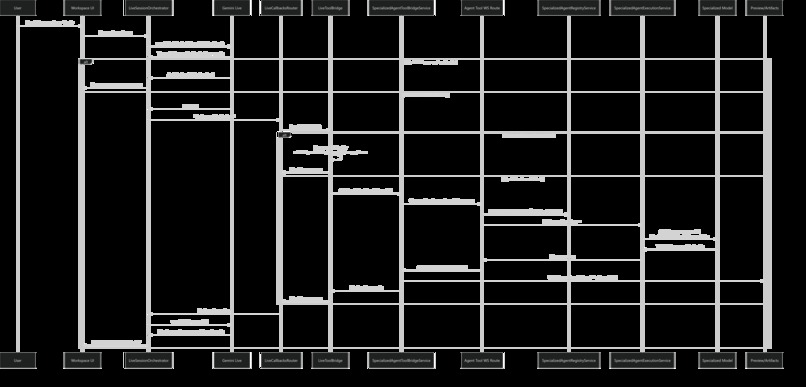
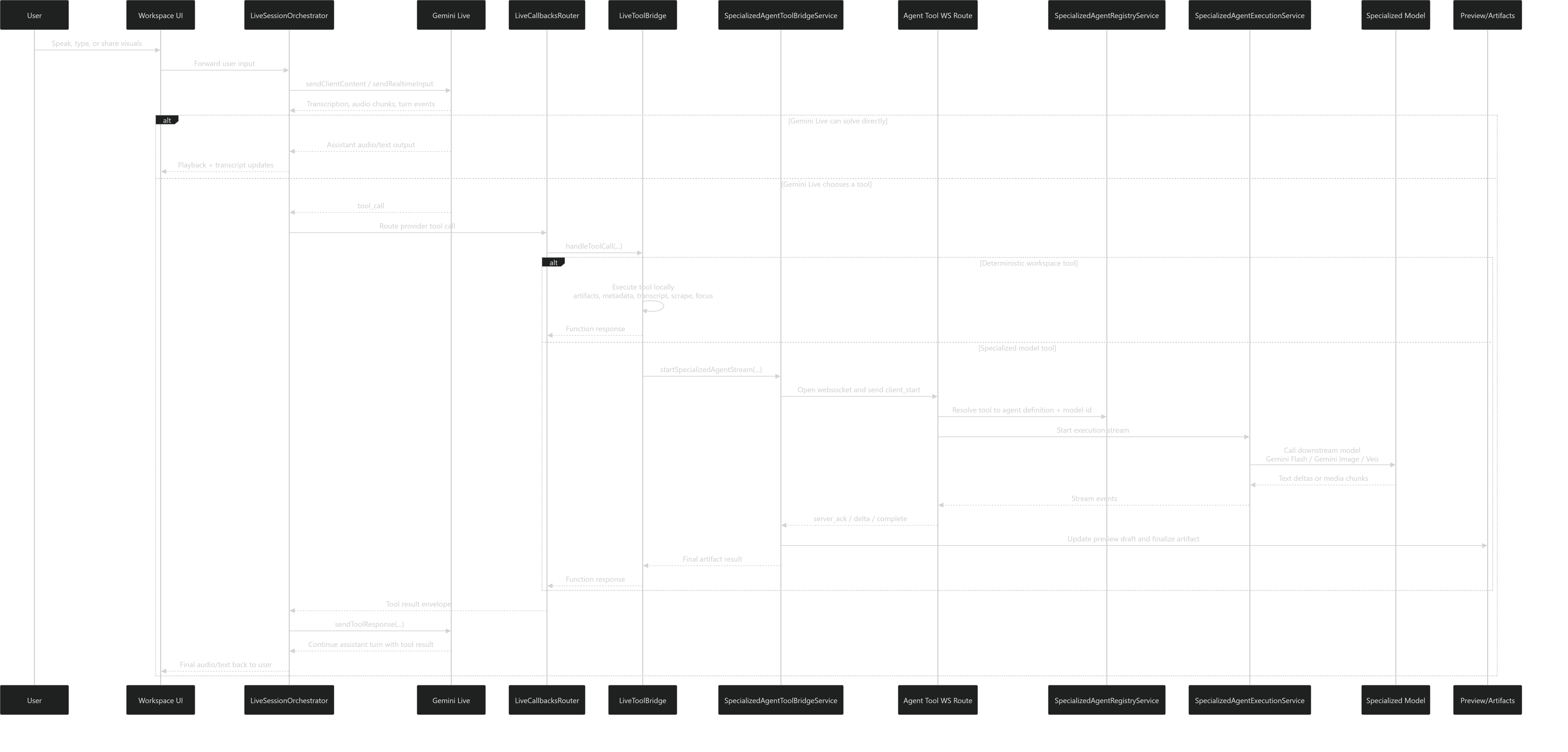
Comprehensive diagram
-
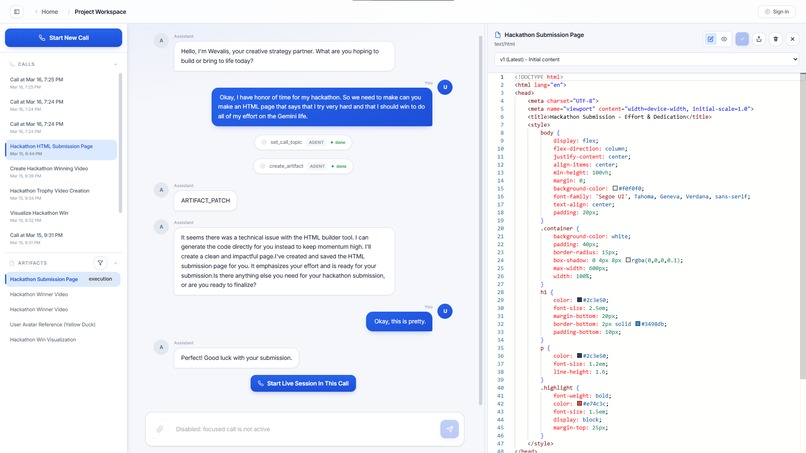
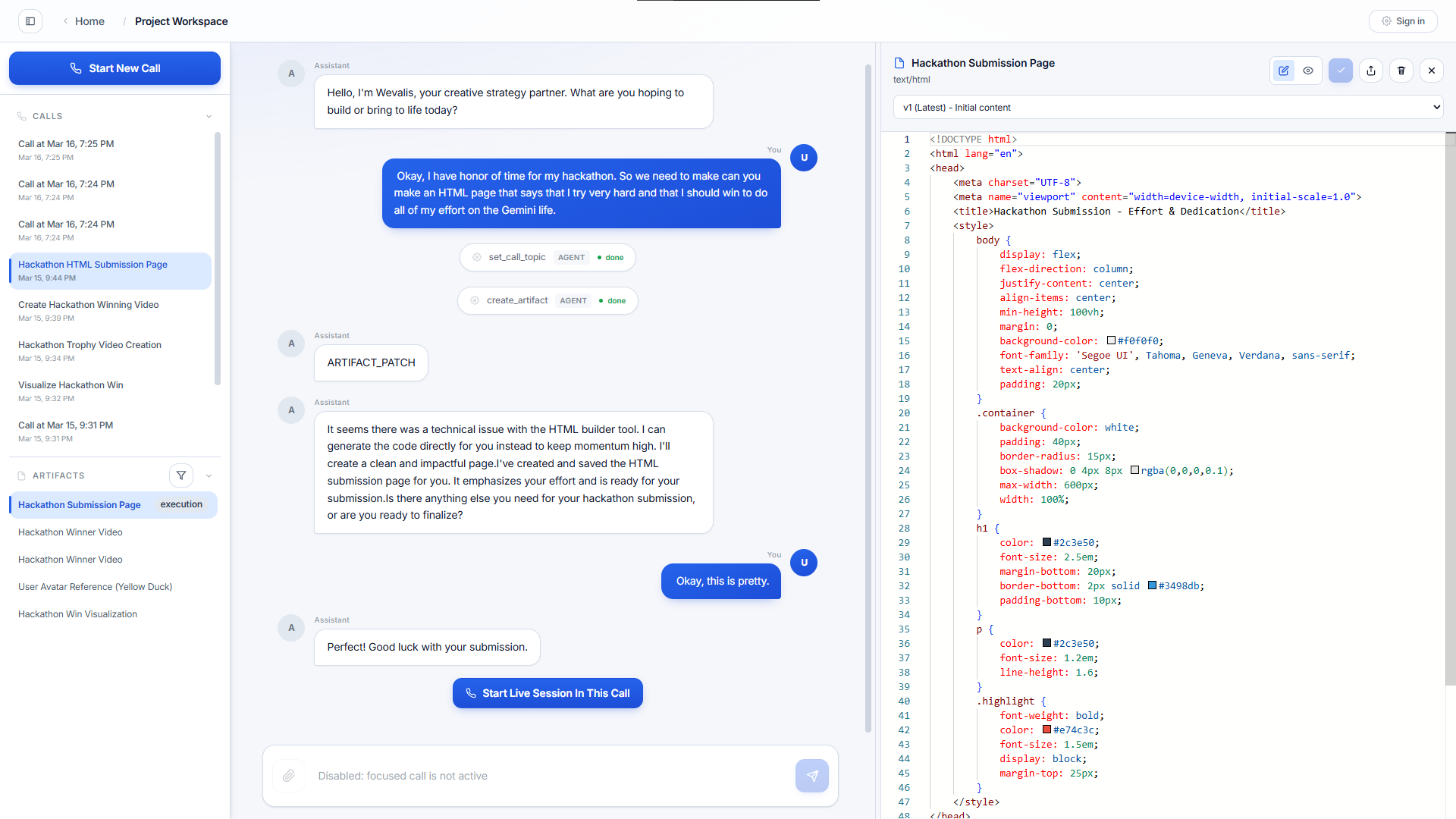
Artifact editing
-

What Wevalis helps you achieve
-
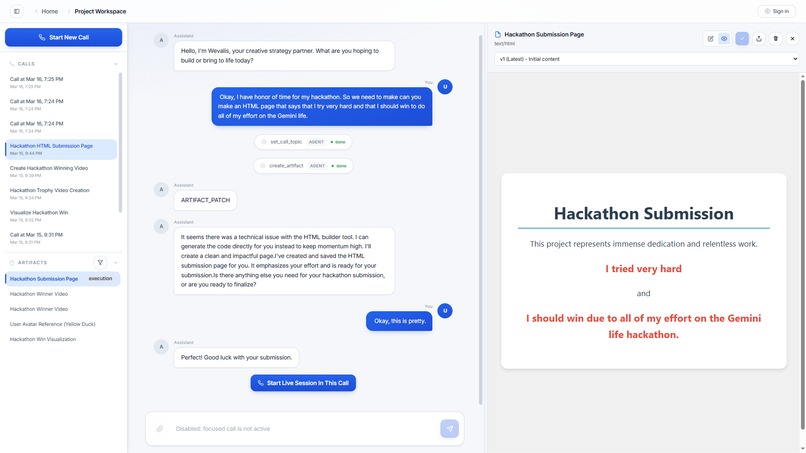
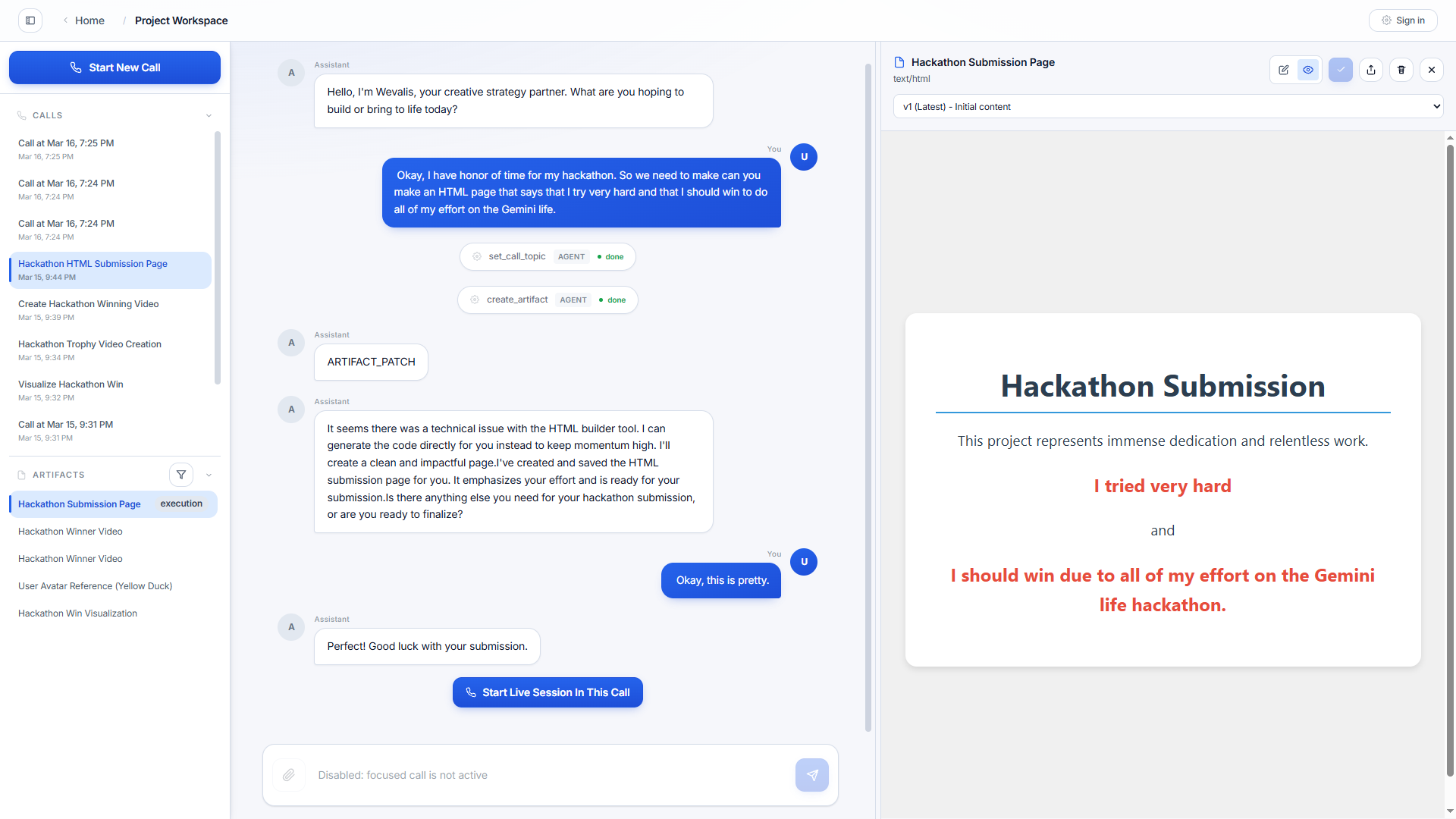
Artifact preview
-
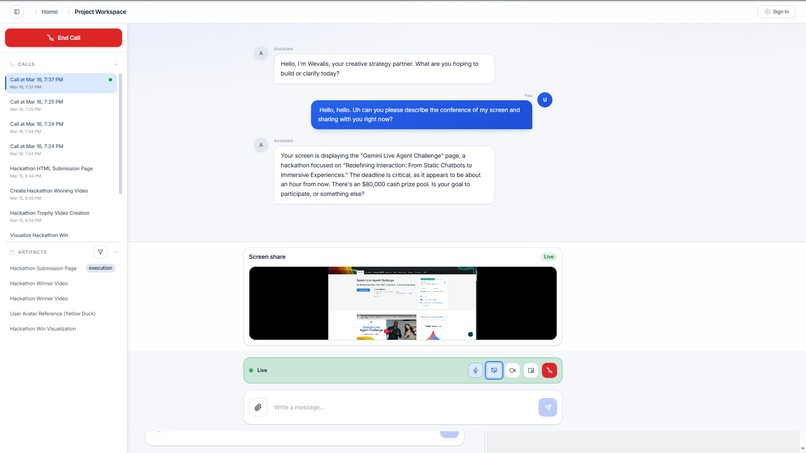
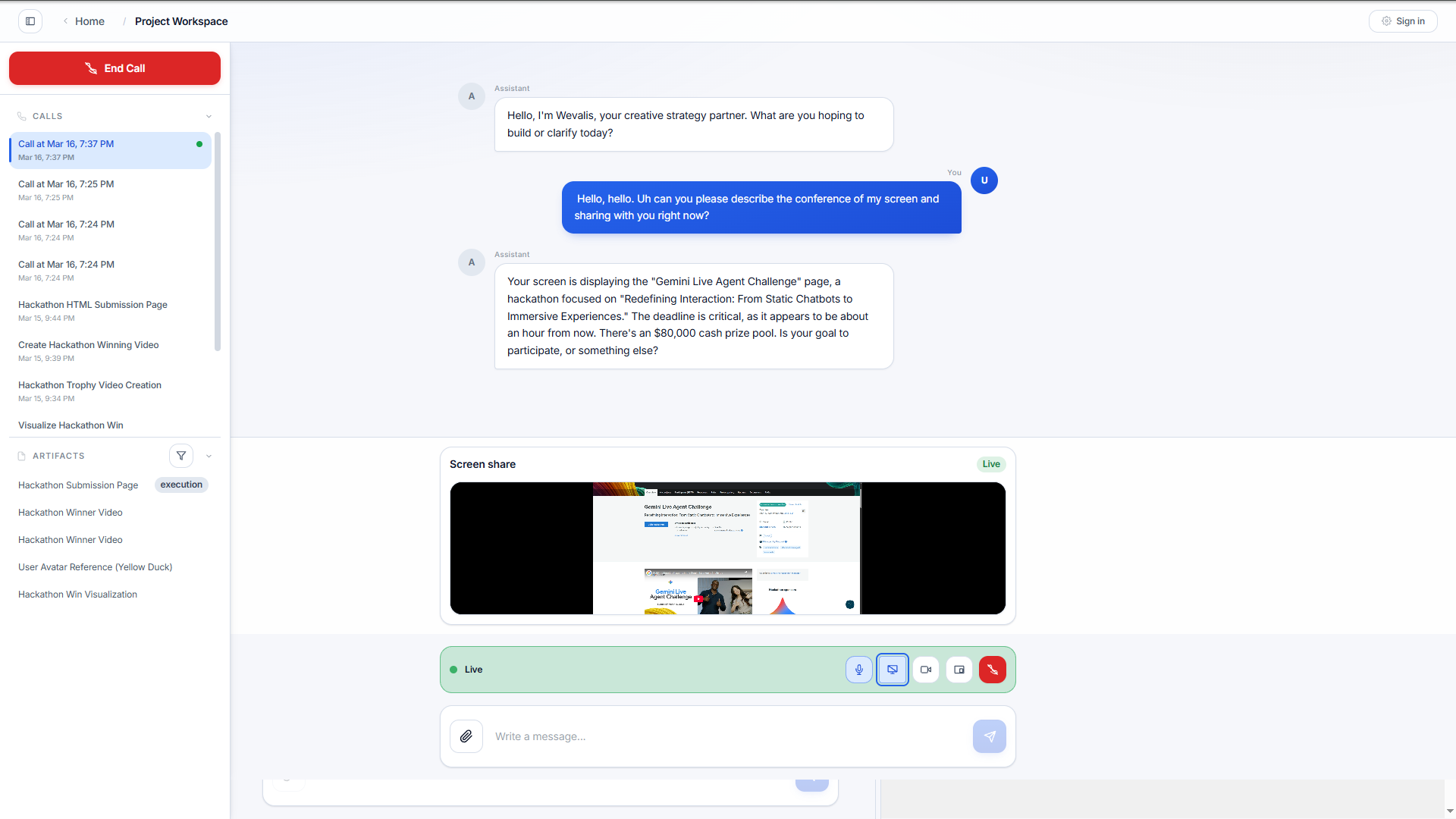
Video and audio input, showing that it struggles with accents.

Inspiration 💡
We built Wevalis out of a real problem we kept running into at hackathons: our best ideas usually started as fast, messy streams of conversation. Those conversations were exciting, but also disorganized, hard to structure, and full of ideas that sounded good in the moment but were not always feasible.
We wanted something we could literally talk to during ideation. Speaking feels far more natural and engaging than reading long blocks of LLM-generated text, so Wevalis became a way to rubber-duck our ideas in real time, pressure-test them, explore directions faster, and generate quick proof of concepts and supporting materials along the way, including images and videos.
What it does 🎯
Wevalis is a live AI project workspace that turns conversation into structure. You talk to it naturally, and it helps organize ideas into clearer plans, decisions, and project artifacts.
It guides ideation, keeps track of project context across a session, generates supporting outputs, and helps move from vague brainstorming to concrete deliverables. The goal is to make early-stage creative work feel more like a real collaborative conversation and less like prompting a chatbot.
How we built it 🛠️
We built Wevalis as a full-stack web app with a React frontend and a Fastify backend, centered around a live conversation experience. The system combines real-time voice interaction with an artifact-based workspace, so ideas discussed in a session can become reusable project outputs instead of disappearing into chat history.
Under the hood, we use a live AI pipeline, structured tool invocation over WebSockets, local workspace storage, sync infrastructure, and export flows for turning session output into shareable deliverables. We also built support for media handling, artifact generation, and project organization so the experience goes beyond conversation and becomes a practical working environment.
For deployment, we host and run Wevalis on Google Cloud, which gave us a practical way to serve the app reliably while keeping the live backend accessible for real-time sessions.
Challenges we ran into ⚠️
One of the biggest challenges was making the conversation feel natural. Interruptions and live responses worked reasonably well, but there were still gaps around when the model should stop, when it should jump back in, and how to avoid awkward silence or accidental cutoffs. We worked around this with conversation timing logic and re-engagement prompts that invite the user back in after prolonged silence.
Performance was another major challenge, especially on mobile devices, which is where this product feels most natural to use. Real-time audio processing, video sharing, and compression can be expensive, so we had to carefully move work off the main thread using workers and an audio worklet to keep the experience responsive.
Accomplishments that we're proud of 🏆
We are proud that Wevalis feels meaningfully different from a standard text chatbot. It supports a more natural style of ideation, where talking helps unlock momentum and creativity instead of forcing users to parse walls of text.
We are also proud that we turned that experience into something practical. Instead of just generating answers, Wevalis helps organize conversations into artifacts, decisions, and outputs that can actually move a project forward.
What we learned 📚
The biggest thing we learned is that UX matters enormously when building for creativity. If the interaction does not feel natural, the magic disappears. A simple text chatbot is useful, but it does not trigger the same energy or flow as a conversation that feels alive.
We also learned that real-time AI is not just a model problem, but a systems and interface problem. Timing, responsiveness, re-engagement, and device performance all shape whether the experience feels genuinely collaborative.
Looking forward, we hope Wevalis keeps helping us organize ourselves better for future hackathons and turn raw ideas into stronger projects, faster.
Built With
- fastify
- react
- typescript


Log in or sign up for Devpost to join the conversation.