-
-
App Icon
-
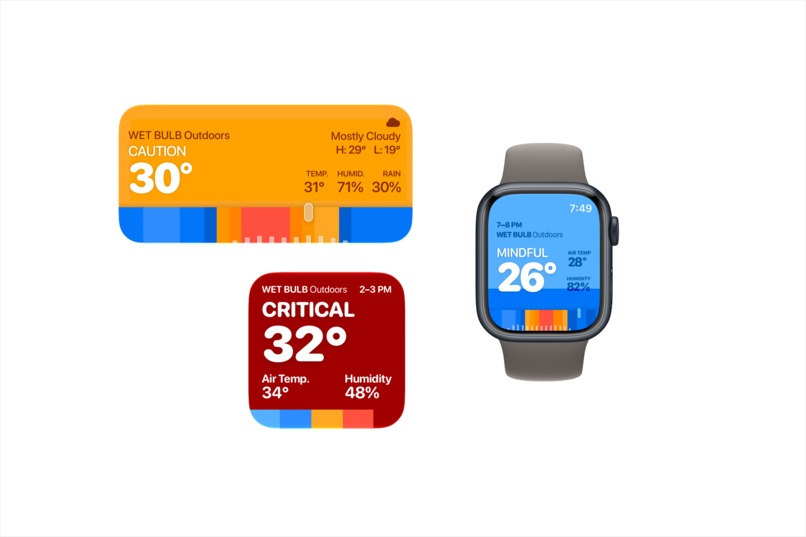
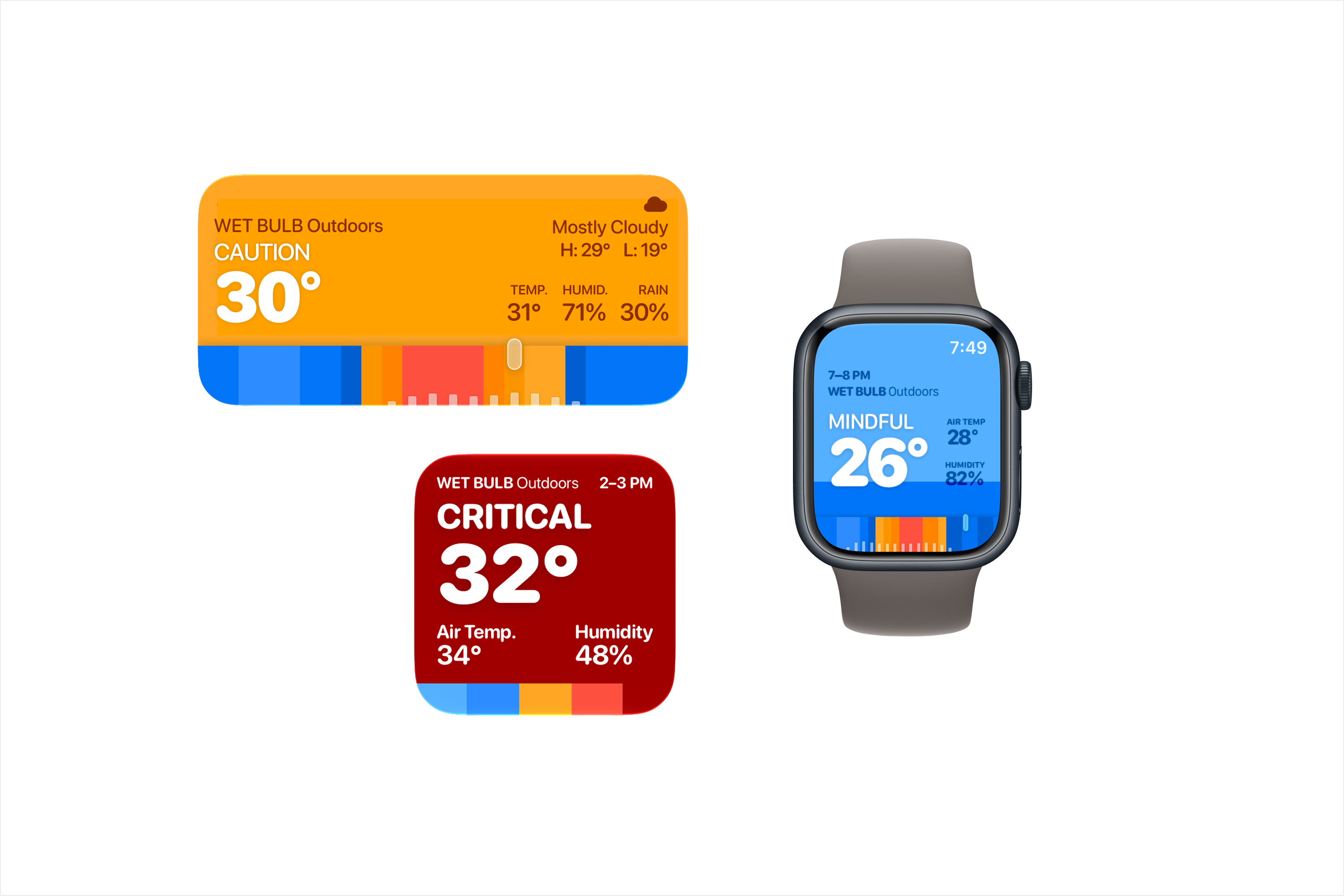
Widget and Watch App Screens
-
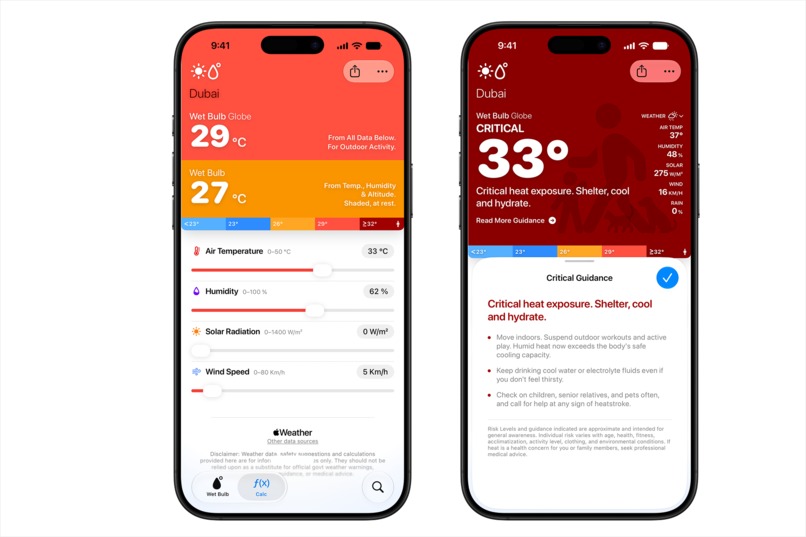
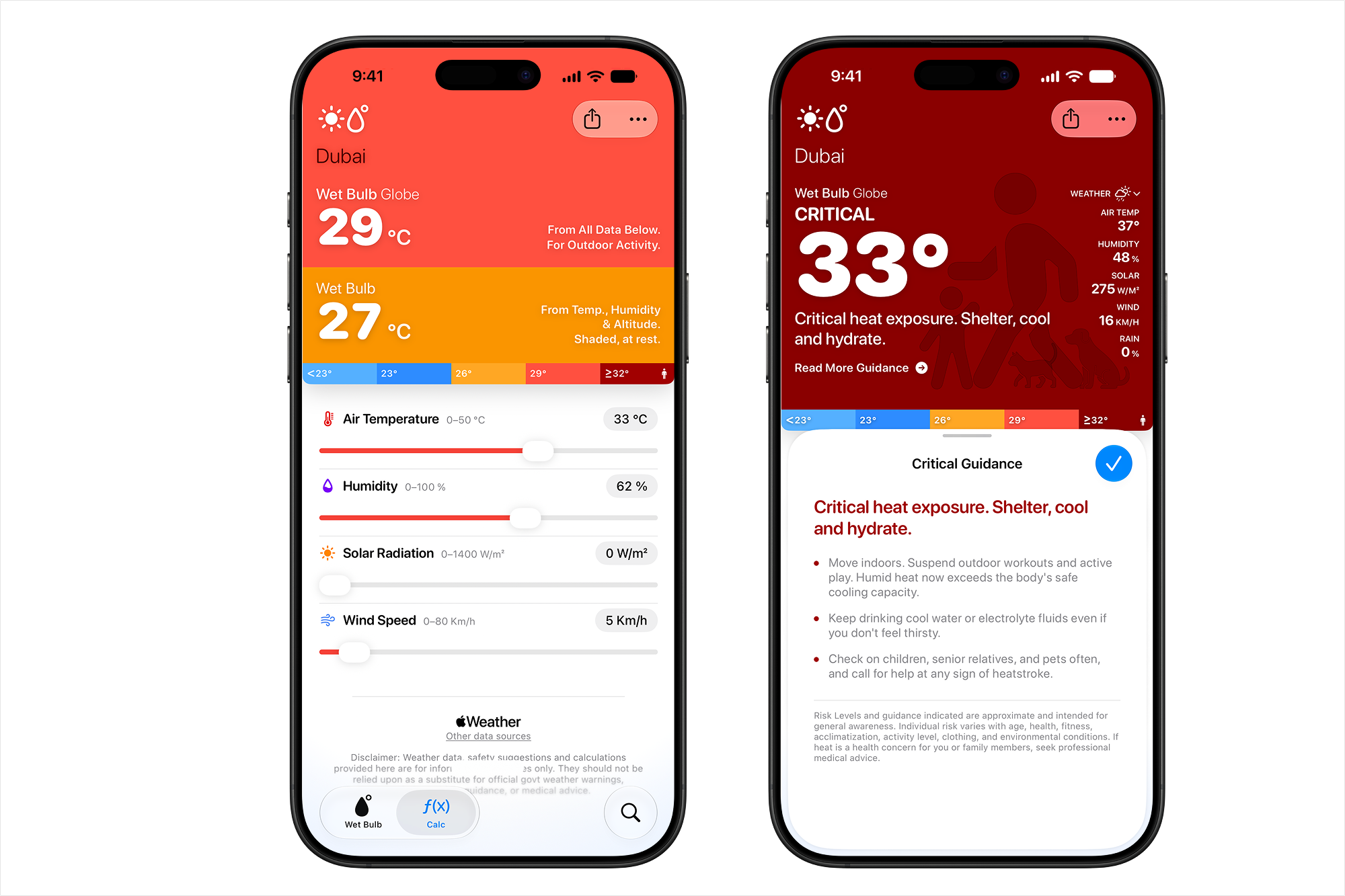
Phone Framed: WBGT Calculator Screen, and Heat Guidance popup for Critical Temperatures
-
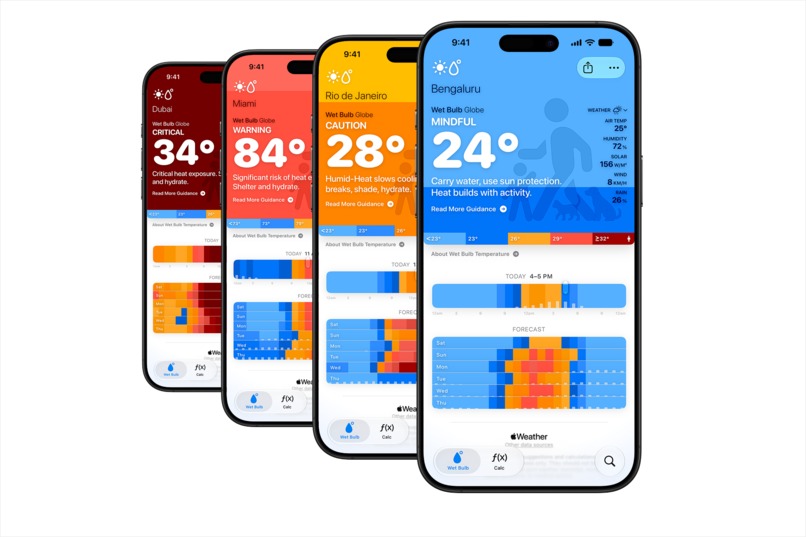
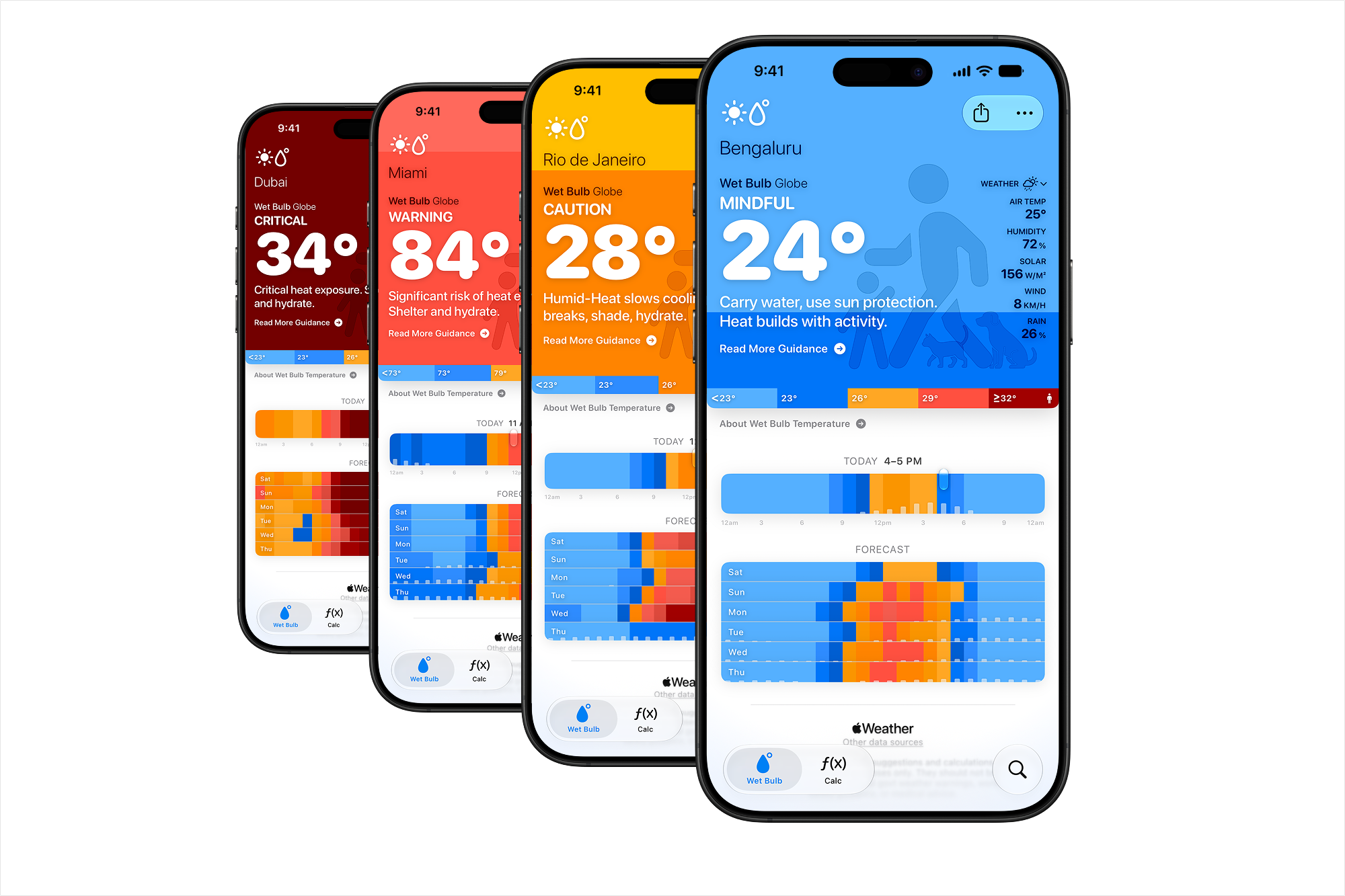
Phone Framed: World cities at different Wet Bulb Risk levels, with Daily and Forecast timelines
-
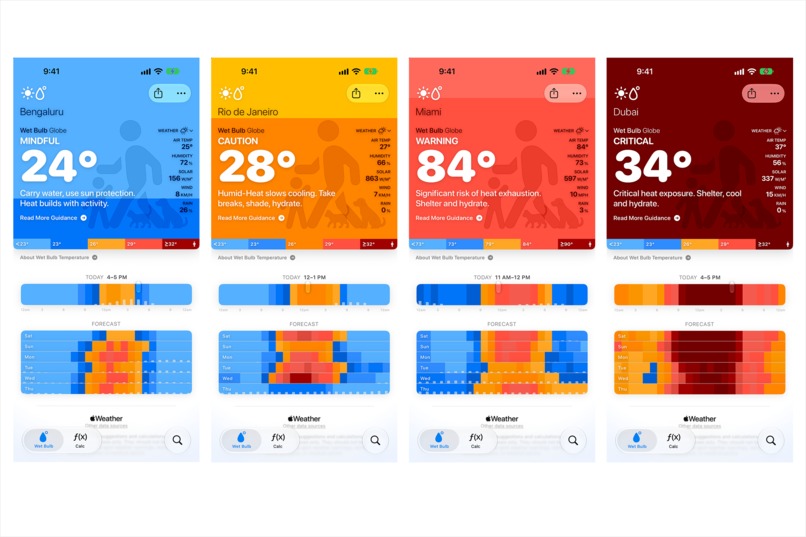
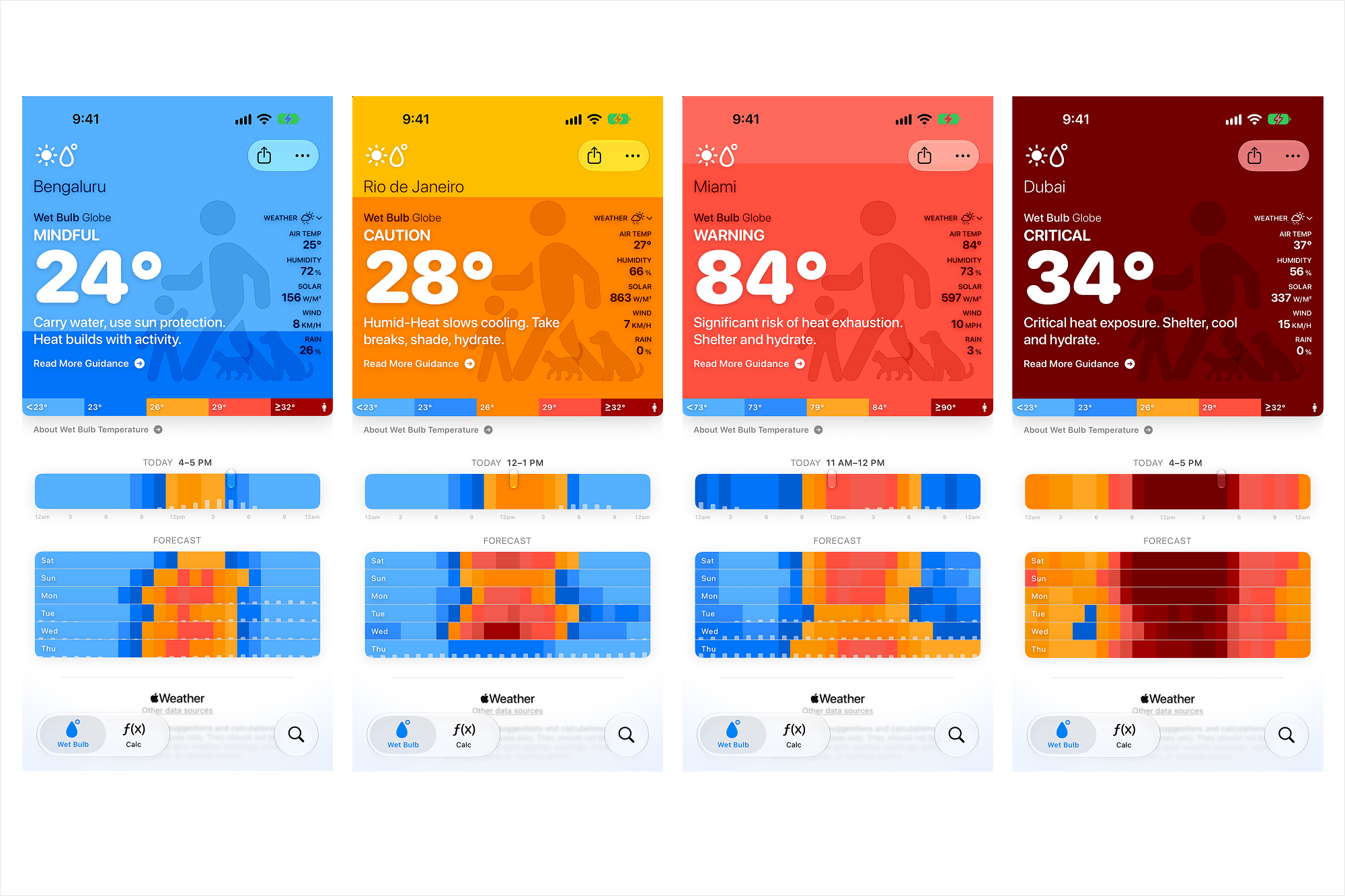
World cities at different Wet Bulb Risk levels, with Daily and Forecast timelines
-
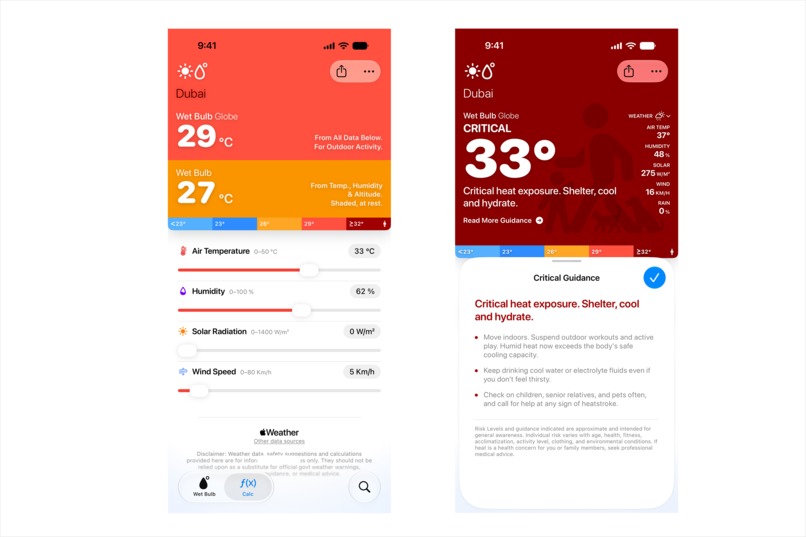
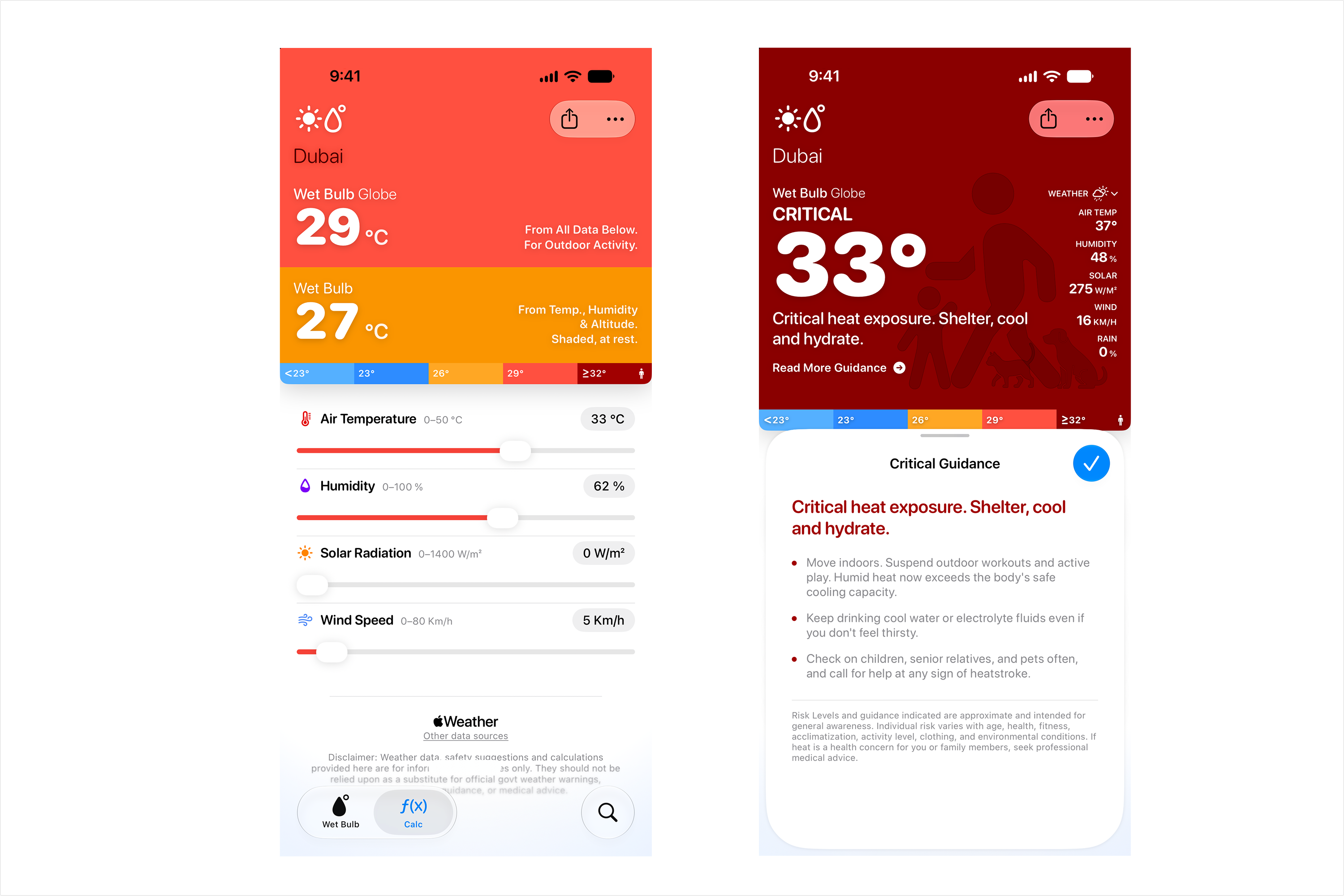
WBGT Calculator Screen, and Heat Guidance popup for Critical Temperatures
Inspiration
Chapter 1 of The Ministry for the Future opens with a deadly wet-bulb heatwave in India. For me, that was close to home, literally and figuratively.
I grew up with dry 37–43°C (100–110°F) summers that peaked in May and June, when 30°C (86°F) felt manageable. Now the hard heat runs into September, and 30°C feels worse: the air is thick and humid, sweat won't evaporate, and the heat holds into the night.
Air temperature, Heat Index and "Feels Like" didn't explain it. Humidity was making the heat unbearable, while typical weather apps showed the same 30°C as if nothing had changed.
And it's not just me: dangerous humid heat days have more than doubled worldwide since the 1970s, from about 10 to 23 a year, and parts of the US Gulf Coast now see more than 100 a year (Dangerous Humid Heat Rising Due to Climate Change | Climate Central).
A simple way to track wet bulb every day felt worth building.
What it does
Wet Bulb Tracker is an iPhone app, with widgets and an Apple Watch app, that turns Wet Bulb Globe Temperature (WBGT) into a heat-stress signal anyone can read at a glance.
- Five colour-coded risk levels: Relax, Mindful, Caution, Warning, Critical
- Forecast Alerts for the next days conditions
- Automatic alerts when conditions cross into a higher-risk level.
- Hourly timeline of the days temperature spread.
- Plain-language guidance for heat management at each level, including for children, seniors and pets
- Calculator for showing and trying out variations of how temperature, humidity, sun and wind change the reading. For both Wet Bulb Globe and plain Wet Bulb.
Who it's for: everyday people at home, travelling, or active outdoors in humid heat, not institutions or weather enthusiasts. Available in English, Spanish, Arabic, Korean, Chinese and Japanese.
Monetization (RevenueCat): the safety features are free. WetBulb+ adds a 6-day forecast on Apple WeatherKit data, Home Screen widgets and the Apple Watch app, for $2.99/year or $9.99 lifetime.
Prize categories: RevenueCat Design Award and RevenueCat Peace Prize.
How we built it
- Design: many Figma iterations to make WBGT feel tied to health, not like another temperature. Colour signals the risk; the number and weather data are supporting detail.
- Five risk levels: built from published guidance (OSHA, US Military heat flags, Japan's Ministry of the Environment, World Athletics) and balanced for the general public.
- Science: follows the US National Weather Service forecast method: a psychrometric solve for wet bulb, plus a hybrid of the Liljegren and Dimiceli/Piltz models for globe temperature.
- Code: native Swift, with a widget extension, a watchOS app and RevenueCat for purchases. I designed the product and UI; Claude Code helped me turn the published models into Swift.
- Data: Open-Meteo (free tier), Apple WeatherKit (WetBulb+).
Challenges we ran into
- Its seen as just another 'heat' metric. WBGT looks like any other temperature in stock weather apps, so people treat it like "Feels Like" or Heat Index and ignore it. Calculating the number was easy; making 30°C read as a risk to your body was hard.
- No single standard. Thresholds differ across militaries, workplaces, sports bodies and countries. One scale for everyday users meant reconciling them sensibly across geographies, activity levels and people.
- Tuning by observation. I tuned the alert levels through experimentation, published standards, and a full summer of watching high wet bulb days in my own city.
Accomplishments that we're proud of
- Design and Communication: Reframing WBGT as how well your body can cool, not how hot the air is. This way its less likely to be seen as another heat metric.
- A risk scale that tops out near where sweat stops cooling you, approaching the limit described in Chapter 1 of The Ministry for the Future.
- Works without opening the app: alerts, widgets and the Watch bring the signal to you.
- Early testers using it as intended: one in Japan relied on the alerts when the weather suddenly turned humid; a senior user in India planned their outdoor week with the timeline; a US tester aired out and cooled their house in the early morning, ahead of a high wet bulb afternoon, saving on AC.
What we learned
- More data isn't more clarity. We added, then removed whole screens of weather data, including indoor wet bulb, to keep the focus on outdoor risk.
- Weather is never steady. Forecast data from APIs updates hourly and revises the past.
- Models approximate instruments. Microclimates vary: a breezy balcony can feel fine at Caution, but a run won't.
- Approximate awareness is still valuable. A clear heads-up is enough to plan the day safely.
What's next for Wet Bulb Temperature: Tracker and Alerts
- Wet bulb history to show local patterns over months and years
- Multiple saved cities, beyond the current location
- Richer widgets that combine weather detail with the risk timeline
Built With
- bitrig
- figma
- revenuecat
- swift

Log in or sign up for Devpost to join the conversation.