-
-
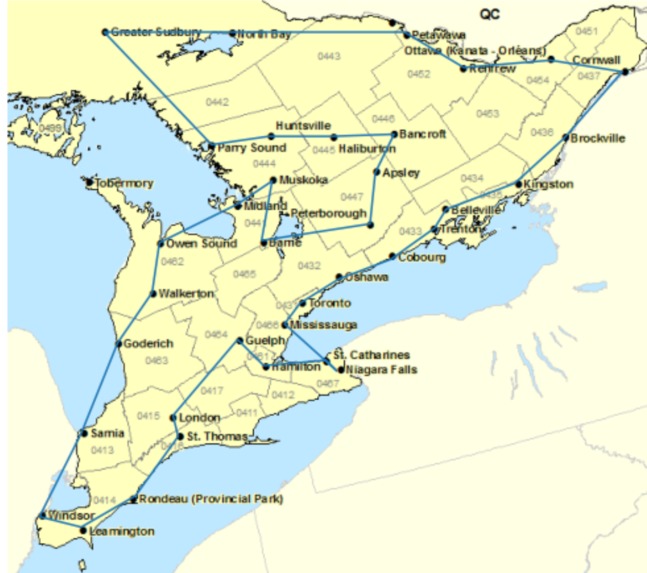
optimized rail path
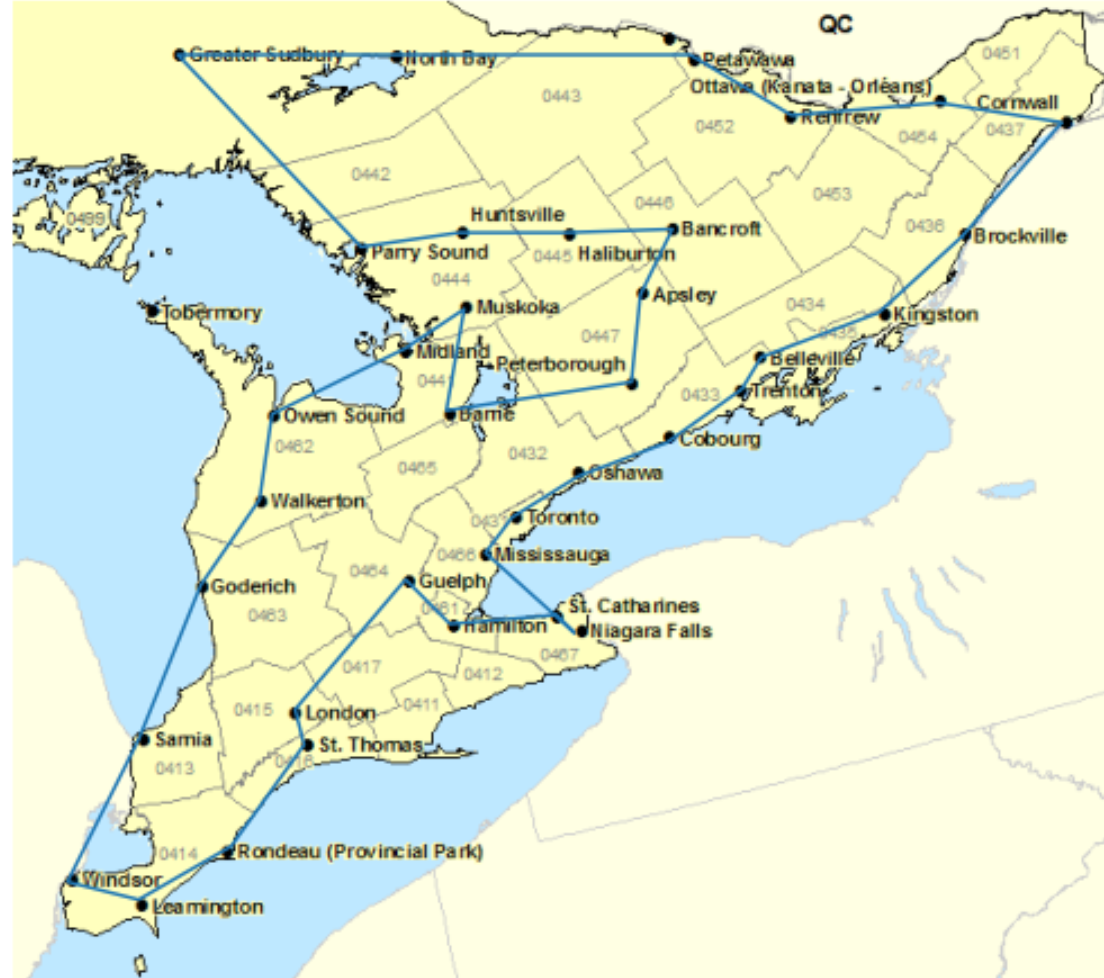
Inspiration
There are three pressing problems in the freight industry that result from the over usage of trucks as the method of transportation.
Firstly, there are severe environmental impacts that demonstrate the need for a change to reduce our carbon footprint. Global water levels, average temperature and average CO2 levels are all projected to rise in the coming decades, so we need to do our part to in reducing these alarming statistics before it is too late. Reducing the amount of transport trucks on the road, which are much less fuel efficient than rail, will help reduce global emission rates, hopefully putting us in the right direction towards a more sustainable future.
Secondly, these environmental impacts, paired with the time and cost inefficiencies for trucking for long distances, show that there is clearly need for changes towards a more sustainable future in the freight industry.
As mentioned earlier, transport trucks are less fuel efficient than rail. They are also much more limited in their freight capacity. Additional investments into the railway industry will create not only a more environmentally friendly transportation industry, but also could lead to a more efficient supply chain for these businesses.
Lastly, the 400 series highways of Ontario grow more congested everyday due to increased demands for products, and building new highways/ expanding the old ones will simple lead to induced congestion (https://environmentaldefence.ca/2020/09/15/why-building-more-highways-wont-make-your-commute-any-better/).
That's where rail comes in. By increasing the amount of freight shipped on railways, we should see a proportional decrease in the amount of transport trucks on the 400 series highways, leading to reduced congestion in Ontario's most densely populated areas.
The magnitudes of these multi layered issues is why we decided to tackle this problem. We hoped that a change could be made by a applying an already existing model to help create a sustainable future for the industry of freight.
What it does
It's an application of an optimization model that implements an "ant-colony"-esque solution to the traveling salesman problem. We in turn further modified this model to allow it to take in coordinates for specific locations, allowing the model to return the near-optimal path, which would be used as a guiding tool for future railway construction.
Challenges we ran into
Understanding how different parts of the optimization algorithm were implemented were definitely hard. A lot of us didn't know much ML coming into the hackathon so trying to understand the developed algorithm as well as simultaneously learning ML was a massive hurdle.
Additionally, the model itself wasn't the ideal algorithm to solve this particular solution. While it does create a near optimal straight line path for the railways, it struggles to account for barriers such as water/ towns that aren't inputted into its coordinates.
The model also doesn't allow for backtracking, which in this case means that we wouldn't be able to find an optimal railway system that allows for trains to run in multiple directions, or allow for multiple railway paths to be made (i.e a Northern path, Eastern path and Western path from Toronto are not all possible at the same time in the current iteration of the project). We will learn from this experience and find a more applicable algorithm for our problems in the future.
Accomplishments that we're proud of
We're very proud of the fact that we understood a large chunk of the complex algorithm and implemented it to solve a real issue in the freight industry. We're also happy that we knew the constraints/ limitations of the model after working with it, such as it's inability to detect water. Knowing this will allow us to build upon this experience for future endeavors, creating more robust projects.
Built With
- machine-learning
- numpy
- optimization
- pandas
- python


Log in or sign up for Devpost to join the conversation.