-
-
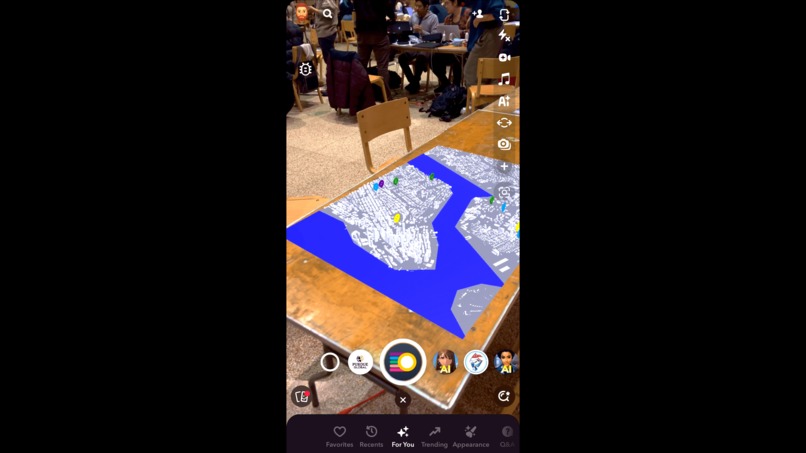
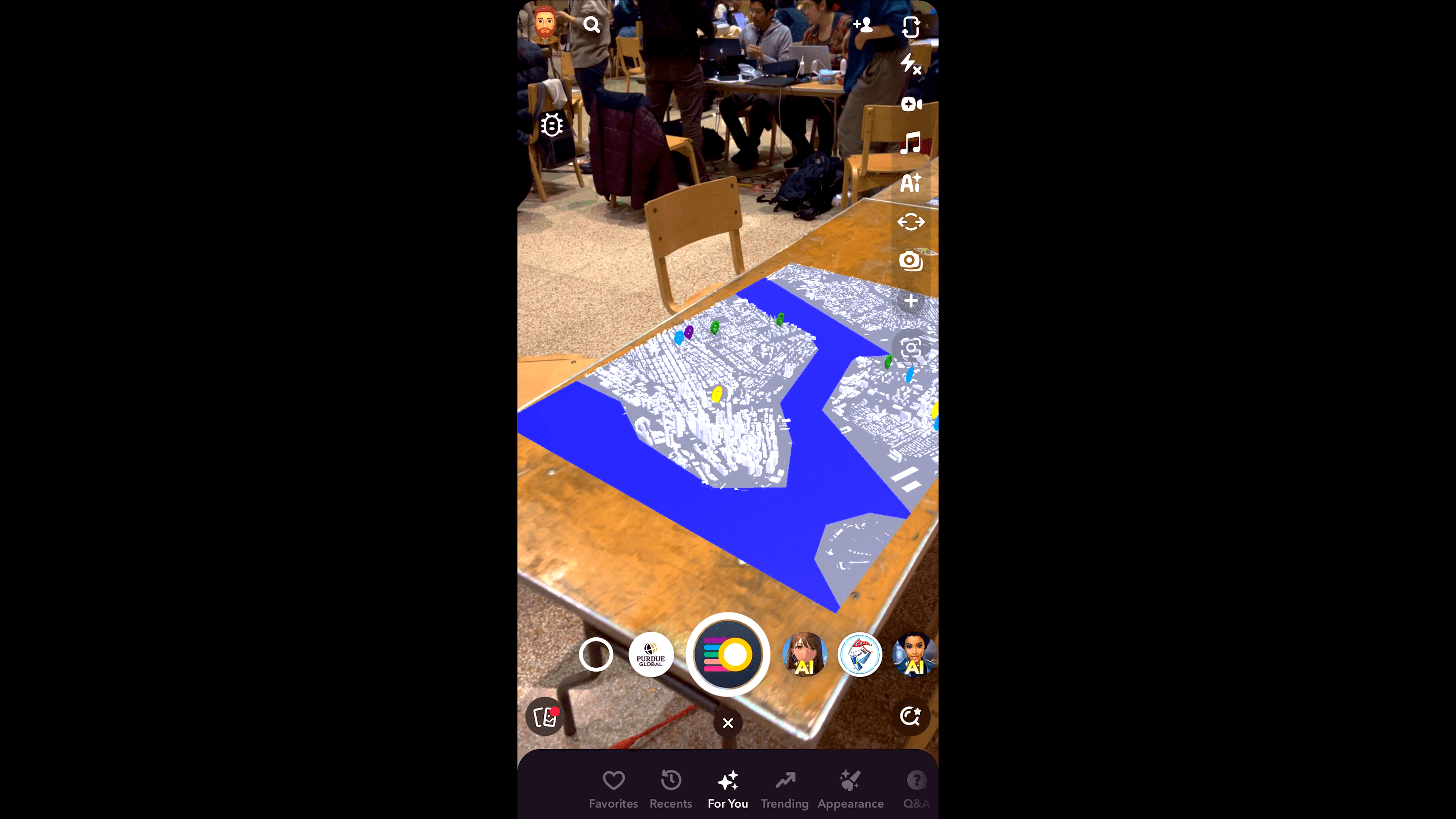
AR app using Snap Lens Studio
-
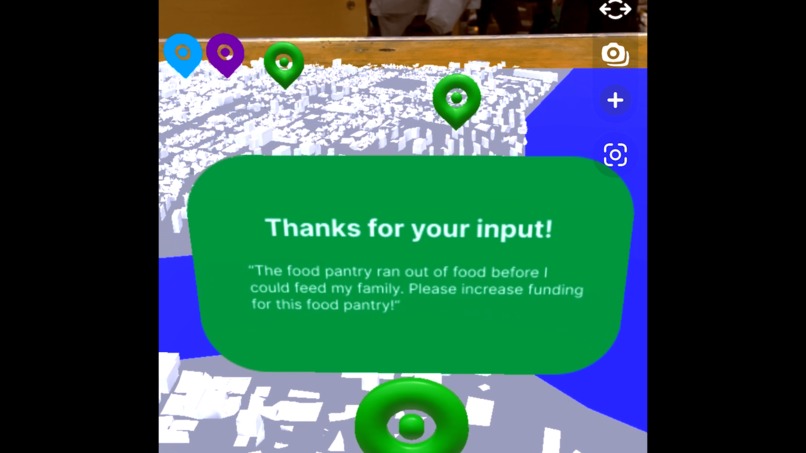
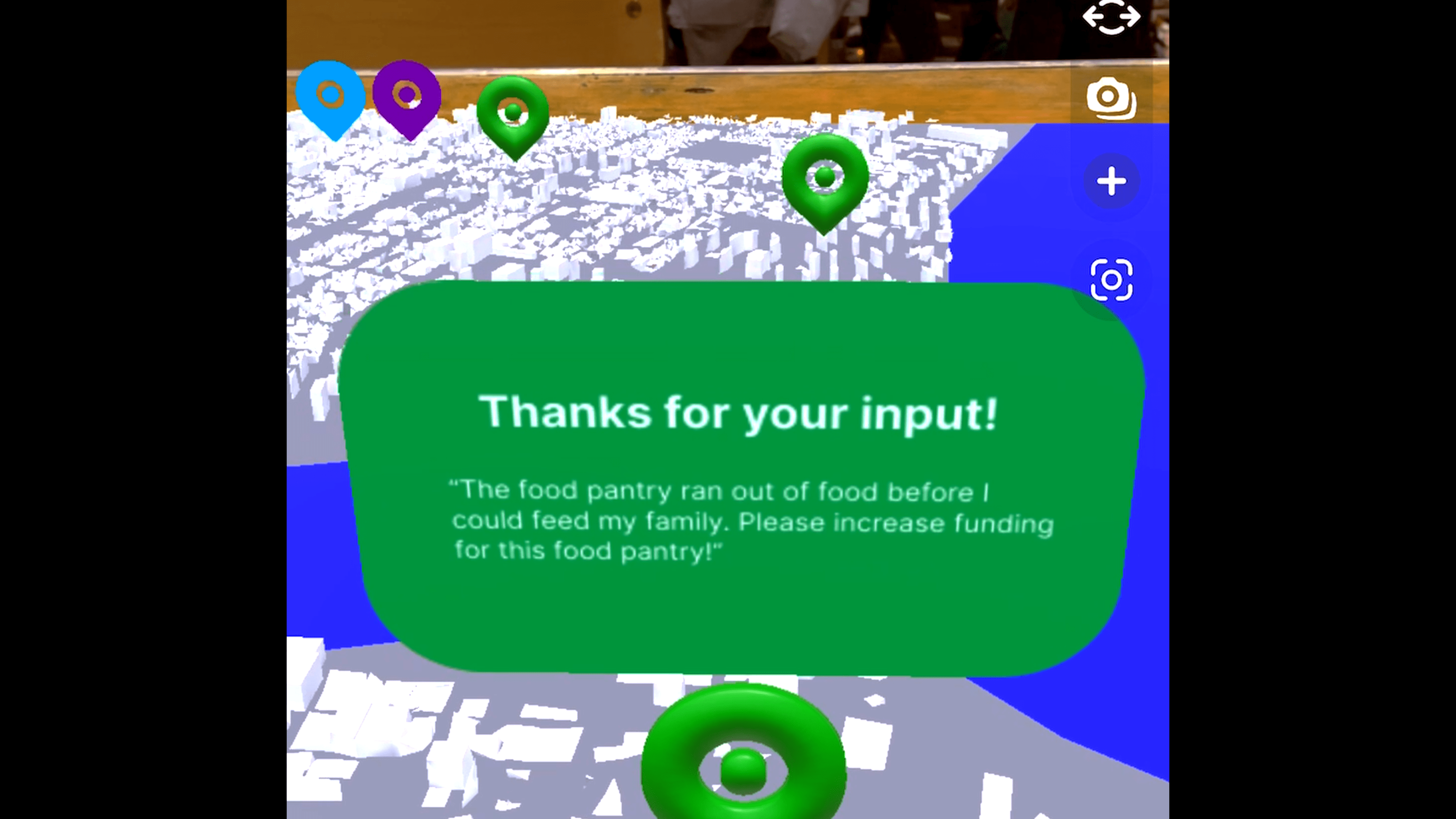
Submit feedback to city administrators in mobile app
-
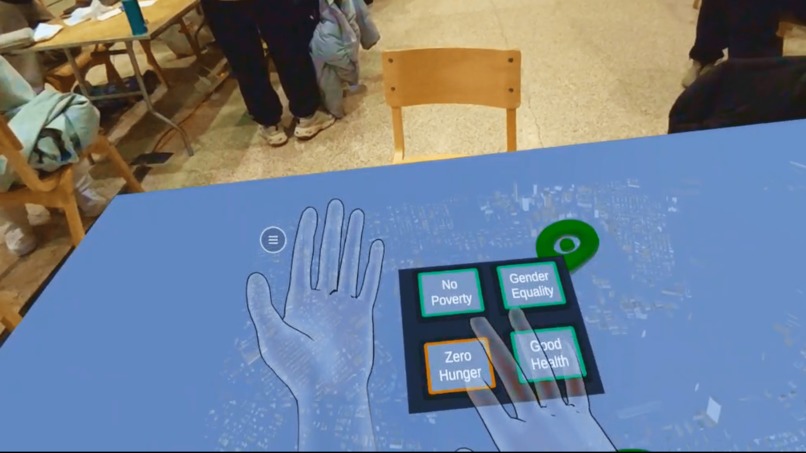
MR app using Meta Quest Presence Platform
-
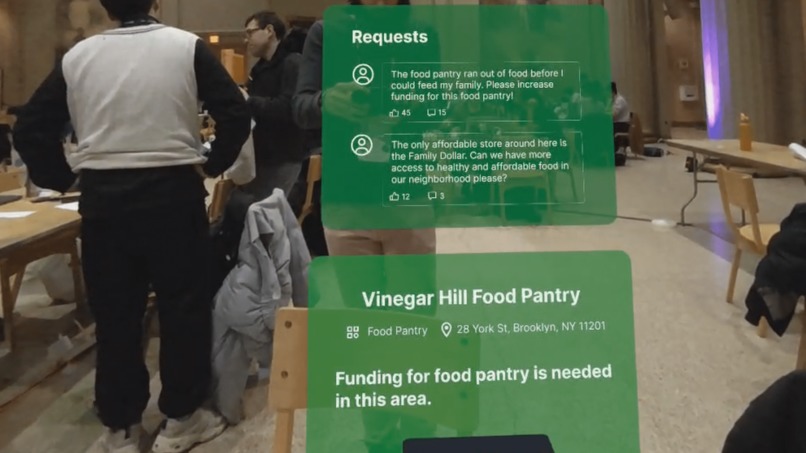
Review resident feedback in Quest app


Inspiration
We live in a complex and dynamic world, where cities face many challenges and opportunities. Food insecurity, homelessness, inequality is on the rise. Public services are facing increased demand. Community members need info about assistance in their area. We need to increase civic engagement in this at-risk population.However, there is often a gap between the people who make decisions for the city and the people who live in the city. This gap can lead to inefficiencies, inequalities, and dissatisfaction.
Community members are not actively engaged in the policy-making process. According to research, some community members are not aware of the resources in their area. Major reasons include: Engagement by email or phone is tedious for the average resident. Difficulties for community members to provide feedback to their local governments and receive replies from their representatives.
What it does
WeSources XR integrates Augmented Reality (AR) and Mixed Reality (MR) technologies to bridge the communication gap between community members and decision-makers, aligning with the goals of SDG 17. The AR tool, designed for residents, displays a 3D map that highlights essential community resources like food pantries and shelters. Additionally, it allows residents to report specific local needs or issues directly, such as shortages in food pantries. On the other hand, it is a powerful spatial computing solution for city administrators and policymakers. The MR tool for decision-makers presents a data-driven 3D city model, enabling them to monitor these community inputs in real-time. This feature facilitates informed and responsive decision-making based on the actual needs and voices of citizens. By establishing a feedback loop, where decision-makers' responses are visible on the residents' AR app, your product not only promotes transparency but also encourages ongoing engagement and trust within the community. This dual-technology approach ensures that policies and actions are more closely aligned with the real-time and specific needs of the community, fostering a more connected and responsive urban environment.
How we built it
We started with open-source 3D model assets and generated more assets with Blender. We designed user interfaces as the 2D assets. The mobile AR is built with Lens Studio, and the mixed-reality experience for Meta Quest 3 is based on the Meta Presence Platform and Ultraleap.
Challenges we ran into
Unexpected system issues at the early stage of development brought challenges to our development process.
Accomplishments that we're proud of
Multiple-device mixed-reality experiences are utilized in a meaningful way for different groups of audiences. Team members all contributed extensively to the whole project, leveraging everybody’s strengths.
What we learned
Research helps understand the problem context and shape the design decisions.
What's next for WeSources
We believe that “WeSources” has the potential to expand and evolve in several impactful ways:
- Technology Enhancement: we will continuously improve the AR and MR technologies for better user experience and more accurate data representation. This could include more intuitive interfaces, real-time updates, and advanced data analysis features.
- Increased User engagement: more features could be added to build the sense of community and address the diverse needs of the community
- Feedback and Improvement Loop: we can establish a robust system for collecting user feedback on both the AR and MR tools, ensuring continuous improvement based on actual user experiences and needs.

Log in or sign up for Devpost to join the conversation.