-
-
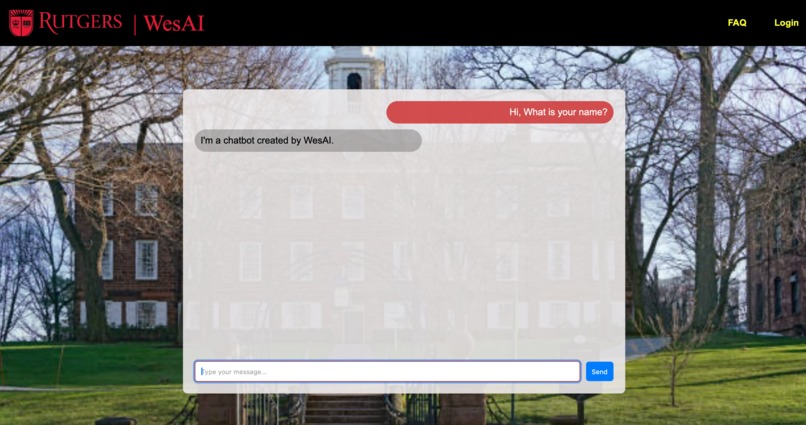
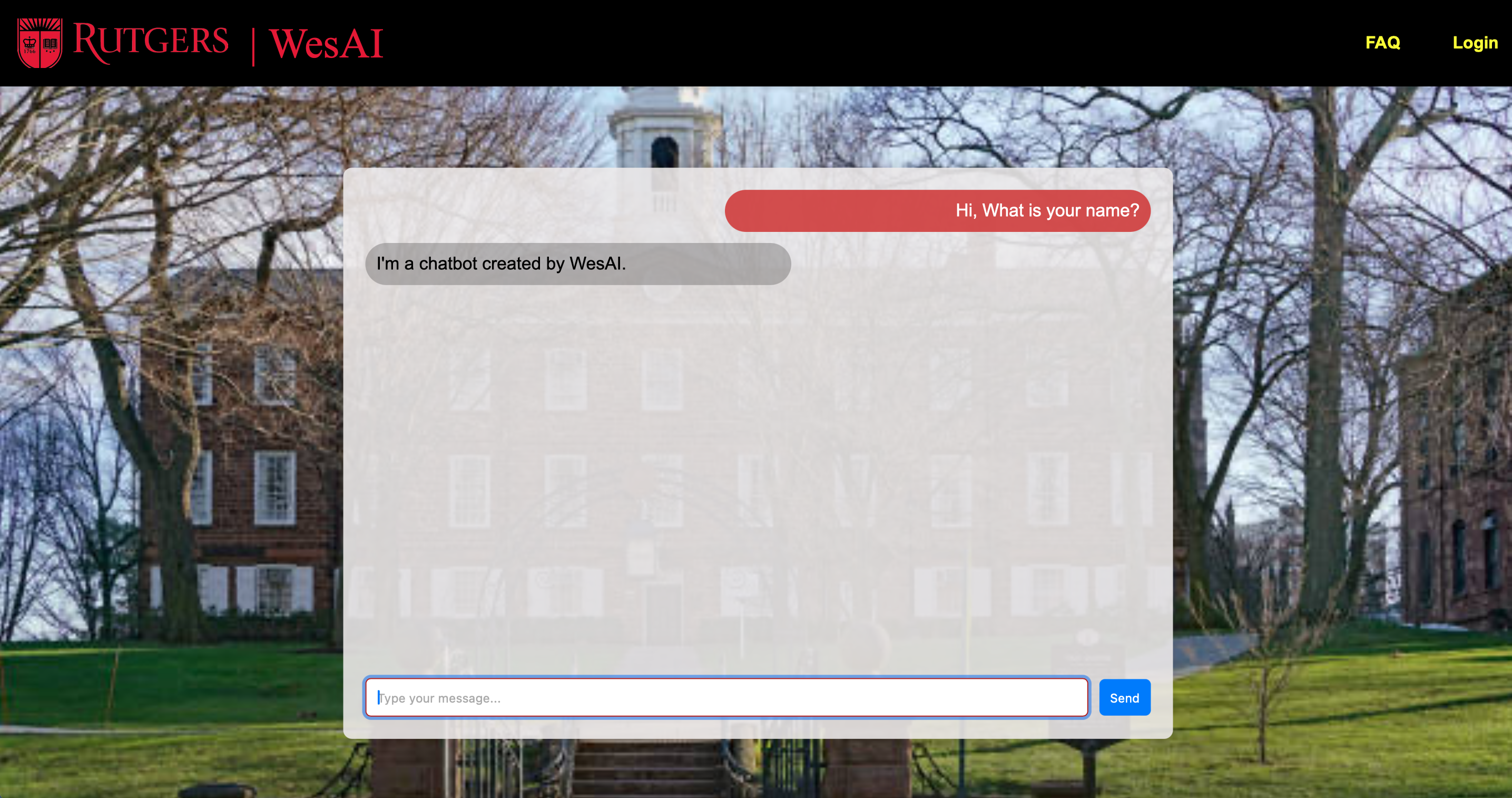
An image that shows a demo of how WesAI works
-
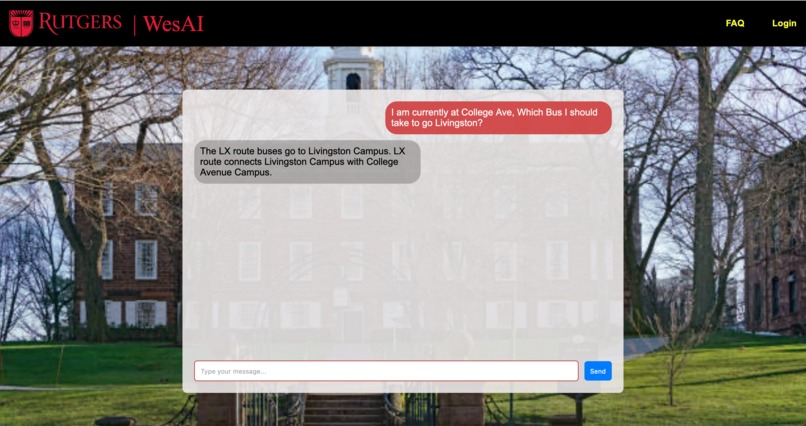
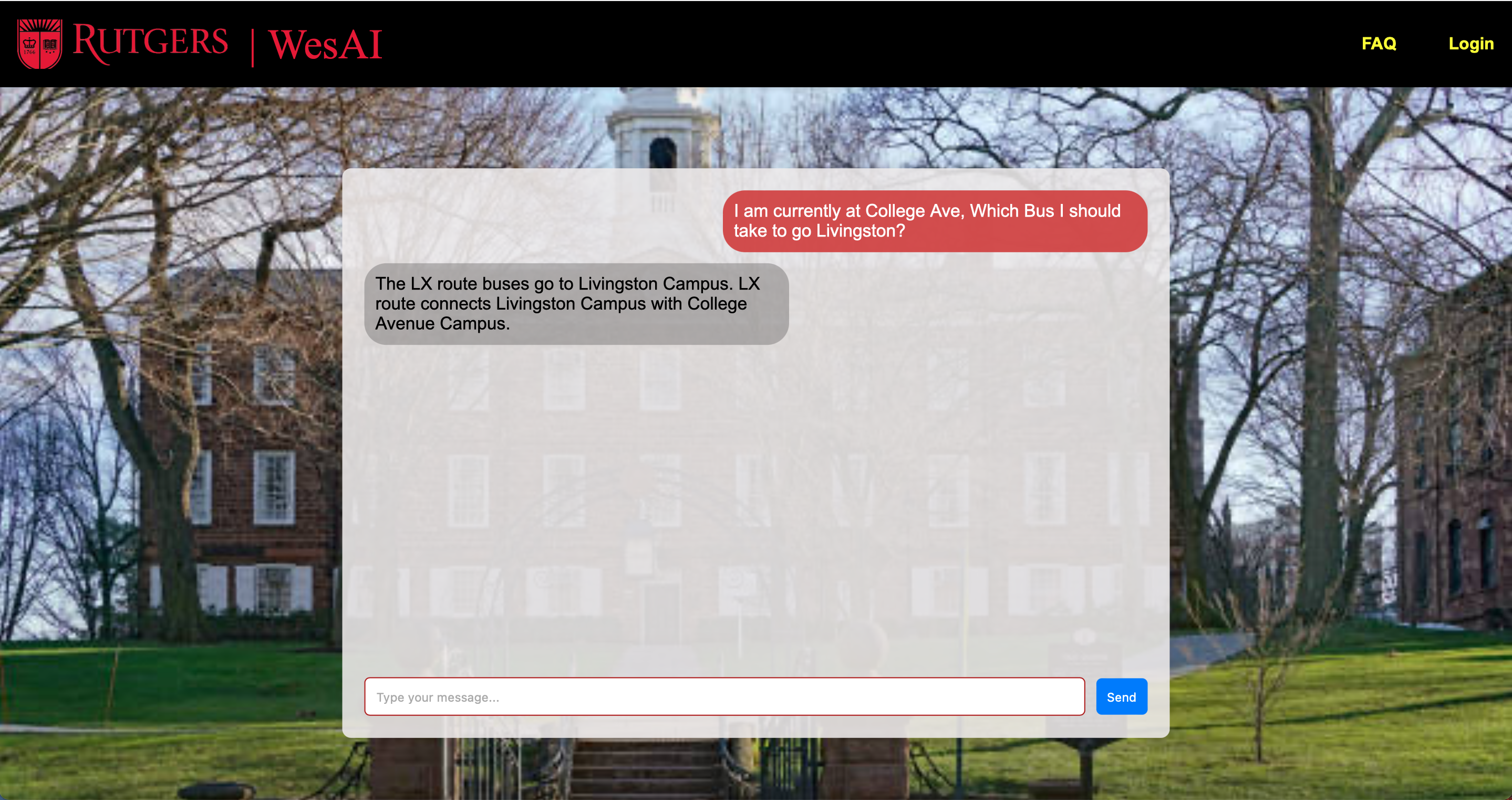
An image that shows a demo of how WesAI works
-
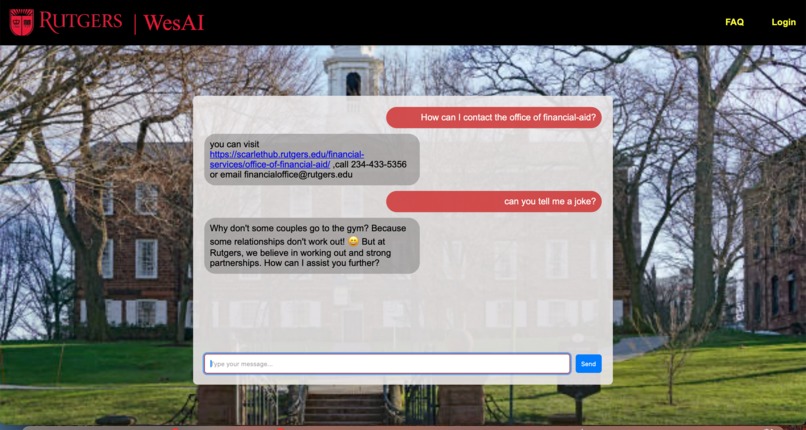
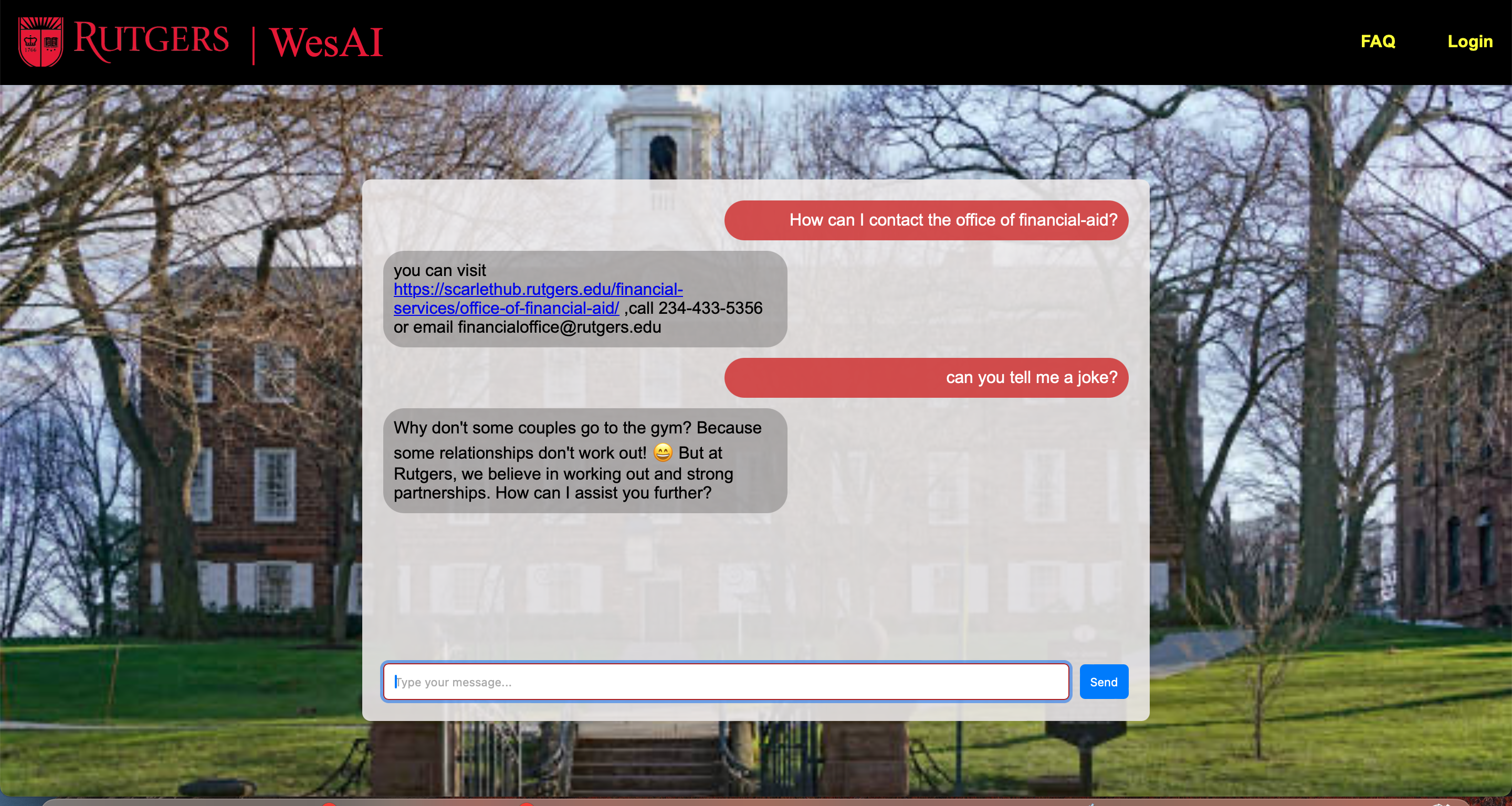
An image that shows a demo of how WesAI works
-
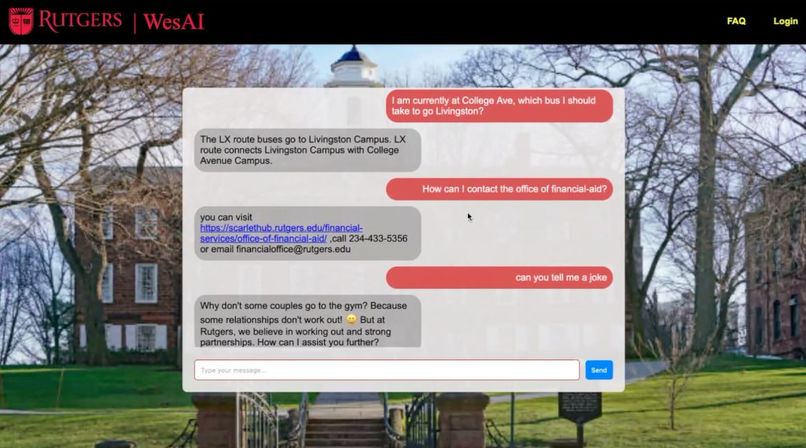
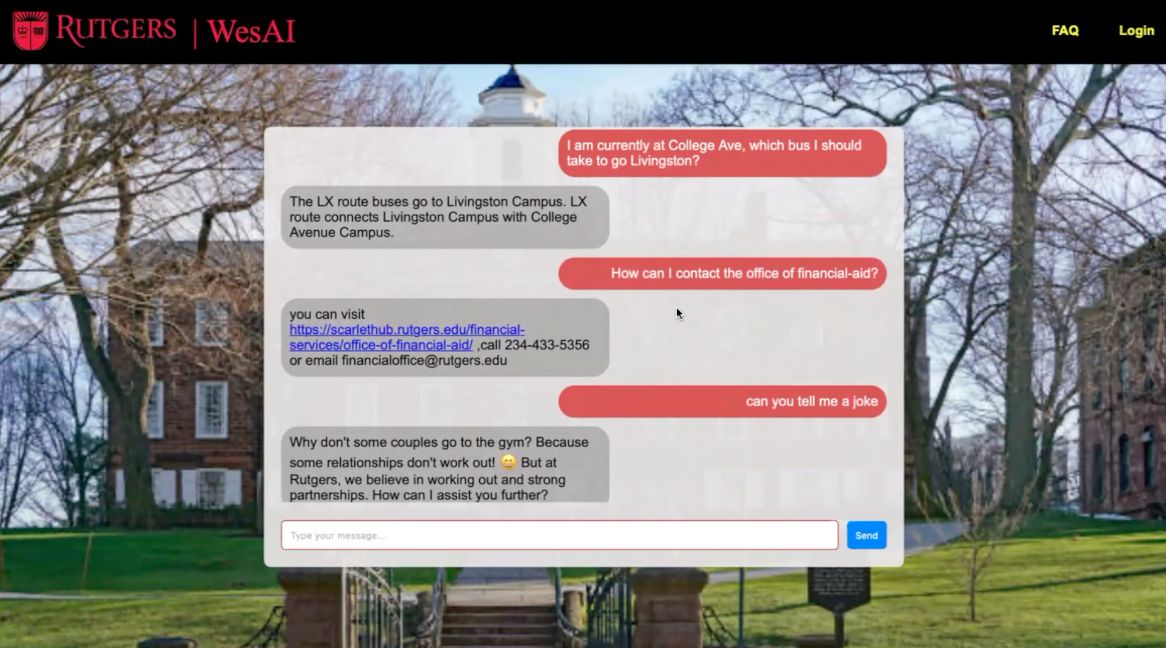
An image that shows a demo of how WesAI works
Inspiration
5th September 2022 was the first day I stepped onto the Livingston campus at Rutgers University. This was my first time at college, and I had yet to learn how I would get to the Busch campus for my first Computer Science course. I needed help figuring out where the bus stops were located. As a matter of fact, I had no idea that there exists an official Rutgers app that shows the live bus schedule. Currently, I am in my senior year, and I don't know who I should email or call for questions related to graduation. Finding dates regarding breaks and registration deadlines was hard as I had to surf the Rutgers web pages to get that information. As a result, we came up with the brilliant idea of creating a chatbot named WesAI (a name dedicated to our professor) that contains all the general details about Rutgers University. All you need to do is just chat with the AI.
What it does
WesAI is Rutgers University’s interactive AI chatbot. WesAi has all the information about campus addresses, bus routes, nearby restaurants, course registrations, general advising questions, contact information, professor reviews, etc. Need help with any of this? Just Ask!
How we built it
We first defined goals and objectives of our project. Based on that we discussed and designed a handwritten prototype on how our frontend and backend would look like. After that we decided to use Python, HTML, CSS, JavaScript, and Django for our frontend and backend. We used sentence transformer, which is a pre-built training framework in Python as our pre-trained model for the chatbot. Our next step was to feed data to the chat-bot. We did that by collecting essential data from Rutgers University webpages. After that, we created a domain name on GoDaddy “wesai.study” (a name dedicated to a professor), and deployed our web application on Netlify. We used GitHub repository to manage our code across members of the team. We increased efficiency of development phase by using GitHub Copilot.
Challenges we ran into
We ran into multiple challenges during the development of the project and as a result we were able to only create a prototype which works as a proof of concept.
- We wanted to access Rutgers API to get information regarding the questions asked by a user. The API was 4 years old we didn’t have API key to access it. As a result, we discussed with mentors and decided to collect data manually.
- As a result of manual data collection and lack of sufficient information, we were not able to train our own fully-fledged model. As a result, we used sentence transformer, which is a pre-built trained framework in Python as our pre-trained model for the chatbot.
- We wanted to host the web application, but Netlify only supports static websites. As a result, we have our frontend up and running but we couldn’t host backend server side anywhere else for free in given time frame.
Accomplishments that we're proud of
It's just so easy to ask questions on WesAI and get information. It can help avoid extra time in phone calls and emails. Even though challenges mentioned above, we are proud that we were able to generate a proof of concept.
What we learned
- We learned that team collaboration is very important in order to succeed in timeline and create a best prototype.
- We got hands-on experience on how we would go about developing real-world projects.
What's next for WesAI
- We would like to integrate Rutgers API so that the chatbot can answer real-time questions.
- We would like to train our own model (Transformer).
- This project is a chatbot which can be a add on to the Rutgers official webpage. We would like to integrate it with Rutgers University website if granted permission.

Log in or sign up for Devpost to join the conversation.