Inspiration
In today's digital world, stress is a serious problem affecting people everywhere. We realized that most mental health apps are spread out, with separate ones for meditation, journaling, and therapy. This makes things harder for people who are already finding things tough.
We wondered, what if there was one digital space that could change based on what you're feeling right now?
Weper came about because we saw the need for a "Super App" for mental wellbeing. Whether you need immediate help in a crisis, a peaceful moment to relax, a place to get things off your chest, or just something to take your mind off things, Weper is your all-in-one buddy designed to make you feel better.
What it does
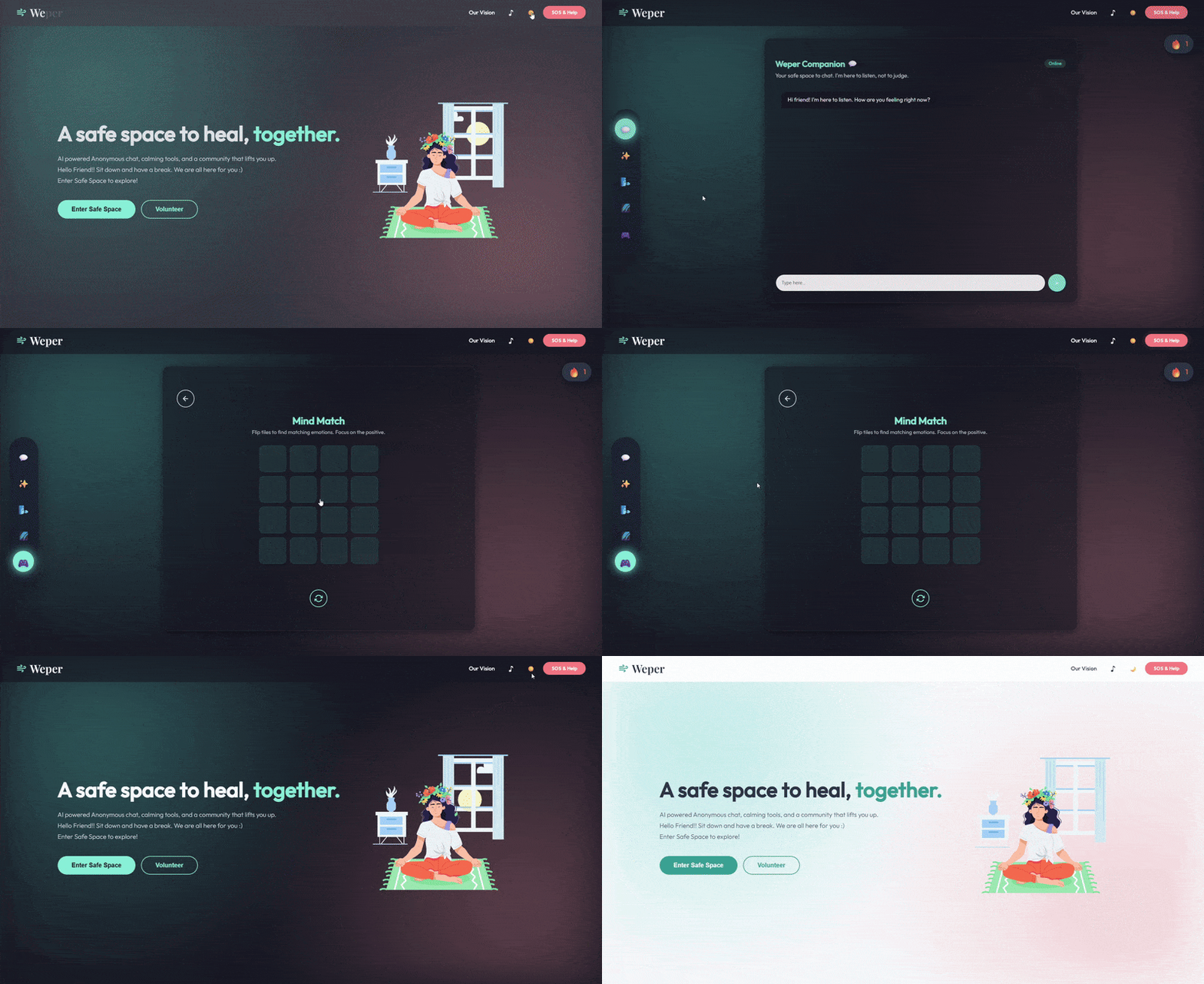
Weper is a complete mental health system that offers different tools for whatever mood you're in. It's more than just a chatbot; it's actually a collection of eight helpful features:
Help in a Crisis
- SOS Emergency Button: With just one tap, this button instantly connects users to local suicide prevention hotlines and emergency services. Your safety is our top concern.
- AI Empathy Chatbot: This is a friendly helper available 24/7, trained to listen actively and without judgment. It's there for you when you can't talk to someone directly but still need to feel heard.
Taking a Moment
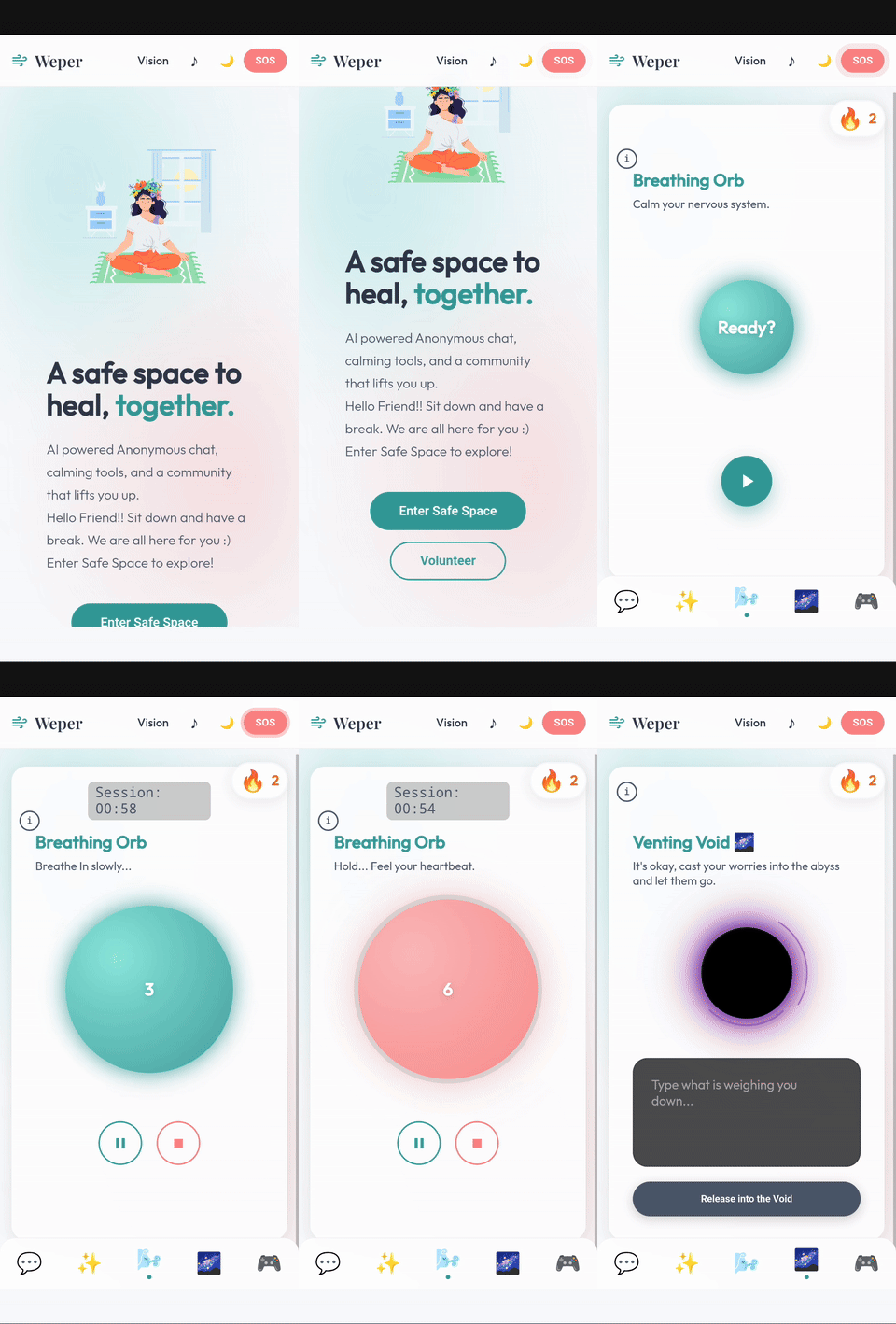
- Breathing Orb: This is a visual tool for meditation that leads you through breathing exercises. The orb expands and contracts, creating a calming effect that helps slow your heart rate.
- Calm Audio Integration: Enjoy calming music that play in the background, turning your surroundings into a tranquil spot.
Letting Go and Shifting Perspective
- The Void: This is a safe place to digitally "vent." You can type out your biggest frustrations, anger, or secrets, and then watch them vanish into a digital black hole, symbolizing you letting go of that weight.
- AI Paraphraser: This is a special tool inspired by cognitive behavioral therapy (CBT). It helps you rephrase negative self-talk or challenging messages into language that's more positive and helpful.
Fun & Habits
- The Arcade: Fun, simple games that help you focus and stop worrying.
- Daily Streaks: A fun way to remind you to check in with yourself every day and make self-care a habit.
How we made it
We designed Weper to be quick and feature-packed, ensuring it works well even if your internet isn't the fastest. All of this was done with the understanding that every transition and interaction should feel soothing for users seeking calmness and positivity.
- Main System: We used Python and Flask for a strong backend that manages how everything works, from navigation to all the different features.
- Front End: The look and feel are made with HTML5, CSS3, and plain JavaScript. We used CSS animations for the Breathing Orb and The Void to make them look great and run smoothly without needing big software libraries.
- AI: We added smart AI models to run both the Chatbot and the Paraphraser. We gave them specific instructions to make sure the AI follows mental health safety rules.
- Keeping Track: We used local storage to remember your Daily Streaks and settings (like sound preferences) without collecting your personal information.
Problems we faced
- Responsive: With so many things to do (Games, AI, Sound, SOS), the screen could get too busy, we had to make sure with every step that the program is compatible with any device type.
- Deploying: Putting the site live online was a challenge. Initially, we decided to deploy on Vercel, but we later discovered that due to the API in the project, the code could break when run on Vercel's server. So we had to change it to Render later on.
- Interactions: With every part of the code we had to make sure that the colour is well suited for a person who need mental assistance and every transition that happens needed to be smooth .
Things we're proud of
- The all-in-one experience: We managed to create a platform where users can go from feeling panicked (SOS/Breathing) to processing their thoughts (Chat/Void) to chilling out (Games) all in one go.
- The Void feature: It was a really cool moment, both technically and emotionally, when we saw the visual idea of "letting go" actually come to life in the code, with text just fading into the dark.
- Making wellness fun: We successfully added the Daily Streak feature, which shows that we can use the same tricks social media uses to get people hooked, but for something good like healing.
What we learned
- Understanding tech stress: We figured out that waiting around (latency) actually makes people more anxious. Making our code run faster wasn't just about speed; it was about making sure someone who's already stressed doesn't have to wait longer for the help they need.
- How helpful distractions can be: Building the Arcade showed us that sometimes, the best way to deal with things isn't talking about them, but just taking a break.
- Dealing with browser sound rules: We figured out how to work around the tricky rules browsers have about playing audio automatically so our calming sounds would play reliably.
What's coming up for Weper Mental Health
Weper is going to be way more than what we built for this hackathon. We're moving on to Phase 2: Connecting with People.
- Getting therapists involved: We're busy looking for licensed therapists and trained volunteers to start a one-on-one anonymous therapy feature. This will be the link between AI help and real human support.
- Anonymous group chats: As more people use Weper, we'll start "Circles" – live, guided support groups where users can chat with others going through similar stuff (like exam stress or dealing with loss), all while staying completely anonymous.
- Using your body's signals: We're looking into using the Web Bluetooth API to connect with smartwatches. This would let us detect stress in real-time and automatically get prompts for the "Breathing Orb."
Cultural & Psychological Impact
Improving Mental Wellness through Digital CBT & Grounding
Weper is not just a collection of features; it is designed around evidence-based psychological principles to address the "Anxiety Loop" common in students and professionals.
- Cognitive Reframing (CBT): Our AI Paraphraser is directly inspired by Cognitive Behavioral Therapy (CBT). By helping users rewrite negative self-talk ("I am a failure") into constructive language ("I am learning"), we provide an accessible, automated way to practice cognitive restructuring without needing a therapist present.
- Physiological Grounding: The Breathing Orb and Calm Audio integration address the physiological symptoms of stress (Fight or Flight response). By guiding users to slow their breathing, Weper forces a biological "reset" of the nervous system, moving users from panic to a state of calm.
- Safe Emotional Release: "The Void" provides a culturally safe outlet for repressed emotions. In high-pressure environments (like competitive high schools or universities) where complaining is often discouraged, this feature allows for the symbolic "letting go" of burdens without fear of judgment or consequences.
Addressing Cultural Stigma & Accessibility
In many cultures and communities, seeking mental health support is still heavily stigmatized or seen as a sign of weakness. Weper bridges the gap between "silent suffering" and "professional help."
- The "Anonymous First Step": For users in conservative communities or high-pressure academic environments who fear judgment from peers or family, Weper offers total anonymity. It serves as a non-threatening "first step" towards care, normalizing the act of seeking help without the barrier of walking into a clinic.
- Combating "Doomscrolling": For Gen Z and digital natives, the default response to stress is often "doomscrolling" on social media, which worsens anxiety. Weper interrupts this cycle by replacing negative digital consumption with "The Arcade" and Daily Streaks—turning the device from a source of stress into a tool for healing.
- Democratizing Access (Remote Communities): Mental health tools are often heavy, expensive apps requiring high-end phones. Weper is engineered to be extremely lightweight (HTML/Flask). This ensures that students in remote areas with 2G/3G connections or older devices can access the same quality of care as those with high-speed fiber, truly democratizing mental wellness.
Neurodiverse-Inclusive Design
We designed Weper's interface with neurodiversity (ADHD, Autism, Sensory Processing Sensitivities) in mind.
- Sensory-Friendly UI: Unlike the chaotic, notification-heavy web, Weper uses a "Dark Mode" aesthetic with muted teal accents to minimize sensory overload.
- Focus Redirection: The minimalist games in the Arcade provide a healthy form of "stimming" or focus redirection for users with ADHD, helping to quiet a noisy mind through simple, rhythmic interaction.


Log in or sign up for Devpost to join the conversation.