-
-
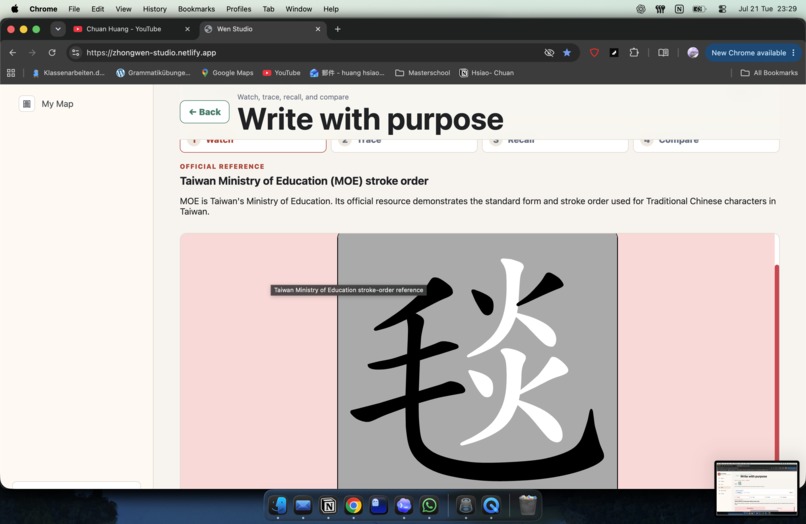
Watch Taiwan MOE stroke-order references, then trace, recall, and compare honestly.
-
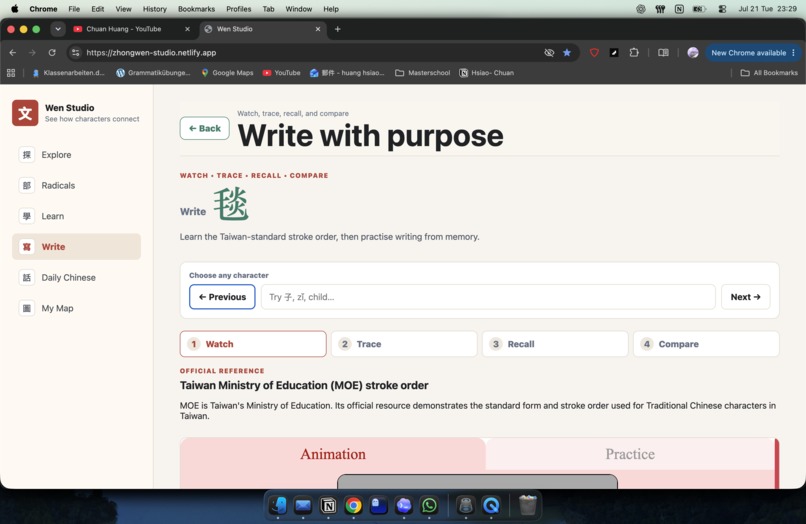
Watch Taiwan MOE stroke-order references, then trace, recall, and compare honestly.
-
Learning path
-
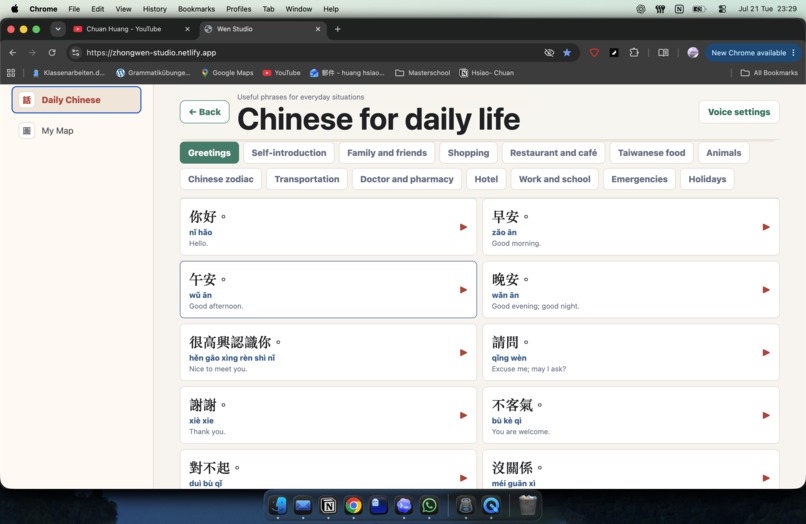
ractise 182 short phrases across 14 everyday situations.
-
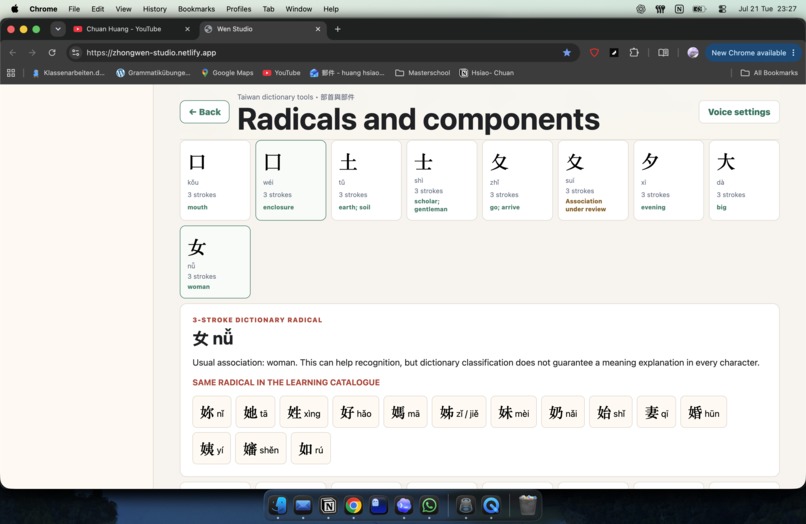
Browse all 214 dictionary radicals and look up characters by radical and remaining strokes.
-
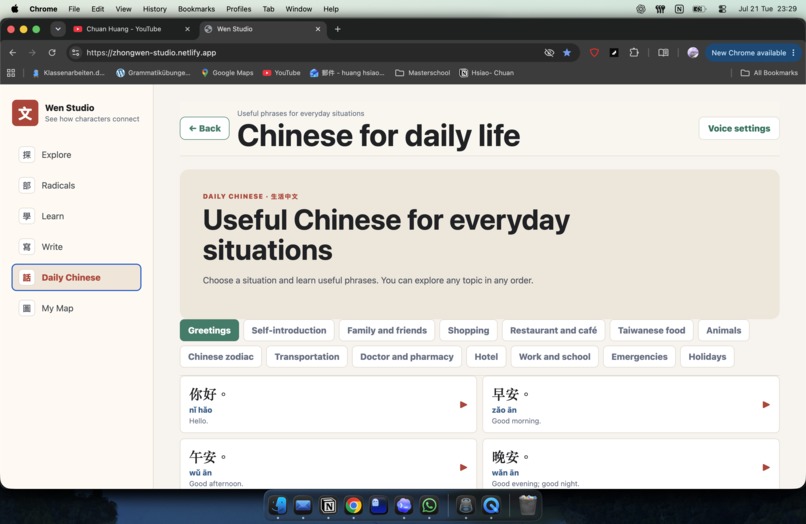
ractise 182 short phrases across 14 everyday situations.
-
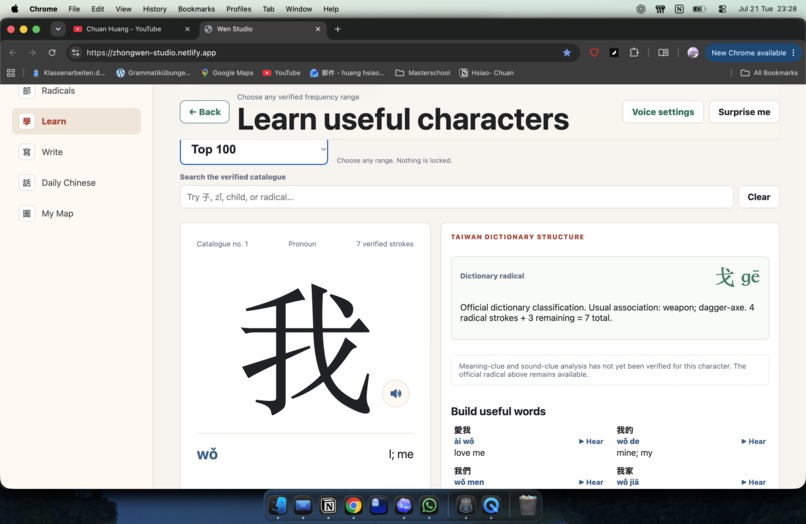
Search 1,025 reviewed character cards with pinyin, meanings, dictionary structure, and useful words.
-
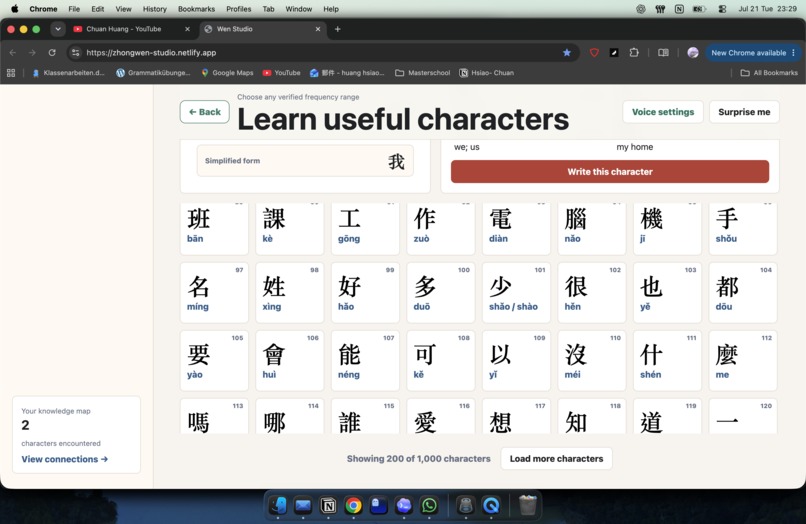
Search 1,025 reviewed character cards with pinyin, meanings, dictionary structure, and useful words.
-
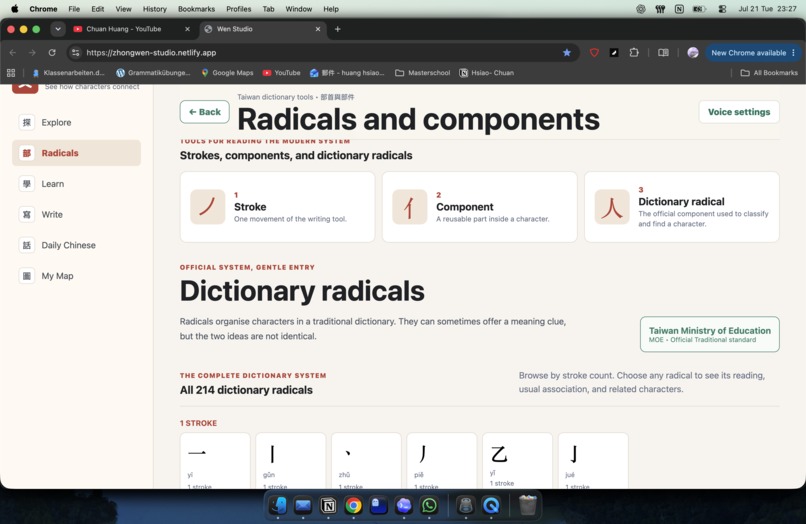
Browse all 214 dictionary radicals and look up characters by radical and remaining strokes.
-
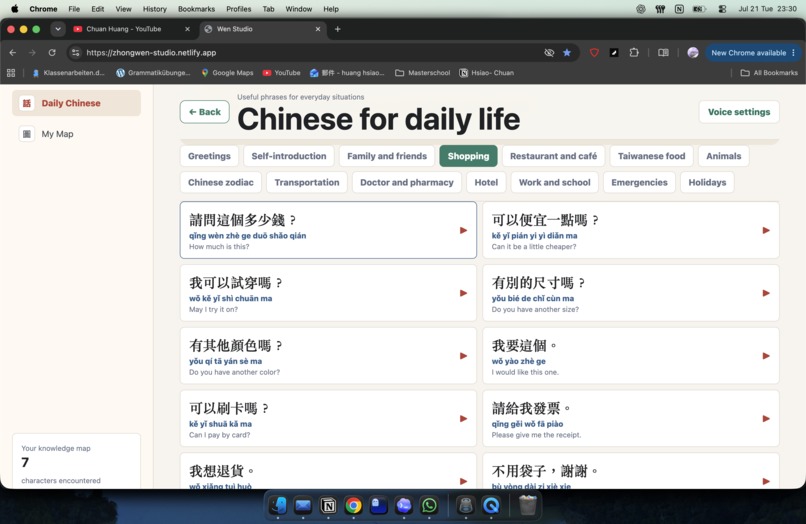
ractise 182 short phrases across 14 everyday situations.
-
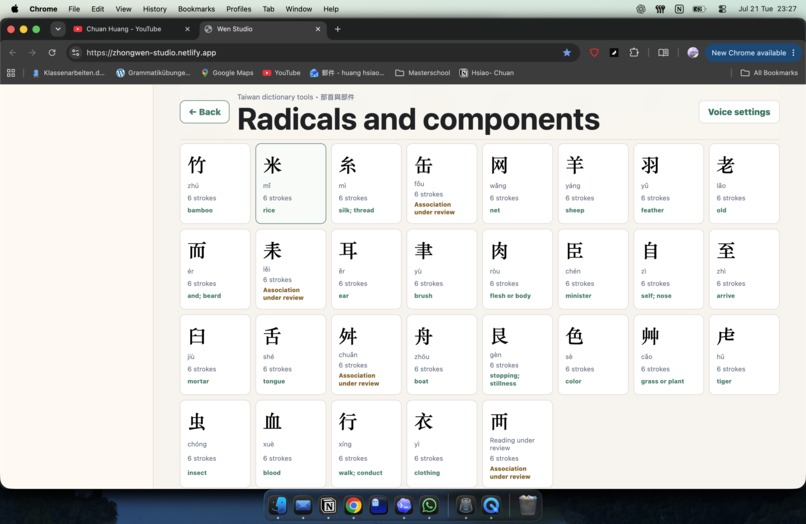
Browse all 214 dictionary radicals and look up characters by radical and remaining strokes.
-
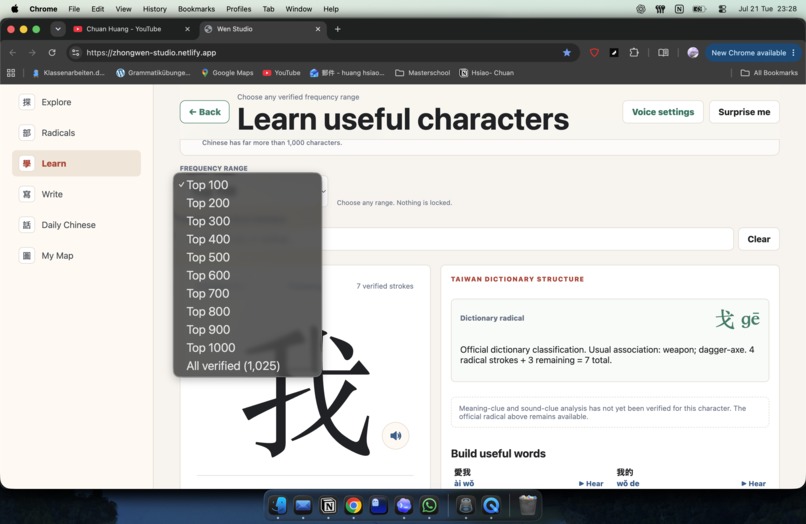
Search 1,025 reviewed character cards with pinyin, meanings, dictionary structure, and useful words.
-
Additional information about Chinese characters
-
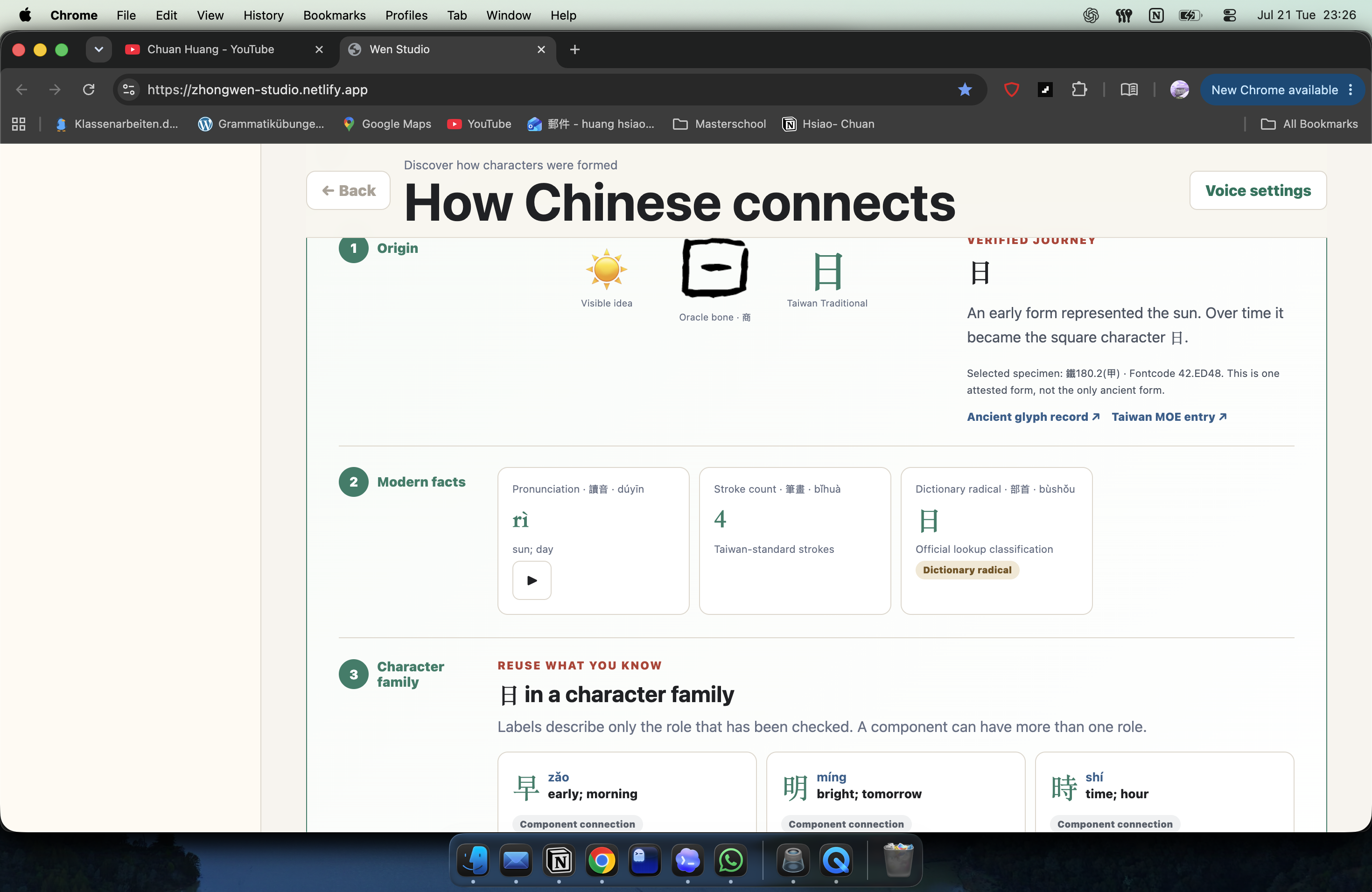
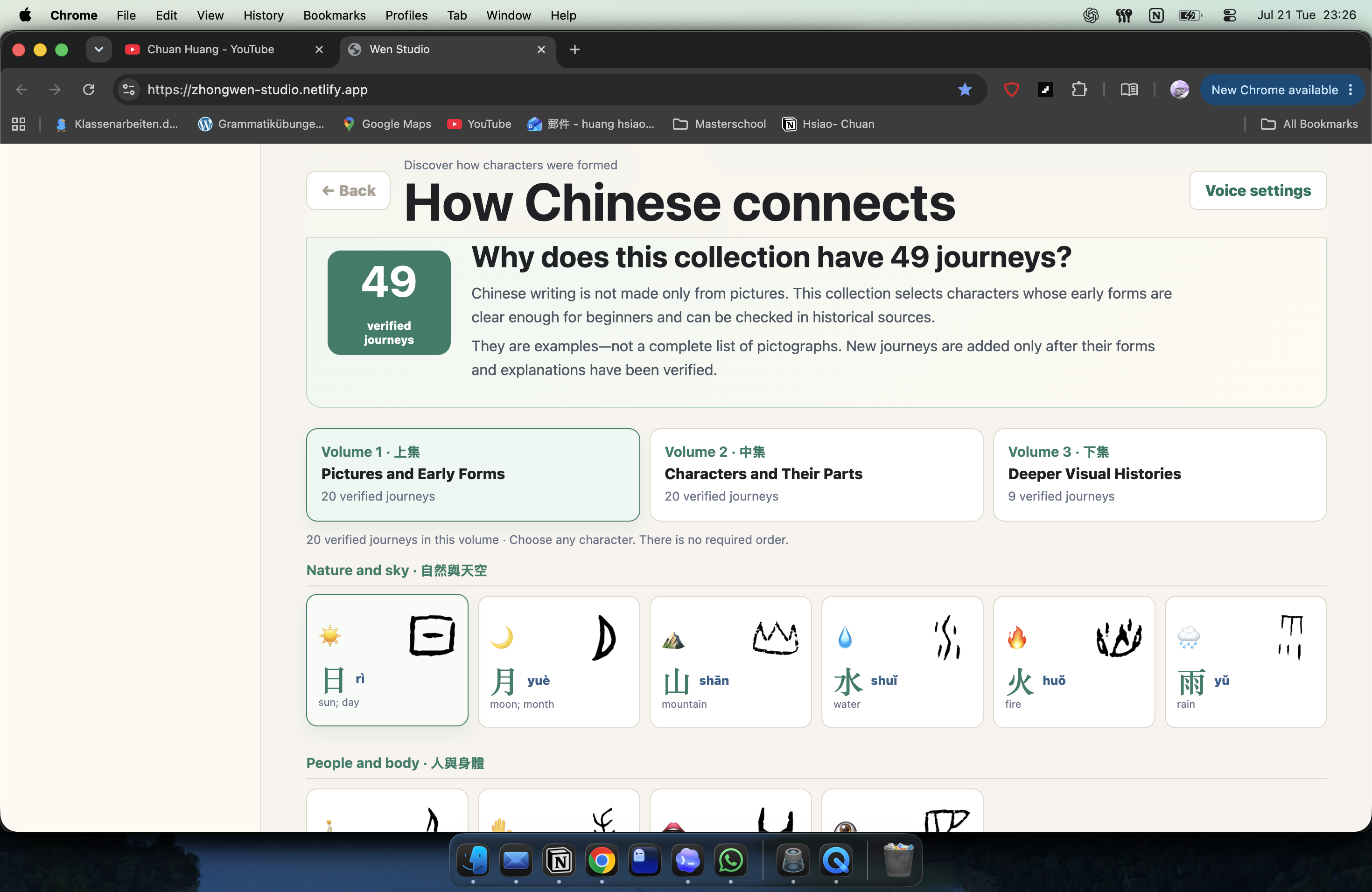
Explore carefully sourced historical forms and modern Taiwan Traditional characters.
-
Explore carefully sourced historical forms and modern Taiwan Traditional characters.
Inspiration:
I always wanted to build an app like Wen Studio to help my grown-up children learn Chinese. Many beginner tools present Chinese characters as isolated shapes to memorise, while traditional dictionaries assume that learners already understand radicals and stroke counts.
I wanted to create a gentler bridge between these approaches: a tool that helps beginners understand how Taiwan Traditional Chinese characters connect through historical forms, dictionary structure, useful words, pronunciation, and writing.
As the project developed, I realised that the same approach could help many other adult beginners, especially learners who may not speak English as their first language. Therefore, I tried to use simple English to build phrases and to explain how Chinese characters were formed.
What it does:
Wen Studio is a browser-based learning app with six freely accessible areas:
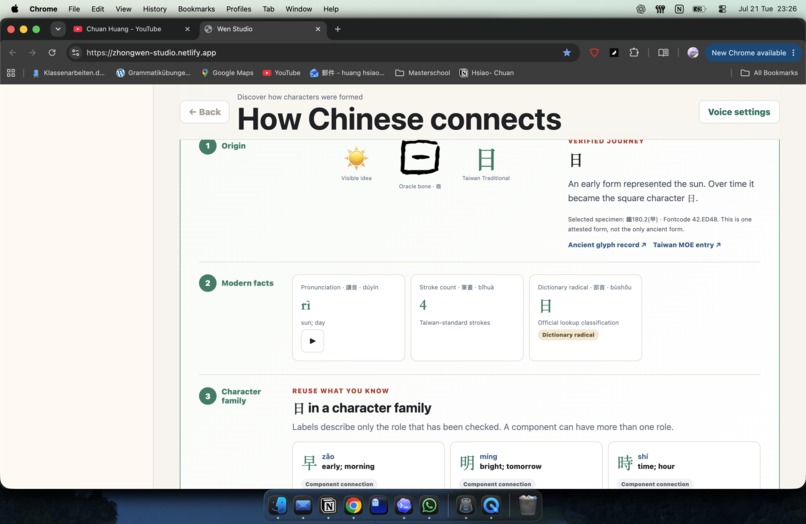
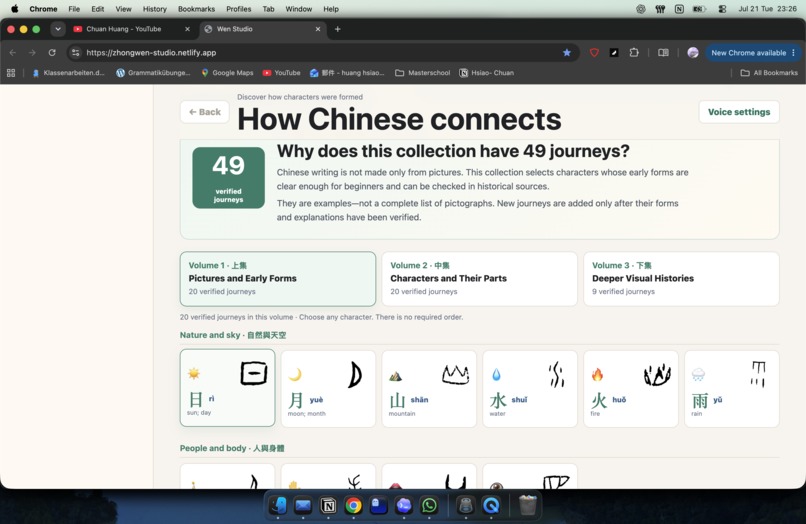
- "Explore" presents 49 carefully sourced visual journeys connecting selected historical forms with modern Taiwan Traditional characters.
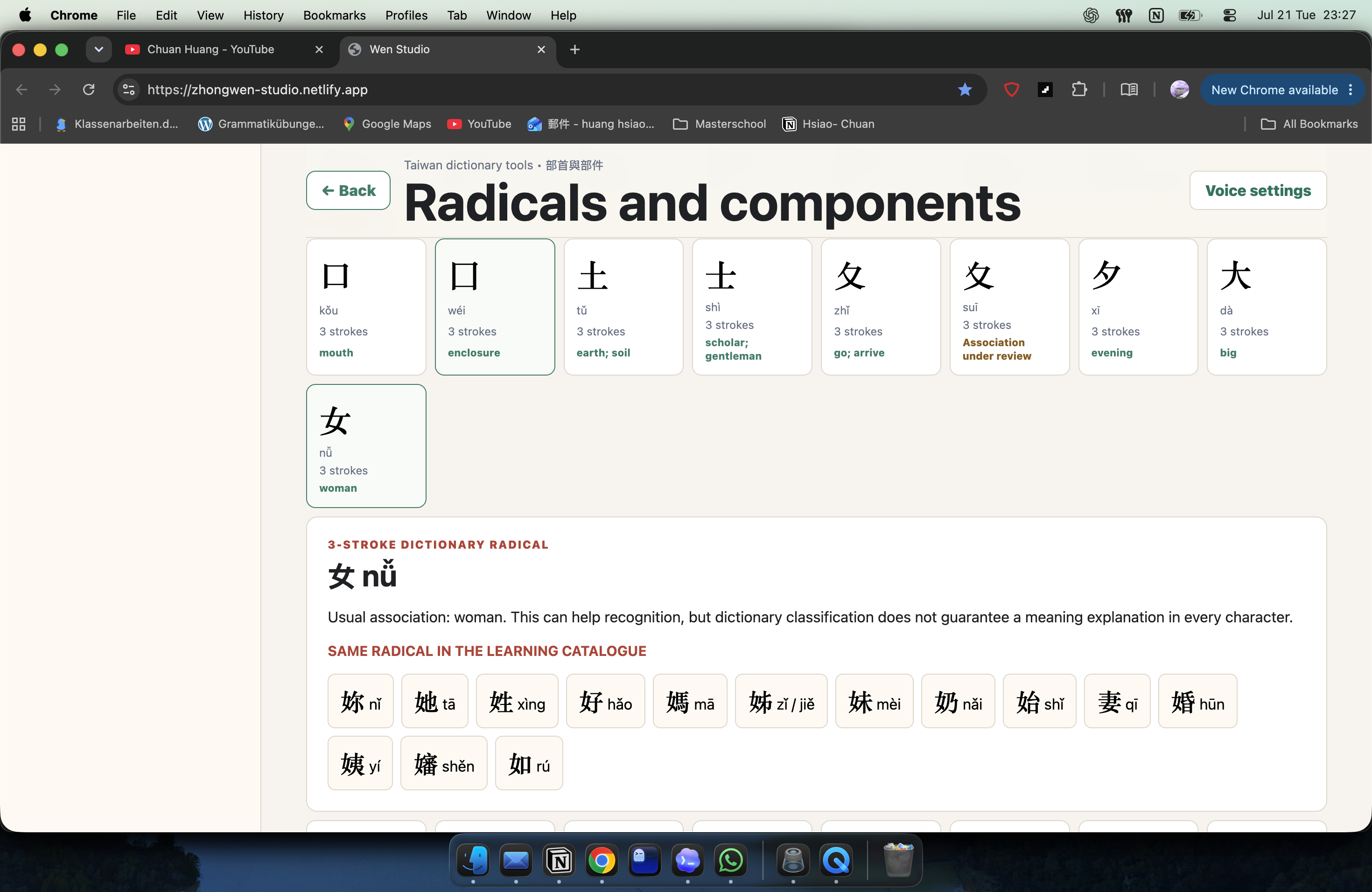
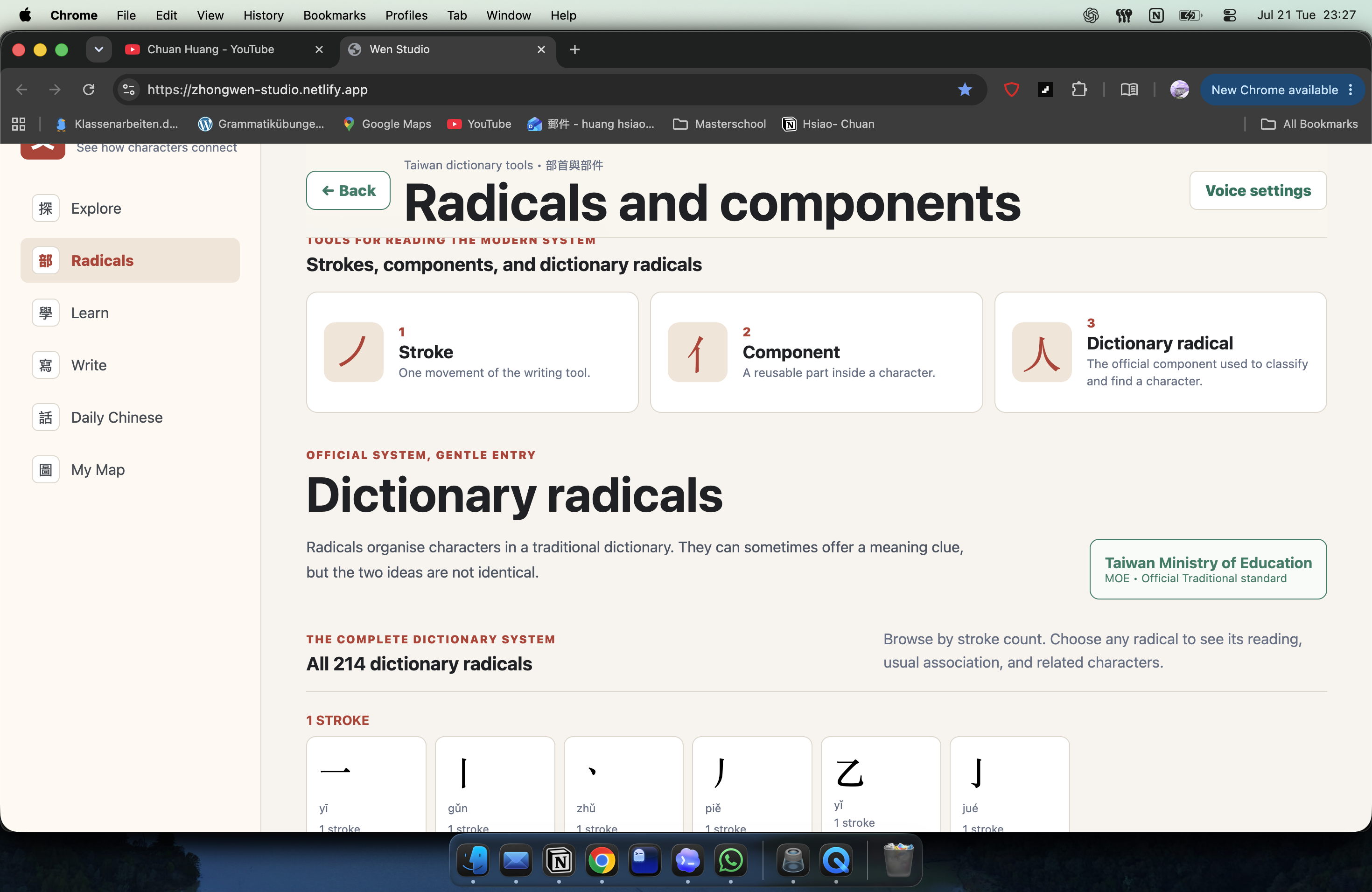
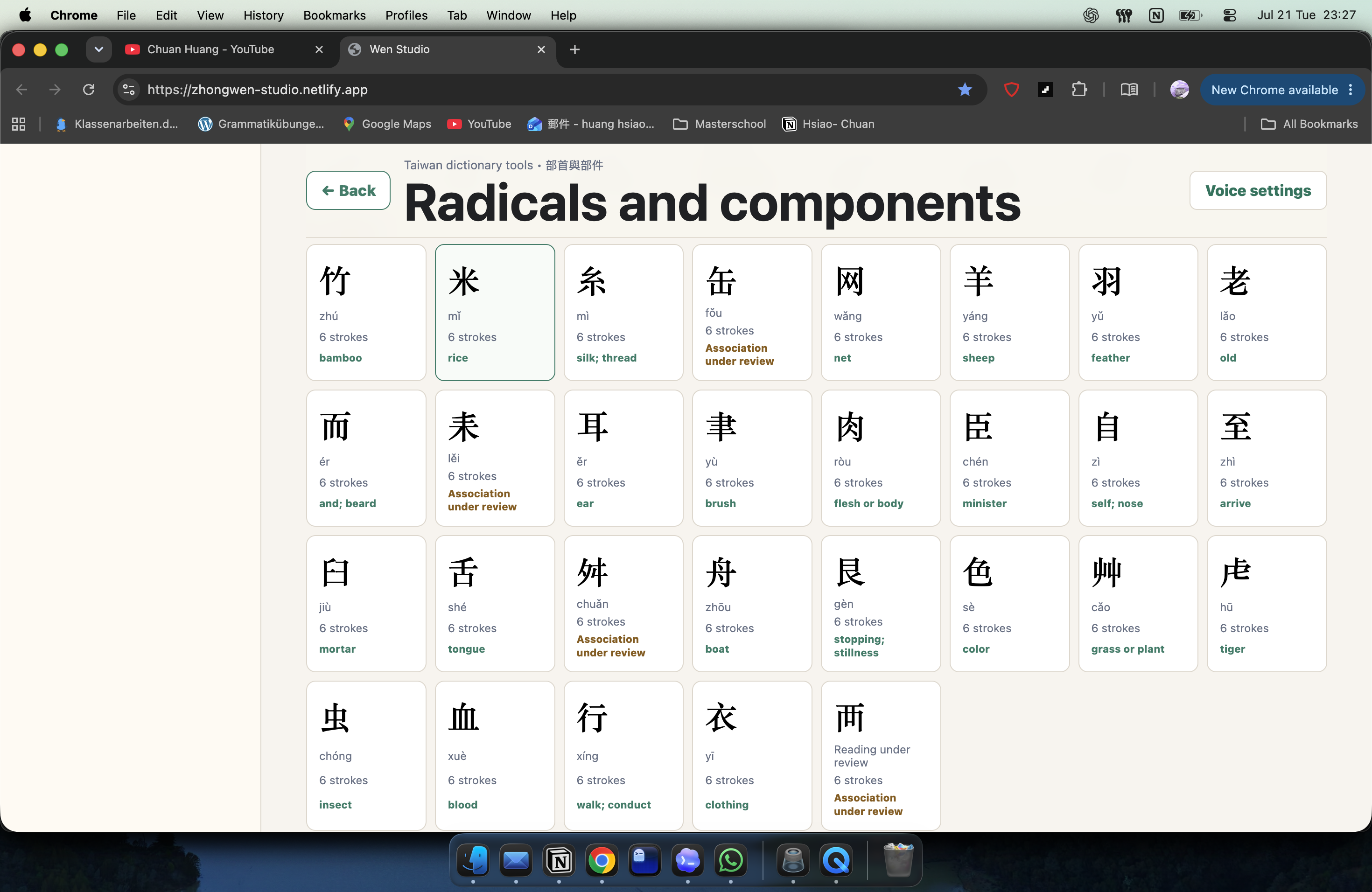
- "Radicals" introduces all 214 traditional dictionary radicals and provides a radical-and-remaining-stroke lookup tool.
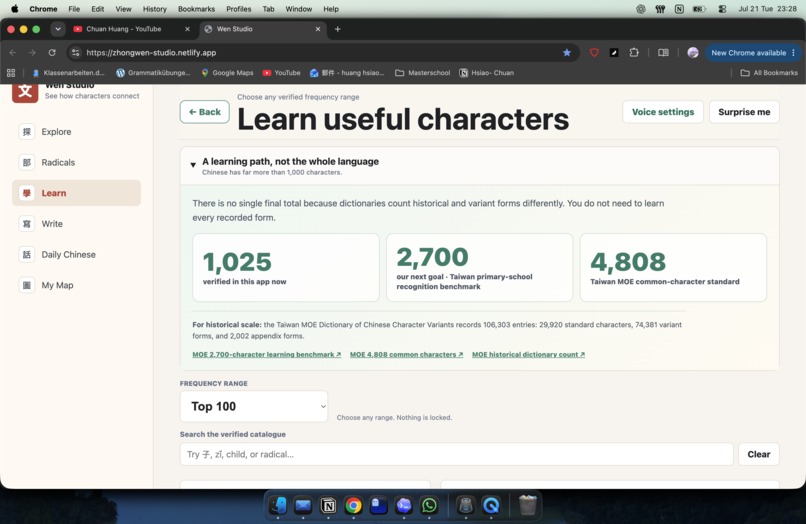
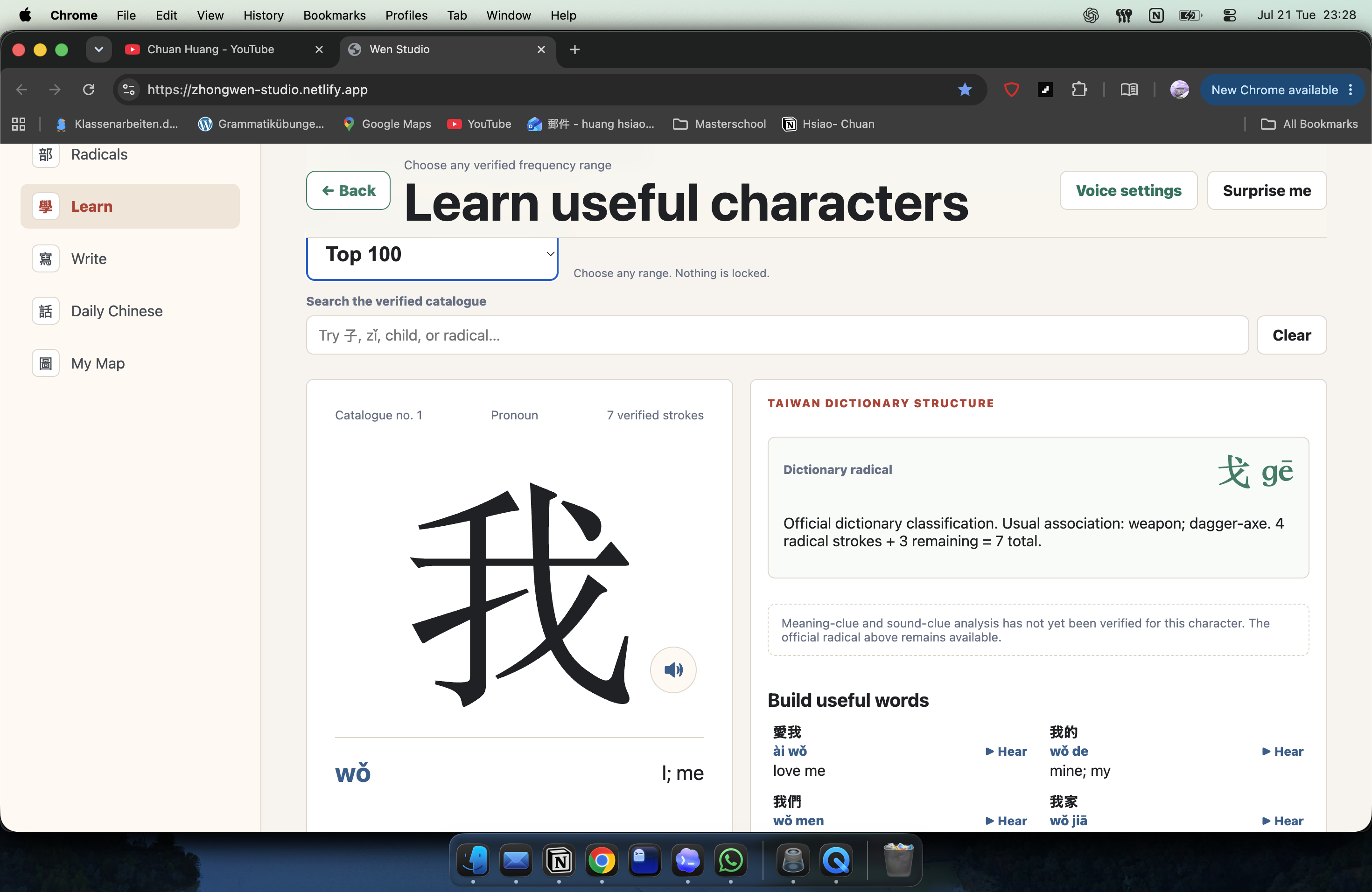
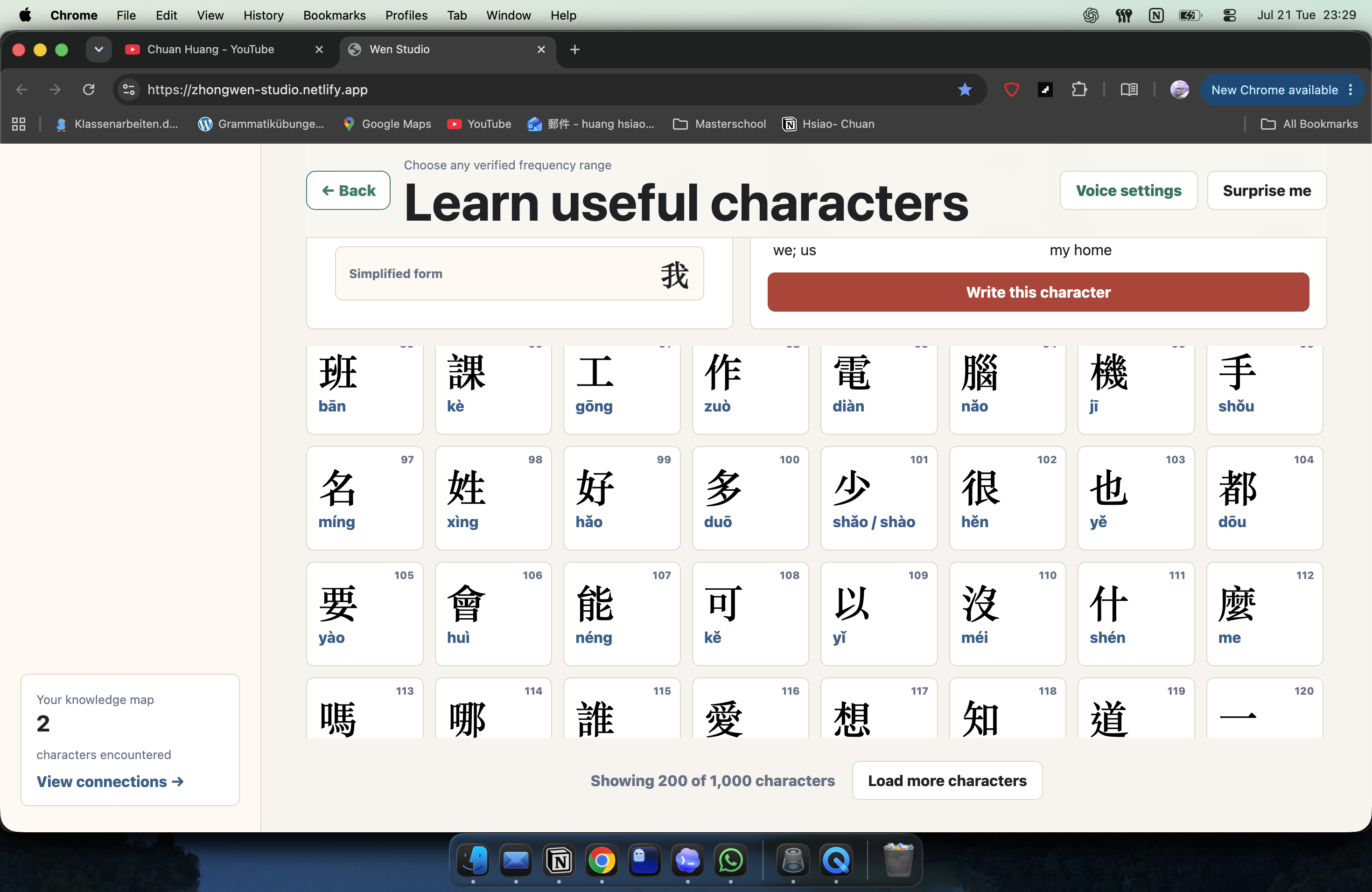
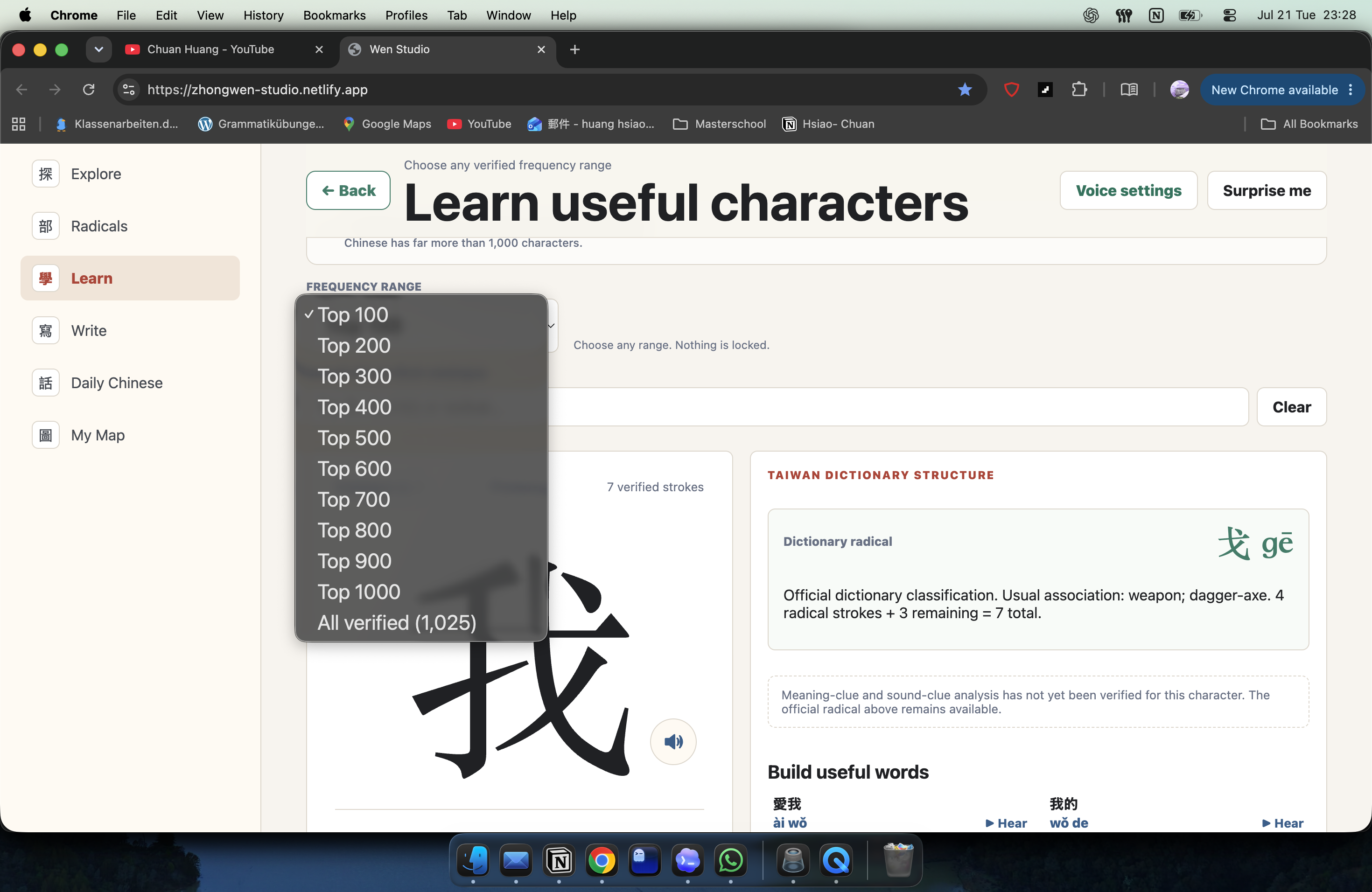
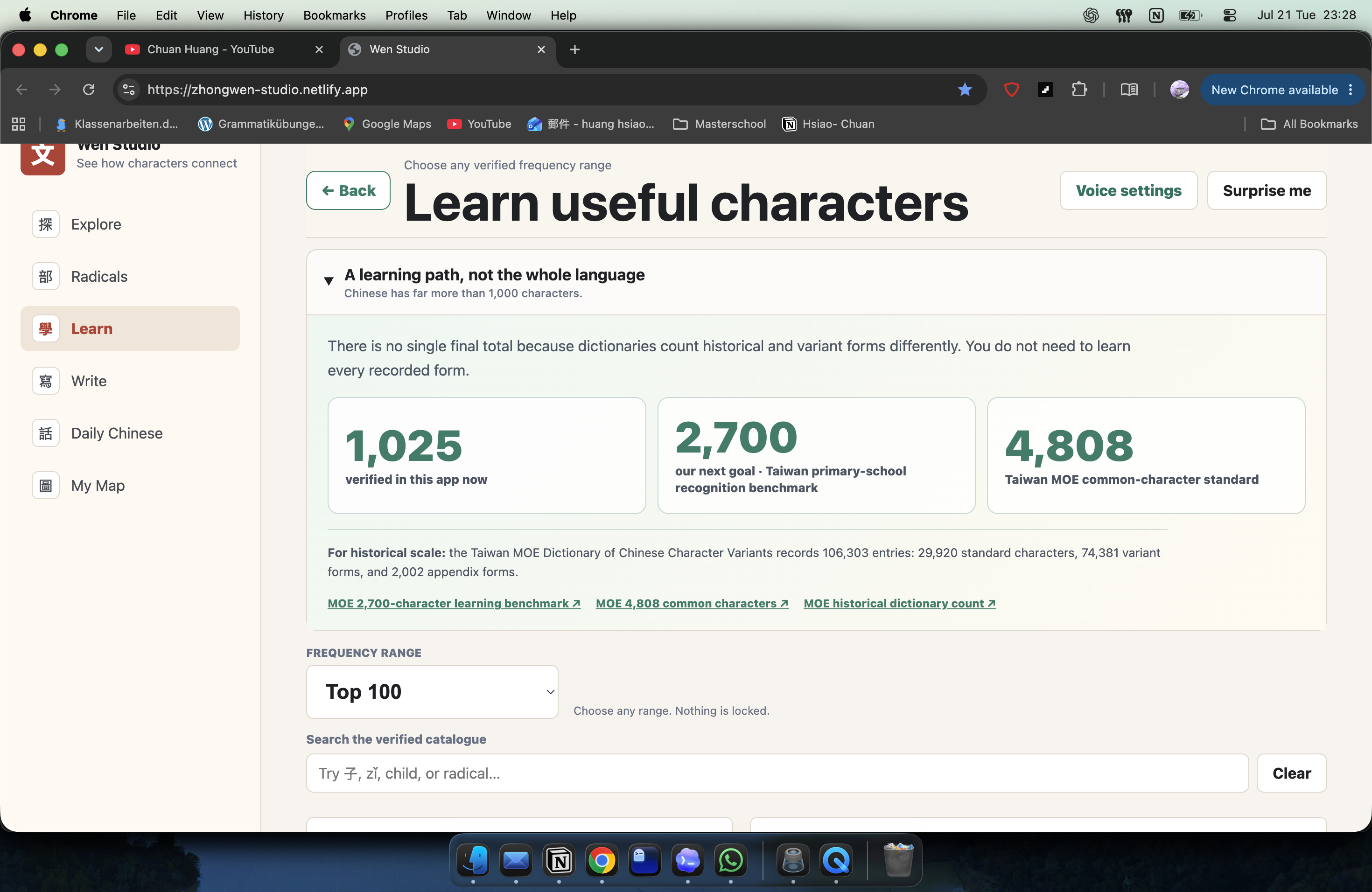
- "Learn" contains 1,025 reviewed character cards with pinyin, short English meanings, Taiwan MOE dictionary structure, and useful words.
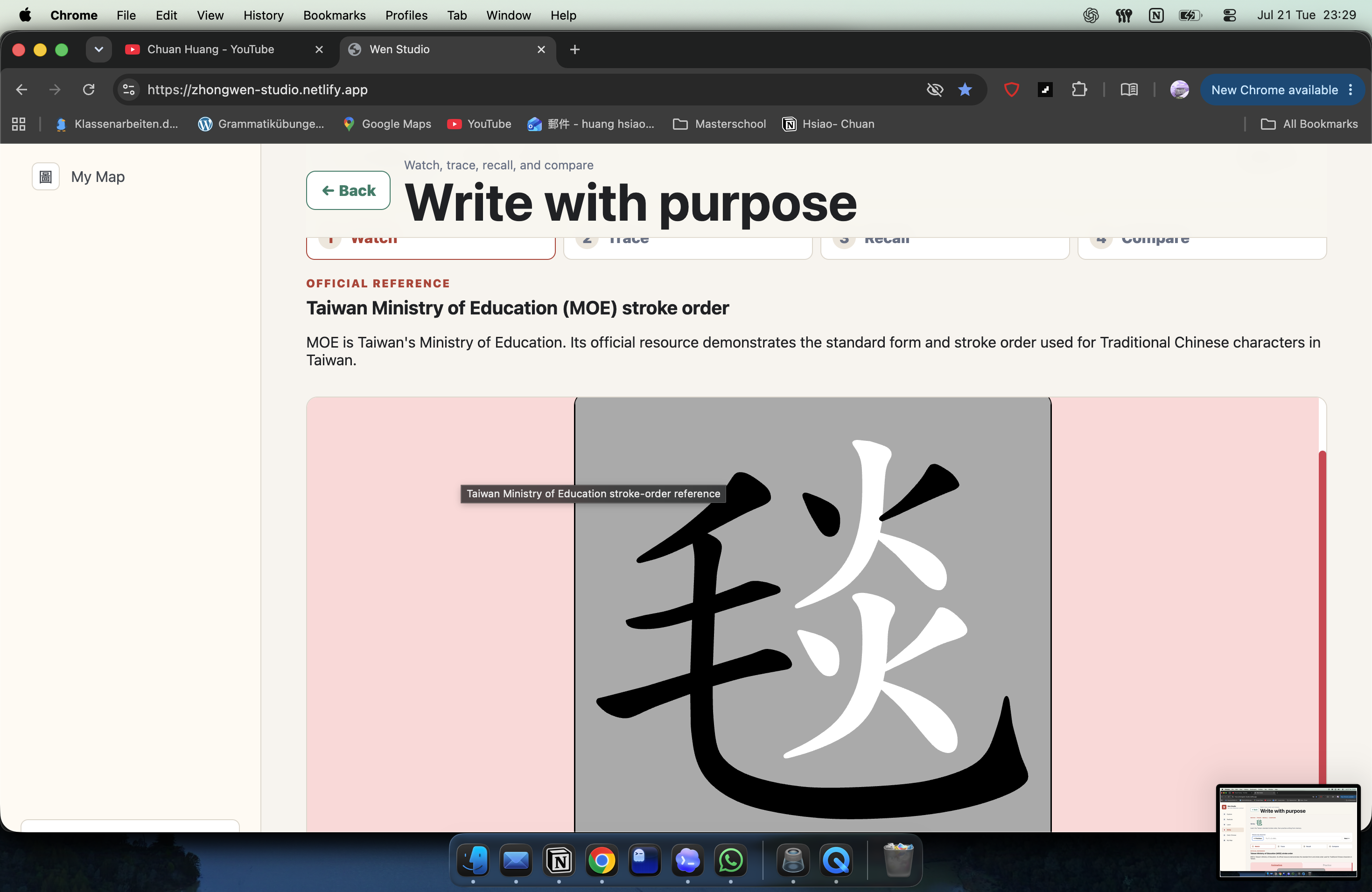
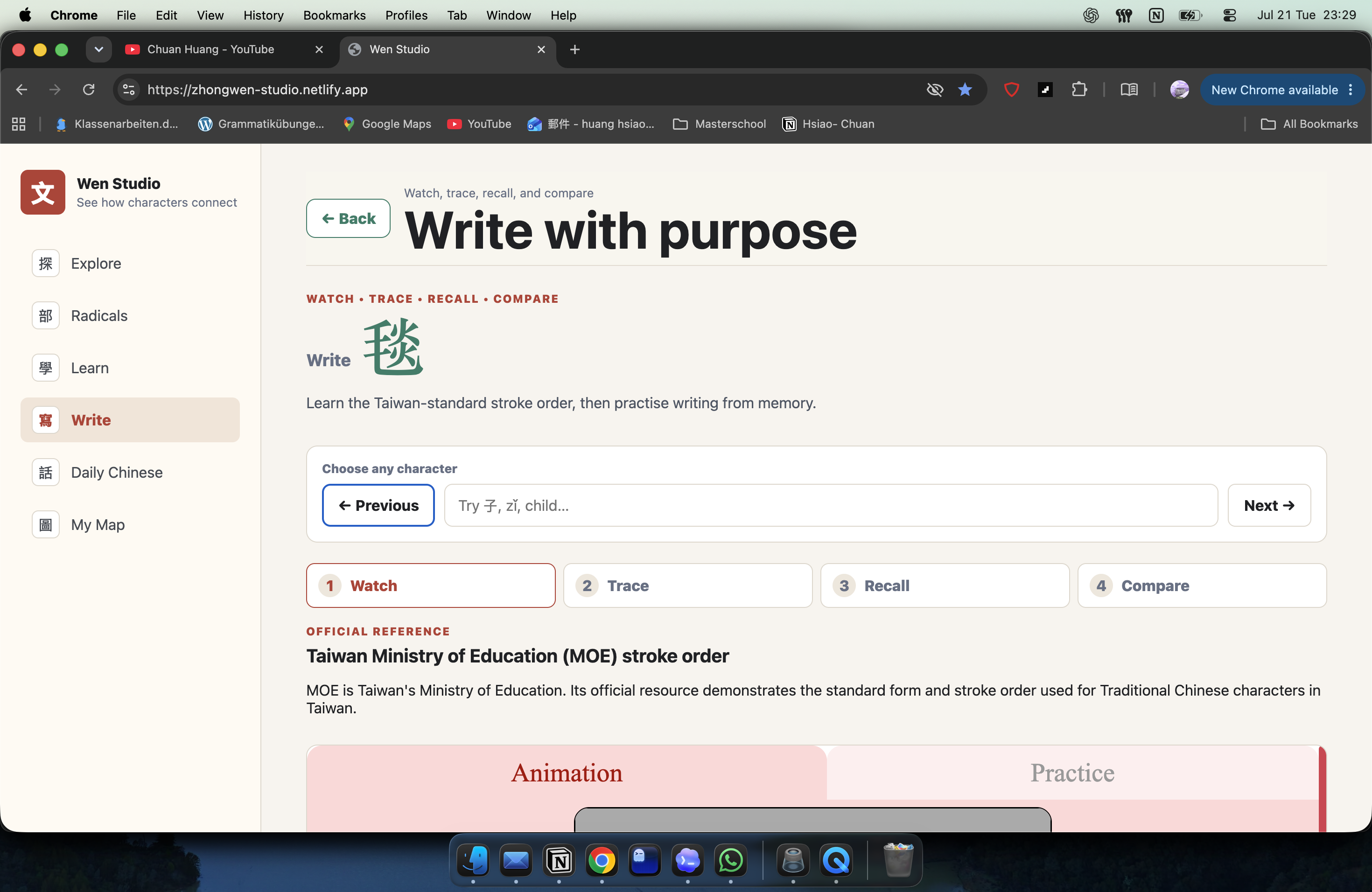
- "Write" connects learners to Taiwan Ministry of Education stroke-order references and supports tracing, recall, and honest self-comparison.
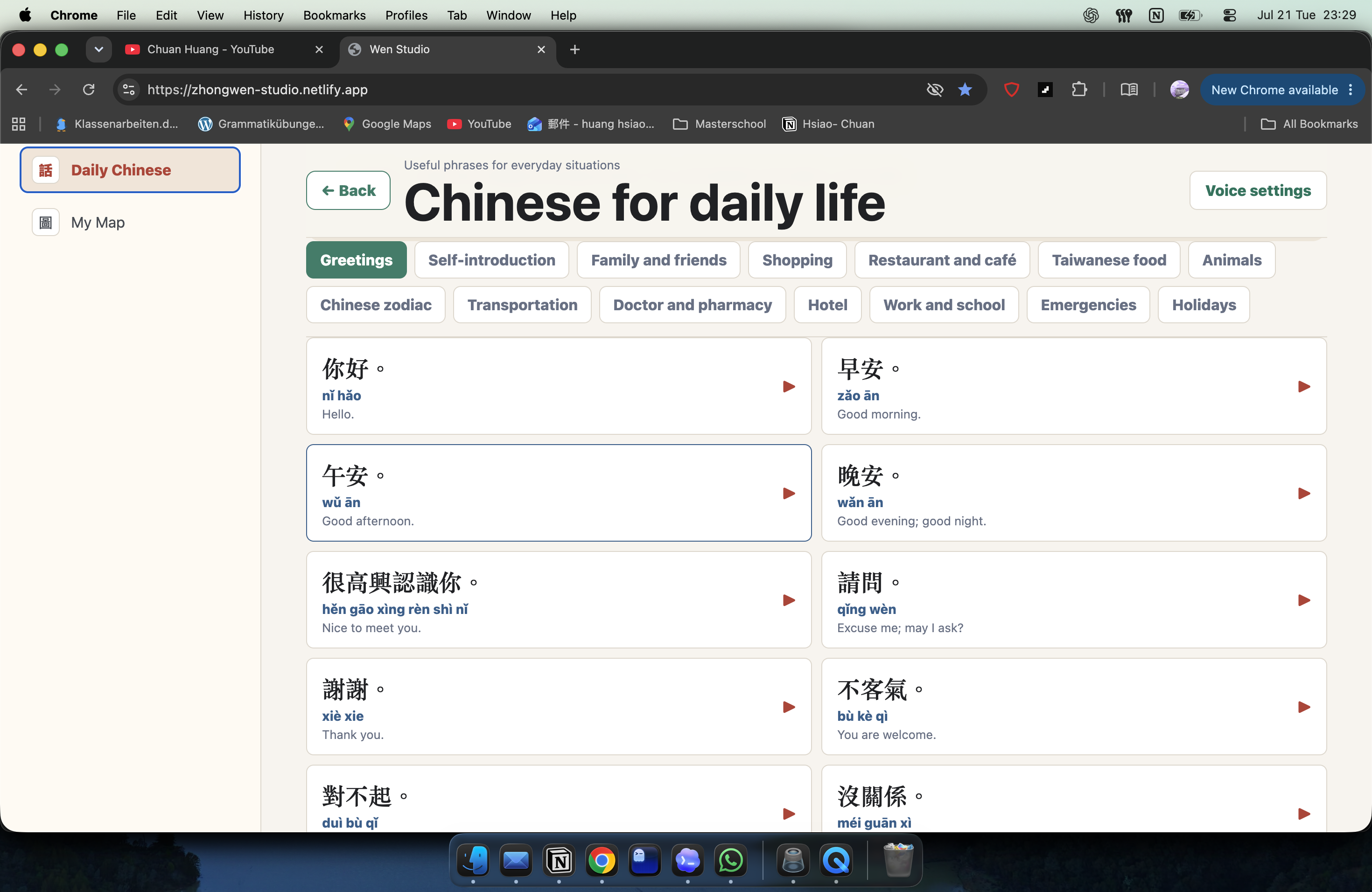
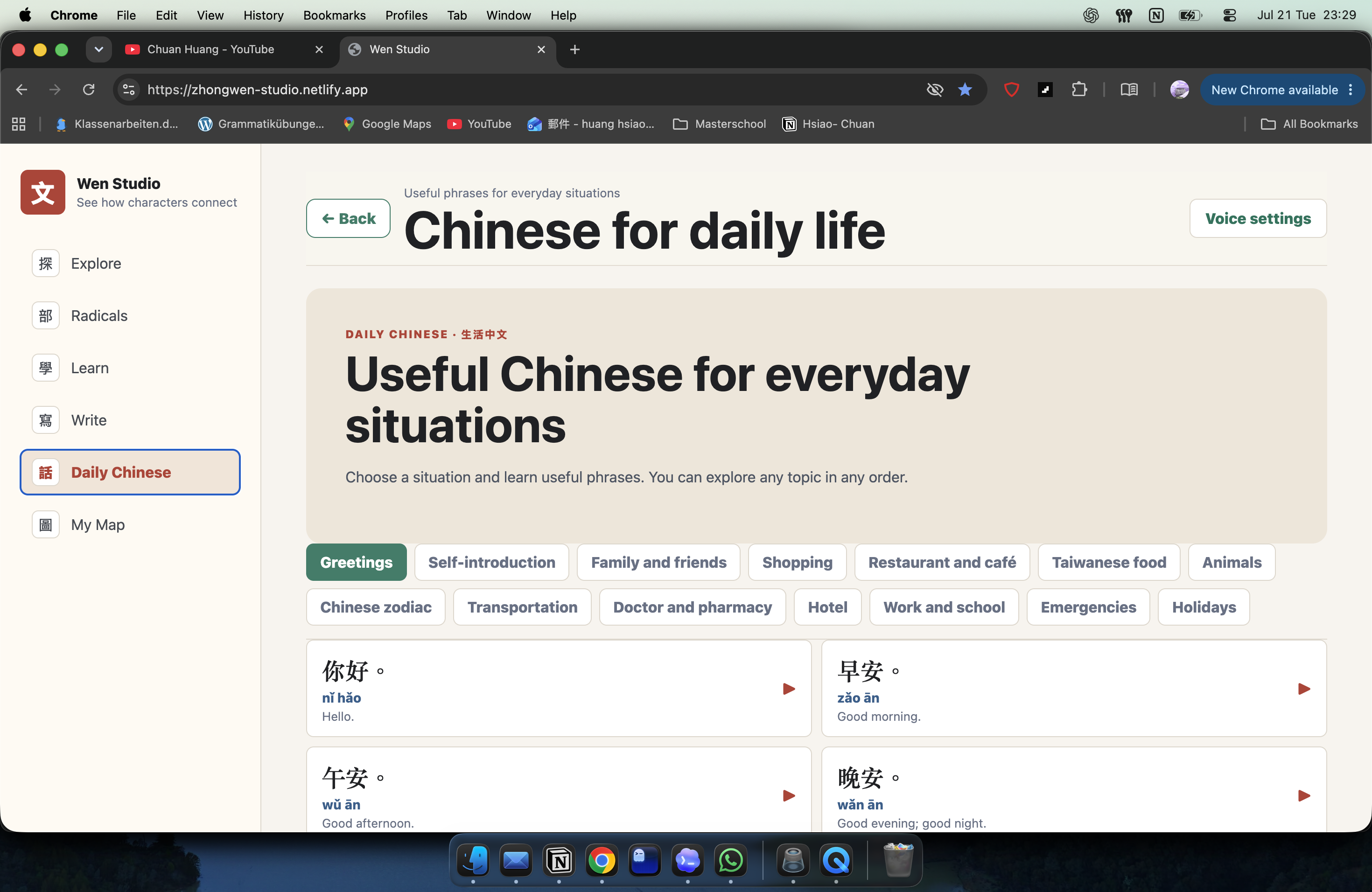
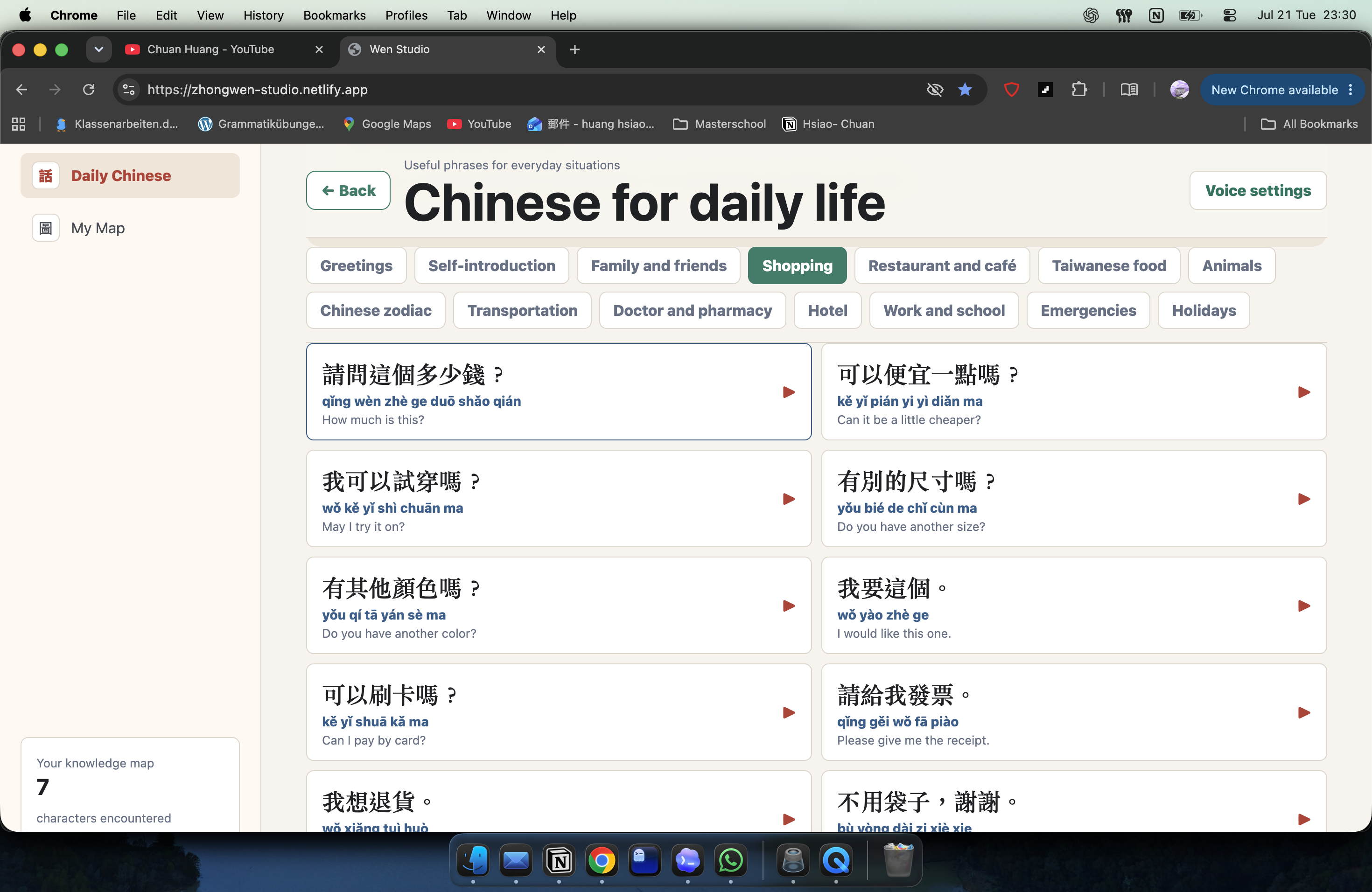
- "Daily Chinese" provides 182 useful phrases across 14 everyday situations.
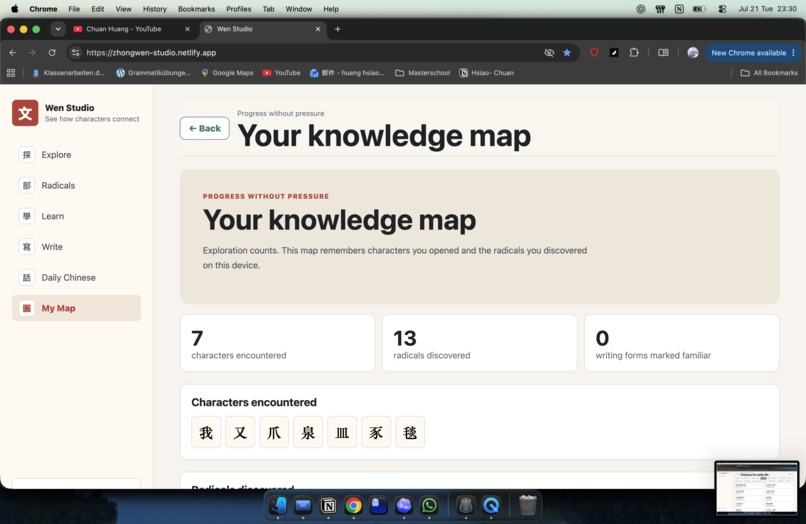
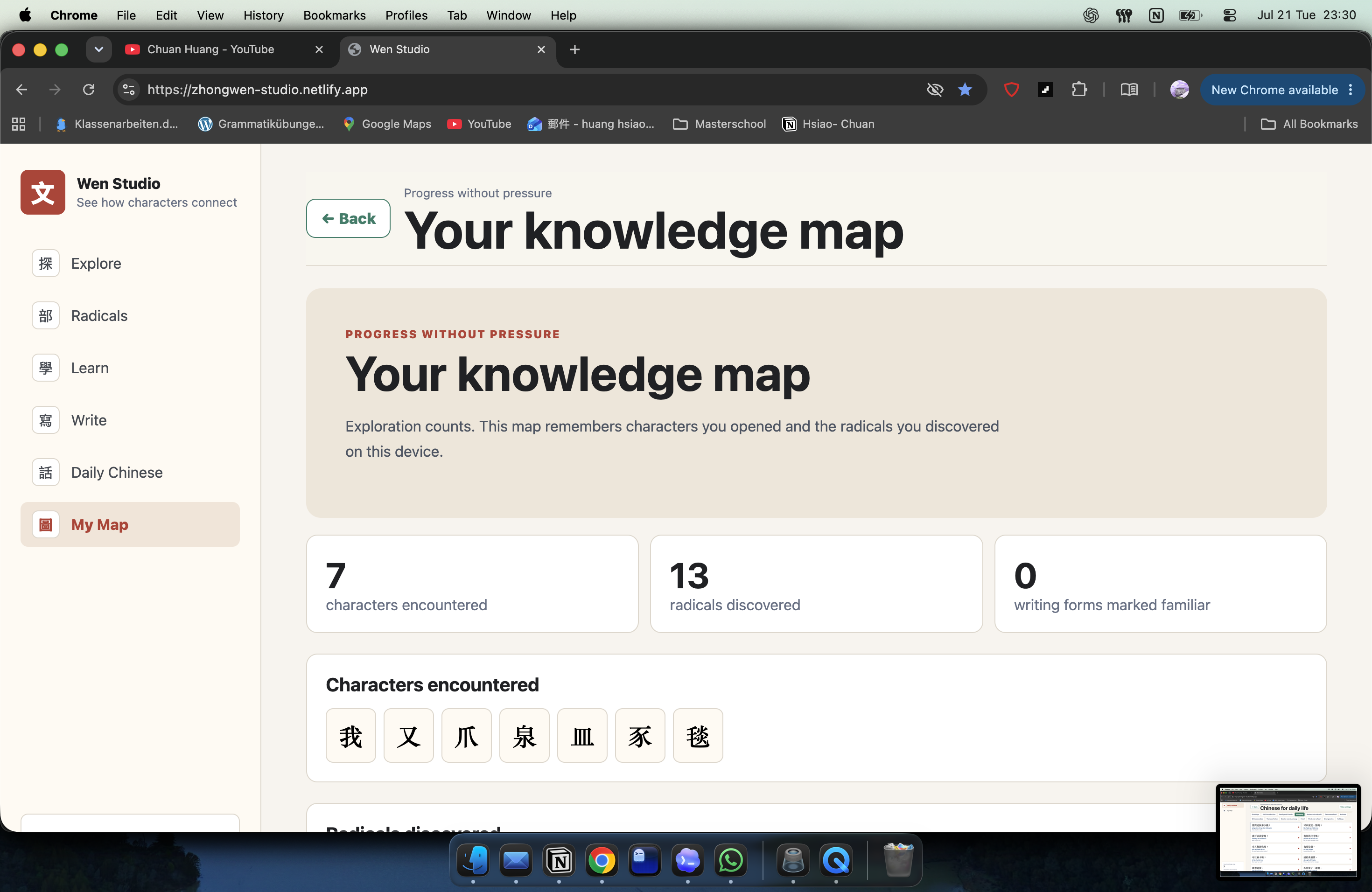
- "My Map" remembers locally encountered characters and radicals without locking lessons or requiring an account.
Every catalogue character has a Taiwan MOE dictionary radical and verified stroke data. Learners can therefore look up unfamiliar characters by radical and remaining stroke count, even when they do not know the pronunciation.
The app only labels meaning clues, sound clues, components, and historical relationships when they have been separately reviewed. It does not invent structural explanations for incomplete records.
How I built it:
I don't understand coding, so AI helped me to build Wen Studio, which is a static browser application built with HTML, CSS, and JavaScript. It uses the Web Speech API for pronunciation, Canvas for handwriting practice, localStorage for learner progress, and a locally bundled pinyin library.
The project does not require an API key, backend, login, or database. It is deployed on Netlify and connected to a private GitHub repository.
I built the project collaboratively with OpenAI Codex and GPT-5.6. I brought the teaching concept, Taiwan Traditional Chinese requirements, and learner perspective. Codex helped me inspect the implementation, reorganise the interface, trace bugs, build content-validation tools, add regression tests, and turn decisions into working code.
The process was iterative: inspect a real screen, identify confusion, make a focused change, test it, and review the result again.
Challenges:
The hardest challenge was presenting complex information honestly.
A dictionary radical is a classification and lookup tool, but it is not automatically a character's meaning clue. A visible component may provide a meaning clue, a sound clue, both, or neither. Historical character forms also vary by source, object, and period.
Instead of generating plausible-looking explanations, Wen Studio displays only relationships that have been checked. Unverified analysis is clearly marked rather than silently invented.
Pronunciation was another challenge because browsers and operating systems expose different speech voices. The app prefers a recognised Taiwan voice, respects the learner's saved choice, and pauses playback when no approved automatic choice is available instead of silently switching to an arbitrary Chinese voice.
AI could self create some new word combinations and pronunciations that are not match with reality.
What I learned:
I learned that AI-assisted development works best as an ongoing conversation, not as a single prompt.
The creator still needs to define the teaching principles, question inaccurate assumptions, verify sources, and decide what the product should communicate. Codex was most valuable when it helped make those decisions concrete through code, tests, documentation, and repeatable validation.
I also learned that passing automated tests is not the same as being educationally correct. A pronunciation can look technically valid while still being wrong for Taiwan usage. Reliable learning software therefore needs both automated checks and careful human review.
Accomplishments:
I built a complete browser-based learning experience as a non-professional developer. I reviewed 1,025 active character records against Taiwan MOE structure data. I added 49 source-based historical-form learning journeys. I implemented the complete 214-radical dictionary system. I have AI created automated checks for missing radicals, invalid stroke arithmetic, incomplete content, pronunciation regressions, and invented fallback examples. I asked AI to reserve an open learning experience with no locked progression or fake automatic grading.
What's next:
My goal is to build more reviewed character-structure explanations, expand toward a carefully selected 2,700-character for other my children and learners.


Log in or sign up for Devpost to join the conversation.