-
-
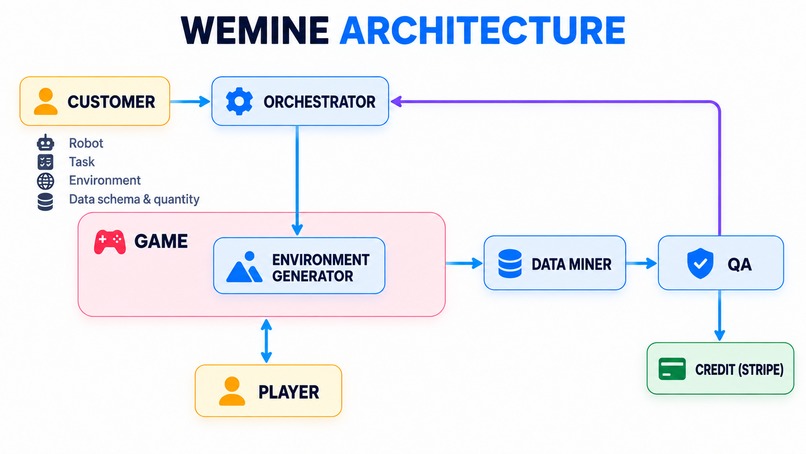
Architecture
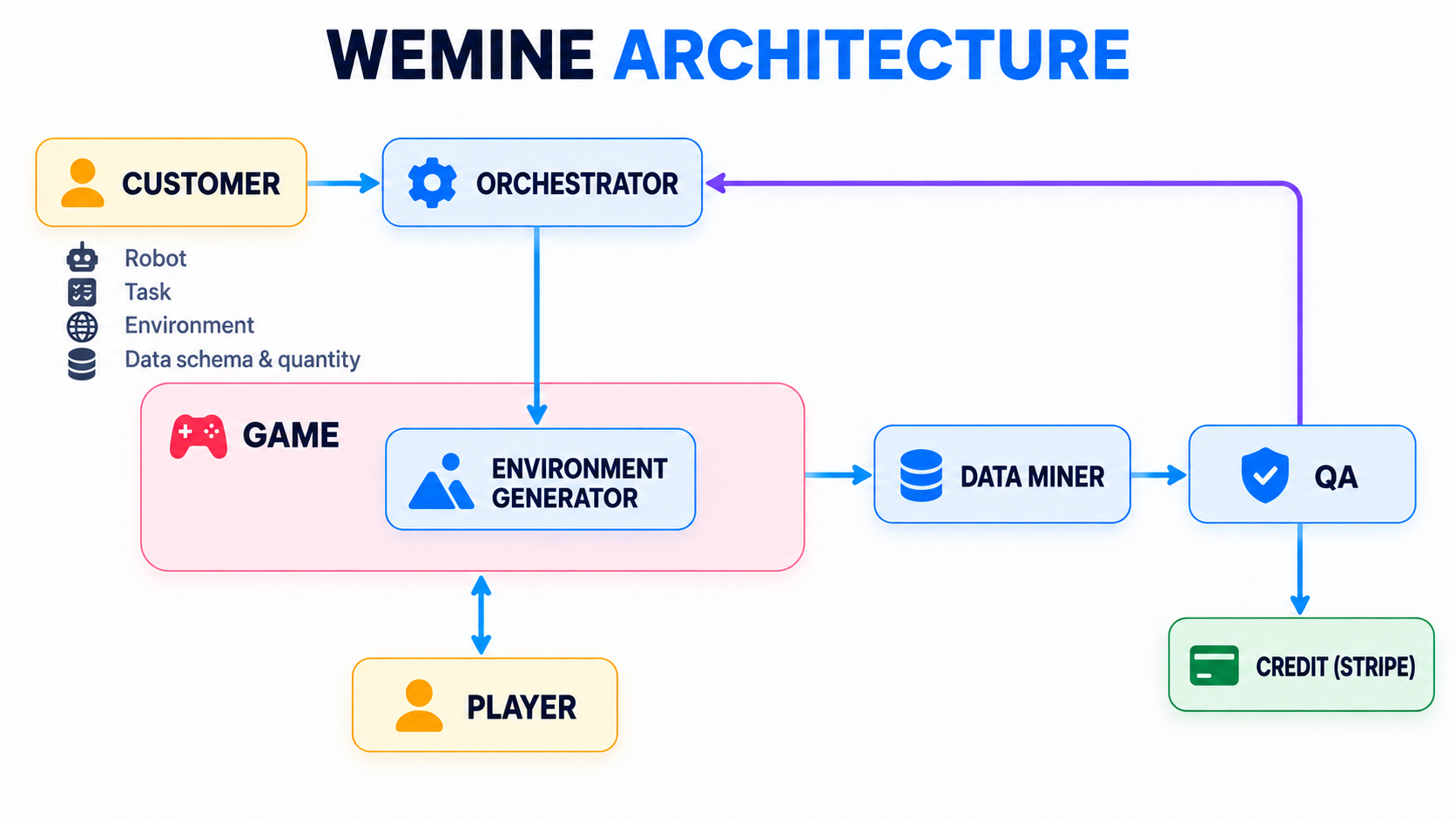
Inspiration
Robot teams need demonstrations and data for specific tasks, but collecting and checking them takes time. We wondered whether a robot task could become a game that people want to play while producing useful data.
What it does
WEMINE lets a team describe the robot data it needs. An agent turns the request into a playable simulation task. Human or AI players control a virtual robot, and WEMINE records their actions and robot states as episodes for quality checks.
How we built it
We built a browser controlled café task using RoboCasa and MuJoCo. A Python game server streams the simulation to the player and saves episodes in HDF5. Brainbase agents running in Cloudflare sandboxes help define tasks, while code validates specifications, checks recorded episodes, and tracks test credits.
Challenges we ran into
Making a simulation playable in a browser while recording synchronized actions and states was challenging. We also had to distinguish a game success from a trustworthy dataset episode: recorded actions must replay consistently, and the task must pass its own success check.
Accomplishments that we're proud of
We connected task specification, browser based robot control, episode recording, automated QA, and credit accounting in one prototype. Players can operate a virtual robot in a café scene and submit their sessions for review.
What we learned
A fun game alone does not make useful robot data. The task definition, recorded actions, replay results, and reasons for rejection all matter to the team receiving the dataset.
What's next for WEMINE
We plan to complete an end to end pilot with replay verified episodes, test the data in a robot team's training or evaluation workflow, and learn which tasks customers actually need. We also want to measure collection cost and QA pass rates with real players before introducing paid rewards.
Built With
- brainbase
- claude
- codex
- issacsim
- mujuco
- runpod
- stripe

Log in or sign up for Devpost to join the conversation.