-
-
cover
Inspiration
Research shows that 18-59% of pregnant women report psychological relationship conflict with their partners during pregnancy, with both couples experiencing increased stress and gradual relationship decline throughout the pregnancy period. As an expecting mother myself, I witnessed this firsthand in maternity communities - endless complaints about unsupportive partners, harsh judgment between mothers, and a culture of "suffering in silence."
The breakthrough moment came when I started listening to the other side. When I asked my husband and other partners what they were experiencing, I heard a completely different story:
"I want to help, but I don't know what she needs."
"I try my best, but nothing seems right."
Both sides were struggling, but they couldn't communicate effectively with each other. The pregnant person felt unseen and unsupported. The partner felt helpless and criticized. Most pregnancy support apps are period trackers or generic advice platforms that provide generalized guidance based on pregnancy weeks. However, pregnancy symptoms, needs, and timing are highly individual - making these one-size-fits-all approaches largely ineffective.
I realized the key to solving this problem was AI-assisted communication. What if AI characters could playfully translate unspoken feelings? What if we could make invisible efforts visible? What if instead of venting frustrations to strangers online, couples could grow together through understanding - where both "me" and "we" flourish simultaneously?
Weme isn't just another pregnancy tracker. It represents a fundamental shift in how we view pregnancy - not as something each partner must endure in isolation, but as a journey where individuals grow as people while couples grow as partners. Through AI relationship intelligence that reads between the lines of daily records and understands hidden needs, Weme helps partners support each other while discovering that personal growth and relationship growth can happen beautifully together.
What it does
Weme is an AI relationship intelligence app that helps expecting couples understand each other's unspoken needs and efforts during pregnancy. Unlike generic pregnancy trackers that provide one-size-fits-all advice, Weme creates personalized communication bridges between partners through playful AI mediation.
Key Features
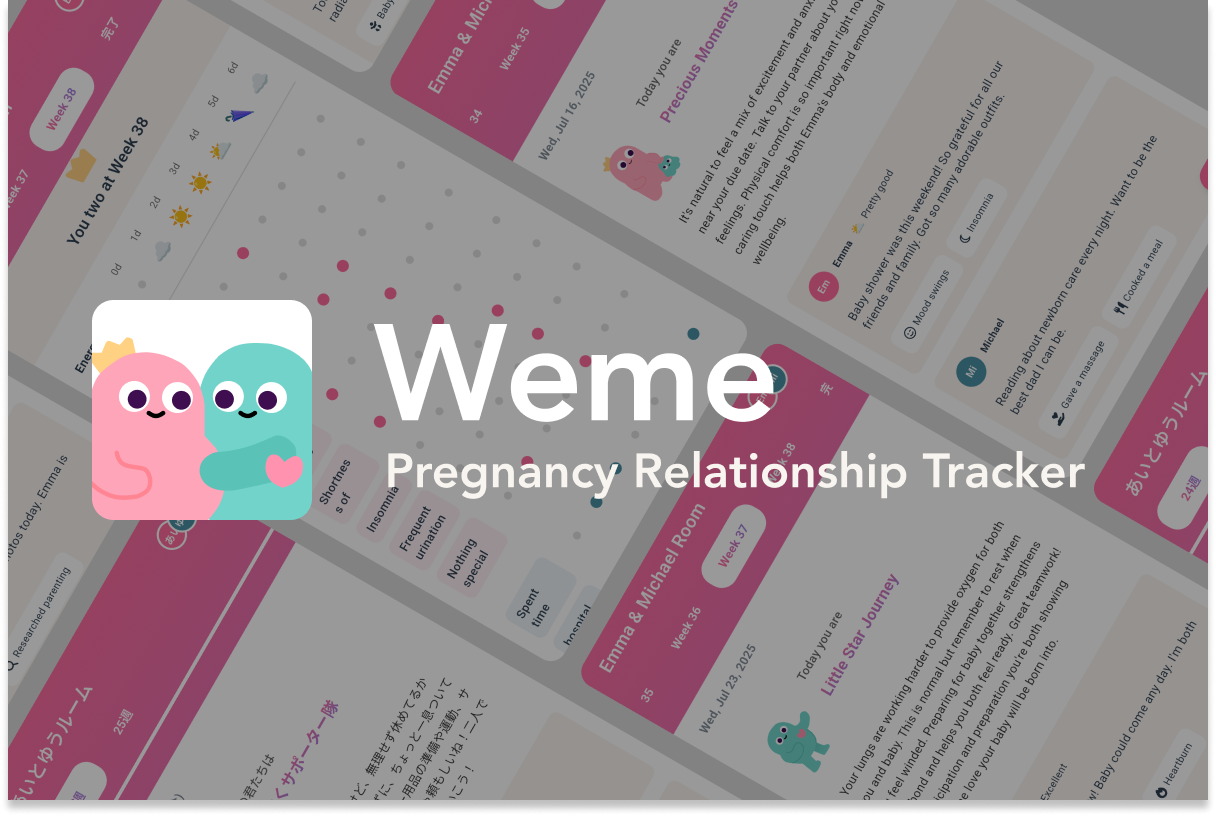
Daily Partner Records: Both partners log their daily experiences - pregnant persons record mood, symptoms, and messages for their partner, while partners record support actions they took and their own messages. Simple, structured logging makes invisible efforts visible.
AI Relationship Translation: Playful AI characters analyze daily records and deliver humorous, insightful messages to both partners each evening. Instead of direct confrontation, the AI gently translates unspoken feelings like "Your partner seems extra tired today - maybe offer that foot massage you've been thinking about?"
Personalized Support Suggestions: Based on the pregnant person's recorded symptoms and mood patterns, the AI provides specific, actionable support ideas to partners - moving beyond generic advice to contextual recommendations that actually help.
Weekly Relationship Insights: Comprehensive reports summarize emotional patterns, support trends, and relationship growth over time. See how both individual growth ("me") and couple growth ("we") are progressing together.
Celebration of Efforts: The AI actively recognizes and celebrates both partners' contributions, ensuring efforts don't go unnoticed and building positive relationship momentum.
This isn't about tracking pregnancy symptoms - it's about transforming the pregnancy journey from individual endurance into collaborative growth where both "me" and "we" flourish together.
Challenges We Faced
Creating Understanding for Things Hard to Say Directly
Our biggest UX challenge was addressing situations where couples want to communicate important feelings but find it difficult to express them directly. We designed AI to serve as an intermediary, transforming simple daily records into gentle, natural communication that allows partners to share and appeal to each other without confrontation.
Maintaining Our Vision Through Data Model Design
While most apps assume "1 account = 1 user," we designed our data model around "1 account = 1 couple (room)." This was a breakthrough for us. The conventional assumption of "1 account = 1 user" would have made all our data complex and required "one-to-many" relationships that would conflict with our core vision. Our approach of "two people, one unit" simplified our entire design, ensuring that all posts and events accumulate as something that "builds up for the family."
Developing Monetization That Doesn't Break Our Vision
Initially, we implemented a subscription plan to "remove ads" and couldn't fully abandon traditional subscription models. We also considered typical ad-supported models, but deliberately avoided this to prevent additional stress during pregnancy, which is already an emotionally sensitive period. Ultimately, we settled on pricing the experience of "keeping 10 months of pregnancy records accessible on your device, even after changing phones or forgetting about the app." This represents monetization as the natural extension and culmination of the "record and communicate" experience, and we believe it's a plan we can confidently propose without compromising our vision.
AI "Translation" Getting Off Track
Even when we intended humor and empathy, AI expressions sometimes felt off-target or uncomfortable. For AI that reads emotional nuances, we needed to prioritize "advancing the relationship" over "being correct," requiring careful adjustments.
Fighting Against Pregnancy's "Limited Time Window"
To deliver meaningful product value, we need to provide sufficient experience within pregnancy's limited timeframe. As users get busier approaching delivery, we had to create mechanisms that encourage habit formation and continuation.
Balancing "Fun" and "Seriousness"
While our AI characters' lightheartedness and playfulness are appealing, pregnancy emotions are sensitive, and slight missteps in phrasing can backfire. We conducted extensive testing to find the right balance.


Log in or sign up for Devpost to join the conversation.