Inspiration
While struggling to brainstorm ideas, we suddenly realized that the sky had already turned dark in what felt like just a blink of an eye. That moment made us think about how we perceive time.
Most of our definitions of time are built on objective clocks and precise mathematical calculations. However, people’s experience of time is subjective.
For example, a two-hour dinner party might feel like only one hour for someone who enjoys socializing. For someone who dislikes social situations, the same two hours may feel like an entire century.
This led us to ask: what if future technology could quantify how people subjectively experience time?
In such a future, time might not only be measured in minutes and hours, but also defined by how it *feels*.
With this idea in mind, we designed Dius, a mobile app concept that explores how technology could help people better understand their mental states and their personal perception of time.
What it does
Dius scientifically measures and collects data about how users perceive time and their brain’s mental states.
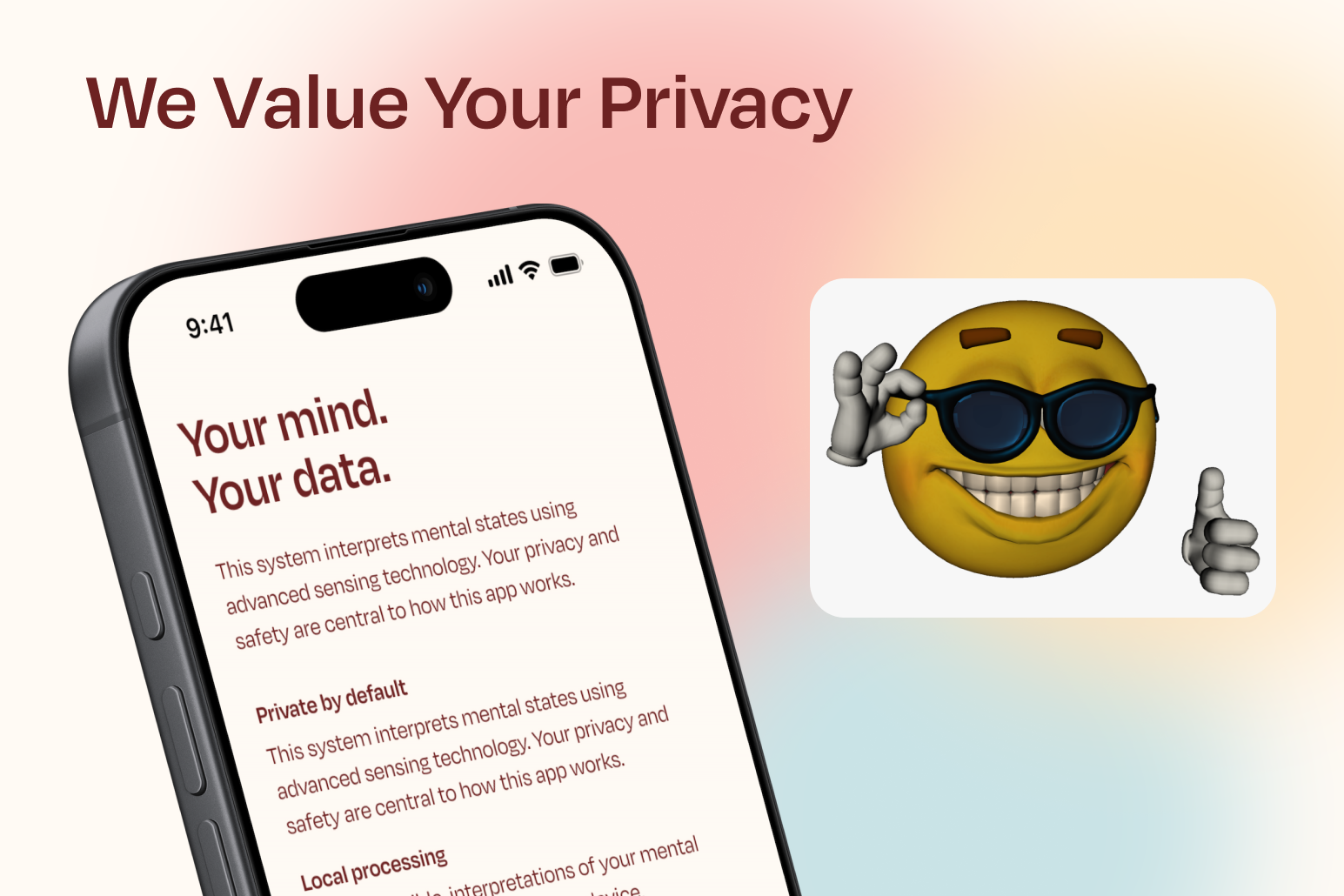
In Dius, a user’s daily activities are recorded, but not at the level of specific tasks in order to strictly respect personal privacy. These activities are grouped into several broad categories, such as:
- Daily — eating, chores, and small life tasks
- Work — school or professional work
- Learning — studying or learning new skills
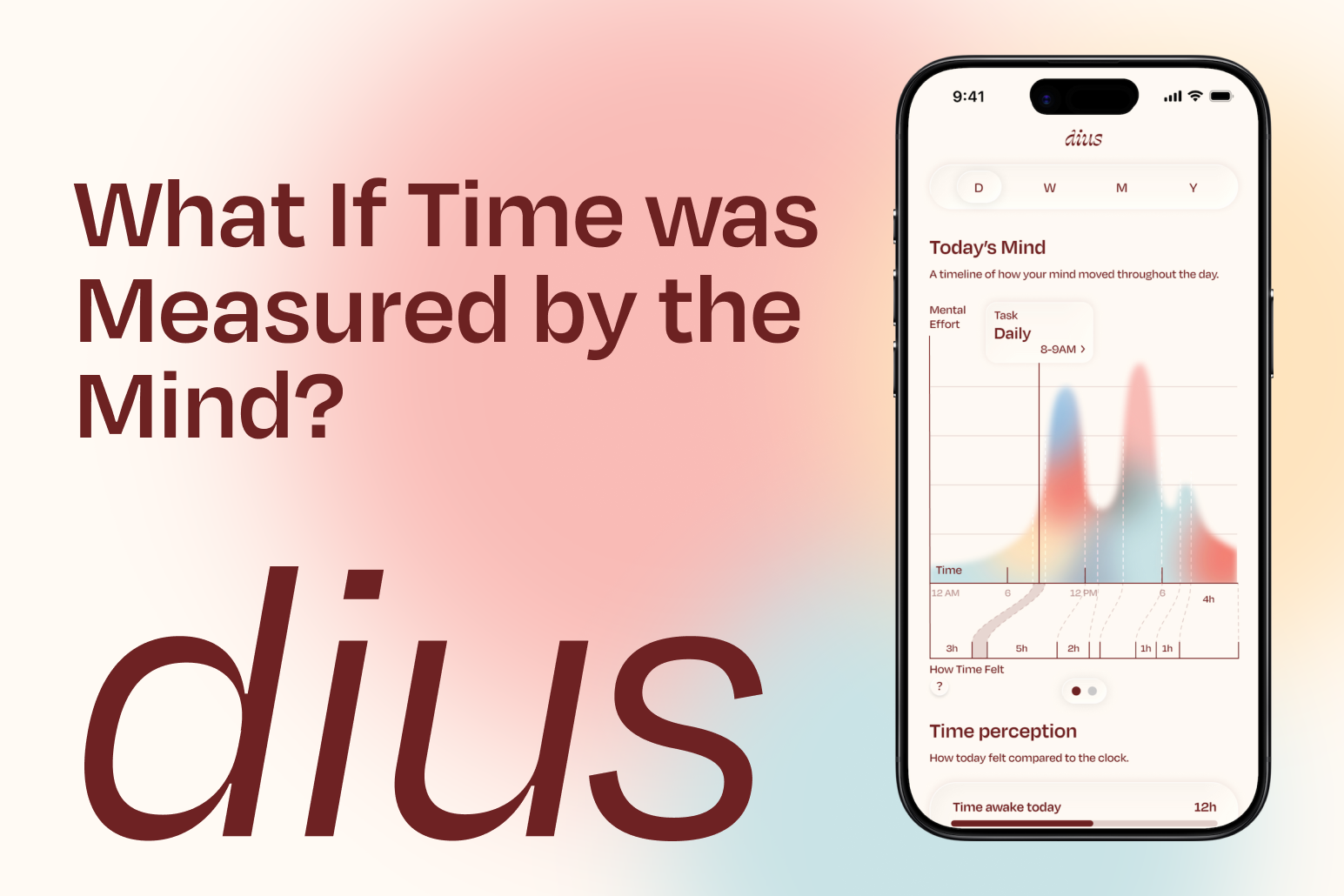
These categories are then visualized on a timeline.
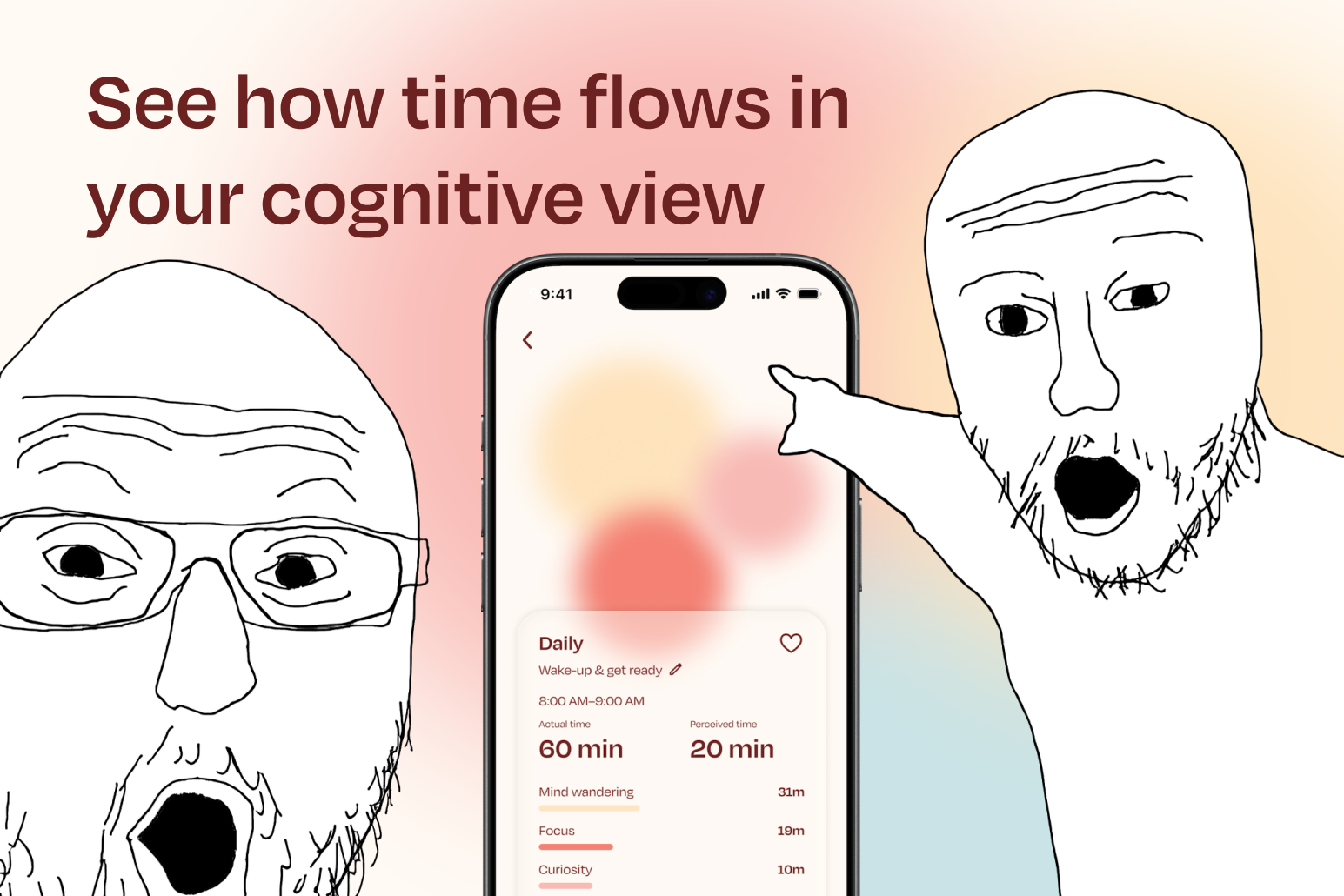
Dius records both the actual time spent on a task and the user’s perceived time — the subjective duration experienced in the brain.
For example:
A 1-hour class may feel like 1 hour and 30 minutes to a student.
At the same time, Dius analyzes and records the user’s mental state during the task.
For example:
During that 1-hour class:
- 45 minutes — focused
- 15 minutes — mind wandering
Dius tracks this data across daily, weekly, monthly, and yearly timelines, and provides pattern analysis and suggestions to help users improve their behavior.
For example:
- Helping students improve learning efficiency
- Helping creative professionals discover their best creative hours
- Helping people with ADHD observe and track improvements in their condition
In short, Dius is a tool designed to help people better understand their cognitive patterns and improve productivity in the areas they care about most.
How we built it
We first listed the core problems on a whiteboard and discussed the main features, dividing them into Must Have, Should Have, and additional ideas.
After that, we created low-fidelity sketches to explore the structure and interaction of the app.
Then we used Figma Make to build a mid-fidelity model, and later refined it into a high-fidelity design and working prototype.
Challenges we ran into
How to design a chart that clearly shows the difference between real time and perceived time.
How to make the app encourage behavioral change, rather than simply displaying data.
How to import structured data into Figma Make and prompt usable interface designs.
Built With
- figma
- figmamake


Log in or sign up for Devpost to join the conversation.