Inspiration
Women's centers rely on donations to serve their communities, but tracking inventory manually with spreadsheets and paper logs makes it nearly impossible to know what's running low or measure real impact. We wanted to build a simple, mobile-friendly tool that volunteers could use without training while giving organizers the data insights they need to serve more families effectively.
What it does
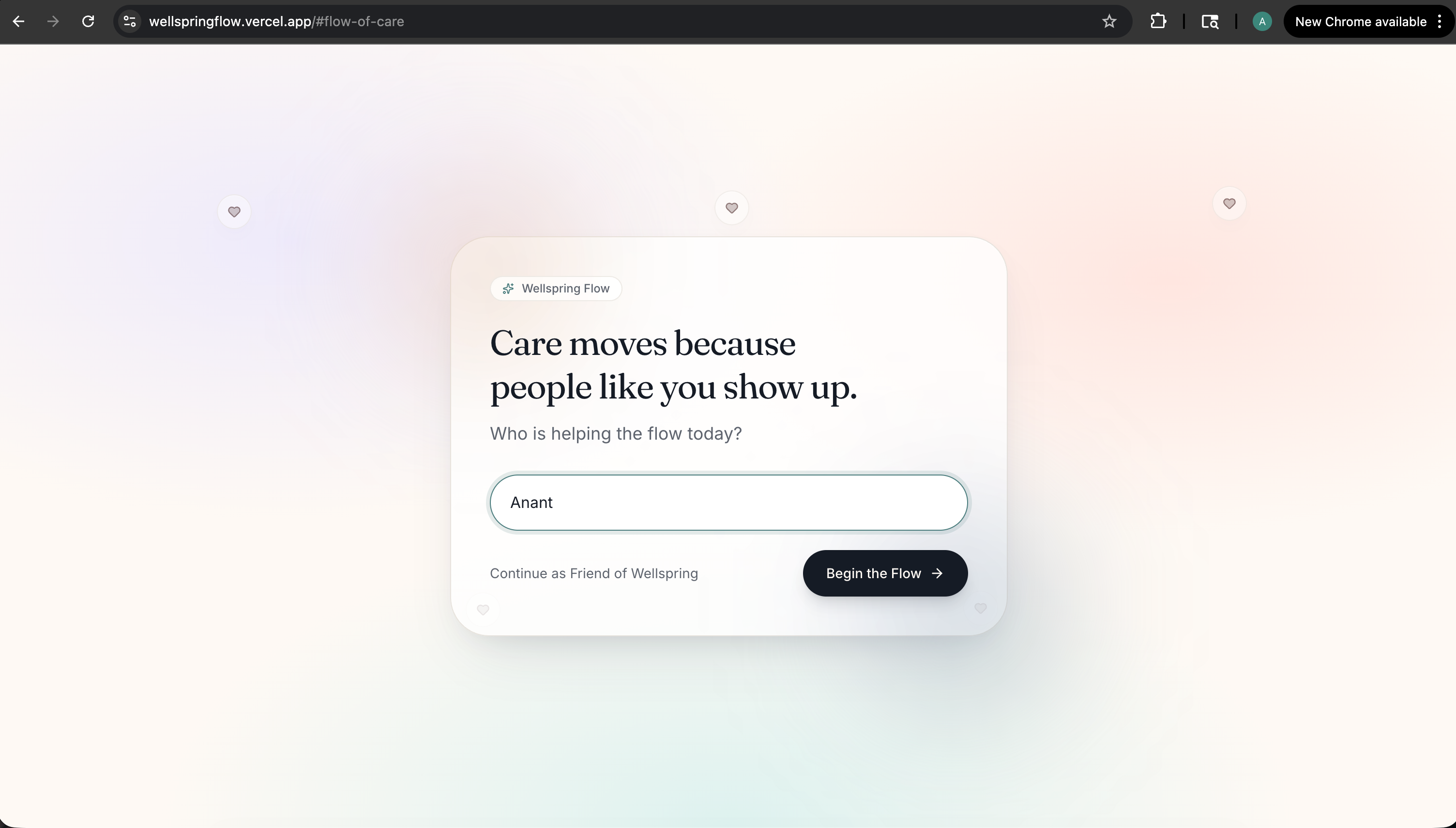
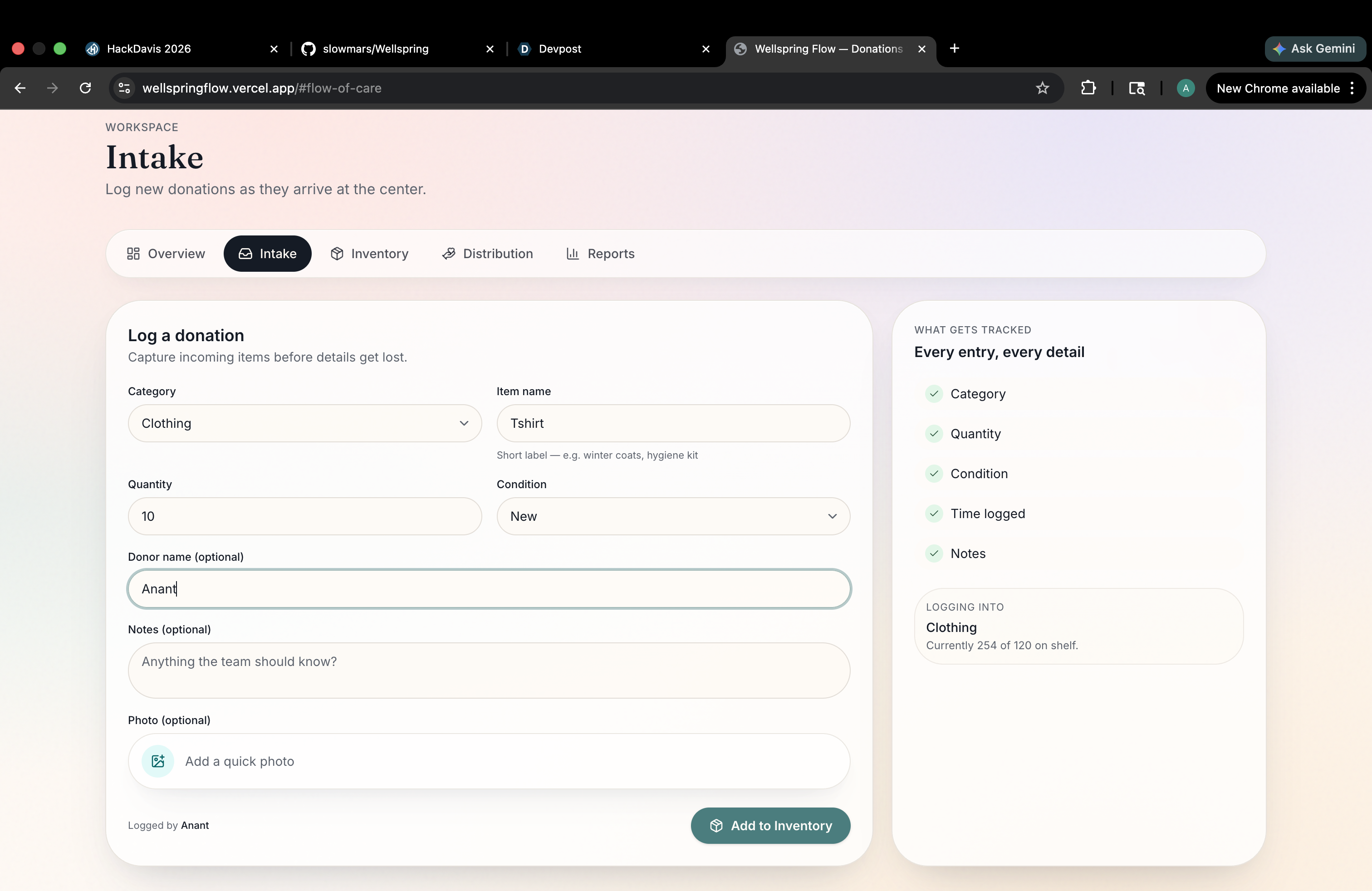
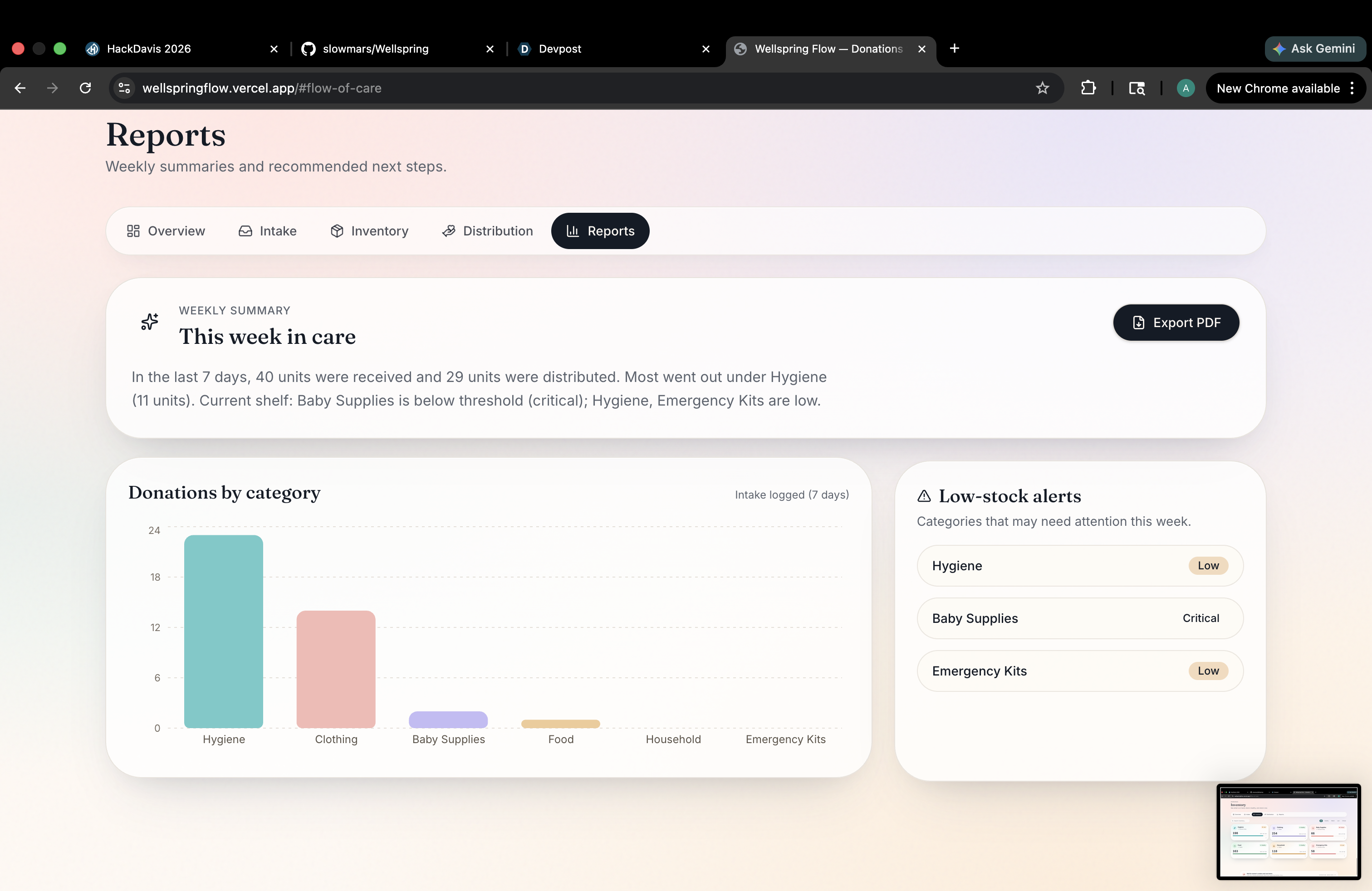
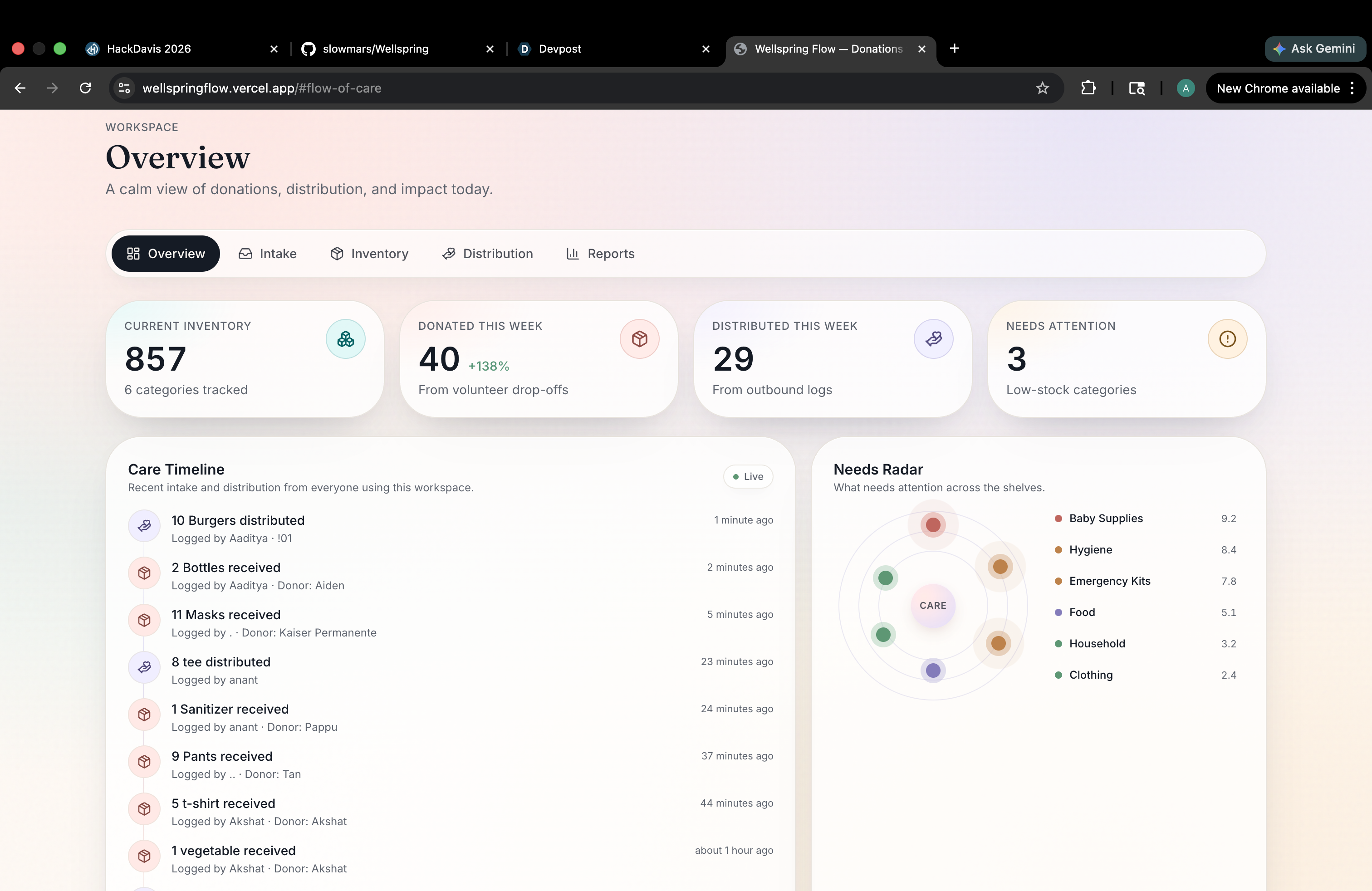
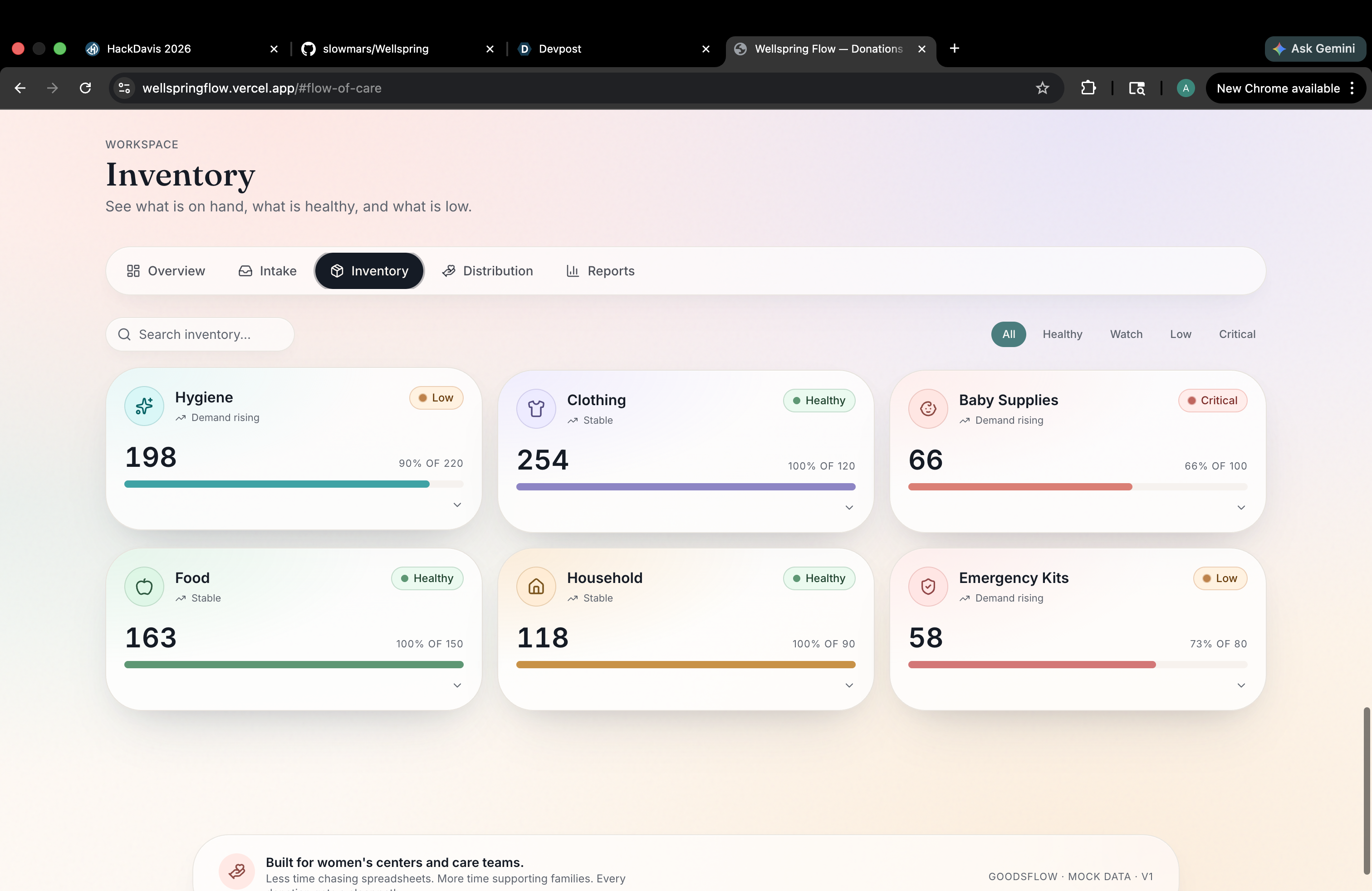
Wellspring Flow is a donation inventory management system that lets volunteers quickly log incoming donations (with photos, condition notes, and donor info), track distributions to community members, monitor real-time stock levels with shortage alerts, and view AI-generated weekly impact summaries. It includes ML-powered analytics that identify critical shortages and provide actionable recommendations to help centers prioritize their donation drives.
How we built it
We built a FastAPI backend with 14 REST endpoints for auth, inventory, and analytics, deployed on Render. The React/Next.js frontend is hosted on Vercel. We implemented a Python analytics engine that calculates shortage scores and trend predictions, integrated Claude API for AI-generated impact summaries, and connected everything through a secure REST API with proper authentication and CORS handling.
Challenges we ran into
We struggled with matching data formats between frontend and backend, configuring CORS to work with Vercel's dynamic preview URLs, migrating the database schema mid-hackathon without losing data, and debugging production-only bugs that didn't appear locally. Coordinating real-time deployments and testing across different platforms while working remotely was also challenging.
Accomplishments that we're proud of
We built and deployed a fully functional full-stack application in 24 hours with 14 working API endpoints, AI-powered insights, real-time inventory tracking, file upload handling, role-based authentication, predictive shortage analytics, and a clean mobile-friendly interface that volunteers can use without any training.
What we learned
API design matters more than we thought—matching frontend expectations from the start saves hours of debugging. Production environments behave differently than local development. Clear documentation prevents integration headaches. Security policies like CORS require careful planning. Most importantly, building for real users means prioritizing simplicity over complexity—volunteers need tools that just work.
What's next for Wellspring Flow
We plan to add multi-tenant support for multiple centers, SMS/email alerts for critical shortages, barcode scanning for faster intake, predictive analytics for seasonal patterns, a donor portal showing personal impact, and eventually a network where centers can share excess inventory with each other to reduce waste and serve more families.
Built With
- fastapi
- git
- javascript
- next.js
- python
- react
- render
- sql
- tailwindcss
- vercel


Log in or sign up for Devpost to join the conversation.