-
-
slide 1
-
slide 2
-
slide 3
-
slide 4
-
homepage
-
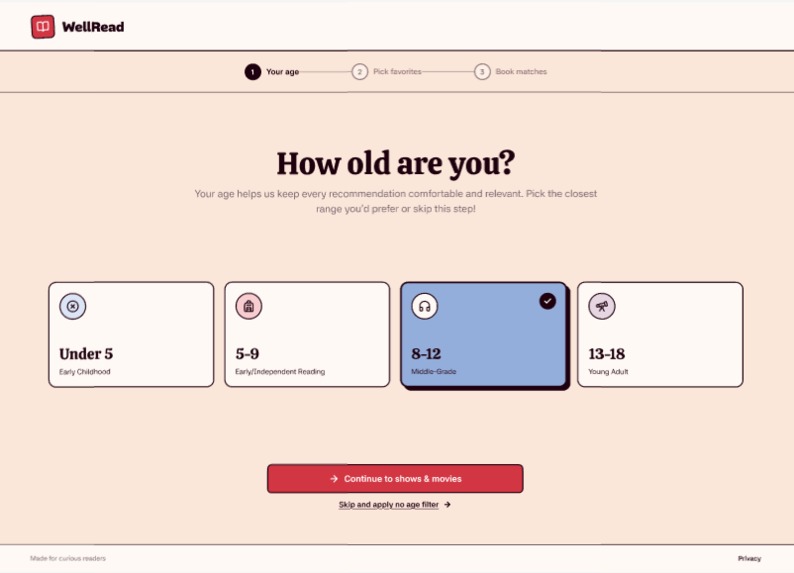
age selection
-
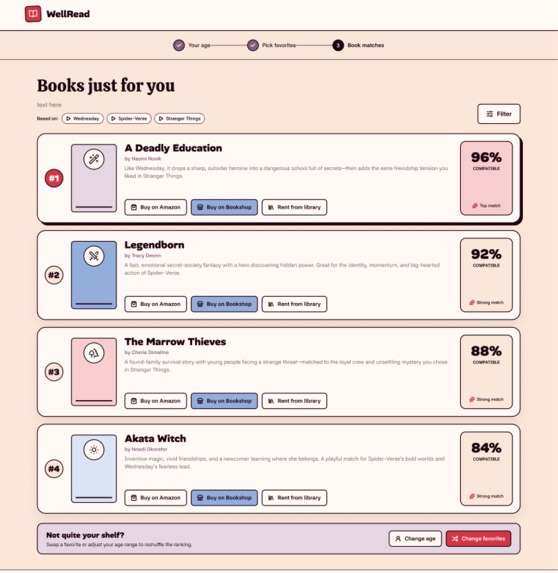
book recommendations list view
-
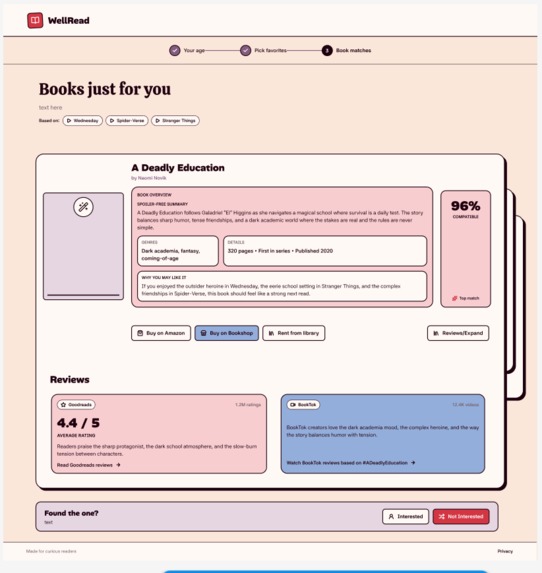
book selection extra features
-
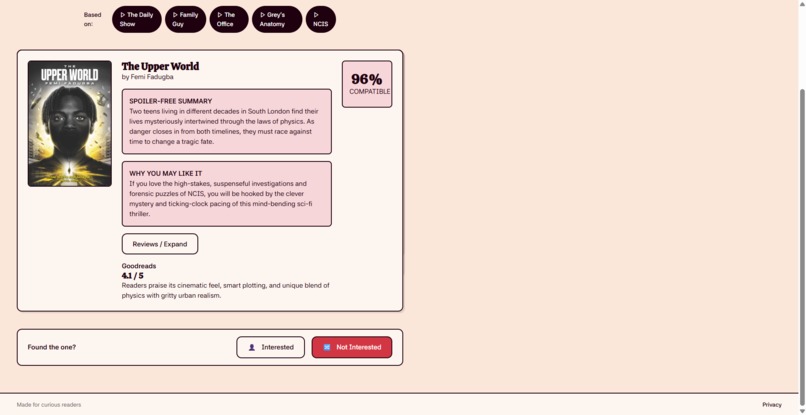
book selection expanded MVP
-
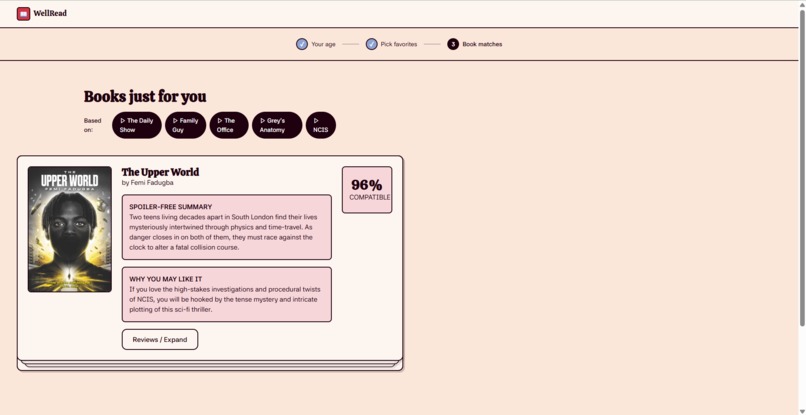
book selection
-
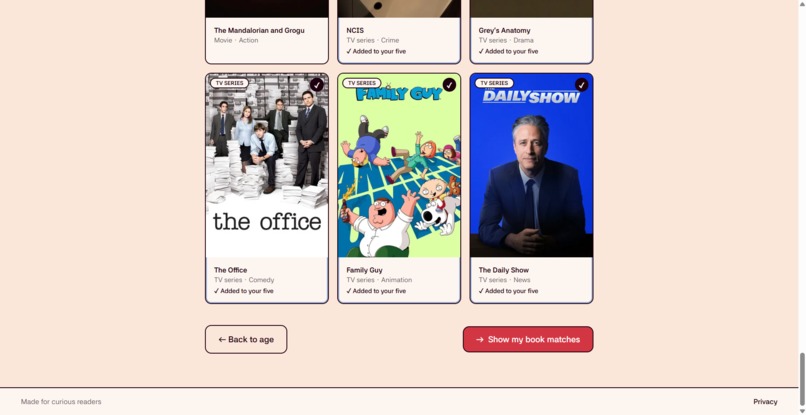
media select 2
-
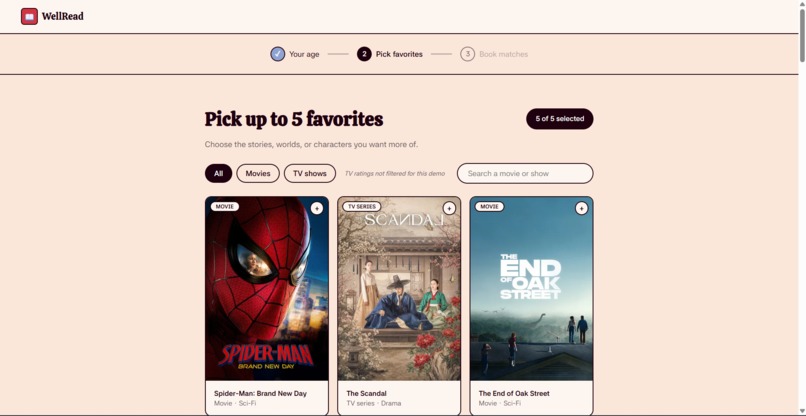
media select 1
-
slide 7
-
slide 8
-
slide 9
-
slide 10

Inspiration
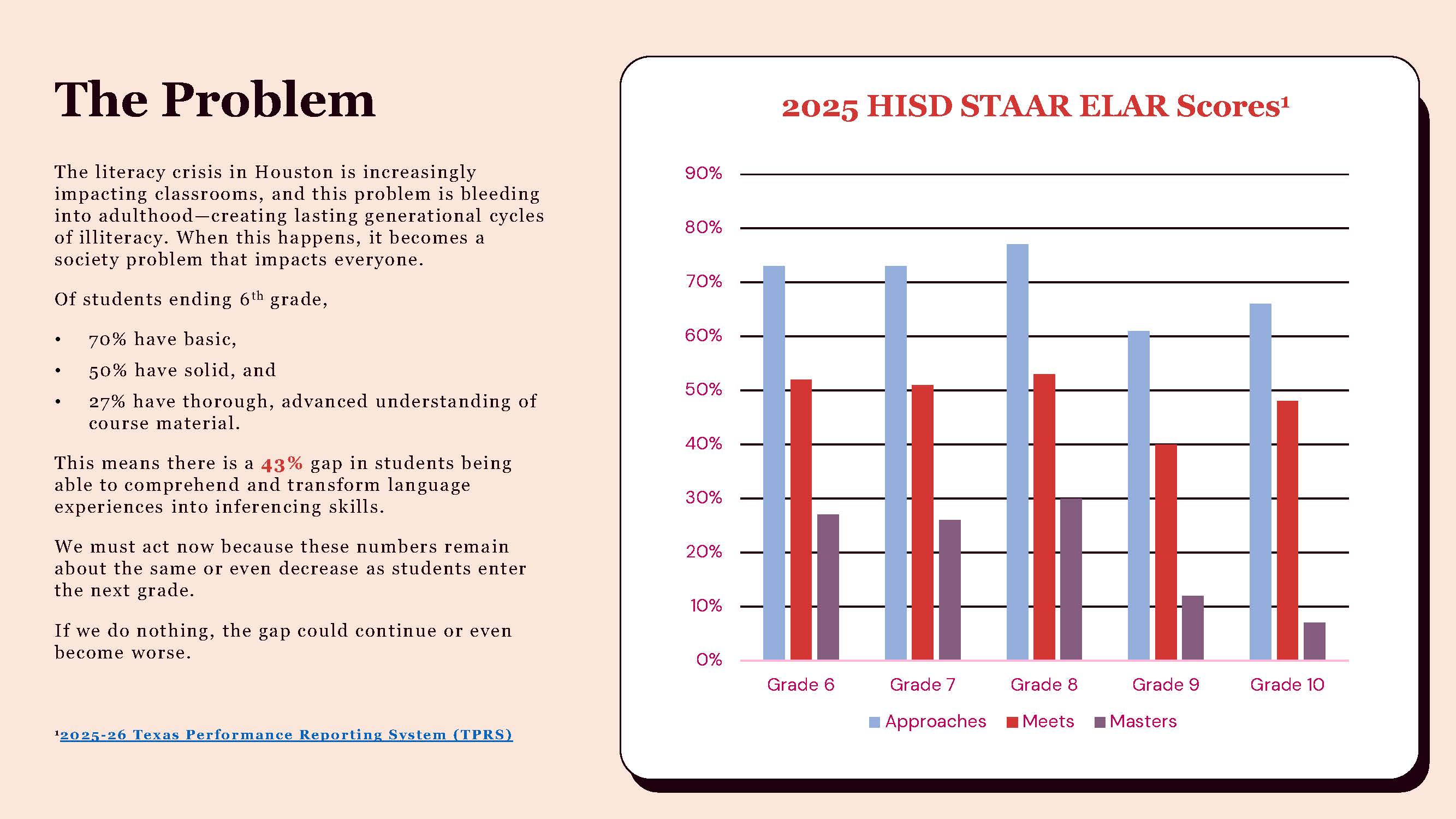
WellRead was inspired by a shared passion for helping young people become lifelong readers. As a former ELA educator, Cassidy saw firsthand how difficult it can be for students to stay engaged with reading, while Daniel was motivated by seeing his younger siblings' perspectives on reading today. While conducting research for this project, we learned how huge the literacy gap is in HISD, the joy of reading decreases in age, and a solution (or even a step in the right direction) is needed because strengthening literacy skills promote empathy and healthy emotional intelligence—building a better community overall.
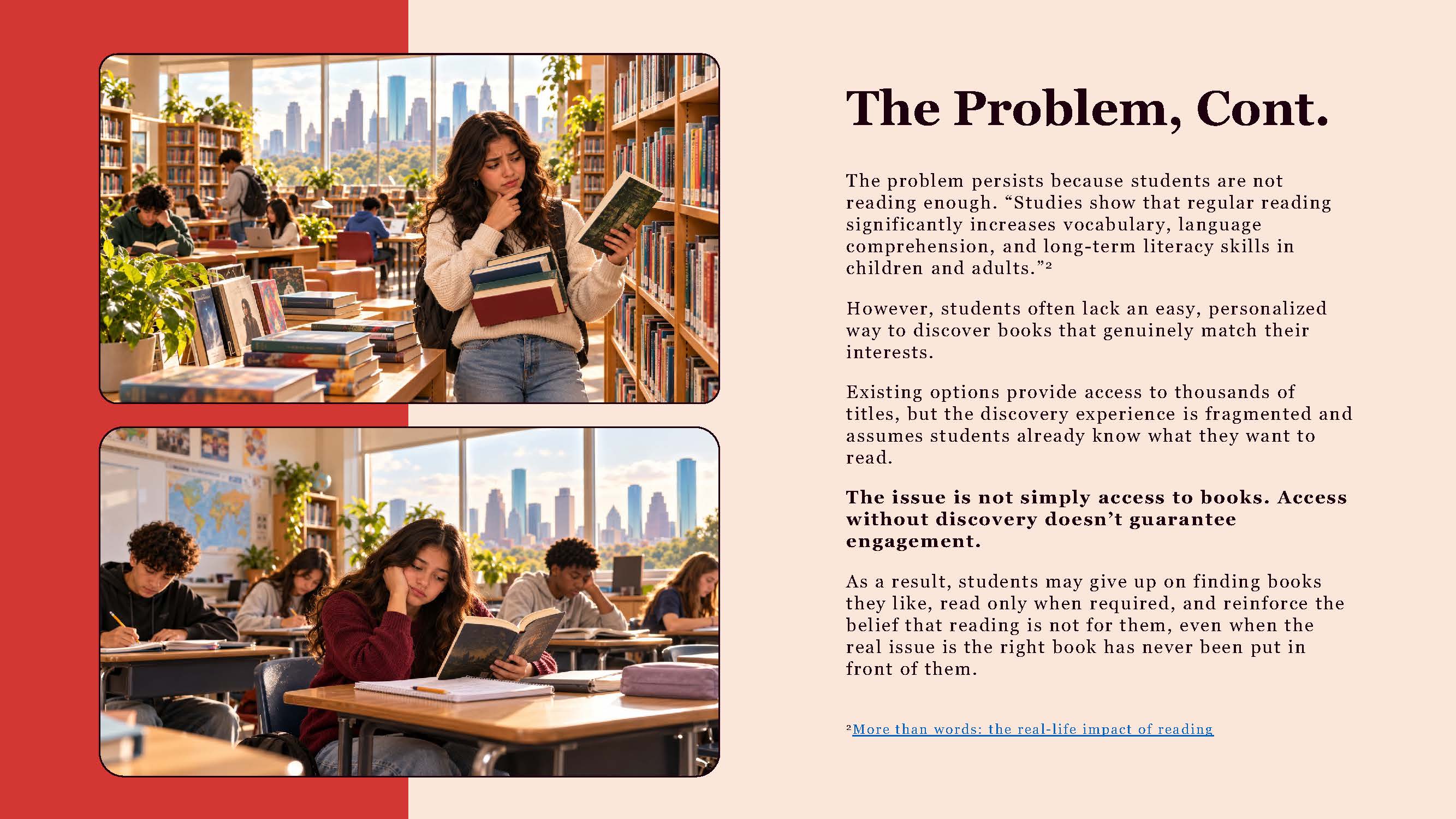
That led us to one central idea: students may not dislike reading itself—they may just have never found the right book. We wanted to create a tool that makes discovering that book feel as easy and exciting as finding the next show to binge.
What it does
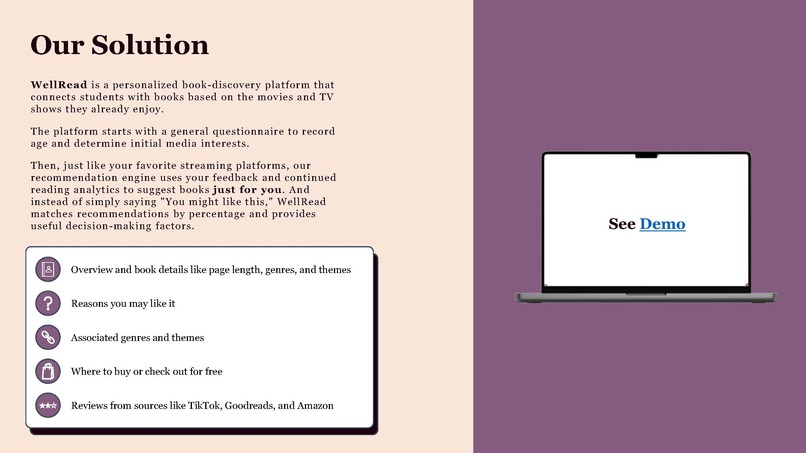
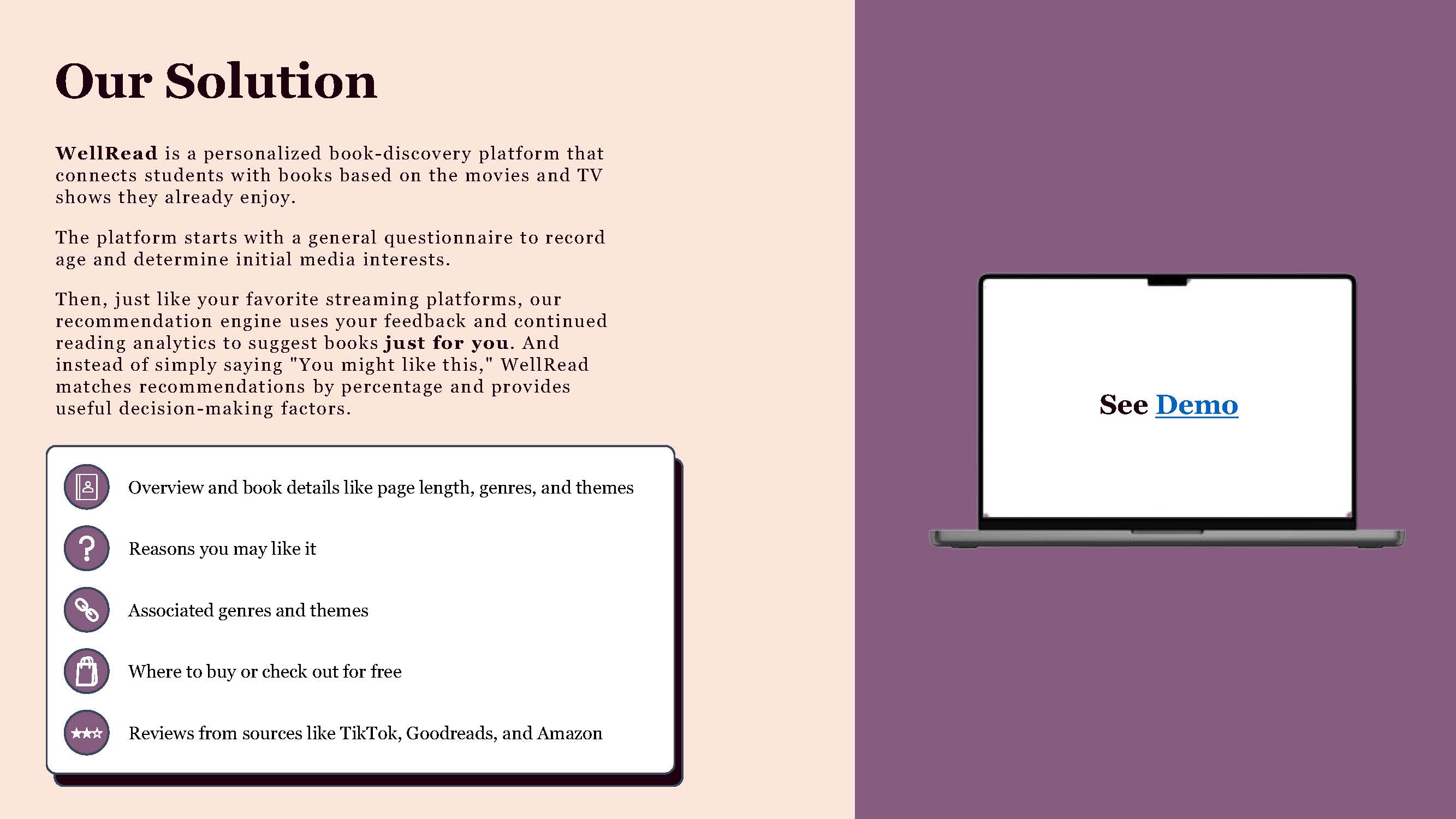
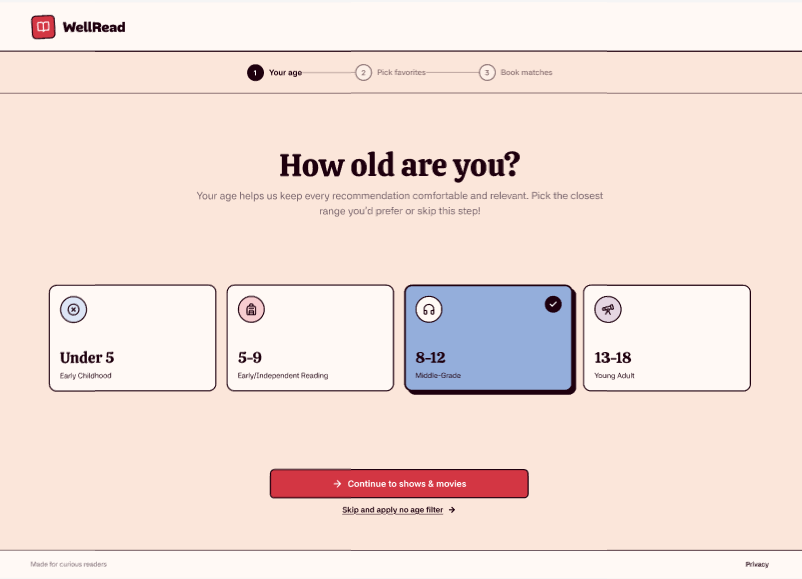
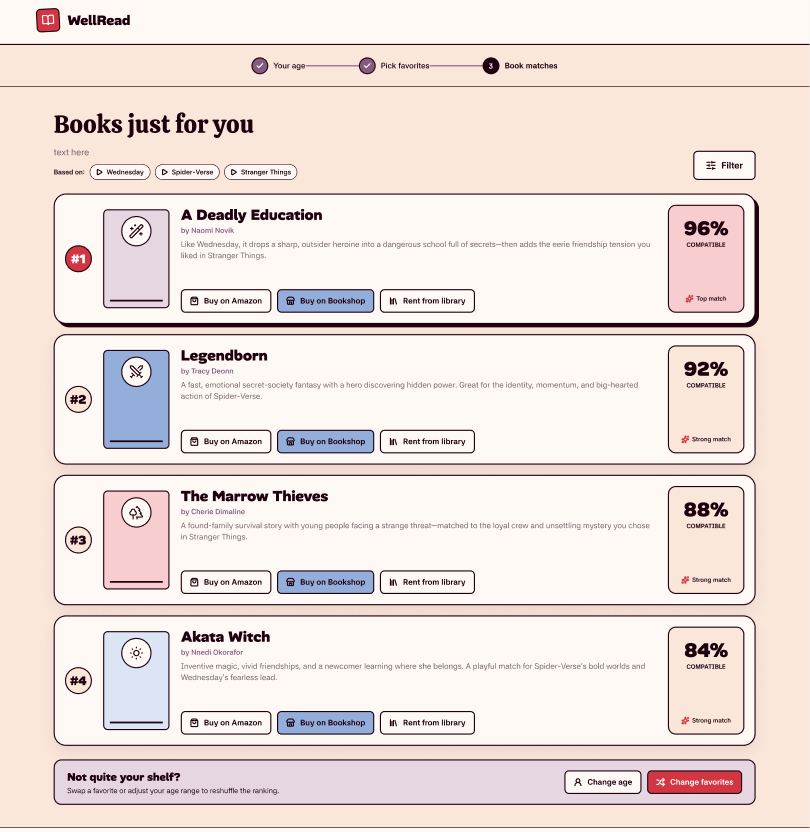
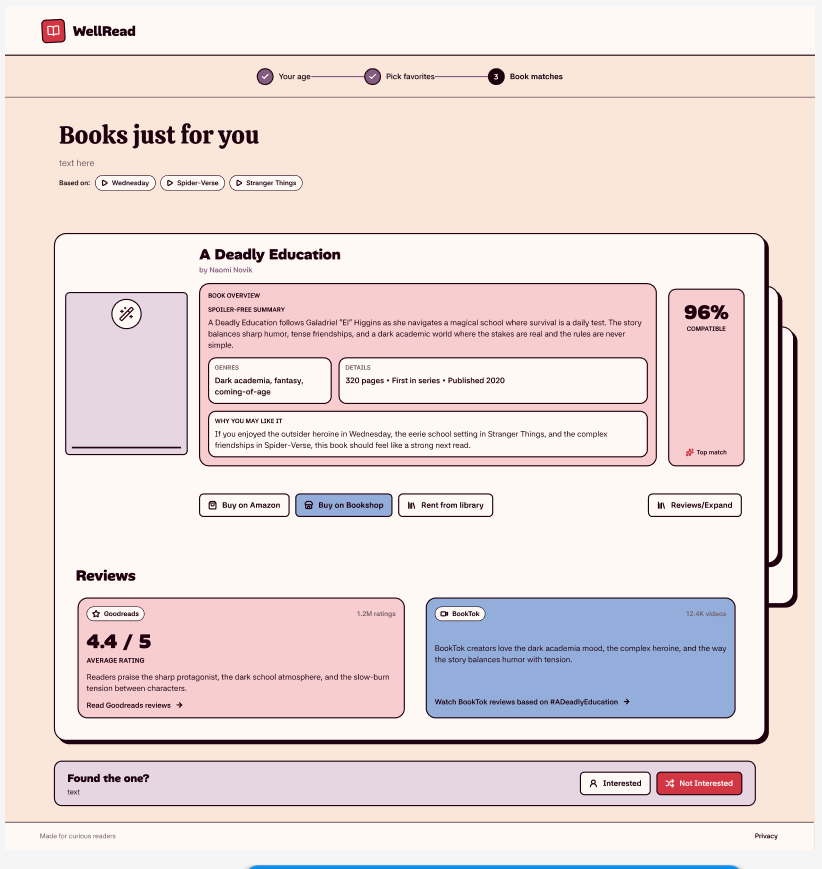
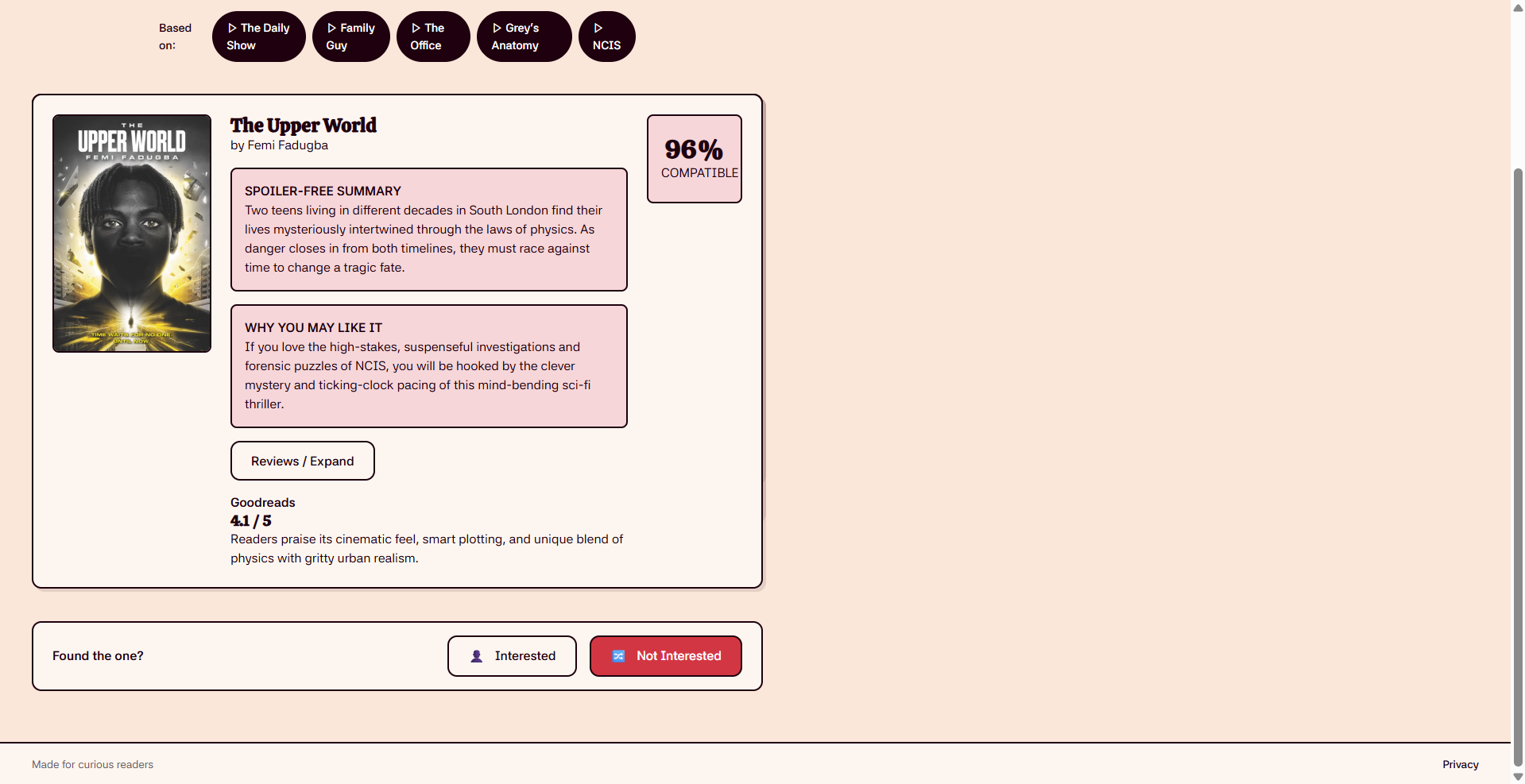
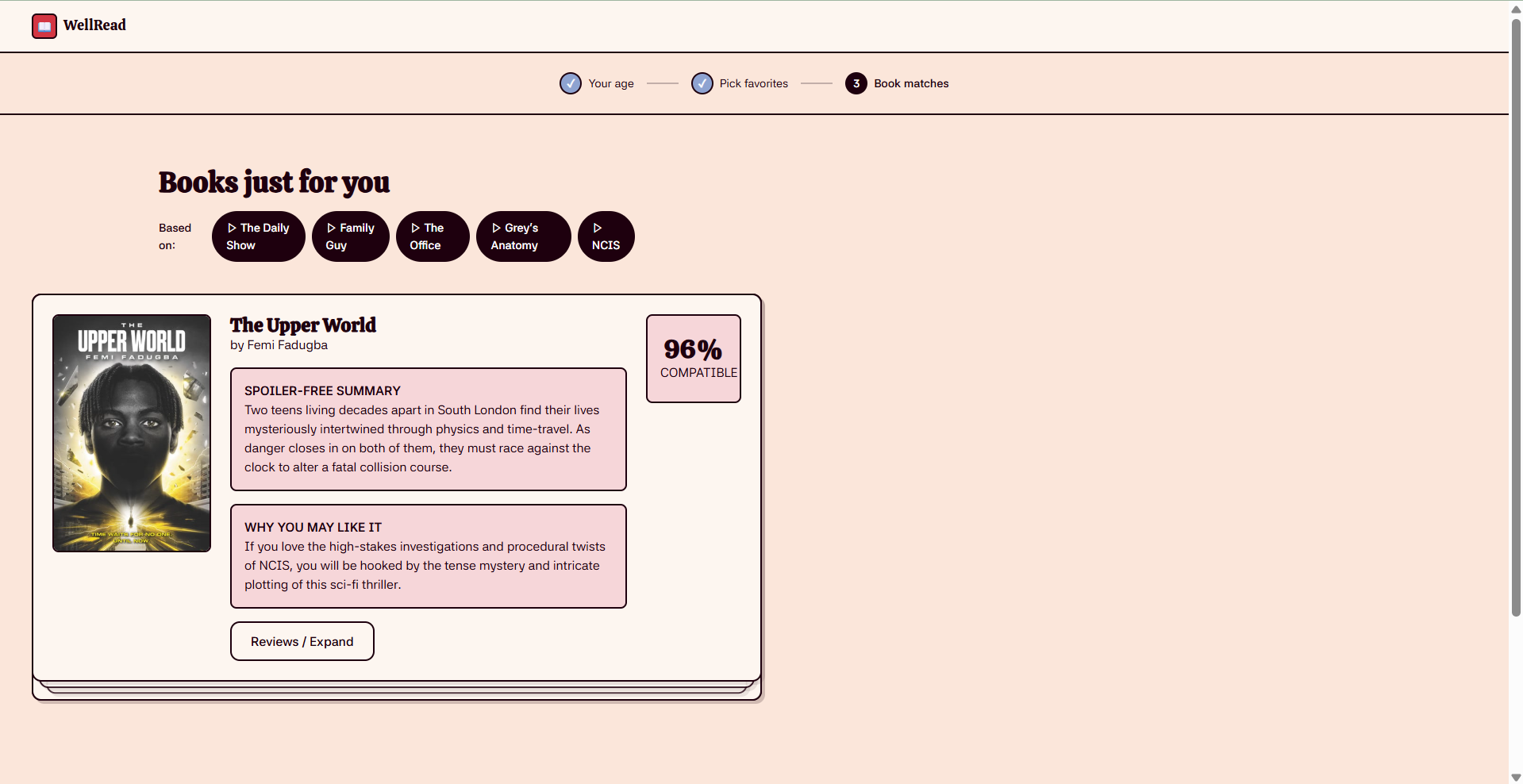
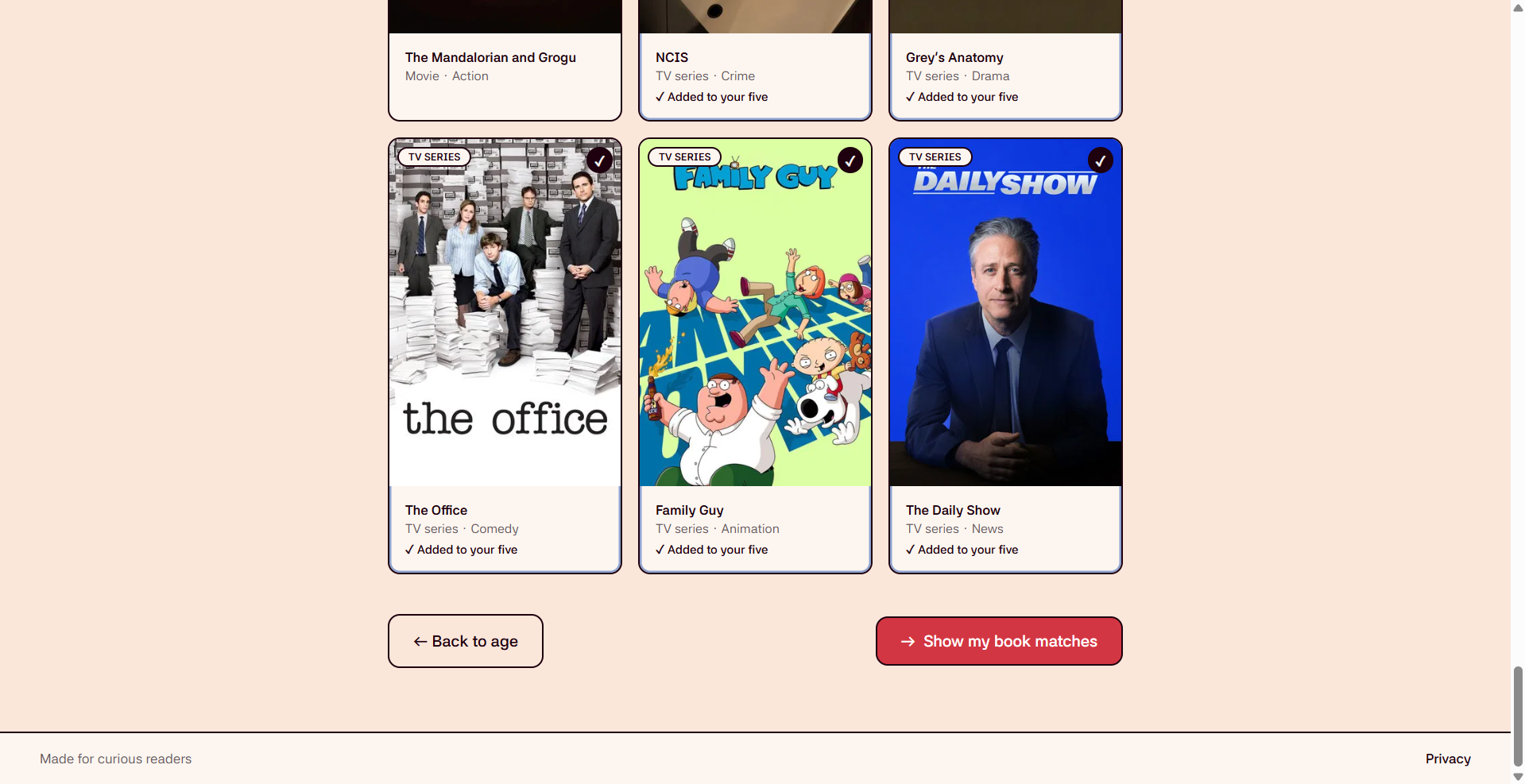
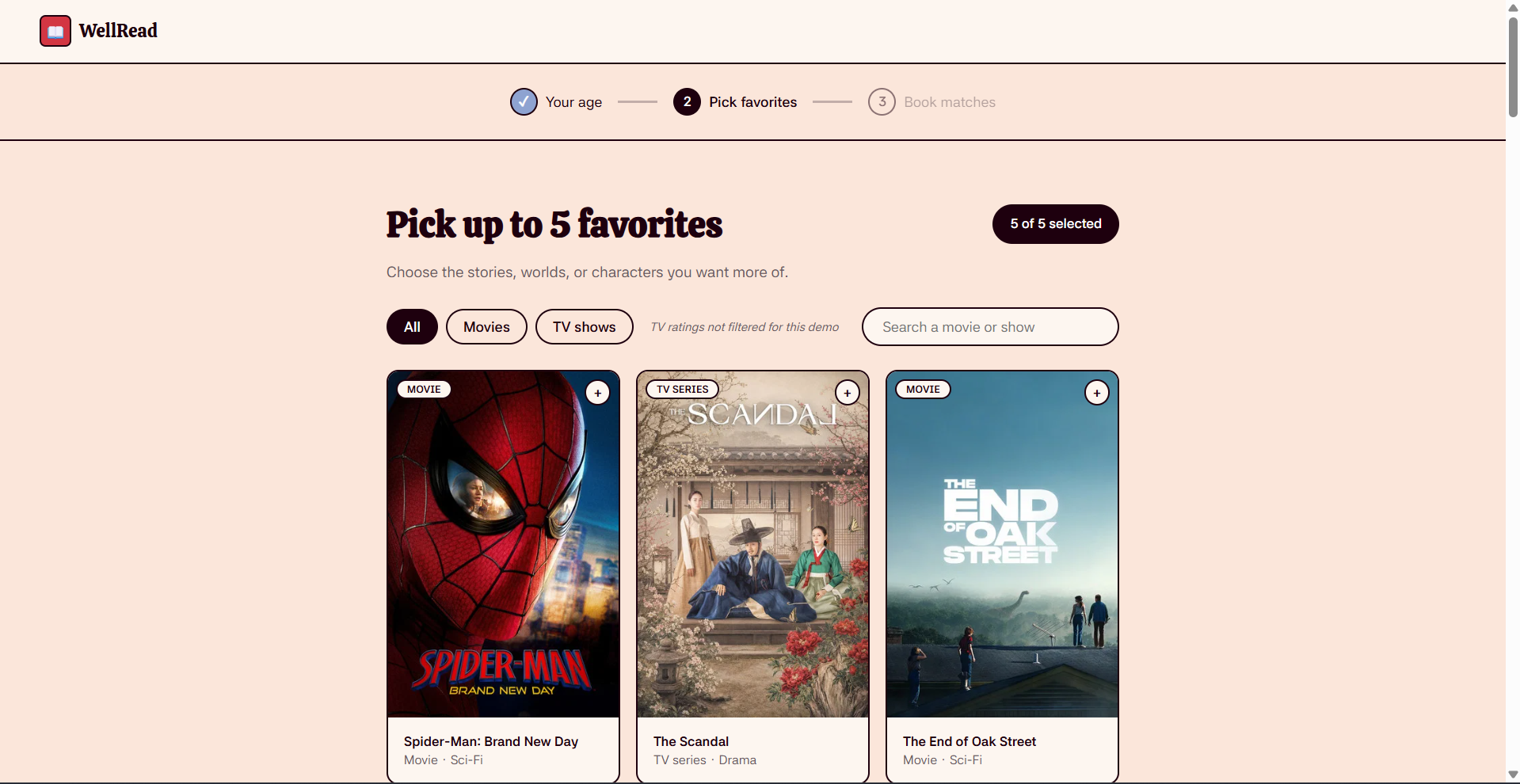
WellRead is a personalized book-discovery platform that connects students with books based on the movies and TV shows they already enjoy. Students begin with a questionnaire that captures their age and media interests, then receive personalized book recommendations ranked by match percentage. Each recommendation provides more than a title: students can see why the book matches their interests, associated genres and themes, reviews, book details, and options for where to buy or borrow it.
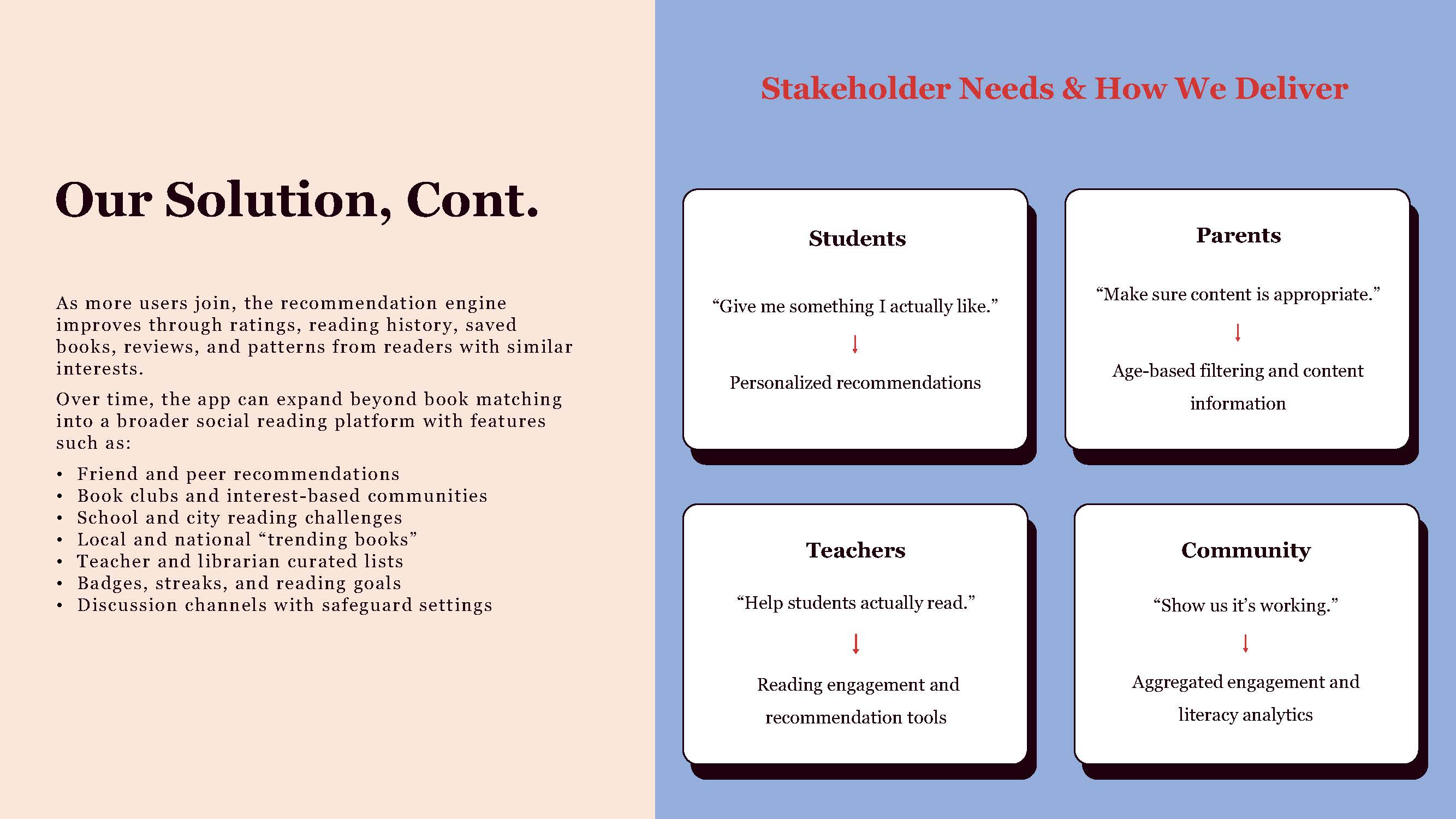
As students continue using WellRead, the recommendation engine can improve using ratings, saved books, reading history, reviews, and patterns from readers with similar interests. Over time, the platform can expand beyond recommendations into a social reading experience with peer recommendations, book clubs, interest-based communities, reading challenges, trending books, curated lists, badges, goals, and moderated discussion spaces.
How we built it
We began by designing and testing different user interfaces in Figma, then built the prototype using HTML, CSS, and JavaScript. A major part of development focused on connecting AI APIs with multiple book and movie databases so the application could extract, filter, standardize, and serve personalized recommendations.
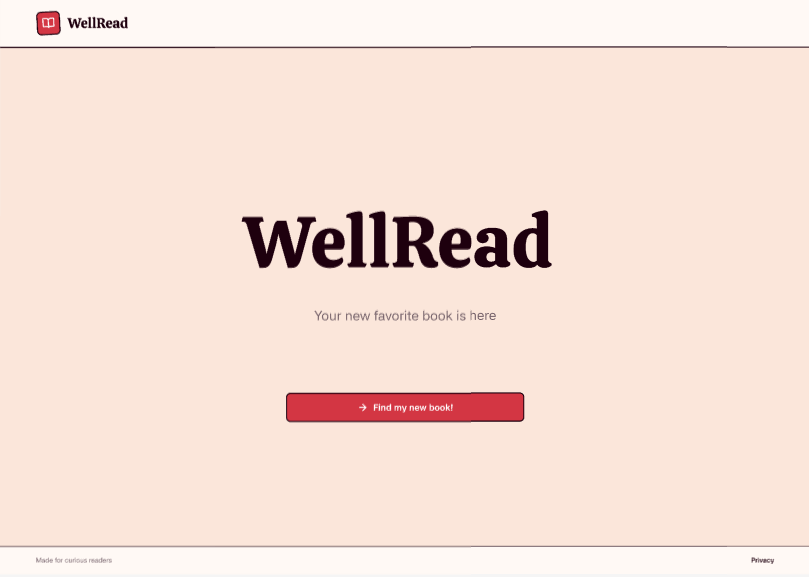
The prototype was designed around a simple user journey: students identify their age, select favorite movies or shows, and receive ranked book matches based on those interests. The recommendation experience was built to feel familiar to users of streaming platforms while still providing the decision-making information students need before choosing a book. The prototype screens in the pitch deck demonstrate this onboarding and recommendation flow.
Challenges we ran into
One of our biggest technical challenges was standardizing information pulled from multiple APIs and databases. Different sources organize titles, genres, themes, age information, and other metadata differently, so we had to determine how to normalize that data before it could be used effectively by the recommendation system.
We also faced challenges in refining the user interface so the experience felt simple rather than overwhelming. Because WellRead is intended for middle and high school students, the platform needs to provide enough information to support a good decision without recreating the same complicated search experience we are trying to solve.
On the pitch and product side, another challenge was communicating a large problem, a technical solution, stakeholder needs, measurable impact, scalability, and funding requirements within one cohesive story. That required prioritizing the most important information and ensuring every part of the pitch connected back to the core problem.
Accomplishments that we're proud of
We are proud that we moved beyond an idea and built a working prototype that demonstrates the core WellRead experience. Instead of creating another generic reading list, we developed a model that starts with something students already understand—the movies and shows they love—and translates those interests into personalized book recommendations.
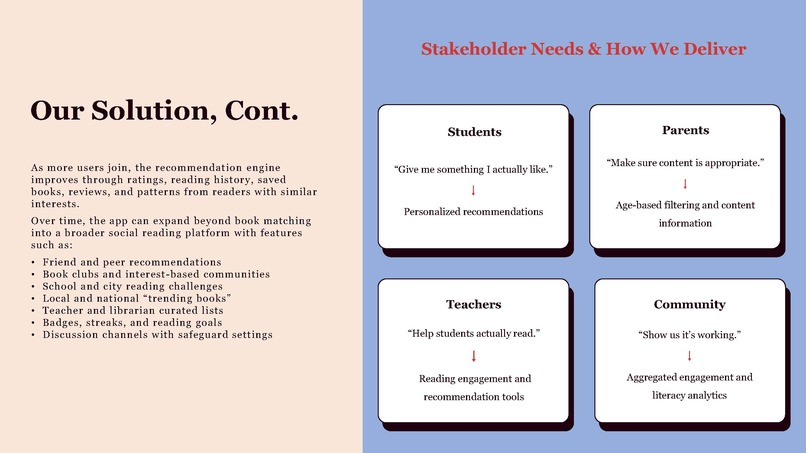
We are also proud that the concept addresses multiple stakeholder needs at once. Students receive personalized recommendations, parents gain age-appropriate filtering and content information, teachers gain tools that can support reading engagement, and communities can receive aggregated literacy and engagement analytics.
What we learned
We learned that building a recommendation platform involves much more than connecting an AI model to a list of books. Real-world API integrations introduce restrictions, inconsistent data structures, filtering challenges, and user-experience considerations that have to be solved before recommendations can feel reliable and useful.
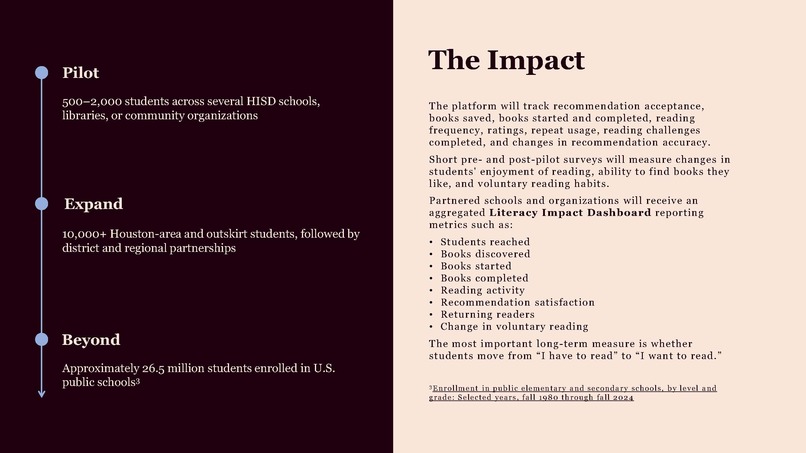
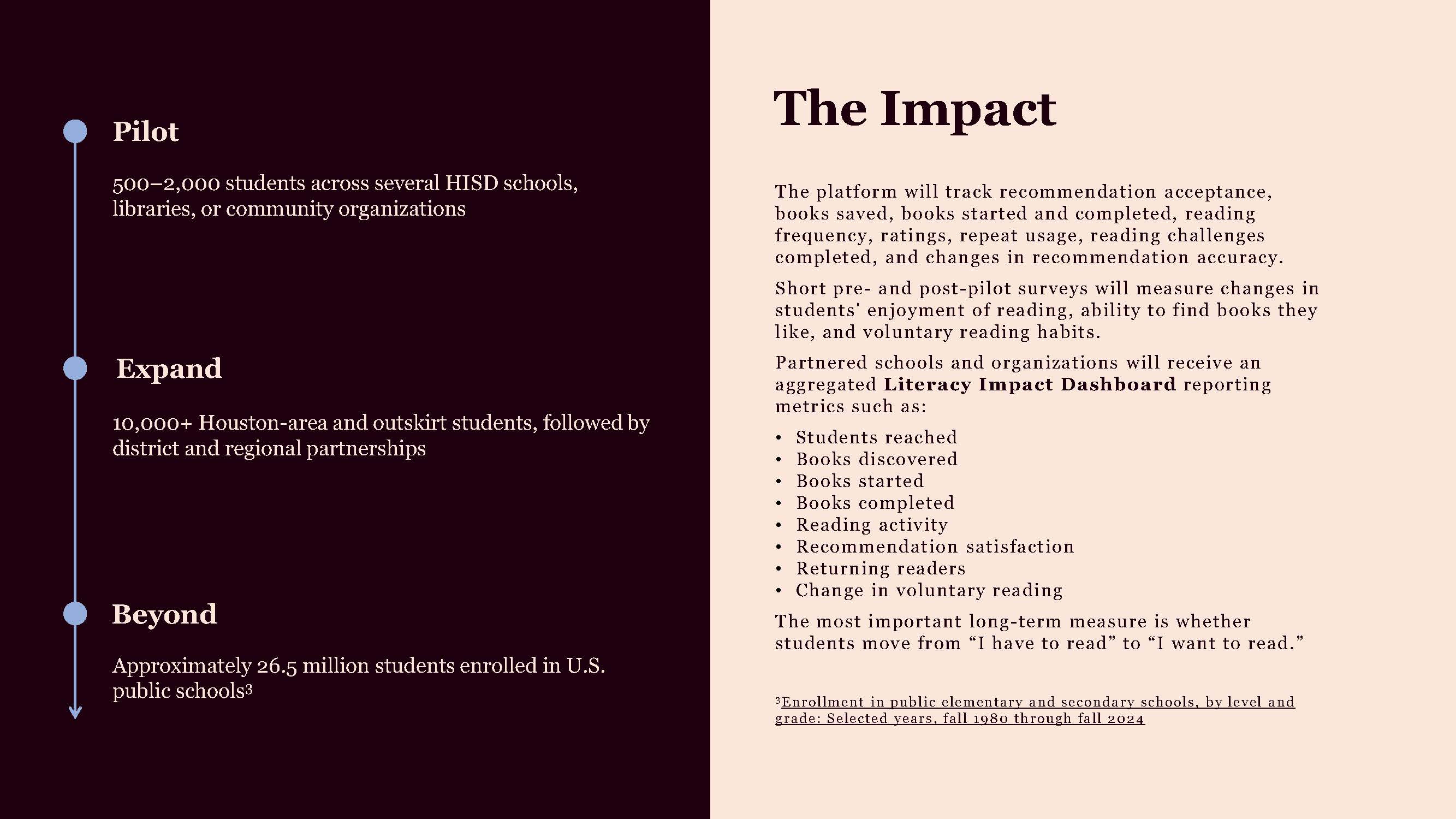
We also learned that literacy engagement should not be measured simply by whether someone downloads or opens an app. WellRead needs to determine whether students actually discover books, start them, finish them, return to the platform, and develop a stronger desire to read through our Literacy Impact Dashboard and pre- and post-pilot surveys.
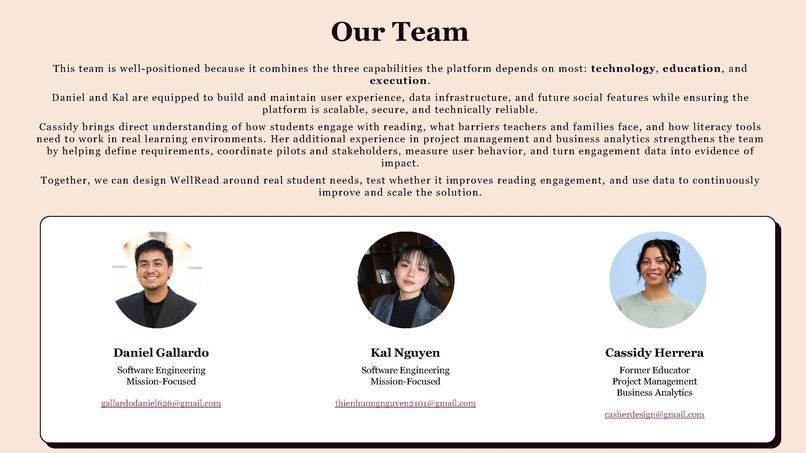
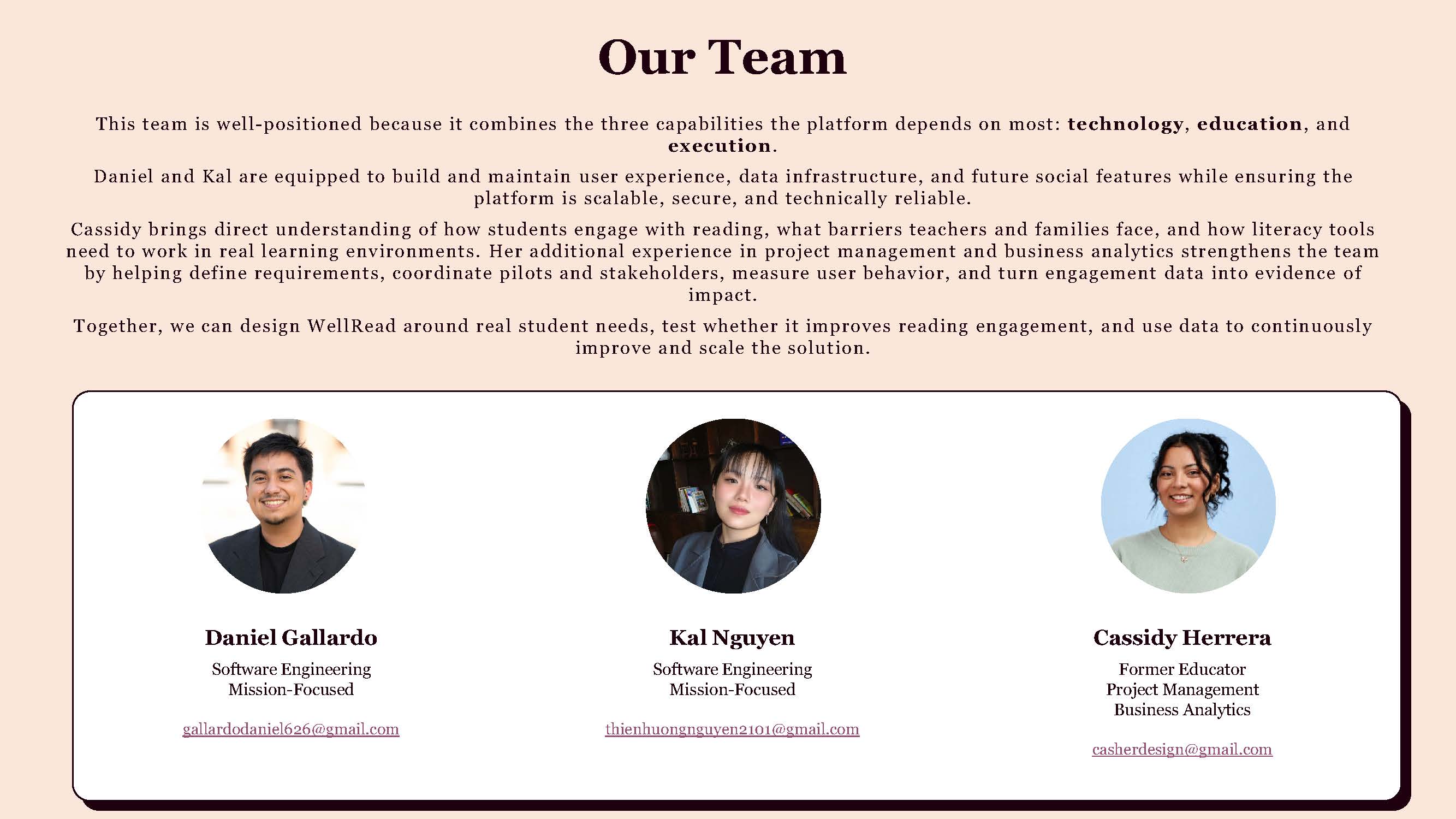
Most importantly, we learned the value of combining technology, education, and execution. Our team brings software engineering, firsthand classroom experience, project management, and business analytics together so we can build the product, understand the people it is intended to serve, and measure whether it is actually making a difference.
What's next for WellRead
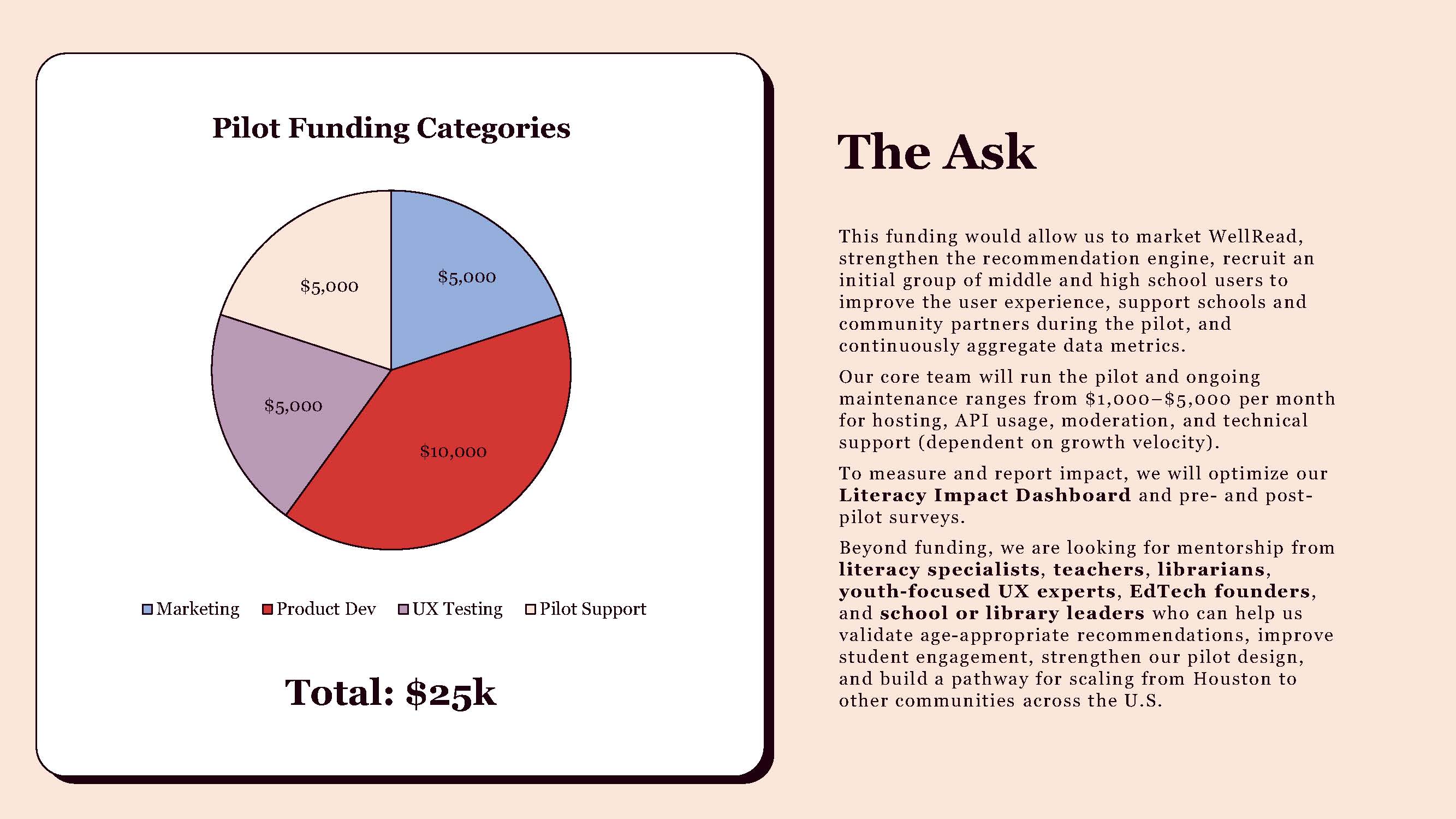
The next step is moving WellRead from prototype to pilot. Long term, WellRead can grow from a personalized recommendation tool into a broader social reading platform where students discover books through friends, communities, local trends, reading challenges, and shared interests. Our goal is to make finding the next great book feel as natural and exciting as finding the next show to binge.


Log in or sign up for Devpost to join the conversation.