-
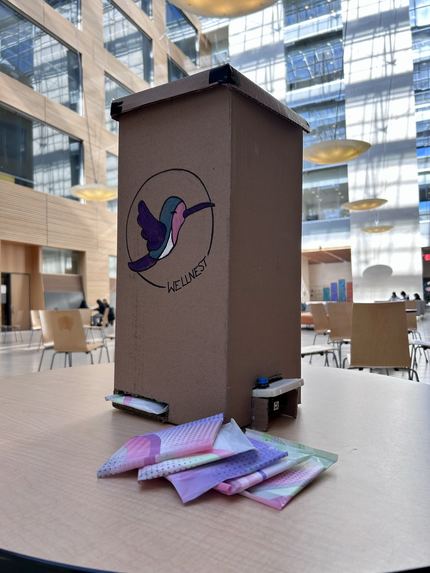
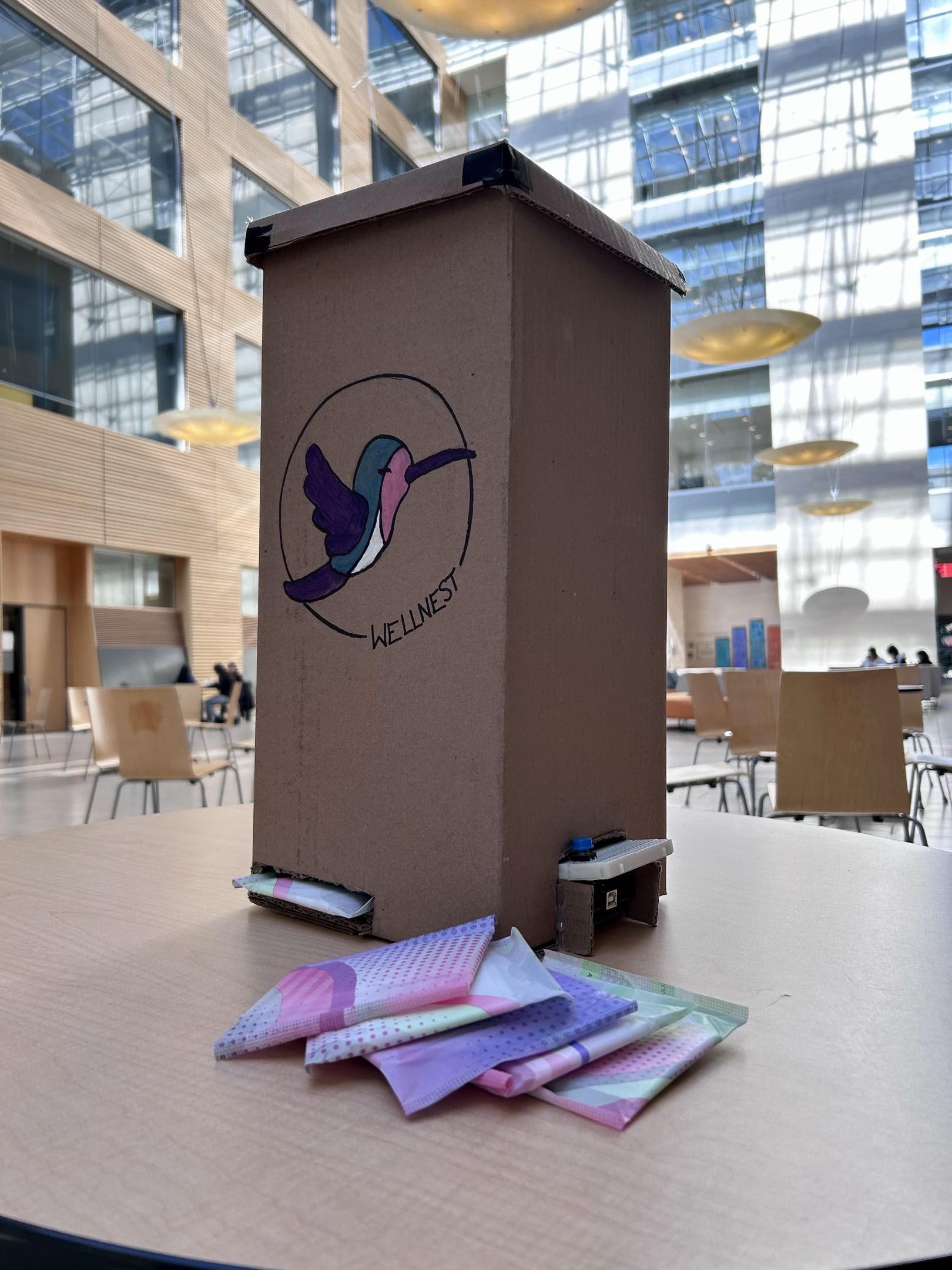
WellNest Pad Dispenser
-
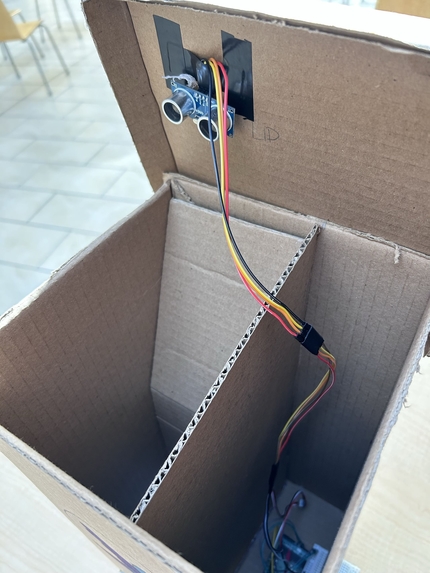
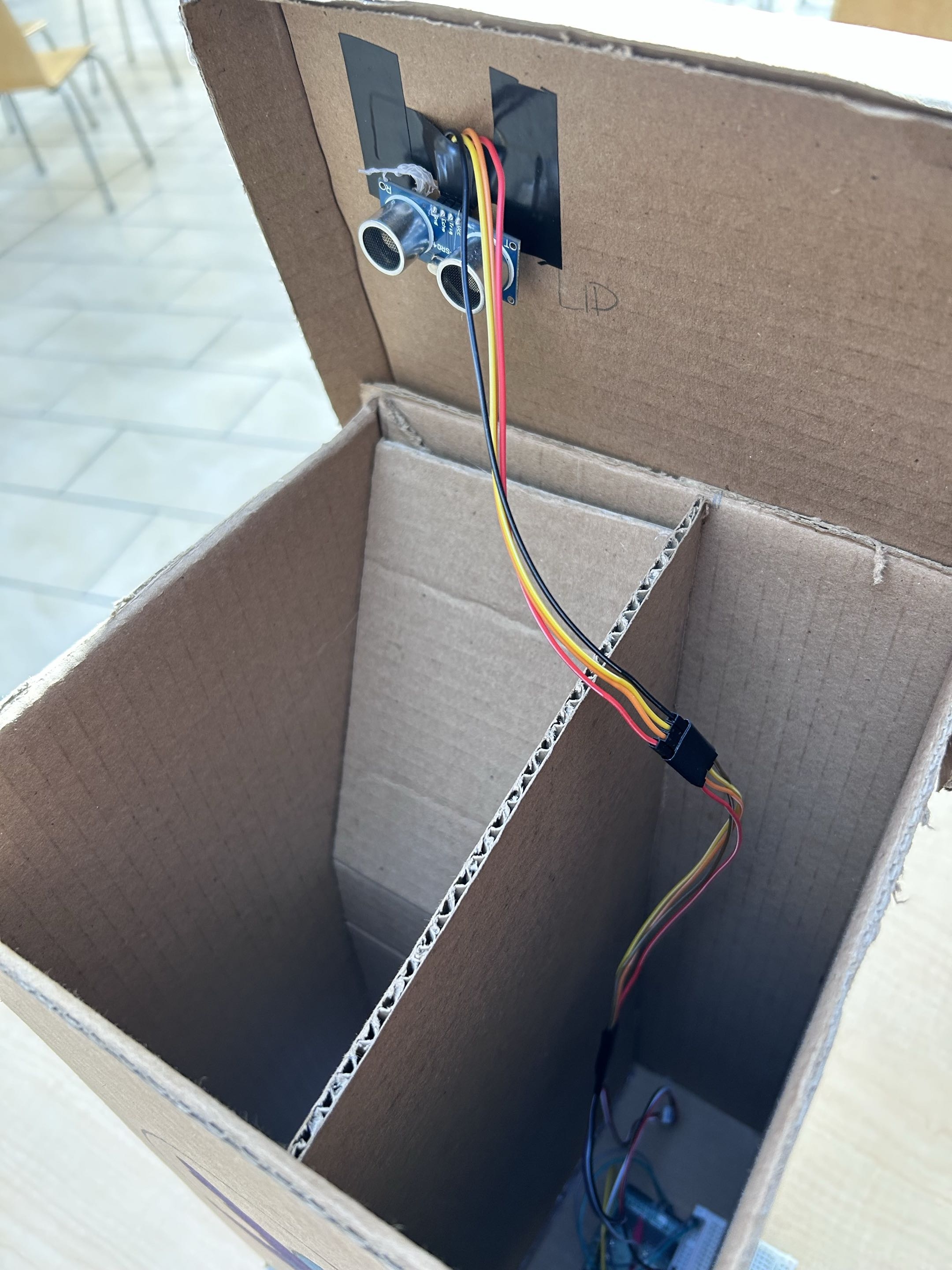
WellNest Dispenser Internals
-
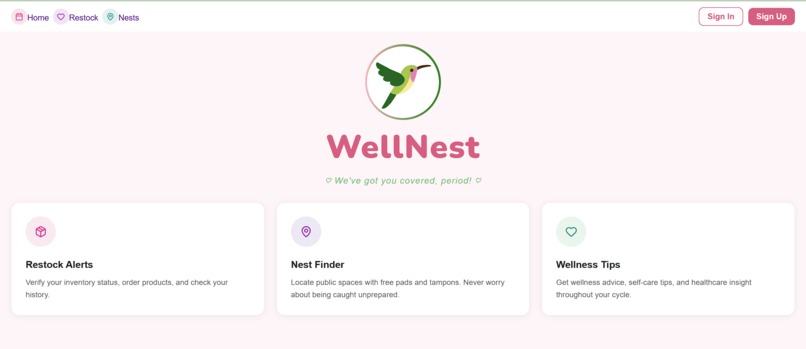
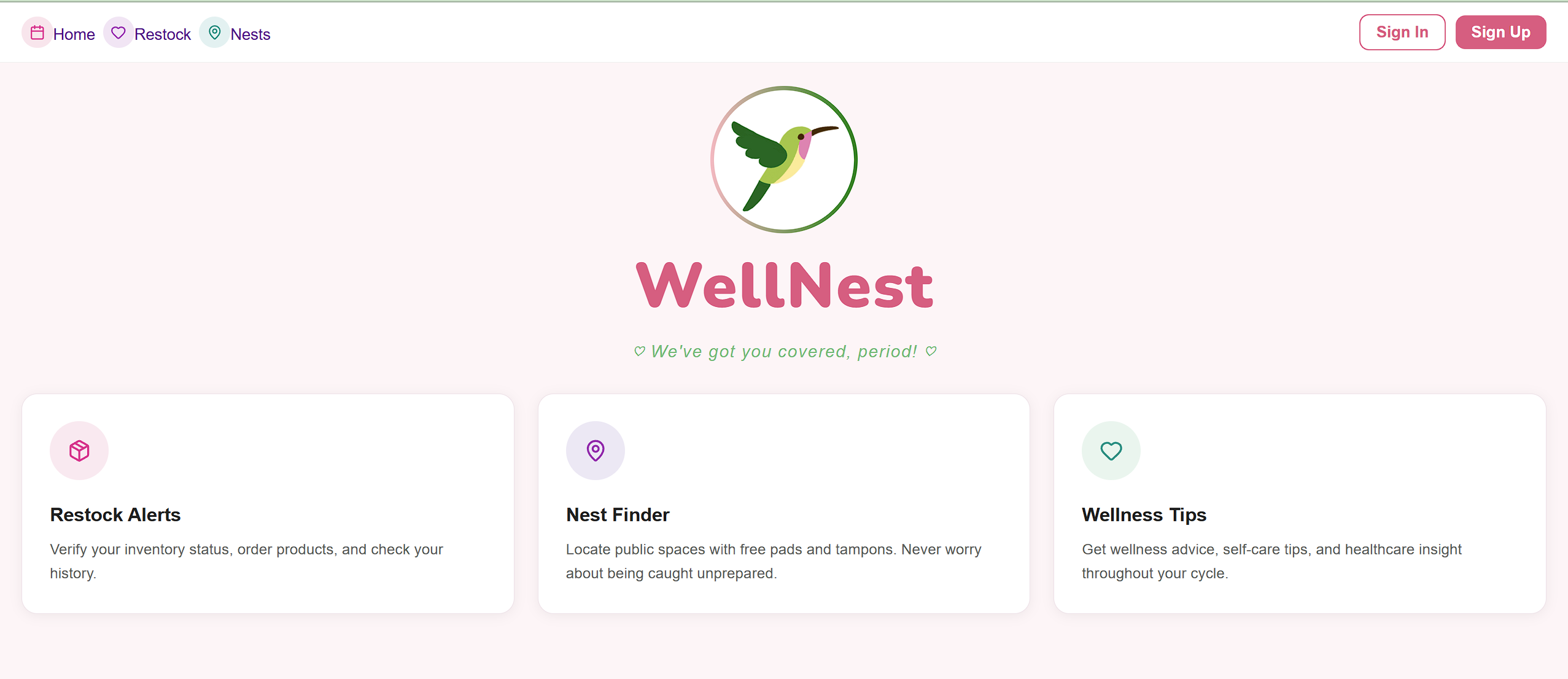
WellNest Landing Page
-
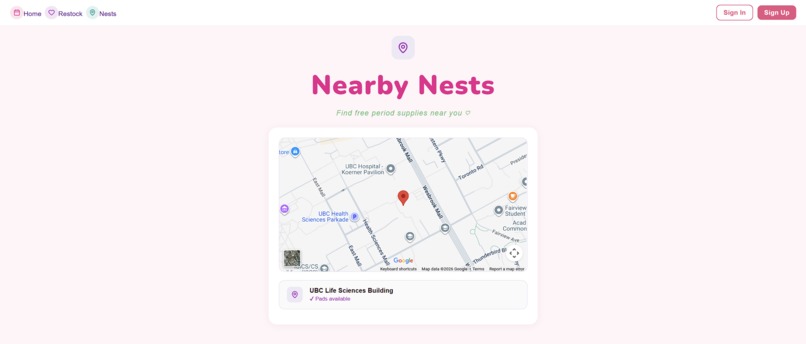
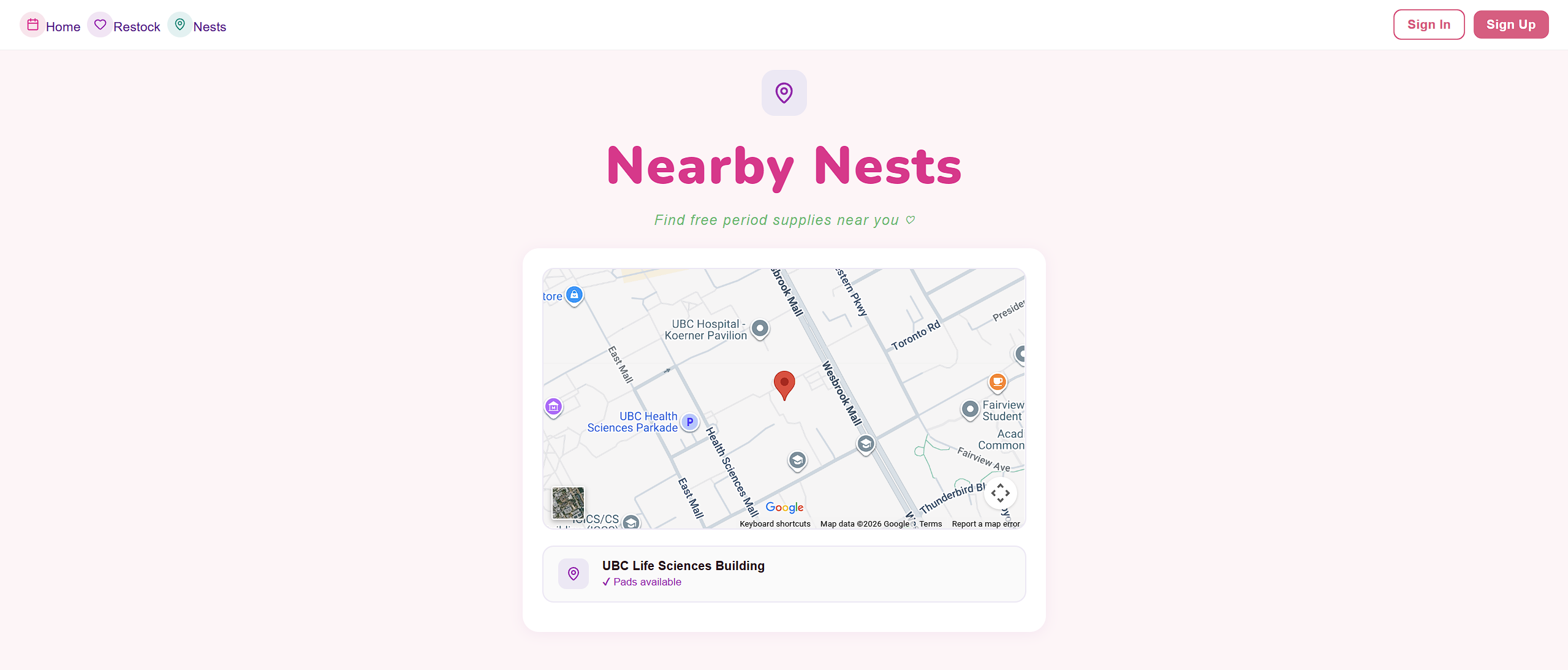
Dispenser Locator
-
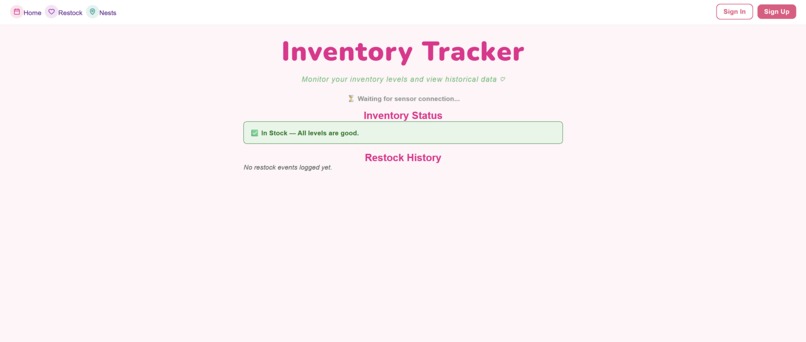
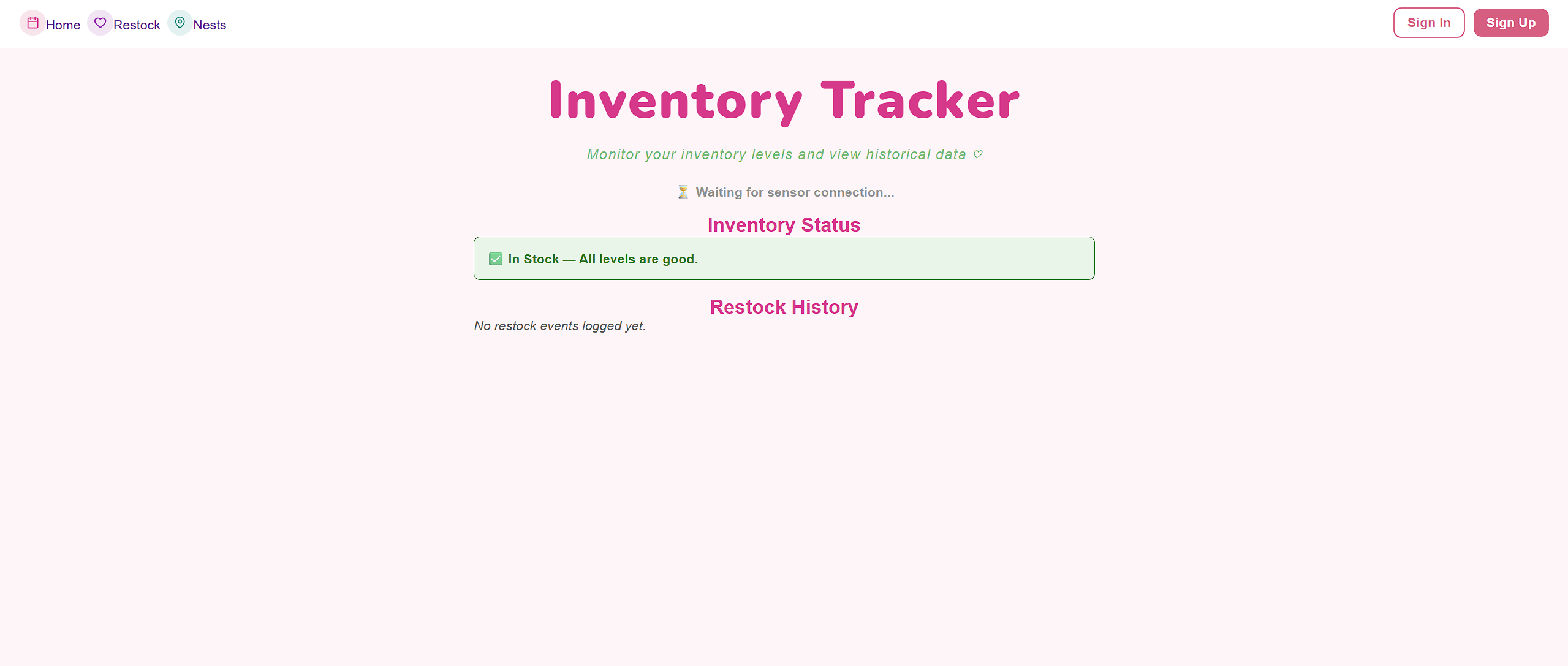
Dispenser Inventory
-
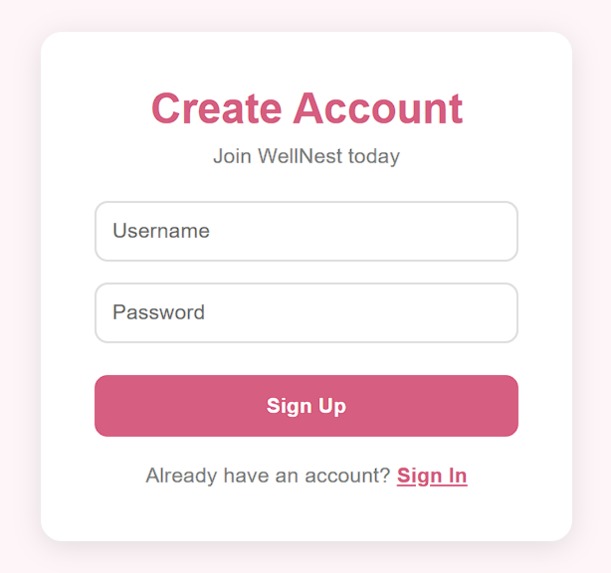
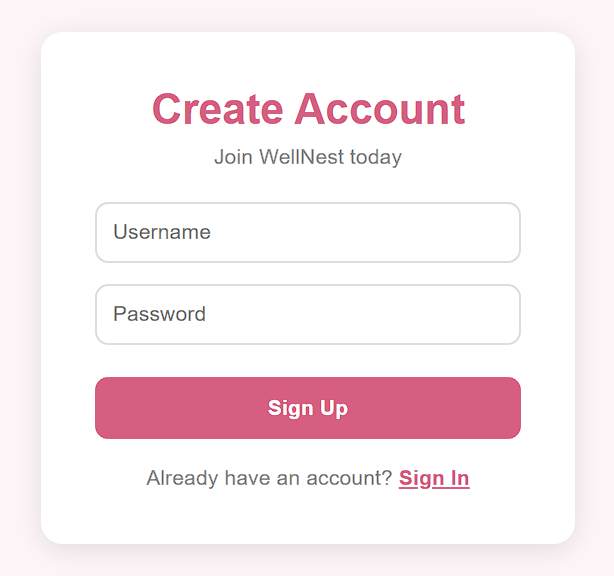
Account Sign Up
Inspiration
Have you ever been in a situation where you really, really need a sanitary pad or a tampon, but there’s none to be seen? What about the awkward calls to your friend from the bathroom, or the plea for help from the person next door? Our solution, WellNest, is made for the period pragmatists, to ensure that you’re never caught off-guard when the cycle comes into full strength.
What it does
WellNest is our user-friendly feminine hygiene product dispenser, where a push of a button can get you the pad that you need. Built with an additional proximity sensor, it can sense when you’re running low on stock and help you order your preferred type online so you’re ready whenever, wherever. Our website, complete with secure user login and analytics, can track your cycle and offer location tracking for the nearest public usage WellNest near you as well as their product availability. If you’re a WellNest owner, you can keep track of any restock notifications and your preferred products. Built for women by women, WellNest is here to solve one of our most common problems with a well-rounded, enhanced solution.
How we built it
There were two main components to this project: hardware and software. Our hardware team developed the physical dispenser from scratch, utilizing cardboard cutouts, Arduino Uno, and servo motors to deliver our basic functionality in dispensing a pad with a single-click button, and notifying low stock to the user by sending a signal through the Arduino to the laptop. Our software team excelled in web development, creating an engaging interface using React and Java that takes the restock signal and keeps a historic record of refills. Additional features include a location tracker of WellNests nearby, by embedding Google Maps via Leaflet, and a reproductive health page that answers some of your most pressing questions on female health and hygiene.
Challenges we ran into
There were plentiful challenges! Here are some of the technical and hollistic problems we worked very hard to solve:
- Materials: Originally, we thought using CAD and 3D-printing our box would be an excellent way to quickly iterate and develop an accurate, durable model. However, we had limited access to a 3D printer, and given the costs associated with using so much filament, we pivoted to using recycled cardboard. While it had less structural integrity, we reinforced our design and changed it on the fly.
- Software Experience: As a group of electrical engineering students where the majority of us enjoyed CMD-F as our first hackathon, we didn’t have plentiful experience programming in Java or other web development languages. This required a lot of patience and reaching out to our incredible mentors to guide us through the fundamentals.
- Target Audience: Our product is applicable to a wide demographic - this made it quite difficult to figure out the ideal strategy in marketing our product. Do we choose to make it a commercialized item, with a focus on restocking convenience? Or do also pay a heavy emphasis on the main consumer, tailoring the product’s design to personal needs over mass production? These were all questions we struggled to answer, before we brainstormed a way to explain our product as a general, scalable solution viable to any audience and problem.
Accomplishments that we're proud of
As previously mentioned, software skills were not extremely common in our group. We believe that this actually provided quite the unique point of view, as we were able to critically think our way through code and collaborated significantly throughout the hackathon period, making integration inherent and natural. Our final product was mostly completed in the early hours of the morning due to our excellent communication skills under stressful situations, making the completion of our project the greatest accomplishment above them all.
What we learned
We learned the various techniques in developing a product, including the scoping process of designing some preliminary prototypes, iteration, and constantly refining our product to meet the minimal requirements. It’s easy to bite off more than you can chew, so our group was quite prone to falling down the rabbit hole of great ideas and struggle to bring them to fruition. Instead, we debriefed during midnight over the best course of action, and knew that to deliver a high-quality product, some minor sacrifices had to be made. This is a skill that is transferrable to our work as engineers and beyond.
What's next for WellNest
If we had more time and resources, this project could have been taken to the next level by using durable 3D-printed parts, and utilizing a heftier servo motor that can push the pad out by 1-in or more. In terms of the programming side, we originally wanted to implement an auto-order function that takes the order tracking notifications an extra step further, which aligns well with our product objectives. Finally, WellNest will continue to strive to deliver an easy-to-grasp, cohesive product that is usable by everyone by being inclusive of multiple pad sizes and tampons. Our team has worked incredibly hard to get to this point of equitable feminine hygiene; our hope is that we’re able to take it just one step farther.


Log in or sign up for Devpost to join the conversation.