-
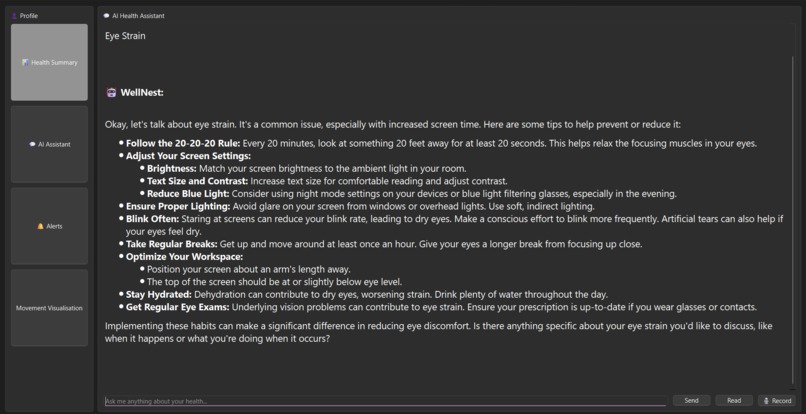
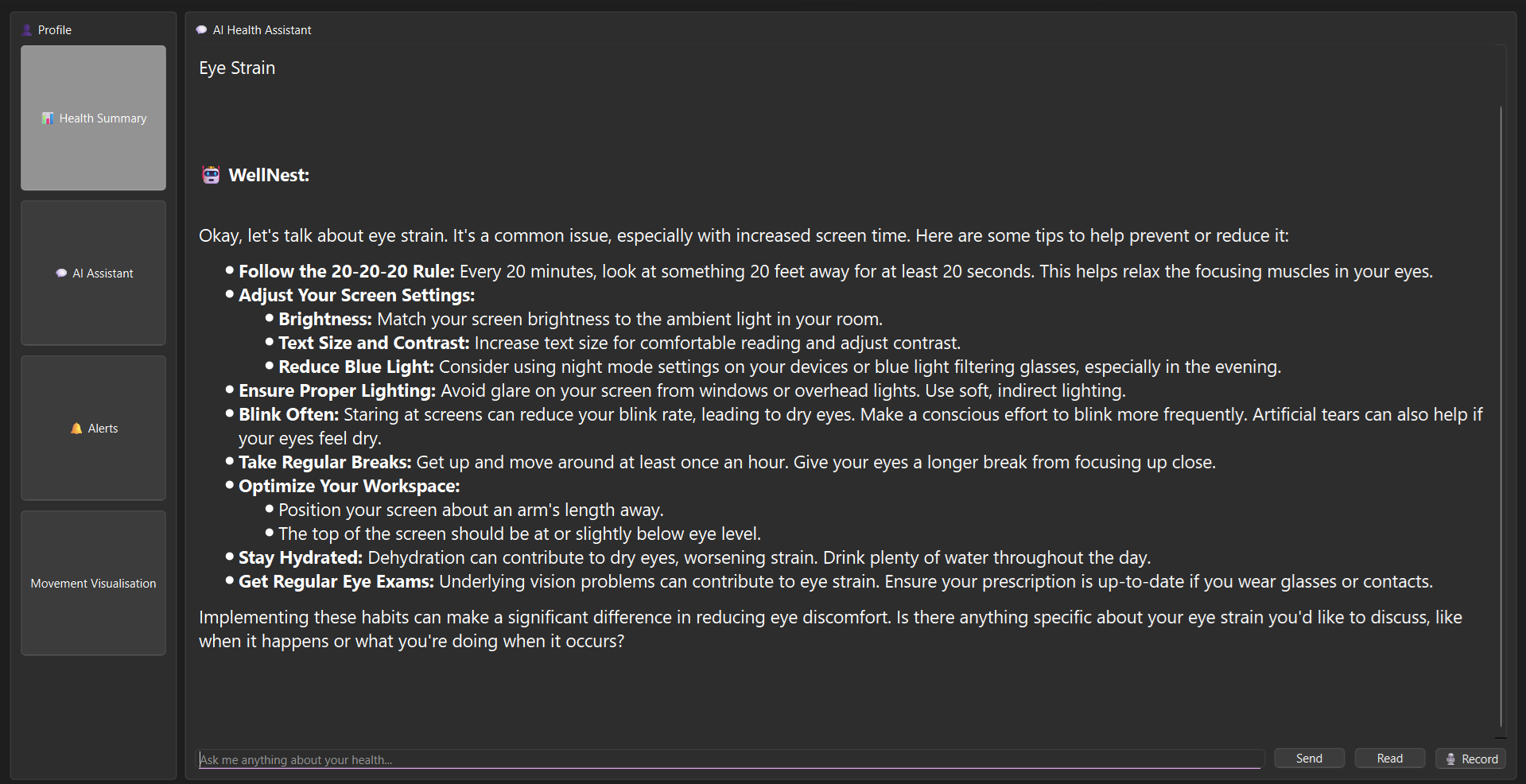
An example of the AI health assistant for eye strain problem input.
Inspiration
By the year 2080, most people will be working from home, spending the majority of their day in front of computer screens.
This will lead to excessive screen time, causing eye strain and long-term vision issues.
Additionally, staying indoors will reduce opportunities for physical activity, contributing to negative physical and mental health outcomes.
People will struggle to manage their well-being—both physically and mentally.
What it does
WellNest is a tool designed to monitor and provide personalized wellness advice.
- The Home page tracks hydration, sleep, and screen time using data from Google Pixel devices.
- The Advice page leverages Google Gemini to generate encouraging, medically informed tips while remaining within safe informational boundaries.
- It provides cautious, general suggestions and always recommends users consult a doctor for serious concerns.
- We’ve included accessibility features such as audio file input support and text-to-speech output.
How we built it
We built this project using:
- Google Gemini API
- Qt for Python
- Neuphonic
Challenges we ran into
- API rate limit issues with Google Gemini
- Formatting difficulties with Qt for Python
- API key verification errors with Neuphonic
Accomplishments that we're proud of
- Overcoming the technical issues mentioned above
- Successfully integrating AI features
- Prioritizing accessibility in our design
What we learned
- How to integrate multiple APIs
- Improved our Qt formatting skills
What's next for WellNest
Further development!
We hope to finalize the integration of the Google Maps API to visualize foot and cycling activity for fitness tracking.

Log in or sign up for Devpost to join the conversation.