-
-
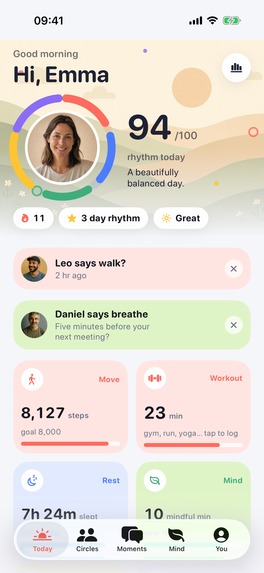
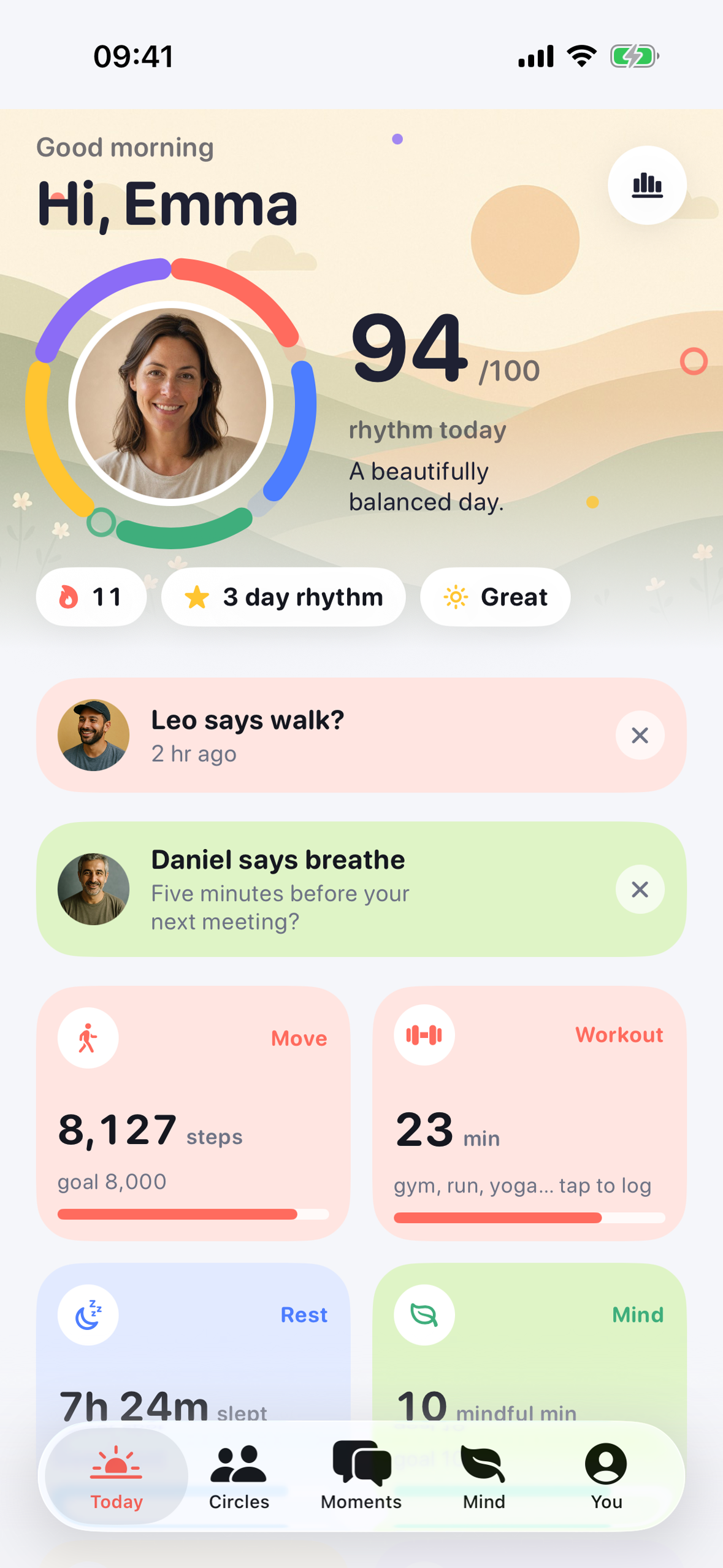
Today: a balanced Rhythm across Move, Rest, Mind, Check-in, and Connect.
-
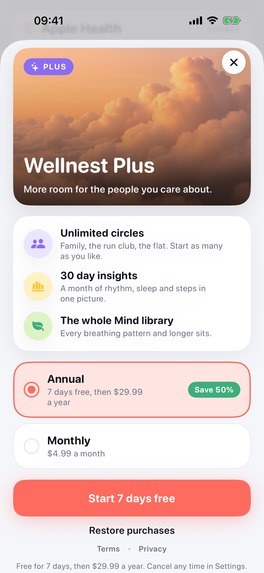
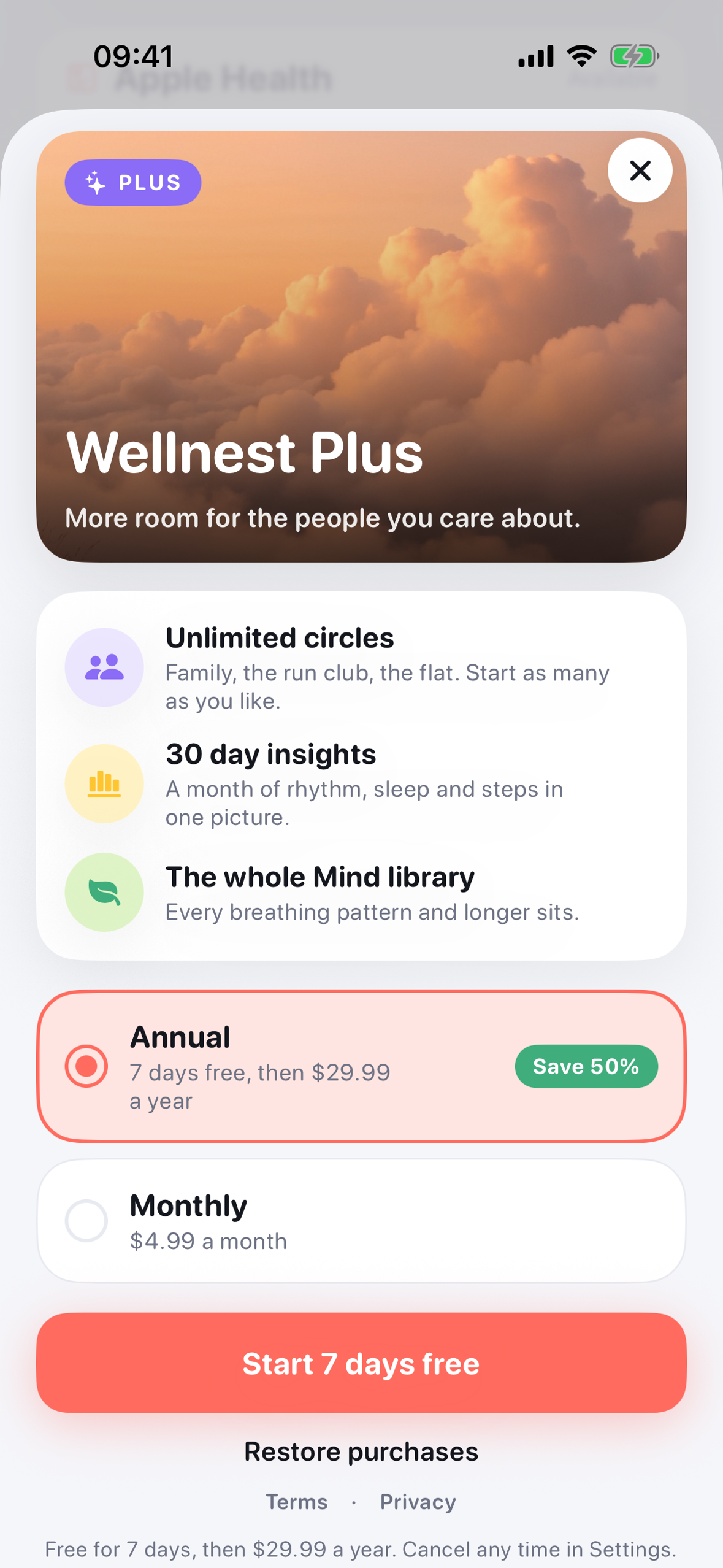
Wellnest Plus: RevenueCat-powered localized plans, trial eligibility, and restore.
-
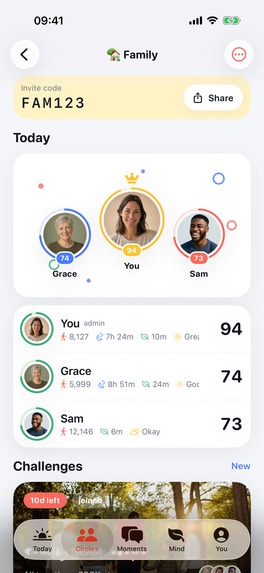
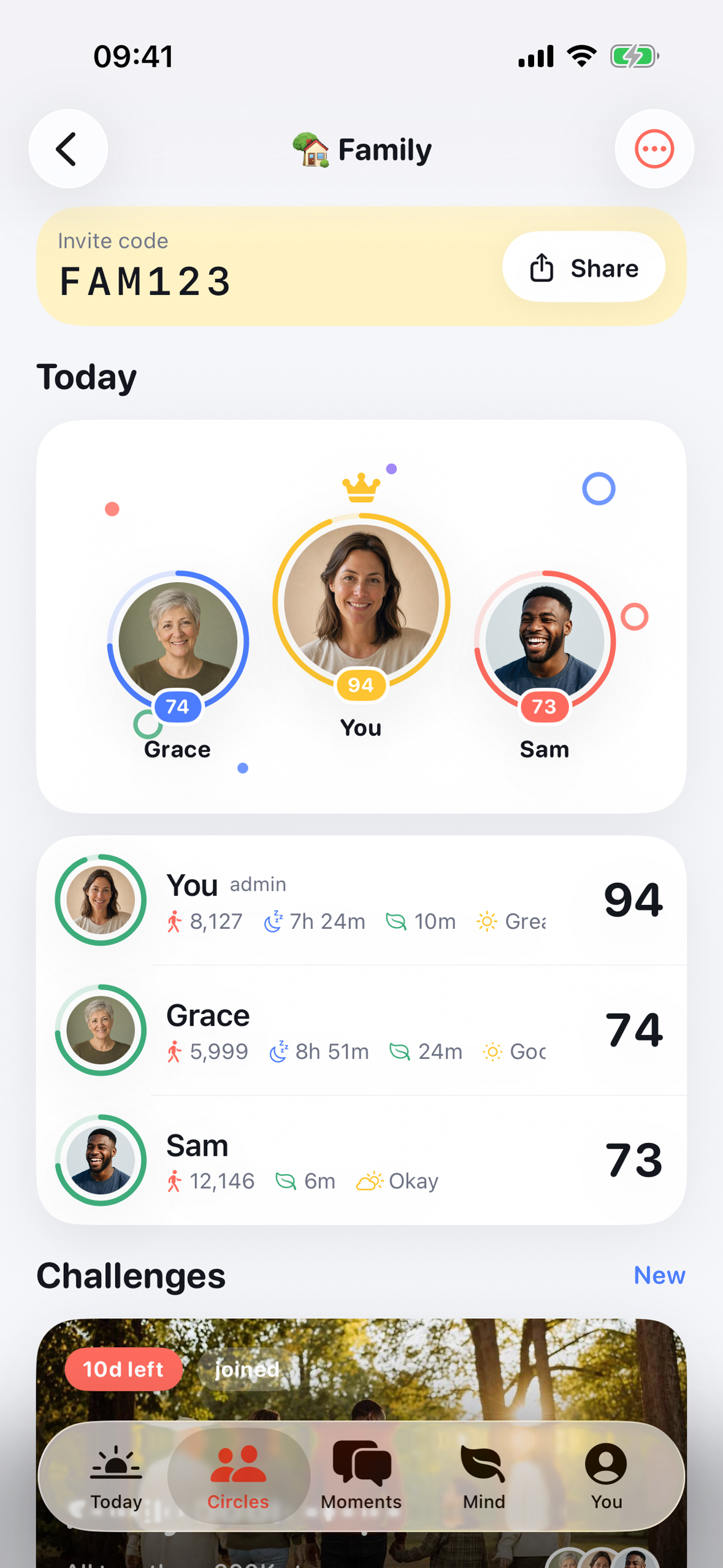
Circle: private, permissioned wellness sharing with the people you choose.
-
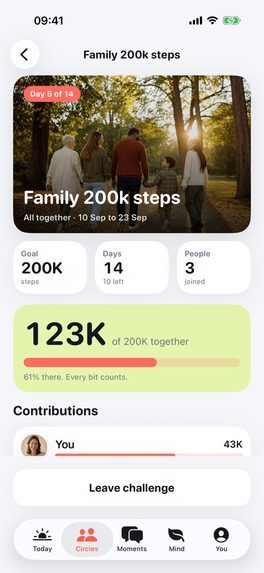
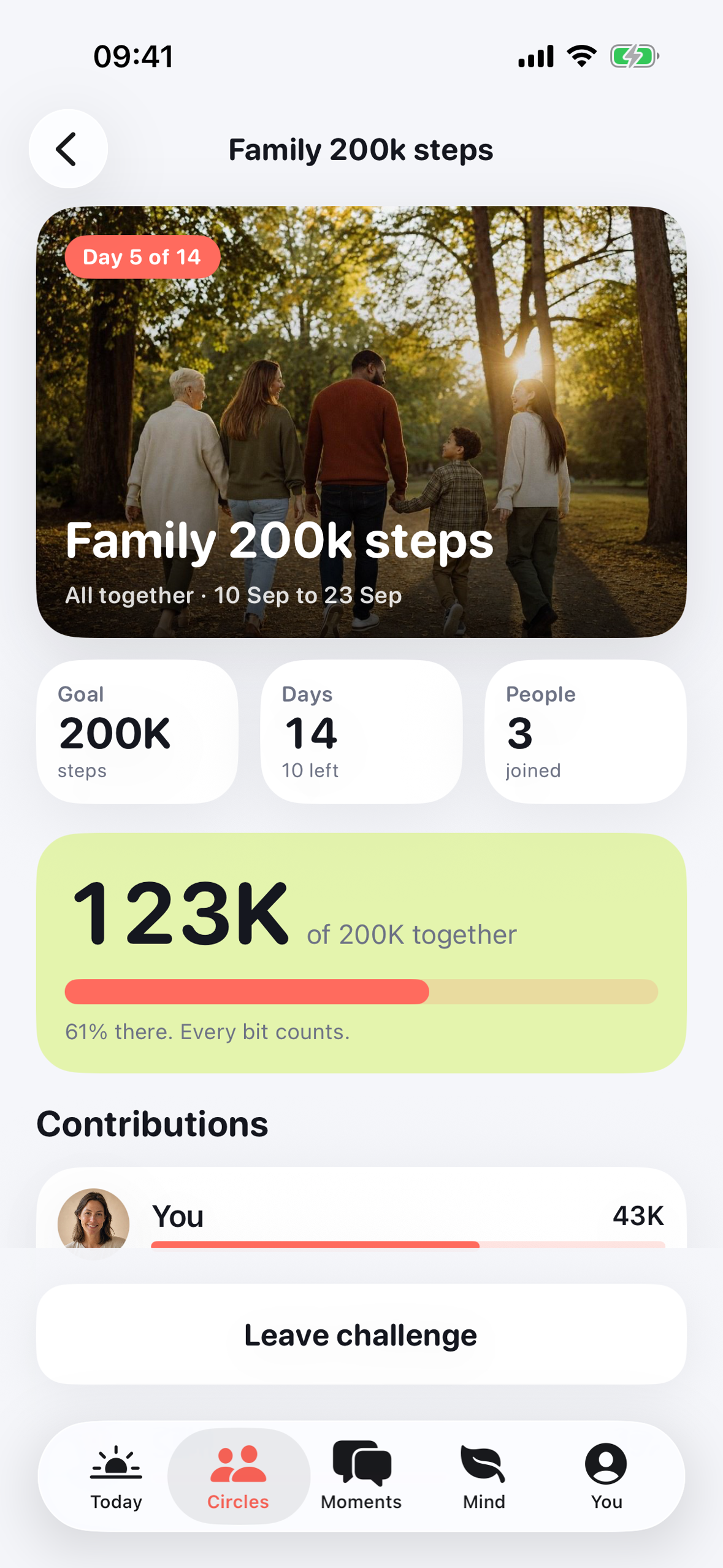
Challenge: shared goals where every person’s contribution matters.
-
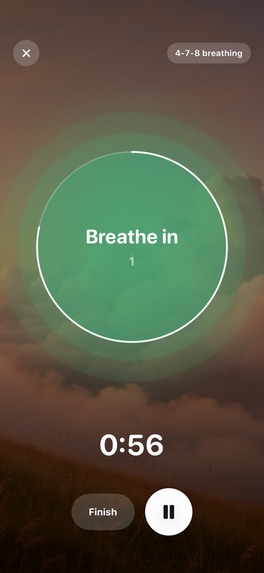
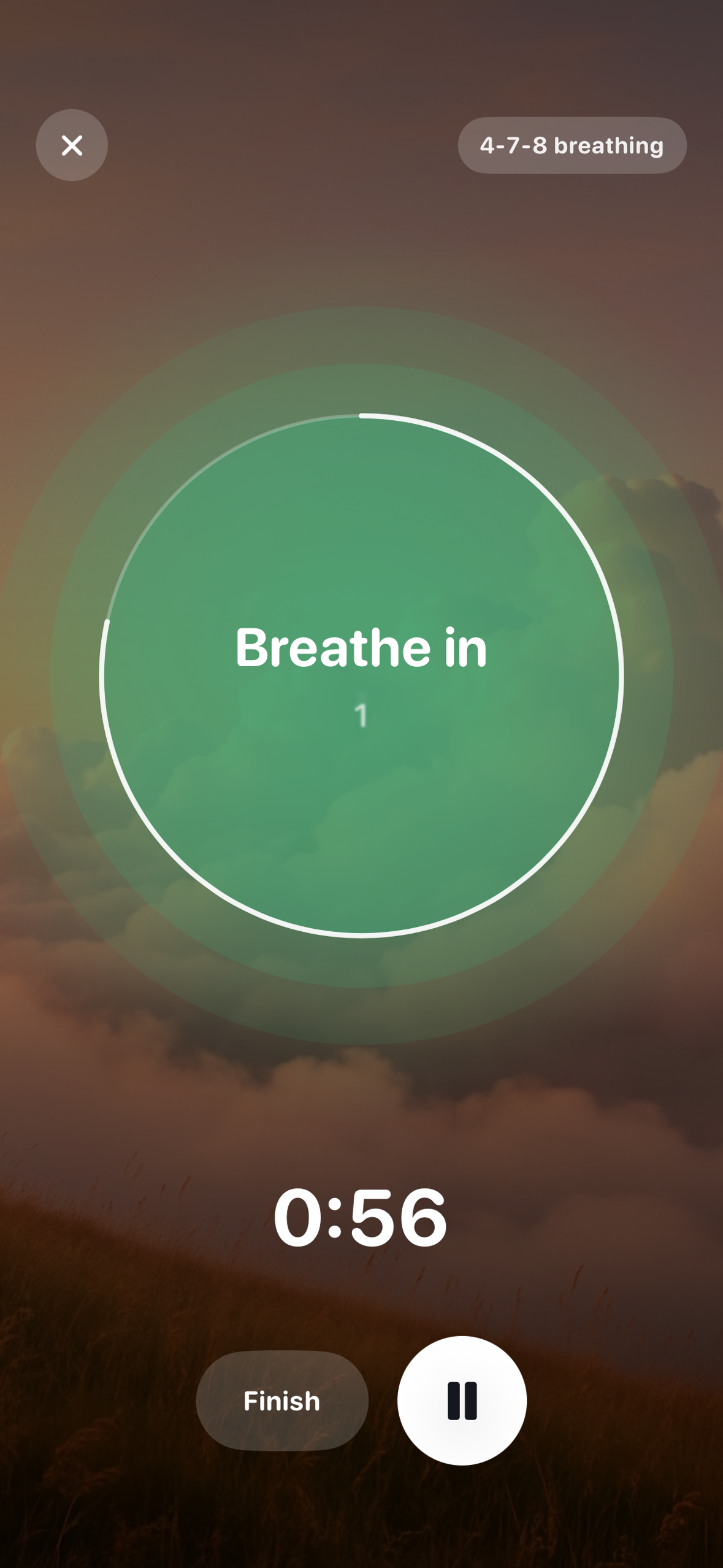
Mind: native guided breathing with paced animation and mindful-minute tracking.
-
Wellnest app icon — original 1024 × 1024 artwork, uncropped.
Inspiration
Most wellness apps are built for one person, and most social fitness apps turn one number into a competition. But the people who help us stay well are usually already in our lives: a parent, sibling, friend, partner, or running group.
Wellnest began with a simple question: what if a family could notice how everyone is doing without turning health into surveillance or a leaderboard?
A 10,000-step day on four hours of sleep is not a balanced day. Neither is a perfect streak that makes someone feel guilty for having a rough week. We wanted to reward a little movement, enough rest, a quiet minute, an honest check-in, and one small act of connection.
What it does
Wellnest is a native wellness app for families and friends. Each person gets a daily Rhythm score with five equal parts:
- Move: steps and workouts from Apple Health, or activity logged by hand
- Rest: sleep duration and bedtime consistency
- Mind: guided breathing, quiet sits, and gratitude
- Check-in: a five-second mood and energy check-in
- Connect: nudges, reactions, comments, and moments shared with the people you care about
People create small private Circles for a family, friend group, or running club. Every member chooses what each Circle may see. Someone can share steps with a running club, sleep with family, and keep mood private everywhere.
Circles can send one-tap nudges such as “Proud of you”, “Walk?”, “Go to bed”, or “Thinking of you”. They can also run individual or team challenges, from 200,000 family steps to an early-to-bed week. In a team challenge, everyone’s contribution matters.
The Mind tab includes box breathing, 4-7-8 breathing, coherent breathing, the physiological sigh, and timed quiet sits. A breathing session fills the Mind arc and can write mindful minutes back to Apple Health with permission.
Mood is information, never a grade. A rough-day check-in earns exactly the same Check-in points as a great-day check-in.
We built and shipped full native apps on both iOS and Android. The iPhone app integrates directly with Apple HealthKit and the Android app integrates directly with Health Connect. Both can import steps, workouts, sleep, and mindful activity with permission, while preserving manual entry for people who do not connect a health service. In-app workouts and mindful sessions can also be written back to the platform health store with permission.
Privacy by design
Wellnest is deliberately not a public social network. There is no discovery feed and there are no public profiles. Health data is shared only inside invite-code Circles, with separate controls for movement, rest, mind, and check-ins in every Circle.
The server applies those visibility rules before returning another person’s metrics. Wellnest has no advertising and does not sell personal or health data. People can delete their account in the app; their profile, health data, posts, and memberships are removed.
Wellnest encourages healthy habits. It is not a medical service, does not give medical advice, and is not an emergency alert system.
How we built it
Wellnest is a real production system, not a web page wrapped in a mobile shell:
- A native iPhone app built with SwiftUI and HealthKit
- A native Android app built with Kotlin, Jetpack Compose, and Health Connect
- A self-hosted Go API and PostgreSQL database
- Firebase Authentication for Apple, Google, and email sign-in
- RevenueCat for subscription products, purchases, restoration, entitlements, and cross-platform customer state
The two clients are independently native rather than a shared web or cross-platform UI. SwiftUI follows Apple interaction and HealthKit conventions; Jetpack Compose follows Android and Health Connect conventions. They share the same product model, privacy rules, API, and RevenueCat entitlement while remaining at home on each platform.
The Rhythm score is computed on the server so every client, Circle, and challenge sees the same result. Access control is also server-side: every request is scoped to the signed-in person and Circle membership, and per-Circle privacy is applied before metrics leave the API.
RevenueCat is configured with the signed-in Firebase user ID. Both native apps read the same wellnest_plus entitlement and the default offering, so screens never hard-code access against product IDs. Store-localized prices and trial eligibility appear on a native paywall, purchases update from RevenueCat customer information, and restoration is available from the profile.
Challenges we ran into
The hardest problem was not counting steps. It was making health data social without making it invasive.
We designed privacy per Circle rather than as one global switch, moved visibility enforcement into the API, and made mood impossible to optimize for points. We also had to make workouts and steps complement one another, so a strength-training day is not treated as failure because the phone recorded fewer steps.
Subscription identity was another subtle problem. RevenueCat must follow the same Firebase identity as the app without delaying launch or leaking access between signed-in people. We configure once, move identity on sign-in and sign-out, and keep UI state driven by one entitlement.
Finally, we built two genuinely native clients. Matching the same product behavior across SwiftUI/HealthKit and Compose/Health Connect required careful testing of permissions, background health imports, purchase catalogs, and offline behavior.
Accomplishments that we are proud of
- Shipped the first public iPhone version during Shipaton, on September 21, 2026
- Delivered complete native iOS and Android apps with platform-native health integrations
- Integrated Apple HealthKit and Android Health Connect for permissioned steps, workouts, sleep, mindful activity, and write-back from Wellnest sessions
- Published a real U.S. App Store listing with working RevenueCat-powered subscriptions
- Built per-Circle health privacy instead of asking people to share everything with everyone
- Made a balanced score where mood is never graded and movement cannot erase poor rest
- Added Family Sharing to the iOS subscription so one purchase can support a household
- Built a warm, photo-first interface designed around people rather than anonymous metrics
What we learned
The most important wellness interaction is often not another chart. It is a small, well-timed signal from someone who knows you.
We learned that social accountability works best when the product makes room for different bodies, schedules, and relationships. Team goals are kinder than winner-takes-all leaderboards. A check-in should reward honesty, not positivity. Privacy has to be understandable in the exact place where sharing happens.
We also learned that monetization can protect the core loop instead of weakening it. Joining a family Circle and taking part in challenges stay free. Plus charges the organizer for expanded creation and deeper personal tools, while RevenueCat keeps the store complexity out of the product experience.
What’s next for Wellnest
Wellnest is built and shipped natively for iOS and Android.
Next we want to improve the weekly Circle recap, make nudges more context-aware without becoming noisy, and test which challenge formats produce healthy repeat participation. We will measure success through seven-day retention in Circles with at least two active people, daily check-in rate, nudges per Circle, and challenge completion—not time spent scrolling.
Built With
- android
- firebase-authentication
- go
- google-play-billing
- health-connect
- healthkit
- ios
- jetpack-compose
- kotlin
- postgresql
- revenuecat
- storekit
- swift
- swiftui

Log in or sign up for Devpost to join the conversation.