-
-
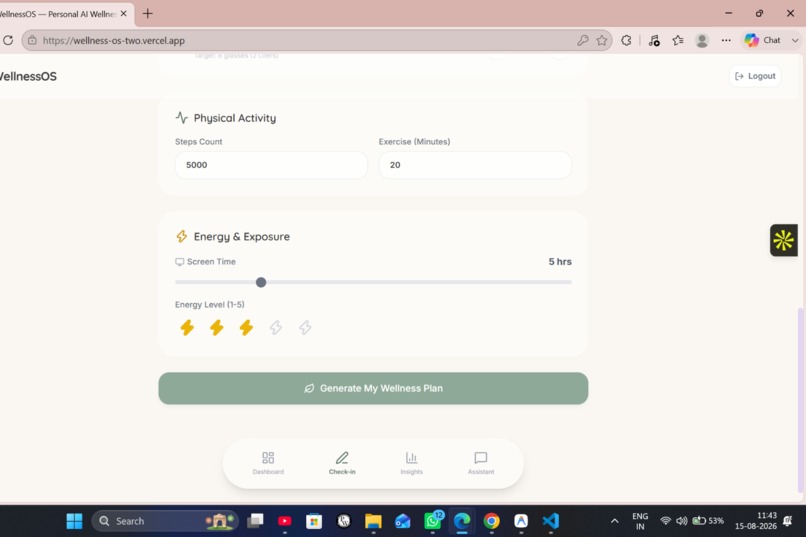
Planning
-
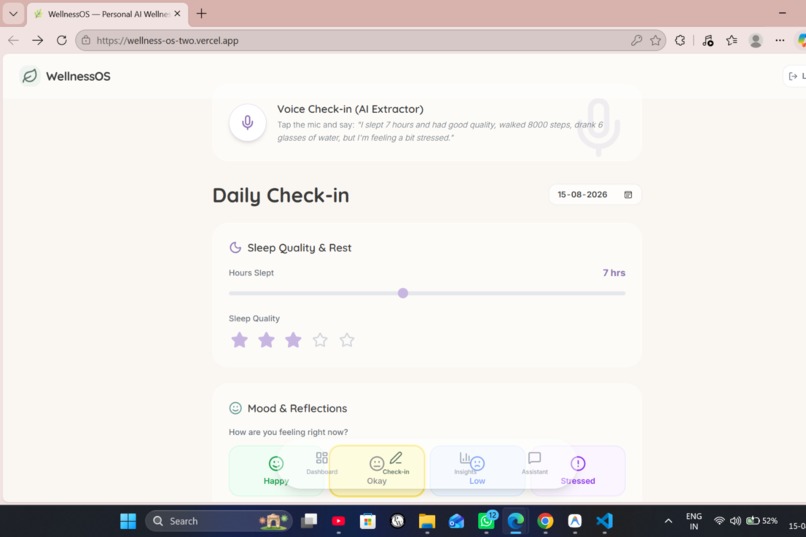
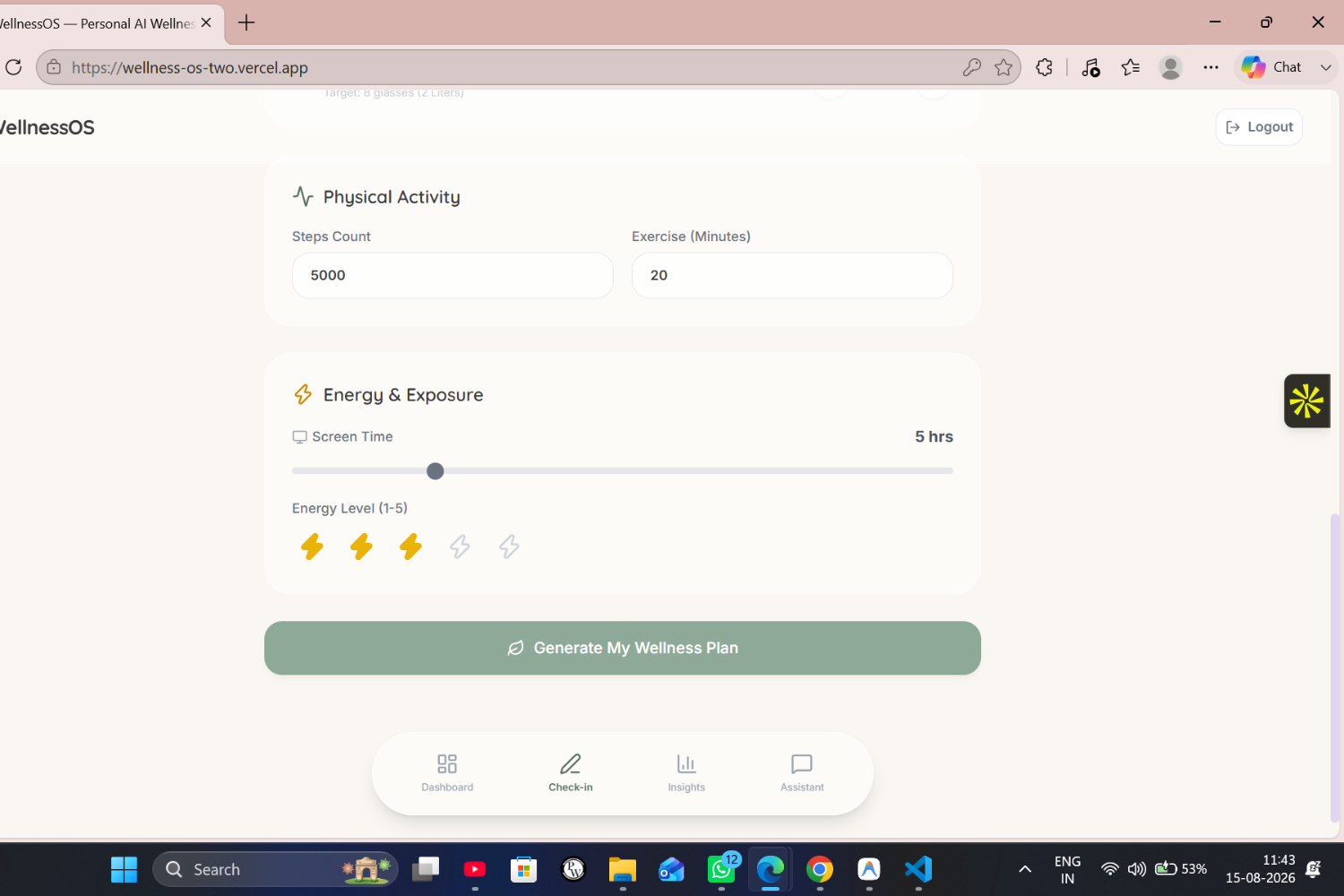
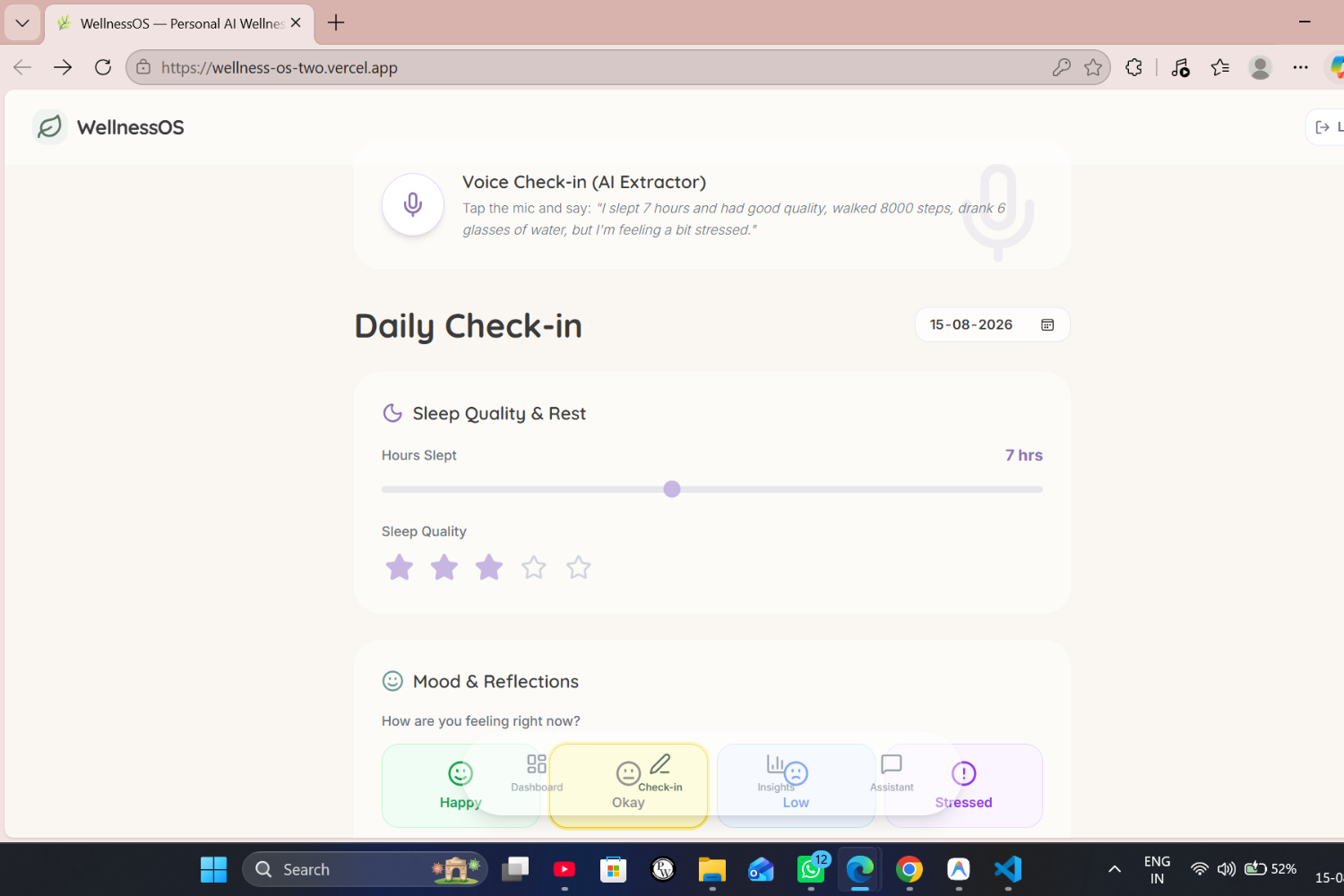
CheckInForm
-
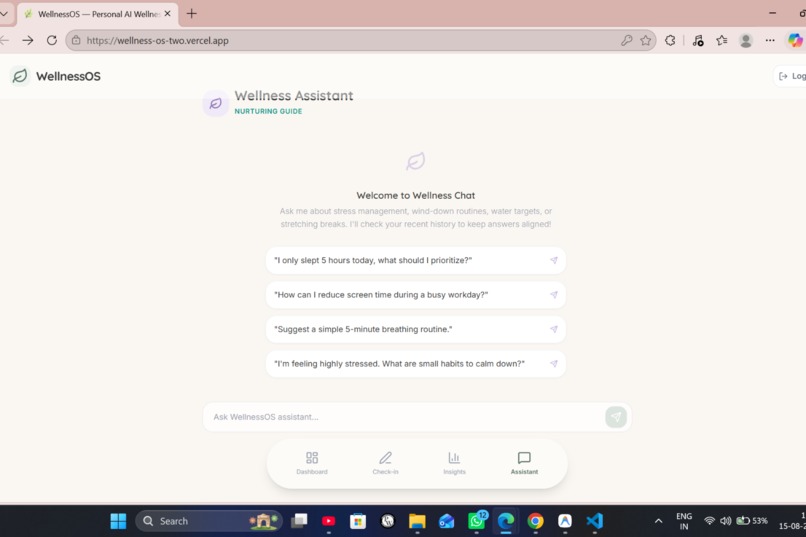
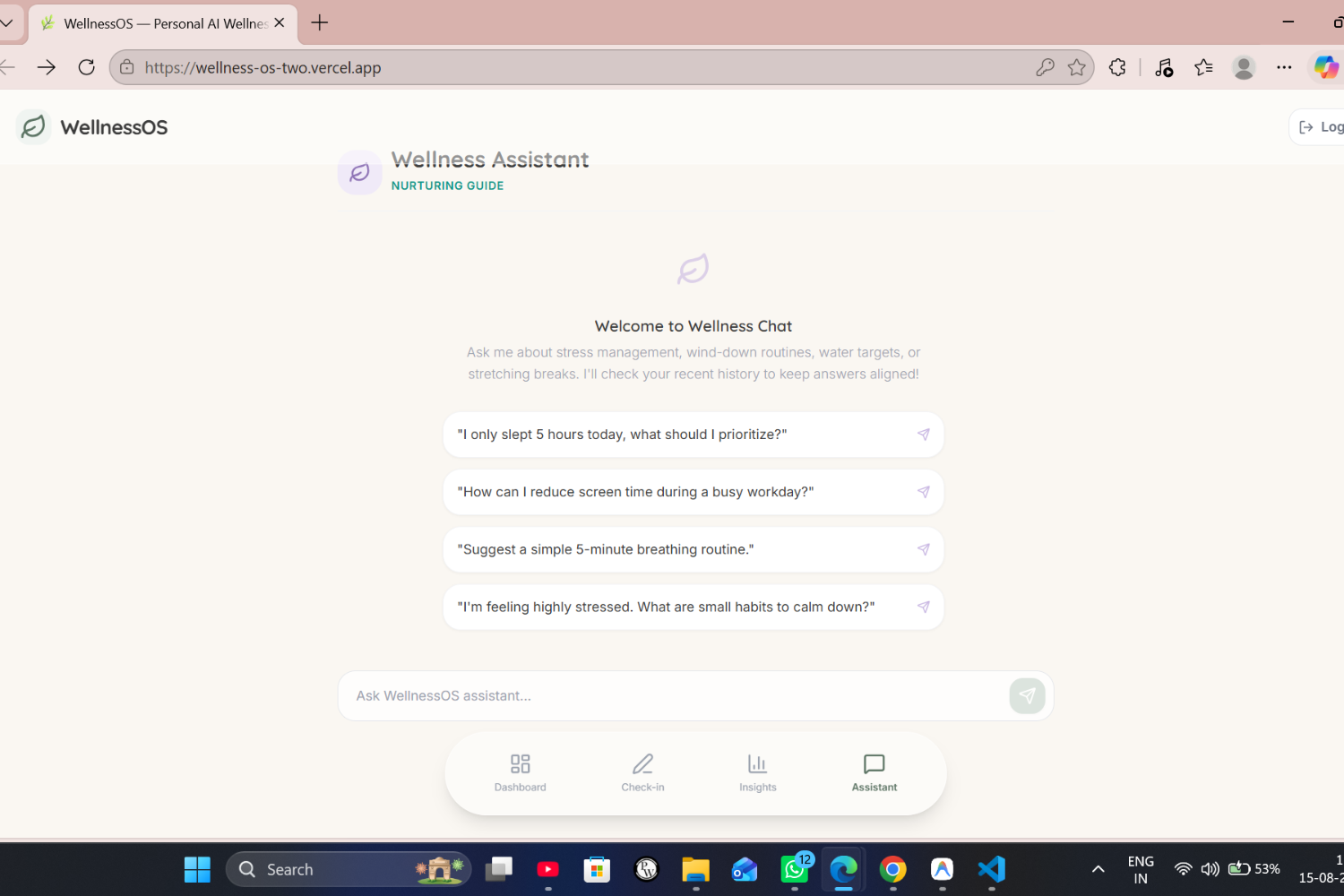
Assistant
-
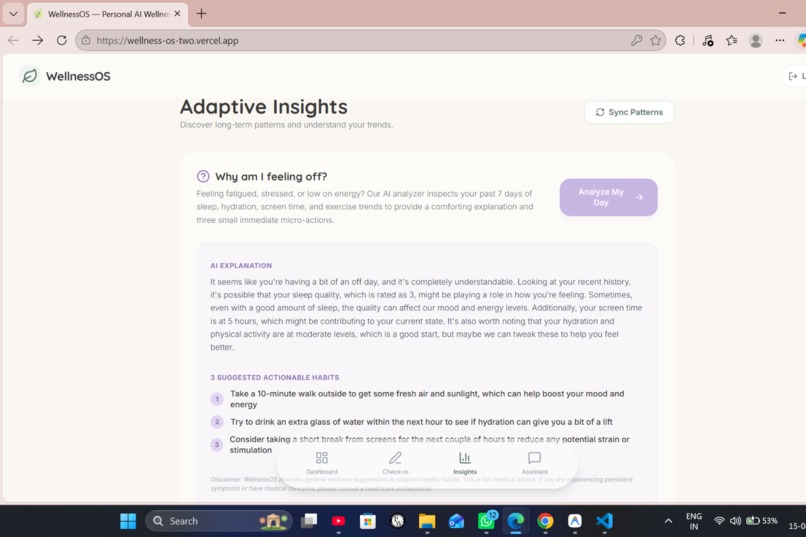
Insights
-
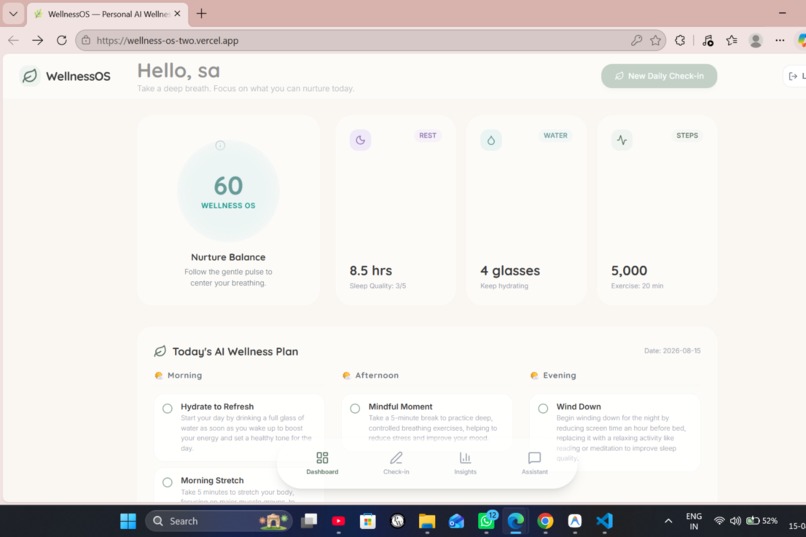
Dashboard
Inspiration
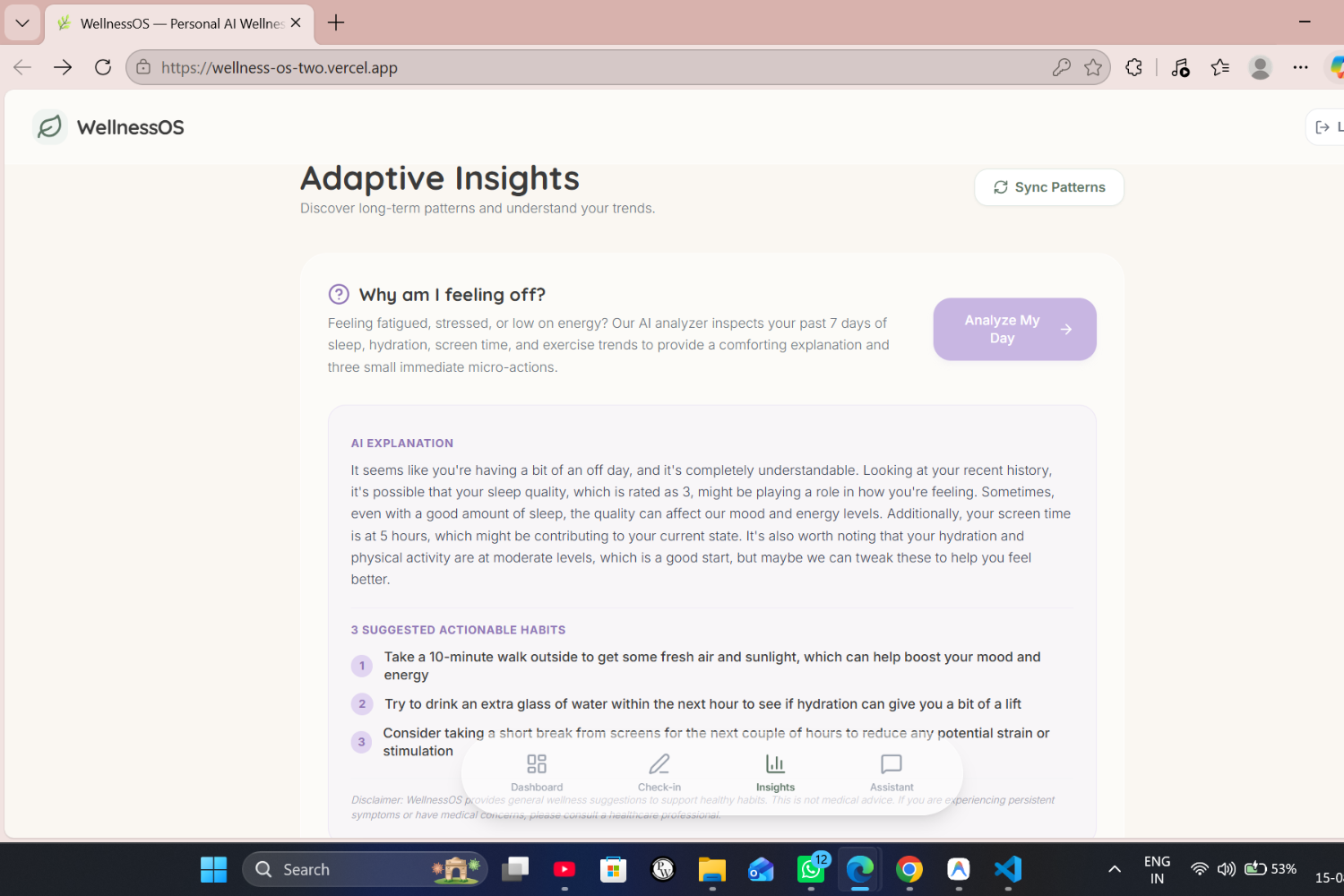
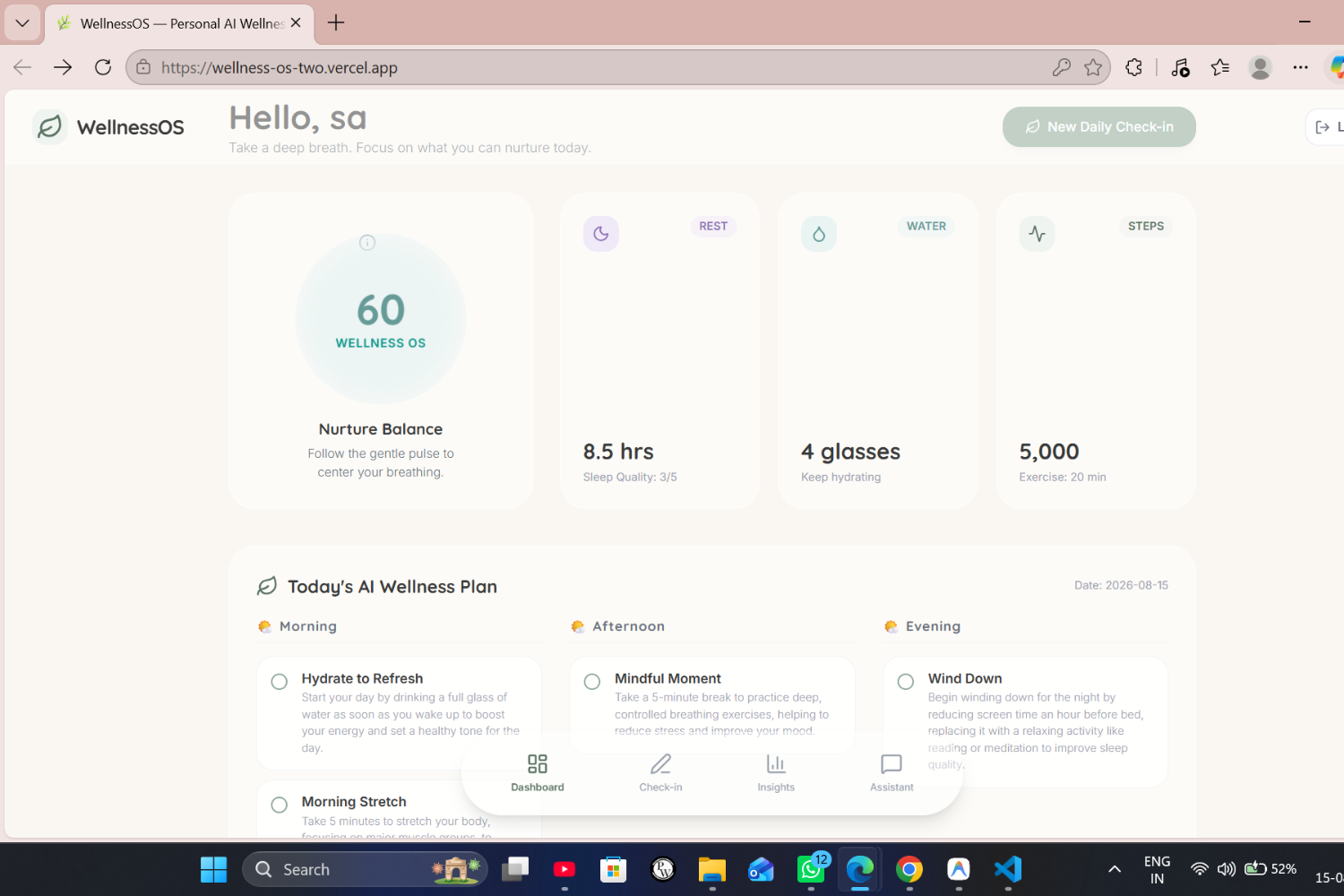
We got tired of fitness and health apps looking like stock market dashboards or hospital records. They are full of red warning bars, alerts, and graphs that end up making you anxious instead of relaxed. We wanted to build something different: a quiet, calm space that feels more like a personal journal or a breathing app.
What it does
WellnessOS helps you track your daily wellness. You can log your parameters manually (sleep, water, steps, energy, and mood) or just tap the mic and speak naturally (e.g. "I slept 7 hours and had good quality, but I'm feeling a bit stressed"). The app:
- Extracts your voice check-in metrics automatically.
- Generates a personalized daily checklist split into morning, afternoon, and evening blocks.
- Calculates a wellness score out of 100.
- Tracks your metrics over a 7-day period.
- Spots patterns and explains how your habits are affecting your mood or sleep.
## How we built it
We built the app using:
Frontend: React (Vite) and Tailwind CSS for the calm sage-green and cream aesthetic, with Recharts for the smooth weekly trend graphs.
Backend: FastAPI (Python) to manage routes and calculate scores.
Database & Auth: Supabase (Postgres) to store check-ins and handle email/password sign-ups securely.
AI Engine: Groq API (using the Llama 3.3 model) to parse voice logs, write daily routines, and explain correlation insights.
## Challenges we ran into
Windows & Python 3.14: We ran into compiler errors when setting up our Python environment. We fixed it by letting pip install newer, pre-compiled package versions.
Localhost Storage Clashing: Since we work on other projects on localhost, the browser kept loading database sessions from other apps. We resolved this by giving the app an isolated, custom local storage key.
Trailing Slash 404s: Adding a slash
/at the end of the API URL caused double-slashes (//checkins) which FastAPI rejected. We added a sanitization step in the frontend code to clean up trailing slashes automatically. Checklist Toggle Lag: Clicking a checkbox had a lag because it waited for the backend to reply. We added "optimistic updates" so the checkbox tics instantly, and the database syncs silently in the background. ## Accomplishments that we're proud of - We got the voice check-in working flawlessly—it feels much more natural to talk to the app than to click buttons.
- The UI feels extremely fluid, responsive, and calm, especially with the optimistic toggle updates. ## What we learned
- We learned how to prompt Groq to return strict JSON data so our database doesn't crash when reading suggestions.
- We learned how to load data silently in the background so the user isn't interrupted by loading spinners. ## What's next for WellnessOS Smartwatch Integration: Automatically sync sleep hours and steps from Apple Health or Google Fit. Offline Support: Allow users to log check-ins even when they don't have internet access. Mood-Based Audio: Generate relaxing ambient audio based on how the user feels.

Log in or sign up for Devpost to join the conversation.