

About Wellness Project
Inspiration
Health data has become incredibly rich, but incredibly fragmented. Your workouts live in one app, sleep in another, nutrition somewhere else, and years of health history are buried inside Apple Health, Health Connect, wearables, and lab results. Most apps show you another dashboard. Very few actually understand the whole picture.
We built Wellness Project around a simple idea: what if AI could actually know you?
Instead of starting every conversation from scratch, Wellness Project brings your health and fitness history together and gives AI enough context to understand what is normal for you, how you’re changing, and what might be worth paying attention to. The goal isn’t more data. It’s turning the data people already generate into something genuinely useful.
What it does
Wellness Project is an AI-powered health and fitness platform that connects data from your devices, apps, workouts, nutrition, sleep, body measurements, and health history into one continuously evolving profile.
You can ask questions naturally: Why has my running pace improved? Am I recovering well? Is my resting heart rate unusual for me? How has my training changed over the last six months?
The AI can investigate the underlying data rather than simply responding from a static summary.
Wellness Project also turns that information into proactive insights, personalized reports, goals, workout planning, nutrition and exercise logging, trend analysis, and long-term progress tracking.
One of our core concepts is the Normalized Strength Index (NSI), which turns strength performance across different exercises into a standardized measure. Instead of simply telling someone that their bench press increased, NSI helps put strength into context against population standards while tracking how the individual is progressing over time.
The broader idea is simple: connect once, then let Wellness Project help make sense of the thousands of health and fitness signals you generate afterward.
How we built it
Wellness Project is built around an AI agent rather than a traditional chatbot.
We created a tool-based architecture that lets the model securely investigate a user’s data when answering a question. Instead of stuffing an enormous health record into every prompt, the agent receives relevant personal context and can retrieve additional workout, sleep, recovery, nutrition, body composition, and other data when it needs it.
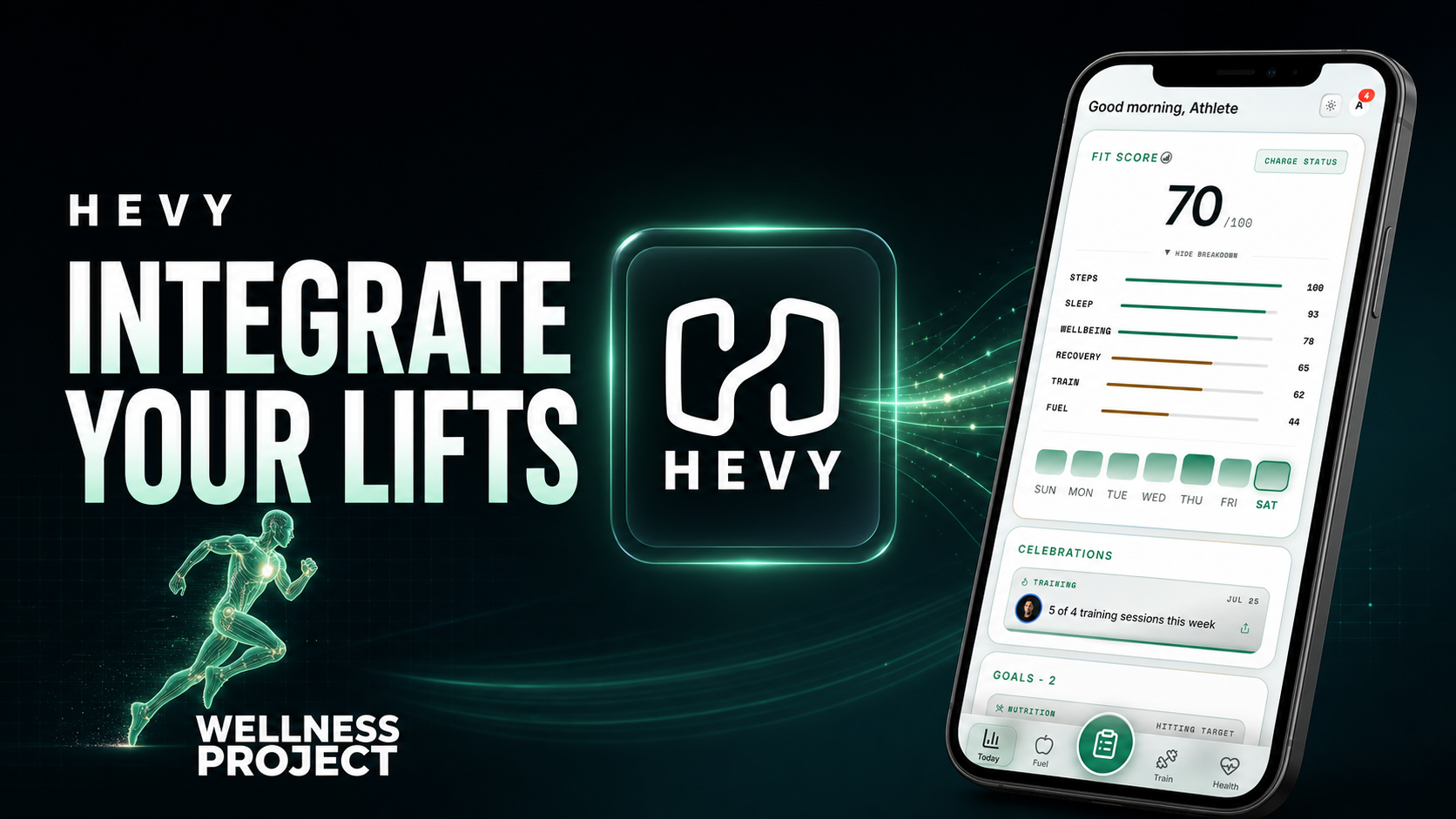
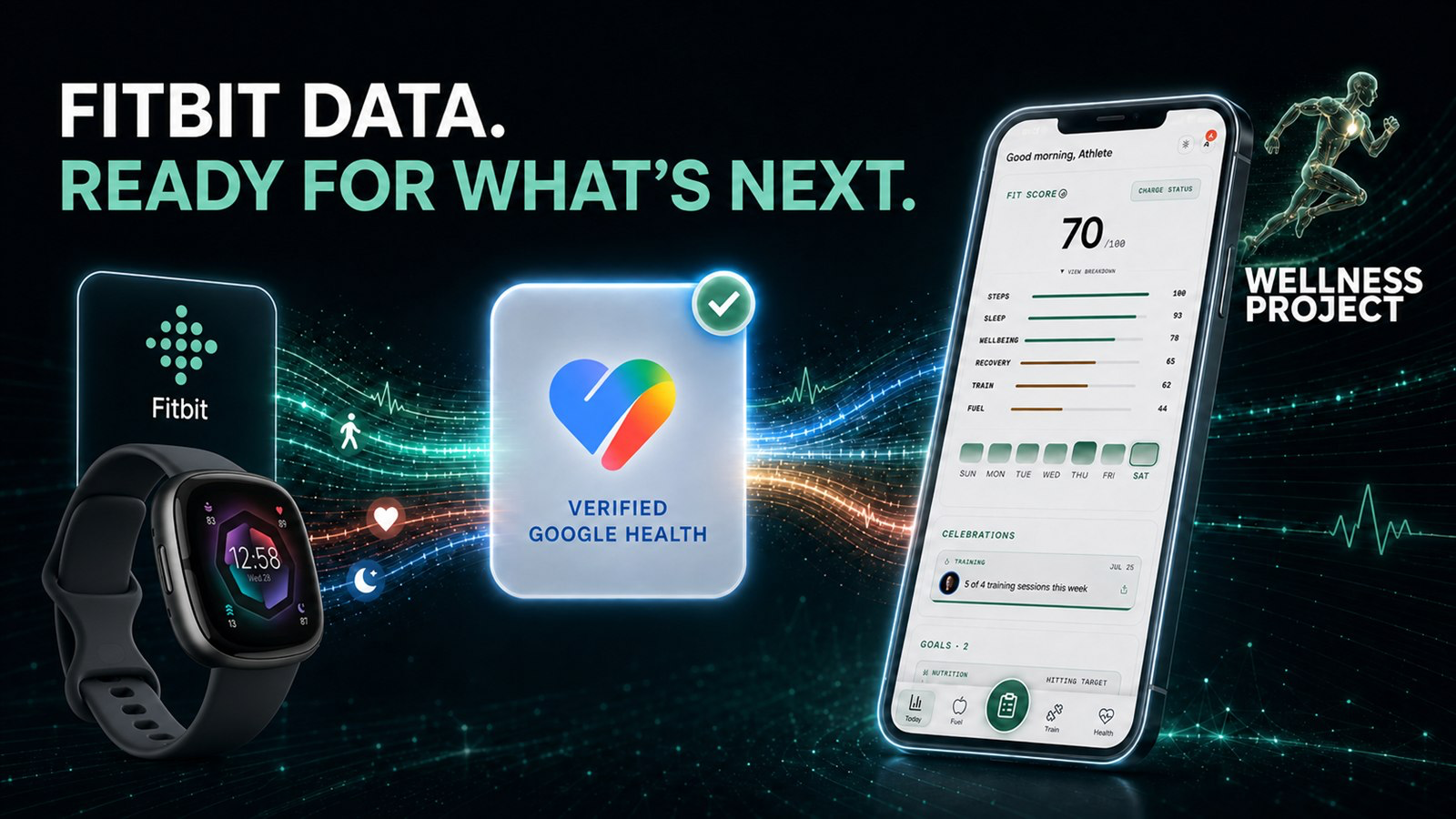
We built integrations with major health ecosystems and wearables, including Apple Health, Google Health Connect, Fitbit, Oura, Withings, and workout platforms such as Hevy, with additional integrations in development.
Behind the scenes, Supabase provides much of our data infrastructure, Vercel powers the web application and services, and Gemini models handle much of the AI reasoning. We also built our own normalization layers because every health platform represents exercises, metrics, timestamps, and units differently.
The product spans iOS, Android, and the web, with the same underlying health profile following the user across them.
Challenges we ran into
The hardest problem wasn’t getting an AI model to talk about health. It was giving it enough reliable context to say something meaningful.
Health data is messy. Two devices may measure the same metric differently. Workout apps use different names for the same exercise. Data can overlap, disappear, arrive late, or be duplicated. A user might have years of information across several platforms, while another might have only a few weeks.
We had to build systems for canonicalizing exercises, resolving overlapping data sources, handling units and time zones, detecting duplicates, prioritizing sources, and deciding which information actually matters for a particular question.
Context was another major challenge. Giving an AI everything we know about someone produces enormous prompts and can actually make reasoning worse. Giving it too little destroys the feeling that the system genuinely knows you. Finding that balance required building a combination of persistent personal context and tools that let the agent investigate deeper when necessary.
Health data also demands a high standard for privacy, security, permissions, and responsible AI behavior. Building those safeguards while keeping the product fast and useful has been a major part of the engineering work.
Accomplishments that we’re proud of
We’re most proud that Wellness Project has started to feel less like a collection of integrations and more like a system that actually understands the person using it.
The AI can connect information that would normally live in completely different places: a workout from one app, recovery data from a wearable, body-weight changes from a smart scale, and months of historical trends. Users can then ask a normal question and have the system investigate those sources together.
We’ve built a substantial health-data platform from scratch, shipped native and web experiences, integrated multiple major health ecosystems, created a large normalized exercise system, developed population-relative fitness metrics such as NSI, and built an agent capable of reasoning across a user’s longitudinal data.
We’re also proud that the system doesn’t require people to abandon the products they already like. You can keep your watch, workout app, smart scale, or ring. Wellness Project is designed to become the intelligence layer connecting them.
What we learned
The biggest lesson is that context matters more than almost anything else in consumer AI.
The difference between a generic AI health answer and an extraordinary one often isn’t a smarter model. It’s whether the model understands the person asking the question.
We also learned that health data becomes much more valuable when different categories are connected. Sleep is more interesting when you can see training. Training is more meaningful alongside recovery and nutrition. Weight changes make more sense alongside activity and body composition. Individually, these are metrics. Together, they become a story.
We’ve also learned that users don’t necessarily want another score to check every morning. They want answers. The best interface for a huge personal dataset may ultimately be the ability to simply ask it a question.
What’s next for Wellness Project
We’re working toward making Wellness Project a genuinely comprehensive intelligence layer for personal health and fitness.
That means adding more wearable, workout, nutrition, and health integrations; improving our understanding of long-term trends; expanding personalized reports and proactive insights; and making the agent increasingly capable of investigating complex questions across years of data.
We’re also exploring deeper personalization, including customizable dashboards, more advanced AI models, specialized AI advisors, and eventually collaboration between AI and human coaches.
The long-term vision is bigger than another fitness tracker.
We want Wellness Project to become a living model of your health and fitness history: one that continuously learns from the data you choose to connect, remembers what matters, understands where you’ve been, and helps you make better decisions about where you’re going.

Log in or sign up for Devpost to join the conversation.