-
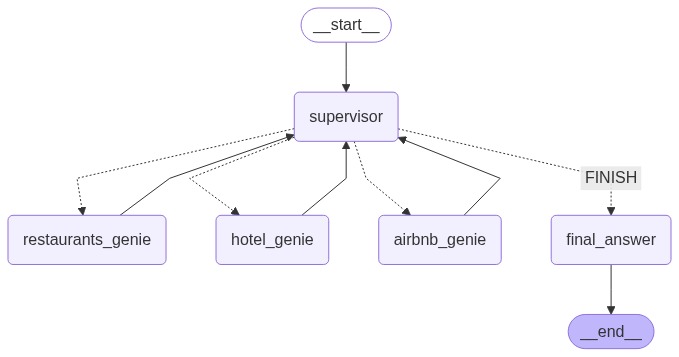
Agent architecture
Inspiration
The inspiration behind Wellness Pathway stems from the everyday challenges faced by individuals with accessibility needs when trying to find suitable accommodations, restaurants, and services. Despite the abundance of travel and location-based platforms, accessibility information is often fragmented, inconsistent, or missing altogether. We wanted to create a tool that bridges this gap—one that intelligently aggregates and interprets data from diverse sources like Google Maps, Airbnb, and local directories to help users make informed, accessibility-conscious decisions with ease and confidence.
What it does
Wellness Pathway leverages a large language model (LLM) and a multi-agent system to intelligently query and synthesize information from heterogeneous data sources. It integrates datasets from platforms like Bright Initiative and Nimble, with real data from services such as Google Maps, Airbnb, and restaurant directories. The system is designed to support accessibility-focused users by identifying wellness-friendly locations, accommodations, and services that meet specific accessibility needs. By orchestrating multiple intelligent agents, the platform can interpret user intent, retrieve relevant data across domains, and present personalized, actionable wellness pathways tailored to each individual's context and preferences.
How we built it
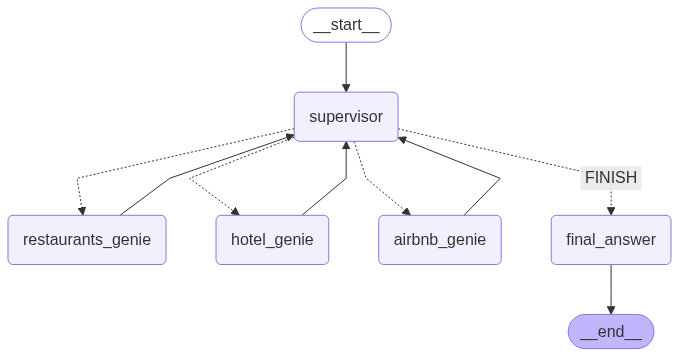
Databricks Genie Agents Supervisor Agent: Interprets user intent and routes tasks and collects final answers Restaurant Agent: Queries the restaurant data and return results based on user intent. Ex. wheelchair accessibility, or vegan options Hotel Agent: Queries the hotel data and returns results based on user intent. Airbnb Agent: Queries the airbnb data and returns results based on user intent. All these agents are powered by Llama for natural language understanding and generation, also handles multi-turn conversations and follow-up questions
Challenges we ran into
One of the biggest challenges was deploying the model.
Accomplishments that we're proud of
Being able to build a working model within a couple of hours.
What we learned
We learned how to effectively combine LLM capabilities with structured data querying and multi-agent coordination. We gained insights into the complexities of accessibility data—how it's stored, labeled, and often overlooked—and how to design systems that can bridge those gaps. We also deepened our understanding of ethical AI design, especially in the context of serving underrepresented communities.
What's next for Wellness pathway
Currently the demo is based out of Databricks Notebook, we need to continue building UI/UX, infrastructure.
Built With
- databricks

Log in or sign up for Devpost to join the conversation.