-
-
About
-
Emotions
-
Home
-
How It Works
Inspiration
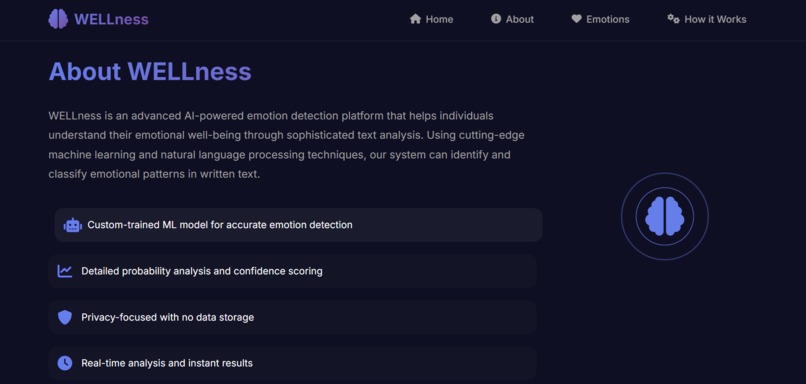
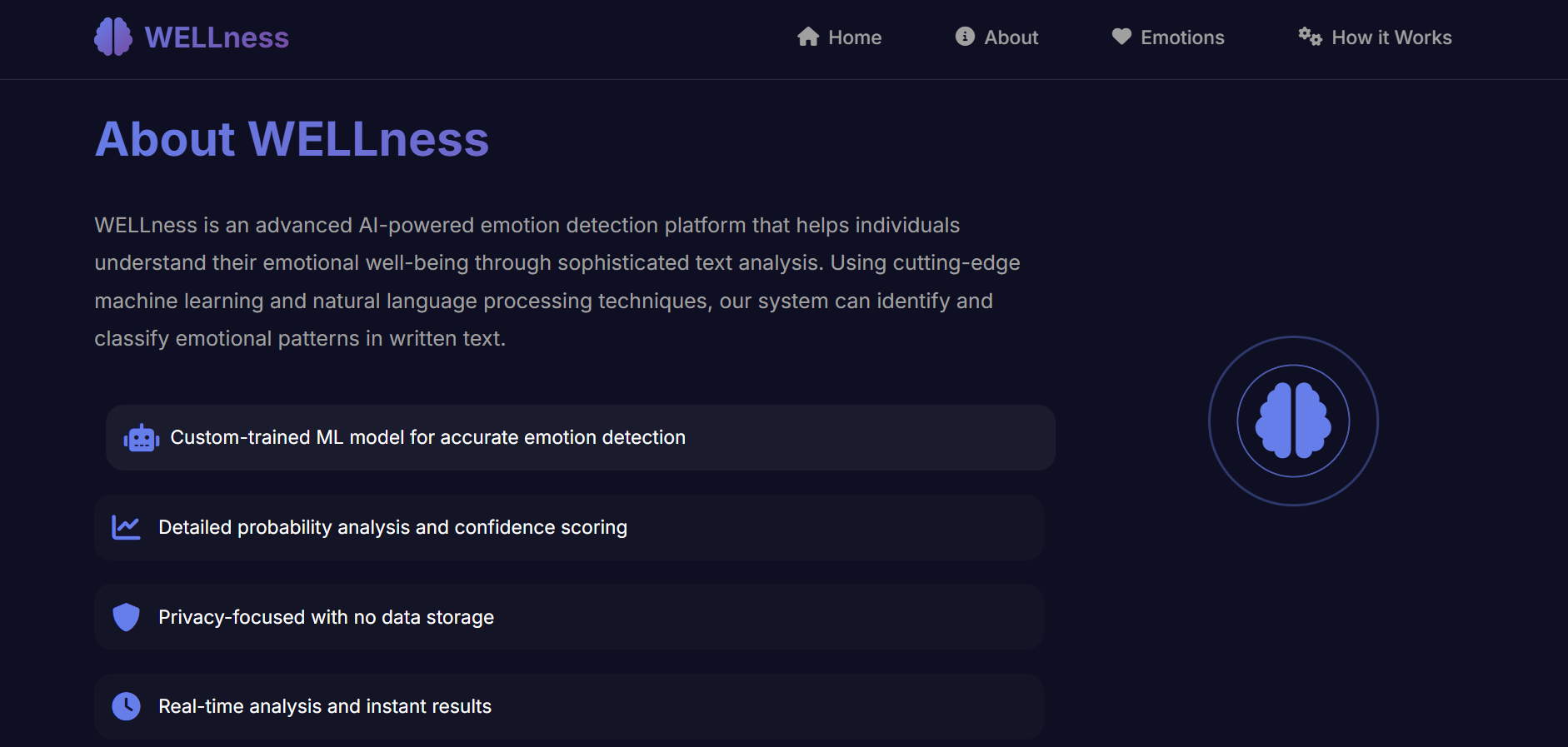
The rising mental health crisis around the world, especially among youth, inspired us to build something meaningful yet lightweight — a wellness checker that respects privacy and runs real ML, built from scratch, with no LLMs or APIs.
We also took this hackathon’s theme seriously — "Build real ML web apps with no wrappers" — and wanted to prove that small yet impactful ML apps can be built and deployed using your own trained models.
What it does
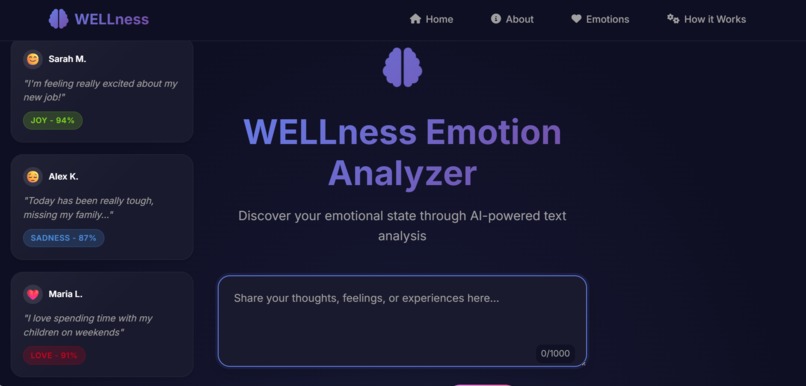
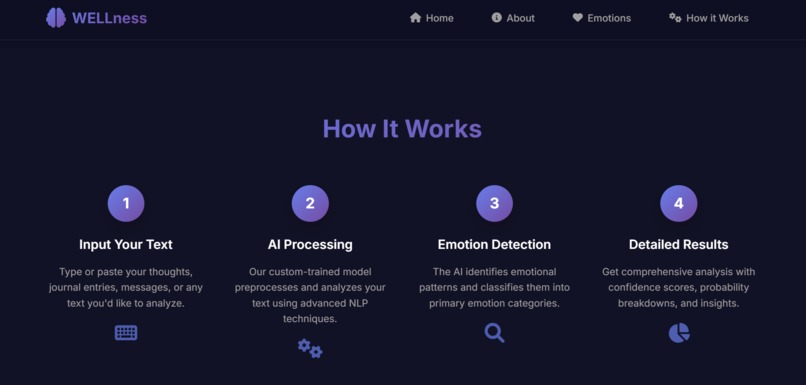
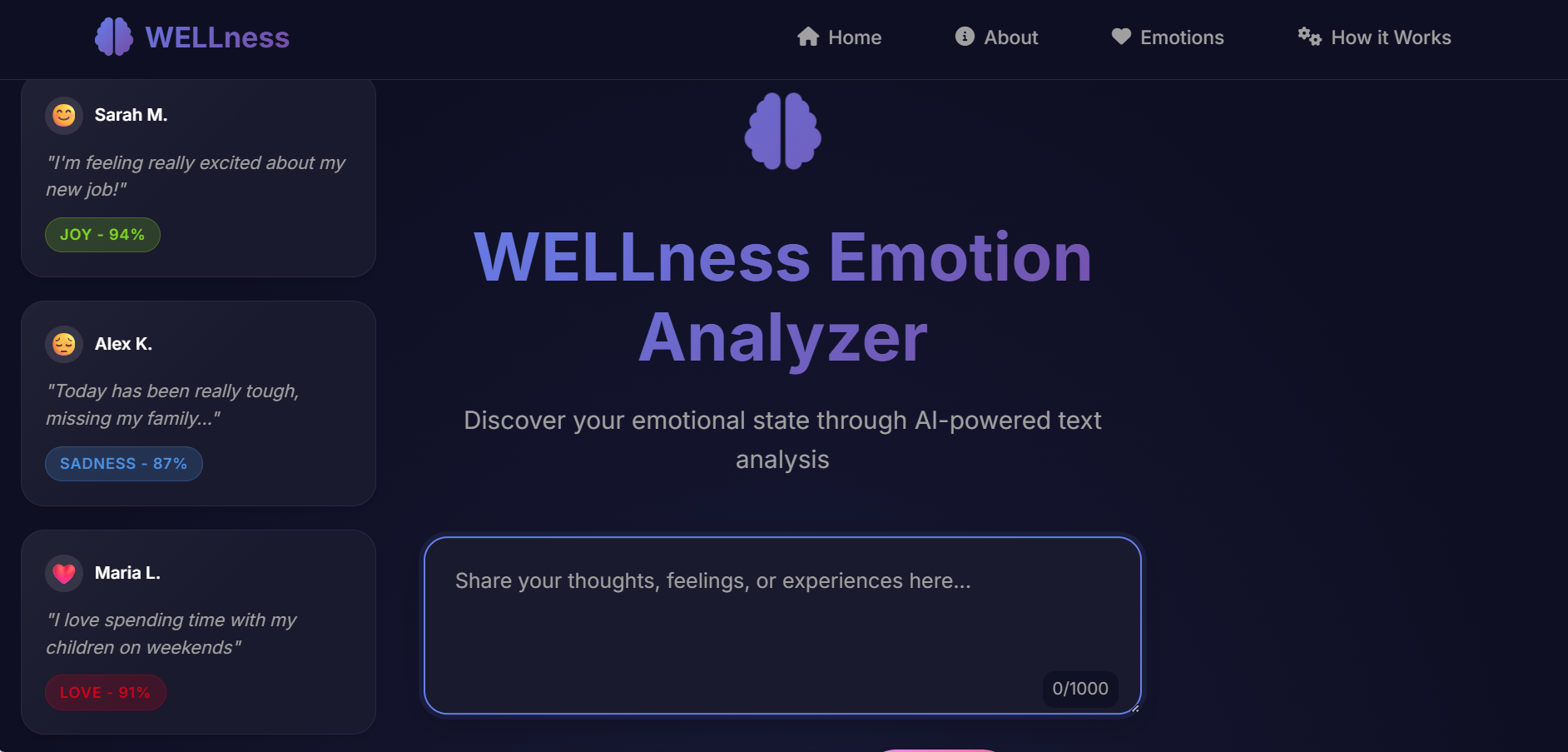
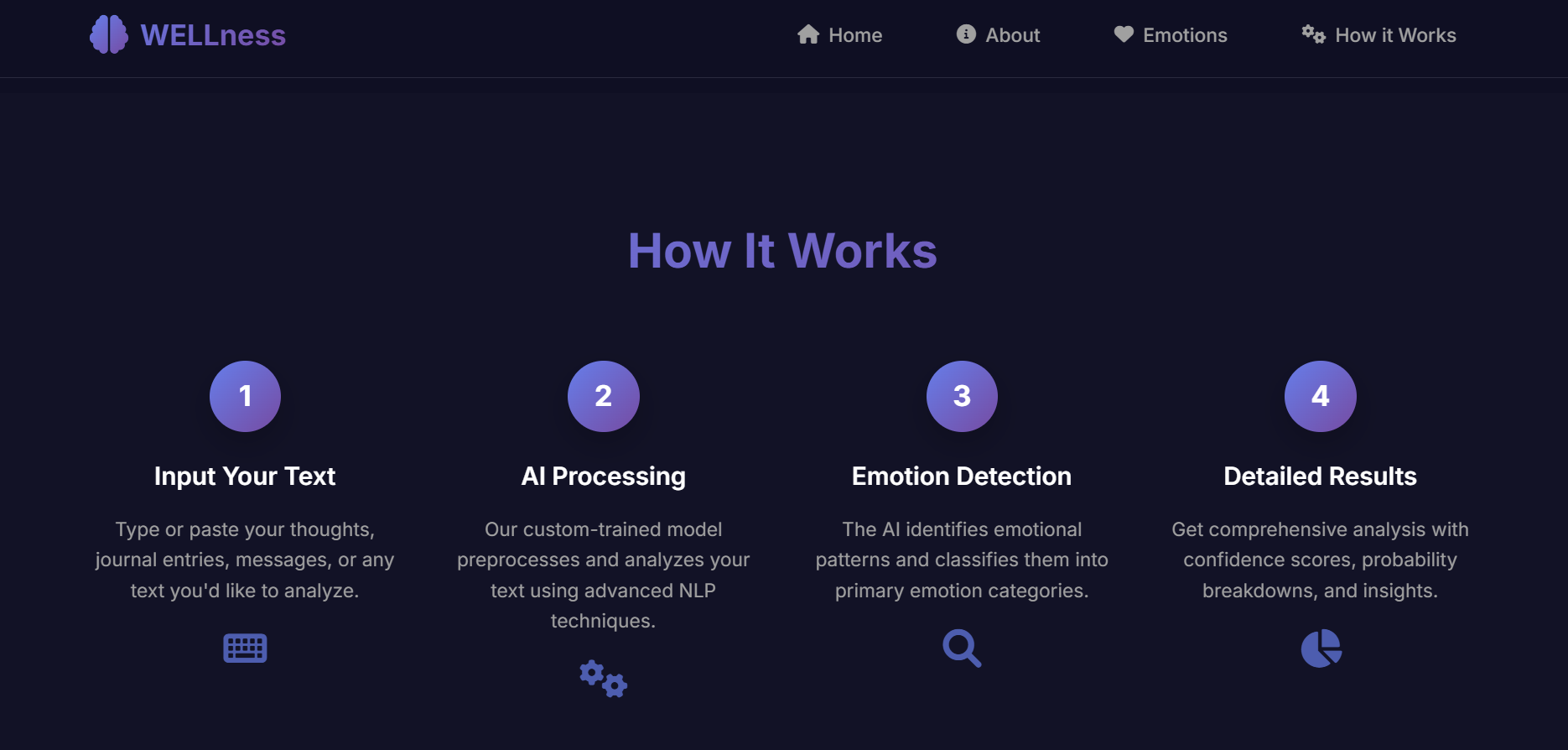
- Takes user input related to their thoughts or feelings
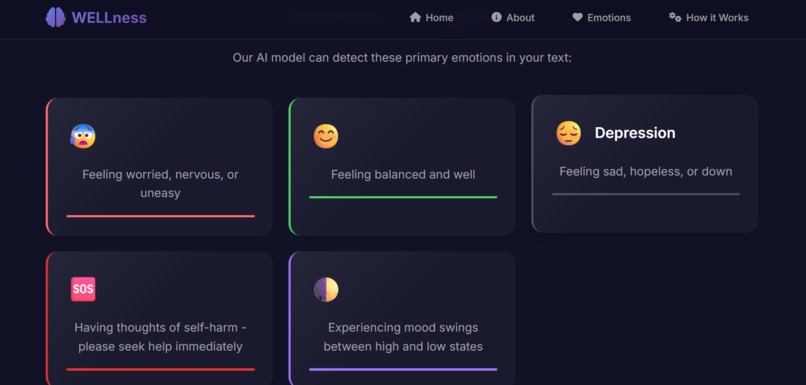
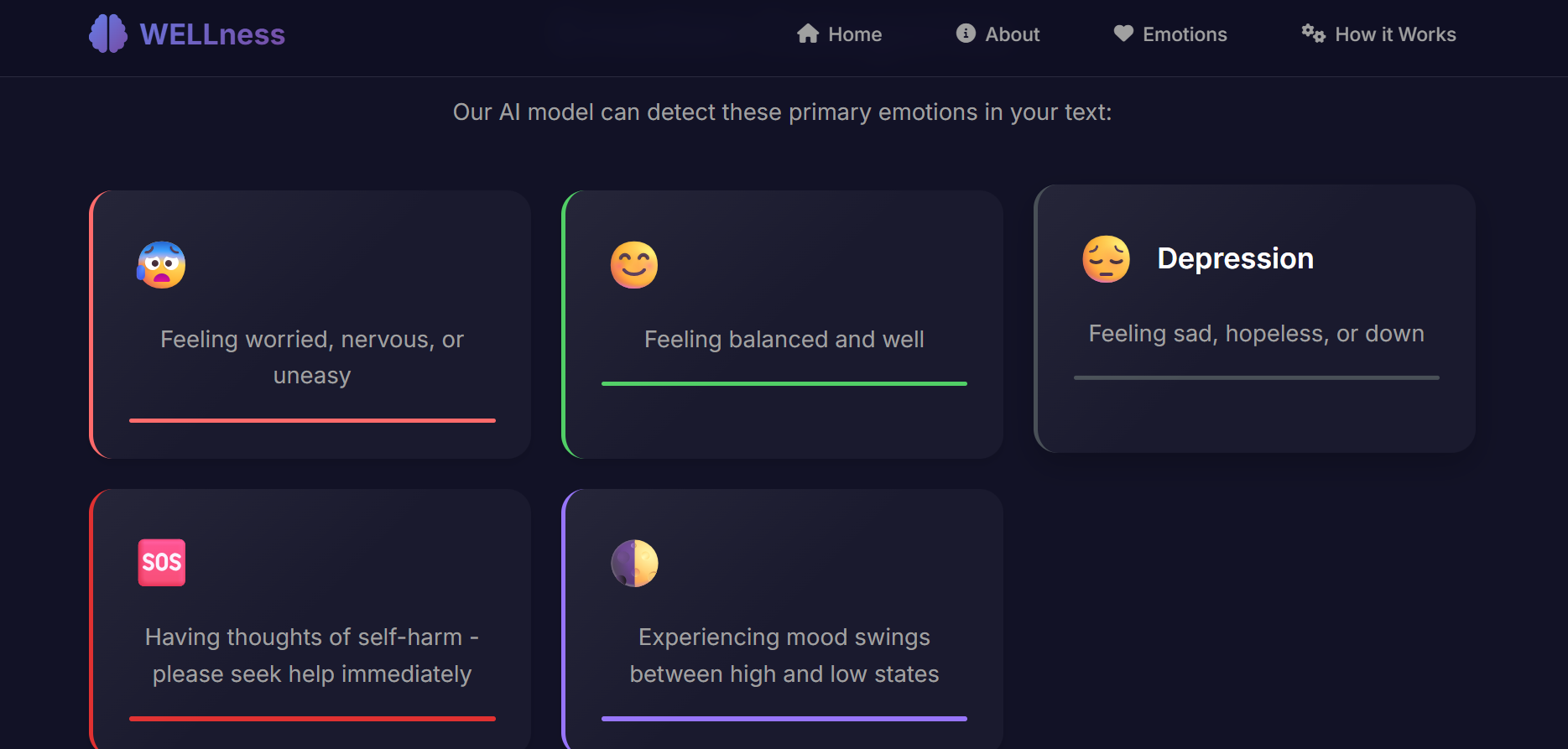
- Classifies sentiment (Positive, Neutral, Negative) using a trained ML model
- Displays emoji-based feedback and results in real-time
- All processing is done locally using a custom-trained model — no external APIs involved
How we built it
- Built a Logistic Regression model using Scikit-learn on a curated dataset of text sentiments
- Converted the model to a .pkl file and integrated it with Flask for backend inference
- Developed a single-page responsive HTML/CSS/JS frontend
- Sent data via AJAX to predict user sentiment and return a response
- Ensured minimal dependencies and total local model logic, with zero wrappers or cloud-based ML tools
Dataset Used : https://www.kaggle.com/datasets/suchintikasarkar/sentiment-analysis-for-mental-health
Google Colab Notebook : https://colab.research.google.com/drive/11j8Obtap3SAMtm8K896imJbn_WJ_YjDo?usp=sharing
Challenges we ran into
- Tuning model accuracy with limited data
- Seamlessly integrating the frontend with Flask using vanilla JS (no React or complex frameworks)
- Keeping the app lightweight, responsive, and fast without using any hosted model APIs
- Designing a clean UI that feels modern and accessible despite time limits ## Accomplishments that we're proud of
- Built an end-to-end ML web app from scratch, no wrappers
- Achieved over 85% model accuracy
- Made mental health checking accessible and private
- Delivered a polished, one-page experience that works across devices
What we learned
- How to train and save models efficiently for real-time inference
- Flask + JS integration tricks for smoother UX
- Importance of keeping UX minimal for wellness/mental health tools
- How powerful even small models can be when paired with thoughtful design ## What's next for WELLness - Mind ML
- Add mood tracking over time with graphs and history
- Build a mobile-first PWA version
- Partner with counselors/NGOs to offer anonymous feedback
- Train model on more nuanced emotion classes like anxiety, stress, joy, confidence
Built With
- css
- google-colab
- html
- javascript
- joblib
- pickle
- python
- scikit-learn

Log in or sign up for Devpost to join the conversation.