🧘 Inspiration
In today’s fast-paced digital world, stress, anxiety, and burnout have become silent epidemics. We noticed how many people, even tech professionals, struggle to find time for self-care. Wellness AI was born out of the idea that technology should not just automate tasks — it should heal, guide, and empower. We wanted to create a digital companion that listens, understands, and helps you take actionable steps toward better mental and emotional well-being.
💡 What It Does
Wellness AI is an intelligent mental-wellness assistant that:
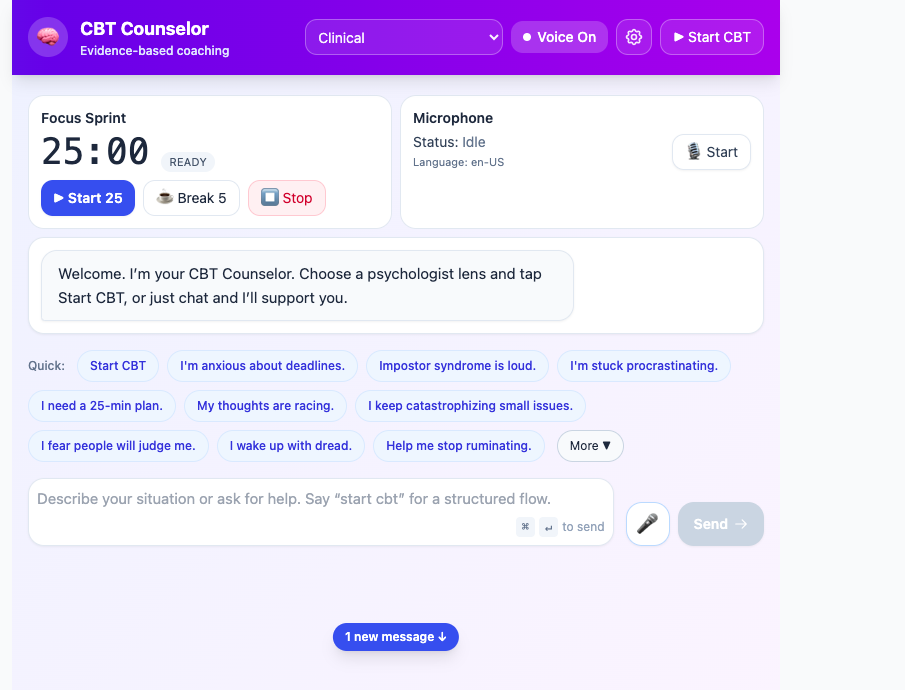
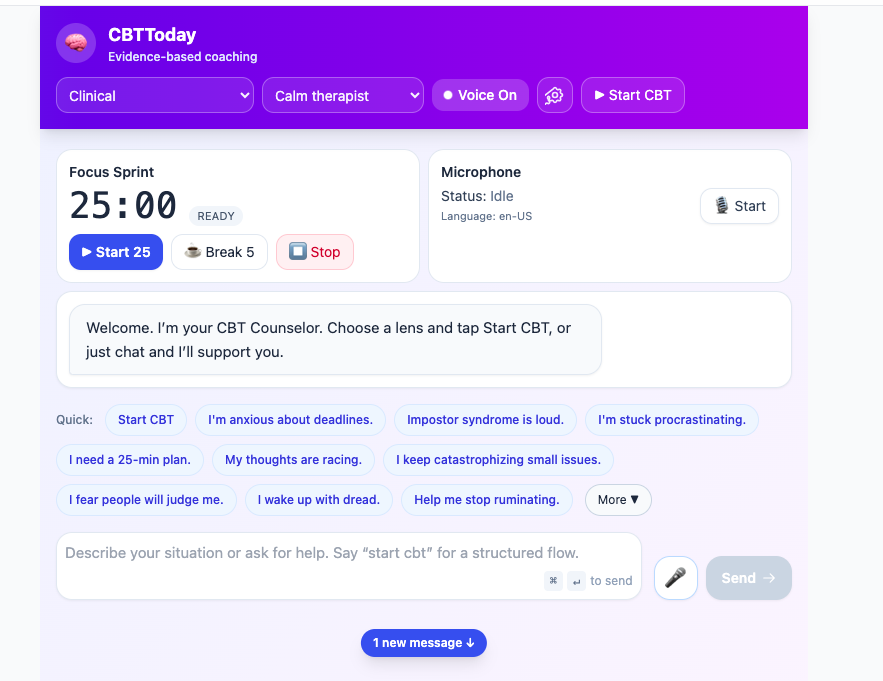
- 🗣️ Uses natural-language understanding to have empathetic conversations about stress, motivation, or mood.
- 🧭 Suggests personalized mindfulness activities, breathing exercises, and journaling prompts.
- 💬 Tracks your mood trends over time and offers positive reinforcement.
- 🎧 Integrates optional voice input/output for hands-free interaction.
- 📊 (Optional) Provides analytics dashboards showing wellness progress, emotional tone, and daily reflections.
Essentially, it’s like having a mindful friend in your pocket — one who genuinely understands your emotions and responds with compassion, not judgment.
🛠️ How We Built It
We built Wellness AI using a powerful full-stack architecture:
- Frontend: React + TypeScript with Tailwind CSS for a clean, mobile-first UI.
- Backend: Node.js / Express + Supabase for authentication and storage.
- AI Layer: OpenAI GPT / Anthropic Claude / LangChain for context-aware emotional conversation.
- Data Visualization: Chart.js and React hooks to display user mood analytics.
- Hosting: Deployed on Vercel for frontend and Supabase for backend APIs.
Our AI prompt structure was designed carefully to balance empathy, psychology principles, and concise coaching — ensuring every response feels human and helpful.
🚧 Challenges We Ran Into
- Emotion Detection: Tuning prompt parameters to capture empathy without sounding repetitive.
- Balancing Privacy & Insights: Ensuring user data remained fully secure while generating wellness insights.
- Voice Features: Synchronizing TTS and speech-to-text responses in real time with minimal lag.
- Context Memory: Maintaining meaningful multi-turn conversations without overwhelming the API context window.
🏆 Accomplishments That We’re Proud Of
- Built a cross-platform, accessible wellness assistant that promotes mindful living.
- Created a sentiment-aware conversational model that adapts to user tone.
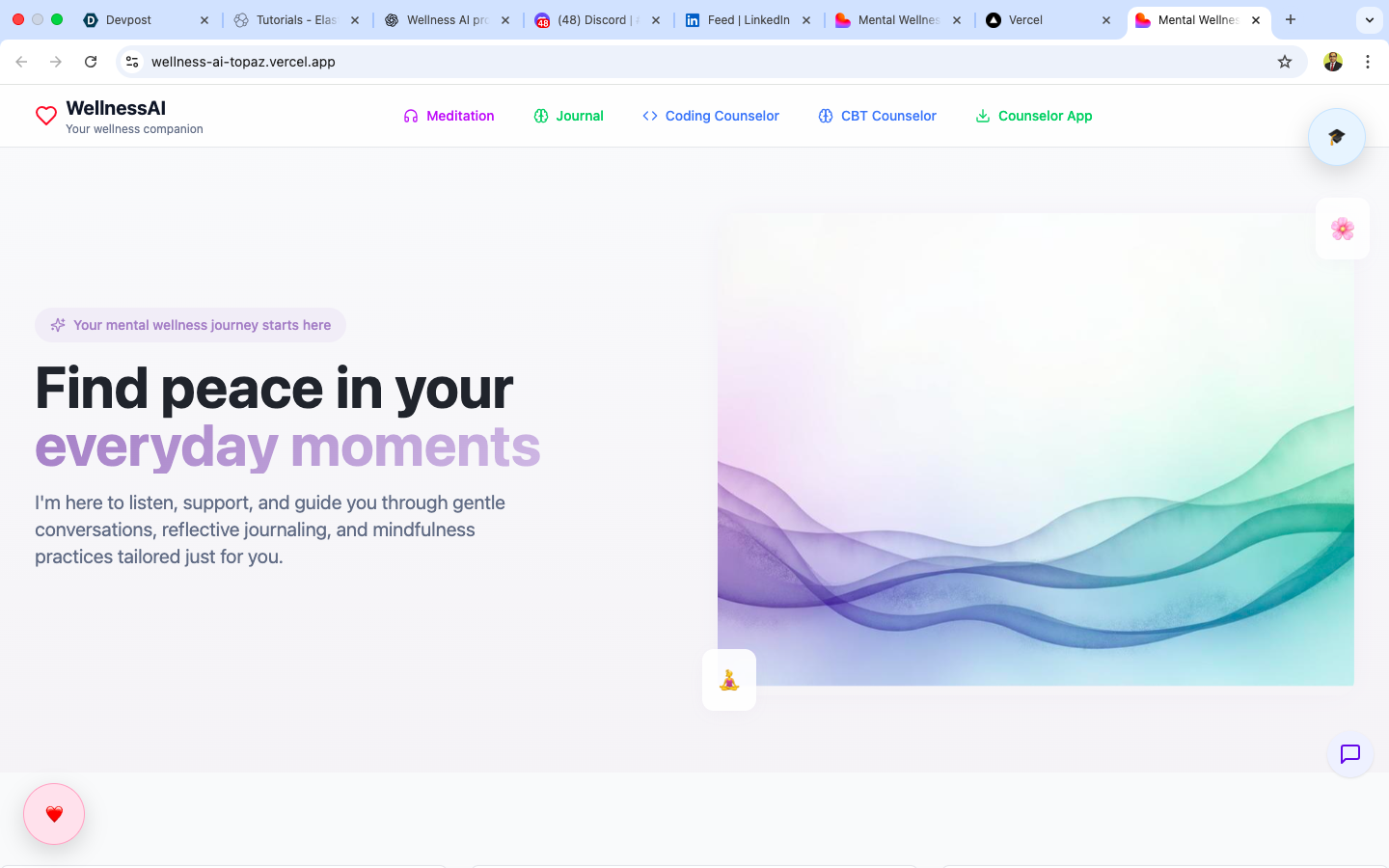
- Designed a beautiful and calming UI that encourages regular self-check-ins.
- Received positive user feedback during testing — many said “it felt like talking to a real therapist.”
📚 What We Learned
- The importance of human-centric AI design — emotion and empathy matter more than perfection.
- How to fine-tune prompts for better contextual flow in long AI chats.
- That even small visual cues (like color gradients or animations) can influence how relaxed users feel.
- Collaboration and clear code documentation save enormous time in multi-disciplinary projects.
🚀 What’s Next for Wellness AI
- Adding multilingual support to reach users worldwide.
- Integrating wearable or sensor data (heart rate, sleep cycles) for deeper insights.
- Building a community wellness mode — group check-ins and mood sharing among trusted peers.
- Deploying a voice-video therapy mode with caption overlays for immersive self-reflection.
Built With
- ai-sdk
- express.js
- gemini
- node.js
- react
- tailwind
- typescript


Log in or sign up for Devpost to join the conversation.