-
-
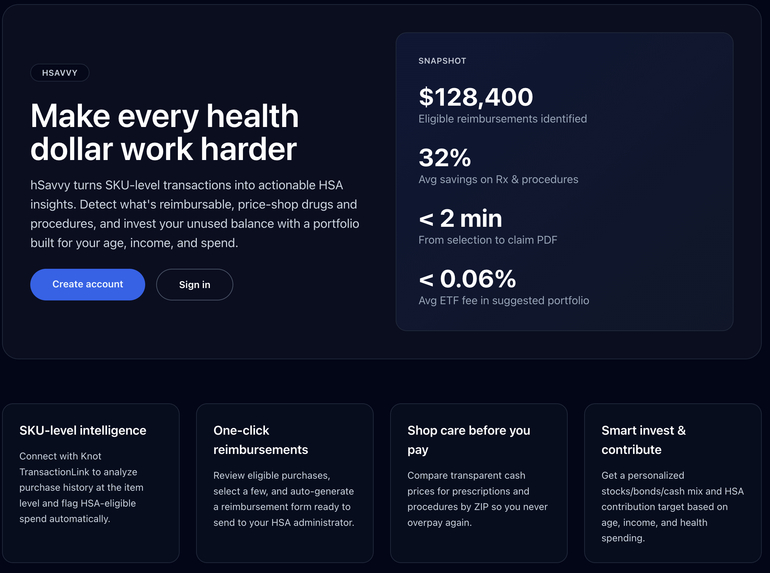
Main Page
-
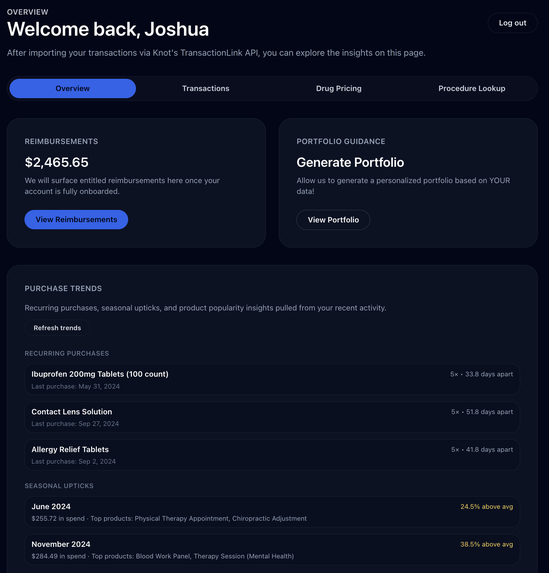
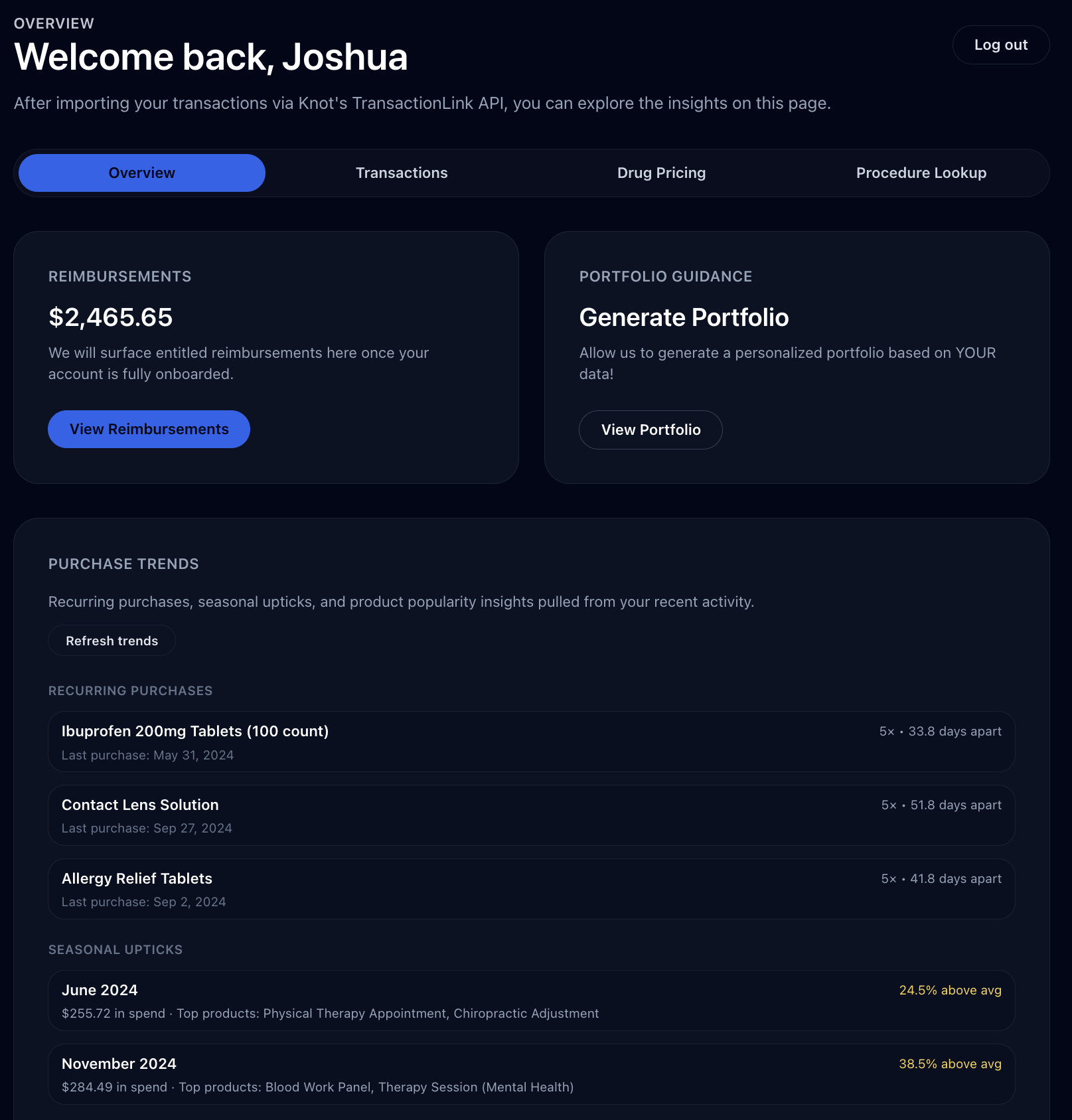
Dashboard 1 (Purchase Trends, Reimbursement Amount)
-
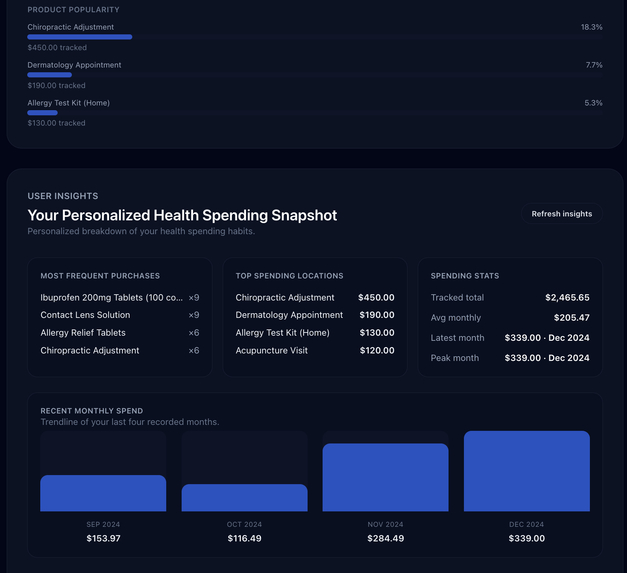
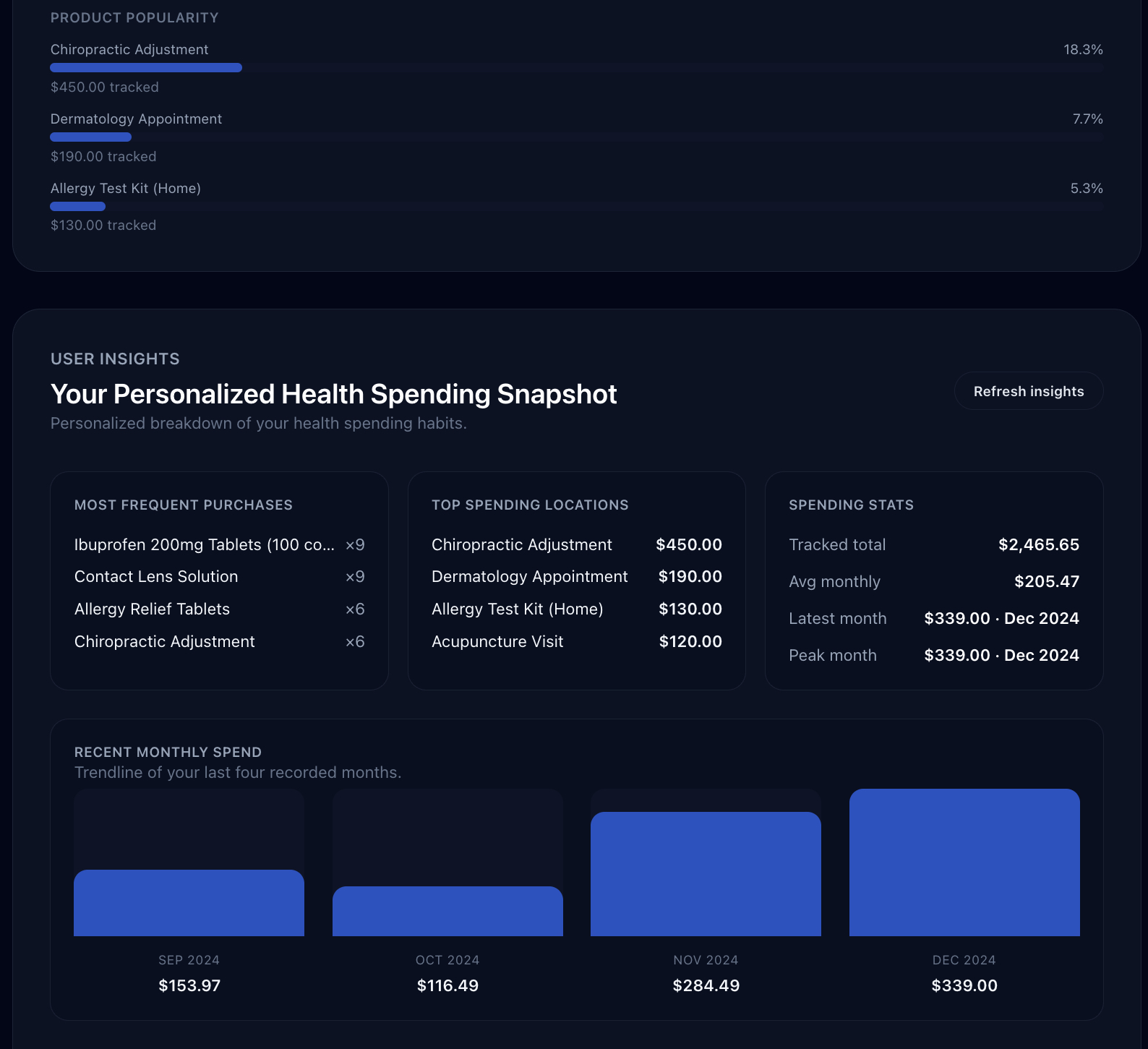
Dashboard 2 (User Insights)
-
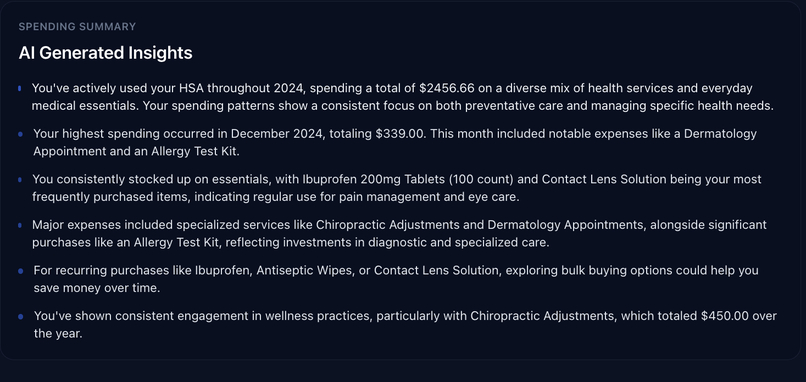
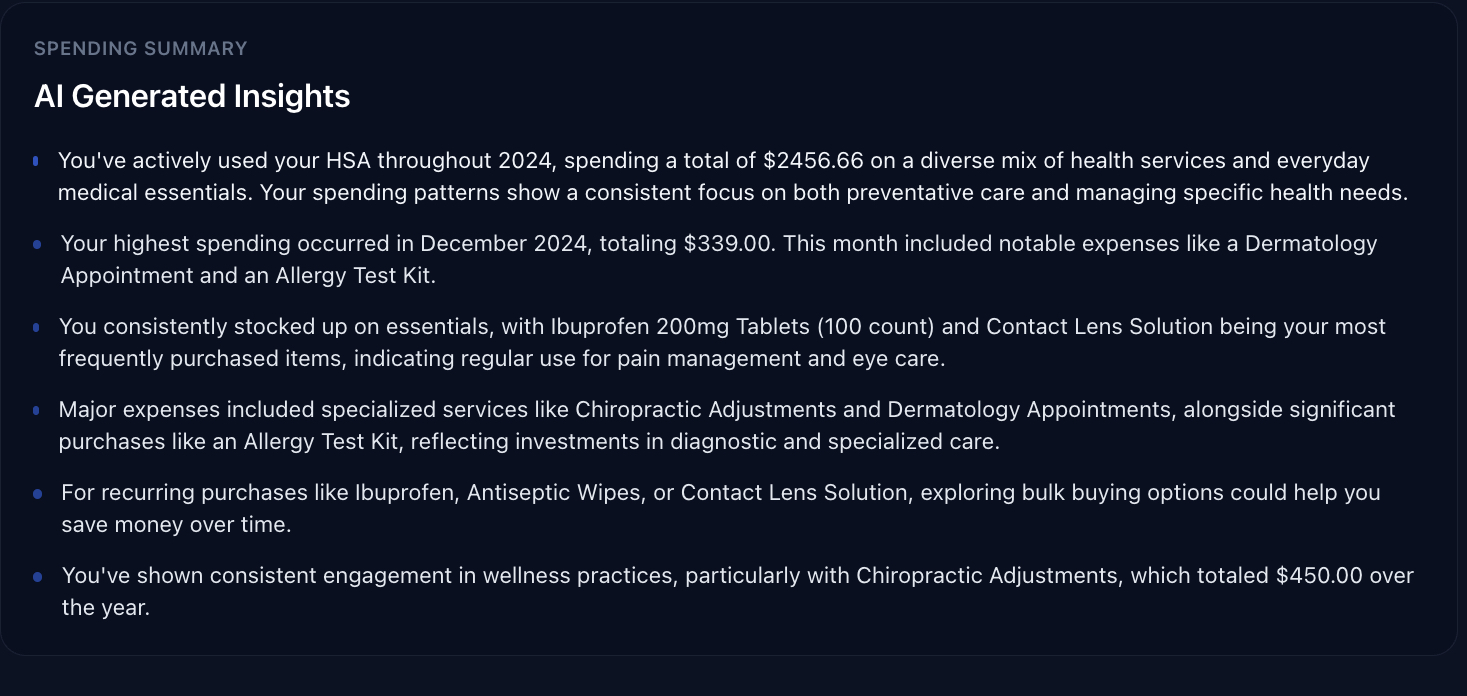
Dashboard 3 (AI Generated Insights)
-
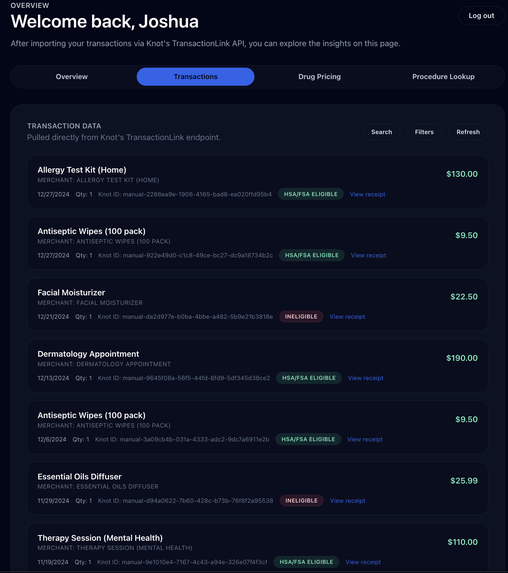
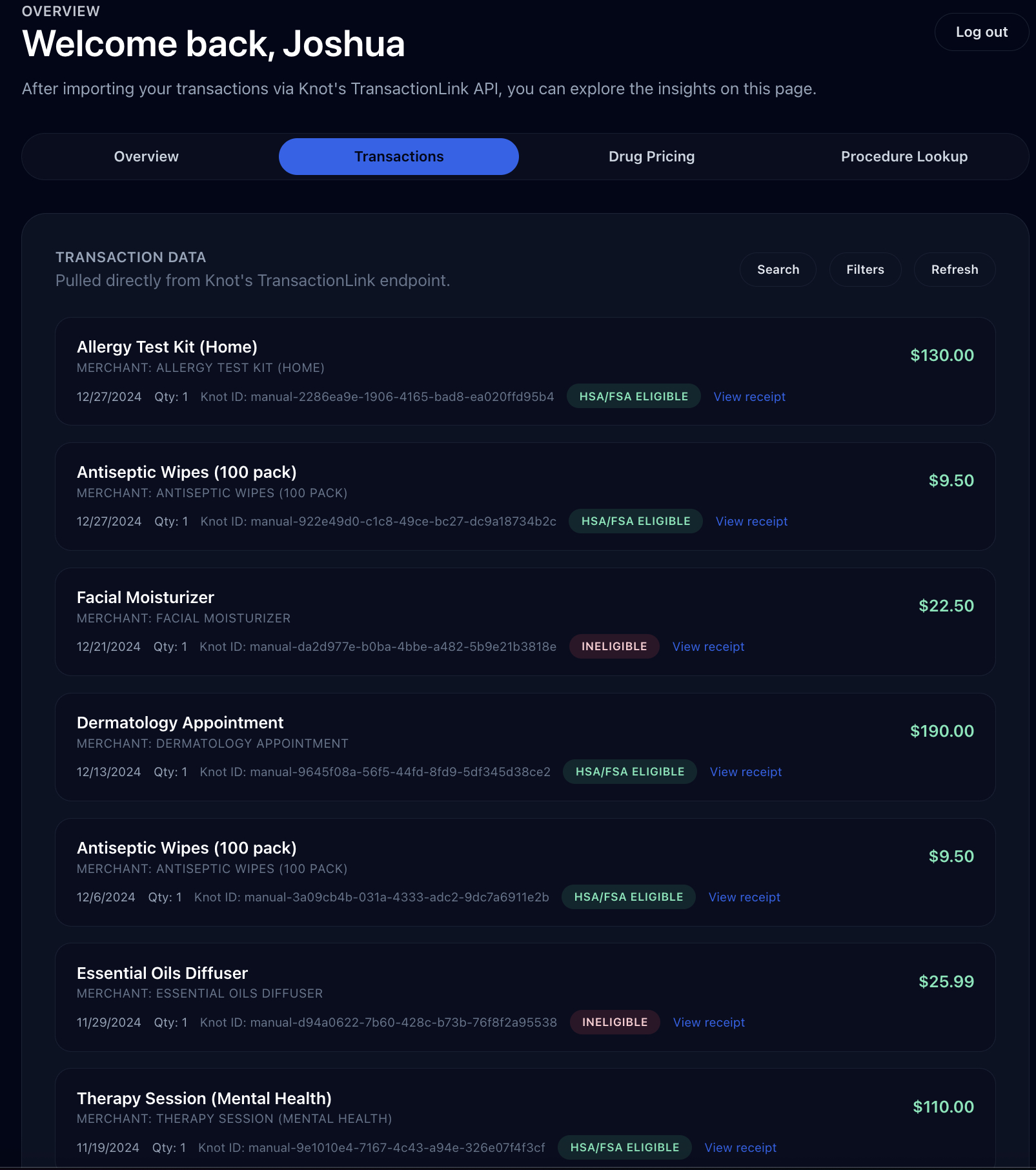
Transactions
-
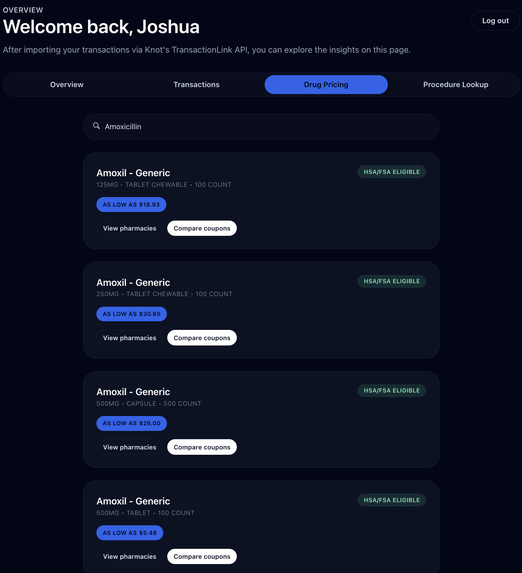
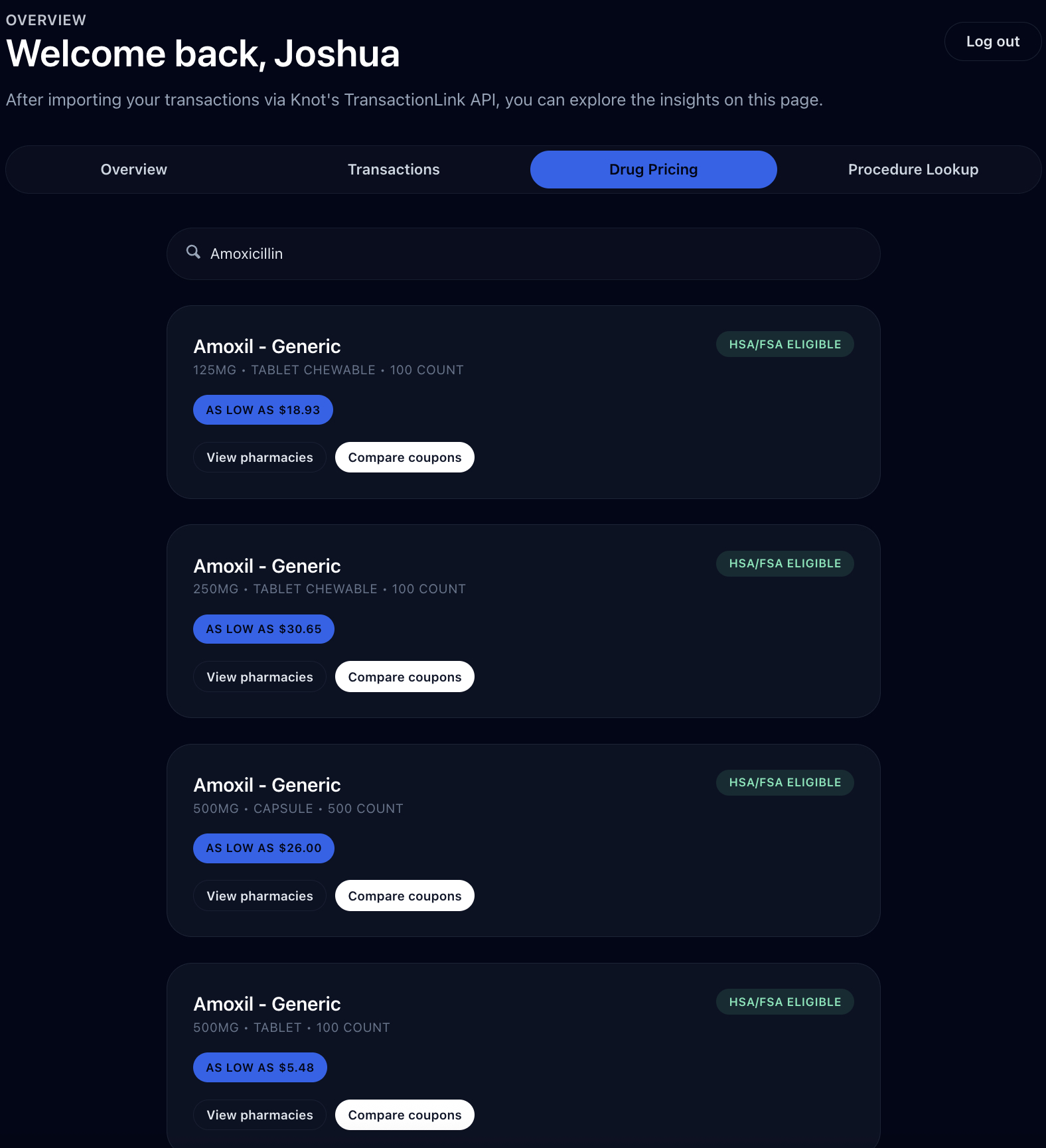
Drug Pricing (CostPlusDrugs)
-
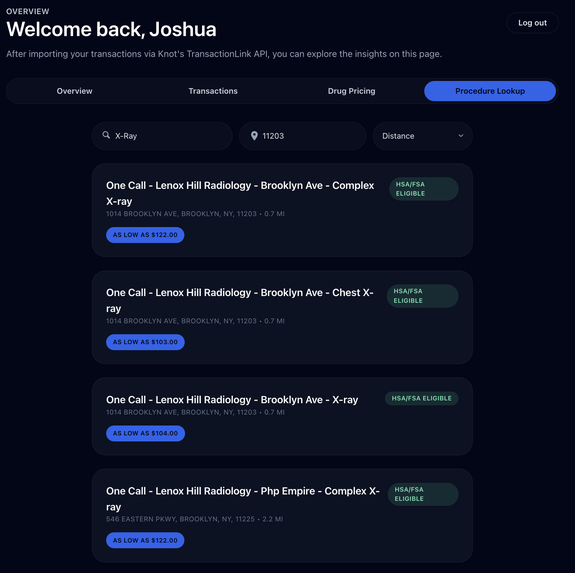
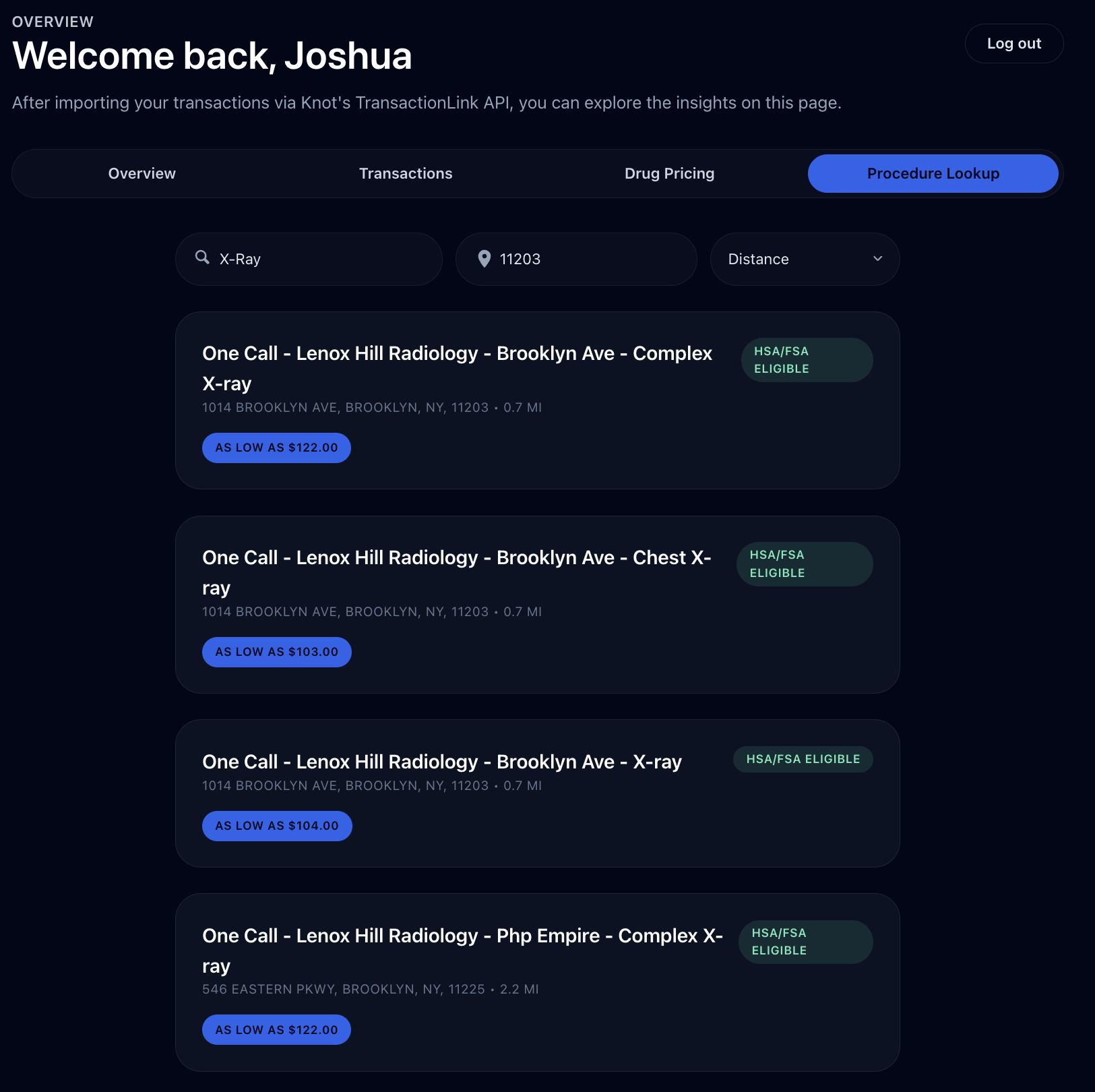
Medical Procedure Lookup (MDSave)
-
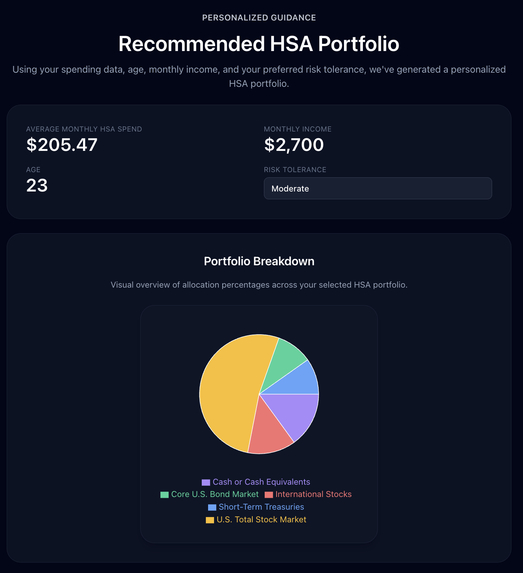
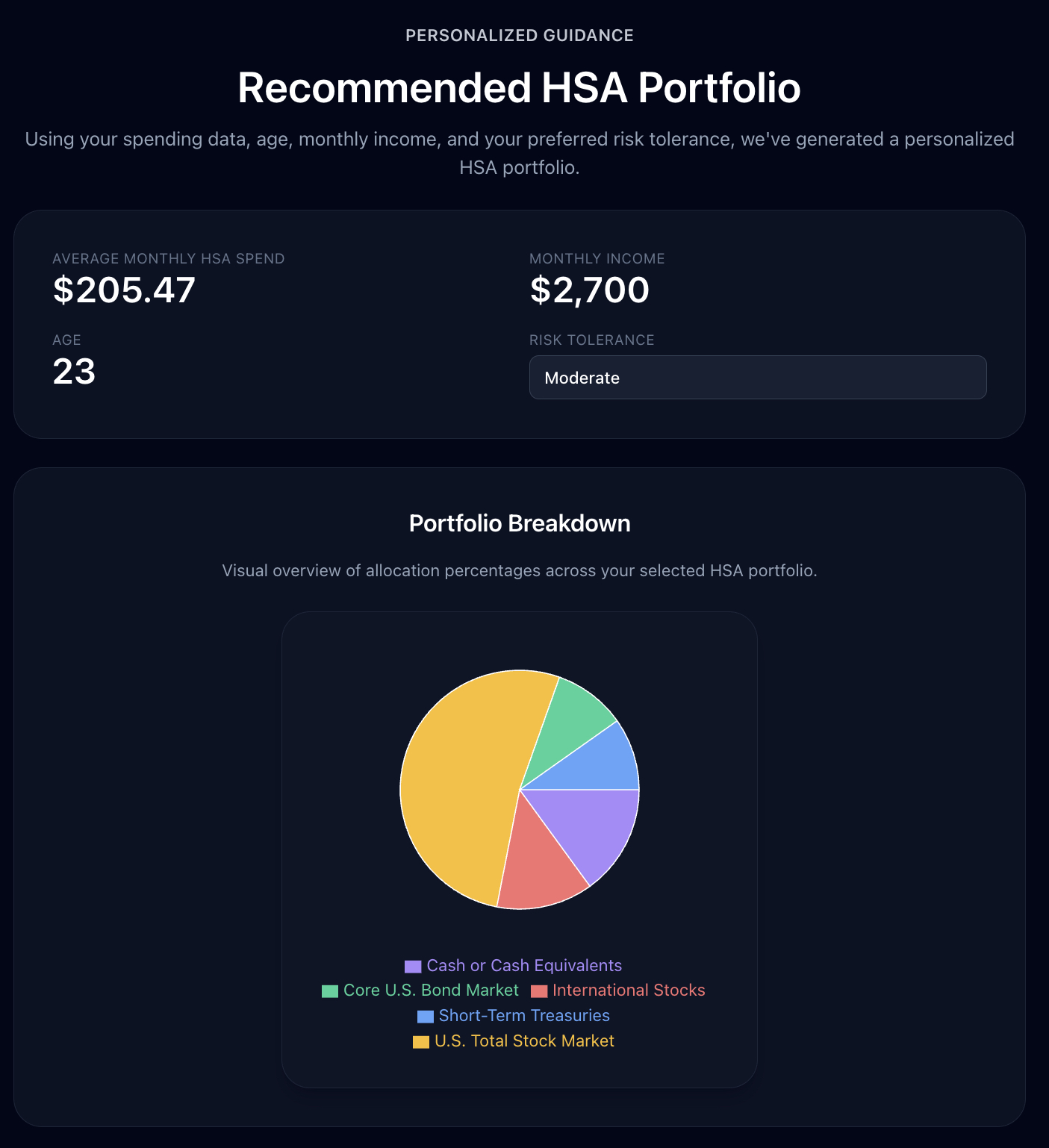
Portfolio Breakdown
-
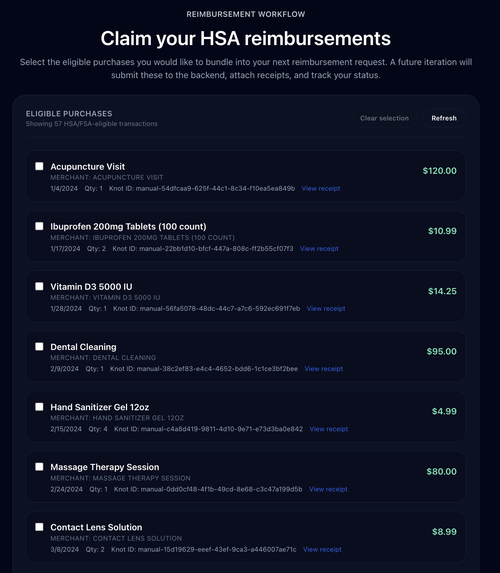
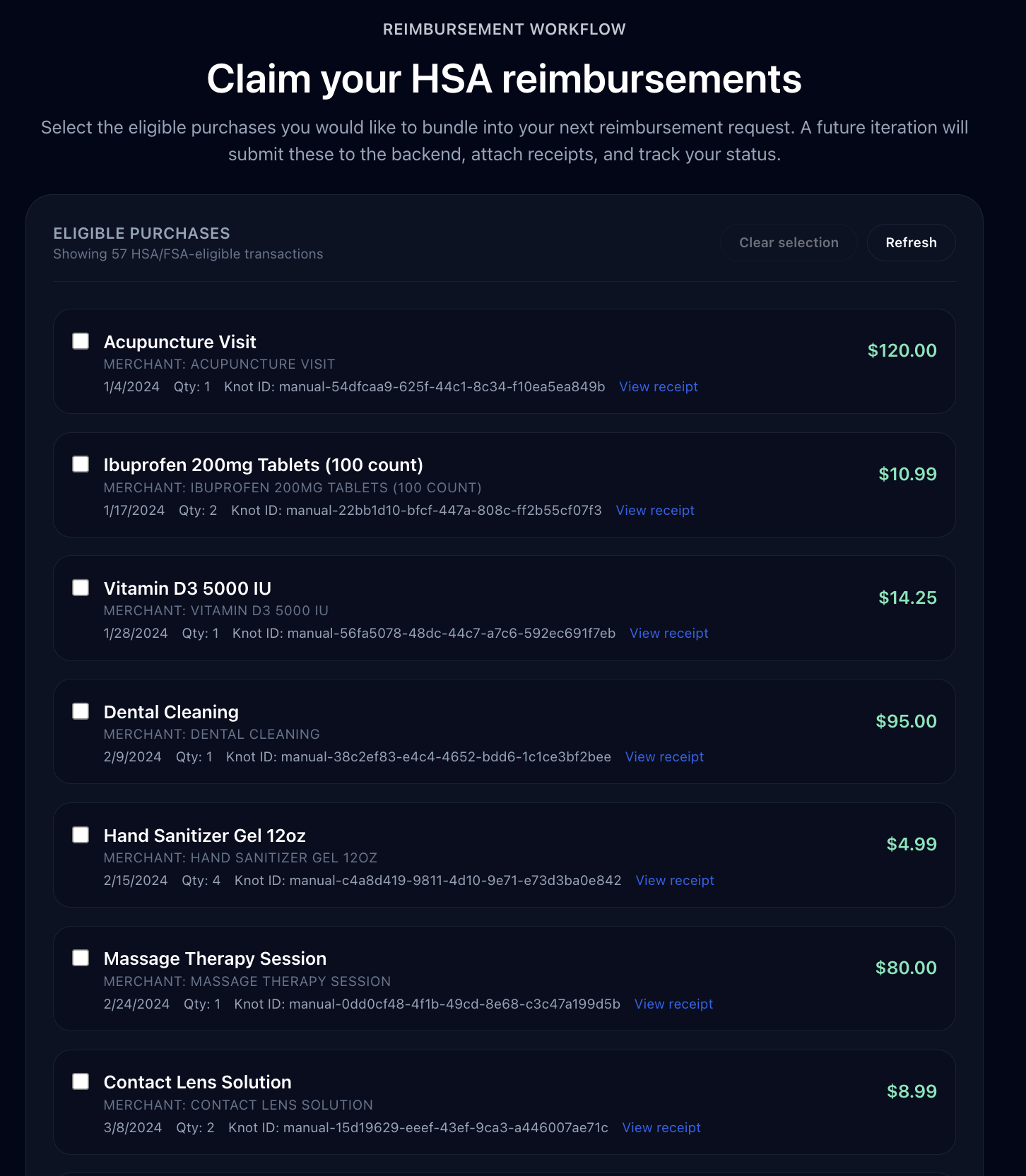
HSA Reimbursements Item Selection
-
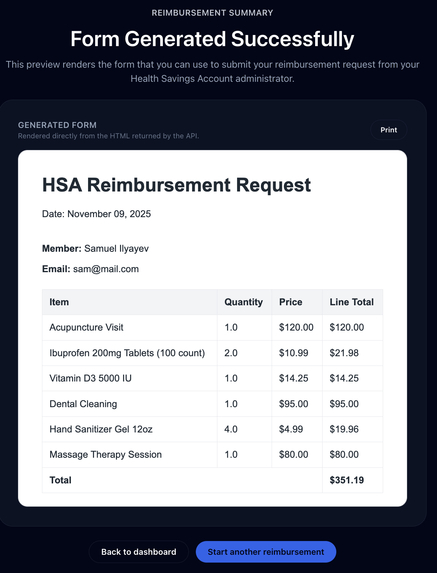
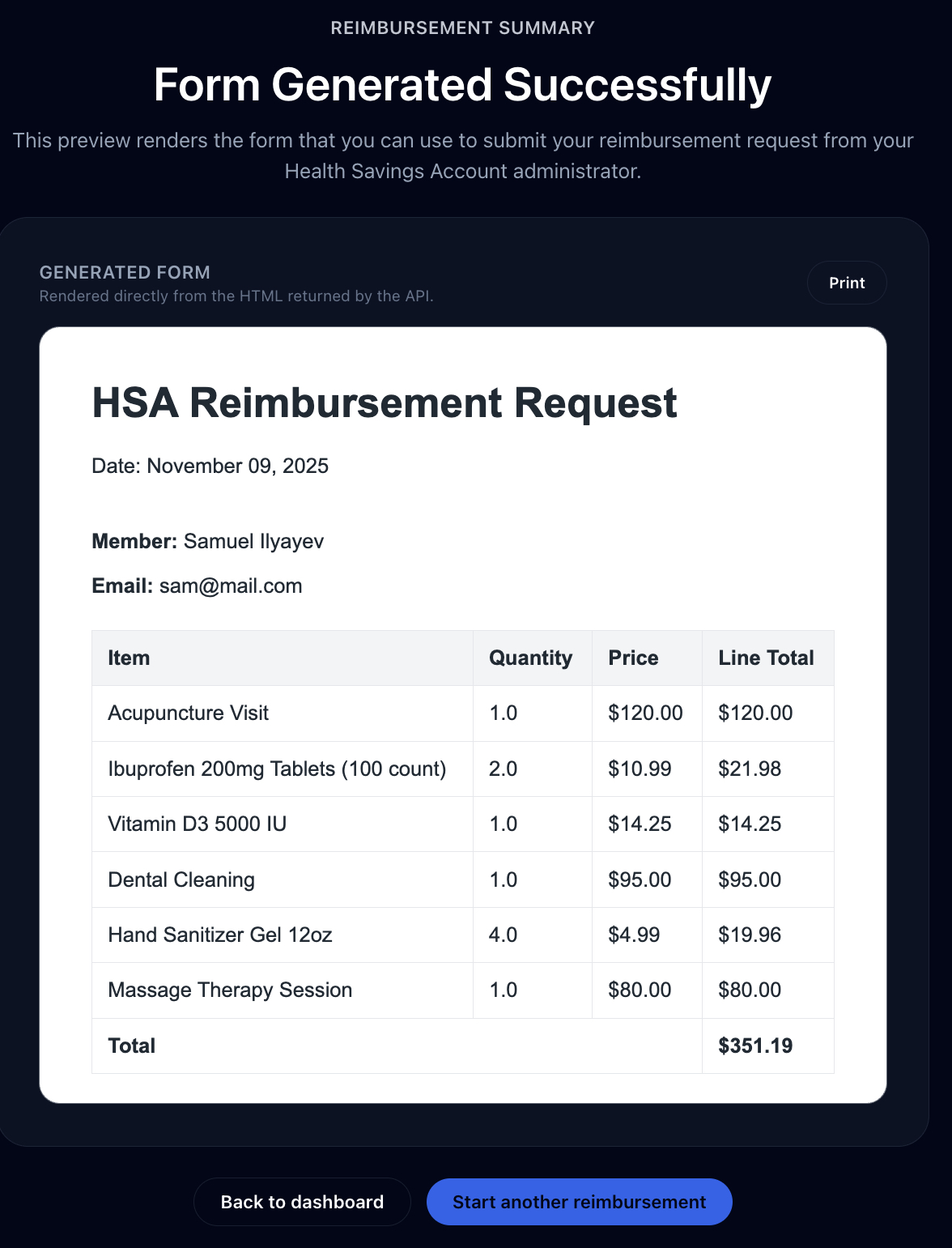
HSA Reimbursement Form Generation
-
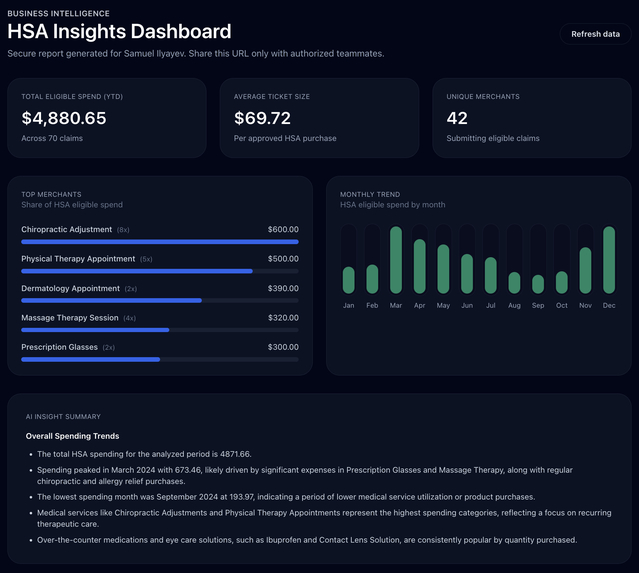
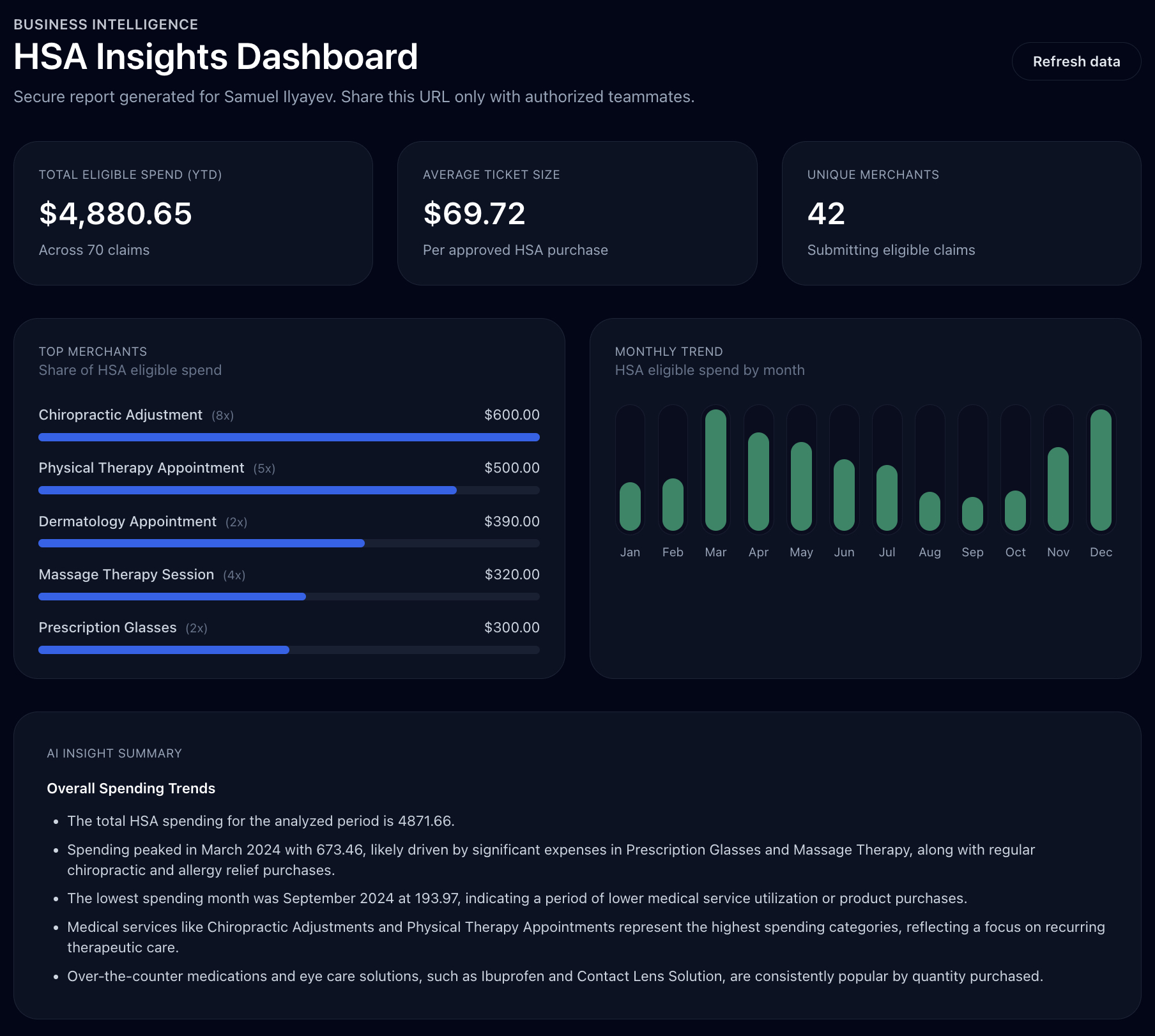
Business HSA Insights Dashboard (Spending, Top Merchants, Monthly Trend, AI Insight Summary)
Inspiration 💡
We kept seeing friends juggle HSAs with spreadsheet chaos, lost receipts, and constant "is this eligible?" anxiety. That pain became our north star: build a benefits co-pilot that quietly ingests the data, explains it in plain English, and nudges you toward smarter decisions.
What It Does 🚀
- Async FastAPI backend ingests Knot-linked commerce data plus manual uploads.
- Deterministic analytics: eligibility screening, seasonal spikes, recurring purchases, personalized portfolio allocations.
- Gemini-assisted storytelling turns the raw numbers into TL;DRs, key insights, and enterprise rollups.
- Action layer: reimbursement PDF generation, MDsave procedure search, CostPlus drug lookup, so insights lead directly to savings.
How We Built It 🛠️
- Stack: Python, FastAPI, async SQLAlchemy with SQLite for hackathon speed, Docker-ready for production.
- Security: JWT + bcrypt auth, shared
get_current_userdependency for least-privilege access. - Analytics + AI:
services/insightscomputes aggregates, Gemini models add human-friendly summaries. - External data: MDSave + CostPlus APIs for price transparency, Knot client for real-world commerce feeds.
- Architecture: Modular routers (
/usersdata,/trends,/enterprise,/procedures,/portfolio, etc.) keep the surface area clean and composable.
Challenges We Ran Into 😅
- Choosing a stack under time pressure: FastAPI/Vite vs. going full TypeScript end-to-end.
- Four backend engineers sprinting on a full-stack web app with limited frontend experience.
- Half the team had never met in person, so aligning on workflows and communication norms took effort.
- Settling on the idea itself. We committed barely 20 minutes before hacking officially began.
Accomplishments We're Proud Of 🏅
- Leveling up on a brand-new frontend toolchain while shipping features.
- Discovering, reverse-engineering, and stabilizing public APIs to power the core experience.
What We Learned 📚
- There's a surprisingly untapped intersection of healthcare, HSAs, and personal finance, especially once you add investment analytics.
- AI copilots shine when paired with real, trustworthy data pipelines; we learned how to orchestrate both across multiple stacks.
What's Next for hSavvy 🔮
- Roll out secure user data vaults so individuals can upload receipts, EOBs, and doctor notes for automated classification.
- Ship role-based enterprise dashboards with anonymized cohort analytics so HR teams can benchmark utilization without touching PHI.
- Integrate claims ingestion (ELI/EOB parsing) and bank syncing for fully automated reimbursement workflows.
- Layer in smart nudges, e.g., "You're $120 short of this quarter's contribution target" or "Book your PT session now for lower pricing", to turn hSavvy into a proactive coach.
Built With
- bcrypt
- costplusdrugs
- docker
- fastapi
- gemini
- html5
- knotapi
- mdsave
- oauth2
- pydantic
- python
- python-jose
- react
- requests
- sqlalchemy
- sqlite
- tailwind
- typescript
- uvicorn
- vite


Log in or sign up for Devpost to join the conversation.