Inspiration
In an era where technology bridges vast distances in seconds, our most vulnerable populations, particularly the elderly, remain tragically isolated. Despite advancements in communication technologies, a significant gap exists: many elderly individuals are left behind, grappling with loneliness that is magnified by the digital divide.
wellChecked changes this.
WellChecked is inspired by the critical need to integrate these individuals back into the fabric of society, ensuring they are connected, accompanied, and cared for. Our mission is to harness the power of AI through regular real-time check-in calls with AI, listening to the cloned voices of their loved ones.
With WellChecked, regular check-ins with these vulnerable individuals become moments of joy and reassurance for our elders, redefining the concept of care in the digital age.
What it does
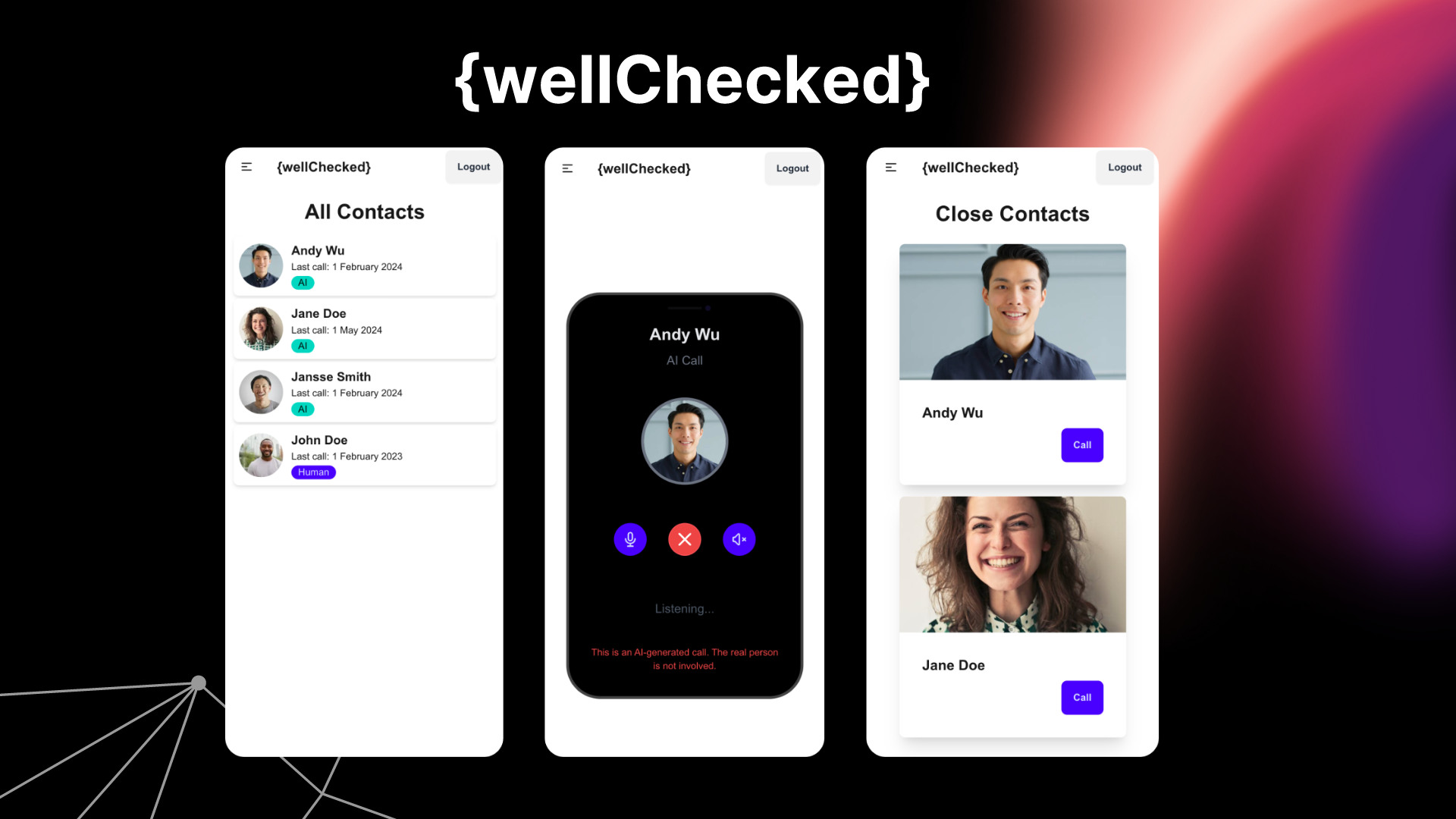
WellChecked transforms the landscape of elderly care with its innovative use of conversational AI. The app crafts personalized, real-time conversations using the familiar voices of family members, tailored specifically to the emotional nuances of each user. This thoughtful integration of voice technology acts as a lifeline for seniors, nurturing their emotional well-being and bridging the gap created by physical distance. Every interaction is designed to resonate deeply, making seniors feel valued and connected within the circle of their loved ones.
How we built it
Voice Recognition and AI Interaction: To enable real-time speech recognition, we integrated the react-speech-recognition library, which provides a seamless interface for converting speech to text, ensuring our application can accurately capture user commands and feedback. For the AI-driven conversations, we employed AssemblyAI for its state-of-the-art speech recognition capabilities and ElevenLabs for generating lifelike synthetic voices, closely mimicking the voices of users’ loved ones. OpenAI’s API was crucial for developing sophisticated conversational AI, enabling the app to conduct natural and empathetic dialogues with users.
Backend Processing: Node.js was selected for its non-blocking, event-driven architecture, making it ideal for handling I/O-heavy operations like real-time communication between clients and servers. MongoDB was used for data storage, due to its flexibility with unstructured data and scalability, which is vital for storing user profiles and interaction logs. We also utilized Socket.IO for real-time bidirectional event-based communication, ensuring that messages and AI responses are delivered without delay, creating a responsive user experience.
Challenges we ran into
Team Dynamics and Initial Meeting: Our team, consisting of five members who met for the first time at this hackathon, faced the initial challenge of quickly establishing effective communication and workflow. Aligning our diverse backgrounds and expertise towards a common goal required considerable coordination and adaptation.
Complexity of the Project Idea: What began as a seemingly straightforward idea quickly unfolded into a complex project with multiple layers of technical depth. As we delved deeper into the development process, the scope of what we needed to achieve expanded, revealing challenges we had not initially anticipated.
Technological Integration and Development: While the foundational technologies we needed existed, tailoring them to fit our unique requirements for WellChecked meant venturing into uncharted territory. This included enhancing existing AI models for better voice cloning and integrating front-end and back-end systems in a way that was new to all of us, as none of the team members had prior experience managing both simultaneously.
Continuous Learning Curve: Our understanding of the needs and behaviors of the elderly—our primary user base—was superficial at the start. As we researched more, we realized the complexity of the issue. This ongoing learning process required us to continually adapt and refine our app’s features to better suit real-world needs.
Front-End and Back-End Synchronization: None of our team members had substantial experience working with both front-end and back-end development simultaneously. This lack of experience led to initial setbacks in creating a seamless interaction between the user interfaces on the front-end and the data processing on the back-end, necessitating a steep and rapid learning curve for all team members involved.
Accomplishments that we're proud of
Successfully Building a Cross-Functional Team: We are incredibly proud of how quickly and effectively our team came together to tackle this project. Despite meeting for the first time, we managed to blend our diverse skills and perspectives into a cohesive unit, creating a product that we are all proud of.
Developing a Functional Prototype: Bringing WellChecked from concept to a working prototype was a major achievement. The app not only functions as intended but does so in a way that significantly impacts our target users positively.
Innovative Use of AI for Social Good: We successfully implemented advanced AI technology to address a pressing social issue—elderly isolation. Our use of AI to replicate the voices of loved ones in conversations is a novel approach that we believe sets a new standard in the application of technology for social care.
What we learned
Depth of Elderly Needs: Our understanding of the elderly’s needs deepened significantly. We learned that creating technology for seniors goes beyond simple usability; it must resonate with them on an emotional level.
Technical Skills Enhancement: Working simultaneously on front-end and back-end development was challenging and taught us the intricacies of full-stack development. This experience has greatly enhanced our technical skills and given us a comprehensive understanding of product development.
Importance of Iterative Feedback: Engaging with potential users and iterating based on their feedback was invaluable. We learned that continuous user feedback is crucial in developing a product that truly meets the users’ needs.
What's next for wellChecked by The Workshop Backroom
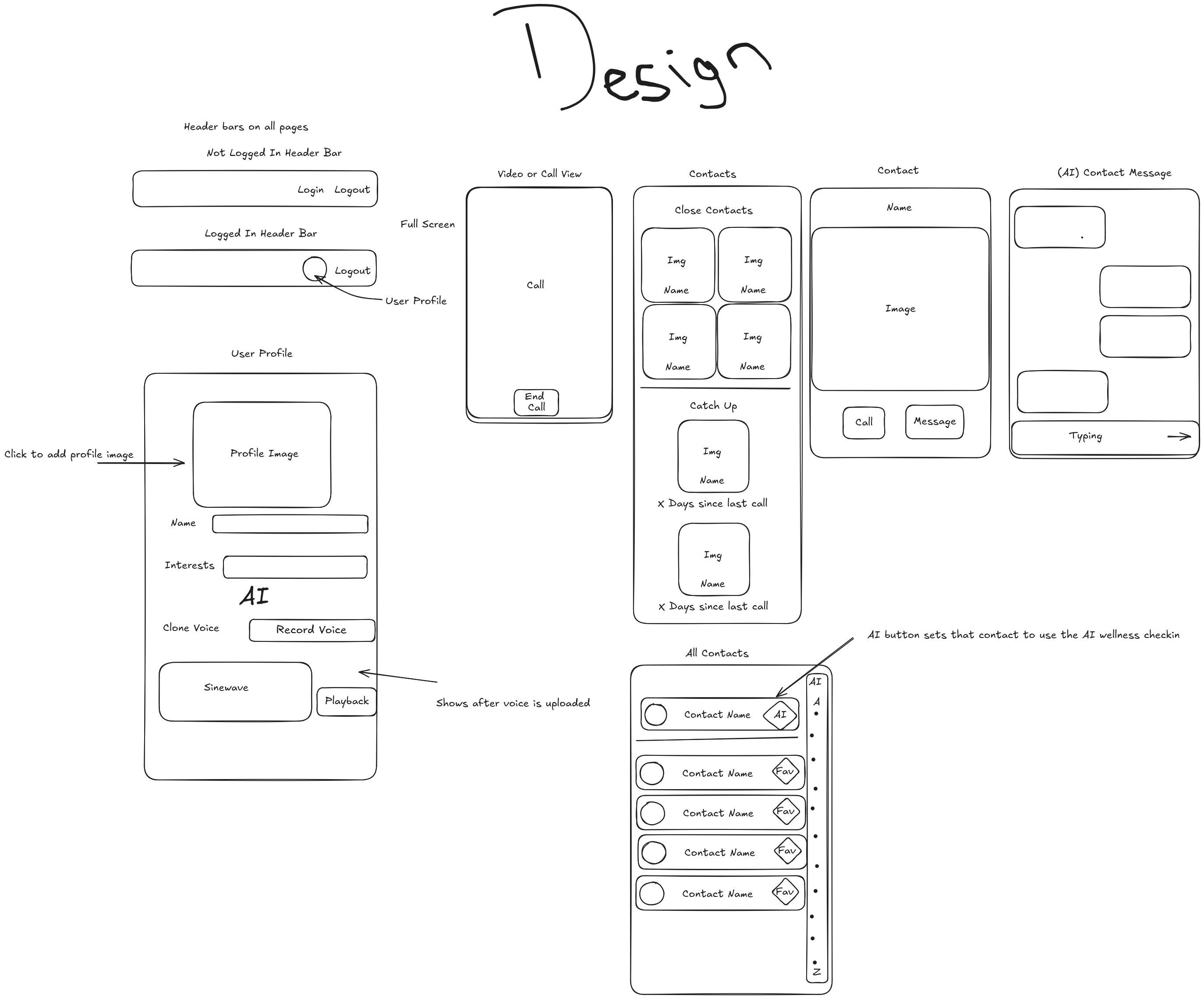
Expanding to Video Calls: We plan to expand the app’s capabilities to include video calls, allowing for more personal and engaging interaction between elderly users and their loved ones.
Increasing AI Budget for Seamless Integration: To improve the fluidity and responsiveness of interactions, we will increase our investment in AI development. This will help seamlessly integrate front-end user interactions with back-end processing.
Automatic Sync with Contacts: We are looking to develop a feature for automatic syncing with the user’s contacts, making it easier for users to connect with their family and friends without manually inputting details. This feature will enhance the user-friendliness of WellChecked, making it more accessible for elderly users.


Log in or sign up for Devpost to join the conversation.