-
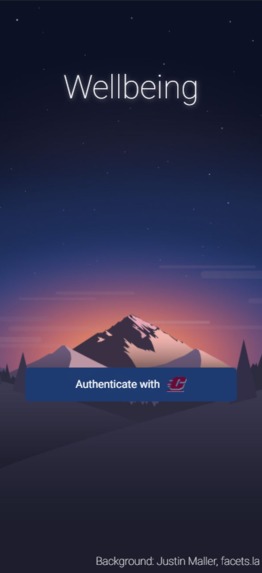
Home page
-
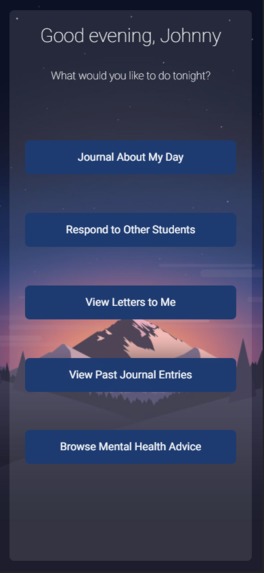
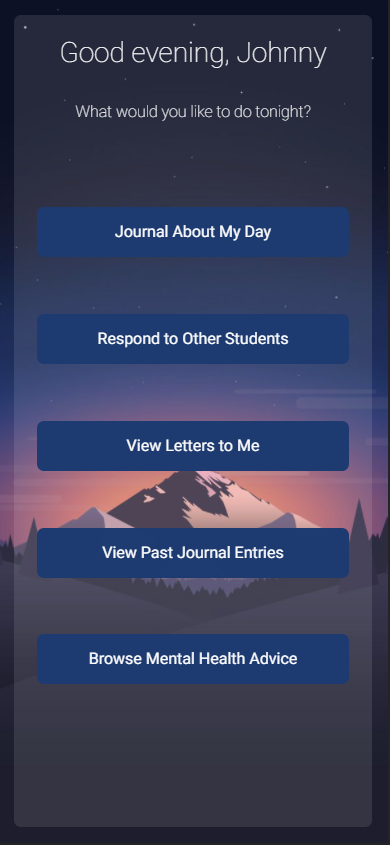
Choice Page
-
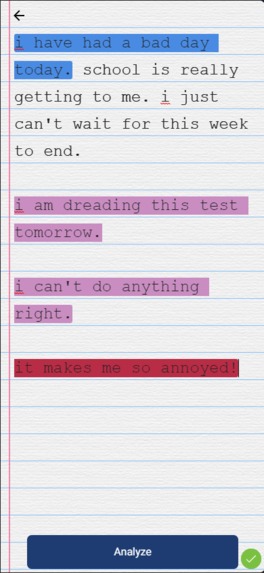
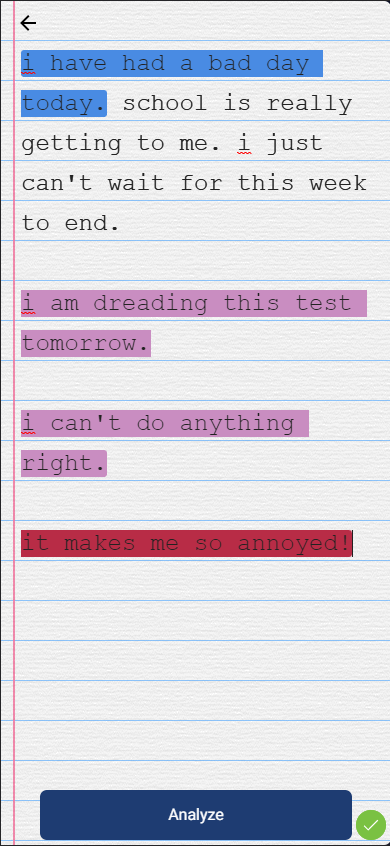
Journaling Page
-
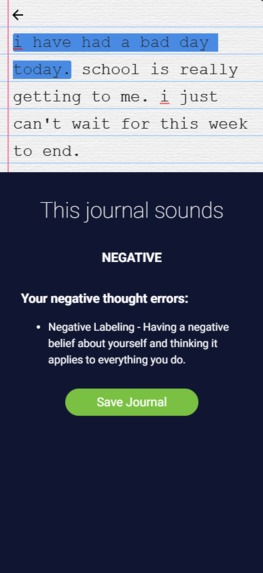
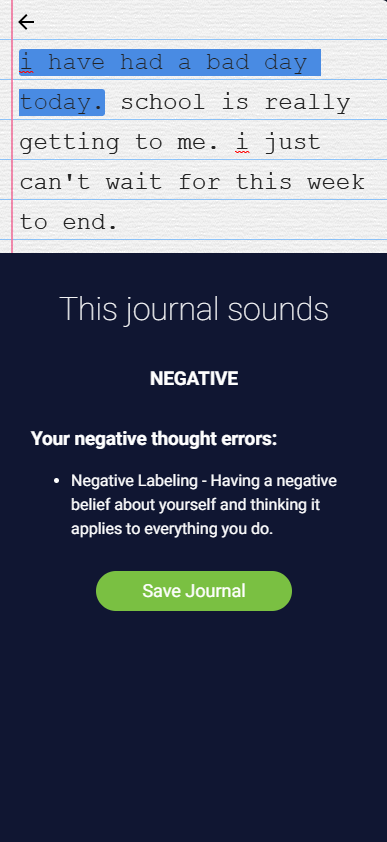
Negative thought patterns
-
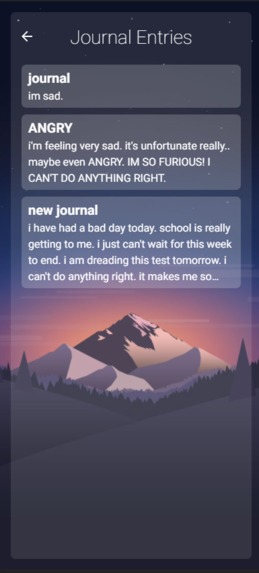
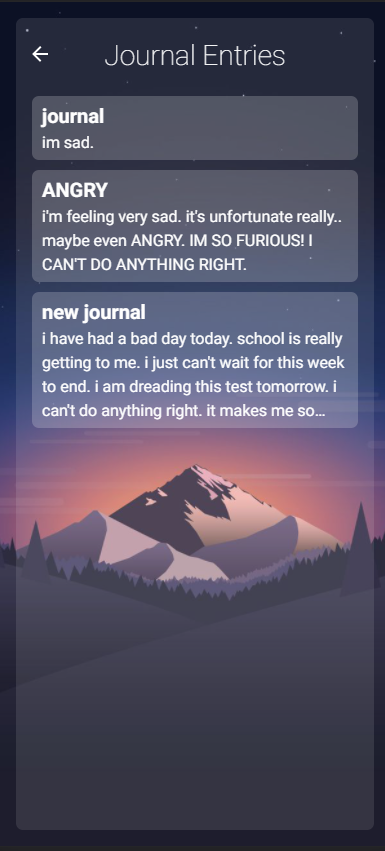
Past journals
-
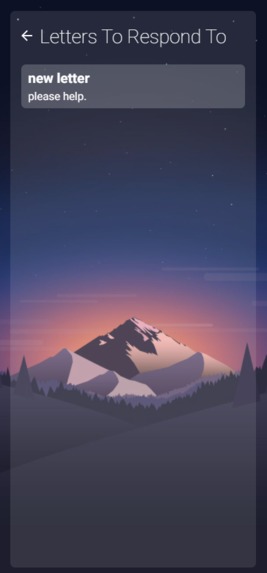
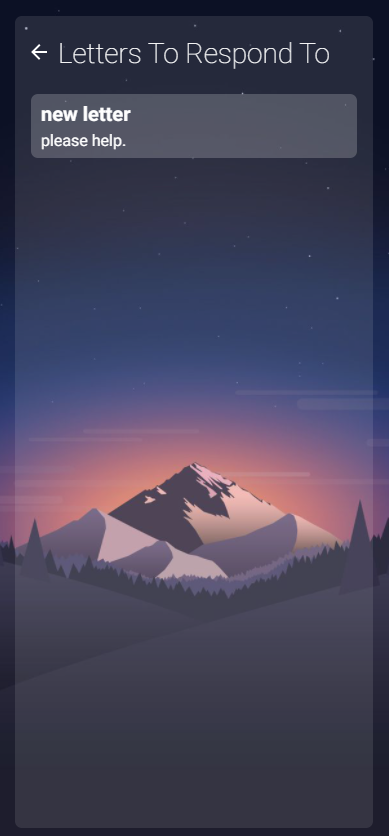
Journals to respond to
Inspiration
According to Mayo Clinic, up to 44% of college students report having symptoms of depression or anxiety (1).
Students often feel overwhelmed, embarrassed, or too scared to go and seek therapy themselves. On top of that, colleges may not have the counseling capacity to see everybody who reaches out in a meaningful way.
We wanted to make a difference, by promoting community, safety, and most importantly -- Wellbeing.
What it does
Wellbeing utilizes machine learning and artificial intelligence to create a powerful journaling app which allows users to write down their thoughts and get instant feedback. Journaling has had a proven effect on the benefits of mental health (2).
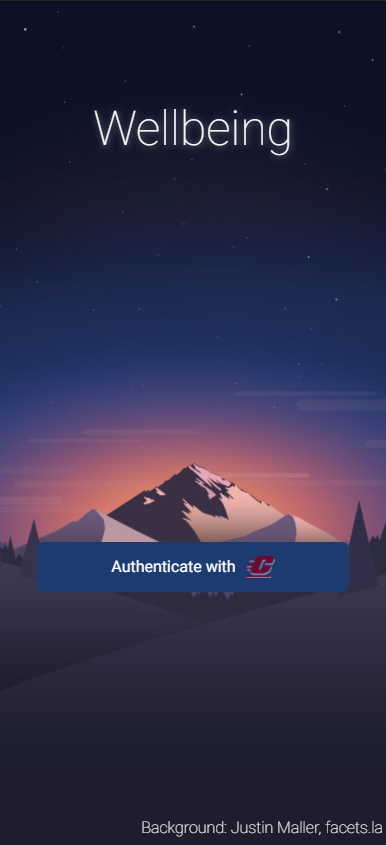
When the user logs in with their university account, they can anonymously journal about their day, and the content is automatically sent to a machine learning algorithm which analyzes its sentiment, and returns it to the user.
The app will highlight various emotions and thought patterns to the user which help them identify where they're struggling.
Users can then further inspect these patterns, and learn various Cognitive Behavioral Therapy (CBT) techniques to help negate these thoughts, or otherwise better themselves.
On top of all of this, users can anonymously send their journal entries out and have them be received and read by other users from the same university. People can respond to these letters and send the responses back to the original author. This helps people feel like they're not alone.
Whilst the end users do not know the origins of the journals, for safety reasons, and to prevent harassment and bullying, the origins are stored and moderated on Wellbeing's servers.
How we built it
We created this application with a mobile-first design using web technologies.
The backend of the site is written using Django and Python, which allow it to be very robust and powerful. We have a RESTful API which responds to various requests from the user.
The machine learning algorithm is integrated using Flair, a python machine learning library to perform sentiment analysis.
The frontend application is written using React.JS which is a JavaScript library used to create intuitive and interactive user interfaces.
The frontend was styled using CSS (specifically, the SCSS flavor).
Challenges we ran into
Time was our biggest enemy here. Even submitting this devpost, we accidentally deleted the entire thing and had to restart.
Our machine learning algorithm does not currently identify the negative thought patterns, but rather this is done using intelligent string matching. This was done to save time and for convenience, rather than the algorithm being incapable.
The reporting system (where users could report harassment) is not currently in place, but would absolutely be implemented before this product reaches the market.
Accomplishments that we're proud of
We are incredibly proud of the extent of the prototype we were able to construct given the time constraints. We have a working sentiment analysis model, and an elegant user interface.
We feel that this is a marketable product with genuine potential!
What's next
Aside from making our machine learning algorithm working for identifying the negative thought patterns, we wish to incorporate more mental health advice into the product besides typical CBT methods. This will help us market our application to users with mental disorders such as OCD where cognitive behavioral therapy isn't always the best approach.

Log in or sign up for Devpost to join the conversation.