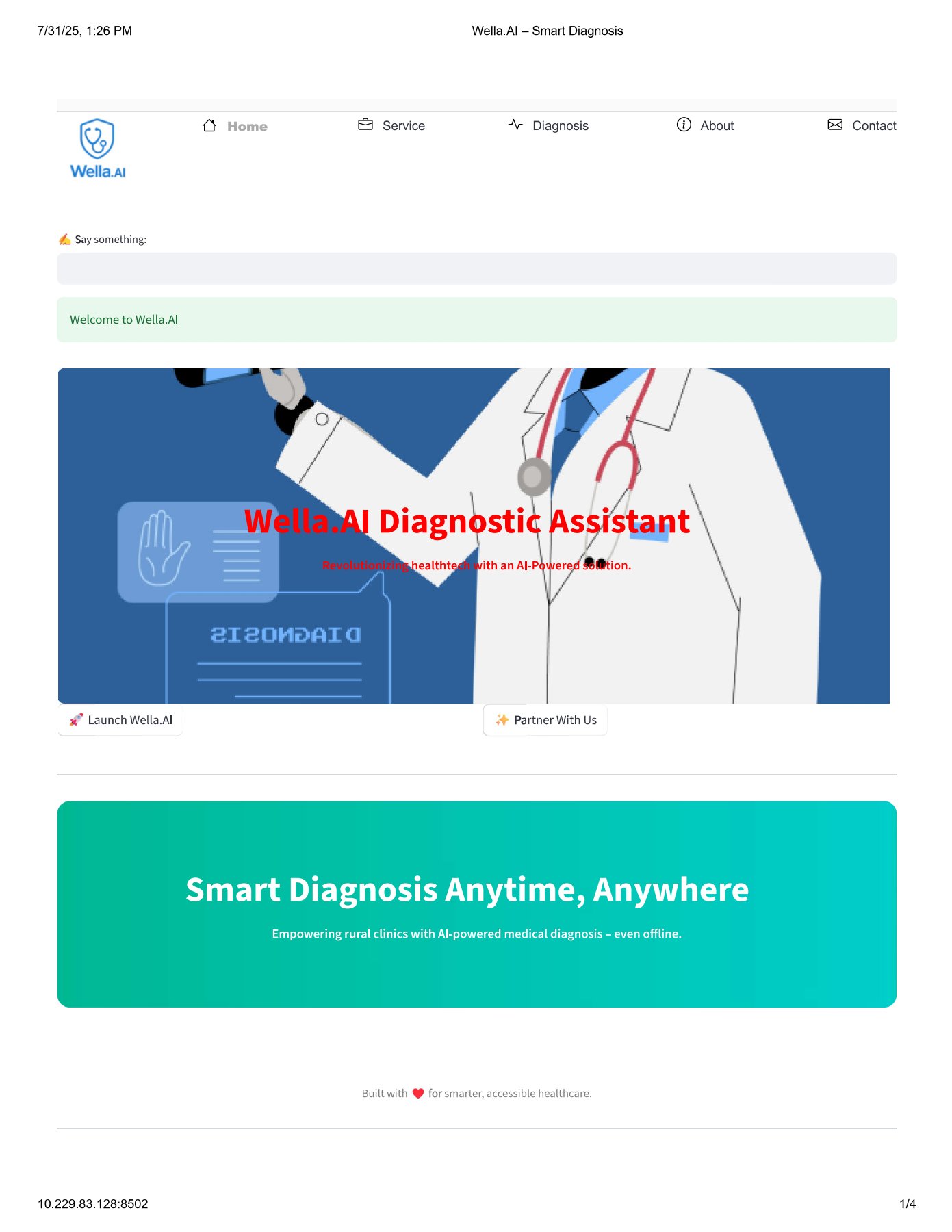
Wella.AI An Offline Healthcare Diagnostic Assistant
https://wellahealth.streamlit.app/
https://github.com/BalogunEzekiel/Wella.AI
Project Report
(Africa Deep Tech Challenge 2025)
EXECUTIVE SUMMARY
Wella.AI is an AI-powered offline-first diagnostic assistant built for rural and under-resourced primary healthcare facilities across Africa. It offers symptom-based pre-diagnosis, health recommendations and patients treatment management, designed to operate offline, under limited computing power and without internet access, while enabling occasional synchronization with a central Supabase database management.
PROBLEM STATEMENT
Over 70% of rural and peri-urban clinics across Africa face systemic challenges such as: • Power supply instability or complete lack of electricity • No internet connectivity • Limited access to medical professionals • Limited diagnostic tools and support • Low digital literacy among health workers These issues lead to delays in diagnosis and treatment of common but life-threatening conditions like malaria, typhoid, anemia and respiratory infections, resulting in thousands of preventable deaths.
THE SOLUTION
An AI-powered offline first diagnostic tool for primary healthcare workers, designed for low-resource settings. Wella.AI is built to address these challenges faced by rural and under-resourced primary healthcare facilities across Africa. It is an intelligent, AI-powered healthcare diagnosis assistant designed to analyze patient symptoms, suggest possible diseases, recommend next steps instantly and securely, and manage patient treatment effectively.
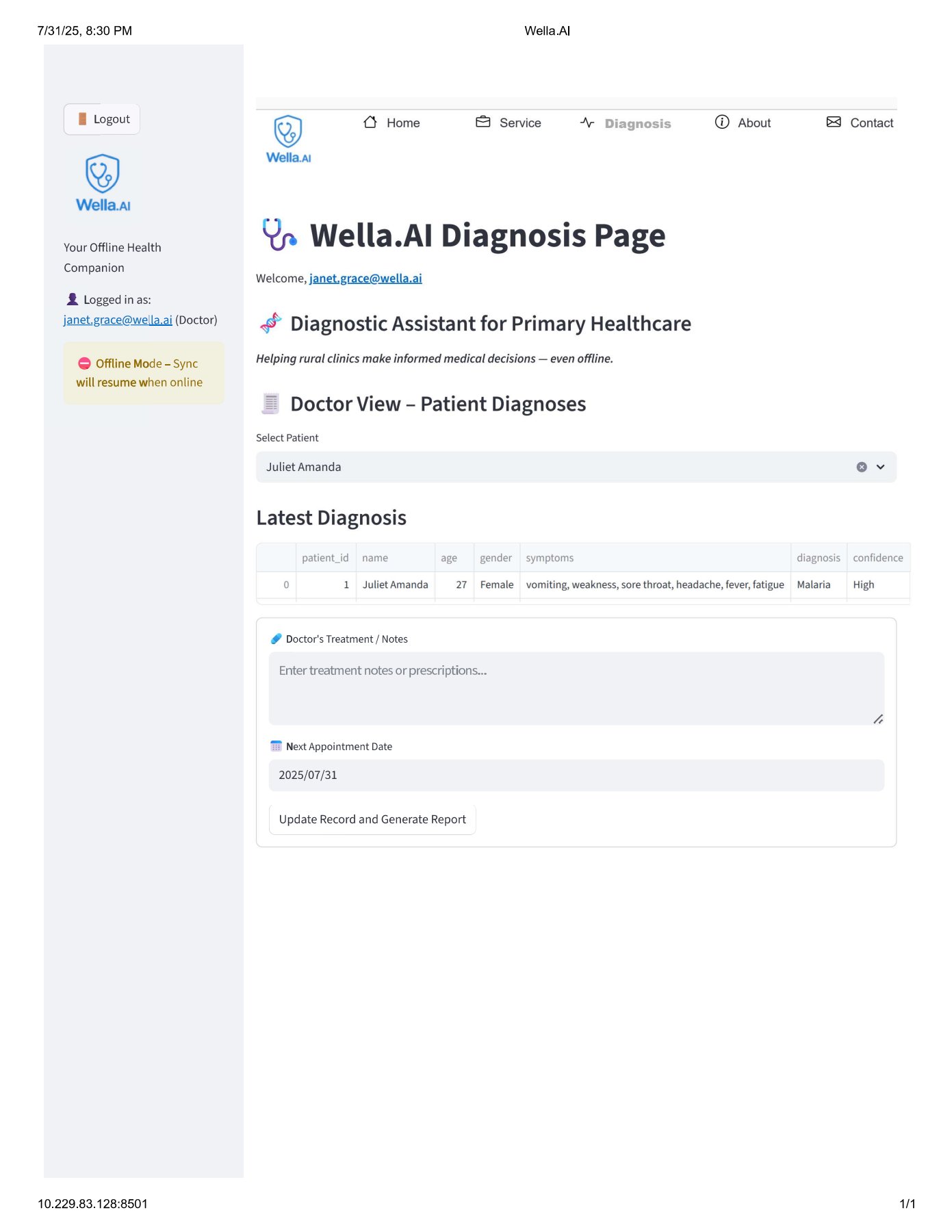
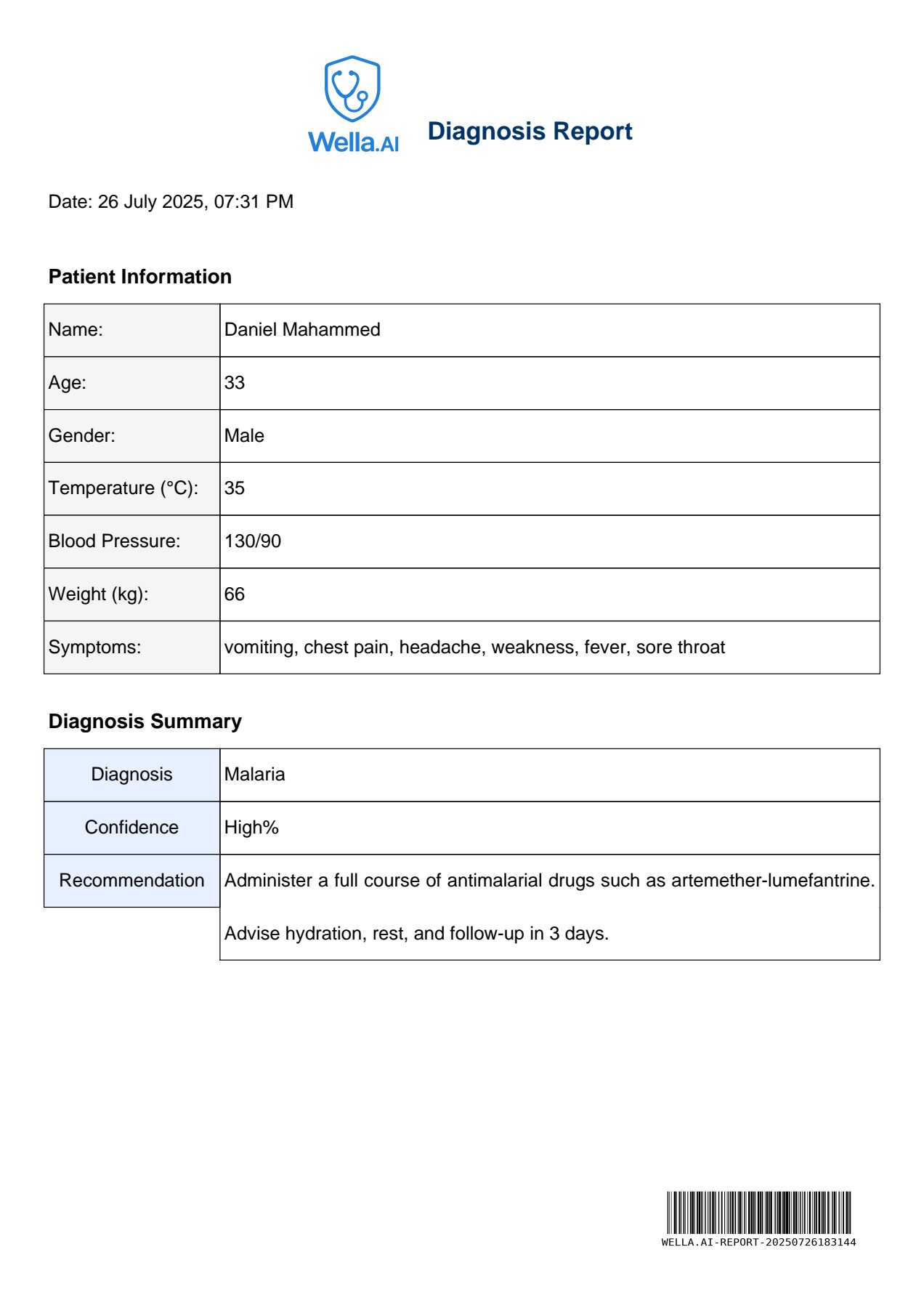
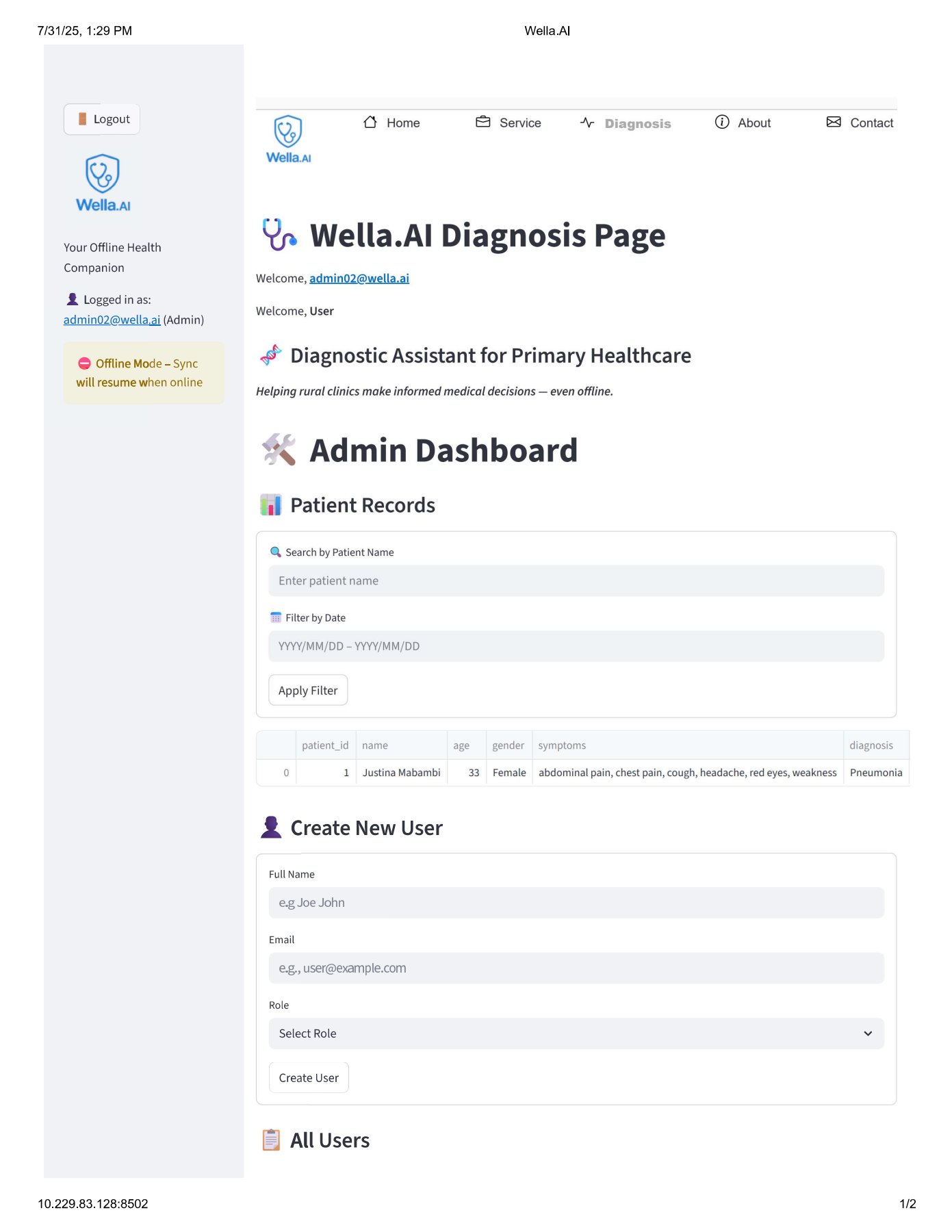
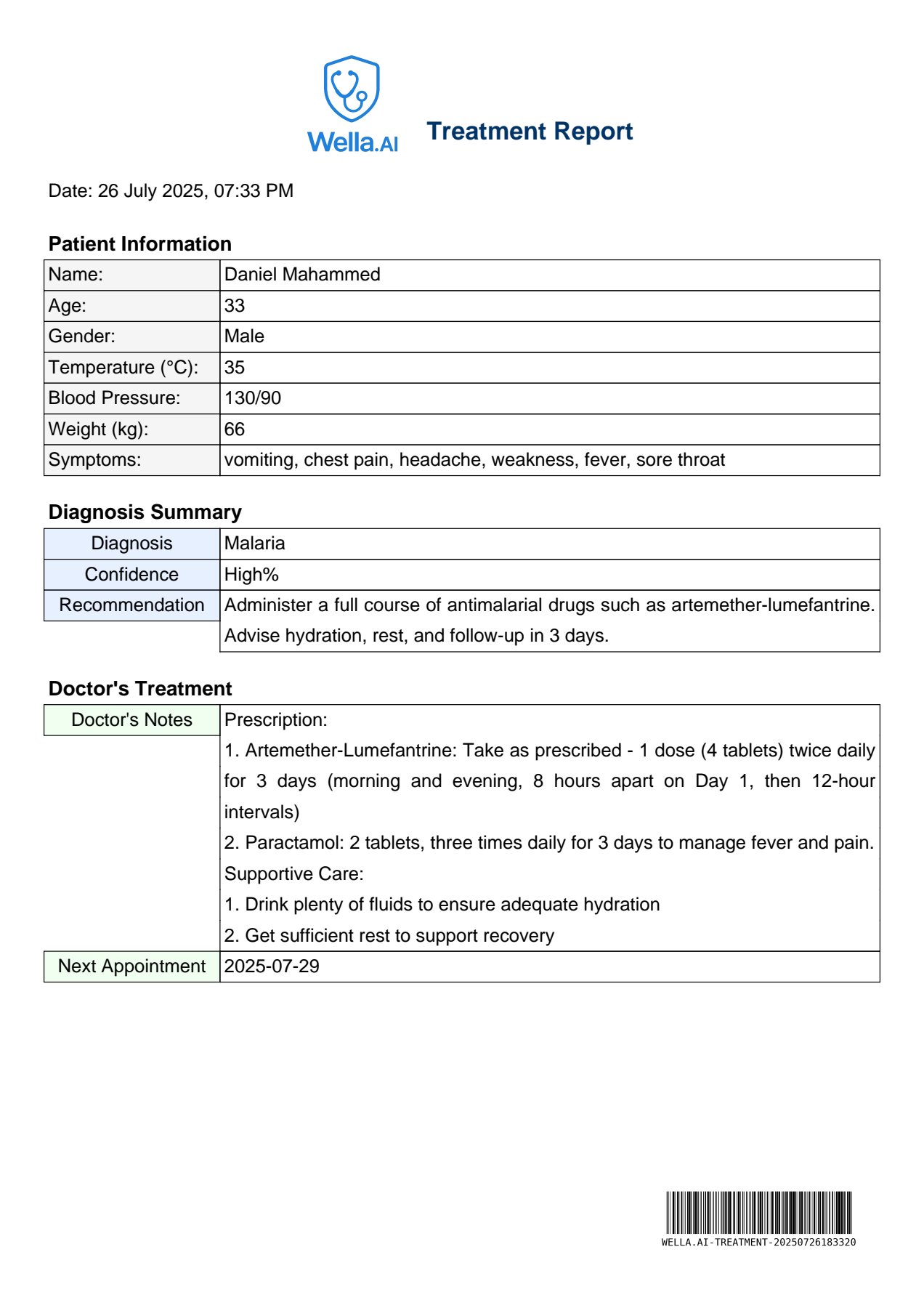
OBJECTIVES • Enable health workers to input symptoms and receive AI-assisted diagnostic guidance. • Provide recommendations for treatment and flag high-risk cases with confidence. • Run completely offline and consume minimal device resources. • Manage patient treatment effectively with Doctor’s treatment note and next appointment update. • Ensure security role-based access, data privacy and data synchronization with Supabase.
Inspiration
In many under-resourced communities, patients often lack access to timely and accurate medical guidance. Long queues, overburdened healthcare workers, and limited diagnostic tools all compound the crisis. We were inspired to create Wella.AI as a digital companion, an intelligent assistant that could bridge the healthcare gap by providing symptom-based preliminary diagnosis, next-step recommendations, and basic treatment management instantly and securely.
What it does
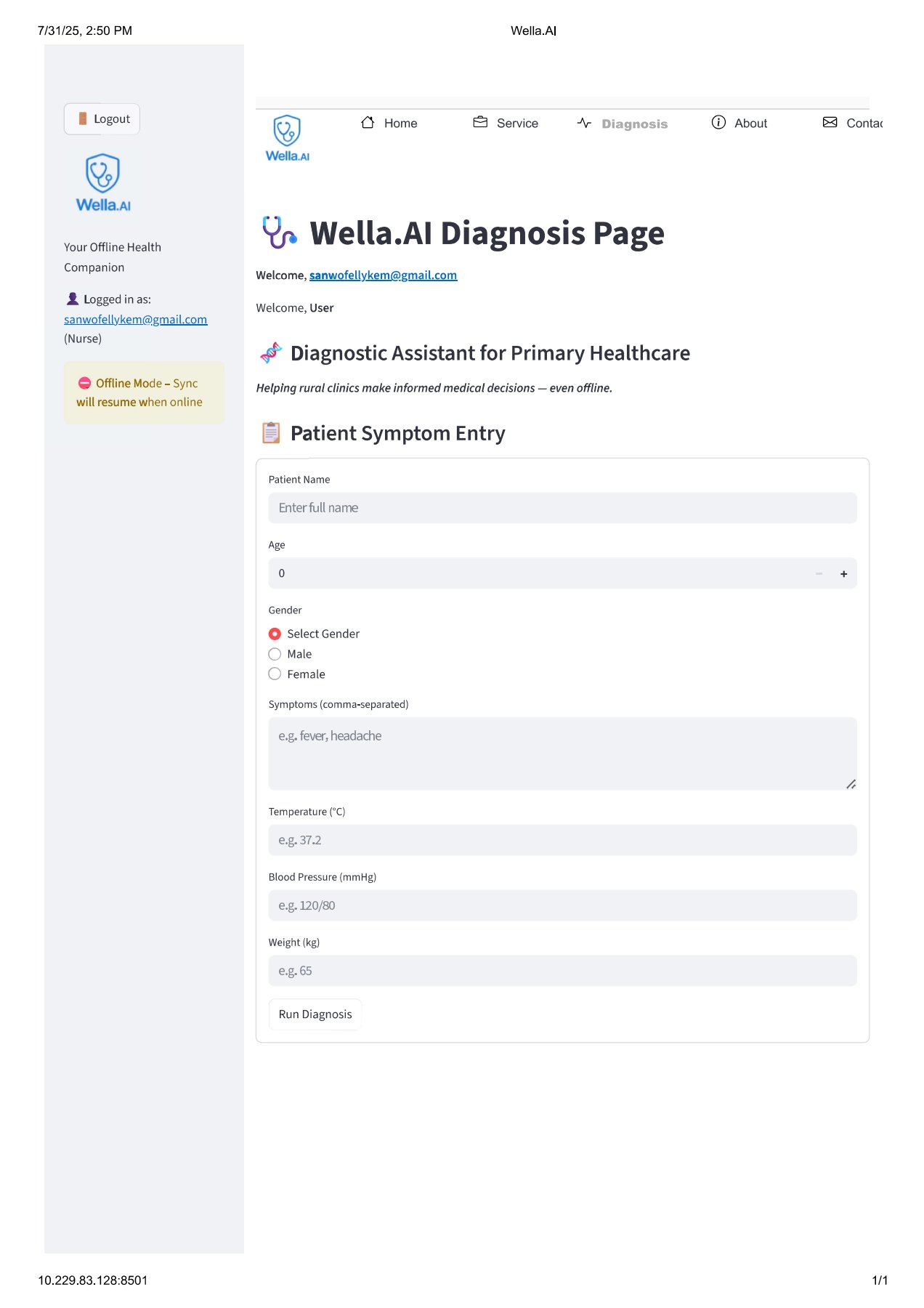
Wella.AI is an AI-powered healthcare assistant that helps analyze patient symptoms, suggests possible illnesses, recommends next steps (e.g., see a doctor, take rest, drink fluids), and manages patient treatment history. It allows users (especially healthcare providers) to quickly input symptoms and receive AI-generated insights that support clinical decisions, improving service delivery in clinics with low doctor-to-patient ratios.
How we built it
We built Wella.AI using:
Python (Streamlit) for the front-end and interactive UI
A custom-trained machine learning model using a Random Forest Classifier for disease prediction.
OpenAI API for symptom analysis and diagnosis suggestions
Pandas for patient data handling
Streamlit Cloud for the current deployment
GitHub + Render for CI/CD and scalable deployment planning
Docker (in progress) for containerization and future cloud independence
Challenges we ran into
Ensuring responsible use of AI for health recommendations
Handling edge cases and uncommon symptoms
Maintaining responsiveness during model interactions
Optimizing data privacy and ensuring patient anonymity
Balancing simplicity with functionality for a non-technical user base
Accomplishments that we're proud of
Successfully launched a working prototype hosted on the web
Designed a user-friendly interface for quick symptom entry and diagnosis
Created an AI assistant that responds within seconds to symptom prompts
Incorporated treatment history tracking and appointment dates
Received overwhelmingly positive feedback from initial users
What we learned
*The power of AI when applied thoughtfully to real-world problems
How to build, host, and deploy intelligent applications using Streamlit and Render
The importance of UX design in healthcare tools
How to iterate quickly using user feedback and deploy updates seamlessly
What's next for Wella.AI
Docker Deployment: Full containerization for portability and scale
Data Security: Strengthen privacy protocols for handling sensitive patient data
Multilingual Support: Extend to local languages like Yoruba, Hausa, Igbo for inclusivity
Mobile App: Develop a lightweight mobile version for offline access
Integration: Collaborate with rural health centers and NGOs for field testing and impact scaling
Built With
- ai
- bcrypt
- docker
- langdetect
- ml
- numpy
- pandas
- psycopg2-binary
- pyinstaller
- python
- random-forest-classifier
- raspberrypi
- render
- scikit-learn
- streamlit-local/cloud


Log in or sign up for Devpost to join the conversation.