-
-
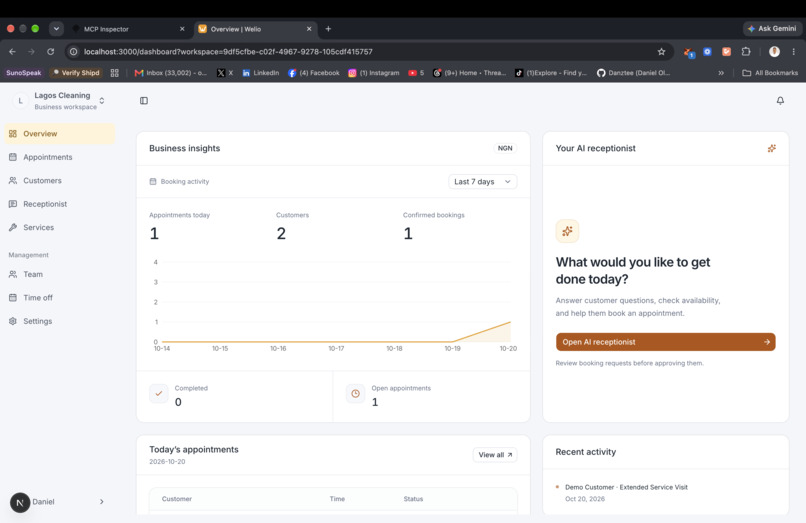
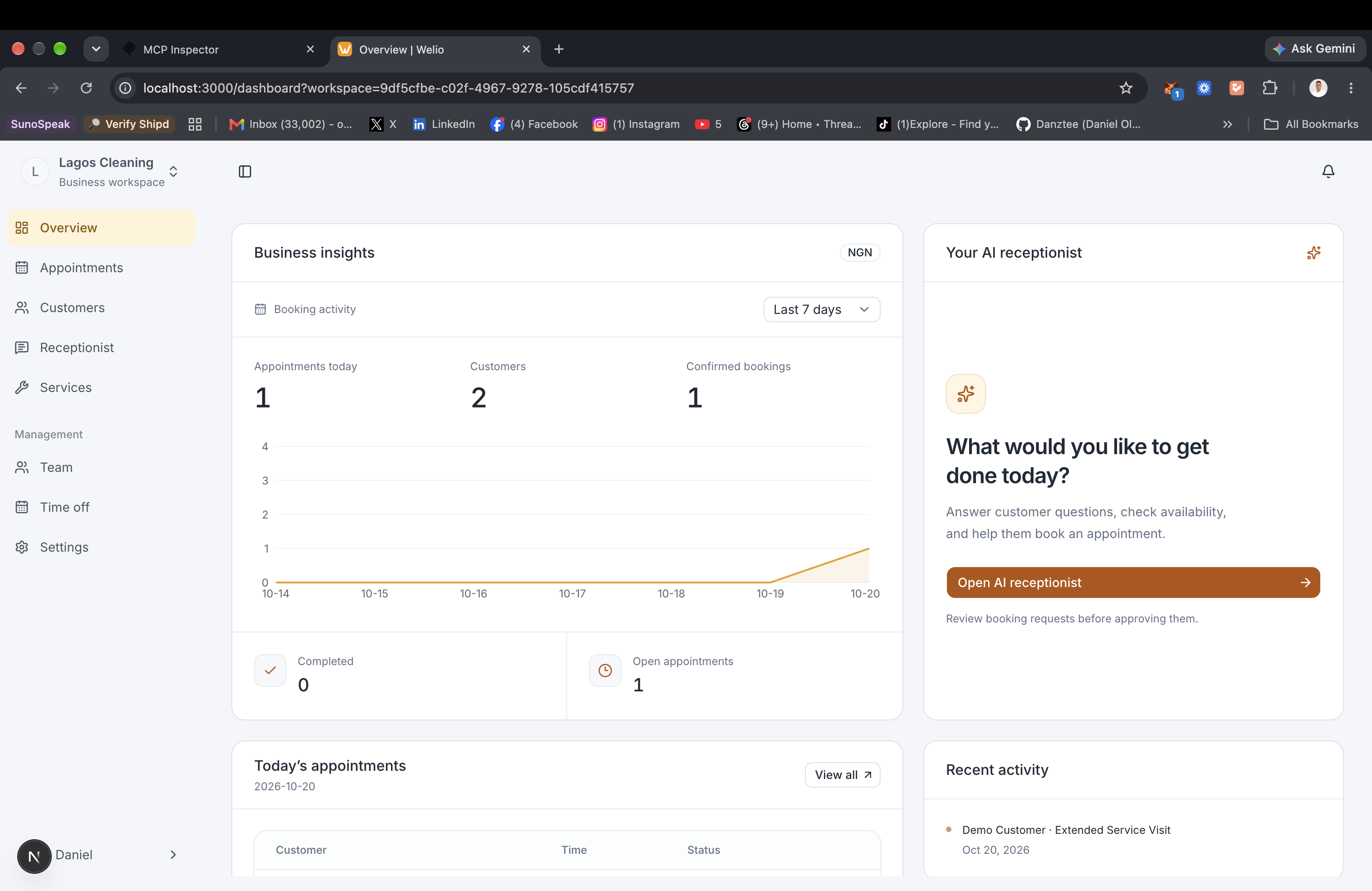
Welio Dashboard
Inspiration
Small service businesses need to answer customer questions, coordinate staff availability, and keep bookings up to date while serving customers. We wanted to bring those workflows into one dependable workspace and give customers a conversational way to get help and book, without taking away the regular booking form.
What we built
Welio is a multi-tenant booking and operations app. Owners manage services, staff, working hours, customers, and appointments. Customers can book through a public page or chat with the AI receptionist. Built with Strands and Amazon Bedrock, the receptionist answers questions using saved business information, checks availability, and prepares a booking for the customer to review and explicitly approve.
We also implemented a tenant-scoped MCP server over Streamable HTTP. Compatible clients can discover services, check availability, prepare a booking, and confirm it after obtaining the customer’s explicit approval. This is our Alexa+ integration path; connecting it to a native Alexa+ client and demonstrating the complete interaction remain to be done.
How we built it
Welio uses Next.js and TypeScript, with PostgreSQL and Drizzle for persistent data. Shared booking rules check service eligibility, staff schedules, breaks, time off, buffers, and current appointments. The AI and MCP tools reuse server-side booking logic, while workspace membership and the business slug keep each business’s data scoped.
Challenges and what we learned
The hardest part is making a conversational assistant dependable when it can affect a real schedule. Availability must come from the business’s actual calendar; a proposal must expire; and the slot and price must be checked again before a booking is created. The customer must approve the exact appointment details. We learned to make the AI a guide to booking while keeping the application—not the model—as the source of truth.
Built With
- amazon-bedrock
- amazon-web-services
- drizzle
- mcp
- next.js
- postgresql
- strands
- typescript

Log in or sign up for Devpost to join the conversation.