-
-
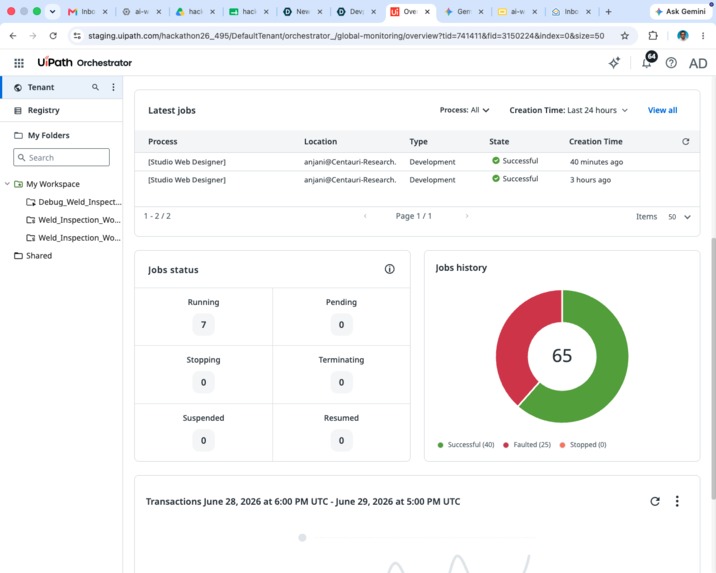
ui-pathdashboard
-
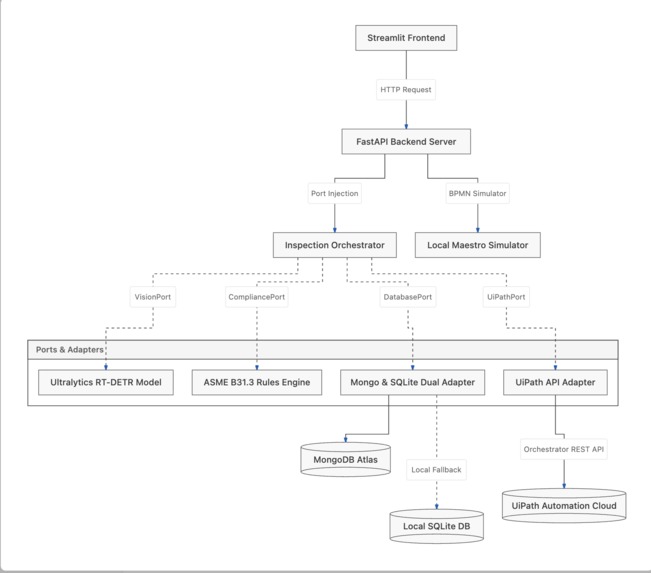
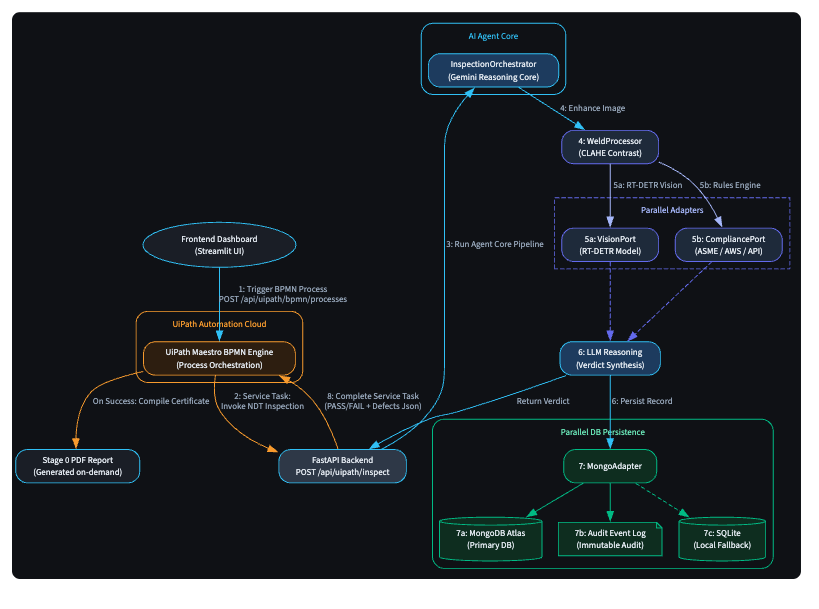
architecture - macro
-
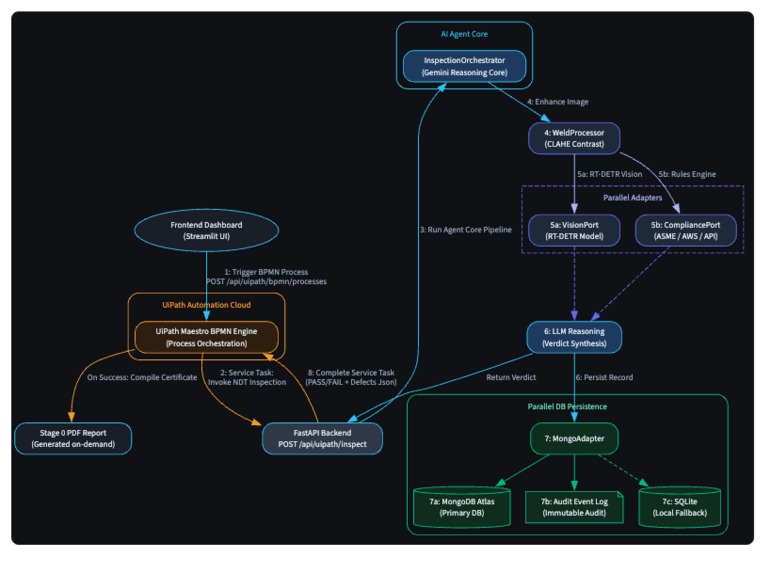
agent architecture (1 of 3)
-
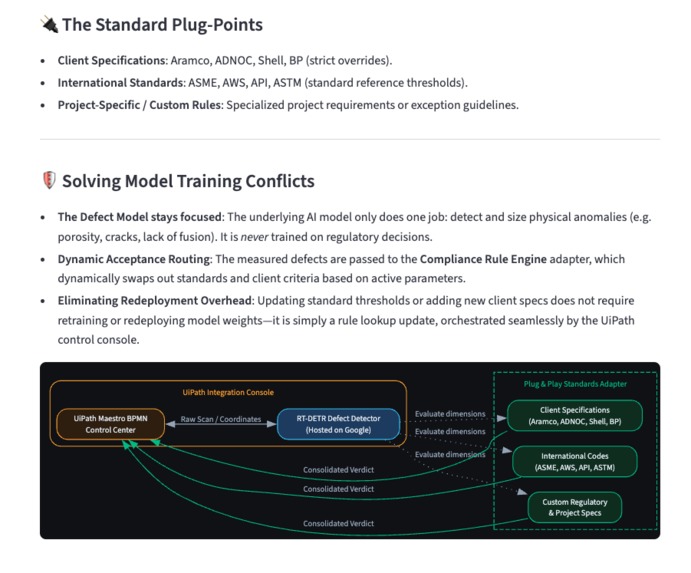
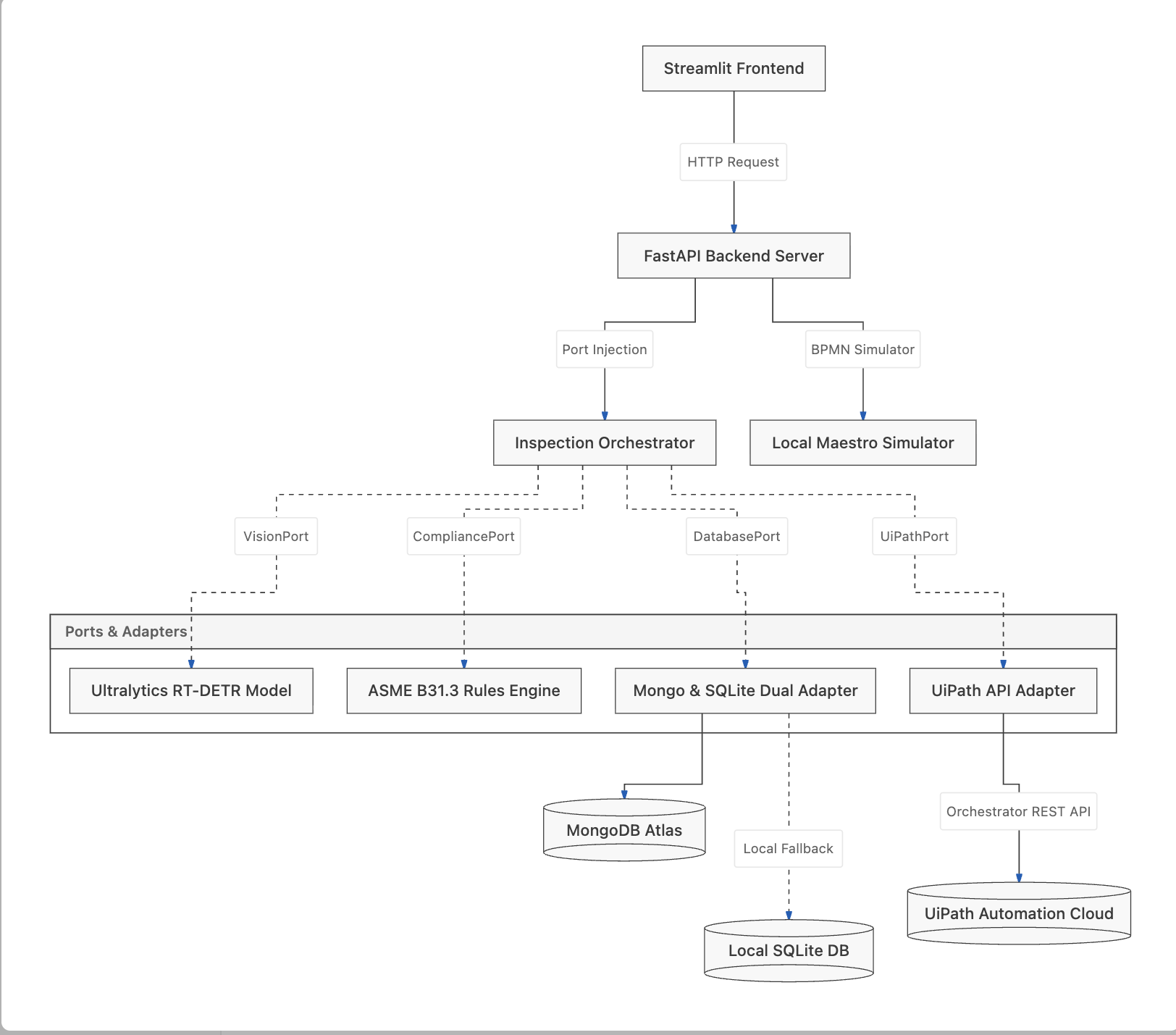
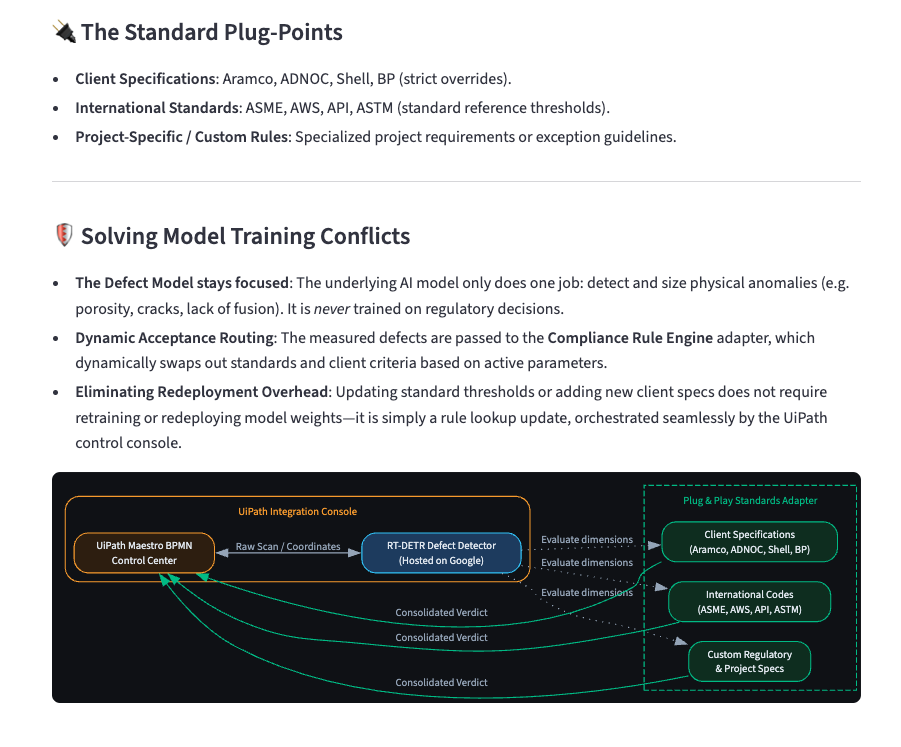
ui-path - plug and play architecture (3/3)
-
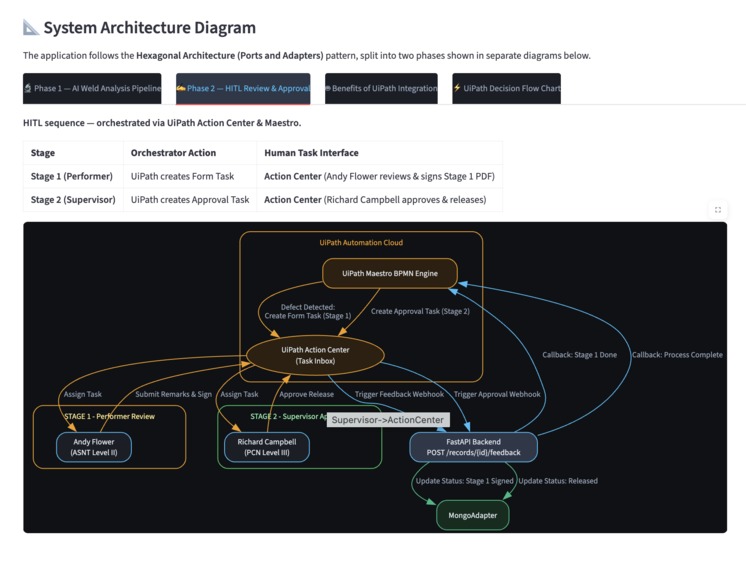
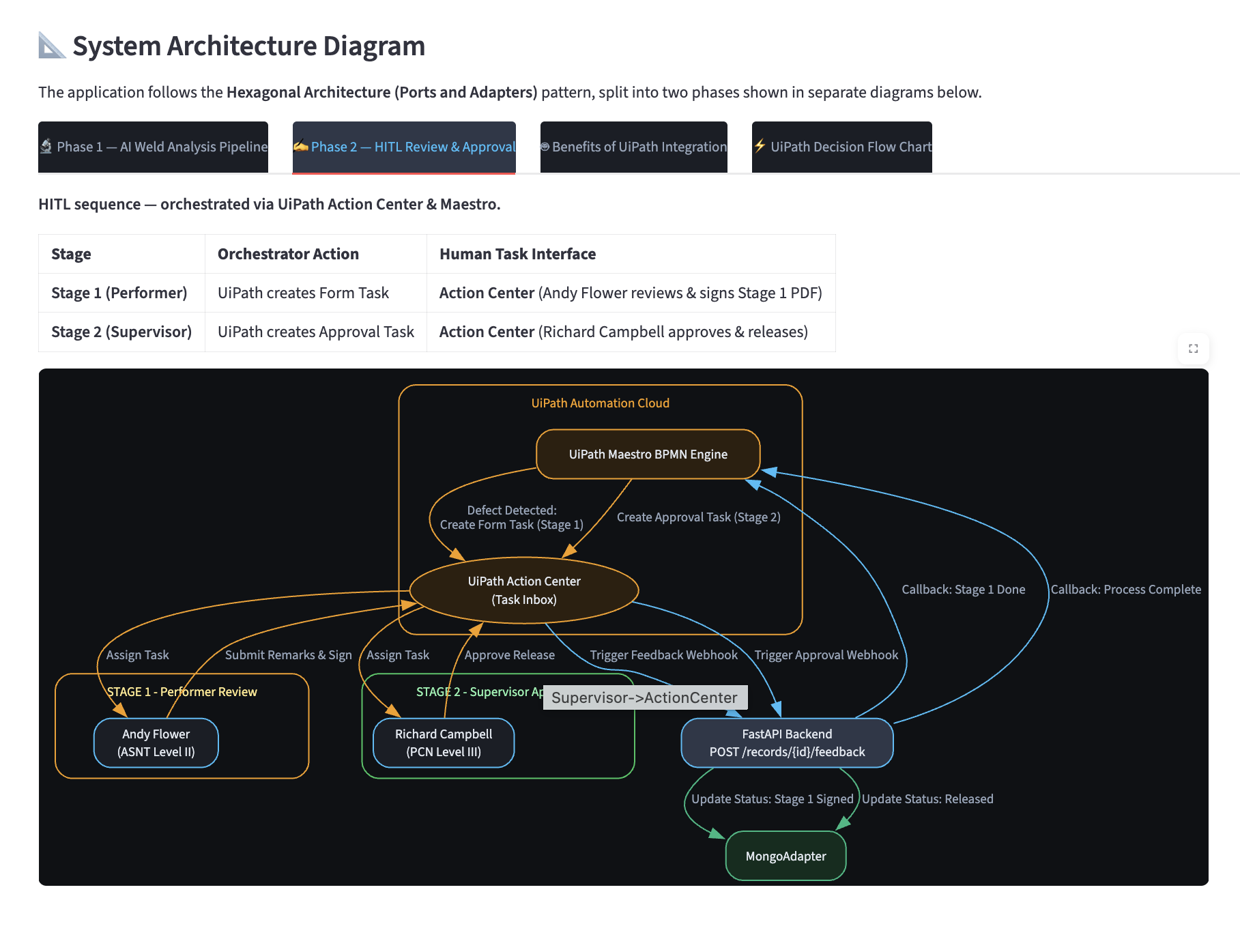
ui-path - Human in the loop (2/3)
-
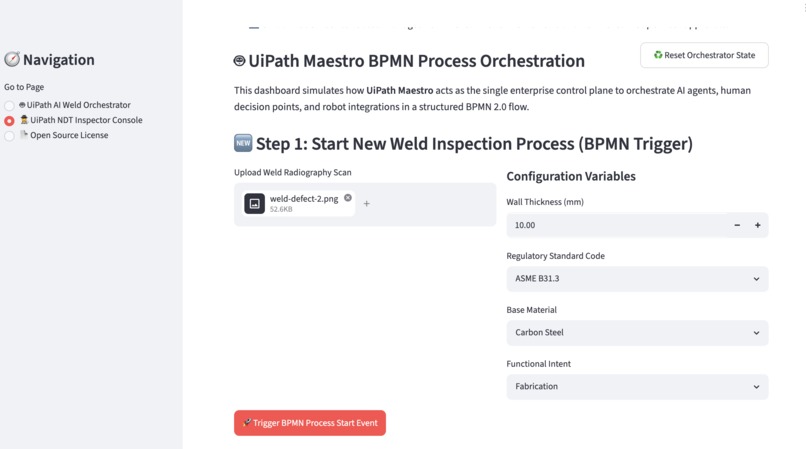
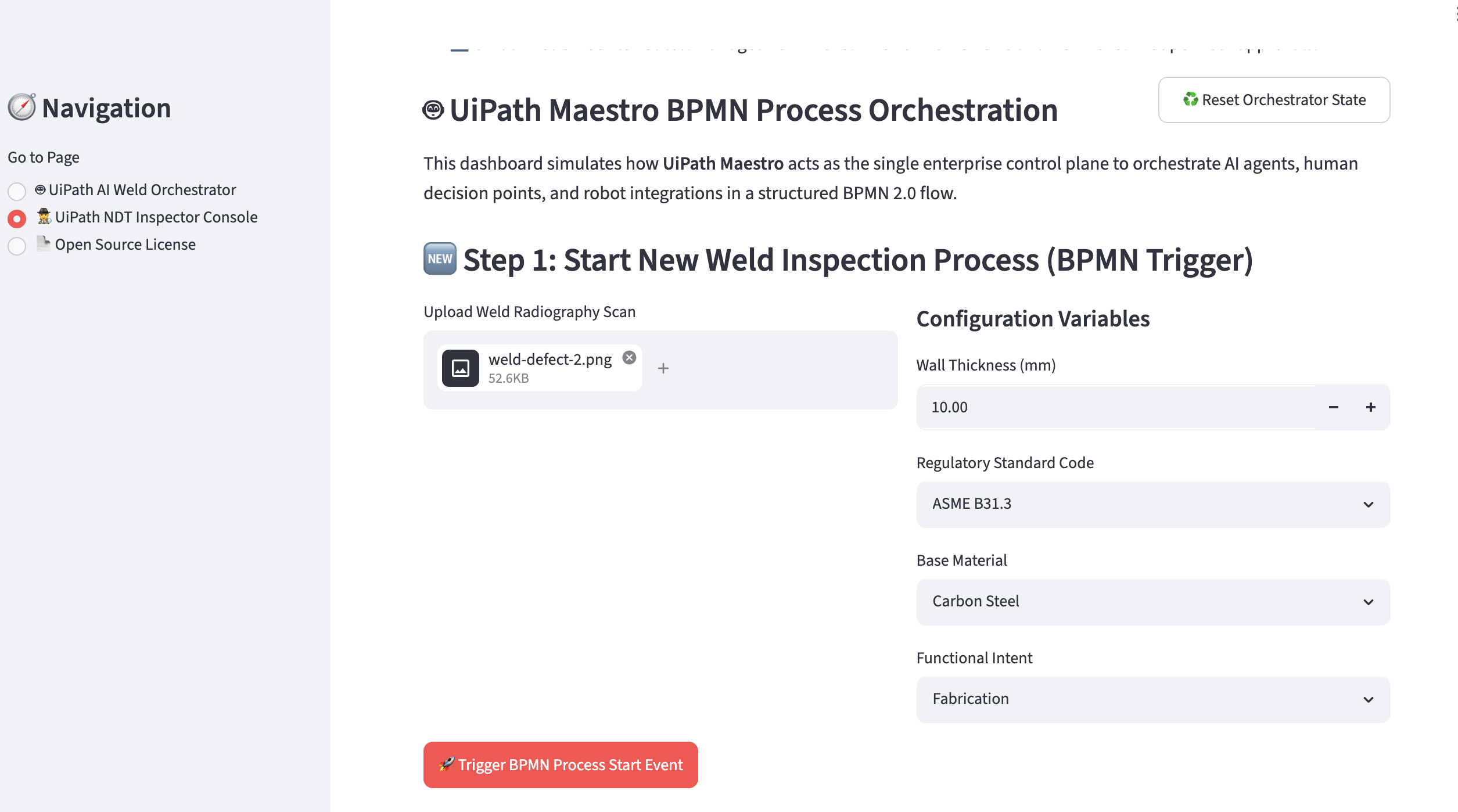
UX-image upload to initiate UI-path orchestration
Inspiration
Industrial welding quality assurance in sectors like oil & gas and pipelines relies heavily on manual inspections of radiographic (RT) films. Translating these scans into ASME/AWS compliance verdicts and managing physical rework is a slow, error-prone, and highly siloed process. We were inspired to build a solution that bridges the gap between deep-learning computer vision models, complex engineering code criteria, and enterprise workflow execution by using a decoupled, orchestrator-driven architecture.
What it does
WeldInspector AI Workflow automates the end-to-end "Review-to-Repair" lifecycle.
It ingests weld scans, enhances images (CLAHE), and uses an RT-DETR object detection model to pinpoint defects. It cross-references defect dimensions against a modular rules engine to evaluate compliance with international codes (ASME B31.3 / AWS). It routes defect-ridden cases through UiPath Action Center for multi-stage human reviewer validation (ASNT Level II Performer and PCN Level III Supervisor). For failed welds, it launches a Google Antigravity SDK Reasoning Agent (powered by Gemini) to analyze defects and draft a customized physical Repair Action Plan for welding technicians.
How we built it
Orchestration: Built with UiPath Maestro BPMN 2.0 acting as the central control plane, dispatching service and user tasks. Backend AI Core: Developed using FastAPI to wrap the RT-DETR vision model and rule evaluation layers. Agentic Reasoning: Configured with the Google Antigravity SDK using Gemini 1.5 Pro to execute reasoning loops, query compliance adapters, and synthesize repair instructions. Frontend: A sleek Streamlit dashboard visualizing the live BPMN process state, REST API transaction logs, and generated inspection certificates. Persistence: Dual-write storage architecture using MongoDB Atlas with SQLite failover capability.
Challenges we ran into
Decoupling AI Logic from Compliance Codes: Training computer vision models on regulatory codes causes severe drift and overhead whenever standards update. We overcame this by keeping the model focused purely on physical dimensions and writing a plug-and-play standards adapter. State Persistence in Streamlit: Streamlit's reactive reload model initially cleared simulated BPMN runtime states on refresh. We solved this by implementing state endpoints in the FastAPI backend that cache active workflow transactions.
Accomplishments that we're proud of
Successfully integrating a complex, multi-agent reasoning chain directly into a standard enterprise UiPath BPMN workflow. Establishing an immutable audit trail matching each weld to its raw image hash, standard clauses, client overrides, and digital approvals. Creating a dynamic BPMN 2.0 Process Map that highlights the active execution node on the frontend in real time.
What we learned
Decoupling computer vision models from business logic makes AI systems highly robust, scalable, and easy to maintain. Combining RPA (UiPath) with GenAI agents (Antigravity SDK) provides the perfect combination of strict process governance (BPMN) and intelligent flexibility (reasoning models).
What's next for WeldInspector_AI_workflow_ui_path
Physical Robot Integration: Connecting the UiPath Orchestrator to actual crawler robots to automate physical camera positioning on pipe spools. Localized Fine-Tuning: Extending the Compliance Port to ingest and parse localized project specification PDFs on the fly using RAG.
Built With
- api
- css
- docker
- fastapi
- fpdf2-(pdf-generation)
- gemini
- genai
- github
- google-antigravity-sdk
- google-cloud-platform-(gcp-cloud-run-&-vertex-ai)
- graphviz
- html
- markdown
- mongodb-atlas-(primary-cloud-database)
- orchestrator
- pydantic
- python
- rest
- sqlite
- streamlit
- uipath
- uipath-automation-cloud
- uipath-maestro-bpmn-2.0
- ultralytics-yolo-/-rt-detr-(computer-vision)
- vertex

Log in or sign up for Devpost to join the conversation.