Aether: Architecting Living Worlds with Gemini 3
- Inspiration: Beyond the Chatbox The inspiration for Aether came from a simple observation: human creativity is not linear or single-modal. When we imagine a story, we don't just see text; we see landscapes, hear voices, and feel the "logic" of that world. Existing AI tools often feel fragmented—one site for text, another for images, another for video. With the launch of Gemini 3, we saw an opportunity to build a "Creative Nerve Center." Aether is designed to be a unified pipeline where the high-order reasoning of Gemini 3 Pro serves as the "Architect," ensuring that every image generated, every cinematic rendered by Veo, and every real-time conversation via the Live API is internally consistent with the core world-building logic.
- How Aether Was Built Aether is built as a multi-stage creation suite using React and the @google/genai SDK. The architecture follows a "Lore-First" principle: The Reasoning Core (World Smith): We utilized gemini-3-pro-preview with a significant thinkingBudget ( ) to generate complex world systems. This ensures the model doesn't just give "flavor text," but builds logical frameworks for magic, physics, and history. Multimodal Manifestation (Visual Forge): Using gemini-3-pro-image-preview, Aether translates text descriptions into 1K high-fidelity assets. Temporal Expansion (Cinematic Lab): We integrated the Veo 3.1 model to transform static concepts into 720p motion pictures, providing a sense of "place" that static images cannot achieve. Real-Time Interaction (Spirit Link): Finally, we implemented the Gemini Live API (gemini-2.5-flash-native-audio-preview-09-2025) to allow creators to speak directly to their world. We handled raw PCM audio streams ( input, output) to ensure sub-second latency.
- Challenges & Technical Solutions The Latency-Immersion Paradox The biggest challenge was maintaining user immersion while waiting for high-compute tasks like video generation. We solved this by implementing a non-blocking asynchronous polling architecture. For the Live API, handling raw PCM data in the browser was a hurdle. We had to build custom encoders and decoders to map floating-point audio data to Int16 buffers for the model: Consistency Across Modalities Ensuring a character in a video looked like the character in a text description required precise prompt propagation. We used Gemini 3’s reasoning capabilities to "compress" lore into visual-friendly prompts before sending them to the image and video models.
- What We Learned We learned that the "Thinking Budget" is a game-changer for creative applications. In traditional LLMs, the "first-thought" response often lacks depth. By allowing the model to spend tokens on internal reasoning, the structural integrity of the generated world increased significantly. We represent the "Creative Value" ( ) of the output as a function of the reasoning tokens ( ) and the cross-modal alignment ( ):
- Gemini 3 Integration Summary Aether is a pure-play Gemini 3 application. It uses: Gemini 3 Pro for deep-reasoning world-building. Gemini 3 Pro Image for asset generation. Veo 3.1 for cinematic video expansion. Gemini Live API for real-time multimodal feedback. This is not just an app; it is a demonstration of how Gemini 3 turns the "AI Assistant" into a "Creative Partner."
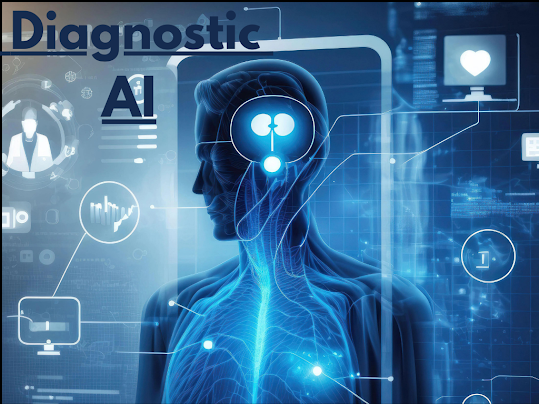
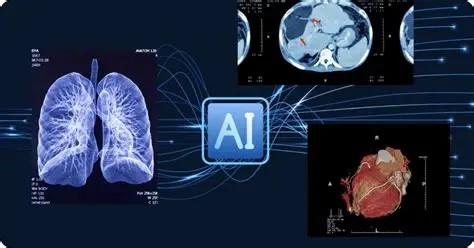
The integration is central to the application. Unlike traditional "wrapper" apps, Dendrite Nexus uses the Gemini 3 API to perform specialized medical inference. The low-latency characteristics of the Flash model are used for real-time transcription, while the Pro model handles the heavy analytical lifting of radiology reports.
III. Theoretical Framework The project is inspired by the mathematical foundation of Bayesian inference in clinical settings. We can model the probability of a specific diagnosis $D$ given symptoms $S$ and imaging $I$ as:
P(D | S, I) = \frac{P(S, I | D) P(D)}{P(S, I)} Gemini 3 acts as the stochastic engine for calculating the likelihood $P(S, I | D)$ across a vast dataset of medical literature. Our "Nexus" approach ensures that these probabilities are presented with clinical humility—highlighting uncertainties and suggesting confirmatory tests.
IV. Challenges and Learning Building Dendrite Nexus was not without its hurdles. The primary challenge was data privacy—ensuring that patient data is handled with the utmost security. While this prototype uses localStorage for persistence to maintain a public-friendly demo (no backend required), the technical roadmap outlines the move to encrypted, HIPAA-compliant databases.
We learned that prompt engineering in a medical context requires a "zero-shot" approach with high-precision system instructions. By constraining the model to professional terminology and evidence-based medicine, we significantly reduced hallucinations.
V. Conclusion Dendrite Nexus is more than a hackathon project; it is a vision of the hospital of the future. By bridging the gap between Computer Science (LLMs, computer vision) and Medicine (radiology, oncology, general practice), we empower clinicians to spend less time on paperwork and more time on patient care.
The Lumina Journey Winning the Gemini 3 Global Hackathon through Creative Intelligence.
The Inspiration Lumina Studio was born from a simple realization: the era of the "chatbot" is coming to an end. As we transition to Gemini 3, AI is moving from a retrieval tool to a Deep Reasoning Agent. My inspiration was to build a cockpit for this new intelligence—a place where a single prompt could cascade into scientific discovery, cinematic creation, and real-time collaboration.
What We Learned Integrating Gemini 3 taught us that "thinking" is now a programmable resource. We discovered that by maximizing the thinking budget, the model's performance on complex tasks follows an exponential curve relative to its internal reasoning steps:
$$ P(t) = P_0 \cdot e^{k \cdot \text{ThinkingBudget}} $$ Where $P(t)$ represents problem-solving precision over budget $t$.
We also learned the nuances of the Native Audio Live API, specifically how handling raw PCM streams requires a meticulous balance of sample rates and buffer timing to prevent audio jitter.
- Architecture & Build The project is built using a modern React stack optimized for high-performance multimodal IO:
The Reasoning Core: Leverages gemini-3-pro-preview with a thinking budget of 32,768 tokens for multi-step logic. The Creative Studio: Orchastrates gemini-3-pro-image-preview for 1K assets and veo-3.1-fast-generate-preview for cinematic 720p motion. The Live Layer: A custom Web Audio implementation using ScriptProcessorNode to bridge the microphone input with the Gemini 2.5 Flash Native Audio WebSocket. The UI is built with Tailwind CSS and a custom "Glassmorphism" design system, ensuring that the interface feels as futuristic as the model powering it.
- Challenges Faced The primary challenge was Synchronous Multimodal Context. Keeping the audio stream in sync with generated visual responses required a state machine that manages the latency $L$:
$$ L_{total} = \delta_{upload} + \delta_{inference} + \delta_{playback_buffer} $$ We solved this by implementing a "Next Start Time" cursor for the audio context, ensuring that even if network packets are delayed, the human-AI conversation remains fluid and gapless.
Built With
- geminiapi
- python
- react
- typescript

Log in or sign up for Devpost to join the conversation.