-
-
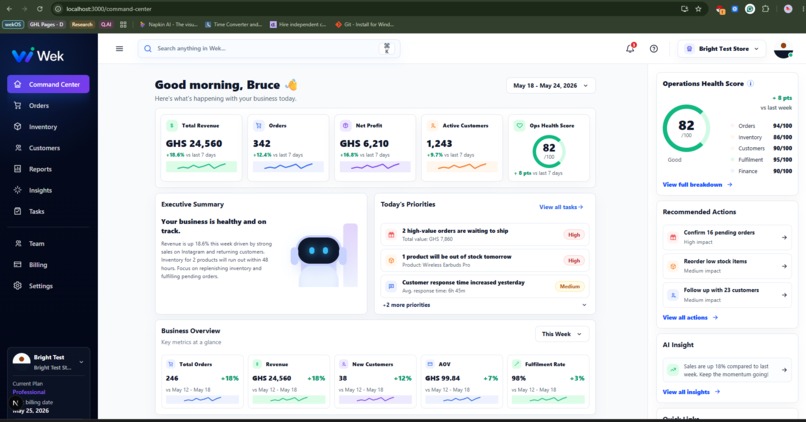
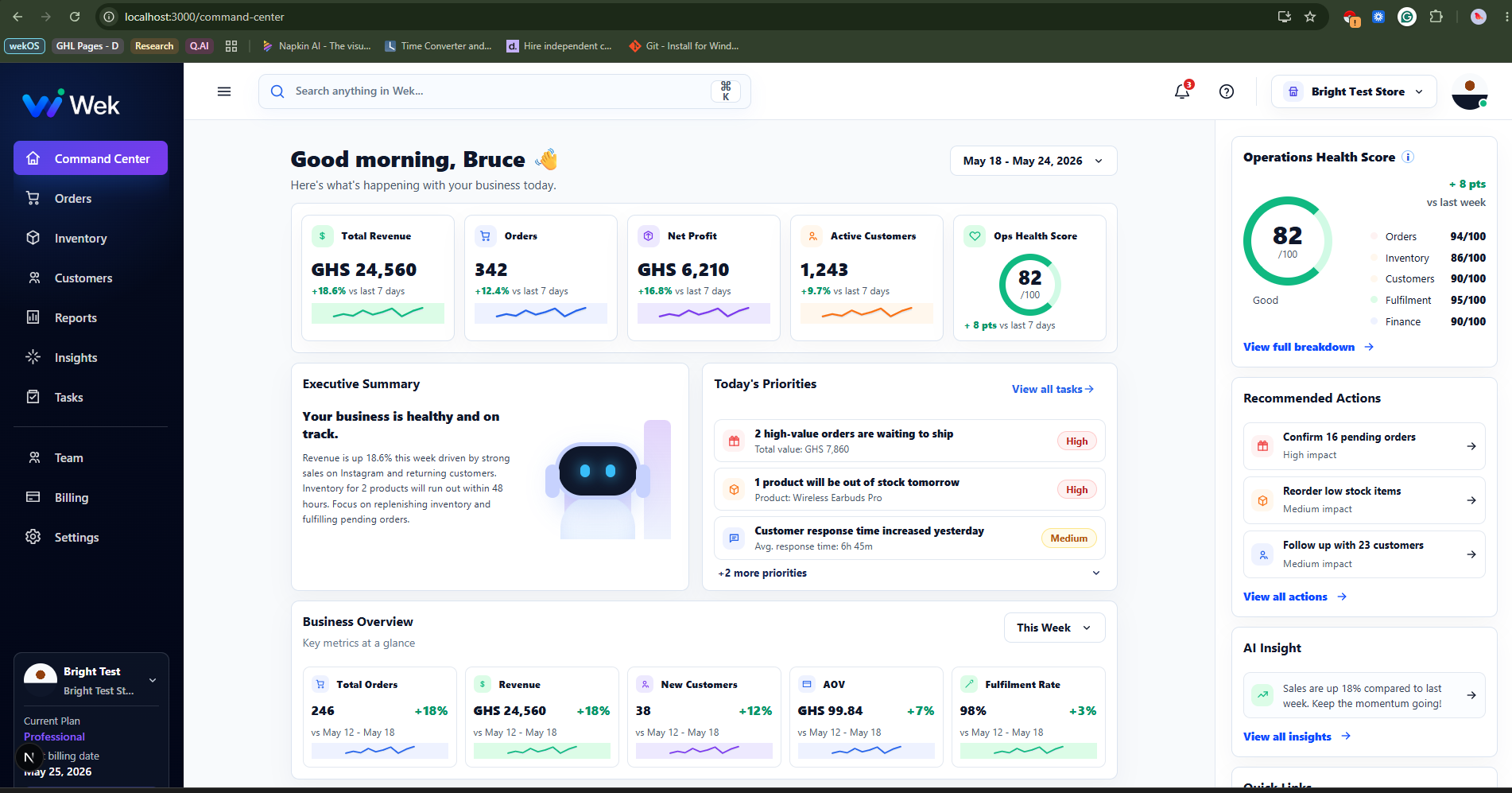
Command Center (Home)
-
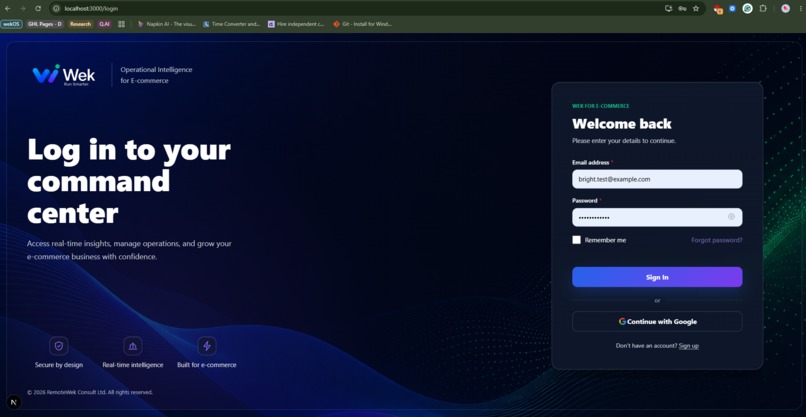
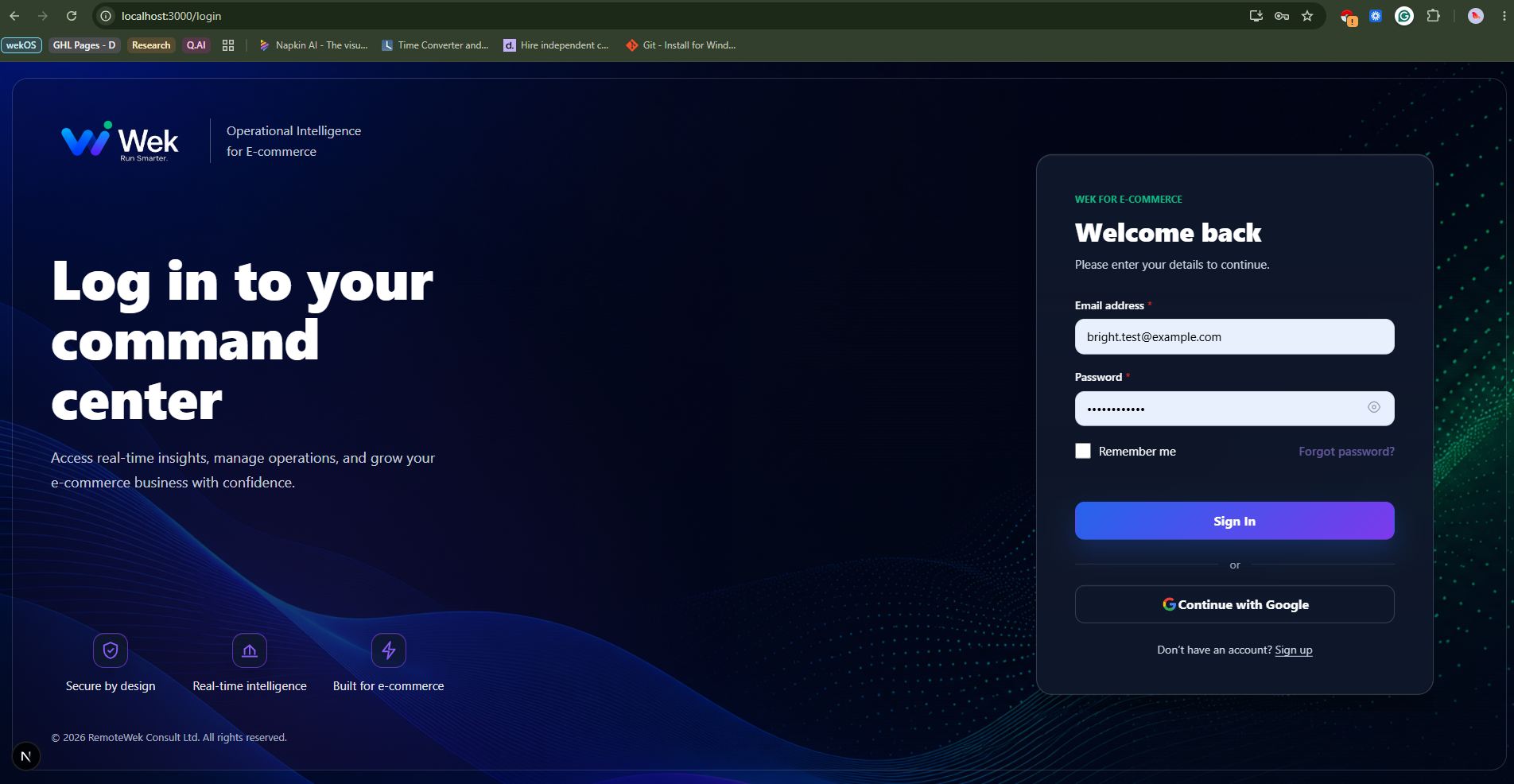
Login page
-
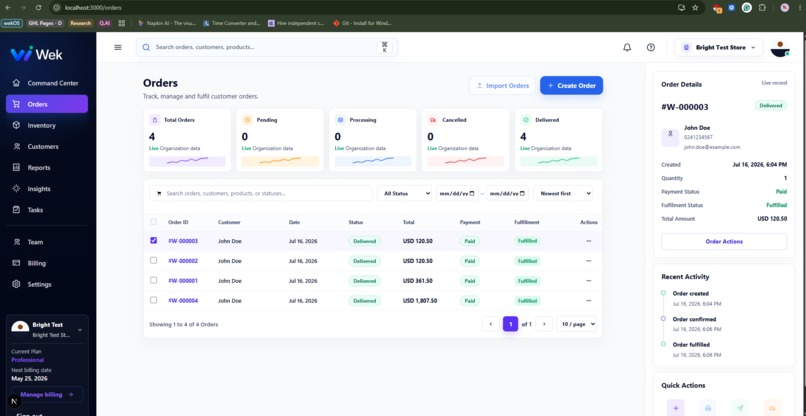
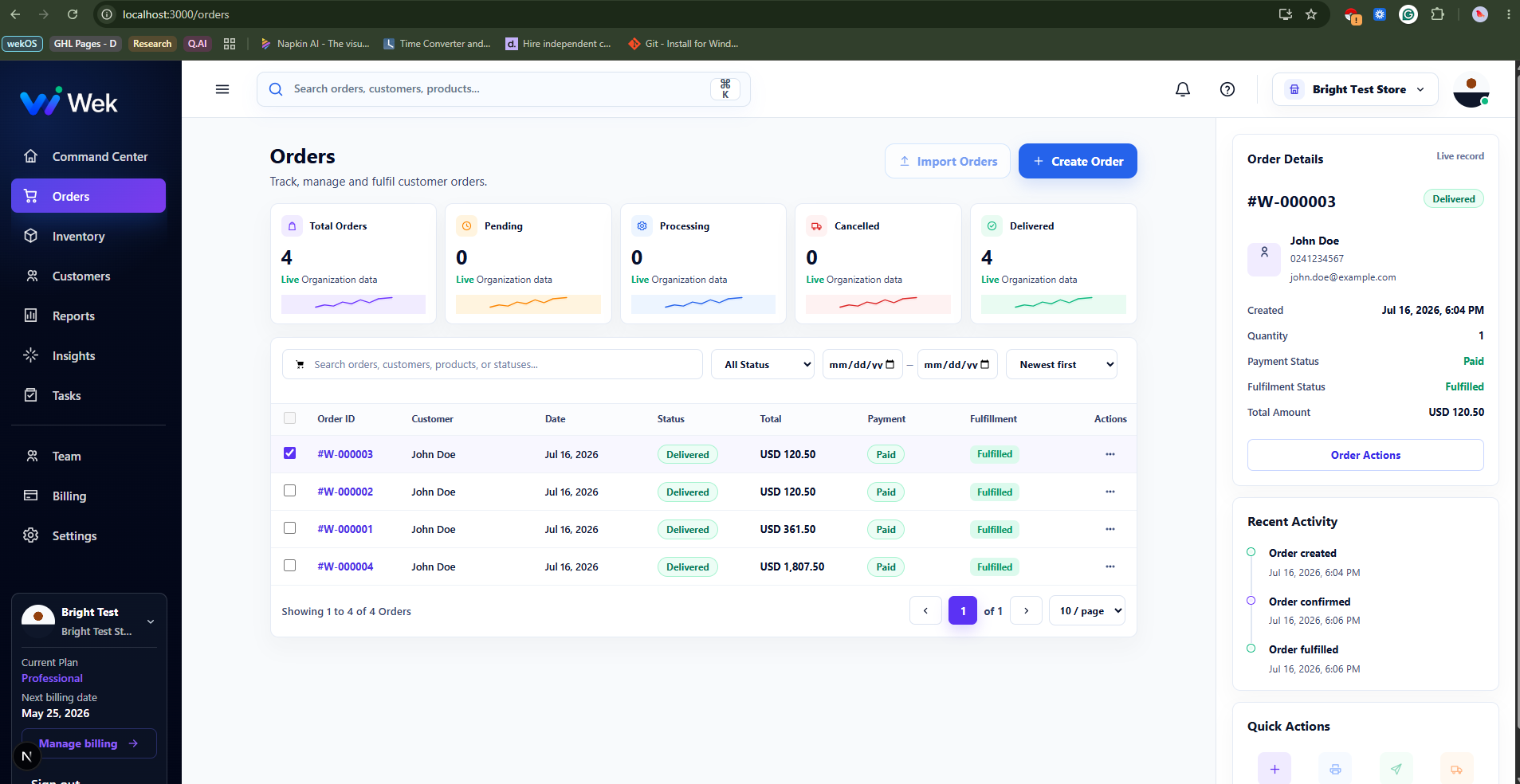
Orders page (Live with some capabilities)
-
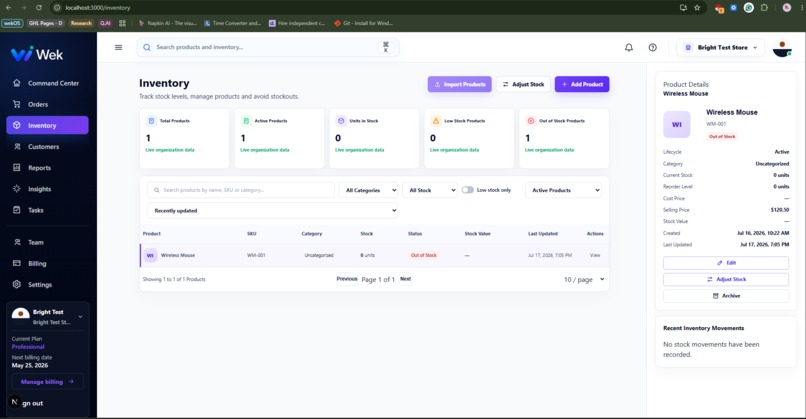
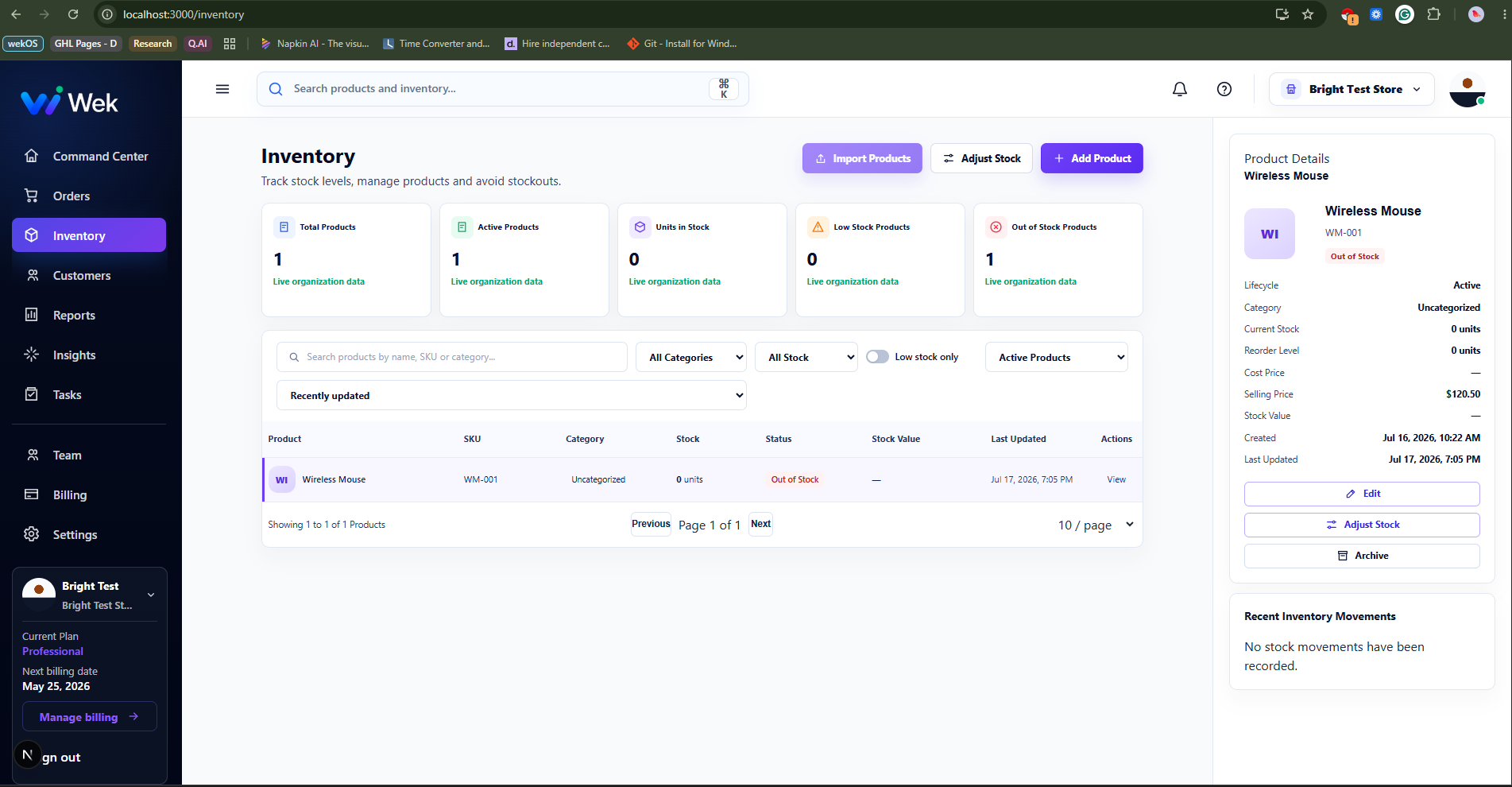
Inventory page (Live with some capabilities)
-
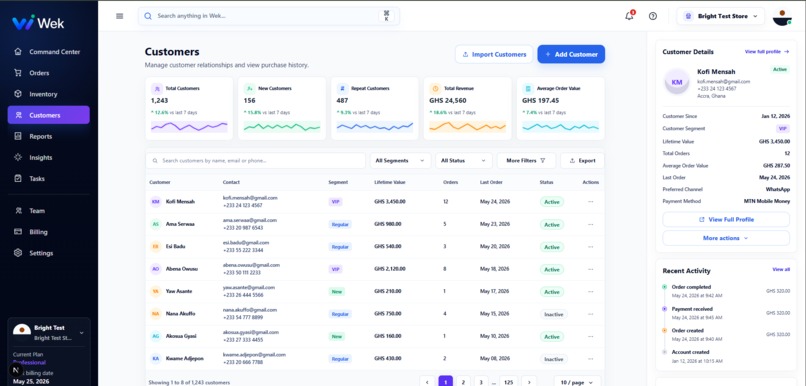
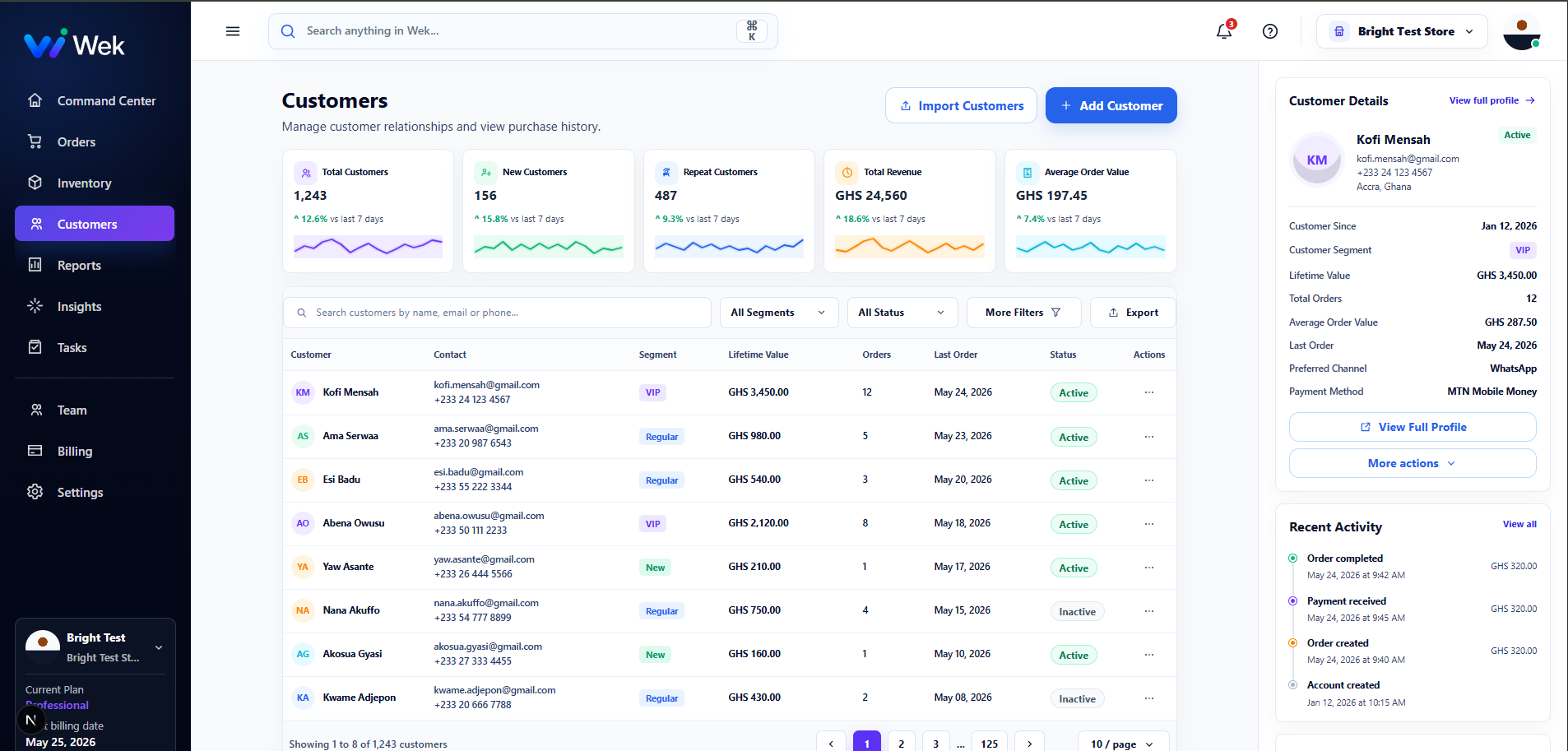
Customers page
-
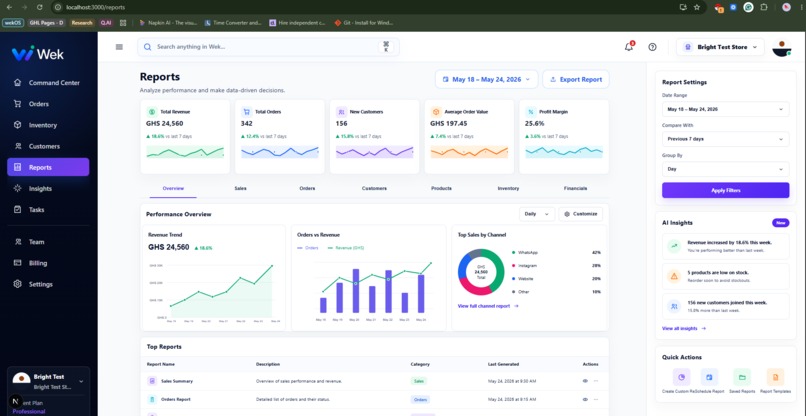
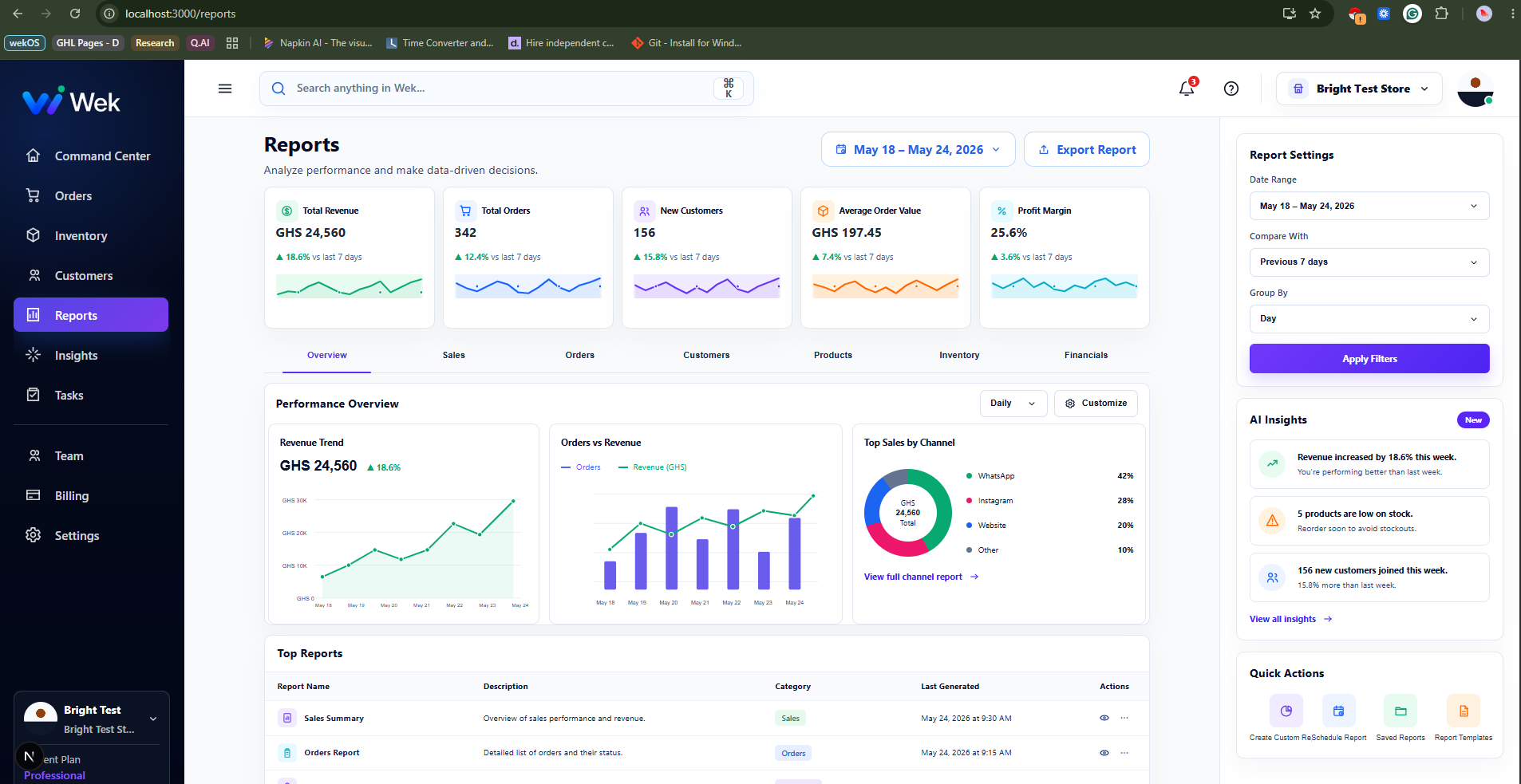
Reports page
-
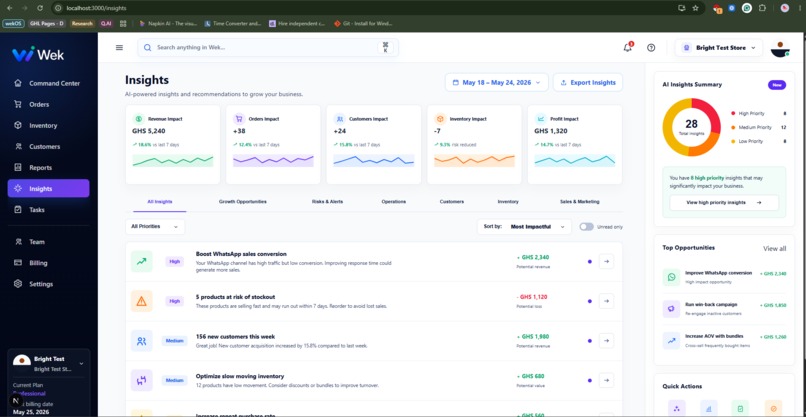
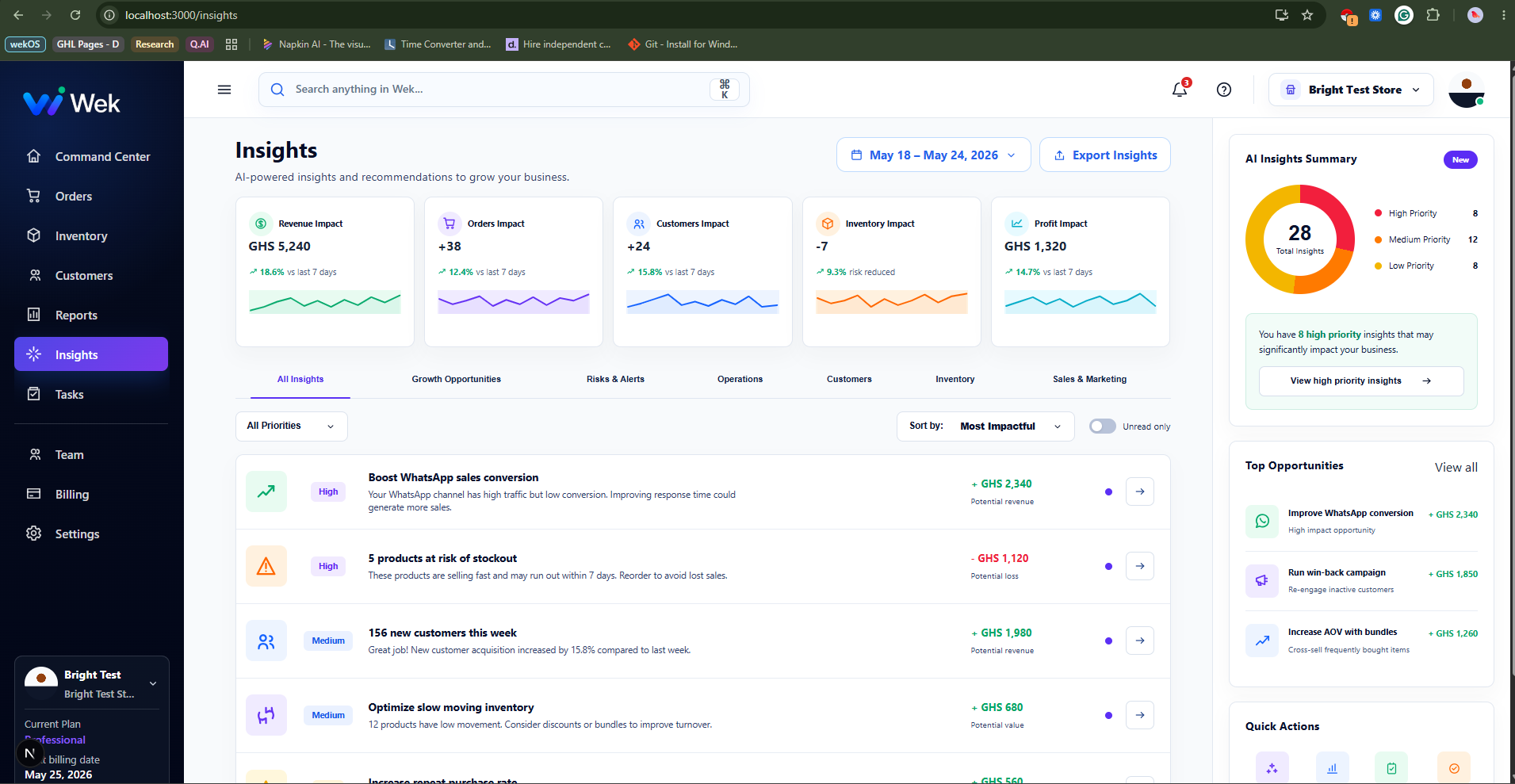
Insights page
-
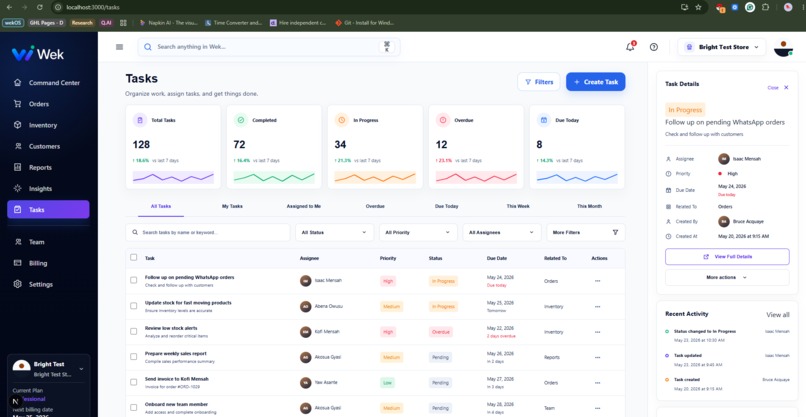
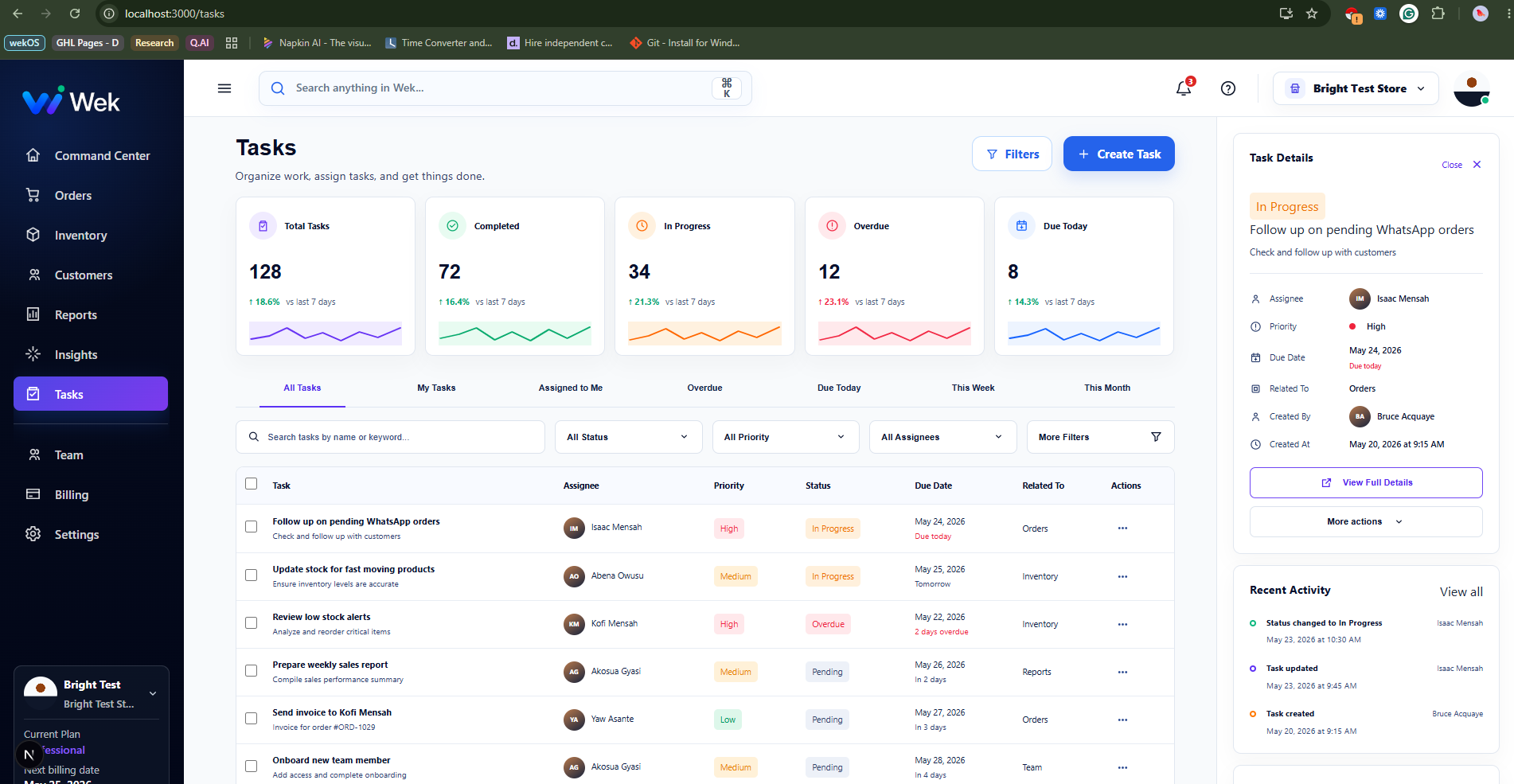
Task page
-
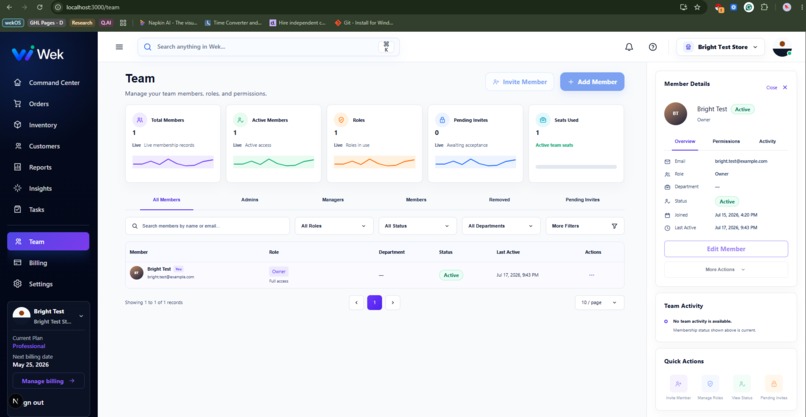
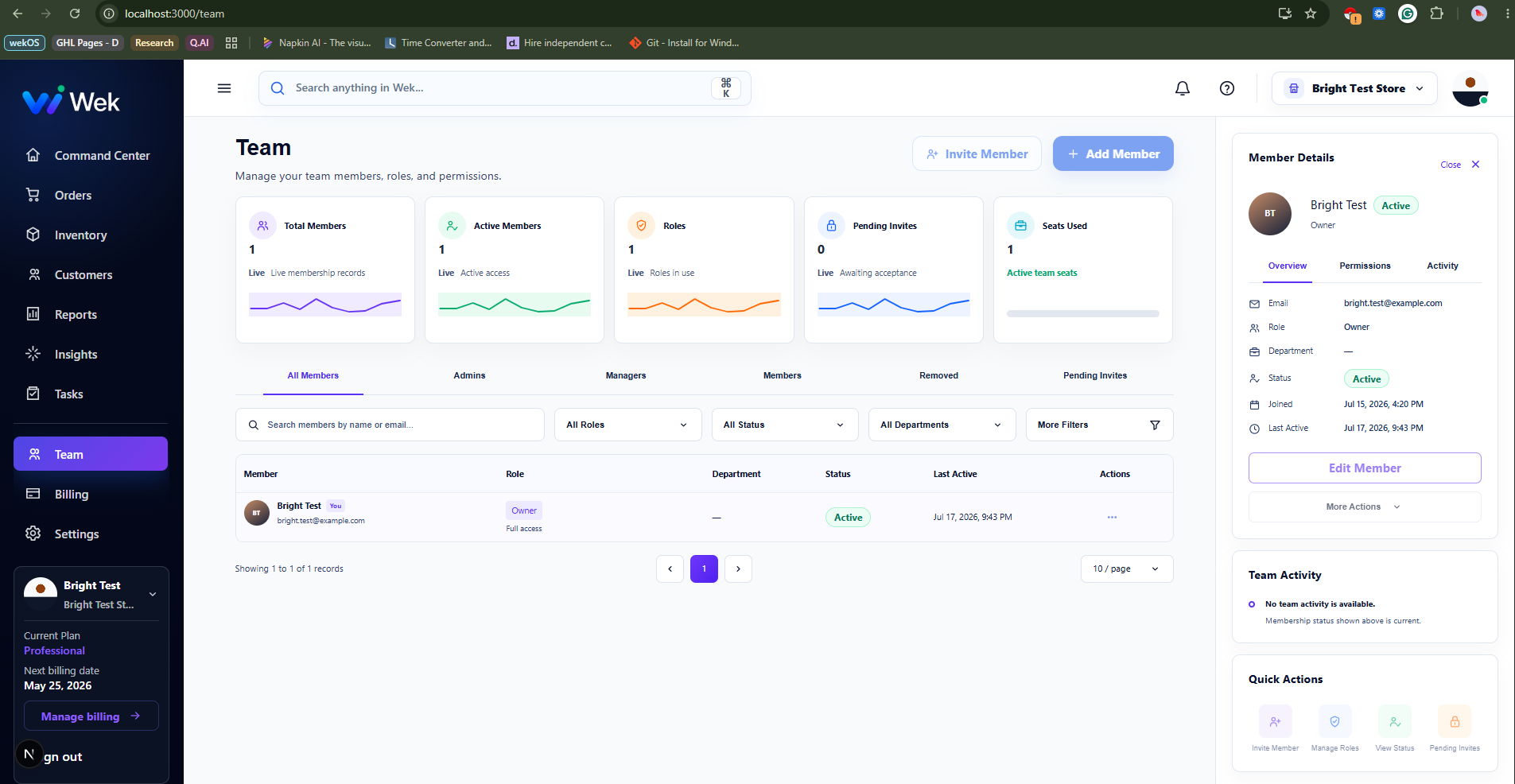
Team page
-
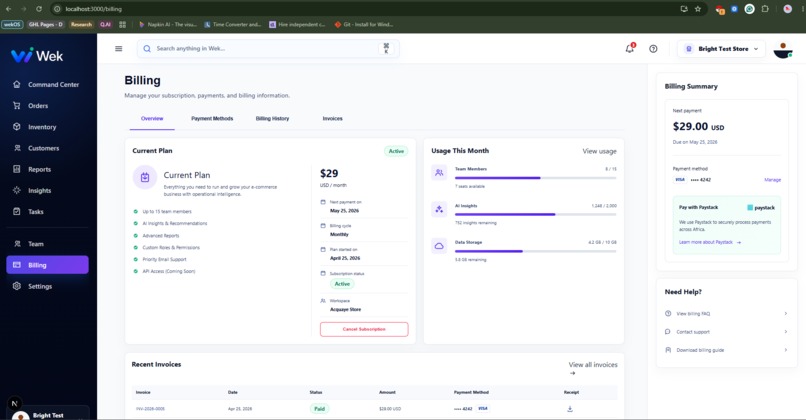
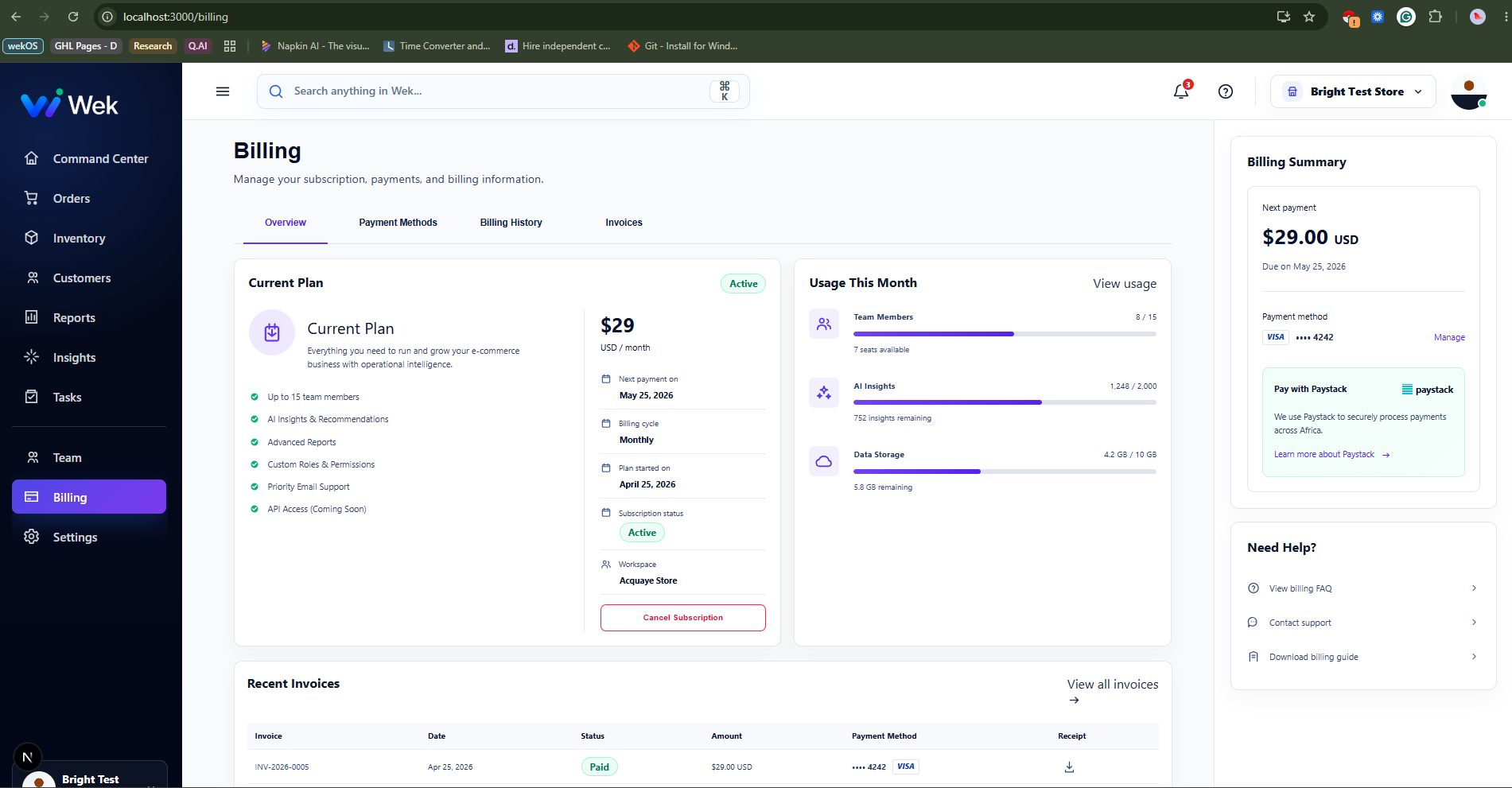
Billing page
-
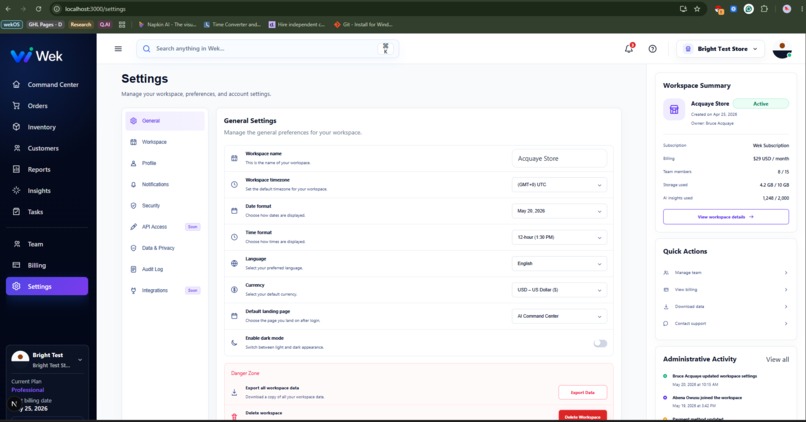
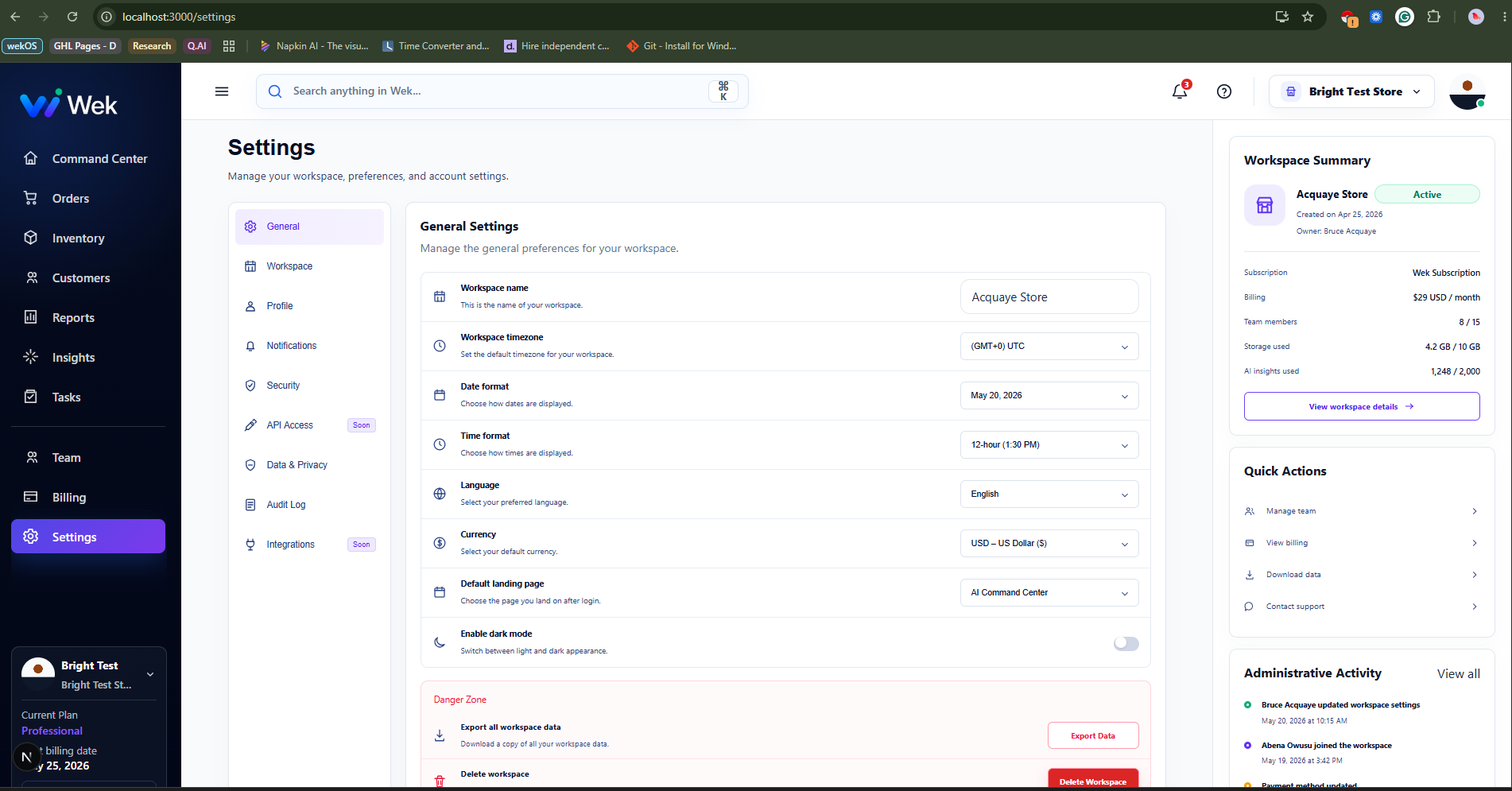
Settings page
-
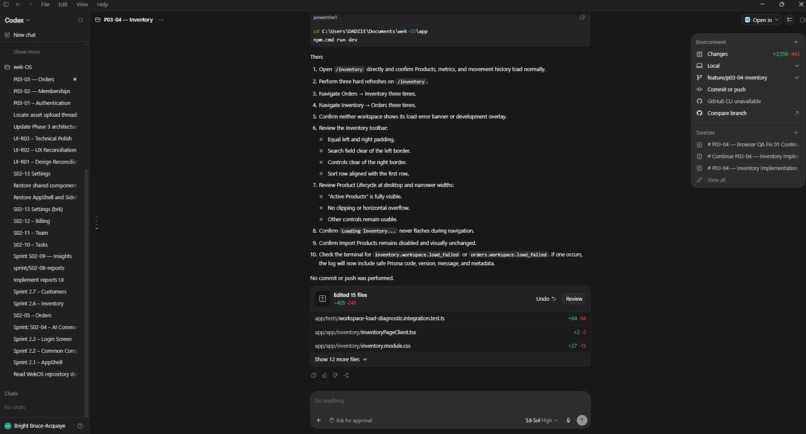
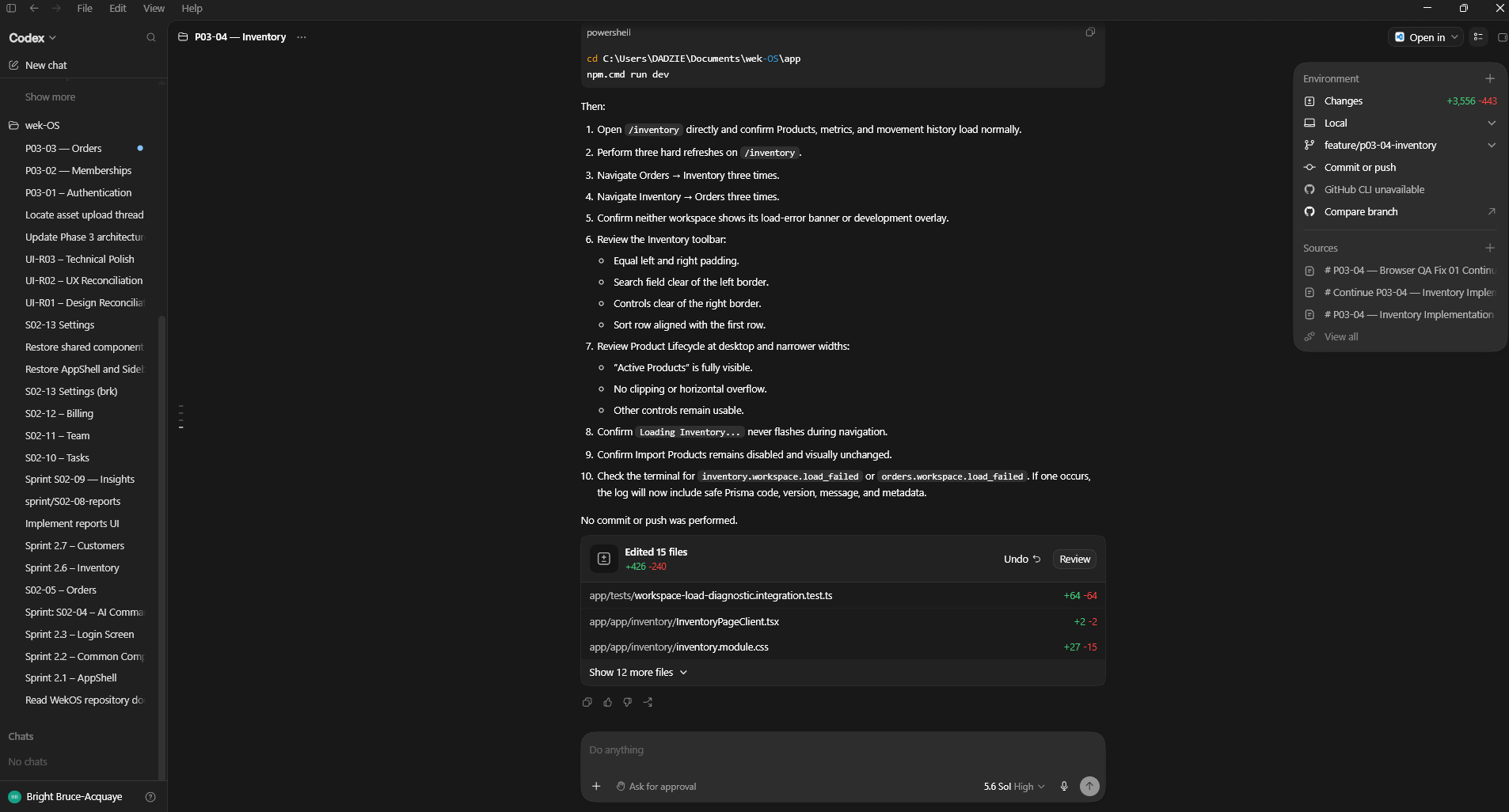
Busing wek in codex, each sprint on a new page
Inspiration
Small and medium-sized e-commerce businesses often manage their operations across disconnected tools such as WhatsApp, spreadsheets, payment platforms, online stores, and social media. While these tools help businesses operate, they don't provide a unified view of what is happening across the business.
After working closely with operations teams and business owners, I saw how difficult it was to detect problems early, understand operational performance, and make informed decisions from fragmented information. Wek was created to solve this problem by bringing operational intelligence into one AI-powered platform.
What it does
Wek is an AI-powered Operations Intelligence Platform built specifically for e-commerce businesses.
Rather than replacing the tools businesses already use, Wek acts as an intelligence layer that consolidates operational data, highlights business health, surfaces important operational signals, identifies risks, and helps founders make faster, more informed decisions.
The long-term vision is to build operational intelligence platforms for multiple industries, beginning with e-commerce.
How we built it
Wek is being built with a modern, scalable architecture using Next.js, React, TypeScript, Prisma, PostgreSQL, Auth.js, and OpenAI models. That's the technical part, i don't fully understand yet.
I come from an operations and process improvement background, not a software engineering background. When I started building Wek, I didn't know how to build a SaaS platform or where to begin.
I used ChatGPT as both a technical mentor and thought partner. Instead of asking it to simply generate code, I first asked it to teach me the entire product development process—from planning and architecture to implementation—as if I were a complete beginner.
Together, we defined the product vision, system architecture, development roadmap, technical documentation, and architectural decision records before writing a single line of code. Every document was reviewed, refined, and approved to create a clear blueprint for the platform.
Once the foundation was established, we adopted a structured sprint-based workflow. Each sprint focuses on one capability at a time. I work with ChatGPT to plan the sprint, review the implementation approach, and generate detailed prompts for Codex. After Codex produces the code, I test every feature manually, share screenshots and feedback with ChatGPT, iterate through QA, and only move to the next sprint after the current one is approved.
This process combines my experience in operations and structured execution with ChatGPT's technical guidance, allowing me to build a production-quality platform while continuously learning software engineering throughout the journey.
Challenges we ran into
The biggest challenge has been building a software product without coming from a software engineering background. While ChatGPT does an excellent job explaining concepts, I still have to spend time learning unfamiliar technical terms and understanding why certain architectural decisions matter before I can confidently approve them.
Another challenge has been maintaining consistency throughout a long-running project. As development progressed across many conversations, I occasionally found that ChatGPT would drift from previously agreed decisions or suggest changes that introduced unnecessary scope. To solve this, I established a structured documentation-first workflow, recorded important architectural decisions in the project repository, and enforced a simple rule: one sprint, one feature, one review, one approval. This helped keep both ChatGPT and the project aligned.
Working with AI also required building disciplined review and QA processes. Rather than accepting generated code at face value, every implementation is manually reviewed, tested in the browser, compared against the original product vision, and refined before moving to the next sprint.
Finally, working with limited internet connectivity occasionally interrupted long development sessions. When that happened, I relied on detailed project documentation and structured handoffs between ChatGPT conversations to preserve context and continue development without losing momentum.
Accomplishments that we're proud of
Although Wek is still under active development, I've established the core foundation needed for a scalable SaaS platform.
So far I've built:
- Secure authentication and session management
- Multi-tenant workspace architecture
- Role-based access control
- Modern operational dashboards
- AI Command Center foundation
- Core operational modules for orders, inventory, customers, reporting, and team management
Most importantly, I've validated that AI can be positioned as an operational intelligence layer rather than simply another assistant or chatbot.
What we learned
Building Wek with ChatGPT has completely changed how I think about software development and human-AI collaboration.
The biggest lesson is that ChatGPT performs best when given structure. Instead of asking ChatGPT to "build an app," I learned to invest time in defining the product vision, documenting requirements, planning the architecture, and breaking the work into focused sprints. The clearer the instructions and constraints, the more consistent and useful the output became.
I also learned that documentation isn't just for developers—it's essential for working effectively with AI. Maintaining roadmaps, architectural decisions, and project documentation helped preserve context across long development cycles and kept both the project and the ChatGPT aligned.
Another important lesson was that AI should be treated as a collaborative engineering partner, not an infallible expert. Early in development, I accepted a recommendation that resulted in unnecessary rework and several hours of lost time. Since then, I've learned to slow down when making high-impact technical decisions, ask more questions, understand the trade-offs, and validate assumptions before making irreversible changes.
Most importantly, I learned that someone without a traditional software engineering background can build sophisticated software by combining domain expertise, structured thinking, continuous learning, and AI. Success doesn't come from asking AI to do everything—it comes from asking better questions, reviewing its work critically, and making informed decisions together.
What's next for Wek for E-Commerce
My immediate focus is completing the MVP and launching a pilot with early e-commerce businesses.
Upcoming milestones include deeper AI capabilities, integrations with commerce and payment platforms, proactive operational monitoring, workflow automation, and richer business intelligence.
The long-term vision is to evolve Wek into the operational intelligence platform that helps businesses across Africa operate with greater visibility, consistency, and confidence.
Built With
- api
- auth
- bullmq
- css
- gpt-5
- neon
- next.js
- openai
- postgresql
- prisma
- react
- redis
- resend
- supabase
- tailwind
- typescript
- vercel

Log in or sign up for Devpost to join the conversation.