-
-
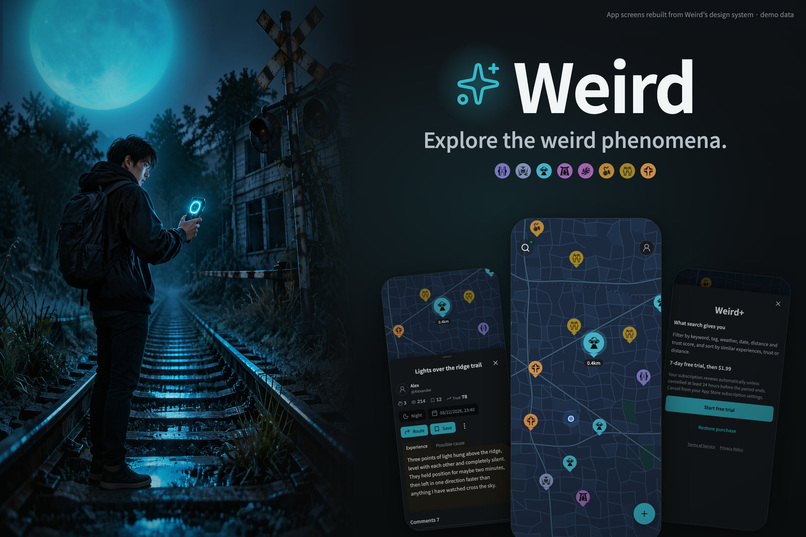
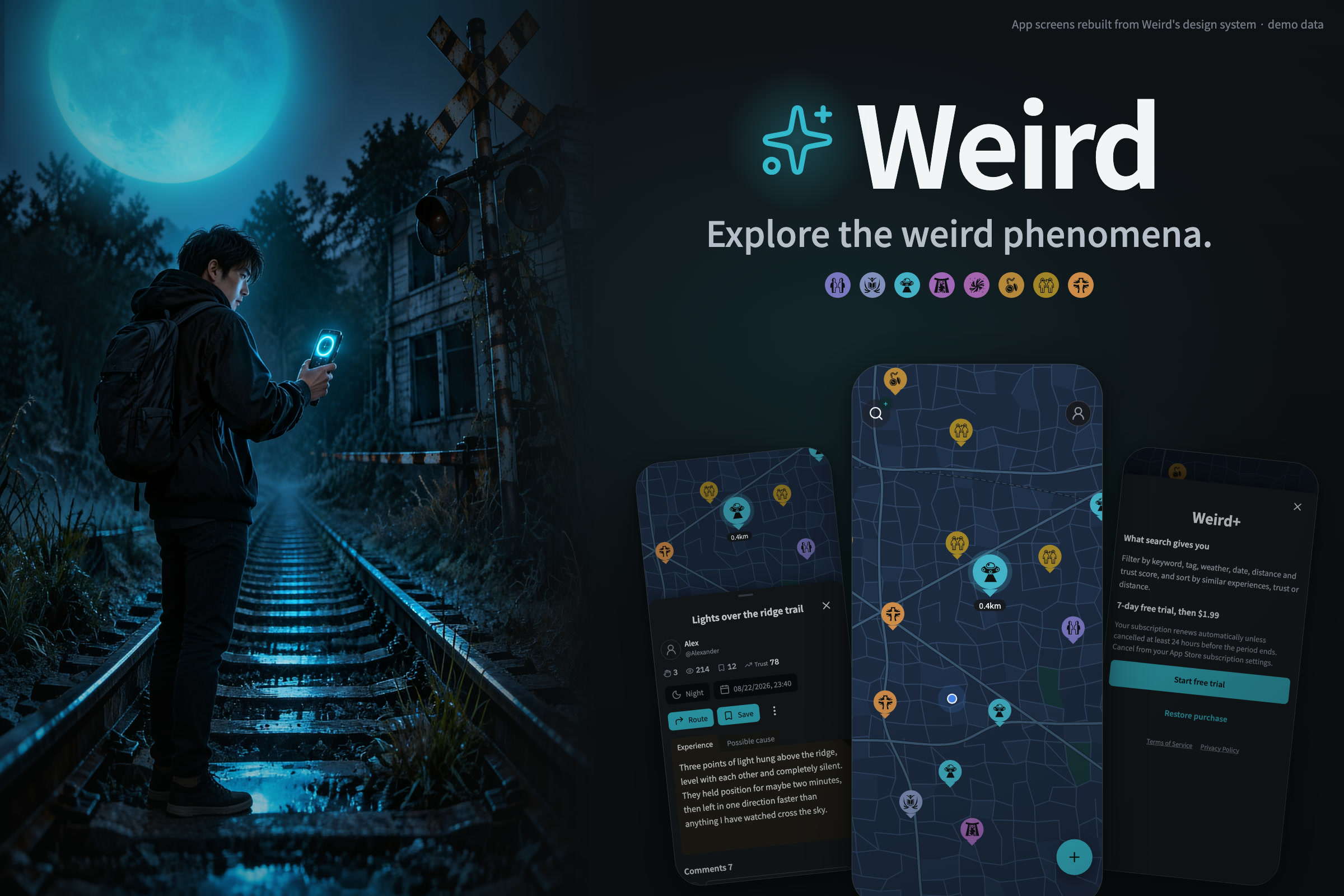
Weird maps strange experiences — Time leap, UFOs, Other world — to where they happened. Read them, add yours, and search with Weird+.
-
in 2026, the fear that AGI could end humanity isn't just science fiction — it's in the news. Artwork: AI-generated.
-
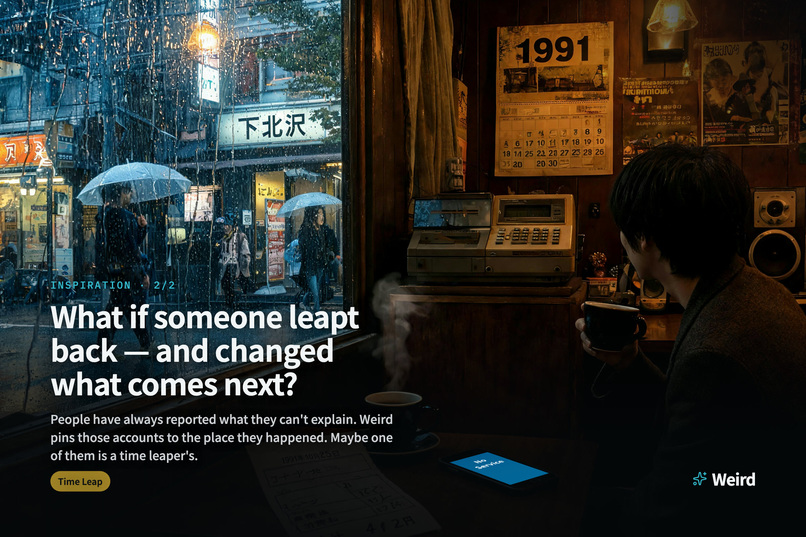
if someone leapt back in time, could they change what comes next? Weird pins the unexplained to where it happened.
-
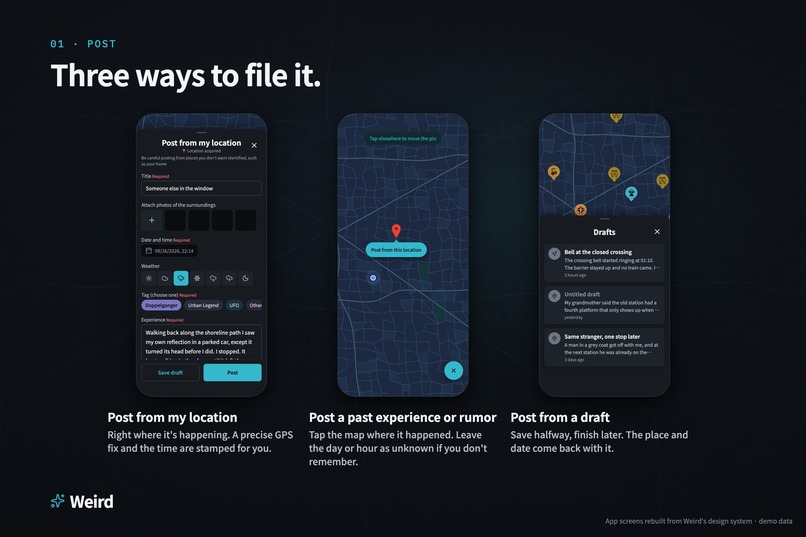
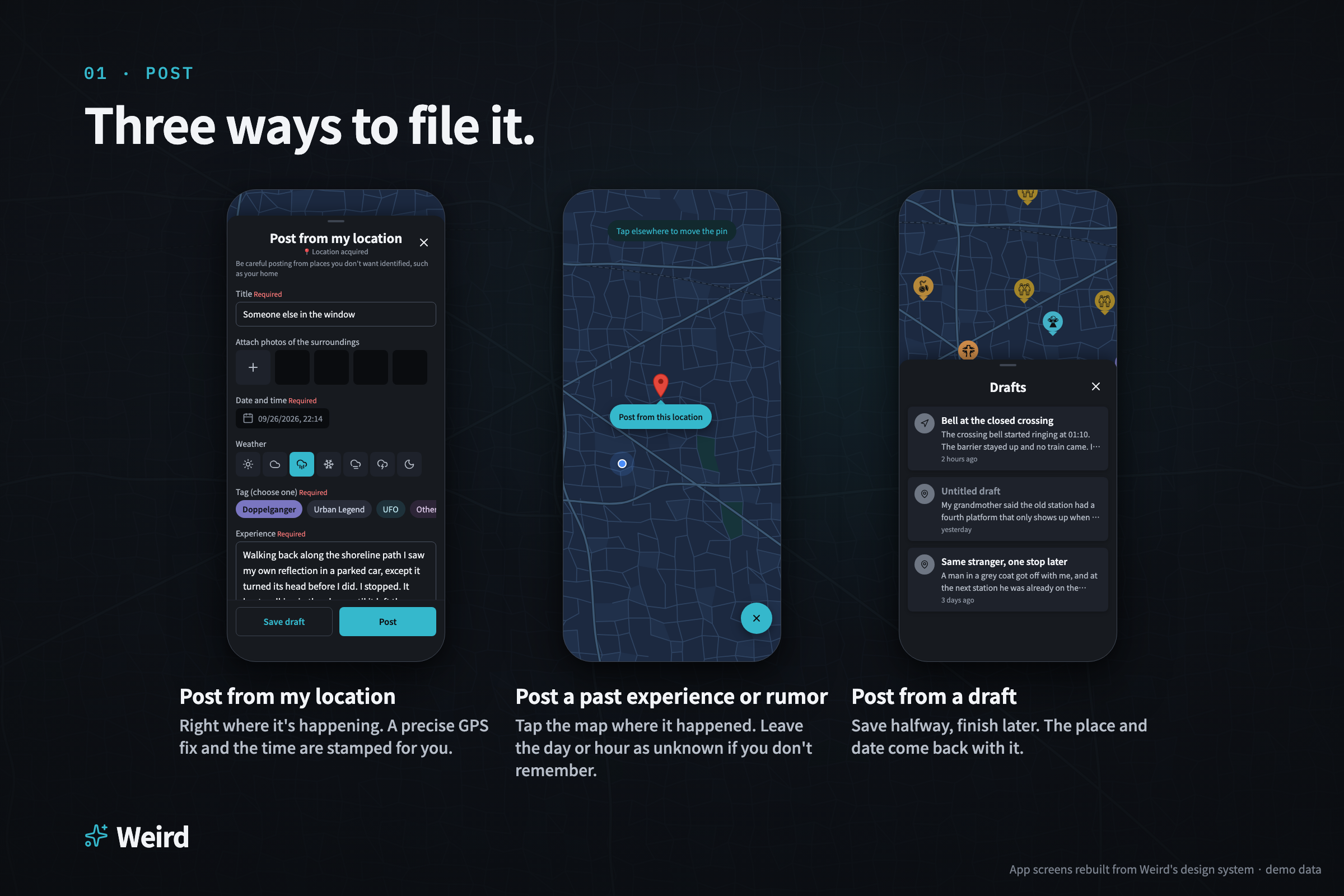
Three ways to post: on the spot (GPS and time filled in), a past experience or rumor pinned on the map (dates can be unknown), or a draft.
-
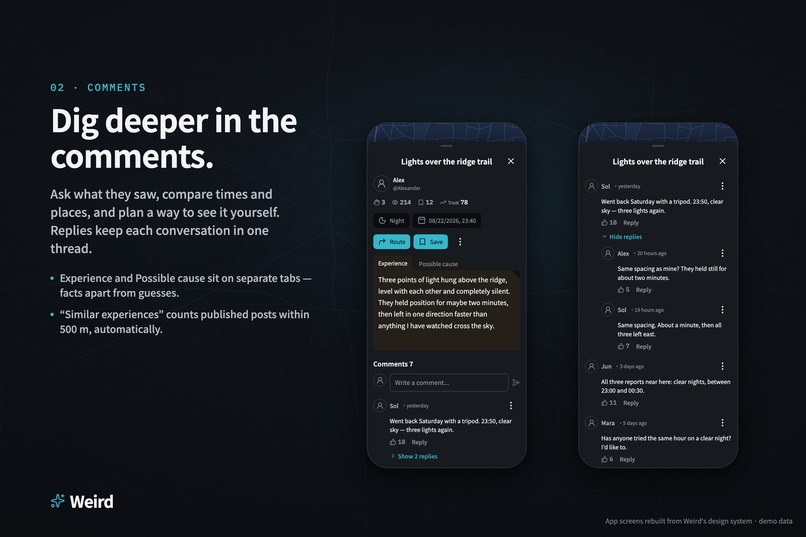
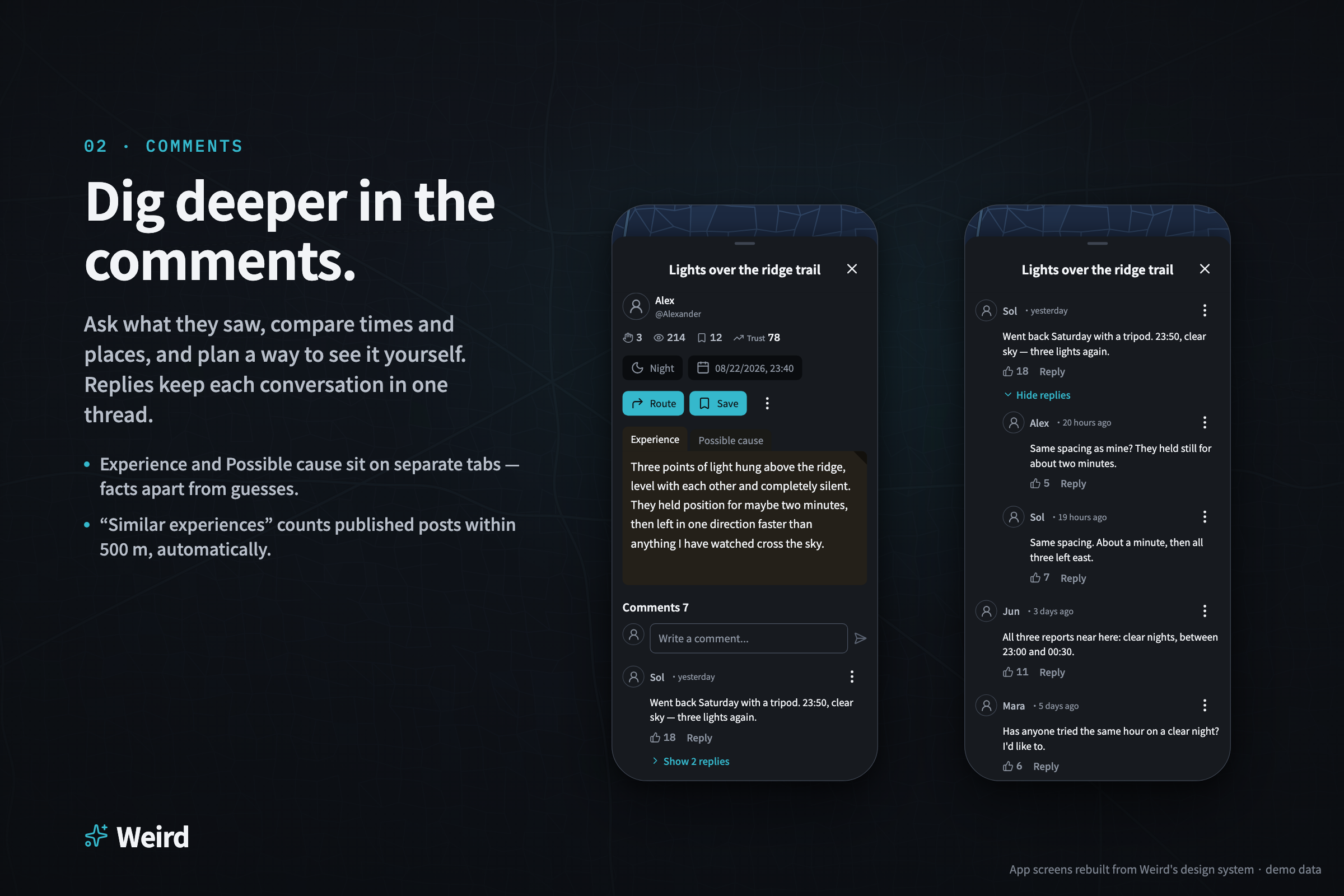
Posts keep the experience and its possible cause on separate tabs. Replies stay threaded; similar experiences within 500 m are counted.
-
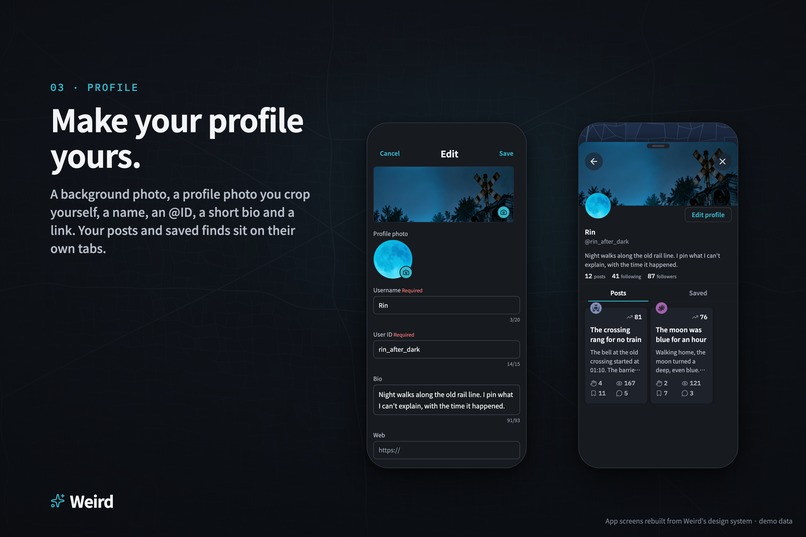
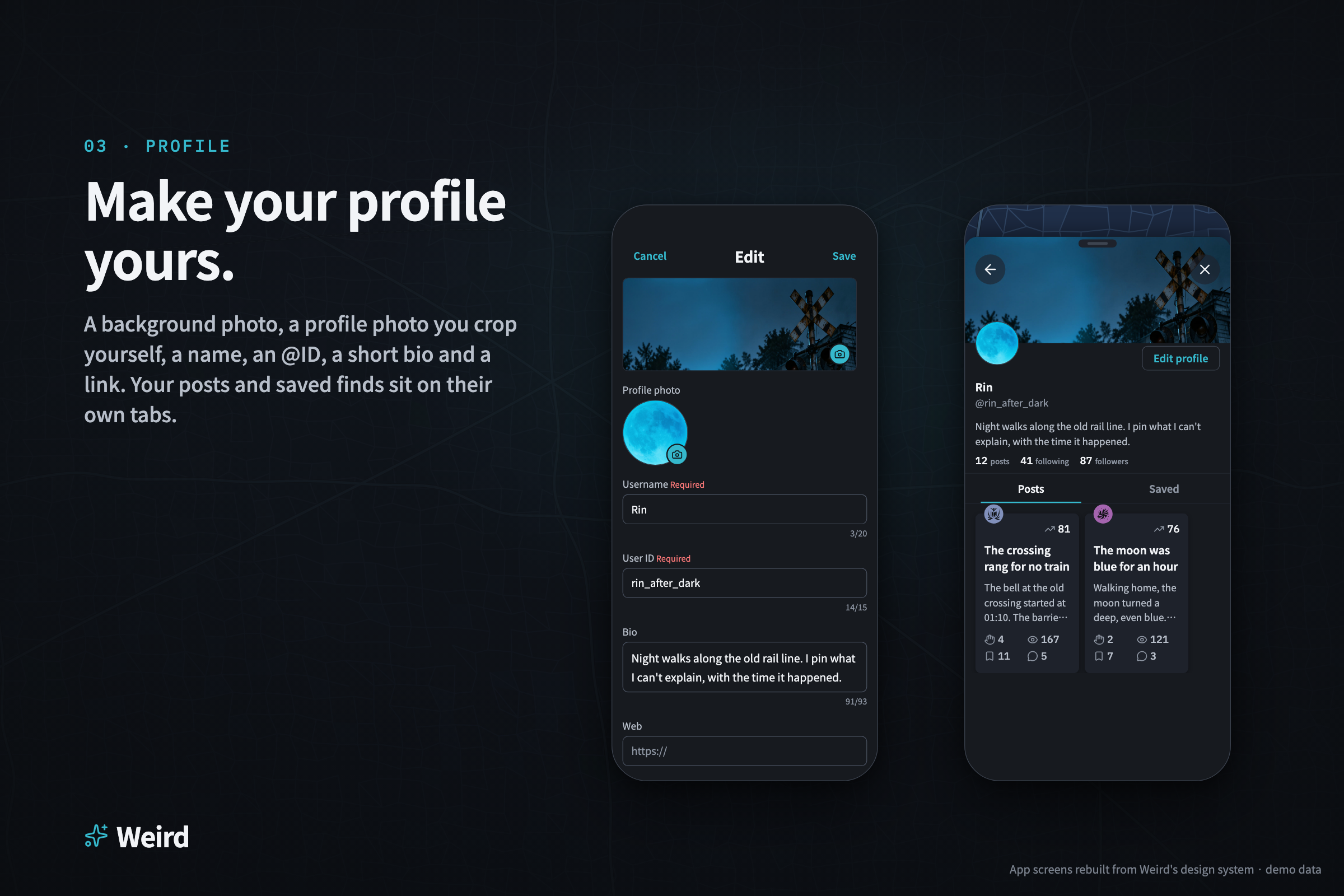
Make it yours: a background photo, a profile photo you crop, name, @ID, a short bio and a link. Posts and saved finds get their own tabs.
-
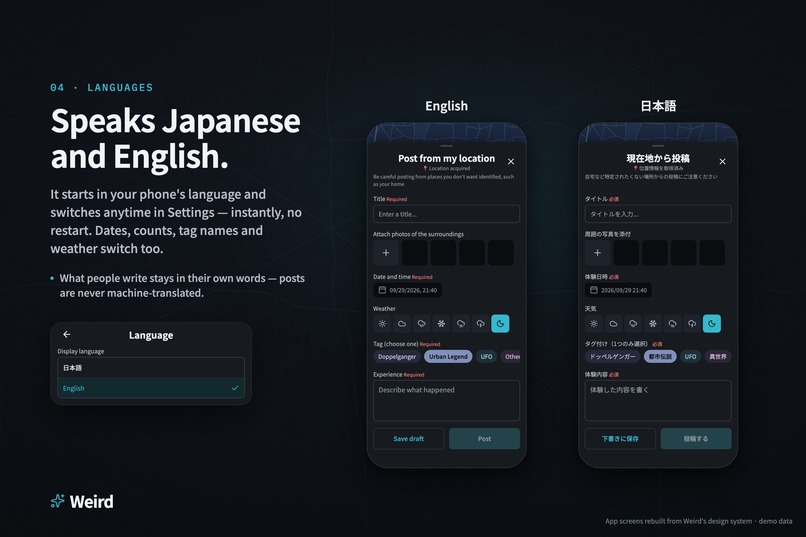
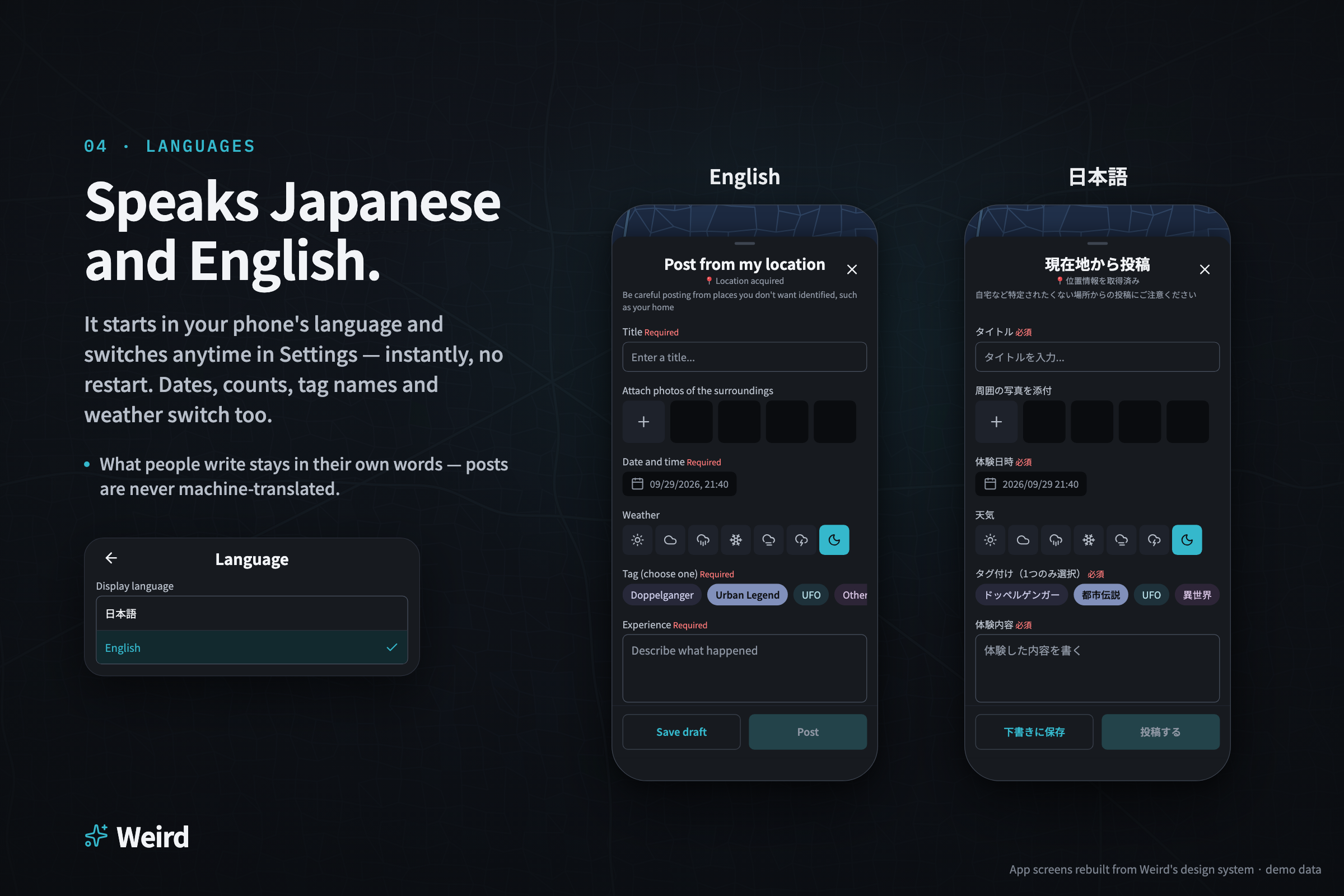
Weird speaks Japanese and English. It follows your phone's language and switches instantly in Settings. Posts are never machine-translated.
-
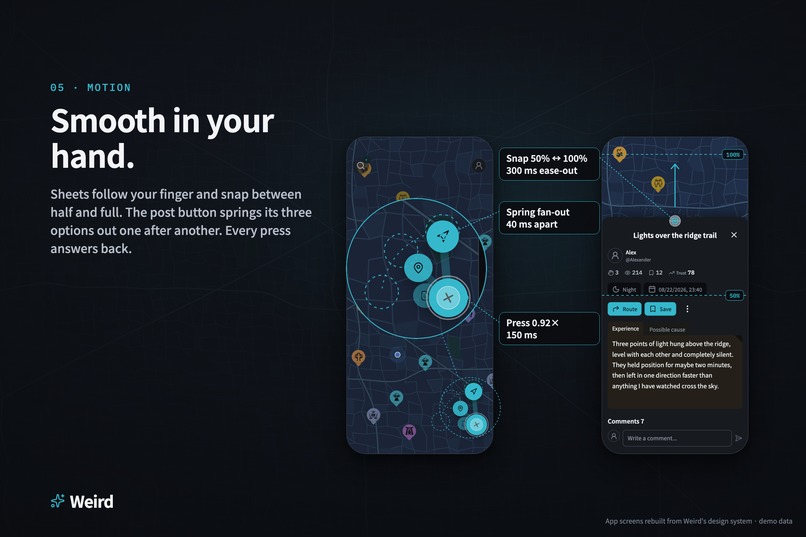
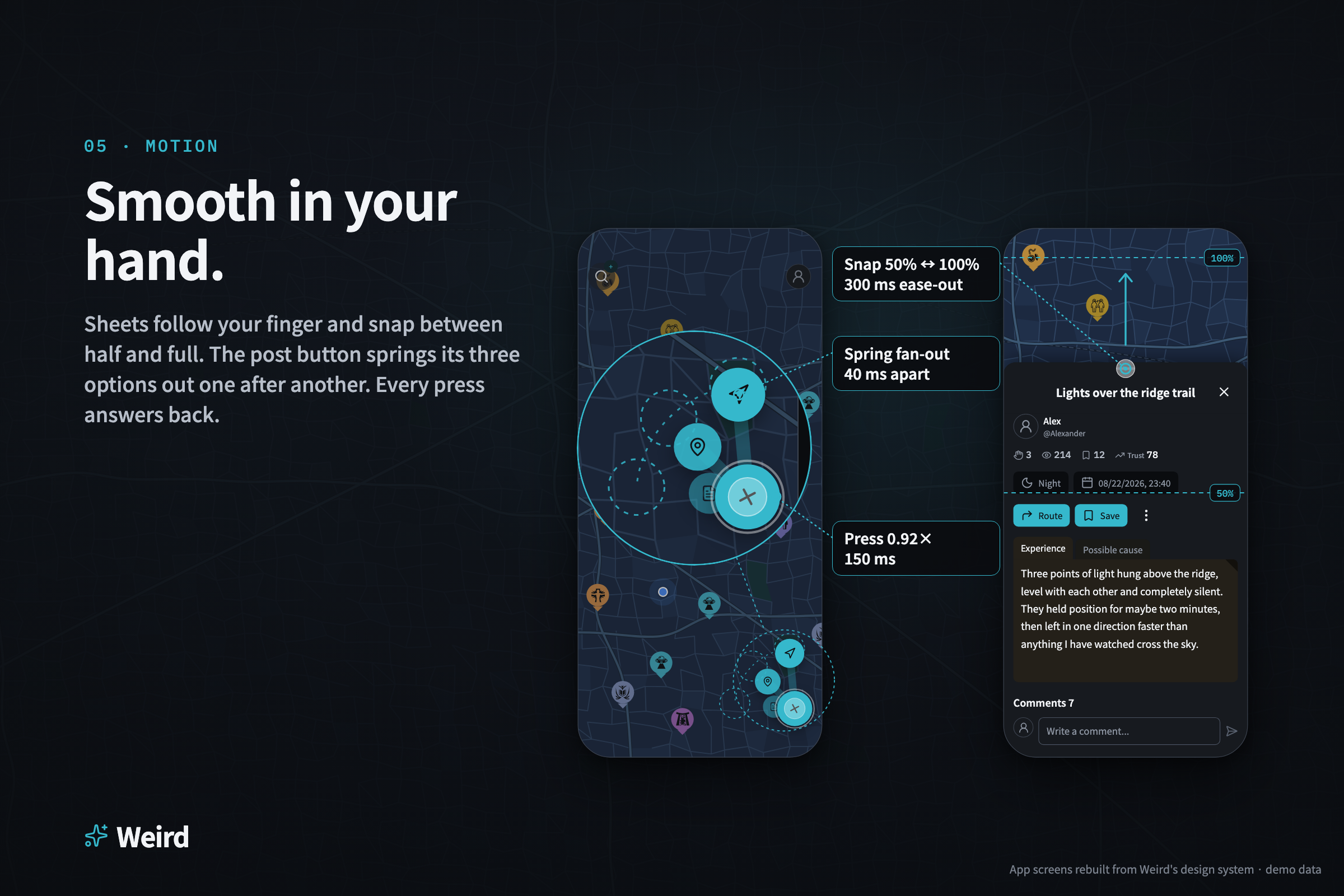
Made to feel smooth: sheets snap between half and full in 300 ms, and the post button springs out its three options 40 ms apart.
Inspiration
It started with the time-leap boom that swept Japan.
At first I doubted it. But the more accounts I read, the harder that got — the specificity of the details, the number of independent cases, the conditions that kept recurring across them, and the fact that serious thinkers were discussing multiverse theory in the same breath. Taken together, I came to believe there was something real here.
And once you believe something is real, if you are an engineer, you want to know whether it reproduces. That instinct is where this app began.
What it does
Weird lets people who have experienced something inexplicable put it on a map — when it happened, where it happened, and under what conditions.
Other users can then read those reports and work the problem together in the comments: what caused it, and what it would take to reproduce it. The map is the dataset; the comment thread is the investigation.
How we built it
Built on spec-driven development. I wrote design documents that laid out how every screen connects to every API, and had AI generate the implementation from them.
The client is React Native + Expo. The backend is Supabase.
For monetization, I attached paid entitlements to the features that actually incur API costs — search being the main one. The paywall sits where the money goes out, rather than being bolted onto an arbitrary feature.
Challenges I ran into
Making the map move smoothly was harder than expected. So was the tension at the heart of the UI: Weird is an investigation tool, but it also has to let people express themselves and grow attached to it. Those two goals pull in opposite directions.
Supabase's RLS also demanded real care. I spent a lot of the build on permissions that assume hostile access, on error design, and on what the user actually sees when something fails — all of it aimed at raising the floor on product quality rather than adding features.
Accomplishments that I'm proud of
Weird isn't only a place to collect the strange experiences that each country's history and culture produce in their own particular ways. It also asks whether time leaps reproduce — and quietly suggests that you, too, could be the protagonist of one.
Turning that idea into a working app is what I'm proud of.
What I learned
The mobile app submission process, RLS permission design, error normalization, and monetization.
What's next for Weird
I want to add a feature that measures the frequencies around a user's current location and renders them as a heatmap — there are indications that the frequency of a place relates to the strange experiences reported there.
I also want to let tourist sites and restaurants attach their information to the map as advertising.
More broadly, the plan is to extend the service by pairing it with domains that have natural affinity: strange experiences × maps × something else.
Built With
- claude
- expo.io
- react-native
- supabase
- typescript

Log in or sign up for Devpost to join the conversation.