Inspiration
As someone who struggled to find streamlined, ad-free tools for European & American weight loss diets—ones that prioritized real nutritional data over gimmicks—I set out to build MEDO. I wanted a tool that fit my rhythm: quick access to Mediterranean/American recipes, easy logging, and personalized recommendations that actually aligned with fat loss/body shaping goals, not generic advice.
What it does
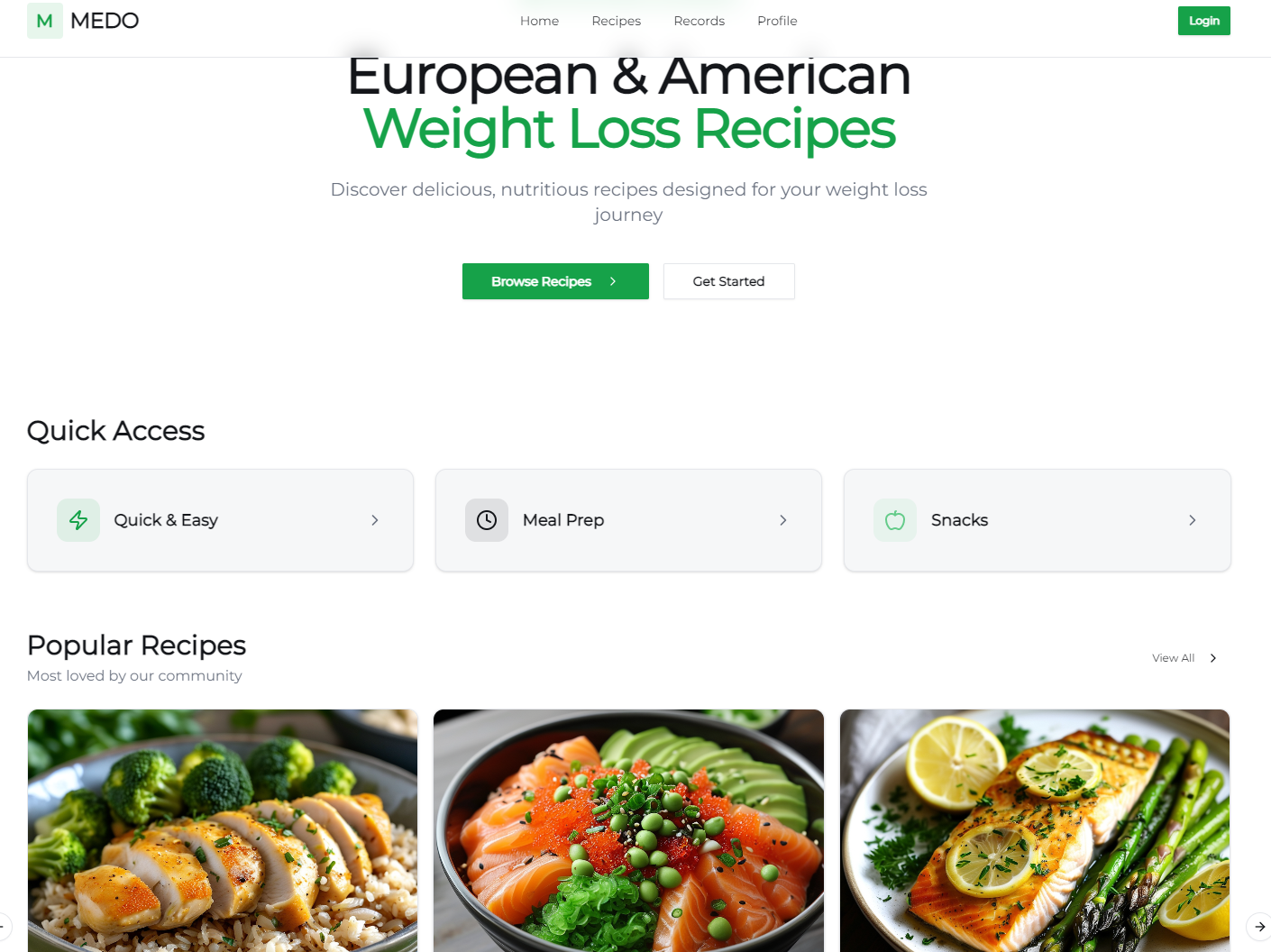
MEDO is a lightweight tool for European & American weight loss recipes: browse/filter recipes by meal time/ingredients, view full nutritional data (calories, protein, fiber), log daily meals, track weekly/monthly intake, and get personalized recipe recommendations based on dietary taboos (gluten-free/lactose-intolerant) and goals.
How we built it
We started with defining core user needs (novice/advanced weight loss users) and mapped page structures (Homepage, Recipe Detail, Personal Center). Frontend built with React/React Native for cross-device use; backend with Node.js/Express to handle recipe data and user logs. MongoDB/Firebase stored user data/collections; AWS for offline cache hosting; Chart.js for intake statistics visualization.
Challenges we ran into
The biggest hurdle was ensuring nutritional data accuracy for every recipe—we had to validate cross-references with trusted dietary databases and adjust for portion sizes relevant to Western diets. We also struggled with real-time filter updates on the recipe list; optimizing the logic to avoid lag when multiple filters (meal time + ingredient + diet type) were applied took weeks of testing.
Accomplishments that we're proud of
We built a fully ad-free experience that prioritizes usability: personalized recommendations that adapt to dietary taboos (no dairy for lactose-intolerant users!), accurate offline recipe saving, and seamless sync of collected recipes across devices. Most importantly, it’s tailored to how Western users approach weight loss—no one-size-fits-all Asian/Japanese recipes cluttering the library.
What we learned
We learned the value of centering user behavior in design: novice users needed simpler steps and clear nutritional highlights, while advanced users wanted customizable logging. We also mastered balancing offline functionality with cloud sync—critical for users who cook without internet access.
What's next for this project
We plan to expand the recipe library to include more regional European diets (e.g., French low-calorie meals) and add a meal planning feature to auto-generate weekly plans based on user goals. We’re also exploring integrations with kitchen measurement tools to auto-calculate ingredient quantities for different portion sizes.

Log in or sign up for Devpost to join the conversation.