Inspiration
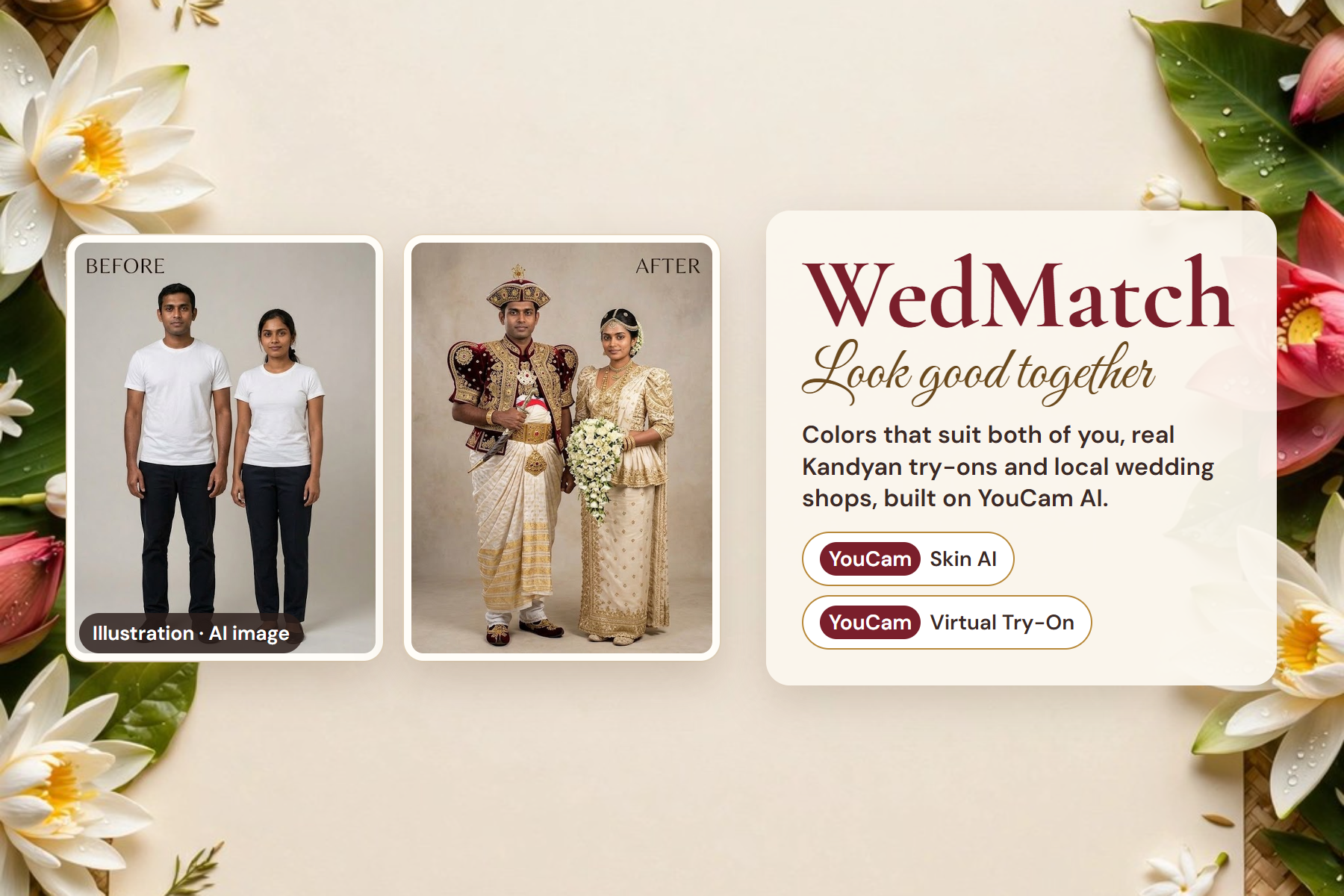
In Sri Lanka, a wedding isn't one day and one outfit. There's the Poruwa ceremony, the homecoming, sometimes a mehndi or a reception, and every event has its own colors and traditions. The bride's osariya comes from one shop, the groom's Kandyan set from another, the jewelry from a third. Couples plan all of this separately and only see how they look together on the day itself, in photos they'll keep for the rest of their lives.
We kept hearing the same small worry from friends who were getting married: "Will our colors clash?" We wanted to build something that answers it before anyone spends money: a place where both partners can see themselves, side by side, in the outfits they're actually thinking of buying.
What it does
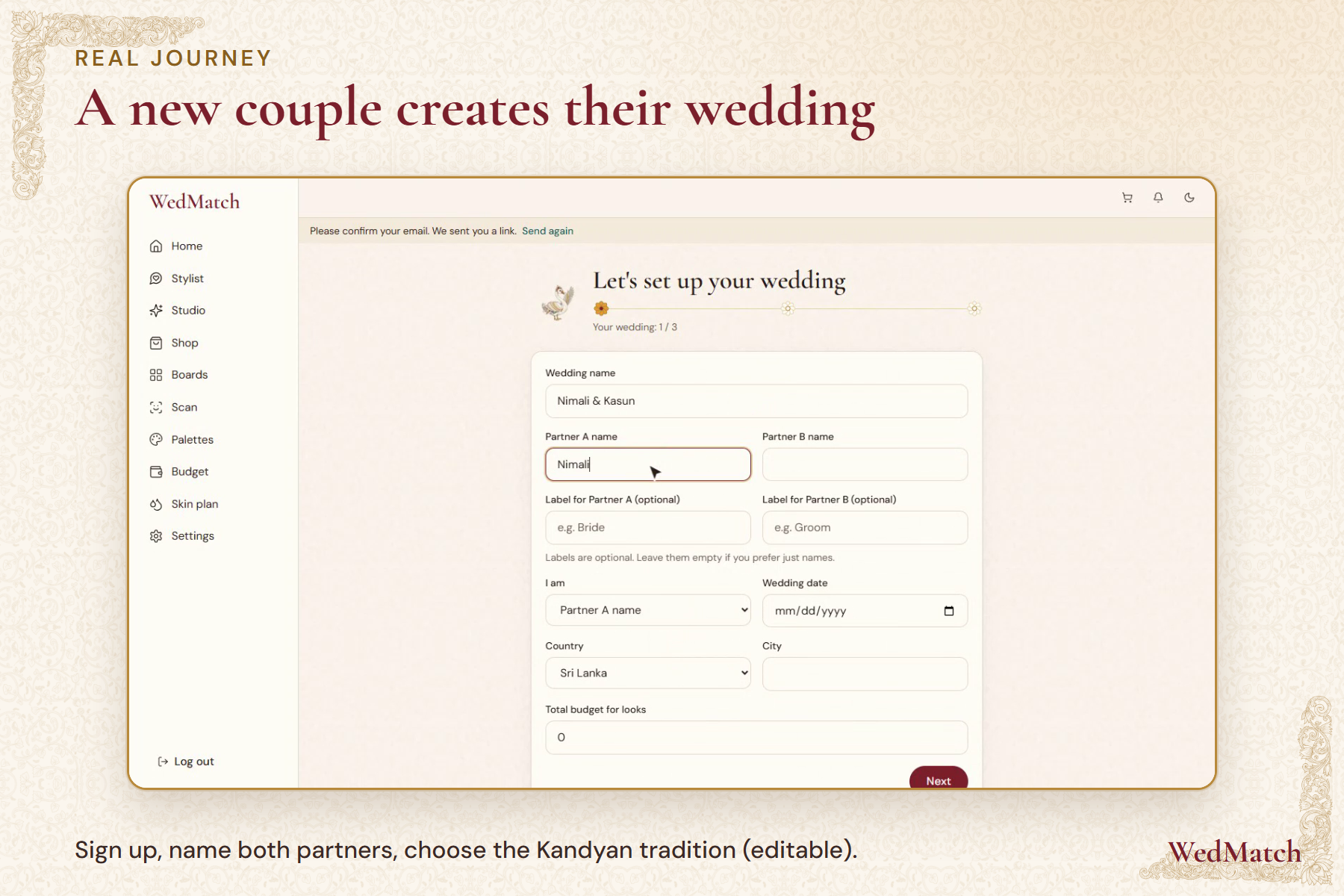
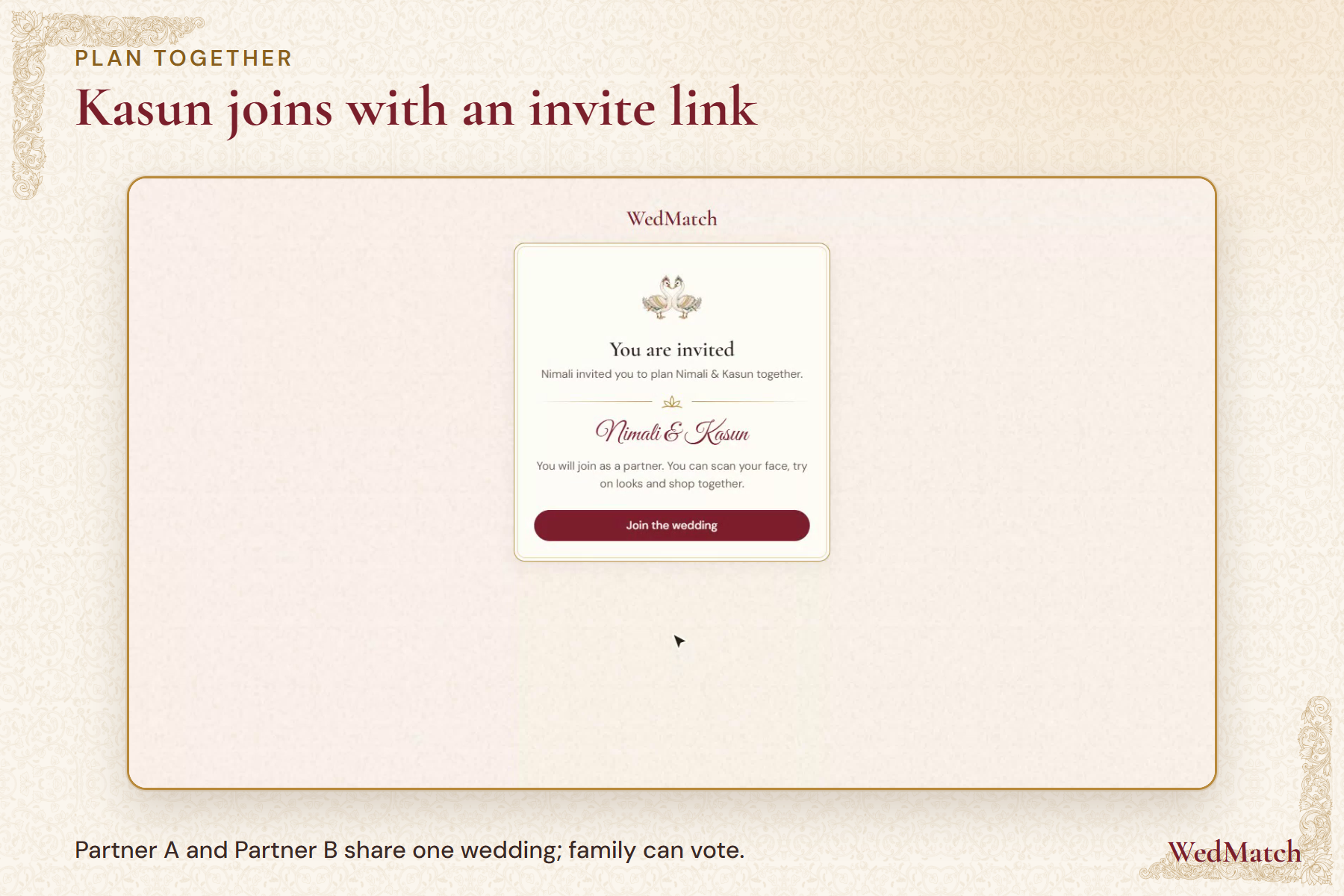
WedMatch is a shared wedding workspace for a couple and their family.
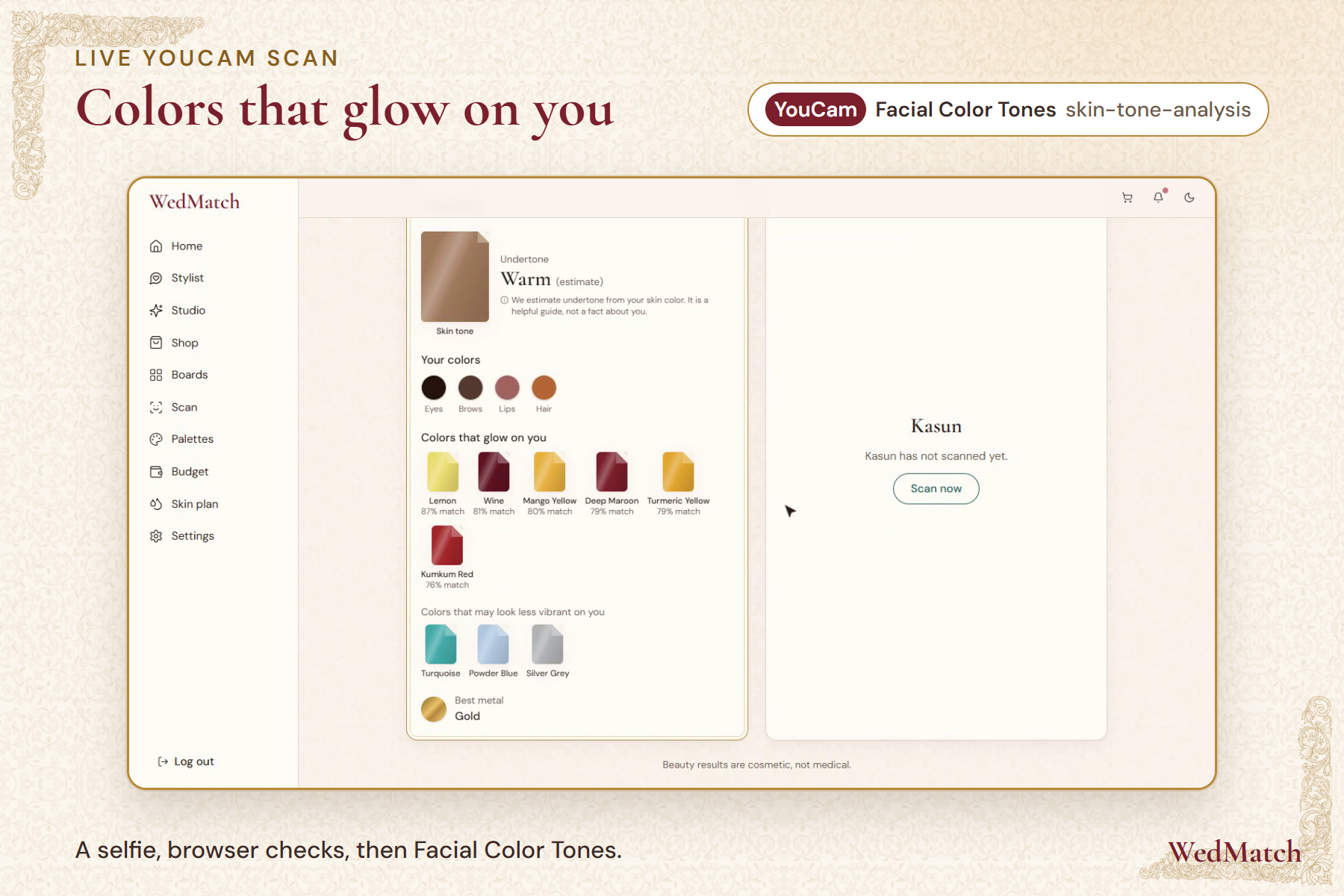
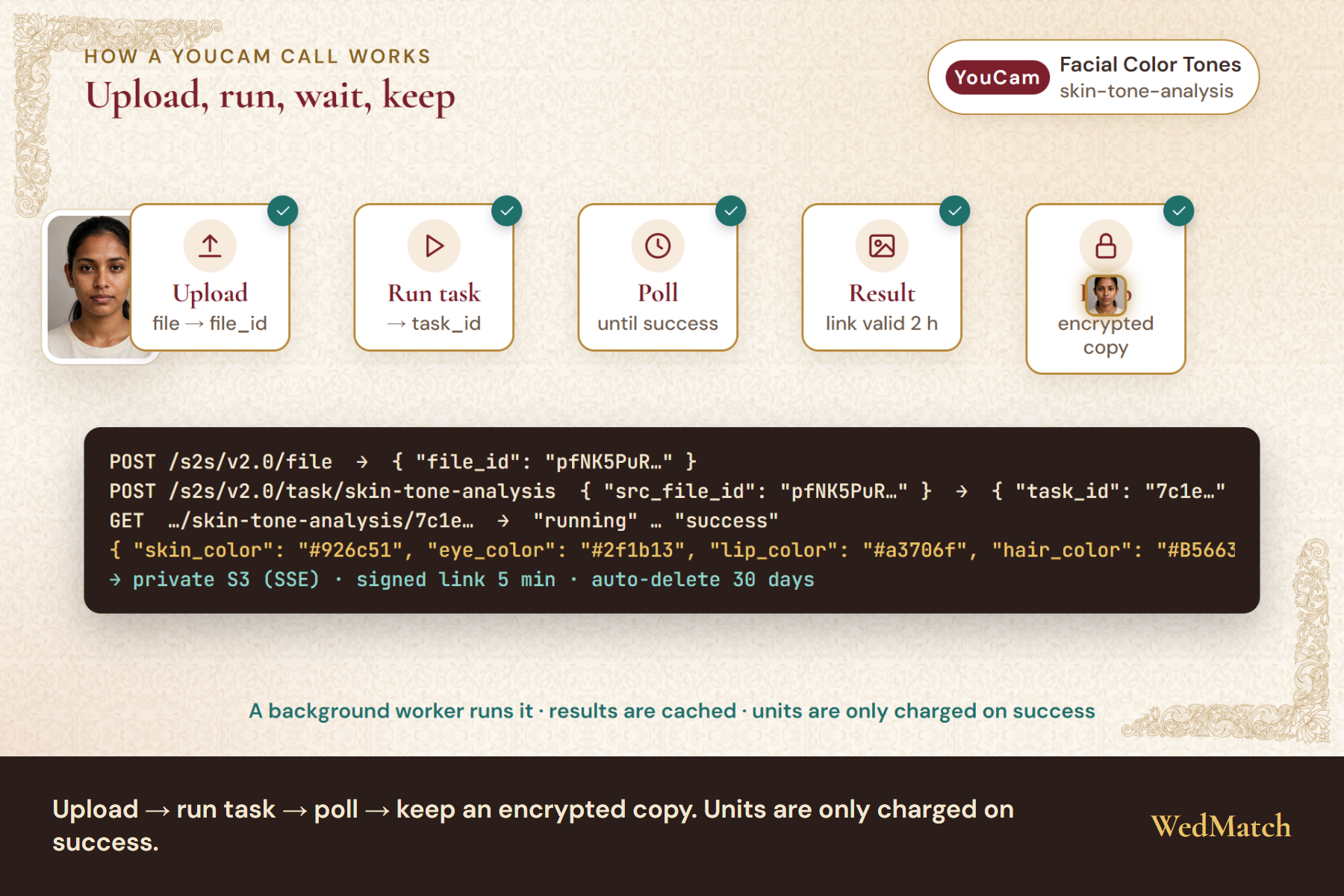
- Both partners scan their faces. A guided selfie is checked in the browser first (light, blur, face size), then YouCam Facial Color Tones reads their skin, eye, lip and hair colors.
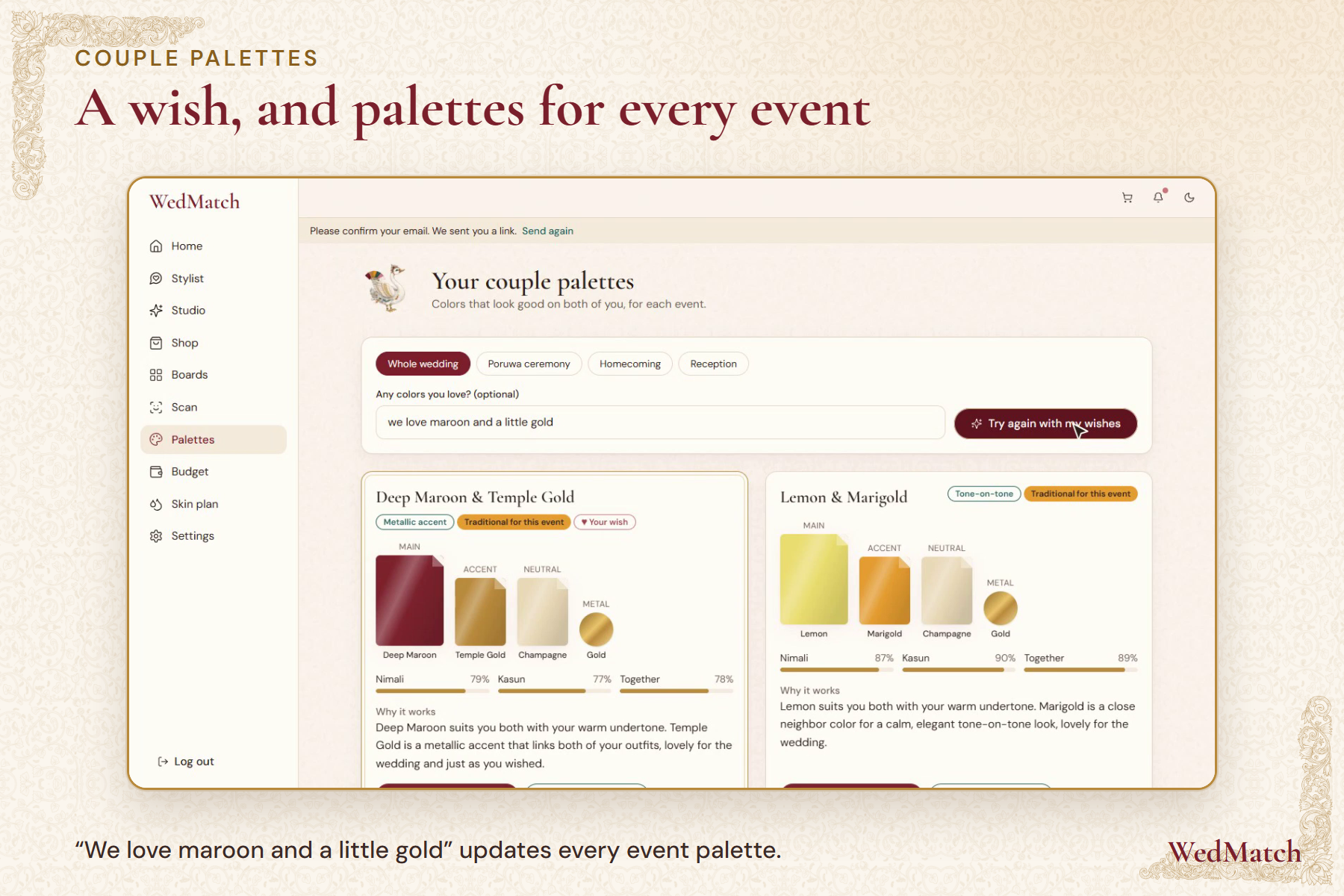
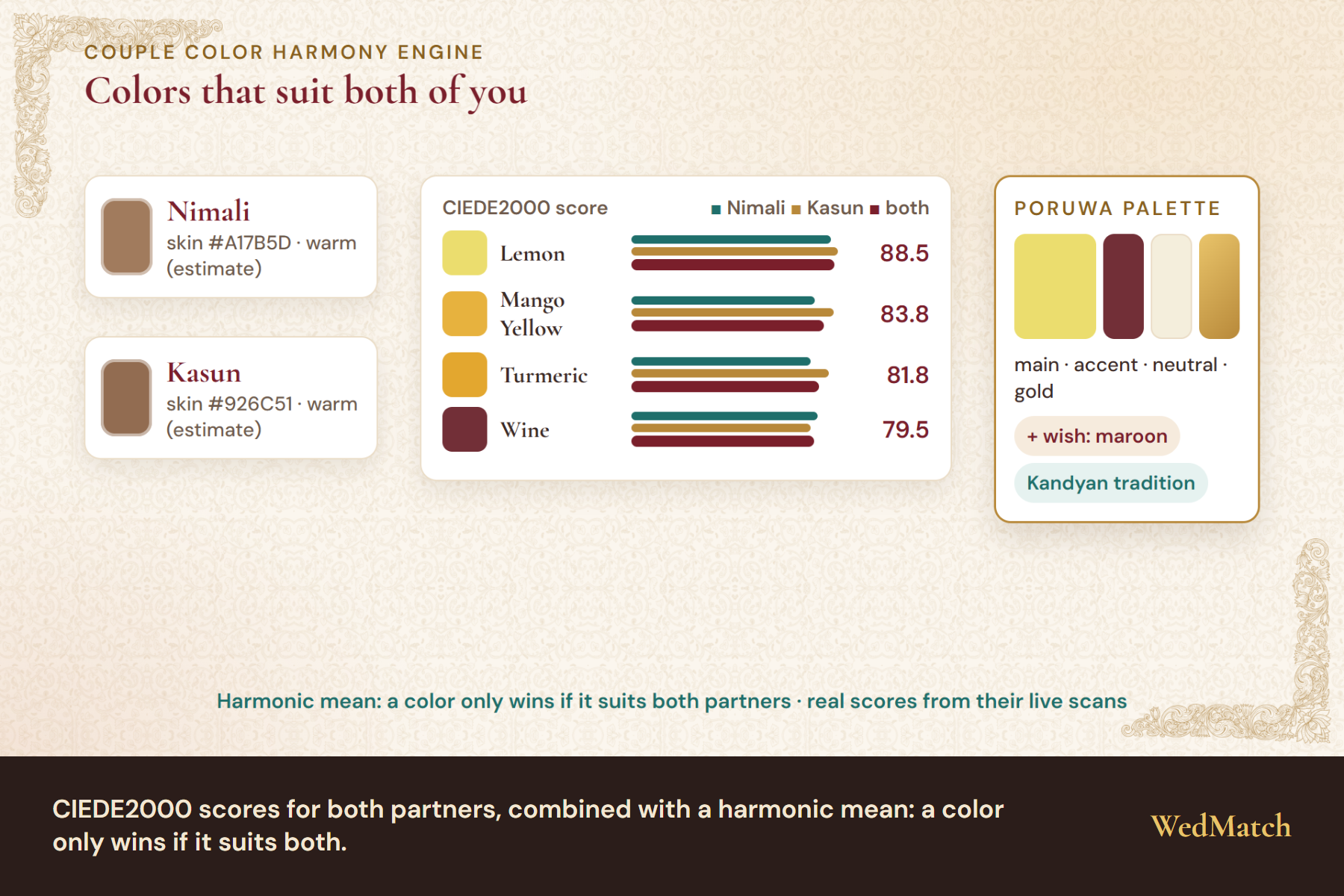
- WedMatch finds colors that suit both of them. Every wedding color is scored for each partner, and only colors that work for both make it into the palette, one palette per event. If they say "we love maroon and a little gold", the palettes adjust.
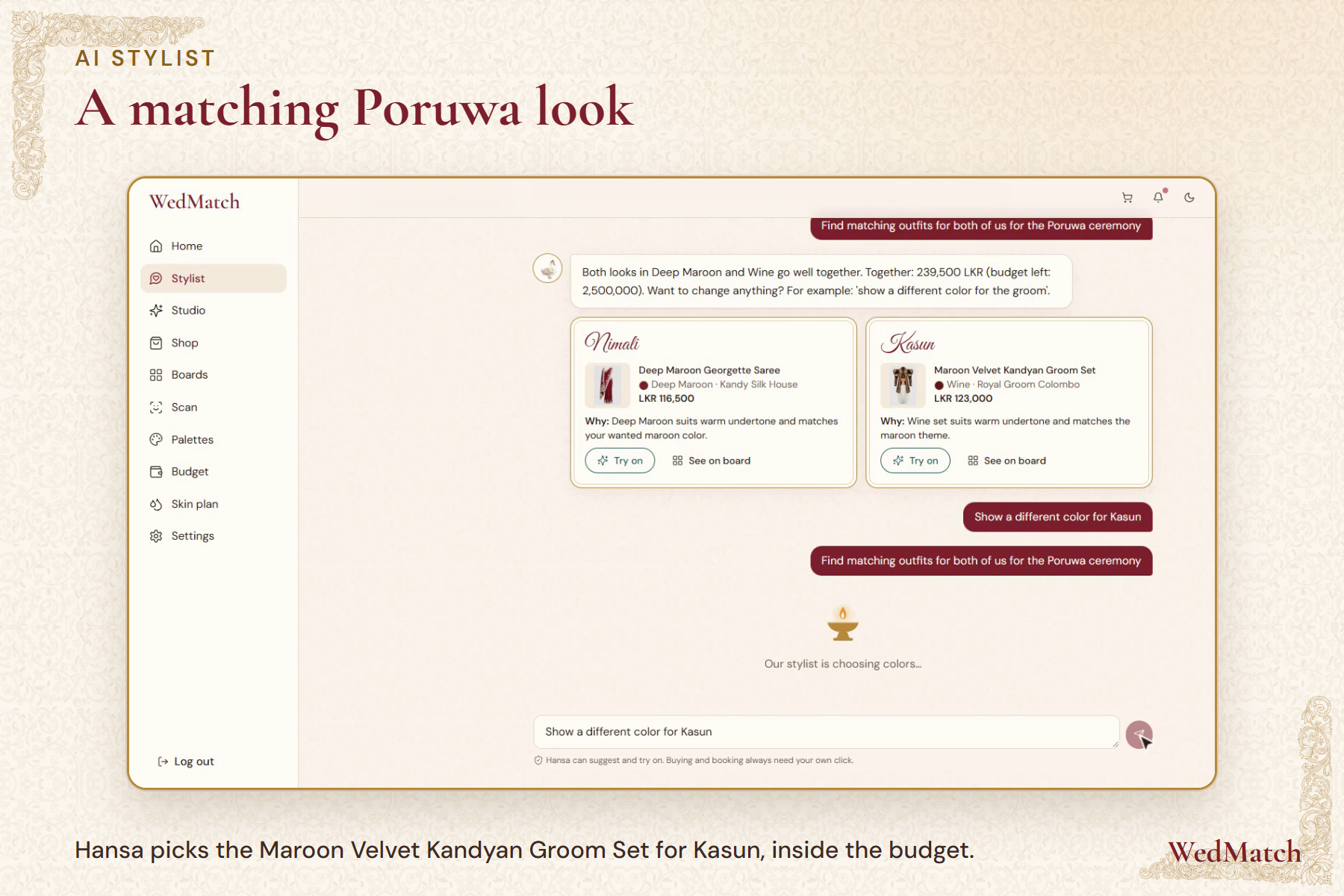
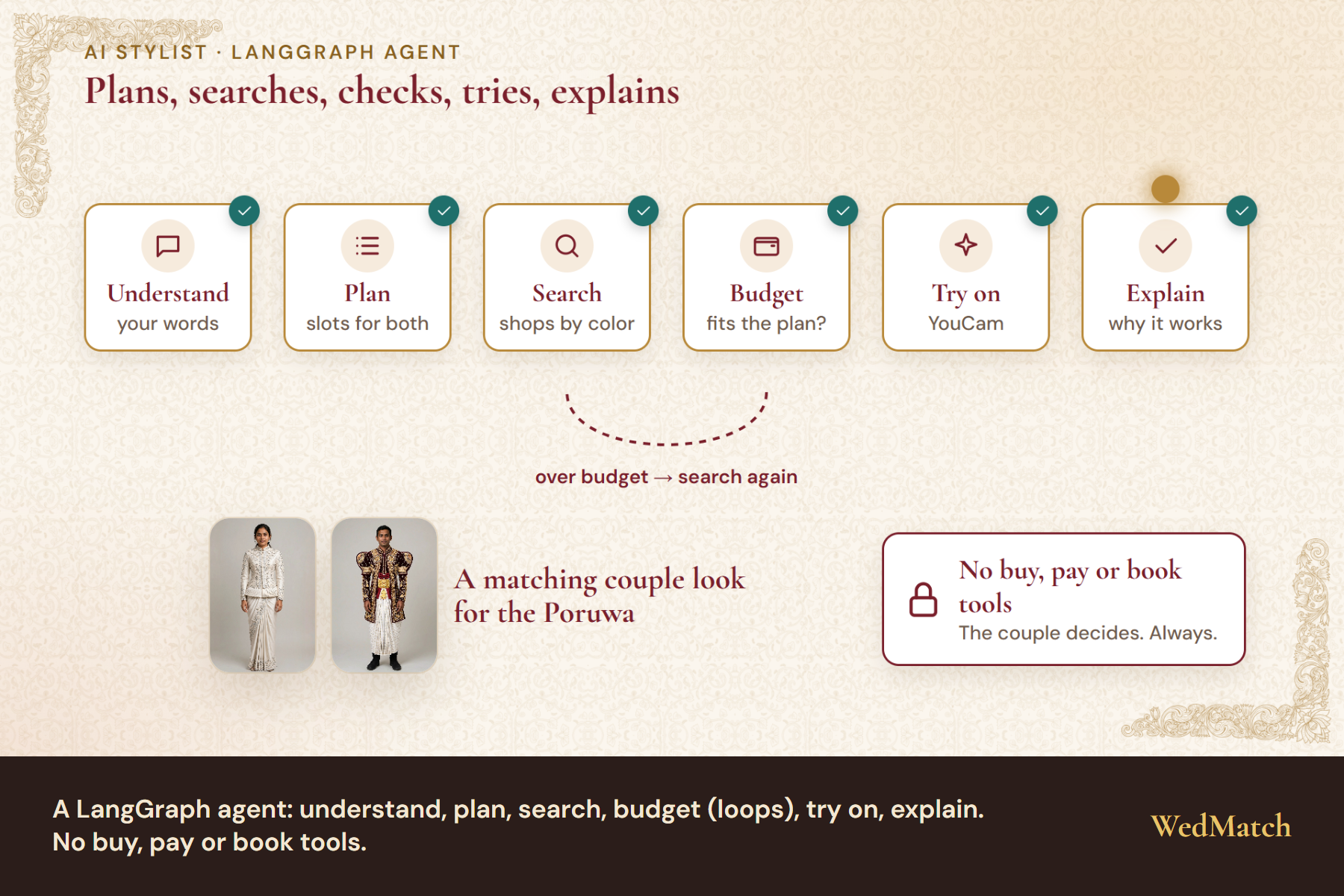
- An AI stylist plans the couple look. Hansa searches local shops by color, keeps to the budget and explains its choices. Say "show a different color for Kasun" and only his look changes. It can suggest and try on, but it can never buy or book anything.
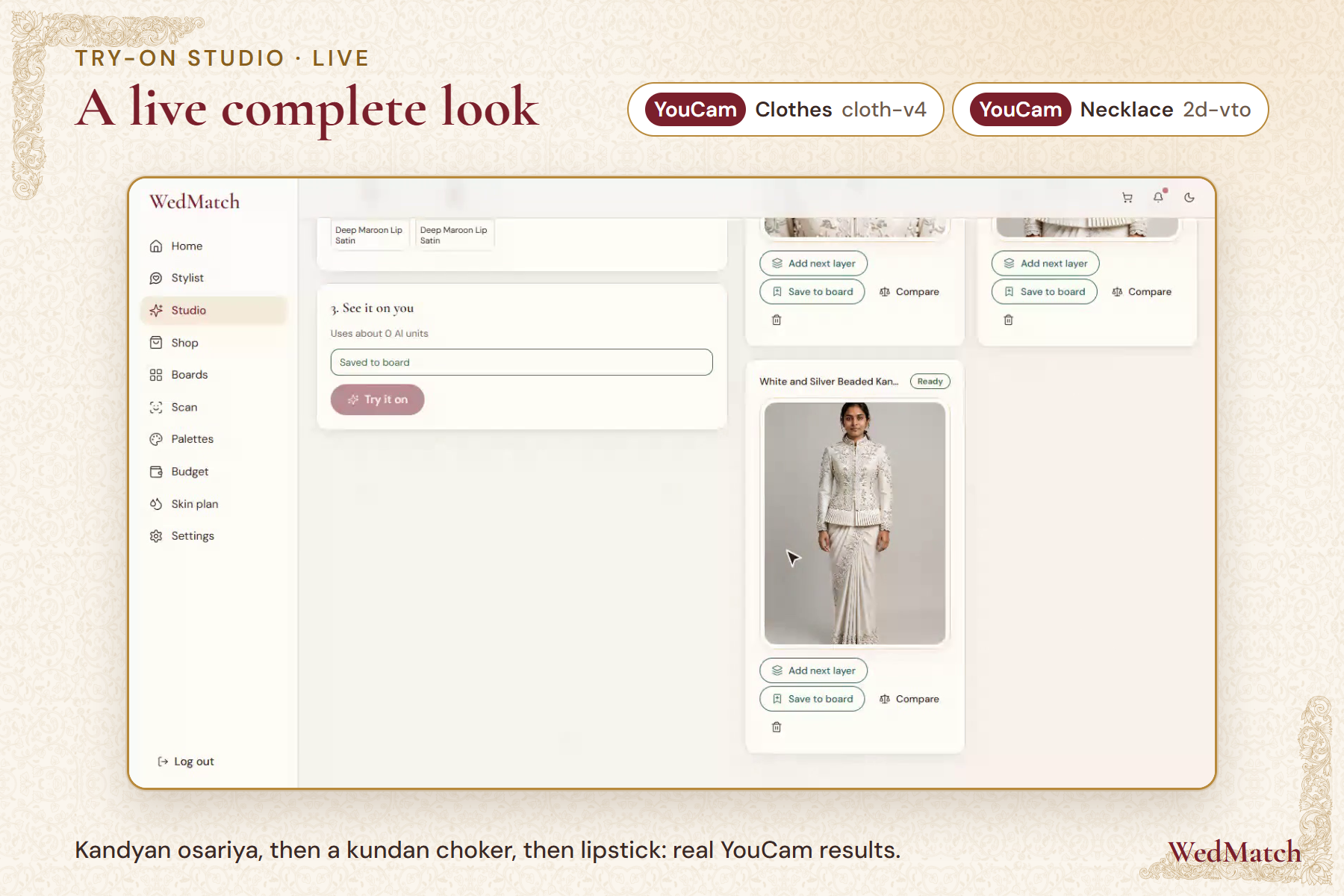
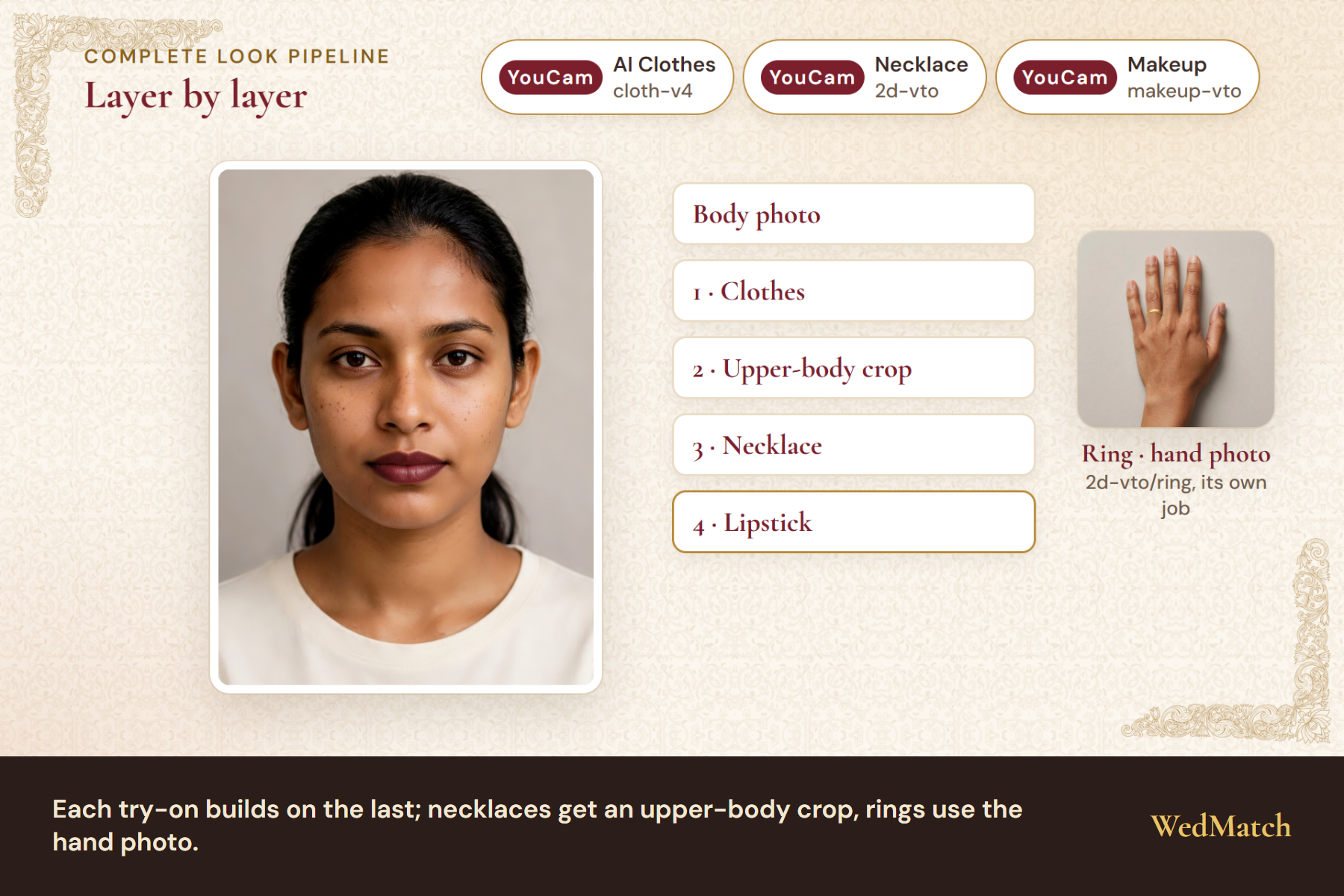
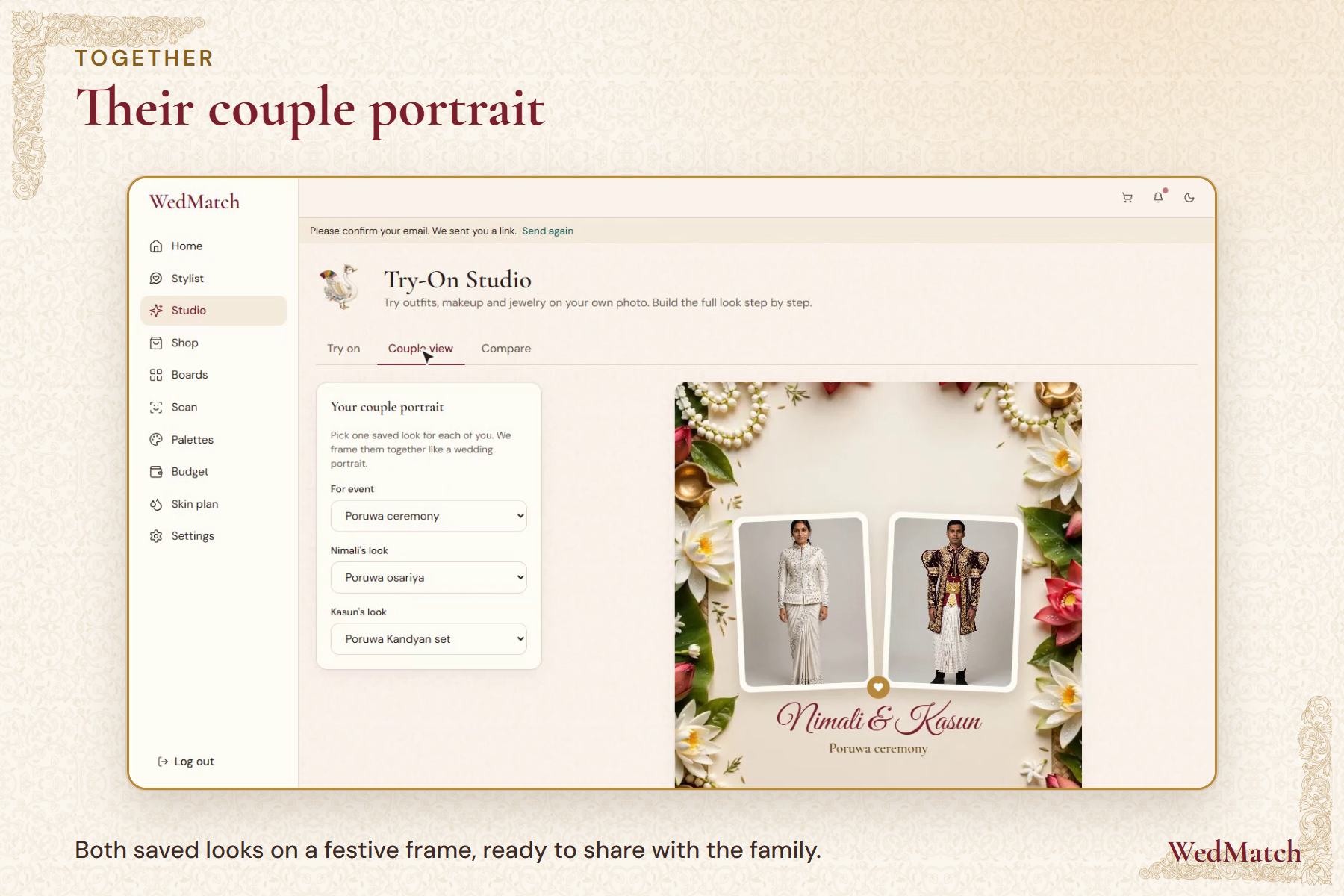
- They try everything on. Real YouCam try-ons for clothes, necklaces, earrings, rings and makeup, layered into one complete look. Both looks then come together in a couple portrait the family can vote on.
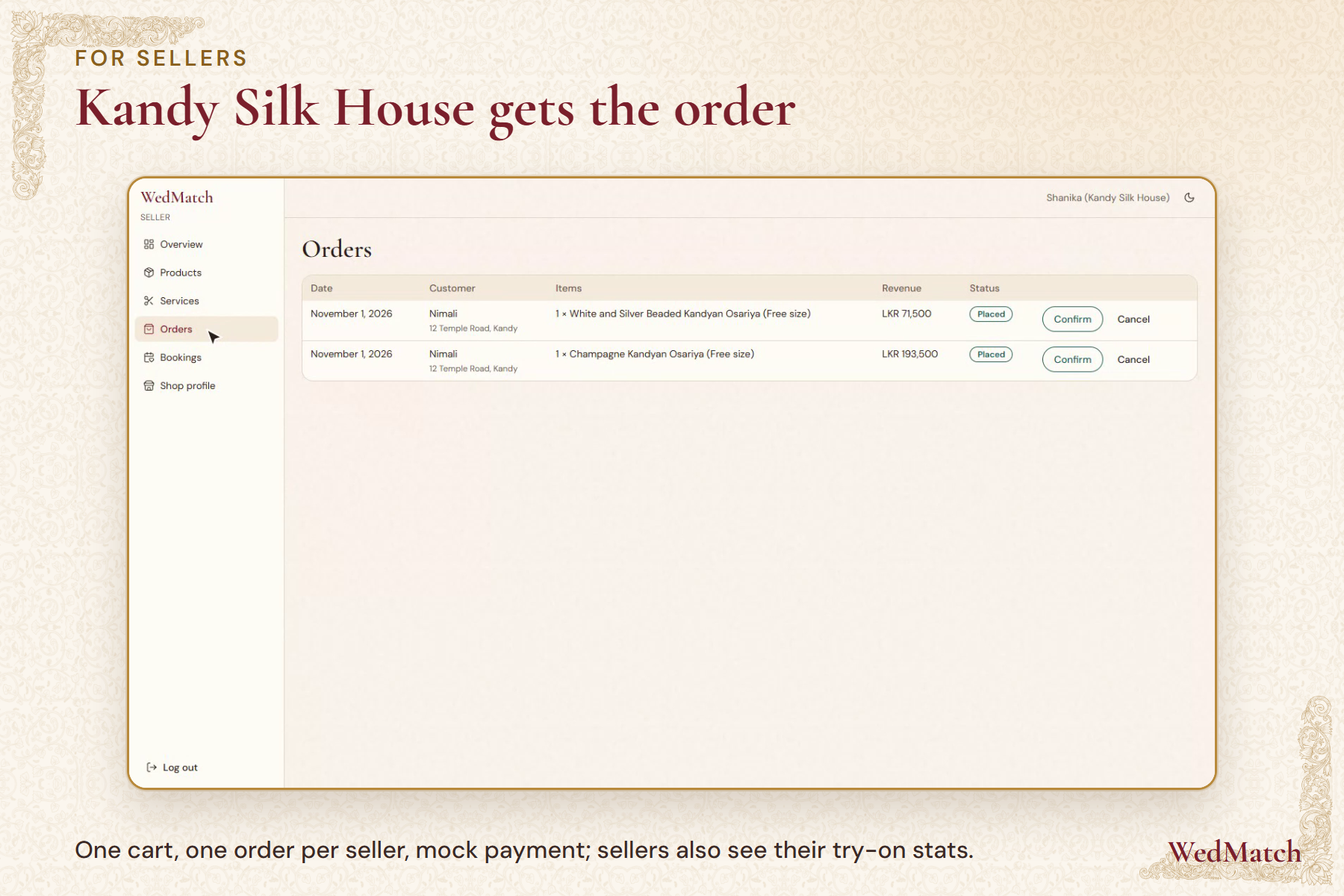
- They shop local. One cart across many wedding sellers, one order per shop, bookings for makeup artists, and a budget that updates itself. Sellers see how often couples try on their products.
- They glow up gently. A weekly YouCam Skin Analysis check-in with a simple routine until the wedding day. It's cosmetic advice, not medical advice.
How we built it
The web app is Next.js and React with a design system we called "Modern Heritage": ivory, maroon and gold, with Sri Lankan liyawela patterns and Kandyan corner ornaments. The backend is FastAPI with PostgreSQL, Redis and a background worker that runs the YouCam jobs, so nobody waits on a spinning page. Photos live in encrypted private storage and are deleted after 30 days.
The color matching isn't guesswork. We convert colors to CIELAB and score them with CIEDE2000 (checked against the published test data), then combine both partners' scores so a color only wins if it suits both. The stylist is a LangGraph agent running on a Meta Llama model, and the language model only ever explains results; it never sees a face photo.
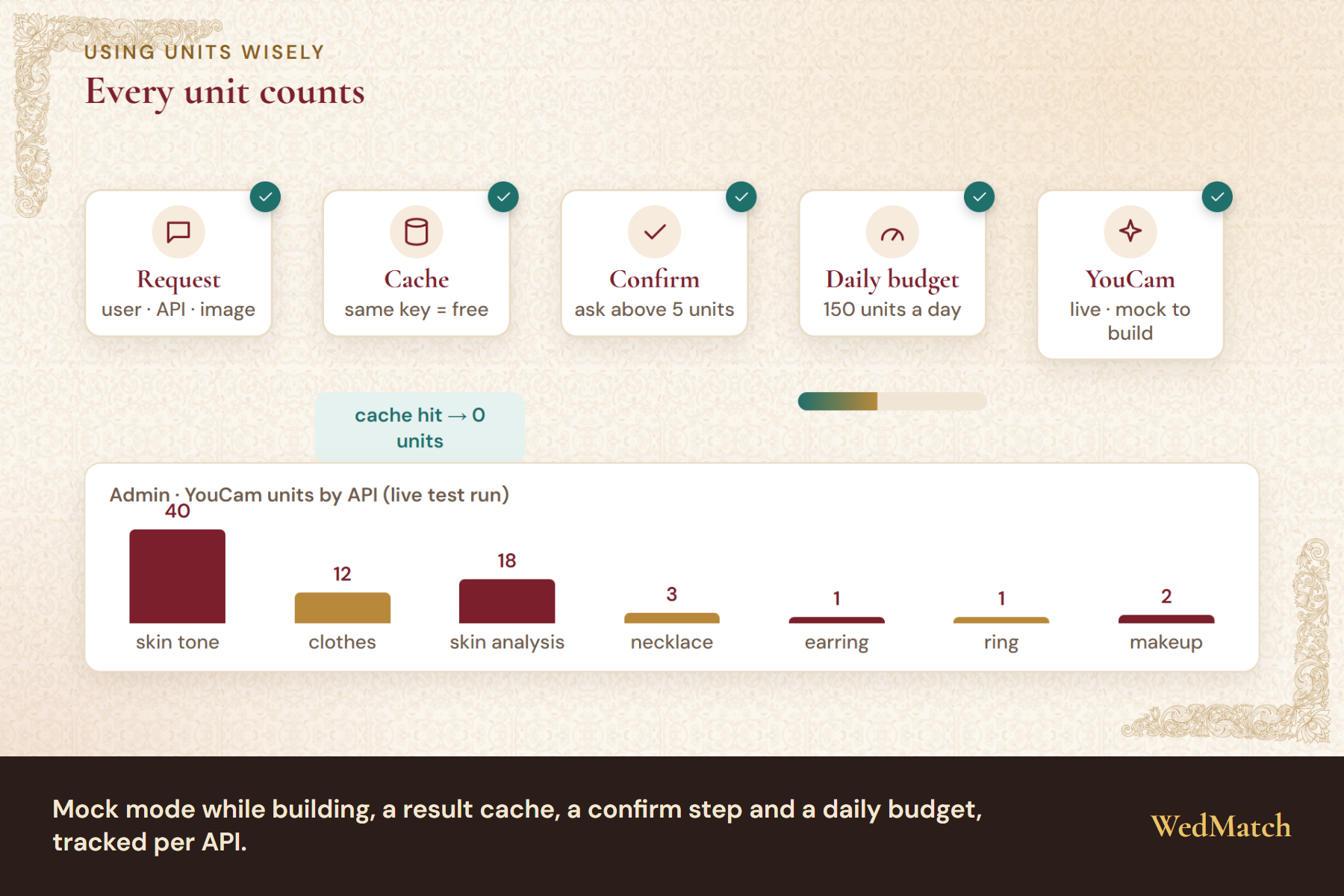
We built most of the app in a mock mode that returns the same shapes as the real YouCam API, so we could develop for weeks without burning units. Every real result is cached, there's a confirm step for bigger requests, and a daily unit budget. All our live testing, plus recording the demo, used about 120 of our 1,000 units.
Challenges we ran into
- Undertone isn't in the API. Facial Color Tones gives a skin color but no undertone. Our first estimate labeled almost every deep skin tone "cool", which was simply wrong, so we rebuilt it to account for lightness.
- Our first palettes were boring. Black and white suit everyone, so the math kept choosing them. We added a "richness" term and per-event rules so wedding colors actually feel like a wedding.
- A necklace on a full-body photo doesn't work. When we layered jewelry on top of an outfit result, YouCam couldn't find the neck. Now the pipeline crops to the upper body for face jewelry and sends rings to the hand photo.
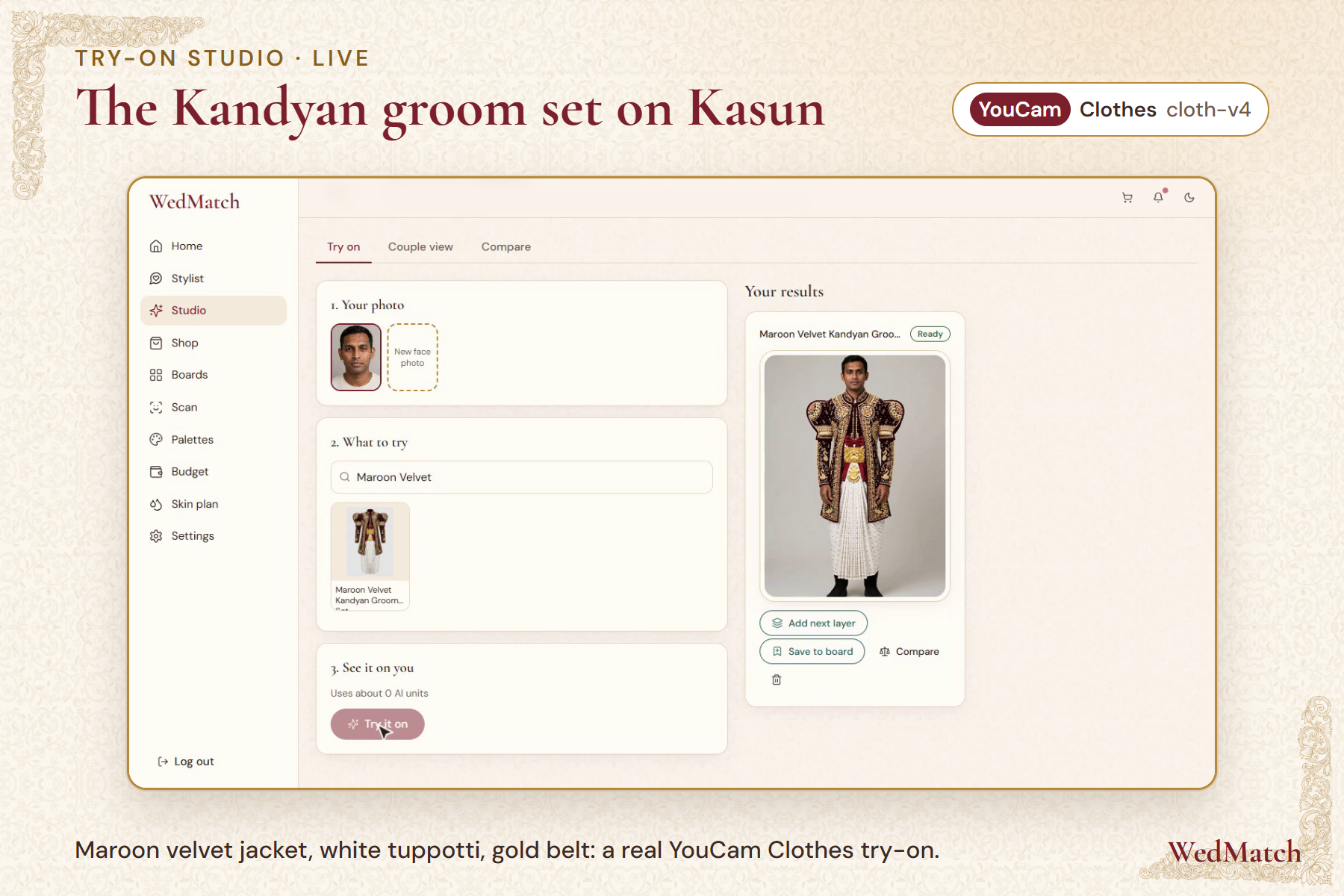
- We got Kandyan attire wrong at first. Our generated catalog had a teal groom set, which no Kandyan groom would wear. We went back, regenerated the clothes as maroon and black velvet with gold and a white tuppotti, and ran the try-ons again.
- Windows webcams can only be opened once. Retaking a selfie gave a black screen until we started reusing the same camera stream.
Accomplishments that we're proud of
- The full journey works for real, end to end: two new people sign up, scan, plan, try on, and buy from a shop that sees the order. That's exactly what our demo video shows.
- Seeing a real YouCam try-on of a Kandyan osariya on our test bride for the first time. It just worked.
- An AI stylist that's actually useful but is designed so it can't spend anyone's money.
- Responsible choices we made on purpose: we don't use face or body reshaping, we block skin-lightening products, and we never guess someone's ethnicity, religion or culture from their face.
What we learned
Color science and AI make a good team: the math makes the decision, and the language model makes it understandable. We also learned how much trust matters for an app that asks for your face. Clear consent, short retention and saying "estimate" when something is an estimate make people far more comfortable.
And we learned to check our cultural details with people who actually wear them. Our wrong teal groom set was a good reminder.
What's next for WedMatch
- Hair, beard and nail try-ons, and face-shape tips for choosing jewelry.
- Sinhala and Tamil translations, and more traditions reviewed with local wedding experts.
- Onboarding real wedding shops in Kandy and Colombo so couples can shop real inventory.
- A mobile-first scan, so the whole family can join from their phones.
Built With
- alembic
- arq
- docker
- fastapi
- heygen
- hyperframes
- langgraph
- mediapipe
- meta-llama
- next.js
- perfect-corp
- playwright
- postgresql
- pytest
- python
- react
- redis
- s3
- seaweedfs
- sqlalchemy
- tailwindcss
- typescript
- vitest
- youcam-api
