-
-
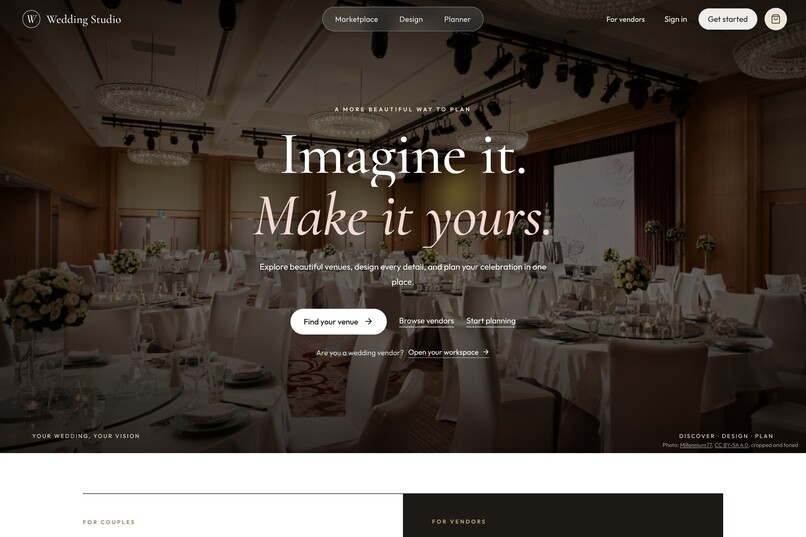
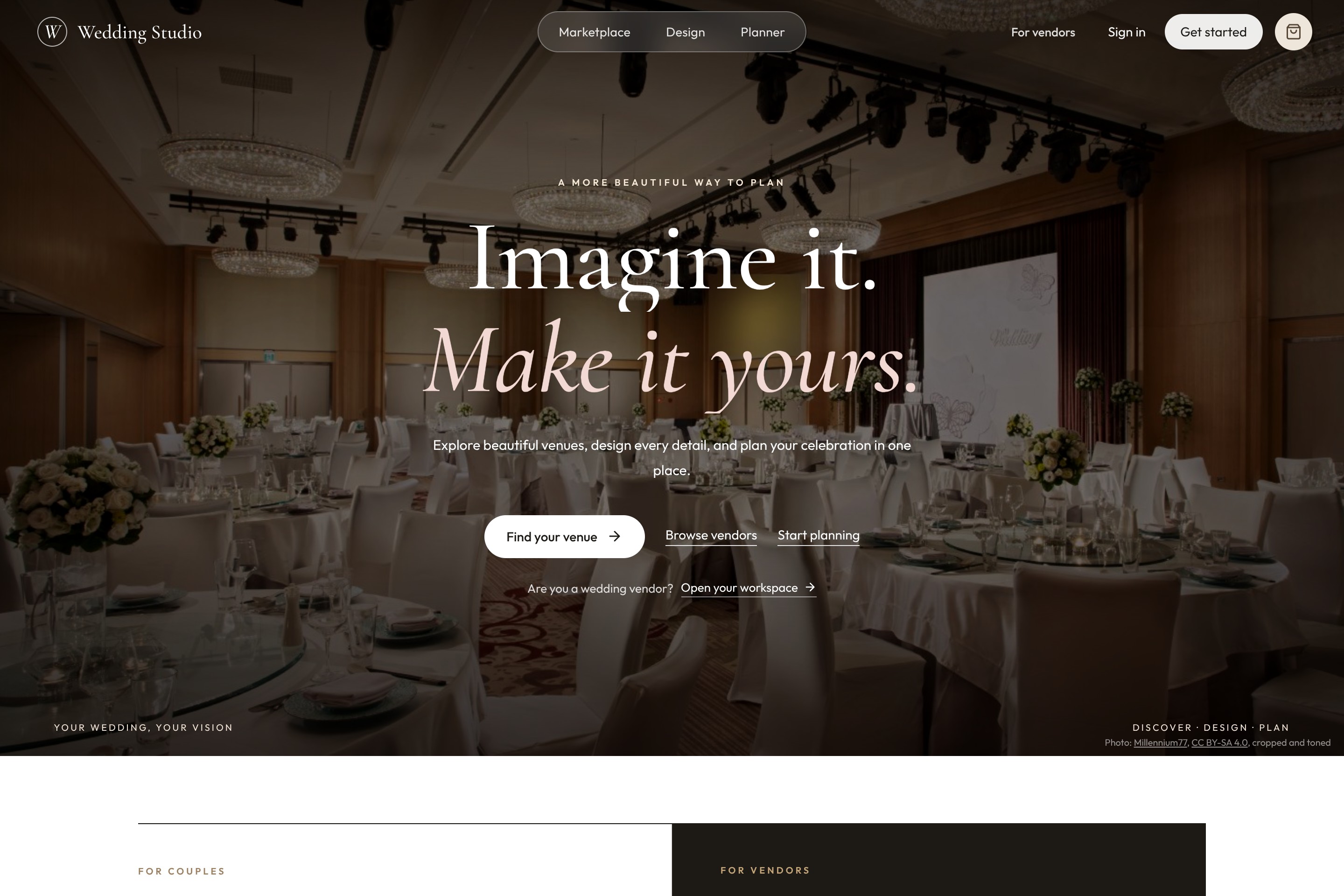
Homepage
-
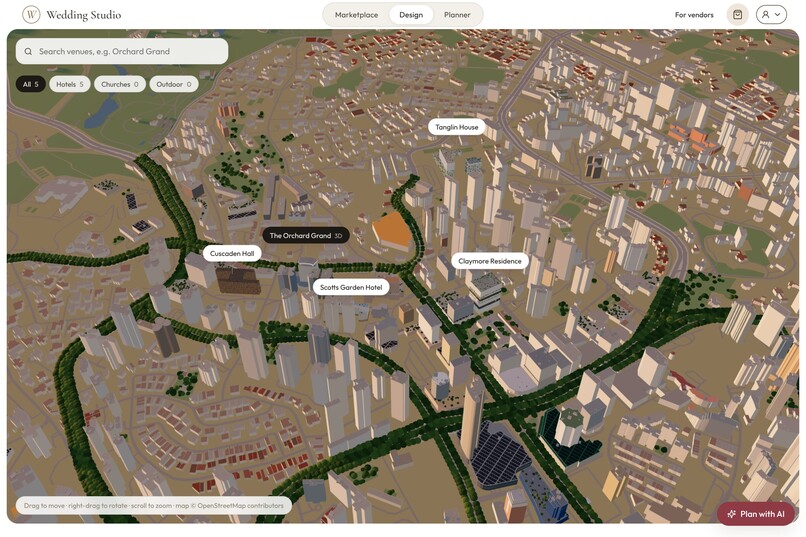
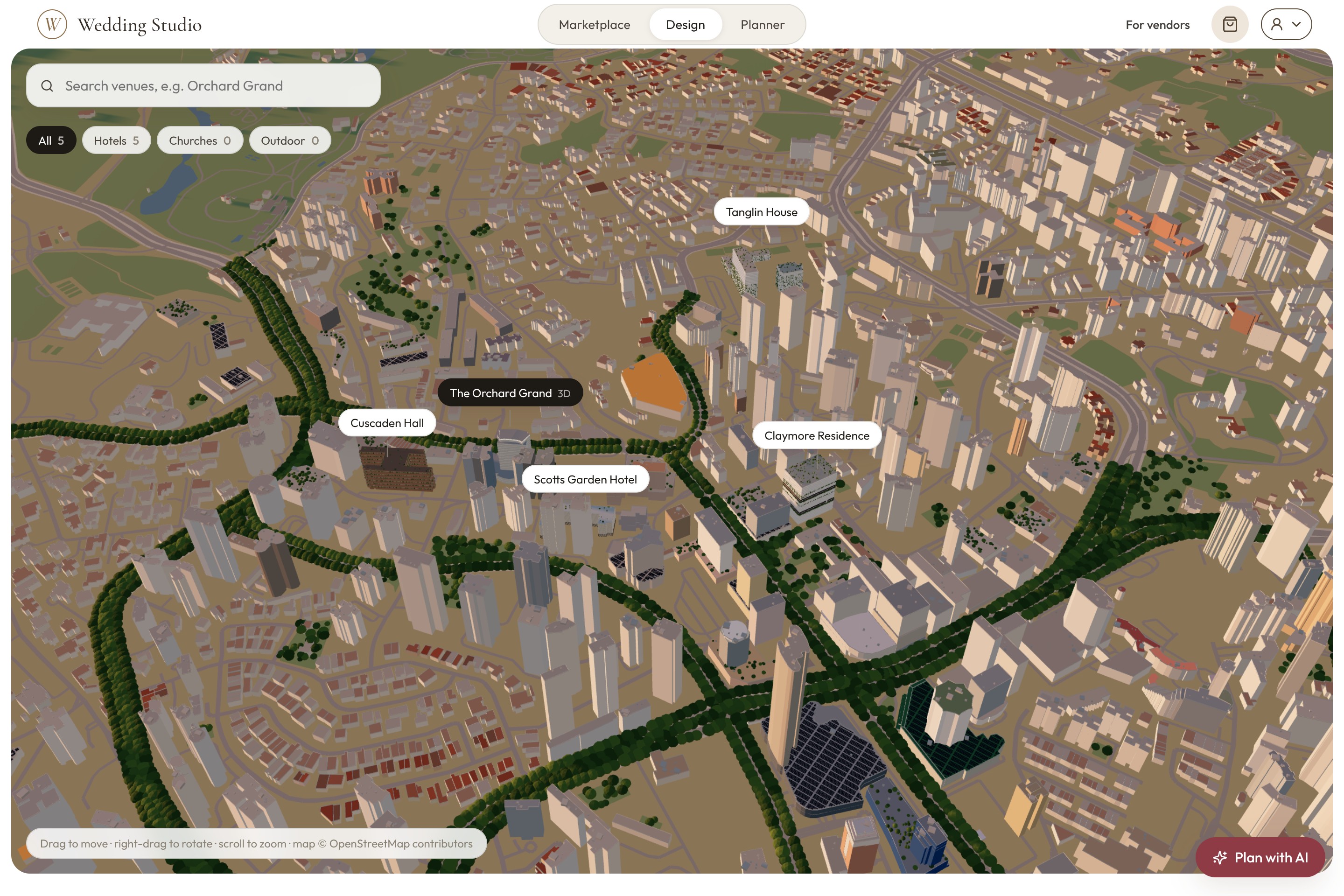
Visually identify which location is best for you
-
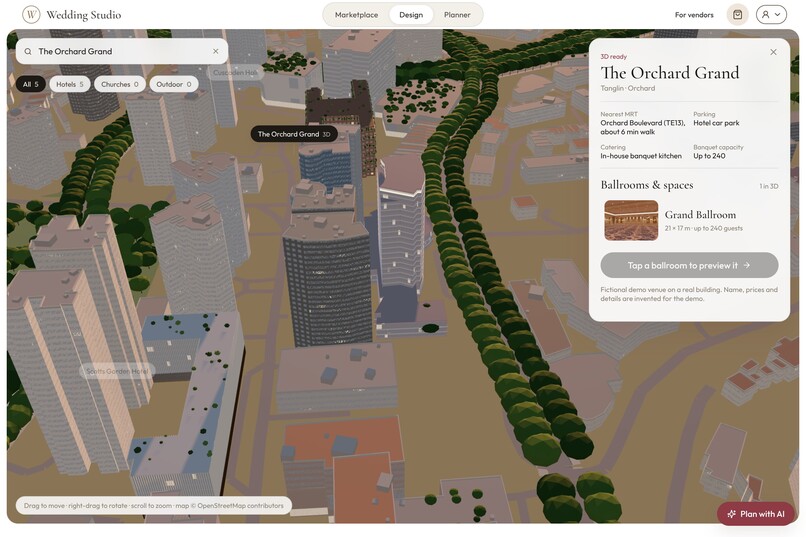
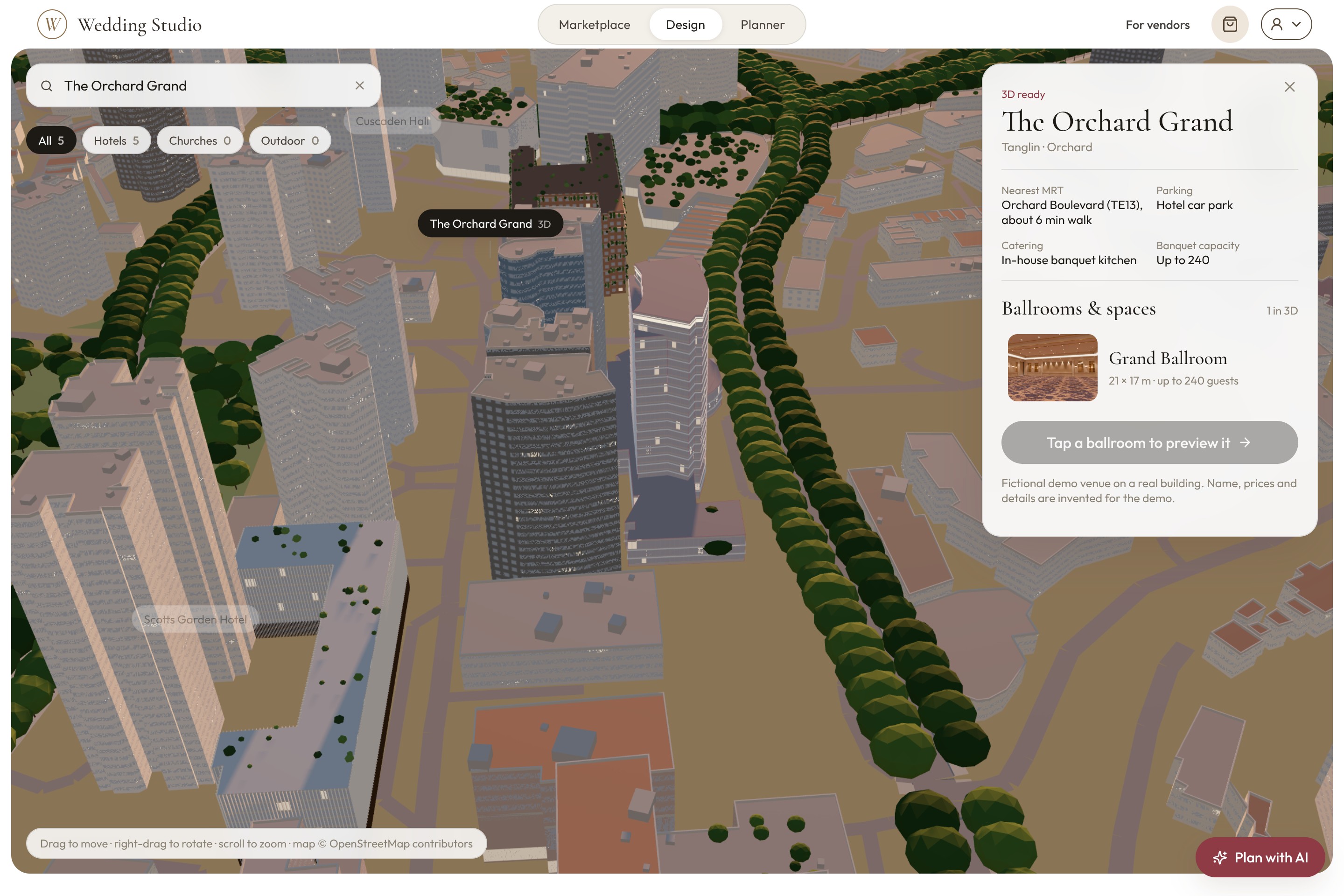
Information about the venue
-
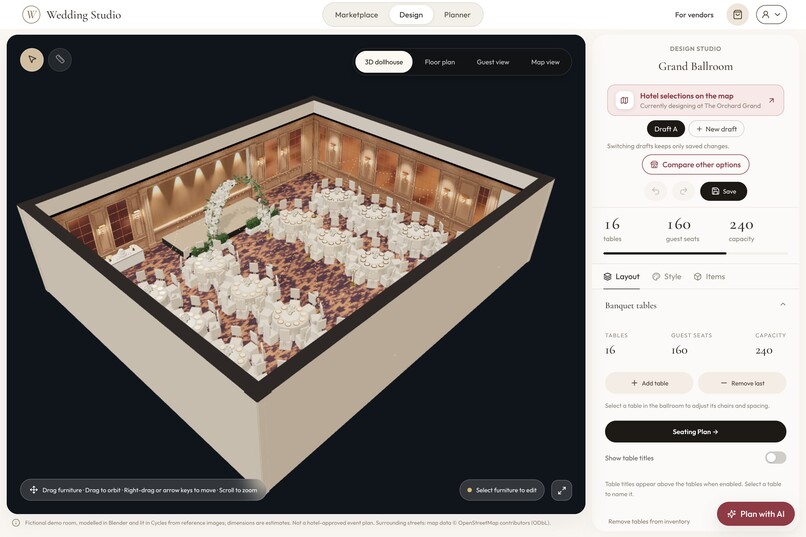
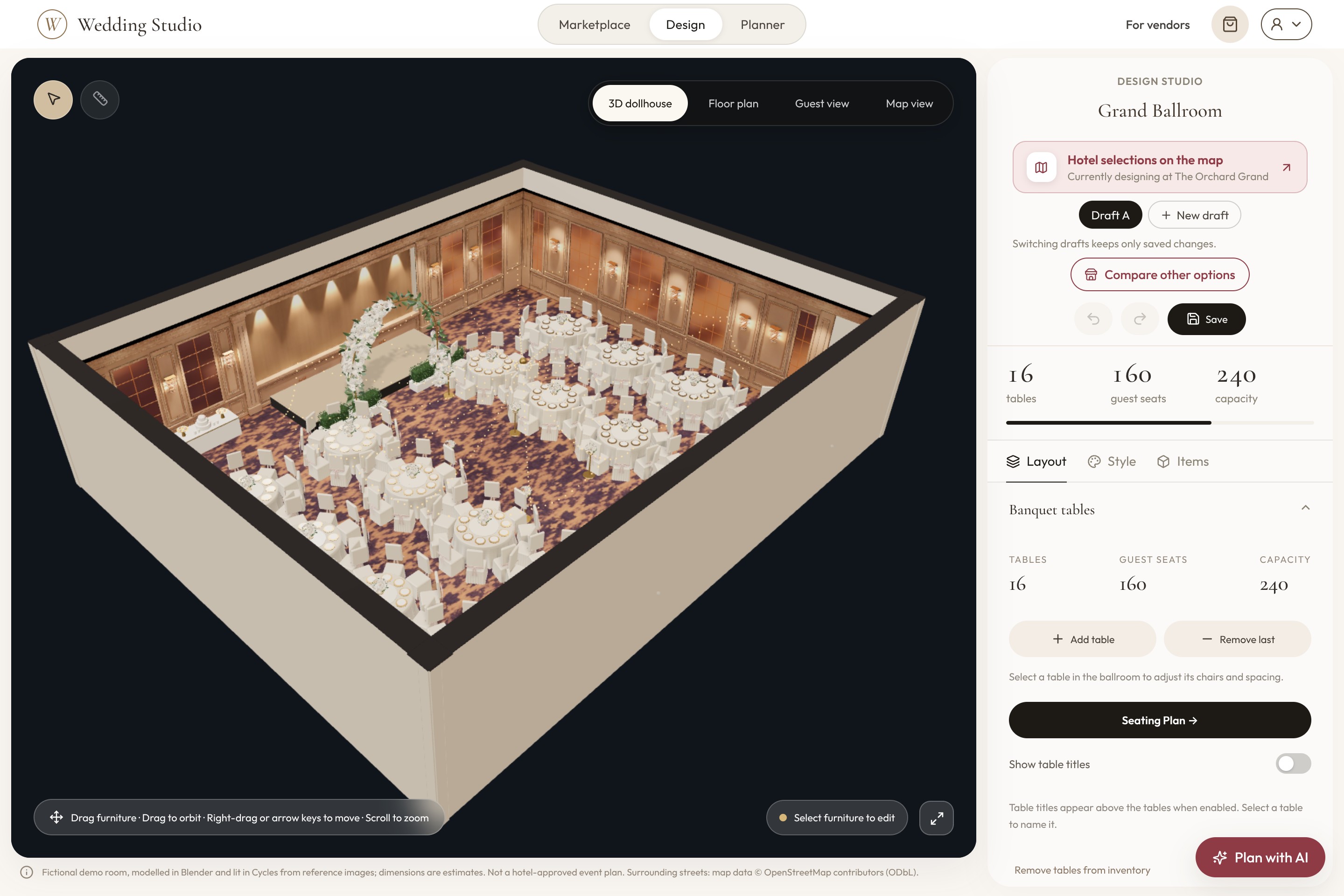
Ballroom Drag-And-Drop feature
-
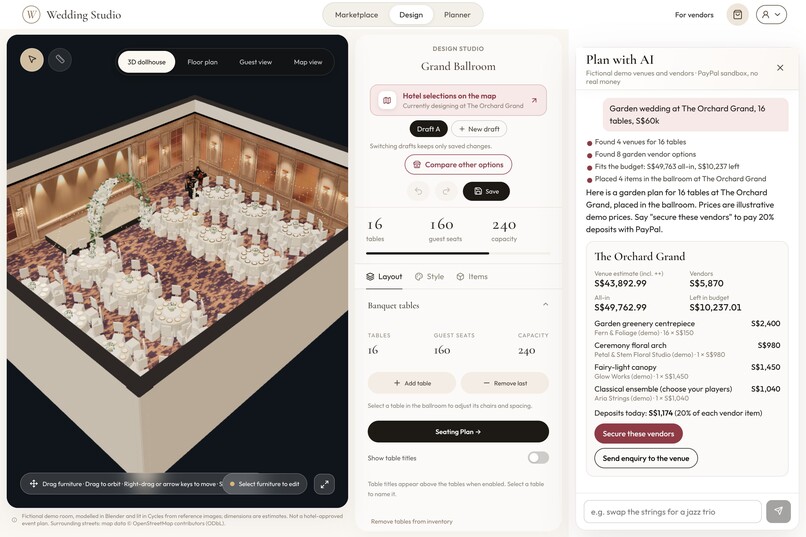
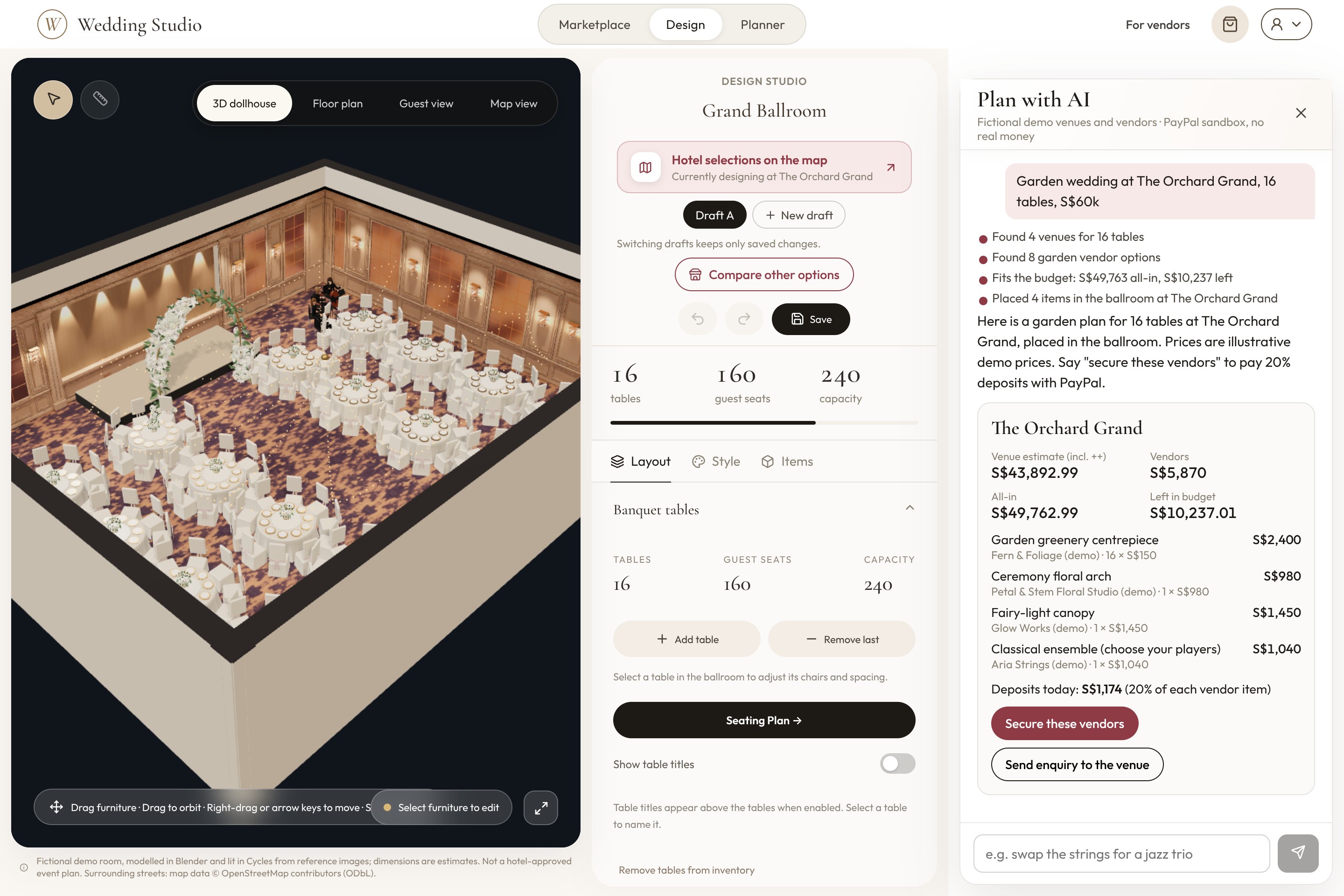
Integrated AI assistance for couples
-
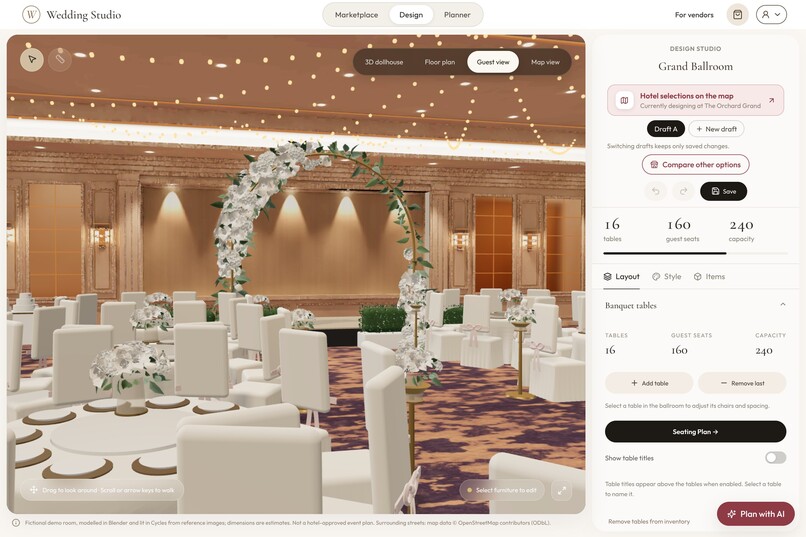
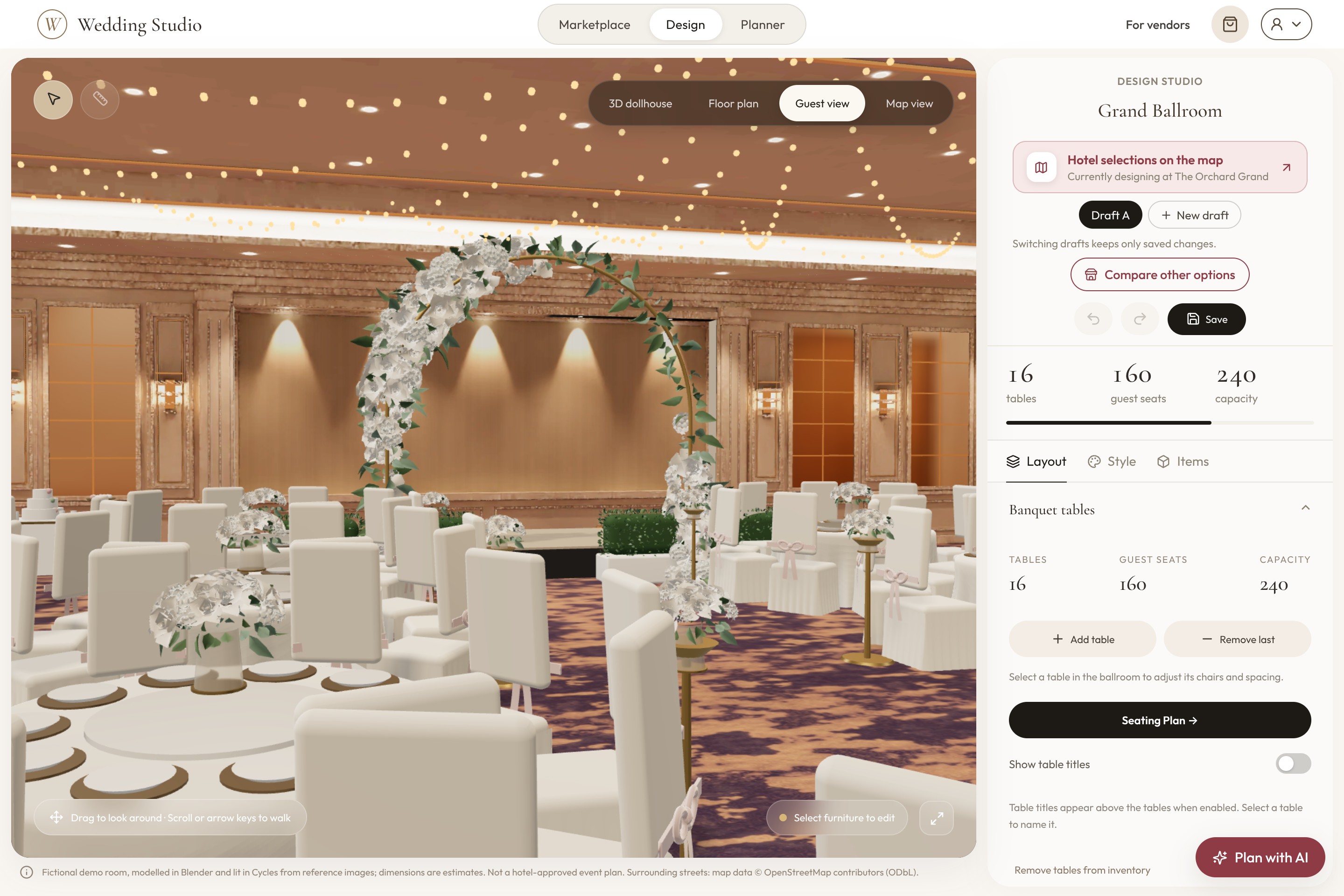
View the room from specific guest's angle
-
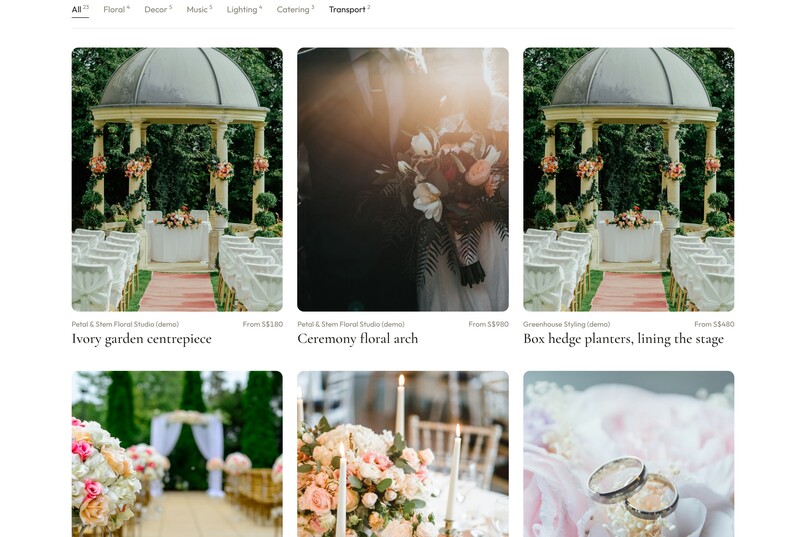
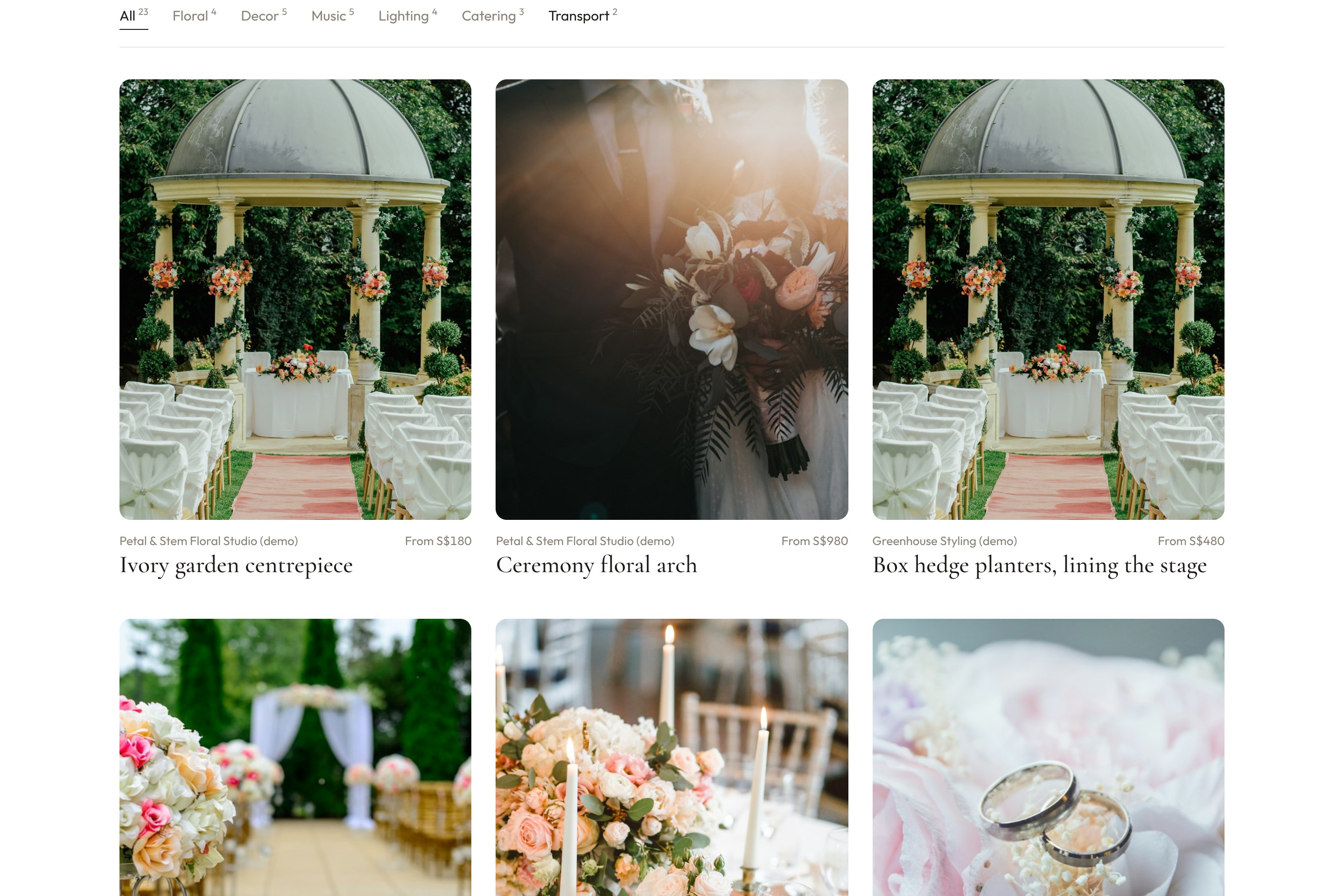
Marketplace to source for different vendors
-
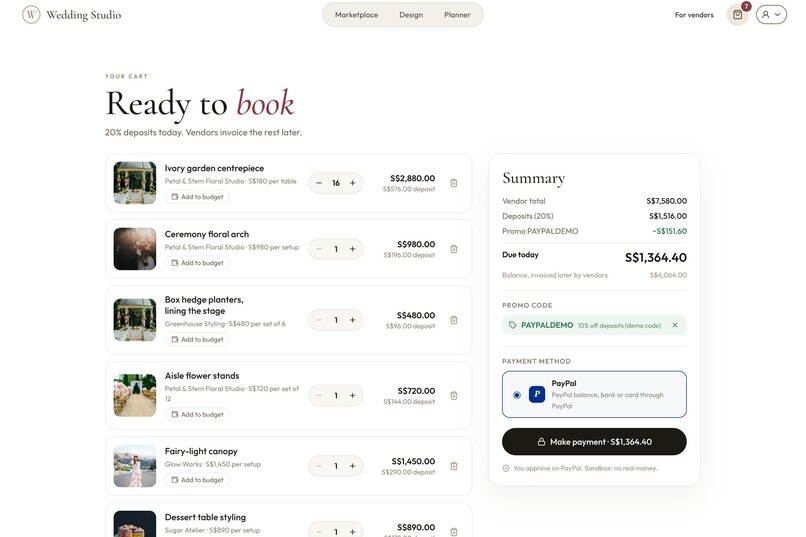
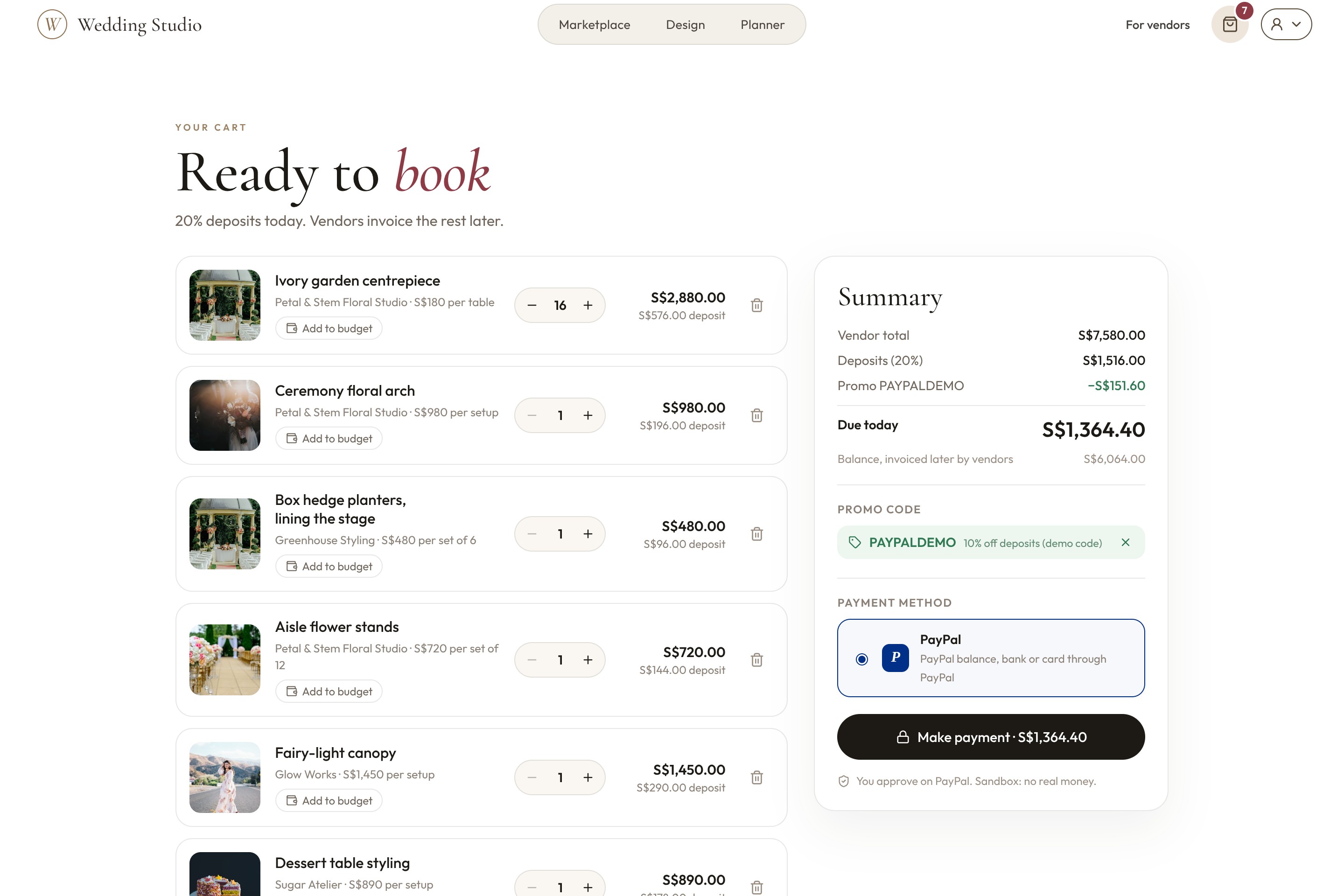
Payment made through the PayPal in one click
-
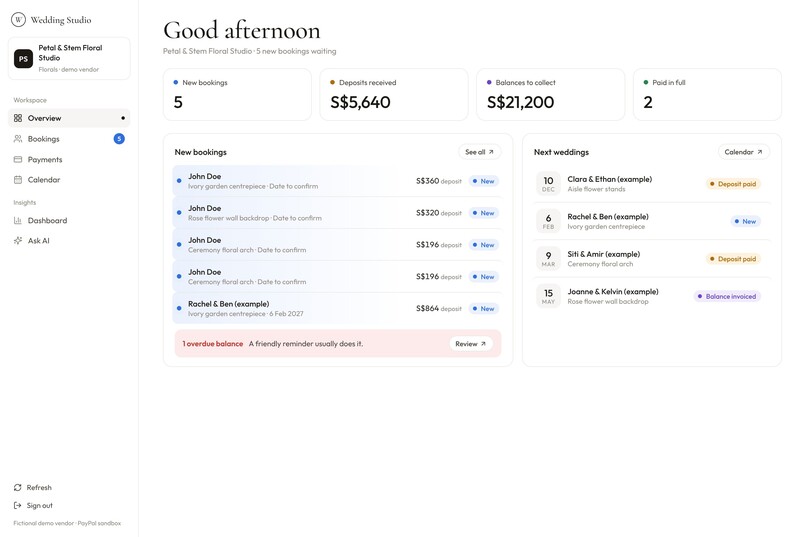
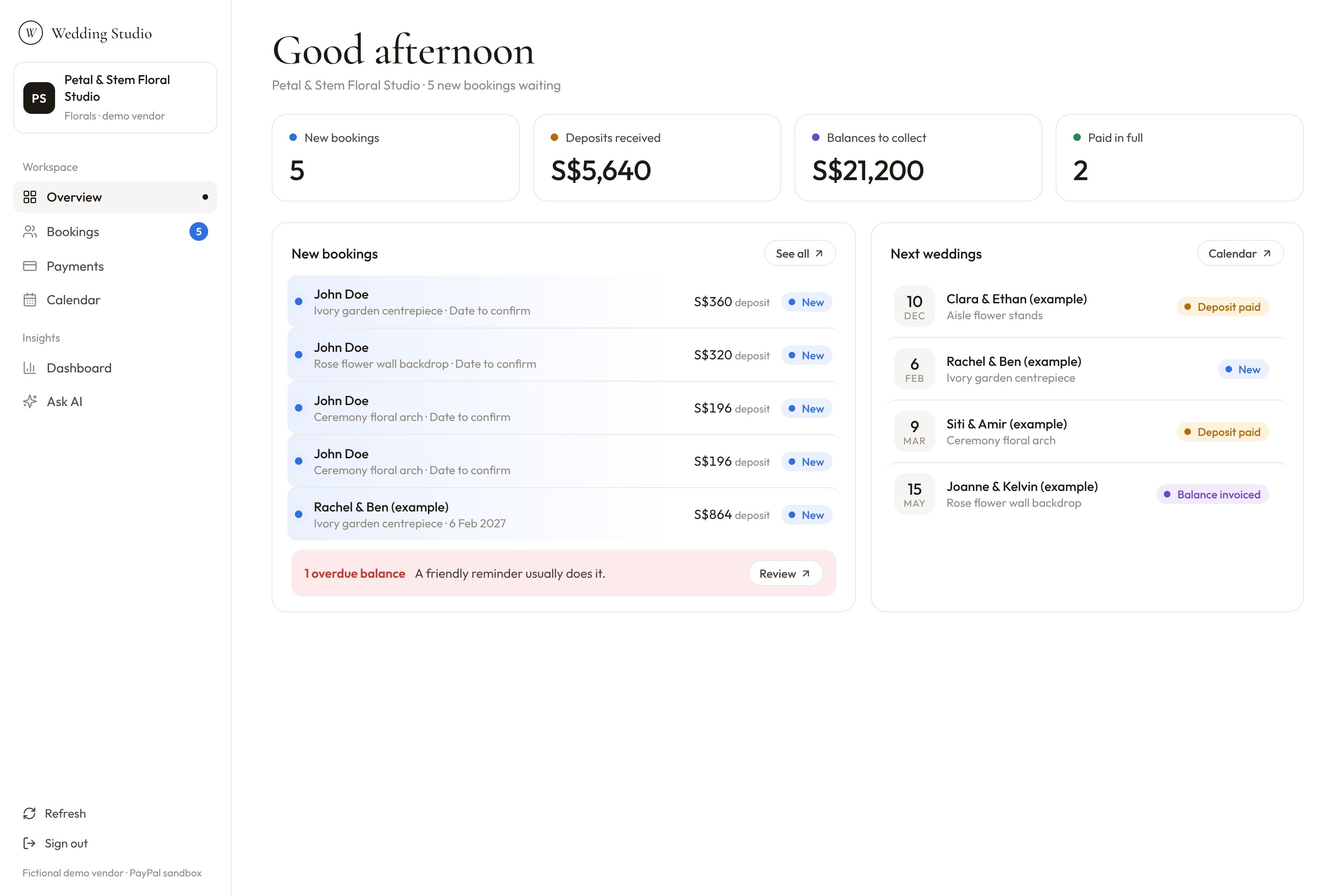
Vendor's dashboard
Inspiration
Having planned my own wedding, it was a hassle to have to liase between many vendors and venues. Wedding planners were expensive, and I couldn't fully see how the vendors flowers would look like in the actual venue. When buying a home, I saw how many interior designers used 3D models of houses to visualise the property without being there, customizing different features all from one platform. I thought, what if there was a way to incorporate this into wedding planning?
What it does
Wedding studio is an all-in-one wedding planner marketplace, that allows you to visualise how your wedding will look like on the day itself. Add, drag, and drop vendors items in different venues to compare them, all without leaving the comfort of your home or having to make 50 individual enquiries. AI agents help users to select the best vendor based on budget and preferences, and payment can be made securely through PaPal. Vendors get their own personal accounts too, to manage sales, upcoming events and delayed payments, all on one page. An AI assistant is always available to relief cognitive overload and stress at any time too. Payments come in securely through PayPal, ensuring payment will always be delivered accurately.
How we built it
Wedding Studio’s front end is built with React, Vite and react-three-fiber. We modelled the ballroom in Blender and lit it with Cycles, then baked the lighting into textures, so the room looks photoreal but still runs smoothly in an ordinary browser. Couples choose their venue on a 3D map of Singapore, built from OpenStreetMap data and streamed in tiles, and every hotel opens from a bird’s-eye view. The server runs on Vercel functions, with Supabase for storage. The AI planner uses the Vercel AI SDK with Claude Haiku, and Gemini Flash takes over automatically if Claude is unavailable. The planner works through tools rather than guesswork. It searches venues and vendors, checks the budget including service charge and GST, places the plan in the 3D room and opens checkout. Vendors get their own assistant that drafts friendly payment reminders. PayPal handles the money on both sides. For couples, the server turns the cart into one PayPal Orders v2 order with a 20% deposit line for each vendor. The couple approves it on PayPal’s page, and the server captures it only after checking the amount. Vendors use the PayPal Agent Toolkit to create and send invoices for the 80% balance, send reminders and see when they’ve been paid. Every amount is calculated in server code, never by the AI or the browser, and a person approves every payment, invoice and reminder.
Challenges we ran into
Our first challenge was making a photoreal room run in a browser. Live lighting was too slow, so we baked Cycles lighting into the room’s textures, which makes the room almost free to draw while furniture keeps live lighting. Paying many vendors at once was another puzzle. We solved it with a single PayPal order that has one line per vendor, which the server splits into separate vendor bookings after capture. Promo codes and band line-ups change prices, so the server reprices the whole cart and checks the captured amount against the approved order. The AI brought its own challenges. At one point the planner swapped the couple’s chosen venue for a cheaper one, and better prompt wording didn’t stop it. We fixed it in code: the tools now refuse any plan for a venue other than the one the couple named. Models can also time out or change their API rules without warning, so we built a fallback chain that moves to the next model automatically and keeps the planner working.
Accomplishments that we're proud of
We’re proud that Wedding Studio covers the full journey for both sides. A couple can plan their wedding with AI, see it in their own venue in 3D, pay every vendor’s deposit in one PayPal checkout and watch their plan update itself. The vendor then receives the booking with a floor plan of where their work goes, and collects the balance with PayPal invoices. The AI hands over to the couple instead of taking over. It brings them to the venue on the map, and when they open the ballroom their plan is already there, with the right number of tables and every vendor’s items, plus a way to compare other options in the marketplace. Because the AI never sets an amount, it can’t get the money wrong. And we managed all of this with a photoreal ballroom and a 3D city map that load quickly in an ordinary browser.
What we learned
I learned that AI works best when it does the legwork and the person makes the decisions. Rules that really matter, like prices and the venue a couple has chosen, belong in code rather than in a prompt, because a prompt can be ignored and code can’t. I also learned that showing the result matters as much as the answer. A room filling with flowers, a budget turning green and tasks ticking themselves off tell the couple far more than a paragraph of text.
What's next for Wedding Studio
Next, we want to build a workspace for venues, so hotels can handle enquiries, quotes and banquet deposits with PayPal invoices. We plan to pay vendors directly, with the platform’s commission split automatically using PayPal multiparty. We also want to bring on real vendor partners with live availability, and let vendors upload 3D models of their own work, as well as a hotels to allow official 3D scans and usage of their facility.
